



Home
Business & Industry
When you hear the words ‘Business and Industry’ you probably immediately think of an office based job or working for a big power plant, but it is so much more than that. You could be involved with infrastructure, looking at the design and materials used to construct roads, railways and buildings. You could look into the management of aeroplanes and ensure they run safely and smoothly. You could even be working in land regeneration making decisions such as what happens to the Olympic Park after the closing ceremony of the Games this summer.
Buying, selling and communications are just some of the aspects that you could be involved with. Do you think you’ve got what it takes? If so, check out the questions below to find out which area interests you. You could also have a look at the ‘Business & Industry’ section on the Future Morph website if you want to take your research further.
Good luck and who knows, maybe you will be behind the design and build for the next Olympic stadium!
Click on the characters next to each answer to find out more about the jobs that our scientists do when not answering your questions!
Careers
What does a civil engineer do?
Unknown - 01 June 2012 - 1 answer - id: 1626
Answered by: Technical Manager
12 June 2012 13:43
Very broadly speaking; civil engineers deal with landscape and structures. They make sure buildings are structurally sound, roads are laid correctly, bridges don't collapse, and appropriate building materials are used etc.
How easy is it to set up your own business?
Lizzy - 24 June 2012 - 1 answer - id: 1649
Answered by: Technical Manager
26 June 2012 13:44
It's very easy to do the legal/administrative bits. Other than that, you need a product to sell and a way of selling it, and this is less easy! A new business will always require hours and hours of work: you will need courage and persistence to be successful.
To help businesses succeed, there are also government grants which can be applied for. They usually fund new ideas. Application processes can be long and are competitive, but if you have an idea for a new product, this may be of interest.
Legally-speaking, a Limited Company can be 'incorporated' (i.e. created) within a day or so online with companies house - the government body responsible for limited companies. The form is very straightforward.If you don't want a limited company, you can trade as person independently - you just have to manage the self-employed income part of a tax return. There are many reasons why you might do it one way or the other - more than I can list here. I suggest reading around before making decisions.
There are many business-support resources, here are some I have found useful: http://www.businesslink.gov.uk (general advice) http://www.companieshouse.gov.uk (setting up limited companies) http://www.innovateuk.org/ (technology grants)
Hope this helps!
At what age does the average person make a decision about what career they wish to peruse and then follow it through?
Unknown - 16 June 2012 - 1 answer - id: 1641
Answered by: Technical Manager
18 June 2012 13:48
I think most people start to drift towards their career from about mid-teens or so - slowly narrowing their selection as they go. My impression is that there's rarely a defining moment when a decision happens - and no decision is irreversible!
My own decision process was something like this: At 14: I didn't want an 'arts' career, nor a manual career such as joinery/building. At 16: I chose technical A-Levels because they interested me. I had narrowed my career to a Technical subject At 18: I chose to study a degree in engineering - career more or less defined at this point. But even within engineering, still a huge scope of choice. At 21: I specialised in wireless technology - and stayed there for the next 3 or 4 years
Remember though that no career path is fixed for ever - people can and do frequently change if they don't like what they're doing even after years of working in the same area.
Industries
Which industry is the most successful in the UK?
Unknown - 01 June 2012 - 1 answer - id: 1618
Answered by: Mechanical engineering student
03 June 2012 15:16
I couldn't find a definite answer but it is most likely to be the pharmaceuticals/drug industry.
What was the first 'industry' in history?
Unknown - 04 June 2012 - 1 answer - id: 1627
Answered by: Technical Manager
12 June 2012 13:47
My best guess would be flint tools. I understand that there are known sites where clearly flint 'factories' were situated several thousands of years ago.
Should industries within the scientific sector be more innovation than profit-driven?
Unknown - 07 June 2012 - 1 answer - id: 1628
Answered by: Technical Manager
12 June 2012 13:59
Businesses are always profit driven, unless they are registered legally as 'not-for-profile' - i.e. something like a charity. If they weren't focused on profit, they'd probably fail. Innovation can be a method of driving profit - provided the company is good at turning new technology into products.
Mobile phones
Could we ever use mobile phones on aeroplanes or on the underground?
Unknown - 05 June 2012 - 1 answer - id: 1629
Answered by: Head of Science, St Pauls School, London
13 June 2012 07:52
Certainly - in fact one company is just introducing mobile phone use on aeroplanes - RyanAir started it in 2009 on some flights. Virgin's A330 airbus route from London to New York will also permit it. Eventually I guess they'll even install wi-fi like they do on buses - by having a telecoms hub that acts as a wifi router.
For the underground the difficulty is getting the signal down into the tubes. As 2/3 of the London underground is above ground, there's no problem with most of it. Again the solution is to place repeaters and aerials in the tunnels and there are plans already to test this out. Technically the difficulty is to send a signal along the tunnel efficiently, without wasting energy sending it out into the ground, and also to avoid problems with signals bouncing off metal trains. However aerials are already designed to produce signals along a line rather than out into a big sphere - they are used along long roads that cut through the middle of nowhere.
Other
Why are more companies not carbon neutral?
Unknown - 14 June 2012 - 1 answer - id: 1642
Answered by: Technical Manager
18 June 2012 14:05
Many companies have little or no incentive: they generally only make an effort to be carbon neutral if it is in their interests to do so - i.e. it saves them money or because they're penalised if they don't. Although this may sound mercenary, the vast majority of companies spend most of their resources just trying to survive!
What can be done to relieve business-related stress?
Unknown - 31 May 2012 - 1 answer - id: 1616
Answered by: Technical Manager
06 June 2012 18:48
In my experience, people cope in different ways - there is no "one way". I find that taking time away from the desk at lunch helps - going for a walk when the weather's nice is ideal. Not getting too tired and knowing when to stop and take a holiday helps too! Stress is probably here to stay though - and some moderate stress can be a good thing; work gets done under duress!
If an element hasn't yet been discovered, how can we claim that it exists?
Unknown - 03 June 2012 - 1 answer - id: 1630
Answered by: Head of Science, St Pauls School, London
13 June 2012 07:57
We know precisely what defines different elements - it is the number of protons in the nucleus. Hydrogen has 1 proton, helium 2 and so on, up to the largest nuclei that have been created with over 100 protons.
We know there are no gaps (we have examples of every element up to the maximum so far) so the only space for new elements is at the top - with more protons. These elements don't exist until we - fleetingly - create them in the heart of a particle accelerator.
The nucleus also contains neutral particles, neutrons. And the number of these can vary - hydrogen can have none, one or two. The isotope (form of hydrogen) with 2 neutrons is unstable and decays - we say it is radioactive.
What we don't know about any new element is how stable the nucleus will be and how many neutrons it needs to be more stable - we simply cannot calculate that very readily, though there are suggestions about particular 'magic' numbers of neutrons which will be more stable.
Does an element exist until we make it? Not really - we know it would exist, but as we don't know how many neutrons to give it, there are lots of forms of it (isotopes) that may exist.
How do people find meaning in their business/work?
Unknown - 01 June 2012 - 1 answer - id: 1619
Answered by: Technical Manager
07 June 2012 13:55
There aren't many scientific/technical jobs that have a very direct 'meaning' in the moral/social sense. Illness/disease research is probably the most obvious, provided illness eradication fits into what is meant by 'meaning' in the context of your question.
Most people I know feel that the job is a means to an end - we work to be able to raise families, buy food, buy/rent a house, enjoy leisure time. The job doesn't have to be meaningful in any moral sense, provided it is enjoyable and rewarding!!
How can maths be used to predict business workings?
Kat - 06 June 2012 - 1 answer - id: 1632
Answered by: Technical Manager
15 June 2012 13:53
For a business, maths is used to understand and predict current and future cash coming in and cash going out. On a wider level it is used to predict the rise and fall of stocks/shares (i.e. ownership and value of companies).
Products
How do businesses find the right products to sell?
Unknown - 31 May 2012 - 1 answer - id: 1617
Answered by: Technical Manager
07 June 2012 14:06
Mostly, it boils down to: imagination, experience, market research, invention and a big slice of luck!
Some products end up being a total 'flop' though. Businesses don't always get it right.
Computers & IT
Computers can do so much these days that it’s no longer a case of RSS feeds, widgets and social networking, we are now talking about thought-controlled prosthetic limbs for use in humans, protein folding being tackled by computer gamers, and talking touch screens to aid patients and this has all happened in the last 10 years – where will we be at the end of the next decade and would you like to be a part of this fast-paced evolving interactive environment?
There are so many jobs that you could take on from Software engineers and designers to information architects and cyber analysts. You could become a systems engineer, a programme analyst or an IT clinical systems educator. Your future is out there and is ready to be explored!
Check out the questions and answers below and let your imagination run wild with the possibilities. So many of our scientists are already working in this area so see what they have to say – just don’t get left behind!
Click on the characters next to each answer to find out more about the jobs that our scientists do when not answering your questions!
Apps
Why don't iPhone apps work on a mactintosh computer? After all they are made of a similar code.
Chelita Annal - 18 March 2012 - 1 answer - id: 1506
Answered by: Senior Lecturer in Digital Electronics
19 March 2012 22:50
Although the code used to develop them might be the same. The code is developed to run on a particular platform iOS, Windows, Mac OS, etc. If the platform is different, then it is not possible to run the code on there. This is because an app makes use of this platform, e.g. it gets data from it and provides data to it, that is different on each of these platforms. Hence you cannot easily run an app designed and built for a certain platform on another platform.
Who comes up with app ideas? Can anyone submit one?
Unknown - 11 March 2012 - 1 answer - id: 1505
Answered by: Senior Lecturer in Digital Electronics
19 March 2012 22:52
Anyone can come up with an app idea, but quite generally the people who have the ideas are also the ones that make/programme the app. If you have an app idea, then there are surely places on the web where you can make yourself heard and hope that someone picks up the idea and turns it into something real. (Be aware that as the originator of the idea you might want to ask to carry the credit for the idea, but it is unlikely that you will earn anything from it unless you have done the work of programming it, however harsh this may sound).
Blogging
What's the best way to start a blog?
Unknown - 28 February 2012 - 1 answer - id: 1464
Answered by: Mechanical engineering student
07 March 2012 00:07
There are many free blogging websites you can use. My favourite is Blogger, as it's owned by Google and extremely easy to start up (you can create an account under your Google account, one less set of login credentials to remember!). Livejournal is another popular choice. After you set up the blog, a good idea is to try to attract readers to it - and this is where you can do virtually anything to advertise your blog. Get friends to read it. Post a link to your blog on Facebook, Twitter, etc! Make sure you have an attractive layout and a few posts prepared to ensure you can update regularly before you find your groove.
What is a blog?
Tezpace - 01 March 2012 - 1 answer - id: 1544
Answered by: Postdoctoral researcher in child-computer interaction
03 April 2012 10:34
A 'blog' is short for a 'web log'. It's like a diary that you keep online, so you write your thoughts to a web page to update it. A lot of people make them public, so often they are like a collection of thoughts over time that you might want to share with friends.
Careers
Will there come a time when there is no one left who knows how to create a micro processor from scratch, with the advancment and involvement of computers and robotics and ever smaller chips?
Unknown - 07 March 2012 - 1 answer - id: 1507
Answered by: Senior Lecturer in Digital Electronics
19 March 2012 22:55
Although technology advances, there will not be a time when we do not know how to do the basics anymore, as you need to know the basics before you can do anything advanced. So, do not fear, whatever advances occur, the basics are not going to be forgotten. After all, you cannot understand most of the advanced stuff without knowing the basics. There is even a trend to move away from very complicated designs and try to solve things in easier ways, so to some extent we must continue to go back to the basics.
Computer images
How do they put colour onto a screen?
Paddy Eaton - 06 March 2012 - 1 answer - id: 1508
Answered by: Senior Lecturer in Digital Electronics
19 March 2012 22:58
Any colour can be created from the basic three colours: Red, Green and Blue. So, if you can mix them correctly, then you can create the correct colour. A screen basically mixes these three colours for each pixel (the smallest element of display in a screen). For example, in an LCD you have a white backlight, this is filtered, by a Red, Green and Blue filter and then in front of these filters you have a layer that either "opens" (or lets the light through), or closes (or stops the light from passing through). Therefore, you change the colour of the light that is passed through and combine your RGB to create the colour you want.
How do they create an image on a computer screen? And what are pixels?
(null) - 02 March 2012 - 1 answer - id: 1465
Answered by: Technical Manager
06 March 2012 13:34
The computer screen is divided into millions of tiny dots, called pixels. Each pixel can be either Red, Green or Blue; the three primary colours of light. The graphics software and hardware on the computer set the individual pixels to the appropriate color so as to match the image to be displayed. By combining the different primary colors, the full set of colour shades can be displayed.
Computers
Will we ever get to a point whereby computers can talk back with a human voice?
Rachel Benischke - 21 March 2012 - 2 answers - id: 1536
Answered by: Technical Manager
31 March 2012 21:55
Well actually, they already do! When you telephone a helpline or corporate institution, and you end up navigating your way through an electronic menu, you are being talked to by a computer. The computer has sound files of the different things the company needs you to hear, and is simply playing them down the telephone line. As you make your selections in the menu, the computer picks different sound files to play, giving you the illusion of a real secretary. I've never explored it, but I think you can also have software enabled on your PC to describe screens vocally for the partially sighted and blind. Again, this would be done by calling up the relevant sound files when needed.
Answered by: Postdoctoral researcher in child-computer interaction
03 April 2012 10:17
There are a number of things the computer needs to do to 'talk back' to you. It needs to understand what you're saying to it, it needs to process what this means, and it needs to speak back in a voice which sounds human. Most of this is already being used to some extent. Voice recognition is used by a lot of people with writing difficulties (search for Dragon Dictate, MyStudyBar or Windows Voice Recognition), but that usually just recognises the words and turns them into text, or recognises very simple commands. Speaking back to you is also quite common, a lot of people with reading difficulties use screen readers and text-to-speech systems (search for Ivona to try a sample for free with very realistic voices, or MyStudyBar you can download for free). The difficult part is understanding complex questions you might ask it, but with Artificial Intelligence this is getting better and better. The closest thing to a computer that talks back to you that you might have heard of is Siri on the iPhone, which aims to do this. It doesn't always get it right, but I think we're getting there!
The other question is, would you want to say everything out loud? Personally I type quite fast, so I much prefer typing a report rather than dictating it. And I quite like having silent chats over instant messenger rather than talking on the phone -- I'm not sure I'd want to give up the keyboard completely! :-)
Will they ever be able to create a computer that is controlled by thoughts?
Unknown - 08 March 2012 - 1 answer - id: 1545
Answered by: Postdoctoral researcher in child-computer interaction
03 April 2012 10:31
Yes, they can do this already! Well, there are computers that can read brain waves if you wear some special sensors, and with a bit of training you can control a cursor or select from a few options with your brain just by thinking hard about it. This is particularly useful for people who cannot move their body or speak, so they can communicate. There is a lot more work being done on controlling a computer through eye movements too, so you can control it just by looking at things. I think it's a very long way off having computers that can 'read your mind' though!
Why is the key pad on computers not in alphabetical order?
charlie - 29 February 2012 - 1 answer - id: 1454
Answered by: Systems Engineer at European Space Agency
01 March 2012 15:09
The Keyboard is not in alphabetical order due to its design originating with the typewriter. The current layout (which is different depending in which country you are in QWERTY, AZWERTY etc.) owes its design in trying to prevent jamming of the typewriter mechanism.
At the time typists were typing so fast that the arms bringing the letter to print were colliding with each other. You will notice that the most common letters used in the language are the farthest apart (look at the letter e and the letter i).
Over the years people have tried to change the keyboard to something more "logical" but as the current design is so familiar and "traditional" it is unlikely to change."
Further Reading :http://en.wikipedia.org/wiki/Typewriter#Keyboard_layouts:_.22QWERTY.22_and_others
Why is IT equipment becoming much more expensive?
Katie - 14 March 2012 - 1 answer - id: 1608
Answered by: Head of scientific computing, Department of medical physics & bioengineering
10 May 2012 11:53
That all depends on what you mean. In terms of processing power it's actually becoming much cheaper. A BBC micro in 1986 cost £500 and contains less processing power than a £100 mobile phone today. The increase in cost you're referring to is more likely to be at the high end: in other words, more is possible than before (faster processing, larger RAM addressing, higher disc speeds, larger disc sizes) and, like a Porsche compared to a Mini, all this costs to produce and maintain.
Why do we need faster processors in computers?
Unknown - 07 March 2012 - 1 answer - id: 1493
Answered by: Technical Manager
15 March 2012 13:34
In simple terms: because of our greed for speed! We don't 'need' faster computers, but they are more pleasant to use. If you look at the modern versions of Windows compared with earlier versions, you'll see that the modern versions are much more graphically-oriented. This is made possible by faster processors.
Why are males more addicted to computers than females?
Kimbo - 17 March 2012 - 1 answer - id: 1620
Answered by: Senior Lecturer in Digital Electronics
10 June 2012 22:14
The "addiction" is probably quite relative. It seems that men are generally more interested in technology as such, and that is also what kind of fits the "society image" of either. There were however recent articles that said that woman were more addicted to games on their mobile device than guys ... Not to say that there are cultures and countries were girls are also much more "addicted" to technology, as you will notice when you go the e.g. South-East Asia.
Who manufactured the first computer?
Unknown - 29 February 2012 - 1 answer - id: 1466
Answered by: Mechanical engineering student
06 March 2012 23:56
It is difficult to pinpoint what exactly was the "first computer" because of its broad definition - a computer is defined as a machine that carries out computations. John Vincent Atanasoff and Clifford Berry designed the first electronic digital computer, called the Atanasoff–Berry Computer.
When will computers interact directly with our brainwaves, without the need for words?
Unknown - 13 March 2012 - 1 answer - id: 1548
Answered by: Postdoctoral researcher in child-computer interaction
03 April 2012 10:32
They can do this already! Well, there are computers that can read brain waves if you wear some special sensors, and with a bit of training you can control a cursor or select from a few options with your brain just by thinking hard about it. This is particularly useful for people who cannot move their body or speak, so they can communicate. There is a lot more work being done on controlling a computer through eye movements too, so you can control it just by looking at things. I think it's a very long way off having computers that can 'read your mind' though!
When something is downloaded, where does it come from?
Unknown - 12 March 2012 - 1 answer - id: 1494
Answered by: Technical Manager
15 March 2012 13:36
Another computer on the internet - generally termed a 'server'. When you request a download, the remote server splits the file into many little packets, and sends them over the internet to your PC.
When items are 'lost' on a computer, where do they disappear to?
Unknown - 21 March 2012 - 1 answer - id: 1517
Answered by: Technical Manager
27 March 2012 14:39
Sometimes a user accidentally moves files to a different folder, and then forgets where the new folder is. Or doesn't realise they've even done it in my case! Sometimes a file is deleted by accident. Occasionally, a small part of the hard disk in the computer becomes corrupt (destroyed) and any files that resided on that part are 'lost' - i.e. illegible and therefore inaccessible. This can happen if the power is removed from the computer while it was accessing that part of the disk.
What's the best way to ensure that your laptop works to the best it can at all times?
becca louise - 30 March 2012 - 1 answer - id: 1540
Answered by: Technical Manager
02 April 2012 14:07
I guess the main issue you're concerned with would be the battery. To optimise its use, you need to prevent it getting too hot. If you can place the laptop on a hard surface when it's being used, there will usually be enough air flow underneath to keep the battery cool. In order to minimise battery drain, you can also keep your screen to the dimmest setting you can cope with and turn off any unused wireless elements: specifically, Bluetooth and Wifi. You can also try tweaking the settings for powering off the screen and going into standby mode after a period of inactivity; go for shorter timeouts into low power states. Hope this helps!
What will computers be like in thirty years time?
Gerry McGachy - 15 March 2012 - 1 answer - id: 1549
Answered by: Postdoctoral researcher in child-computer interaction
03 April 2012 10:49
This is a great question, but very hard to answer! If I knew this I could make a fortune... They often say that new technology takes about 10 years to get from first being made to becoming popular. So the new technologies which are getting popular now such as tablets, gesture recognition in the Xbox Kinect, voice recognition in Siri on the iPhone, e-Paper in the Kindle... the technologies behind these have all been around for a long time (I was reading about them at university in 2003), it just takes a long time for people to find a need for them, and to make them affordable. This means we can guess about the next 10 years or so, but longer than that is harder.
3D printers have been around for a long time, and they're just starting to become affordable now. I think we'll see much more of them in the next 10 years. Holograms too are being developed now but mainly the technology is large, unwieldy and expensive, so this will probably be available on your phones in the next 10-20 years. 3D screens that you can see without glasses are already available (such as the Nintendo 3DS), I don't think it will be long before this technology is cheap enough to use in TVs too. One great visionary was Mark Weiser, who saw the future of 'ubiquitous computing' (computing everywhere) - you can read his article from Scientific American at http://www.ubiq.com/hypertext/weiser/SciAmDraft3.html - he is imagining tablets, mobile phones, interactive whiteboards and more, but this was way back in 1991! It is possible to predict what will be available, but very hard to predict what will be popular or will be needed by society. I'm looking forward to seeing what the future brings!
What is the largest computer in the world?
Unknown - 12 March 2012 - 1 answer - id: 1498
Answered by: Research Engineer, Lightning & Electrostatics
19 March 2012 11:33
According to Douglas Adams, the world is a giant computer run by mice.
What is the greatest physically possible frequency that can be acieved in a CPU now, or in the future?
Unknown - 21 March 2012 - 1 answer - id: 1621
Answered by: Senior Lecturer in Digital Electronics
10 June 2012 22:10
It is rather hard to put a fixed number to this question. Currently most processor run at about 3 GHZ. This can be increased as long as the cooling for the CPU can be properly dealt with, this is generally what overclocking is meant to do, but I do not know what their highest reaching number is. The power of a computer is however not purely in the speed of the processor, there are quite a few other factors that determine how "fast" the computer operates in our eyes. Personally, I do not think that they will increase processor speed much more, for several reasons. Having said that, there are machines that operate at much higher frequencies than this 3 GHz, but these are not for domestic use, and are not really "computers" as such either.
What is RAM?
Unknown - 11 March 2012 - 1 answer - id: 1484
Answered by: Senior Lecturer in Digital Electronics
12 March 2012 20:42
RAM stands for Random Access Memory. A computer generally uses multiple different kinds of memory. There is permanent storage, like a hard drive, and there is memory that is used during operation. That is where RAM comes in. RAM in a computer is generally of either the SRAM type or DRAM type. These are both memories that will lose their content when there is no power supplied to them. The reason why they are called RAM is because the content can be randomly accessed. So, you can ask for the content of item 1, 20, 500, etc. in any order and you will get it in the order you requested it. This is in contrast with sequential storage. If you look at old music cassettes, these are sequential kind of media, you needed to go through the full sequence to get to the location you want to get too.
What is a pc?
Unknown - 04 March 2012 - 1 answer - id: 1535
Answered by: Technical Manager
31 March 2012 22:06
PC stands for 'Personal Computer'. As a minimum, this consists of: a hard-drive with the operating system installed, a motherboard which holds the processor (the brain of the computer) and usually a network connection and graphics controller built in as well, and a DC power supply which converts standard 240V ac into 24V and 5V dc for the mother board and hard drive. The mother board also holds the RAM, which is the memory used by the processor for its functions. There is often (but need not be) a DVD drive built in too, and the PCs you would normally see also have screens, keyboards and mice, although this is not mandatory. Servers for example, are basically PCs (but very fast with tonnes of memory) but often have no screen or keyboard/mouse because they don't sit at a desk with a person infront of them. If administration is required, remote-desktop software is usually used, allowing the administrator to operate the remote server from his/her own PC.
What are the pros and cons of computers and the internet?
katy - 06 March 2012 - 1 answer - id: 1652
Answered by: Development Manager
02 July 2012 14:21
If your question is about the pros and cons of local vs. cloud storage - this is quite simple - to use the Cloud (i.e. data being in online storage) you need an internet connection - as soon as you lose that, you lose access to your data. So if you are in a car, and you want access to a document, unless you use your mobile phone data connection, which can be very pricey, you lose access to your data.
With your data on your computer, you have the offline storage, but then if you have a problem with the computer, you lose your data.
Perhaps a happy compromise is to synchronise your data - or use online backups.
In the future will computers be able to respond to human signals and voice?
Unknown - 12 March 2012 - 1 answer - id: 1546
Answered by: Postdoctoral researcher in child-computer interaction
03 April 2012 10:23
Not just in the future, it's happening now! Voice recognition has been around for a long time (since about the 1990s I think), and it's getting better all the time. Windows and MacOS computers have voice recognition built in that you can turn on in the control panel, or programmes like Dragon Dictate will let you write an essay by speaking into the computer. MyStudyBar is a free tool for Windows that will let you speak into the computer or have it speak back to you, among other things. As to other 'signals', gesture recognition is getting better too, think of the Xbox Kinect and how it can recognise when you wave to it. I'm sure in the future this technology will be more available, although I'm not sure I want to be waving and shouting at my computer to control it!
How small will computer devices eventually get?
Robertsk - 13 March 2012 - 1 answer - id: 1653
Answered by: Development Manager
02 July 2012 14:33
In the 1960's or 1970's a "law" was derived called Moore's Law which suggested that component size would halve every - something like - 2 years - and for many years it held to that - and then it slowed slightly.
In the 1980's, people were saying that due to the underlying physics, you wouldn't be able to keep shrinking devices as the photographic process would not support ever smaller features from 1um (1/1000th of a mm). That was overcome, and today we have devices with feature sizes about 1/30th that size. Then there was going to be a problem with the energy of the electrons being too high to prevent them from "tunnelling" onto different tracks - and that was addressed by reducing the voltages.
It has been suggested for several years that optical computers, or maybe quantum computers will provide the next leap forwards in technology.
However, if we reduce the feature size (Line width) by half, we can fit 4 times as much on the chip for the same area. With additional integration of peripherals onto the processor, the performance increases - and so a disproportionate gain can be perceived.
There probably is a limit to how much we can shrink devices to gain performance increases, but don't hold your breath as to when that will be!
How small is the smallest computer?
Unknown - 02 March 2012 - 1 answer - id: 1510
Answered by: Senior Lecturer in Digital Electronics
19 March 2012 23:02
This partly depends on how you define "computer", but they do exist in a lot of different sizes. To my knowledge, the smallest one I saw was about the size of the tip of your little finger, but I cannot recall who made that one, and it is already a few years ago. Considering that everything is always decreasing in size, when it comes to computing, I would assume that there are multiple numbers of these around these days. However, you have to take into account that these tiny computers do not always have the same capabilities as the larger ones.
How do we encourage the elder generation to try using computers?
LJ - 11 March 2012 - 1 answer - id: 1547
Answered by: Postdoctoral researcher in child-computer interaction
03 April 2012 10:27
There's a lot of work on how to make computers more usable for the elderly, as our population is ageing this is going to affect more people, and it can be hard if you start getting problems with muscles, vision or memory. For people who are just nervous or unfamiliar with computers though a lot of the time I think it helps to find something they want to do with the computer. Not everyone is interested in the computer itself, but they would like to send and read emails, look up maps, or store photos, so focussing on the things the computer can do rather than the technology seems helpful for a lot of people.
How do processors work?
Unknown - 17 March 2012 - 1 answer - id: 1516
Answered by: Technical Manager
27 March 2012 14:44
In really simple terms... processors are logic-electronics that are designed to respond to a series of instructions; the instructions are generally to do with moving data from one place to another, and doing mathematical operations on data. A programme is simply a series of these instructions put together to achieve something useful. (Such as calculate the date, for example).
How do computers store information?
Clare - 29 March 2012 - 1 answer - id: 1622
Answered by: Senior Lecturer in Digital Electronics
10 June 2012 22:20
Computers work with binary format representation, which means that everything, from numbers to characters are represented with a series of 1's and 0's. That is also what is stored, so whatever medium that is being used it stores these 1's and 0's. The actual storage depends on the medium used. When using a Hard-disk, then data is stored in a magnetic format. So as much as there are two polarities to magnets, these two polarities can be used to represent the 0's and 1's and provide storage. Simply imagine many tiny magnets on a disk ... and you have a hard drive. Similarly, CD's, DVD's and Blu-ray, all operate on the same principle of storing 0's and 1's, but in this case the read out is done by a laser (depending on the medium a different laser is used). The disk itself has a layer to which pits and lands are applied (that is the official term, it basically means that the material characteristics is changed at some locations). These pits and lands change the reflection of the laser light that shine at the disk and when this reflection changes that indicates changes between 1's and 0's. Other memories use different ways of storage, which are a bit more complicated to explain here, but they all store a collection of 1's and 0's.
Can computers be taught to fix themselves when they go wrong?
Unknown - 15 March 2012 - 1 answer - id: 1515
Answered by: Technical Manager
27 March 2012 18:17
Currently; no. Your question is at two levels: hardware and software. I have seen research papers detailing how to allow electronics to auto-heal following lightly severed tracks. I think it involved a semi fluid conductor. I have not heard of anything commercially feasible though. As for software; if a programme hangs, it hangs. The computer can try to recover from a hung programme, but it couldn't correct the programme itself - that would have to be done by a human.
Are apple macs over priced or can they do a lot of things that other computers cannot do?
Cameron - 02 March 2012 - 1 answer - id: 1509
Answered by: Senior Lecturer in Digital Electronics
19 March 2012 23:07
Apples have historically mainly been used in the graphic/media/art industry. They used to be known to be very good for these kind of applications, and they also looked very attractive. It is only recently that they started to have more similar hardware to the conventional desktop machines that most people have. That has made the price comparison a bit easier, and therefore people consider them to be overpriced. It really depends on how you look at it, but Apple sometimes has very good prices for their hardware.
However, overall they provide a slightly different economic model and operating system. A lot of their software is much cheaper than for the Windows equivalent machine. So, they charge more for the hardware, but also provide more of a total solution.
Are they capable of doing more ? Personally, I think that they both stand on about the same level these days. People will argue differently in relation to their personal favorite, but they are e.g. not faster when it comes to graphic processing or anything of this kind. There might be some minor differences, but then these are more due to the Operating System than the actual hardware.
Cost
Why do iPads cost so much?
Unknown - 29 March 2012 - 1 answer - id: 1656
Answered by: Development Manager
04 July 2012 11:43
An iPad costs as much as it does, because Apple has to distribute it, package it, design and manufacture it! It is a surprise it is as cheap as it is! When you consider the amount of software on the iPad, and the testing it has to go through; and the complexity of the electronics - the screen itself may cost Apple - in manufacturing volumes - over £100, and then there is the case, the battery, the connectors, the chips (the main one may well be custom - which can cost over $500K to get the design to the first chip!), and the circuit board may well cost $50 each due to the size and complexity! Add the numbers up, and the profit Apple makes on an iPad is very low!
How much do the components used to make a computer actually cost and how big is the profit margin?
Sally-anne - 19 March 2012 - 1 answer - id: 1551
Answered by: Research Engineer, Lightning & Electrostatics
03 April 2012 16:47
An interesting question to which I don't know the answer.
However I do know that the Playstation's individual components cost MORE than the overall price, i.e. they make a loss on every one they sell. However they do this for a good reason - every PS has a Blu-Ray player inside and by making a loss on the PS, they smuggle a Blu Ray player into everybody's home who buys one.
Blu Ray has a rival technology - HD DVD. But everyone will buy Blu Ray discs (a Sony technology) because they already have the Blu Ray player in their house. So in the long term, they win because it ensures that their technology comes out on top.
Years ago, there was video v Betamax - Betamax was considered to be the superior technology but people didn't have the right players so it never took off as well as video tape did.
Gaming
What programmes enable you to make computer games?
jonoman - 05 March 2012 - 1 answer - id: 1518
Answered by: Technical Manager
27 March 2012 14:49
It depends what games you want to write. Many simple 2-d graphical games on the internet are created using either flash or java. There are many programmes that you can use to programme in these languages; I have used Netbeans for Java in the past. You could write games with Microsoft's .NET too, but you would have to pay for the software. This would allow you to write your code in any one of a number of standard languages.
Realistically, how long before we see 3D TV's delivering 3D games?
Unknown - 08 March 2012 - 1 answer - id: 1657
Answered by: Graduate Systems Engineer
11 June 2012 08:45
3D games already exist I believe. If you search for 3D PS3 games on the internet you should find that many games for Sony's Playstation 3 support 3D gaming providing you have a 3D television.
Hope this helps.
How many years is it likely to be until we play computer games directly through our brains with no need for TV or controllers?
James Stratton - 28 March 2012 - 1 answer - id: 1537
Answered by: Technical Manager
31 March 2012 21:35
Technology exists to control simple devices with our brains; provided we have a big headset on. As I understand it, research is being conducted in the area of control by 'thought', but not into the area of projecting images straight into your mind. I think some form of visual display will be with us for some time to come; controllers may become more exciting in the near future.
How many computer games have ever been made?
(null) - 08 March 2012 - 1 answer - id: 1519
Answered by: Technical Manager
27 March 2012 16:02
There are probably millions of disparate games which have been developed (depending on your exact meaning of the word). However, the number of unique games will probably be far smaller. For example, games like Tetris appear in different forms, with different graphics, but rely on the same basic concept of tessellating blocks. If you count the number of concepts which are used to produce games, the number is probably in the thousands or tens of thousands.
Internet
Who invented the internet?
Unknown - 14 March 2012 - 1 answer - id: 1550
Answered by: Postdoctoral researcher in child-computer interaction
03 April 2012 11:10
It's hard to say exactly, as it was the work of a lot of people doing different bits of it over time. Ivan Sutherland and Bob Taylor are credited with some of the earliest work creating a computer network at the US Defense Department's Advanced Research Projects Agency in the 1960s (the DARPAnet is considered the earliest ancestor of the Internet as we know it). Then Robert Kahn and Vint Cerf developed the Internet Protocol standard in the 1970s which we all use today, and which tells the computers how to talk to each other. The 'world wide web' as we know it though and the way you access it through a web browser is credited to Tim Berners-Lee in the 1990s.
What determines how fast your Internet speed is?
Unknown - 18 March 2012 - 1 answer - id: 1511
Answered by: Postdoctoral researcher in Electrical engineering
20 March 2012 08:32
There are lots of different factors that can affect your internet speed - some of these you can change, some your internet provider can change, and some the website you are visiting can change. The main influences are:
1. Your computer - The speed of the processor on your computer will affect how quickly you can view pages.
2. Your connection - The speed at which your modem is able to upload and download information to the internet is obviously a big factor. This itself depends on your modem, the cables used, the server used by your service provider and the number of people trying to access the internet at any one time.
The safety of children online is important. How can we make it an extra safe place for them?
Lowers84 - 22 March 2012 - 1 answer - id: 1521
Answered by: Technical Manager
27 March 2012 18:35
We cannot 'control' the internet, but we can control how the internet is used by children in our care. Using parental control software is a good start and very effective; these often work by creating 'white-lists' of allowed sites. But if a forum or social interaction site is white-listed, the child is still exposed to malicious activity which the software can know nothing about. The best fundamental method is education: a child has to learn to use the internet responsibly, beginning with active parent/teacher supervision.
Is there a capacity limit to the internets entirety? If so what is it and is there a way to increase it?
Unknown - 28 February 2012 - 1 answer - id: 1485
Answered by: Senior Lecturer in Digital Electronics
12 March 2012 20:47
There is no real capacity limit to the internet size as such. There would be people who argue there was, but this has been overcome. The main issue with a network as large as the internet is that whatever the size, you still need to be able to address all of the individual locations. That is like giving everyone on the planet a mobile phone - there must be enough numbers to be able to do that. The system used in the internet was an addressing method called IPv4, this has recently run out of addresses, so it was no longer possible to add new users, as there were no more addresses. This was not a problem though as they had already thought about this and there was a successor, called IPv6. This new addressing method, is only different in the length of the number, and clearly also the number of addresses available. There are now enough addresses that each person on this planet could get about 6 devices registered on the internet, so that should do for a while!
How was the Internet invented?
Unknown - 03 March 2012 - 2 answers - id: 1486
Answered by: Postdoctoral researcher in child-computer interaction
03 April 2012 11:01
At first they wanted to find ways to link computers to share information between them. This was started mainly by the US Defense Department's Advanced Research Projects Agency - supposedly they wanted to find ways they could communicate without going outside in the event of nuclear war! But mostly they just wanted to send data from one computer to another. They built one network, and then other people built other similar networks, for example academics built networks to share scientific data and information. They started doing the work on how to send 'packets' of information across the network, and how to know where to send it.
It used to be the case that every computer which wanted to connect to the network had a file on it, with the address of every other computer on the network - imagine that now! The early internet was very different (no web browsers), but they worked out a lot of the computer protocols (such as TCP/IP) that we now need to make our internet work.
Answered by: Research Engineer, Lightning & Electrostatics
12 March 2012 23:55
It's an extension of a network originally created at CERN - now better known as the home of the Large Hadron Collider!
How does the Internet work?
(null) - 04 March 2012 - 1 answer - id: 1487
Answered by: Senior Lecturer in Digital Electronics
12 March 2012 20:53
The internet works pretty much identically to the normal royal mail system with the only difference in that it works fully electronically, and hence is much faster.
Any location on the internet would have a unique address, just like your address at home. The only difference is that these addresses are completely numeric. So, if you write a web-address in your browser the first thing that happens is that it will look up which numeric address that corresponds to (what is called a DNS look-up). Then, once the numbered address is known, if you are browsing the web, a request for data will be sent out. This request will come to a device called a router. This device knows what is connected to it, just like the postman knowns which addresses he delivers to every day. If the address is not known to him, then he will pass it onto another router, just like the postman would pass the letter onto another postman or office. By this process, the electronic package/letter finds its destination and if necessary can find its way back to you.
All of this clearly happens very quickly!
How does the internet really work?
Unknown - 04 March 2012 - 1 answer - id: 1543
Answered by: Senior Lecturer in Digital Electronics
13 March 2012 09:20
The internet works pretty much identically to the normal royal mail system with the only difference in that it works fully electronically, and hence is much faster. Any location on the internet would have a unique address, just like your address at home. The only difference is that these addresses are completely numeric. So, if you write a web-address in your browser the first thing that happens is that it will look up which numeric address that corresponds to (what is called a DNS look-up). Then, once the numbered address is known, if you are browsing the web, a request for data will be sent out. This request will come to a device called a router. This device knows what is connected to it, just like the postman knowns which addresses he delivers to every day. If the address is not known to him, then he will pass it onto another router, just like the postman would pass the letter onto another postman or office. By this process, the electronic package/letter finds its destination and if necessary can find its way back to you. All of this clearly happens very quickly!
How does the Internet know where in the world I am?
Unknown - 05 March 2012 - 1 answer - id: 1520
Answered by: Graduate consultant in IT and Communications
28 March 2012 09:37
When a device (pc, mobile phone, etc.) is connected to the internet, the device is assigned an IP address. The latter can be used to find your location because of the method used to assign these IP addresses.
How do you create your own website for the internet? Where do you begin? How do you make it a sucess?
Liisa - 11 March 2012 - 1 answer - id: 1625
Answered by: Graduate Systems Engineer
11 June 2012 08:59
To create a website you will need to first purchase some web space on the internet to save your website to. This is commonly known as web hosting. Once you have done this you can create your website using HTML files which define what is on your website and how it looks. You can either write the HTML yourself in a text editor or find a graphical what you see is what you get (WYSIWYG) HTML editor which writes the HTML for you based on your designs and content.
Once your website is complete you then save it to the web space you purchased earlier. Your website is now online! Unless you have also purchased a domain name you will only be able to access your website from an IP Address. An IP Address is a set of numbers which point to a location on a network (the internet in this case). For example www.google.co.uk can also be accessed by going to http://173.194.34.88/. For a website to be successful it is important to have a domain name so you can buy www.yourwebsite.com which will then point to where your website is hosted. In addition, to make the website even more successful it should appear in search engines. This is called Search Engine Optimization. There are a variety of techniques that can be used to promote your website and I suggest you search google for Search Engine Optimization to find out a complete list.
To get you started one of the fundamental concepts search engines use is meta tags. These are keywords that define what your website is about, so setting these up properly will make your website more visible to searchers.
Hope this helps!
How do search engines find their information?
missbee - 05 March 2012 - 1 answer - id: 1623
Answered by: Senior Lecturer in Digital Electronics
10 June 2012 22:24
Search engines have a database with information. When you enter a search, the search engine looks in this database and replies with the hits. The database is built up by what are called "crawlers", these are like automatic web-surfing tools, which basically surf the web very quickly and automatically. Each page they come across they "make a note off" and that is stored in the database of the search engine.
How did the idea of the Internet first come about?
Unknown - 10 March 2012 - 1 answer - id: 1534
Answered by: Electronic engineer
29 March 2012 14:29
As is common with many technological advances the idea of the internet was first devised as a concept to improve military communications & control systems. The first operational internet was called ARPANET & built by the United States, Defence Departments Advanced Research Projects Agency (DARPA) & used packet switching . This was operational on 30th August of 1969.
Memory
With storage media getting smaller, from CD and DVD to micro memory card, how small can it go? Will music and films ever be sold on memory cards or USB sticks instead of CD's?
Unknown - 21 March 2012 - 1 answer - id: 1522
Answered by: Technical Manager
27 March 2012 19:14
Pretty small! CDs will be around for a while though: they are much cheaper to make than usb sticks. CDs are part-giving way to downloading media off the internet - this trend will presumably continue to a point where CDs are as rare as vinyls.
How does computer memory work?
Unknown - 04 March 2012 - 1 answer - id: 1650
Answered by: Development Manager
02 July 2012 14:42
If we look at how all digital electronics work - it equates one state to a presence of charge - or electrons, and a second state equates to a lack of that charge/electrons.
To replicate that for memory, a similar method is needed - and this varies as to the type of memory. "Flash" memory - and most non-volatile memory - as you find in your camera for pictures - or your USB memory stick use different methods to keep charge stored on transistors in the memory - and this charge - or lack of it can be read back to provide the data.
But in most computers, you have either "static RAM" or "dynamic RAM". In static RAM, the memory needs power to retain the data - and the data is stored on transistors - and can be read and written to easily. Dynamic RAM not only requires power to sustain the data, but also needs circuitry to keep the data refreshed to prevent data loss. Reads and writes have to be organised around the data refreshing - so it is more complicated - but again the charge is held on transistors.
Mobile phones
Is chemistry used in phones, if yes, where and why?
jonoman - 12 March 2012 - 1 answer - id: 1495
Answered by: Technical Manager
15 March 2012 13:46
For a finished phone, the only chemical activity is the battery which uses a chemical process to provide power to the phone. For manufacturing, most of the parts are made through a chemical process. Aside from the plastics which are made and shaped; the fabrication of the processors, screens and chips is heavily driven by chemistry.
Online connectivity
How is information transmitted wirelessly?
Arpi - 15 March 2012 - 1 answer - id: 1501
Answered by: Postdoctoral researcher in Electrical engineering
19 March 2012 12:56
Information is sent and received wirelessly using a form of radio waves. Wi-Fi networks use a hub (or modem) which is wired into the telephone network. This modem then sends and receives short range radio waves to your computer.
How does Wi-Fi work?
Chelsea - 16 March 2012 - 1 answer - id: 1502
Answered by: Postdoctoral researcher in Electrical engineering
19 March 2012 12:58
Wi-Fi works by sending and receiving a short range radio wave between a modem and your computer.
How does cloud computing work?
Unknown - 22 March 2012 - 1 answer - id: 1541
Answered by: Technical Manager
02 April 2012 13:59
Cloud computing is about users accessing software and documents over the web - broadly speaking. The main idea is to centralise functionality and information (i.e. files/data) so that it is accessible from any web browser, anywhere - via a secure login procedure. At the heart of a cloud, you would find one or more servers running software specific to that cloud. The reason it's called 'cloud' is because of the frequently used cloud-symbol in network diagrams, which denotes an intranet or the Internet.
How does blue tooth transfer information?
Unknown - 20 March 2012 - 1 answer - id: 1523
Answered by: Technical Manager
27 March 2012 16:37
In much the same way that wi-fi does; using a very high frequency radio wave. Bluetooth is designed to allow a small number of devices to interconnect in a small area, (like a car or desk), with a moderate data transfer speed which will accommodate sound data easily. Wi-fi uses the same radio wave frequency, but is designed for larger data transfer speeds.
Other
Will holograms ever become reality?
Unknown - 02 March 2012 - 1 answer - id: 1503
Answered by: Postdoctoral researcher in Electrical engineering
19 March 2012 13:05
Holograms are real! The first real hologram was made in the early 1960’s. Holograms are formed using a technique that allows light scattered (bounced off) from an object to be recorded and projected at a later time. When an imaging system (a camera or an eye) is placed in the correct position, an image of the object will be seen even when the object has been removed. The image changes as the position and orientation of the viewing system changes in exactly the same way as if the object were still present, thus making the image appear three-dimensional.
However these are only images and not solid objects as sometimes used in science fiction films. We are still a long way from producing a Star Trek style Holodeck!
Will encoding bits of data based on the quantum state of nuclei ever be feasible or is this pure science fiction? Will there every be a quantum computer? Could bits of data be stored molecularly as in nature with the example of DNA?
Alexander McMahon - 04 March 2012 - 1 answer - id: 1488
Answered by: Senior Lecturer in Digital Electronics
12 March 2012 21:15
A quantum computer already exists, but this is in a lab environment, so not as a commercial product. The main problem is that they need to cool them down to extremely low temperatures, way colder than your ice-cream. So, it is possible, but the main question is whether it will be possible to do it at normal room temperature.
Personally, I think technology is moving that way. However, what is generally referred to as quantum computing is actually only one piece of the cake. There is the field of quantum mechanics and if that would be more considered in current electronics, then we might get to a "quantum" computer much earlier and much quicker.
Will computers ever be integrated into clothing? Is this possible?
InsaneStar - 13 March 2012 - 1 answer - id: 1504
Answered by: Postdoctoral researcher in Electrical engineering
19 March 2012 13:09
This is a difficult task to achieve as computers are traditionally quite large, bulky and inflexible, so are not idle to put into clothing. However there is a lot of research and work taking place in developing flexible electronic circuits that are generally based on a new(ish) ideas on organic based electronics. From this flexible display screens have been produced, so it may be possible to take this further forward and integrate such technology into clothing.
Will a computerised brain ever be created?
Unknown - 08 March 2012 - 1 answer - id: 1496
Answered by: Technical Manager
15 March 2012 13:52
People have already built 'neural networks' in software, which function in a very similar way to brains - i.e. using thousands of synapses. Although many differences exist between these and the actual brain, the most significant is the number of synapses. Software and computing power produces neural networks no where near the size of the (human) brain.
When you delete things from your recycle bin on a computer where does it go?
Unknown - 03 May 2012 - 1 answer - id: 1624
Answered by: Senior Lecturer in Digital Electronics
10 June 2012 22:29
The data that you remove actually goes nowhere. Data on a hard-drive is stored with a table at the beginning which indicates which information is stored where (a bit like a table of contents or index in a book). When you move data to the recycle bin, then the index indicates that the data is no longer available in the book itself, but the link is still there in the index itself, so you could get back to those pages/files if you wish to. If you remove the data from the recycle bin, then you actually remove the link from the index, and therefore the pages, as well as the space in the index which can then be used to store other information.
What is C++?
Aakta Patel - 02 March 2012 - 1 answer - id: 1468
Answered by: Technical Manager
06 March 2012 13:40
Computers have to be told exactly what to do with a set of instructions: e.g. " if the 'save' button is pressed, then save the file to disk". A programming language defines a set of instructions that the computer can follow, and C++ is one such language.
What is a capacitor?
bob - 08 March 2012 - 1 answer - id: 1490
Answered by: Senior Lecturer in Digital Electronics
12 March 2012 20:38
Any electrical device operates on the movement of electrons (the negative particles around an atom). A capacitor is basically a device that consists of two metal plates and in between them there is an isolator. One of the metal plates will be charged with electronics, the other one will be charged with positrons (the opposite element of an electron). Therefore a capacitor basically stores charge.
A capacitor is often used in an electronic circuit where the amount of electrons might fluctuate, but due to this bucket of elements that fluctuation is reduced as the bucket works as a kind of buffer for a lack of sufficient electrons.
Most capacitors that you buy will have a cylinder shape, which is due to the fact that the two metal plates are rolled up, with isolation material in between.
What is 4g?
Unknown - 03 March 2012 - 1 answer - id: 1469
Answered by: Mechanical engineering student
07 March 2012 00:00
4G is a step up in cellular wireless networks, the successor of 2G and 3G. Notable improvements include higher peak speed requirements e.g. your smartphone will be able to browse the internet much quicker than before!
One day will there be wireless chargers?
Unknown - 10 March 2012 - 1 answer - id: 1473
Answered by: Postdoctoral Research Fellow, Planetary Science Group
12 March 2012 11:35
There are already wireless chargers available. A lot of electric toothbrushes are charged wirelessly, even though you need to place them on a charging station. The same sort of technology is also used to charge artificial implants in the human body. Being able to charge your iPod whilst you just have it on a coffee table and not near any charging equipment is still some way off, but people are working on that technology.
Is computer science a science in its own right like chemistry and biology?
(null) - 05 March 2012 - 1 answer - id: 1524
Answered by: Technical Manager
27 March 2012 18:26
I had a look in my dictionary to answer this! The first meaning of 'science' is as a branch of knowledge dealing with natural phenomena and based on observation, experiment and induction. "Computer science" does not fit the meaning here in the way that chemistry and biology do, since it is based on deduction and logic (like maths), not empirical observation and experiment. However, the second meaning of science is a 'trained skill'; and this is the meaning used in 'computer science'. I would class "Computer Science" alongside mathematics and philosophy, rather than chemistry and biology.
How is carbon fibre made?
Wilson-89 - 25 March 2012 - 1 answer - id: 1552
Answered by: Research Engineer, Lightning & Electrostatics
03 April 2012 17:04
We take layers of carbon weave and place them on top of each other in different directions. This is because each layer is conductive in one direction only. Inbetween each layer is a layer of resin, like a glue. The whole thing gets put into an autoclave, like a giant very hot oven and is baked into carbon-fibre composite material.
How has evolution evolved from some very basic hunter gatherer tasks to communicating and sending documents/photos on a computer?
Chelsi - 02 March 2012 - 1 answer - id: 1467
Answered by: Technical Manager
06 March 2012 13:50
I don't think humans have evolved biologically that much, and I also think that our early ancestors were every bit as intelligent as us, they just didn't know as much. Each successive generation builds on the knowledge that has gone before and makes bigger, better tools. The key drivers for technology have always been a) war, and b) labour saving, and each new discovery takes us a step further from our hunter/gatherer starting point.
How does a processor actually work?
Unknown - 11 March 2012 - 1 answer - id: 1658
Answered by: Development Manager
04 July 2012 11:49
A processor uses two voltages which is considered to be a logic "1" or a logic "0". These voltages - or logic states are then used to determine whether "switches" are on or off - and this can determine how other logic is applied to the voltages.
There are only a couple of basic logic "gates" - which perform the "NOT", "AND" and "OR" functions, and combinations of these can allow more complex functions. If you write software, the "high level" code is broken down using a compiler into simpler instructions that the processor can "understand" - machine code - and the processor implements these instructions, which are normally related to basic logic operations, maybe some basic maths operations, and branches and tests/comparisons and "storage" operations.Putting these together allows almost any code to be executed!
How do things get saved to a microchip?
Morgan lloyd - 16 March 2012 - 1 answer - id: 1538
Answered by: Technical Manager
31 March 2012 21:48
Micro-controllers are programmed using special 'programmers'; these work over a digital interface which allows the programmer to write the programme (or data) into the micro-controller's memory - usually with the micro-controller held in a 'reset' state. Nowadays, it is also possible to run the micro-controller with the programmer still attached, and step into the code in real time; viewing the variables and tracing programme steps. This is invaluable when debugging low-level code! If you want to explore micro-controllers, there are many "development kits" available which you'll be able to experiment with using a standard PC.
How do they make films using computer generated images and where can I learn to do it myself?
Unknown - 10 March 2012 - 1 answer - id: 1492
Answered by: Postdoctoral Research Fellow, Planetary Science Group
12 March 2012 11:57
There are lots of techniques for generating images using your computer. Depending on how confident you are in using computers it's fairly easy to get into this yourself for free.
Usually the thing on screen needs to be "modelled". So if you're doing a car chase scene you'll need to make "3D models" of cars, the roads they are travelling down, etc. These 3D models are a representation of everything that makes up the car all described using triangles or squares. The more triangles/squares you use, the more the car will look like a car. Each triangle can be coloured or have an image (or part of an image) placed on it to make it look real. This is the modelling part.
Once you have made 3D models of everything in your "scene" you can get another piece of software to draw or "render" the scene. This sounds like a lot of work, and it can be. Often people will have made models that can be used. So if you're doing a car chase scene and you want one of the cars to hit a dustbin, you might find someone has already made a model of a dustbin that you can use.
The rendering part is usually done using something called a ray tracer. When you set up your scene you say where the lights are - so in a night-time car chase scene you'll have lights in the car headlamps, street lights, maybe the moon etc. - and where the camera is - so do you want to put the camera on the floor and have the cars drive over you, for example, or do you want an overhead view. Then the raytracer will follow rays of light from each light source and will see where they go. When these rays of light hit the camera, the software records where they've hit on the screen and so the image is built up. So a ray might have come from a yellow street lamp, been reflected from one of the cars and gone through a red tinted car window before entering the camera - so that point on the image will look orange. This is why computer generated images can take time to draw...
This sounds quite technical but once you've learnt to do a few simple things, like a cube lit with a lamp, it is easier to get into doing it for yourself.
If you have some movies on DVD which use computer generated images then you might find they have extras which talk about how they made these images. That might give you more of a flavour of how it's done.
Blender (http://www.blender.org/) is a free piece of software that you can use to start making your own computer generated images. There are lots of tutorials to help you get started and to learn to do things (e.g., http://www.blender.org/education-help/tutorials/, http://www.blenderguru.com/).
How do they compress a whole vinyl onto an mp3?
Ellen - 10 March 2012 - 1 answer - id: 1491
Answered by: Senior Lecturer in Digital Electronics
12 March 2012 21:23
This is an interesting question.
The human ear has several limitations, like it is not possible to hear a faint noise just after a large bang. Your vinyl or CD contains the full set of audio information, that includes every single small sound, however when played back you will not hear all of these due to the limitations of the human ear. MP3, which is a short for MPEG 1 Layer 3, is a compression standard. Compression means that we push the data together and represent it in the shortest possible form. When doing that you can compress without loss of information, say I have 10 1's, rather than writing those 10 1's, I will say I have 10 1's as that is shorter to write. When looking at MP3, we have what is called a lossy compression. This means that we lose information if we compress the original. The information that we lose, cannot be recovered, but we try to lose information that is not essential for the people listening, like the small sound just after the big bang, as described above.
MP3, therefore reduces by throwing away data, but also by representing it differently (like the 10 1's). Hence, it needs much less "space" than the original CD or Vinyl.
It has to be said that every person is different, therefore we also all hear slightly differently. Hence, some people will say that music from an mp3 player sounds bad in comparison to CD or Vinyl, whereas others will say it sounds exactly the same. This is where our ears hear differently, namely one ear will hear much more detail than the other.
How do the card readers that banks use for Internet banking work?
Vikkisut88 - 08 March 2012 - 1 answer - id: 1489
Answered by: Senior Lecturer in Digital Electronics
12 March 2012 21:10
Most of the bank card readers for internet use, connect to the metal contacts you find on one side of the card. These metal contacts connect to a chip within the card, and this chip basically contains certain information stored in a secure manner.
When you slide your card into the reader, you will be asked for your pin as well as certain numbers. The small card reader takes all this information and performs a certain calculation with these numbers, spitting out a new number for you to use in your online banking. The processing performed by these calculators is known by the bank, and they also know the result that the series of numbers that you use should give as a result, so they can check that you used the correct card and numbers.
Has design and functionality lost out to miniaturisation?
Unknown - 19 March 2012 - 1 answer - id: 1525
Answered by: Technical Manager
27 March 2012 19:20
Functionality; perhaps. I think miniature keyboards on phones are a pain to work with. The trouble is that there are conflicting demands: we want an item that fits into the palm of our hands. But this item also has to have a keyboard that has 26+ finger-tip-sized buttons with a screen that you can read accurately from a metre away. On the flip side: tiny devices that fit inside a heart to regulate the pace of the beat function extremely well and wouldn't work if they were any bigger!
DVDs.. blue ray.. any advance?
missbee - 05 March 2012 - 1 answer - id: 1472
Answered by: Postdoctoral researcher in Electrical engineering
07 March 2012 12:52
Your question should probably start with CDs, DVDs, blue ray ... Each of these is a method to store data using optical techniques and each advance has allowed more data to be stored. The idea works by using a laser to burn a pattern on tiny holes onto the disk, another laser then reads this pattern to recover the data. The size of the holes that can be burnt is determined by the wavelength (colour) of the laser. The shorter the wavelength (the more blue/purple the light) the smaller the hole can be.
CDs were first and use infra-red lasers. These were then followed by DVDs which use red lasers, and as you probably guessed from the name blue ray uses blue lasers and can store enough data to store HD picture quality.
So what could come next? It may be possible to use ultra-violet lasers to reduce the wavelength even further, although such lasers do not currently exist. Another option is to improve the optics used to focus the laser onto the disk (the lenses and mirrors). Recent advances mean that light can now be focused to a smaller size than was previously possibe so it may be possible to still use a blue laser but have next generation blue ray.
Do you think that the world will become 100% paperless in the near future?
Lowers84 - 18 March 2012 - 1 answer - id: 1499
Answered by: Research Engineer, Lightning & Electrostatics
19 March 2012 11:35
Not 100% any time soon.
Are holographic aeroplanes real?
Unknown - 26 March 2012 - 1 answer - id: 1553
Printing
Will it be possible in the future to print things in 3D?
bellend - 03 March 2012 - 1 answer - id: 1500
Answered by: Research Engineer, Lightning & Electrostatics
19 March 2012 11:34
It already is possible - many people are using 3D printers, not only in industry but in their homes. Just google for some and you'll find them out there!
How does ink not dry inside a cartridge or bottle?
Smylie - 02 June 2011 - 3 answers - id: 710
Answered by: PhD research scholar in Microelectronics & Nanostructures
03 June 2011 18:27
Printers, as used in offices or at home, tend to use aqueous inks based on a mixture of water, glycol and dyes or pigments. So, they remain in liquid form inside a cartridge or bottle.
Answered by: Electronics & Communication Engineering student
04 December 2011 13:10
The ink inside a bottle or a cartridge does not get dried up very easily because, the ink in its liquid form has to get converted to gaseous form and then escape. But, a bottle or cartridge is air-locked. Hence, even if the ink turns to gaseous state, there is no place for it to escape.
This is the reason why an ink bottle gets dried up if the lid is kept open for a long time.
Answered by: Electronic engineer
12 October 2011 16:20
Most computer printers of the Ink Jet or Bubble jet type work a bit like a cake icing gun. They contain a bag filled with ink that is compressed with a spring against an electronically controlled nozzle that switches on & off the ink. The ink needs air to dry & as there is no air in the ink bag, it is only once the ink is sprayed out onto the print media where there is air that it starts to dry.
Social media
What does the # on Twitter mean?
jub - 11 March 2012 - 1 answer - id: 1474
Answered by: Postdoctoral Research Fellow, Planetary Science Group
12 March 2012 11:39
The hash "#" symbol is usually used to note a "hashtag" to allow people to more easily find your post. So if you're at a football match, you can tweet about the match using the name of your football team. Any other fan can then find out more information about the match by searching twitter for that same hash tag. So I support Hull City and their hash tag is #hcafc - so I can use that when talking about them and search for other people also tweeting about them. It's a matter of courtesy though to use hashtags in this way to "add value" to a subject - so tweeting something that other people might find useful.
Other people use hashtags in different ways. So if someone is at work on a Monday morning and is down in the dumps about it - they might tweet something like that and add a hashtag "#HateMondays" as a way of finishing off a tweet.
Software
Why does PC software conflict with each other?
pedro - 09 March 2012 - 1 answer - id: 1526
Answered by: Technical Manager
27 March 2012 16:41
Usually because two pieces of software are trying to use the same resource (like a graphics card) but with conflicting - i.e. different instructions. It's a bit like being told to do one thing by one teacher and the opposite by another one. Unfortunately computers aren't always smart enough to resolve the situation; they just crash.
What is the future of hard drive type systems with the development of iCloud based systems?
Unknown - 18 March 2012 - 1 answer - id: 1527
Answered by: Technical Manager
27 March 2012 18:45
No matter how the cloud is used, it always ends up with servers running it; each server with its own hard drives. They are not mutually exclusive. On a different level, solid state hard drives are now becoming more popular for smaller computing needs, and will probably eventually replace traditional magnetic hard-drives.
Technology
Will there ever be a 4D TV?
Boudy - 04 March 2012 - 1 answer - id: 1459
Answered by: Systems Engineer at European Space Agency
05 March 2012 10:34
Depends what you mean by 4D (length ,width , height , time ( unlikely)).
The Marketing guys will probably sell you 4D as being a full immersive experience with your chair moving in response to the image and possible wind, scent and humidity (water spray) to provide you "the sensation of being there."
Will a child born today use a desktop pc as we know it?
Unknown - 26 November 2011 - 1 answer - id: 1255
Answered by: Electronic engineer
05 December 2011 17:13
Perhaps! Predicting the future of computing is a difficult task! But if that child starts to use a computer in 5 years time (2016), the desktop PC will probably still be around for processer intensive applications and the fact that educational establishments are very conservative. My personal prediction would be that school age children would probably be using some form of Tablet PC like the iPAD interactively with a teacher using a projected computerised screen at the front of the class. These technologies are currently available but in the future their cost will have fallen to a modern day equivalent of less than £200.
Why is it so important in the 21st century that we all have access to so many 'gadgets'?
Mousey - 08 March 2012 - 1 answer - id: 1530
Answered by: Technical Manager
27 March 2012 19:09
Because people want them! But how important are they really? I mean: 'really'? I need a computer for my work, because my work is about electronics and software. It's kind of intrinsic. But I actually quite enjoy divorcing myself from gadgets - life without them is surprisingly relaxing.
Why are so many technologies named after fruits e.g. apple, blackberry, orange?
Unknown - 19 March 2012 - 1 answer - id: 1532
Answered by: Technical Manager
27 March 2012 16:50
Probably because of the ease of brand-creation. Fruit has plenty of colour and everybody knows what it looks like. Have you checked out the Raspberry pi yet?
When an ipod is on shuffle, will it play songs in a particular order, e.g. if i start the shuffle on the same song, will it follow the same pattern each time? If not, what formula does it work on?
Unknown - 09 March 2012 - 1 answer - id: 1497
Answered by: Technical Manager
15 March 2012 14:02
The shuffling is based on randomly ordering the files - pseudo random numbers are generated easily in software, usually using prime numbers and iterative equations. They are 'pseudo' random in that if the starting point and algorithm are known, the numbers are easily determined (and therefore not truly random). Usually, the starting point for the iterative equations is taken from the current time, so that the starting point is as random as possible.
Is there anything that can still be produced for computers or have we seen it all now? Where can we go from here?
Jawsjones - 07 March 2012 - 1 answer - id: 1529
Answered by: Technical Manager
27 March 2012 18:52
The general trend is more speed and more memory all the time - but this represents incremental change. 'Step changes' might be using quantum computing or optical computing, although the computer would still be a box with a screen and keyboard. The box may be remotely located - such as in a cloud context. I think the basic PC we have is more or less here to stay 'as is'. But we have by no means seen it all; I think the next big leap forwards technically will be merging biological entities with computers.
Is the technology we use taking away from us actually learning to do certain tasks for ourselves?
Unknown - 07 March 2012 - 1 answer - id: 1528
Answered by: Technical Manager
27 March 2012 16:47
I think in some ways, yes. I have stopped looking in books for answers; I use search engines. The result is often quicker, but frequently a less complete answer. My handwriting is far worse than it was, and my mental arithmetic is lacking. Spelling becomes a problem because we rely on the spell checker.
But technology does have benefits; far ahead of the disadvantages. Perhaps it's a question of learning to use it but not to rely on it.
Is technology more advanced than we are led to believe so corporations can drip feed new products into the market to maximise product sales?
Unknown - 11 March 2012 - 1 answer - id: 1514
Answered by: Electronic engineer
25 March 2012 19:46
The driver with consumer products is usually economies of scale, i.e. the more a product is made, the less it cost to produce until a price point is reached - let's say a well functioning laptop for less than £400, so at this point most people can afford to by 1 indeed so it becomes a possible Christmas present.
Therefore on the whole it's not really the technology being withheld, but ways in which to make it that most people can afford that set what companies design, build & market. The manufacturers do make different products for different market sectors dependant on disposable incomes so people who are rich may buy a £2500 lap top which in a few years time would become the £400 laptop after they have made 100,00+ so the rich help pay for ways in which to make the high end technology lower cost for the majority.
How has technology been able to develop so quickly?
Georgina - 30 March 2012 - 1 answer - id: 1542
Answered by: Technical Manager
02 April 2012 13:51
I think it must be that technology enables more technology: i.e. better communications, improved transport, faster computers and ease of access to information, which provides a foundation for more research, which in turn drives yet better communications, transport, computers and information access. It is its own virtuous circle!
How do voice recognition apps work?
(null) - 03 March 2012 - 1 answer - id: 1470
Answered by: Technical Manager
06 March 2012 14:00
Voice and speech recognition work by matching the digitised sound of what you say with a massive database of signatures. Generally, the bigger the database, the better the speech/voice recognition. For a voice-recognition system, the database would consist of 'voice' signatures (i.e. yours); for a speech-recognition system, the database contains spoken examples of words.
How do computers do maths?
Unknown - 07 March 2012 - 1 answer - id: 1513
Answered by: Electronic engineer
25 March 2012 19:27
We take it for granted that computers these days can perform complex mathematical calculations but up until 1989 when the Intel 80286 was replaced by the Intel 80486 DX, all its predecessors could do was add & subtract. Multiplication & division were achieved by repeat addition or subtraction until initial value was zero or less than zero, e.g. 20 divided by 5 - load value of 20 into memory location 1[MEM1]=20 - load value of 5 into memory location 2 [MEM2]=5, MEM1-MEM2=15, MEM1-MEM2=10, MEM1-MEM2=5, MEM1-MEM2=0. It took 4 sets of subtractions to get to a result of zero where the answer = 4.
With the advent of the 80486 & 80586 (Pentium Class) Intel CPUs which have dedicated Floating Point Units (FPU) in which addition, subtraction, multiplication & division could be done using special hardware & was much faster than repeat subtraction or addition which becomes very slow with very large numbers as each subtraction takes at least 1 or more clock cycle.
Are computers better than a human being?
Amir Aslam - 08 March 2012 - 1 answer - id: 1531
Answered by: Technical Manager
27 March 2012 18:59
For doing big sums; yes. For holding an intelligent conversation, or making a cup of coffee, no. Computers can undertake basic arithmetic computations very, very fast. That's basically all they do. Even artificial intelligence boils down to doing sums. But lots and lots of them. What humans have that a computer will never have is imagination. A computer has to be told exactly what to do and how to do it. A human can be inspired to be creative.
Virtual reality
Are we real or are we just a figment of our imagination within a virtual reality setting?
ravz - 05 March 2012 - 1 answer - id: 1471
Answered by: Technical Manager
06 March 2012 14:08
Well personally, I'm real! Rene Descartes answered a very similar type of question. He began his answer with "I think, therefore I am".
WIFI
How does wi-fi actually work? How does it connect?
Unknown - 23 March 2012 - 1 answer - id: 1533
Answered by: Technical Manager
27 March 2012 17:01
Wifi works using radio waves to transmit data, instead of the wires that Ethernet uses. The protocol for doing so is complex and functions quite literally on many levels. The 'connection' bit is abstract: your laptop is 'connected' in software when the nearby access point has registered your wi-fi card's address in its routing table.
You can think of it as the wireless card and the access point having agreed to exchange data with certain security codes.
Disasters
Fire service crew managers, disaster management planners and humanitarian architects are just some of the jobs related to this theme that could be for you in the future. When a disaster strikes, more often than not, we are not prepared for the sheer force of nature and the destructive power that it can have on buildings, landscapes, whole communities and on our world. From earthquakes to avalanches, forest fires to tsunamis, these disasters often attack with no warning leading to disastrous consequences such as loss of homes, livelihoods and loved ones. Could you be the one to step in and take charge? Could you help rebuild properties after a disaster, minimise disease spread or analyse the tourism impact on the country affected? There are so many ways that you could build your career within this area. Have a look through the questions below and take no chances. The world waits for no one!
Click on the characters next to each answer to find out more about the jobs that our scientists do when not answering your questions!
Careers
What qualifications would you need if you want to be part of an air rescue team?
Unknown - 03 December 2011 - 1 answer - id: 1269
Answered by: Mechanical engineering student
08 December 2011 15:00
There are the usual nationality, residency, age and fitness requirements which can be found on the RAF website here: http://www.raf.mod.uk/careers/canijoin/
Some positions on the team will require specific GCSEs and/or A-Levels, whereas other positions have no specific subject requirements as long as a sufficient grade is achieved.
I would like to help support families that have been caught in a disaster, how do you do this?
Unknown - 03 December 2011 - 1 answer - id: 1371
Answered by: UK Site Manager & Corporate Vice President
08 February 2012 13:55
You can support through a number of charities, the main one being through http://www.dec.org.uk/ as this brings together a number of UK charities for this. You can also donate on-line.
How long does an Architecture course at University last for?
Unknown - 25 August 2011 - 1 answer - id: 1266
Answered by: Engineering student
07 December 2011 17:15
It depends on what country you are studying in and varies from school to school. In Germany, for example, an architecture course lasts 4 years, but it is 3 years in the UK. In China, most universities have five-year architecture courses.
Coastal erosion
How can we reverse the effects of erosion on the UK coastline?
Unknown - 04 December 2011 - 1 answer - id: 1271
Answered by: Environmental Scientist
09 December 2011 13:06
You cannot really reverse erosion…You can put in sea defences to generally slow the process down. However, this can in cases simply move the area of erosion further along the coast causing problems where there wasn’t previously.
A managed retreat is often the most effective method.
There is a section on the BBC GCSE bitesize website - http://www.bbc.co.uk/schools/gcsebitesize/geography/coasts/coastal_management_rev1.shtml
Earthquakes
How do earthquakes happen?
Ritavonwoo - 14 May 2011 - 1 answer - id: 488
Answered by: Lecturer in forensic geophysics
17 May 2011 14:40
Fundamentally earthquakes usually happen when stress and strain builds up from moving continental plates is suddenly released, the origin of this being called the focus, and it's position on the ground surface called the epicenter. The released energy then radiates in all directions from the source. This sudden movement if underwater is bad news, as it displaces the water column, causing a Tsunami, as see recently in Japan.
How can you predict earthquakes?
Unknown - 05 December 2011 - 1 answer - id: 1267
Answered by: Engineering student
07 December 2011 22:44
Scientists still do not know many of the details of the physical processes involved in earthquakes and how to predict them. Despite considerable research efforts by seismologists, scientifically reproducible predictions cannot yet be made to a specific day or month. However, for well-understood faults the probability that a segment may rupture during the next few decades can be estimated.
How can scientists tell that San Francisco is overdue an earthquake?
Unknown - 03 December 2011 - 1 answer - id: 1355
Answered by: Postdoctoral Research Fellow, Planetary Science Group
04 February 2012 12:19
From what we understand about earthquakes in San Francisco we know how often they usually occur. So big earthquakes associated with the San Andreas fault (near San Francisco) occur roughly once every 150 years. The last one was in 1857 so more than 150 years have past since one happened and so we are now overdue an earthquake. This doesn't mean that one is going to happen tomorrow, it just means the chance of one happening is quite high. For every year that goes on past the "due date" for an earthquake, the chance of a large earthquake goes up. Again, it doesn't mean that one *will* happen, just that the chance of one is getting higher and higher. It may be another 150 years before San Francisco sees another earthquake, but the chance of this is very small.
How can I protect my house against an earthquake?
Rob - 04 December 2011 - 1 answer - id: 1272
Answered by: Environmental Scientist
09 December 2011 13:17
FEMA (The US department responsible for Homeland security and resilience) have a wealth of sources to download from here – http://www.fema.gov/plan/prevent/howto/
A Summary includes: • Anchor Large Equipment Properly, • Anchor Tall Bookcases and Filing Cabinets, • Anchor and Brace Propane Tanks and Gas Cylinders, • Bolt Sill Plates to Foundations, • Brace Cripple Walls, • Install Latches on Drawers and Cabinet Doors, • Mount Framed Pictures and Mirrors Securely, • Restrain Desktop Computers and Appliances, • Use Flexible Connections on Gas and Water Lines.
Flooding
Will Britain flood soon due to the rising sea levels?
amelia - 11 December 2011 - 1 answer - id: 1294
Answered by: Technical Manager
13 December 2011 17:14
Britain isn't about to be flooded - sea levels are rising very slowly, and most of Britain is reasonably elevated.
Why is sand the best material to be used against flooding?
Unknown - 08 December 2011 - 1 answer - id: 1277
Answered by: Environmental Scientist
09 December 2011 13:32
Mainly because it is cheap and readily available! However soil can be equally used. . .
Eventually, even sandbags will let water in and will need replacing – they are not a “fix all” solution.
Why does flood water cause so much damage?
Unknown - 06 December 2011 - 1 answer - id: 1276
Answered by: Environmental Scientist
09 December 2011 13:34
Flood water causes damage and is dangerous because it isn’t “normal water”. It will have pollutants, contaminates, debris and even small animals (in developing countries snakes and other dangerous animals can be brought into settlements). The water also aids in breeding infections and diseases.
That’s why all warnings to stay away from flood water should be adhered to.
Why do we still build houses in high flood risk areas?
John mc - 05 December 2011 - 1 answer - id: 1275
Answered by: Environmental Scientist
09 December 2011 13:29
Unfortunately, many countries, including the UK, continue to build on floodplains even with the known risks that accompany such a decision. The biggest reason is that space is a premium in most countries and whole areas cannot be left unpopulated especially given the dramatic rises in the number of people on the planet. There is a kind of 'hopefully' attitude that offsets the possibility of a flood; a kind of “it wont happen to us” sentiment.
What will happen if the sea level rises?
Amy - 13 December 2011 - 1 answer - id: 1299
Answered by: Engineering student
18 December 2011 11:00
It will vary greatly by region. Here is an article about this topic. http://e360.yale.edu/content/feature.msp?id=2255
The temperature may vary from place to place. Some coastal areas will be inundated while others stay dry. Many low lying countries will be underwater, including large parts of the USA, UK, Holland, Bangladesh, and many Pacific Island countries.
What causes flooding?
Unknown - 04 December 2011 - 1 answer - id: 1273
Answered by: Environmental Scientist
09 December 2011 13:25
Another excellent BBC GCSE Bitesize website has some helpful information on flooding here -
http://www.bbc.co.uk/schools/gcsebitesize/geography/water_rivers/river_flooding_management_rev1.shtml
What can you do to prevent flooding?
Unknown - 08 December 2011 - 1 answer - id: 1278
Answered by: Environmental Scientist
09 December 2011 13:38
There are many engineering solutions that can be implemented to stop or at least reduce flooding. Such as coastal sea defences, river levees etc.
However afforestation or replanting vegetation can also help and is generally more achievable (it's cheaper) for developing countries to do!
How can you try to protect your home from a flood?
Danny - 04 December 2011 - 1 answer - id: 1274
Answered by: Environmental Scientist
09 December 2011 13:26
Government information can be found on the directgov website -
http://www.direct.gov.uk/en/HomeAndCommunity/WhereYouLive/FloodingInYourArea/DG_10014599
However, in a flooding emergency you should always follow local weather and government advice.
Government
During disaster periods what input would the UK government realistically let young people have?
Unknown - 02 December 2011 - 1 answer - id: 1279
Answered by: Environmental Scientist
09 December 2011 13:41
My personal opinion is not much – there is a lot of insurance and legal implications of taking young people into disaster areas, as I am sure you can appreciate! There is also the issue, with adults too, that putting untrained personnel into a disaster area can create further issues (they themselves can get into trouble and will need rescuing) . . . That said, I do think locally a lot would need doing that young adults could get involved with. In a large scale disaster, communities often have to “band together” and help each other out. Local food centres, shelters and even daycare for younger children could be provided by young adults. However, as the UK has never been tested it's hard to predict how they would react. Currently, young people are not considered within emergency planning procedures and therefore it would be on an ad-hoc basis.
Natural disasters
Which has been the largest natural disaster recorded?
Lucy - 01 December 2011 - 1 answer - id: 1264
Answered by: Graduate Systems Engineer
06 December 2011 09:55
The worst natrual disaster by death toll is reported to have been the floods in China in 1931. I believe the Yellow River, Huai River and the Yangtze River are the ones to have flooded.
The death toll is unknown but estimates range from 145,000 to around 4,000,000 people.
What is a disaster? Is there a scale to determine what is disastrous and what is just bad?
Roz lloyd - 06 December 2011 - 1 answer - id: 1284
Answered by: Environmental Scientist
09 December 2011 13:58
No, generally insurance costs, fatalities and magnitude of the event is used to compare and contrast.
There seem to be more natural disasters happening in recent years. Is this true or just perception due to improved communication/news reporting?
Unknown - 03 December 2011 - 1 answer - id: 1282
Answered by: Environmental Scientist
09 December 2011 13:50
Exactly right - communications has increased.
Is it possible to prevent natural disasters at all (e.g. hurricanes)?
aims987 - 02 December 2011 - 1 answer - id: 1280
Answered by: Environmental Scientist
09 December 2011 13:45
The simple answer is no.
We can prepare ourselves to better adapt and be resilient to disasters but for NATURAL disasters there is often little we can do. . .
If we engineer structures to be be more 'disaster proof' this can reduce collapse and thus injuries, but this isnt 100% accurate.
I am worried about all the natural disasters that are happening in the world as they seem to be happening more frequently, why is this?
Unknown - 04 December 2011 - 1 answer - id: 1256
Answered by: Science & Physics teacher
05 December 2011 19:17
The rate of natural disasters is relatively constant over long periods of time. They appear to be occurring more regularly because telecommunications and the internet makes it easier for you receive news of each disaster in almost real-time.
How can we predict disasters?
Unknown - 03 December 2011 - 1 answer - id: 1281
Answered by: Environmental Scientist
09 December 2011 13:48
We can predict certain phenomena, such as increased seismic activity and weather disturbances, to a certain extent but we cannot generally predict disasters. Even methods to predict the natural phenomena (such as volcanoes and earthquakes) isn't 100% accurate!
How can tsunamis be prevented? Are we doing anything to add to the severity of these natural disasters?
Siobhan :) - 08 December 2011 - 1 answer - id: 1285
Answered by: Environmental Scientist
09 December 2011 14:03
2 separate but excellent questions!
Tsunami – Tsunamis cannot be prevented but there are some mitigation strategies that can be implemented but generally evacuation is key to avoid mass fatality.
http://www.ess.washington.edu/tsunami/general/mitigation/mitigation.html
Human Factors – The area human activity has the greatest impact on disasters is in the meteorological world – weather! Climate change, with the associated arguments of the exact implications humanity is having on that, has changed our weather patterns and the frequency of extreme events.
Are volcanoes and earthquakes only present at fault lines?
Unknown - 05 December 2011 - 1 answer - id: 1283
Answered by: Environmental Scientist
09 December 2011 13:58
Not always. There are such things as hotspots - Hawaii is the perfect case study.
http://hvo.wr.usgs.gov/volcanoes/
Earthquakes can also occur on fault lines no longer active and for more man-made reasons (such as subsidence).
Nature
How can we maintain the world's rainforests?
Unknown - 04 December 2011 - 1 answer - id: 1286
Answered by: Environmental Scientist
09 December 2011 14:04
Being UK based the best website and organisation to look at is - http://www.rainforestconcern.org/
Do trees feel anything when a branch breaks off?
Leigh H - 20 May 2011 - 1 answer - id: 643
Answered by: Development Manager
27 May 2011 08:26
There was a book written several years ago called "The secret life of plants", which noted experiments conducted where the author claimed plants "scream" when leaves are removed. I don't recall the fine details, but I think it is natural to consider that when a plant suffers damage, there will be a reaction - to try to minimise the impact to the rest of the organism. A plant may need to take action to stop sap seeping out of the "wound" - just as our bodies stem the blood flow from a wound. However, do these actions constitute pain? For humans, we "feel" through our nervous system, therefore we can sense "pain" when we hurt ourselves. Plants don't have the same system of nerves, nor do they have brains, but does this stop them feeling pain? I think this is a philosophical answer - so I'm not qualified to comment, but I think we would need to understand if there are other systems that can provide senses - other than the ones we are familiar with in mammals. If there are, then other life forms may have some appreciation of the senses we take for granted!
Other
Will the world actually end in 2012?
Jawsjones - 03 December 2011 - 2 answers - id: 1287
Answered by: Technician
06 February 2012 21:39
I'm going to say NO! There are always these predictions of Armageddon. The first one I remember was the world would end in 1989, then it was 1990, then 1995, then again in 1999, 2000, 2001, and 2005. After 2012 someone will simply attach some significance to some other date in the future.
Answered by: Environmental Scientist
09 December 2011 14:09
My answer would be no ...
What would happen if the Earth stopped spinning?
Unknown - 08 December 2011 - 1 answer - id: 1289
Answered by: Environmental Scientist
09 December 2011 14:13
A lengthy but interesting article on this topic can be found here -
http://www.esri.com/news/arcuser/0610/nospin.html
What are the best things to store in case of flooding/snow?
Unknown - 04 December 2011 - 1 answer - id: 1257
Answered by: Electronic engineer
05 December 2011 18:53
Items needed for basic survival such as food, drink, warm clothing, lighting (battery operated) & not forgetting prescribed medications. Also a wireless communication device such as a mobile phone or 2-way radio to summon help in an emergency (again make sure it's battery is charged and only powered on when needed) . As for food & drink, tinned food & bottled water have long shelf life’s & are sealed against the environment & do not need fridges or freezers to stay fresh so will help you stay alive till help arrives.
How late can a disaster warning go out?
Unknown - 04 December 2011 - 1 answer - id: 1288
Answered by: Environmental Scientist
09 December 2011 14:11
The point of a disaster warning is to allow people to either evacuate if needed or make other necessary arrangements, therefore there isn't a specific answer...As long as people need. Unfortunately most disasters do not have a long enough warning period and it's rarely more than a few hours.
How do you know if you have carbon monoxide in your house?
Figgybisc - 09 December 2011 - 1 answer - id: 1295
Answered by: Technical Manager
13 December 2011 17:18
There are plenty of commercially available detectors - from the visual but passive cardboard-backed sensors to battery-driven sensors. Usually these are placed near boilers or other sources of flames where carbon monoxide, if present, will be first found.
How can I protect my car against frost?
Unknown - 03 December 2011 - 1 answer - id: 1296
Answered by: Electronic engineer
18 December 2011 18:12
Most cars come with a user manual which should contain the manufacturers (e.g. Ford, BMW, VW) recommendations of dealing with winter driving conditions such as engine antifreeze, winter engine oil, winter screen wash, window de-icing, battery maintenance and the types of tyres that can be used in cold climates to increase grip.
How can I prevent frozen pipes at home this winter?
Unknown - 05 December 2011 - 1 answer - id: 1300
Answered by: Planetarium Presenter
23 December 2011 11:58
There are a few simple things we can do to prevent pipes from becoming frozen.
The main ones are to insulate the pipe - this not only helps reduce heat losses if it's a heating or hot water pipe thus saving you heating bills, but it slows down how fast the pipe cools.
Ensure you run your heating regularly, even if you're not at home to keep the temperature of the house above 0 degrees celcius.
Further suggestions are given by Scottish Water, including what to do if the pipes do freeze: http://tinyurl.com/dyk5wlc
Safety
Who can I tell if my water is contaminated?
Unknown - 06 December 2011 - 1 answer - id: 1290
Answered by: Environmental Scientist
09 December 2011 14:15
You should contact your water provider/authority.
How will I know if my home is in a disaster risk area?
Jess Button - 01 December 2011 - 1 answer - id: 1258
Answered by: Electronic engineer
05 December 2011 18:32
If the disaster is related to flooding from river or sea or even coastal erosion and many other environmental risks, then a good source of information is the Environment Agency website. http://maps.environment-agency.gov.uk/wiyby/wiybyController?x=531500.0&y;=181500.0&topic;=floodmap&ep;=map&scale;=3&location;=London,%20City%20of%20London⟨=_e&layerGroups;=default&textonly;=off
Storms
Why doesn't the UK get hit by tornadoes?
Unknown - 02 December 2011 - 1 answer - id: 1301
Answered by: Planetarium Presenter
23 December 2011 12:05
The UK does experience tornadoes, though not nearly as many as the USA. About 50 as opposed to 1200 on average. However, you are more likely to see one here as there are fewer unpopulated areas.
http://www.uk-severe-weather.co.uk/uk-tornado-information.php
What is the difference between a hurricane and a tornado?
LittleWelshJo - 19 September 2011 - 1 answer - id: 1177
Answered by: Geotechnical Engineer
26 October 2011 20:51
Hi LittleWelshJo,
Brilliant question and something people often get confused with. The major difference is that hurricanes form over large areas of warm water such as warm oceans and they weaken when they move onto land. Tornadoes form on dry land where warm air collides with cold air and begins a rotational movement which can strengthen and form the typical tornado you are thinking of. Whilst tornadoes can form by themselves on dry land, they can also be produced when a hurricane forms so may be seen over the sea.
During a thunder storm can you use your phone and can you switch on/off your lights?
Unknown - 03 December 2011 - 1 answer - id: 1254
Answered by: Research Engineer, Lightning & Electrostatics
05 December 2011 15:15
Yes you can still do those things - it is possible that the storm can cause some interference which may stop these things working sometimes though.
Volcanoes
What is the chance of Yellowstone erupting in the next decade?
Unknown - 06 September 2011 - 1 answer - id: 1291
Answered by: Environmental Scientist
09 December 2011 14:19
Not likely (hopefully) - The USGS are your best source of information.
http://volcanoes.usgs.gov/yvo/
Volunteering
I would like to volunteer to help people affected by disasters. What opportunities to do this are there?
Unknown - 07 December 2011 - 1 answer - id: 1292
Answered by: Environmental Scientist
09 December 2011 13:03
Without knowing how old you are it’s hard to say! Under 18's will find it hard to find volunteer positions for insurance and legal reasons. It also depends on what aspects you want to help out with. . . If you are wanting to do hands-on work then this will definitely apply. One useful website is VSO - http://www.vso.org.uk/
However, there is still plenty to do at home. Getting involved with local box schemes or donating money to the Disaster Emergency Committee will ensure that your help goes to the right places.
How can we help countries recover from a disaster?
Unknown - 01 December 2011 - 1 answer - id: 1293
Answered by: Environmental Scientist
09 December 2011 14:21
The best way is through donating aid to a reputable charity - either money or goods; Oxfam, Red Cross, Disaster Emergency Committee, are all good bets!
Wind
What generates wind?
Unknown - 12 May 2011 - 1 answer - id: 491
Answered by: Soil Scientist
17 May 2011 20:51
Wind is air moving from one place to another. Like all gases, air moves in response to differences in pressure - from areas of high pressure to areas of low pressure. The two most important factors in the generation of these differences in pressure are the Earth's gravity, which pulls the air down towards the ground, and solar radiation, which heats the air up (either directly or by heating the ground which then heats the air above it). This is the basic process: air near the ground is heated up by the sun's rays. When a gas is heated, it expands, or becomes less dense. Our piece of air near the ground is thus lighter than the air above it (which is still cool) and so it rises up away from the ground. As it moves up, air from all around rushes in to fill the space it leaves behind - this rushing air is 'wind'.
You've asked this question under disasters, so perhaps you have hurricanes or tornados in mind when you ask about wind. A hurricane can be generally explained by the process I described above, if you imagine the air being heated very quickly over a large area - it creates a very low pressure area and surrounding air has to move very very fast to try to fill it up. A tornado is a bit (perhaps a lot) more complex, but in general the idea of differences in temperature creating differences in pressure, leading to (sometimes very rapid) movement of air, is the thing to keep in mind. Hope this helps.
Earth Science
From the highest mountain ranges to the deepest parts of the ocean, within this section we are talking about the sciences related to planet Earth and all of the jobs that are involved which could shape your future career. From the earth’s core to its crust, you could be looking at the shape of the earth, the glaciers and ice caps, the oceans and seas that cover much of the earth’s surface, or examining the soil of different areas or countries. There are so many careers involved here from environmental journalists to soil scientists to climate researchers. As our world and climate changes we are only going to be creating more jobs in this area so come on in and get your hands dirty! Have a read through some of the questions and answers below that we have received for the theme of Earth Science and see where you might fit in.
Click on the characters next to each answer to find out more about the jobs that our scientists do when not answering your questions!
Careers
What do earth scientists do?
Aakta Patel - 10 October 2011 - 3 answers - id: 1100
Answered by: Environmental Scientist
20 October 2011 10:57
Within Industry, Earth Science is more "applied" to company activities.
So for example, I work for the Government, and I am interested in how activities and equipment impact on the environment and trying to mitigate those affects by applying environmental processes and understanding the delicacy to avoid damaging it.
To get an idea of the vast range of jobs within the field of Earth Science check out: http://www.earthworks-jobs.com/index.shtml
Answered by: Geotechnical Engineer
25 October 2011 20:27
Hi Aakta,
Brilliant question and something I get asked a lot. There are lots of places where earth sciences are used in work and we appear in a lot of jobs you wouldn't expect. Along with the pure earth sciences careers that are mentioned above, the subject splits out into other industries. For example I am a geotechnical engineer which links geology (study of the earth and it's materials) and engineering. I specifically work on mine-based projects. I use my knowledge of the rocks and their properties to design mines above the ground and below it and also help to fix problems when they go wrong e.g. when slopes collapse. I'm sure that you can probably find some kind of earth scientist involved in all industries whether it be in a very minor role or as the key link between nature and man-made constructions.
Answered by: Geology & Geophysics PhD student
12 October 2011 13:17
Hi Aakta! Earth Scientists do a whole range of things. It would take too much time to explain all, but I can give you a few examples. In general, we study the history of the Earth, as well as trying to undertand the changes that are constantly happening on the planet. There are many disciplines within Earth Science, some people focus on understanding how volcanoes work - volcanologists. Others try to understand earthquakes and faults - seismologists and structural geologists. People study fossils and dinosaurs to understand how the Earth was many millions of years ago - Palaeontologists. People like me want to know how the Earth's magnetic field works, both at present, but also, in the distance past, and we are known as Geomagnetists. Earth Science also has many industrial applications, the most famous is of course, the hunt for fossil fuels: natural gas, crude oil and coal. Many disciplines are involved in the study of fossil fuels, from seismologists, geophysicists, to sedimentologists, stratigraphers and palaeontologists, geomagnetists, etc... Earth Science is also used for cleaning up contamination caused in the ground by manmade processes - fueling up your car at petrol stations, producing paint, amongst many others. The list really is endless!!!!!
Earthquakes
Will we ever be able to stop earthquakes?
Dean - 08 October 2011 - 1 answer - id: 1098
Answered by: Geology & Geophysics PhD student
12 October 2011 13:35
Hi Dean! In short, no, we will never be able to stop an earthquake, in the same way we will never be able to stop a volcanic eruption. The forces involved in producing such phenomenon are too powerful for us to be able to interfere. Look at the answers given to some of the other earthquake themed questions as they explain how earthquakes come about. It would be unrealistic for humans to think that we will be able to stop plate tectonics...
Will we be able to predict earthquakes in the future?
(null) - 03 October 2011 - 1 answer - id: 1175
Answered by: Geotechnical Engineer
25 October 2011 20:35
Good question, and one that has been asked for a very long time. The simple answer at the moment is no. Seismologists (people who study earthquakes) are getting better and better at figuring out where the next earthquakes are likely to happen based on observations made 24/7 around the world but they cannot locate, date and time earthquakes precisely. As technologies are developing and our understanding of the Earth is also growing and expanding, we are getting closer and closer to the ultimate goal of predicting earthquakes. Will we ever be able to do it? In order to predict it we need to identify a pattern. Once this pattern is known, predictions can be made but at the moment, we don't have enough data to identify a pattern which lets us predict earthquakes. This is definately something to keep your eye on as our technology and understanding develops, maybe we will be able to predict with some accuracy, the location and time of earthquakes.
Why does there seem to have been a lot of earthquakes in recent years?
Unknown - 04 October 2011 - 1 answer - id: 1080
Answered by: Professor of Earth Sciences
06 October 2011 12:27
During the past few years there have been some very large and very destructive earthquakes, most notably in China, Indonesia, Japan, Haiti, New Zealand and Chile. With quick access to information on the internet, and rapid global communications, we are now quickly aware of each new event. But if we look at the evidence of past large earthquakes, it is not clear that there are any more quakes now than in the past. There seem to have been a lot of events recently, simply because we have been more ready to notice them - and, unfortunately, because some of them have been so devastating.
The United States Geological Survey has a nice collection of pages on earthquake statistics: http://earthquake.usgs.gov/earthquakes/eqarchives/year/eqstats.php
Why does an earthquake cause a tsunami?
Unknown - 04 October 2011 - 1 answer - id: 1111
Answered by: Electronic engineer
14 October 2011 13:49
Earthquakes occur when the Earth's plates expand or compress or ride over the top of one other. This causes the sea on top of the plates to be displaced causing gigantic waves. Sometimes the earthquakes cause underwater avalanches of the sea bed which in turn causes a great increase in the number of waves. It’s a bit like tilting a washing up bowl of cold water as the motion/displacement causes waves.
Why do England experience minor earthquakes if it does not settle on a faultline on the tectonic plates?
AbiCook - 06 October 2011 - 2 answers - id: 1107
Answered by: Environmental Scientist
20 October 2011 11:21
This is a really useful source for Earthquakes in the UK - http://www.quakes.bgs.ac.uk/hazard/Hazard_UK.htm.
Possible explanations attributed to earthquakes in specific areas are:
-Those confined to around the North Sea are probably due to a “thinner crust” and the large concentration of faults in the area. -Those quakes around the Midlands Microcraton, which is an ancient, Precambrian (older than 590 million years) feature, are attributed to the softer rocks around the hard rock feature being (easily) disturbed. -There can also be “earth tremors” from collapsed old mining shafts or disturbances from other man-made features too. -There is also some debate about the effect from crustal rebound due to the last Ice Age and the crust “bouncing back”. -There are many minor fault lines all over the country and various stresses and strains from the plate will build up and can result in small earthquakes.
In summary, each UK earthquake will be down to the local conditions and can have a different cause!
Answered by: Electronic engineer
13 October 2011 17:05
The UK sits in the middle of the Eurasian tectonic plate. The greatest earthquakes happen at the joints between tectonic plates, but when plates move apart or crush together energy is released. This energy travels like a wave along the plate, so the UK will still experience small earthquakes. Imagine throwing a stone into a still lake - there will be a big splash where the stone lands (the plate boundary,energy released), then a wave travels outwards some distance from the impact site, the wave represents energy moving through the water (the plate).
Why can't we predict earthquakes well in advance?
Unknown - 03 October 2011 - 1 answer - id: 1071
Answered by: Geology & Geophysics PhD student
04 October 2011 22:28
We cannot predict earthquakes well in advance because they do not produce a signal that we can detect. We have a good understanding of where earthquakes are likely to occur, from historical information and because we understand how plate tectonics work. However, predicting when they will occur, is not possible. Often a large earthquake is preceded by a number of smaller earthquakes, but these only occur shortly before the large event and do not allow for enough time to alert the local population.
Where do the most earthquakes occur?
Unknown - 05 October 2011 - 1 answer - id: 1093
Answered by: Geology & Geophysics PhD student
06 October 2011 21:18
Earthquakes occur all the time all over the world, both along plate edges and along faults. The earth's crust (the outer layer of the planet) is made up of several pieces, called plates. The plates under the oceans are called oceanic plates and the rest are continental plates. The plates are moved around by the motion of a deeper part of the earth (the mantle) that lies underneath the crust. These plates are always bumping into each other, pulling away from each other, or past each other. The plates usually move at about the same speed that your fingernails grow. Earthquakes usually occur where two plates are running into each other or sliding past each other. Faults are cracks in the earth where sections of a plate (or two plates) are moving in different directions. Faults are caused by all that bumping and sliding the plates do. They are more common near the edges of the plates.
What reflects the severity of earthquakes?
Unknown - 26 October 2011 - 1 answer - id: 1188
Answered by: Electronic engineer
01 November 2011 14:42
The magnitude of earthquakes is measured on a seismogram using the Richter scale invented by Charles F Richter in 1934. It is the largest amplitude of the seismic wave recorded for the earthquake. Note: Richter magnitudes are logarithmic scale (base 10) so for each whole number, the amplitude of the ground motion is 10 times i.e. 5 is 10 times the size of 4 on the Richter scale. http://www.bgs.ac.uk/discoveringGeology/hazards/earthquakes/HowWeMeasureThem.html
What is the most powerful earthquake ever recorded?
Unknown - 11 October 2011 - 1 answer - id: 1101
Answered by: Geology & Geophysics PhD student
12 October 2011 13:29
The largest earthquake recorded was a magnitude 9.5 on the richter scale, at Valdivia, Chile in 1960. The third largest is the Boxing day (2004) off the coast of Sumatra and that registered 9.1 on the richter scale. There is some bias towards more recent events, as we have a much wider network of seismometers. It is possible that prior to the development of seismometers there were even larger events, but they have simply not been measured.
What does the scale in which earthquakes are measured actually mean?
pinkcadillac - 05 October 2011 - 1 answer - id: 1082
Answered by: Professor of Earth Sciences
06 October 2011 12:48
Earthquake sizes are usually reported using the Richter magnitude scale. This scale was originally invented by Charles Richter so that different earthquakes could be compared; and he based this scale on the amount of shaking (the size of the ground waves) recorded by a seismometer at a particular distance from the earthquake centre. Today, scientists use several different ways to measure 'magnitude'. All of these estimate the amount of energy released in the earthquake, and since the amounts of energy release can be so large, the magnitude scales are logarithmic: so a magnitude 8 earthquake releases about 32 times more energy than a magnitude 8 quake.
There is a lot more on this on the US Geological Survey pages: http://earthquake.usgs.gov/learn/glossary/?termID=118
What causes an earthquake and can it be predicted?
Unknown - 04 October 2011 - 1 answer - id: 1187
Answered by: Electronic engineer
01 November 2011 14:52
Earthquakes are when there is a sudden release of strain energy in the Earth's crust resulting in waves of shaking that humans can feel & can cause damage to buildings if powerful enough. As for predicting earthquakes there is currently no known way to predict them. There is some useful information on this page: http://earthquakes.bgs.ac.uk/education/faqs/faq_index.html
Is there a way to predict an earthquake or do they occur without any pre-warning?
Tina Beckett - 03 October 2011 - 1 answer - id: 1223
Answered by: Soil Scientist
13 November 2011 13:30
Hi Tina. At the moment there is no reliable way to predict an earthquake, because we have no way of measuring the buildup of pressure beneath the ground. We can look at where earthquakes are likely to occur, on major faults between the continents (e.g. the San Andreas fault, California) and see how long it was since the last earthquake, compare this with the rate of movement on the fault and the frequency of earthquakes there over history, and that way estimate roughly when we might expect the next one - but it is all guesswork.
Some scientists think that there are geochemical and other environmental changes that can occur before an earthquake, but no good evidence has been found to turn these into reliable predictors. The problem is that every earthquake occurs in a different place, with different geology, so the precursor signs - if they do occur - will always be slightly different.
How likely is an earthquake in Britain?
Jenny jones - 14 October 2011 - 1 answer - id: 1126
Answered by: Electronic engineer
19 October 2011 14:54
Very likely! Minor earthquakes happen quite a lot in the UK in fact according to the British Geological Surveys web site there was one today at 02:32 in Tuxford, Nottinghamshire, it was of a fairly low magnitude of 1.6 on the Richter Scale. The last significant earthquake was at 00:56:47.8 on 27/02/2008 in Market Rasen, Lincolnshire and measured a mighty 5.2 on the Richter scale. These significant earthquakes have occurred approximately every 1-2 years over the last 40 years.
How does an earthquake happen and why?
Clare - 12 October 2011 - 1 answer - id: 1102
Answered by: Geology & Geophysics PhD student
13 October 2011 10:37
Hi Clare! Here is the link to a website that has an easy to understand explanation to why earthquakes happen. It also has a little experiment which you can do to help you understand them too. http://www.geo.mtu.edu/UPSeis/why.html
How do earthquakes happen?
Joey - 30 October 2011 - 1 answer - id: 1224
Answered by: Soil Scientist
13 November 2011 13:25
The solid surface of the Earth is always moving, because, underneath, the rocks are so hot that they flow about like water boiling in a pan (except much much more slowly). The hot moving rocks beneath drag the cold, solid surface rocks with them. However, because the surface is solid it doesn't move easily - try pushing two bricks together! So, over time, the pressure builds up more and more, until it is greater than the strength of the rocks can bear. When this happens, the rocks suddenly break and 'snap' past each other to release the pressure (imagine pressing the bricks together so hard that they crack, or suddenly slip past each other). This sudden movement shudders right through the Earth's surface away from the point where the break happened, and we feel it on the ground as the shaking of an earthquake.
Do you think we will ever be able to accurately predict earthquakes?
Unknown - 04 October 2011 - 1 answer - id: 1081
Answered by: Professor of Earth Sciences
06 October 2011 12:40
A short answer would be no! Earthquake scientists use the word 'prediction' to mean that we can say when, where and how large an event will be. To be useful, a prediction must be able to specify the location and timing very precisely - otherwise it is nothing more than a statement of the obvious. ("There will be an earthquake somewhere on Earth in the next hour..." is not a prediction!). In some rare cases, we might be lucky to recognise a pattern of behaviour leading up to an event which then allows a prediction, but this is going to be the exception and not the rule. In many ways, movements on faults (and earthquakes) are as predictable as the snapping of an elastic band: if you have a hundred elastic bands and you stretch them one by one, they will all eventually snap. But they won't all snap after the same amount of stretching. So, geologists can give you a probability that a particular fault might break at a certain point, based on their measurements of previous breaks - and these probabilities, and how well we know them, will vary from fault to fault, and from place to place. In the future, we will get a lot better at estimating these probabilities - but we will still not be able to predict precisely when the next earthquake will happen in a particular place.
Can we prevent disasters such as earthquakes?
Unknown - 14 October 2011 - 1 answer - id: 1127
Answered by: Geology & Geophysics PhD student
19 October 2011 17:26
It is unlikely that we will be able to prevent earthquakes, but it is likely that in some instances (by no means all) we might be able to minimise the damage caused by an earthquake.
We can never stop an earthquake from happening (or that is my opinion at least). The forces driving earthquakes are so large, it is very unlikely we'll be able stop one. However, technology in a whole load of areas is ever improving, which would mean the damage caused by them might be significantly minimised. In the future, we hope to be able to predict earthquakes better and give people much more forewarning of the likelihood of a large event. We also know (and are discovering more and more) areas that are more susceptible to earthquakes and we can prepare those people living there. Better building infrastructure and better building planning can minimise the damage. Training people to know what to do in the event of an earthquake is also hugely important. I know San Francisco (and probably large parts of California) send all their school teachers on courses that tell them what to do in the event of an earthquake at school, in order to help them & their school survive an earthquake.
I don't think we can prevent disasters, but we can, in some instances, reduce the damage they cause by understanding them better. That is why research into them is so important!
Are the buildings in earthquake areas earthquake proof?
Lexy - 15 October 2011 - 1 answer - id: 1129
Answered by: Environmental Scientist
20 October 2011 11:37
Many countries have earthquake proof building designs and standards. They are commonly mandated for new buildings in a lot of developed countries that experience a large volume and/or high magnitude quakes (such as Japan or the US). However, in poorer areas, standards are not imposed and this is one of the many reasons the impacts from earthquakes can be so devastating in these areas. Specifically, in Europe, we have EuroCode 8, which applies to all new builds in seismic regions.
There is also evidence that from Ancient times seismic design features have been incorporated into building constructions. There is evidence that materials and structural design were considered by Architects prior to construction, especially in the Med. There is currently debate about certain features in Pompeii and Ercolano, the famous towns destroyed by the AD79 eruption of Vesuvio, being specifically designed to withstand the frequent earthquakes experienced there.
Energy
Why don't we use the heat of the earths core to generate electricity more?
Unknown - 01 June 2011 - 1 answer - id: 660
Answered by: Soil Scientist
01 June 2011 21:45
Hello. In many places on the world, people are already using the Earth's heat - or geothermal energy - to generate electricity and even more directly to provide heating. However, the reason it's not more widely used is a question of geography - where you are on the globe. Only places like Iceland and New Zealand, where the Earth's crust is relatively thin and volcanoes bring hot magma close to the surface, have enough heat energy to produce power on a really large scale. Across most of our land area, the thick continental crust means that to get at the high temperatures needed for electricity generation requires very very deep drilling - it is just not practical.
However, that's not to say that using geothermal energy is impossible in these areas. The temperature underground increases by about 25 degC with every kilometre depth, according to the International Geothermal Association (http://www.geothermal-energy.org/314,what_is_geothermal_energy.html), even far away from tectonically active (volcanic) regions. We can make use of this heat gradient for heating (and cooling, when the surface temperature is very high in summer), but it is only where the gradient is very steep, with 100 degC temperatures relatively near the surface, that boiling groundwater can be used to drive electricity turbines.
The best feature of geothermal energy, however used, is its reliability. Unlike wind, wave or even solar, the flux of energy out of the ground remains pretty constant day in, day out, year in year out - it doesn't vary with the seasons or weather. However, compared to these it is a very small heat flow - about 1/10,000 of the energy provided by the sun to every square metre of the Earth's surface. But if we *could* harness all that geothermal energy, then our immediate energy problems would be pretty much solved - global geothermal flow rates are more than twice the rate of human energy consumption from all primary sources. See Wikipedia for more facts and figures - http://en.wikipedia.org/wiki/Geothermal_gradient.
Why can't we use the sea current to make energy?
Unknown - 07 October 2011 - 1 answer - id: 1096
Answered by: Project Manager, Energy Technologies Institute
11 October 2011 09:28
Hello there. There are a number of ways in which the power of the sea and tides can be harnessed to provide us with electrical energy. These can include under-sea turbines (think wind turbines, but under the surface of the sea), tidal barrages (similar to a dam across an estuary such as the Humber, Solway or Severn estuaries) and wave generators. For the last category, there are a number of different technologies, such as the "sea-snake" like Pelamis. This is a long, articulated device which "rides" the waves: each time the waves pass, the articulated joints move and create power in hydraulic rams inside the device: this power can then be translated into electrical power.
There are good points and bad points to each different way of harnessing wave power. Tidal barrages may prevent fishing or leisure boats from passing down the estuary, or impact on wildlife. Some are more or less good (efficient) at converting wave power into electricity. Another key factor is that the electricity needs to be brought back to land using under-sea cables. If we were to install lots of wave-power devices, then there would need to be electrical sub-stations built on the coast to "gather" all the electricity coming in from the sea and then feed into large overhead power lines. You can find out more at: http://www.therenewableenergycentre.co.uk/wave-and-tidal-power/
Why can't more to be done to harness wave power as a form of renewable energy?
Unknown - 15 October 2011 - 1 answer - id: 1149
Answered by: Electronic engineer
21 October 2011 13:13
Economics!
Waves do contain vast quantities of cyclic power but in order to build adequate systems that can stand the constant battering & harsh salt water environment for 20 years or more out at sea, a lot of time and money is required (it can also be very dangerous).
Tidal power usually works out to be a more cost effective source of renewable energy. Systems such as SeaGen 1st installed at Strangford Narrows, Northern Ireland generates 1.2MW for 18-20 hours a day & unlike wind turbines the tides are very predictable.
What causes thunder?
Nik - 31 May 2011 - 2 answers - id: 658
Answered by: Postdoctoral researcher in Biochemistry
31 May 2011 12:33
The sudden increase in pressure and temperature from lightning produces rapid expansion of the air around. This creates a sonic shock wave which produces the sound of thunder.
Answered by: Research Engineer, Lightning & Electrostatics
01 August 2011 09:20
A lightning bolt is very hot - about 30,000 degrees C - that's hotter than the surface of the sun! The heat from this makes the air expand and eventually explode creating a shock wave which propogates as sound. Just because it is sound doesn't mean it's harmless though - shock waves produced from nuclear explosions can cause a lot of damage and so can thunder claps if they are very close to a building or person for example.
Fuel
Will we ever see a completely renewable fuel source?
Unknown - 05 October 2011 - 1 answer - id: 1128
Answered by: Environmental Scientist
20 October 2011 11:47
Renewable energy is in the form of geothermal/sunlight, wave/tidal and wind. They arent "fuels" but are a renewable way to generate energy.
Have a look at the questions under the 'Energy' header in this theme that can answer more direct questions.
What are the negative effects of petrol on the environment?
Daisy - 15 October 2011 - 1 answer - id: 1130
Answered by: Environmental Scientist
20 October 2011 11:56
When petrol escapes from petrol stations for example, volatile compounds can evaporate and enter the atmosphere. These can be carbon dioxide, nitrogen oxides and ozone depleters and can affect the atmosphere through similar processes to global warming and ozone damage.
Petrol can also contaminate the soil and this can obviously damage plants and animals, and on a large scale water supplies.
Petrol has lots of nasties in, and can potentially kill wildlife on a large scale, in a similar way to oil spills that are on the news.
Global warming
Why do some experts still believe that global warming does not exist?
Unknown - 22 October 2011 - 1 answer - id: 1157
Answered by: Environmental Scientist
24 October 2011 10:49
There are many reasons why some scientists don’t believe in Global Warming . . . - Some scientists are not as independent and are motivated by politics. As some countries would suffer economically by changing to mitigate their global impact it is chosen to be rather cynical about the evidence. - There have been issues with evidence and presentation of facts. Such as the recent UEA controversy regarding emails. - Some scientists believe that the climate is changing but that human activity has not been a cause. This is down to the variations of global climate over millennia. - Some scientists view natural phenomena as being more of an issue than what humans can do; such as volcanic eruptions.
And there are many more!
What is the wider impact of global warming?
Unknown - 17 June 2011 - 2 answers - id: 810
Answered by: Development Manager
21 June 2011 05:56
I think there are many possibilities as to what may happen with climate change. There is a predicted 4degC change in temperature by the end of the century (I think). This will have a dramatic effect on the ice caps, and cause far more melt water to enter the oceans. This will cause the sea level to rise, causing far more flooding than we have experienced to date, with places like Bangaldesh suffering far more than it already does. In addition, the cold waters from the Arctic may push the Gulf Stream further south. This will make the UK much colder, and the waters will be even colder than they are already! We will experience much colder winters and summers. London - which has the Thames Barrier to protect it from flooding has been used far more than anticipated, and it is believed it will not be able to protect London in the future - and so there is already talk of a much larger barrier to be built between Kent and Essex. The change in the water temperatures around our coast will affect the sealife we find. The changes in air temperatures will impact the plants we can grow, and the animals that can survive in our climate. I believe I read a while ago that there are already signs of population changes in animals in Africa (I think) as a result of climate change, and this will increase as climate change continues. There is also talk of changes to the intensity of solar flares, which will impact our weather. The impact of climate change is so massive that it is difficult to model accurately, as there are so many variables. And whilst nature is very good at trying to balance the damage man does, we must look at all ways of reducing our consumption of the environment, and give nature a chance to rectify the damage we do!
Answered by: Geology/Geophysics PhD student
21 July 2011 16:13
There are many issues surrounding climate change, so many in fact, that the effects are very hard to model. One of the main concerns is about the effects on sea levels, but the issue is much more complex than the ice caps melting and increasing the volume of water in the oceans. Isostacy is a term used in geology to explain how, say tectonic plates, "float" at a given elevation which depends on their thickness and density. Therefore, if a thick ice sheet is present over a land mass, it will force the land mass to be depressed by the huge weight of the ice sheet. This effect was felt significantly during the last glacial period on Earth, and northern Europe (including the UK), Siberia, Canada, U.S.A, Patagonia and Antartica were particularly affected. When the last ice sheets melted, the melted ice water returned to the oceans, thus sea level in the ocean increased. At the same time the land masses the ice was centred over, started to rise, in a process known as isostatic rebound. Northern parts of the UK are still rising as a result of the last deglaciation. Isostacy means that depending upon the location, the rise in sea level at a certain site may be more than that at another site. So, as a result of current glacial melting, we may find that certain areas suffer a lot from sea level rise, whilst others suffer from sea level fall. Understanding glacial isostacy is important in monitoring the effects of global warming.
What is the current situation regarding the ozone layer?
Sammie - 03 October 2011 - 1 answer - id: 1132
Answered by: Environmental Scientist
20 October 2011 12:46
Key information on what the Ozone Layer is can be found using this website - http://www.oar.noaa.gov/climate/t_ozonelayer.html
In summary: Ozone is a naturally occurring gas within the atmosphere; the Ozone Layer plays a vital role in shielding humans (and other life) from harmful UV light from the Sun. Over the last few decades human activity produced chemicals, such as chlorofluorocarbons (CFCs), which contributed to the depletion of ozone. In 1987, the Montreal Protocol was established with the International Community banning many of the harmful chemicals. As a result, it is estimated that there was a 95% reduction in the consumption of ozone depleting substances and that the ‘hole’ started to fix. It is in no way “fixed” but well on the way to recovery.
Is global warming just returning the Earth back to it's original state/temperature?
Lucy - 20 October 2011 - 1 answer - id: 1156
Answered by: Environmental Scientist
24 October 2011 10:53
Global climate change refers to the change in climate of the Earth… Throughout history there have been different climatic conditions such as the warmer Carboniferous period and the cooler Pleistocene era.
If global warming means the globe is warming then why are UK winters getting colder?
Richard - 24 October 2011 - 1 answer - id: 1189
Answered by: Head of Education Services & Continued Learning, Royal Meteorological Society
01 November 2011 13:56
UK winters aren't getting colder - although the last couple were an exception! If you look at the graph at http://www.metoffice.gov.uk/news/releases/archive/2011/cold-dec (enlarge it to see better) you can see that winters have been, generally, getting warmer since the 1980s. Of course, some years are always colder that others - that's the difference between 'weather' (what you get on one particular occasion) and 'climate' (what you expect i.e. what you consider to be normal).
Whether we get a warmer or colder winter depends on the large scale patterns of weather around the globe - for example whether there is an el nino or la nino event going on, and what the pressure difference is between Iceland and the Azores - this effects the position of the jet stream and where the weather systems go.
In general, British winters are expected to get warmer, wetter and stormier in the future.
How are polar bears affected by climate change?
Unknown - 12 October 2011 - 1 answer - id: 1133
Answered by: Environmental Scientist
20 October 2011 12:56
The effect on polar bears is really quite sad! This is a good website to use - http://www.polarbearsinternational.org/polar-bears/bear-essentials-polar-style/human-interaction/climate-change (you can also do online adoptions and other things to support the cause).
To summarise, increased temperatures is melting sea ice (the whole global warming debate is another issue!) and it’s this change that affects not only the habitat for the bears but also their prey stocks! Seals, for instance, need the sea ice to reproduce, as this sea ice melts, the seals cannot reproduce. This is reducing the numbers of food available for the bears, especially the cubs. Polar bears also require sea ice for activities such as mating and rearing young, so when this melts it also changes and alters these activities. You can see how interrelated everything is! There have also been incidents of polar bears drowning; they can only swim so far!
However, the answer is not clear cut (as with most environmental issues). In some areas there have been noted declines in population, whereas in other areas, numbers have remained but distribution has altered.
From various studies it is said that the Earth is still warming up from the last ice age. Is this true or is global warming a real thing?
Tina Beckett - 31 October 2011 - 1 answer - id: 1231
Answered by: Soil Scientist
15 November 2011 14:13
Hi Tina. Firstly, yes, we are likely in a natural warm 'interglacial' period between the last Ice Age and another future one, assuming that the pattern of Ice Ages that we have seen in the last million years or so continues. In the sense that the Earth's climate has varied continuously and by large amounts over geological time, then climate change is very real. However, 'man-made' climate change is also very real too. Since the industrial revolution, when we started burning coal and oil in large quantities, the amount of carbon dioxide in our atmosphere has shot up. Our knowledge of atmospheric physics tells us that this should cause increased temperatures by trapping more of the sun's heat near the surface. We are now seeing, in measurements from all over the world, signs of that increase, over and above what we might expect from 'natural' variations in temperature.
Does global warming really exist?
PeteWilkes - 25 October 2011 - 1 answer - id: 1190
Answered by: Head of Education Services & Continued Learning, Royal Meteorological Society
01 November 2011 14:04
Yes ... but please dont call it 'global warming' - 'climate change' is a much more accurate term, as there is so much more going on than warming (in fact, a few, localised places are cooling). But yes, people are adding greenhouse gases to the atmosphere and the net effect on the whole climate system is to cause the climate to change.
Are periglacial formations likely to be adversely affected by global warming?
Gman - 03 October 2011 - 1 answer - id: 1227
Answered by: Soil Scientist
14 November 2011 21:13
The short answer is yes, assuming you mean periglacial regions in general and don't have a specific feature (e.g. pingos) in mind. The region of land in the Arctic known where permafrost exists is very sensitive to a warming climate. Most worryingly, permafrost locks up a large amount of carbon and methane in the ground. When/if it melts, this may be released into the atmosphere, greatly increasing the levels of greenhouse gases and accelerating climate change, which will melt greater amounts of permafrost, releasing more gases... - a process known as positive feedback. Not good.
Gravity
Why do you get variations in gravity in different regions of the planet?
Unknown - 19 October 2011 - 1 answer - id: 1173
Answered by: Electronic engineer
24 October 2011 19:49
If the Earth was a perfect sphere with perfect uniform density, then the gravitational pull would always be the same at any point on the Earth. In reality it is far from this due to differing types of geology causing density variations, and also due to the fact that the gravity on the Earth decreases the closer to the centre it is measured, so gravity on a high mountain top would be greater than say in a very deep mine/cave.
How does gravity work?
PeteWilkes - 25 October 2011 - 1 answer - id: 1232
Answered by: Soil Scientist
15 November 2011 14:30
Hi Pete. Gravity is a property of bodies which have mass (planets, stars, black holes; mountains; sheep; you, me). The larger the mass in a body, the stronger its gravity. Gravity causes bodies to exert an attractive force on other bodies nearby (only nearby, since the gravity force decreases with distance from the centre of mass of each body). You can very roughly think of gravity by imagining a huge, flat sheet stretched very tight. If you drop an apple on this sheet, it will make a dent in it. The dent won't be very deep or very wide, but if you dropped, say, a pea near to the apple, the pea would roll down the dent until it reached the apple. The apple's gravity, in other words, has acted on the pea to accelerate it towards the apple until it hit. Now imagine leaving the apple-and-pea on the sheet, and then carefully placing a cannonball a few metres away. The cannonball has a lot more mass than the apple, and creates a big dent. As long as the cannonball is not too far away, the apple-and-pea will start slowly moving towards it, then faster and faster until finally the pea, apple and cannonball are all stuck together in the middle of the cannonball's 'gravity well'. Hope this helps visualise what gravity is basically about.
One last thing - imagine the apple is rolling steadily along the flat sheet in a straight line when the cannonball is set down just off to the side of its direction of travel. What will happen? The apple won't just head straight for the cannonball (unless the ball is super heavy) - it will curve round the edge of the dent caused by the cannonball, and unless it is travelling fast enough to 'escape', it will end up circling round and round the cannonball, slowly settling into a regular circular or oval path. You've just thought of the orbit of a comet, around the Sun, or a spaceship around the Earth - it is all controlled by gravity.
Does gravity pull us from below or push us from above?
Unknown - 05 October 2011 - 1 answer - id: 1176
Answered by: Geotechnical Engineer
25 October 2011 20:49
Good question and one which can be solved by starting dropping an apple. Isaac Newton was the guy who discovered gravity in as much as he developed an equation describing the force he observed when an apple fell on his head while he was sat under a tree. After Newton's theory on gravity, Albert Einstein suggested that gravity was not a force (as described by Newton) but a distortion in space time. Whilst this sounds a bit too much like Star Trek, Einstein said that it was a curve in space time that caused two objects travelling in the same direction at the same time to collide where as Newton described a force (gravity) that pulled the two together. Regardless of who says what, gravity is a force that pulls not pushes us and is formed as a result of the Earths rotation around it's axis. It sticks you to the ground and gives every object mass. The best way to think of it for me... when you walk, what aches? Your feet or your shoulders? Surely if it was something pushing down on you, your shoulders, neck and head would be sore. At the moment, all a long walk does is make your feet ache.
Hurricanes
How do scientists predict how long hurricanes will last for?
RachyRoo - 04 October 2011 - 1 answer - id: 1191
Answered by: Head of Education Services & Continued Learning, Royal Meteorological Society
01 November 2011 14:13
In general, hurricanes last until they run out of energy and this is commonly when they cross from being over the ocean to being over land. It could also happen if they move over a colder bit of water. Both would reduce the amount of evaporation going on, and its evaporation which is ultimately the source of the energy that a hurricane needs to keep going. Scientists predict where a hurricane is going to go, and therefore how long it's going to last for, using very big computer models. They take into account all that we know about the atmosphere (the pressure patterns, the wind speeds and directions, the temperature of the air at different levels, etc.) and then solve hundreds, if not thousands, of equations. The better the data about the state of the atmosphere (and oceans) near the hurricane, the better the forecast.
Natural disasters
Why does there seem to have been more natural disasters in the past fews years than ever before? Are there actually more or is technology allowing them to be detected and reported more?
Unknown - 09 October 2011 - 1 answer - id: 1099
Answered by: Geology & Geophysics PhD student
12 October 2011 13:42
You've answered your own question! :)! There is in fact far more (and better) technology in the modern world than there has been in the past and this is allowing us to detect and report natural distasters in greater numbers all across the globe. I think in future, as the equipment used for the study and detection of natural hazards becomes even better, we will record even more natural disasters. However, there is nothing that beats being in the right place (or the wrong one, depending on your view) at the right time. See this BBC video on a cliff collapse in Cornwall just two weeks ago. http://www.bbc.co.uk/news/uk-15251292
Why do hurricanes form over seas?
PeteWilkes - 25 October 2011 - 1 answer - id: 1193
Answered by: Head of Education Services & Continued Learning, Royal Meteorological Society
01 November 2011 14:08
Because they need a big source of warm water - this water evaporates into the rising (convecting) air. As the moist air rises, expands and cools, the water starts condensing. As water condenses, it releases energy (heat) into the air and this is the energy source for the hurricane that keeps it moving. As soon as the hurricane moves over land, it is cut off from its energy source and fizzles out fairly quickly.
Why are we seeing more natural disasters these days?
Naomi - 10 October 2011 - 1 answer - id: 1103
Answered by: Geology & Geophysics PhD student
12 October 2011 13:24
Hi Naomi! I don't think it is strictly true that we are seeing more natural disasters these days. I think what is happening is that they are more widley reported. We live in an era where information and reporting of it, is key to society. Large proportions of the global population has access to smartphones which allow them to record an event and post it on the web almost immediately. In the past we have had to rely on eyewitness accounts of natural disasters, recorded in some written form. These accounts are easily lost, destroyed or simply stored in someones private collection and not accessible to the wider public. People are now more aware of natural disasters and know that through the sharing of experiences we are more likely to learn about them.
Where do hurricanes come from?
Gunnie - 14 October 2011 - 1 answer - id: 1192
Answered by: Head of Education Services & Continued Learning, Royal Meteorological Society
01 November 2011 14:00
In general, where the temperature of the surface of the ocean is nice and warm (so there is lots of evaporation going on ... this evaporated water later condenses in the hurricane clouds, releasing the energy that drives the hurricane on) and where the effect of the rotation of the Earth is big enough to cause the rising air to start spinning. In practice, this usually means in the Tropics, over the Oceans but not too close to the Equator. Exactly where they form depends on the details of the weather - how the winds are blowing etc.
What is the worst natural disaster?
Rosie - 18 October 2011 - 1 answer - id: 1136
Answered by: Environmental Scientist
20 October 2011 13:35
Not to be difficult but this depends on what you are regarding as your biggest loss! Generally, there are 3 categories; economic loss (including short and long term impacts to economy and society), deaths and injury, and then the more scientific element; the magnitude of the event (the amount of energy released) …
What is the difference between a typhoon, a tornado and a whirlwind?
Unknown - 15 October 2011 - 1 answer - id: 1135
Answered by: Environmental Scientist
20 October 2011 13:13
Hurricanes and typhoons are essentially the same thing; they are also called cyclones. Essentially, the name is dependant on which part of the world they are in. All terms mean tropical cyclone, but generally, the term Typhoon is used by the Japanese, Hurricane by the Americans and Cyclones by countries around the Indian Ocean.
The textbook definition for a tropical cyclone is “a system of thunderstorms that shows a cyclonic rotation around a central core or eye. A tropical cyclone is a generic term for a storm with an organized system of thunderstorms that are not based on a frontal system.”
Whirlwinds, or more commonly known as tornadoes, are the vortex of wind (rotating column of air), commonly seen in disaster movies!
What causes a tsunami?
Unknown - 04 October 2011 - 1 answer - id: 1076
Answered by: Geology & Geophysics PhD student
04 October 2011 21:23
Tsunamis are caused by a number of phenomenons. Generally they are caused by earthquakes, less commonly by submarine landslides, infrequently by submarine volcanic eruptions and very rarely by a large meteorite impact in the ocean. They are a result of the displacement of very large volumes of water, so can occur in oceans but also in large lakes. The most common scenario is a tsunami resulting from an earthquake, as this causes the sea floor to deform in a very short space of time and causes the overlying water to be displaced. A large earthquake has to occur in order to cause the movement required, so they are often associated with earthquakes that result from the movement of plate boundaries.
Is there a way to stop a tsunami?
Unknown - 18 October 2011 - 1 answer - id: 1131
Answered by: Environmental Scientist
20 October 2011 13:30
In short, no!
Out at sea, tsunamis are hardly noticeable; it is to coastal communities that they are a threat. As tsunamis approach the shoreline, the gradient of the sea bed is inclined; this slows the base of the tsunami down but the tops are still moving fast. This makes them grow in energy and height (in brief). As they impact with the shore, any structures around will reduce the speed and provide physical barriers to SOME EXTENT, however, they can still come far inland before that happens!
General advice is to move to high ground and avoid the tsunami. But there are instances where mitigation strategies have been attempted; Afforestation, offshore blockers have been trialled. Success is debatable. Notable examples have been Japan and other Pacific-based countries.
How do scientists determine where fault lines are and how can they predict how active they will be?
Unknown - 23 October 2011 - 1 answer - id: 1164
Answered by: Geology & Geophysics PhD student
24 October 2011 12:55
There are a number of ways in which we can determine where fault lines are. The reality is that often they are found by chance!
Large scale faults - often expressed on the surface and air photographs taken from a plane or satellite can show, clearly, where a fault is. Have a look at this image of the St. Andreas Fault in California http://scrippsnews.ucsd.edu/Releases/?releaseID=736.
Seismic modelling - where a number of seismometers are placed on the ground to see the arrivals of earthquake events. The data is then modelled and can reveal the location of a new fault. Often faults have no expression on the Earth's surface and this is the only way we can see that they exist. It is a technique that allows us to "see" below the Earth. The boundaries of tectonic plates are associated with faults and we look in areas of known activity for more faults.
Oceans
What determines ocean currents?
Unknown - 29 October 2011 - 1 answer - id: 1204
Answered by: Head of Education Services & Continued Learning, Royal Meteorological Society
03 November 2011 16:06
A combination of temperature gradients, salinity gradients (saltier water sinks), where the continents are and which way the wind predominantly blows over the ocean surface.
How much water is there in the Earth's oceans?
Unknown - 03 October 2011 - 1 answer - id: 1072
Answered by: Geology & Geophysics PhD student
04 October 2011 22:33
The United States Geological Survey (USGS) estimate that there is 1,386,000,000 cubic kilometers (332,519,000 cubic miles) of water on the Earth, of which 97% is found in the Earth's oceans.
Do all of the salt seas of the Earth have the same levels of salt?
Unknown - 05 October 2011 - 1 answer - id: 1134
Answered by: Environmental Scientist
20 October 2011 13:41
No. Salinity (salt content) is dependant on a number of factors, one being humidity.
Other
Will there ever be another ice age?
Lauren Brown - 10 October 2011 - 1 answer - id: 1165
Answered by: Geology & Geophysics PhD student
24 October 2011 12:44
Hi Lauren! A short answer to your question is YES! We are technically, in the middle of an ice age, right now. An ice age or, more precisely, glacial age, is a generic geological period of long-term reduction in the temperature of the Earth's surface and atmosphere, resulting in the presence or expansion of continental ice sheets, polar ice sheets and alpine glaciers. In particularly long ice ages, there are periods of extreme cold known as glacial periods and also periods that are warmer which are known as interglacials. We are currently in an interglacial. Watch this video by Dr. Iain Steward, where he explains this: http://www.bbc.co.uk/science/earth/water_and_ice/ice_age#p00gbg2j
Why is there always the same amount of water in the world?
Rosie - 19 October 2011 - 1 answer - id: 1233
Answered by: Soil Scientist
15 November 2011 16:54
Hi Rosie, What an excellent question! You could have asked the same of lots of different substances - in fact, if you break down the familiar substances into elements, then for nearly all of them (except the unstable ones that 'decay' by radioactivity) the total amount on Earth (including the atmosphere) is more or less a constant. This is because the Earth is very nearly a 'closed system' - that means large amounts of matter aren't disappearing off into space, or arriving from space. Since matter can't be created or destroyed, then the total amount on Earth stays the same. Of course things can be transformed from one form to another - so water gets evaporated from the oceans to form water vapour in the atmosphere, then condenses into rain and falls on the land, can be stored in various forms on or under the surface, can be incorporated into rocks, can be subducted down into the interior of the Earth, is released as steam from volcanoes, and so on - but these processes act at pretty steady rates so on average you are right that the total amount present as liquid water stays about the same. That's the simple story - in fact, of course, small amounts of matter do fall to Earth from Space (meteorites, for example) but relative to the total mass of the Earth this addition is negligible. Back in the early formation of the Earth, however, all the water we have now arrived from space, brought by the impact of many thousands of icy comets during the formation of the Solar System.
Why is the sky blue and the grass green?
G1 NGE - 08 July 2011 - 1 answer - id: 1068
Answered by: Head of Education Services & Continued Learning/ Royal Meteorological Society
29 September 2011 09:38
There is a very good answer with pictures on this website: http://www.sciencemadesimple.com/sky_blue.html
The light we get from the Sun is pretty white - approximately equal amounts of all the colours. Grass is green because the grass absorbs the blue and red/yellow end of the spectrum but reflects the green light - so we see it. Grass wont emit light itself as its much colder than the Sun - the colder an object is, the longer the wavelengths it emits at, so all of the radiation emited by objects on the Earth's surface tends to be infrared.
Why do we have ice ages?
Unknown - 06 October 2011 - 1 answer - id: 1137
Answered by: Environmental Scientist
20 October 2011 14:04
Wow, what a question! In a nutshell (really) …
‘Ice Age’ is a generic term for a geological period of time where there is a long-term reduction in the Earth’s surface and atmospheric temperatures. This causes an expansion of continental and polar ice.
There are many causes! Changes in the atmospheric temperature, changes in sea currents, position of the continents, sun output, and volcanism. There are also natural variations in the earth’s orbit known as the Milankovitch cycles ref: http://earthobservatory.nasa.gov/Features/Milankovitch/milankovitch.php
As you will have no doubt seen in disaster movies too, global warming itself can cause a feedback loop and trigger an ice age too.
Why do geysers occur?
Unknown - 09 October 2011 - 1 answer - id: 1105
Answered by: Geology & Geophysics PhD student
13 October 2011 10:53
A geyser is a hot spring that periodically erupts, throwing water into the air. Though that sounds simple, geysers are extremely rare. As of August 2008, the total number of active geysers on earth was approximately 1000. Conditions must be just right for geysers to occur.
Three components must be present for geysers to exist: an abundant supply of water, an intense source of heat, and unique plumbing. Water is common in nature, heat can come from volcanic activity, but the plumbing is critical.
The following is an excerpt from Scott Bryan's 'Geysers of Yellowstone', 3rd edition, copyright 2001. Yellowstone National Park has a large number of geysers. 'The hot water, circulating up from great depth, flows into the plumbing system of a geyser. Because this water is many degrees above the boiling point, some of it turns to steam instead of forming liquid pools. Meanwhile, additional, cooler water is flowing into the geyser from the porous rocks nearer the surface. The two waters mix as the plumbing system fills. Steam bubbles rising from deep within the plumbing system manage to heat the surface water until it also reaches the boiling point. Now the geyser begins to function like a pressure cooker. Soon there is a virtual explosion as the steam expands to over 1,500 times its original, liquid volume. The boiling rapidly becomes violent and water is ejected so rapidly that it is thrown into the air.'
Where do rainbows come from?
Unknown - 10 June 2011 - 1 answer - id: 763
Answered by: Postdoctoral researcher in Electrical engineering
13 June 2011 08:19
Hi/
A rainbow is caused by an optical effect known as refraction (this means the bending of light).
The first thing to realise is that the whiteish/yellow light that the sun (or light bulbs) give out is actually made up of light of all the different colours which then add up to give the white look.
The second thing to know is that light moves differently through different objects for this reason when light moves between two different objects it can bend (this is called refraction). A good demonstration of this can be done in your kitchen using a glass of water and a pencil. Firstly you half fill a glass with water and then stand a pencil up in it, if you then look at the water level it looks like the pencil bends as you go from the air to the water.
As for rainbows forming, around a rainstorm there are lots of water droplets in the air so as the light travels through them it will bend in a similar way. As the white light from the sun is really made up of all the colours these will all bend and the amount they bend will depend on the colour allowing the colours to spread out forming a rainbow.
What is the tallest mountain in the world?
Unknown - 18 October 2011 - 1 answer - id: 1142
Answered by: Environmental Scientist
20 October 2011 14:17
See this - http://geology.com/records/highest-mountain-in-the-world.shtml
What is the relationship between the moon and the tide?
Unknown - 04 October 2011 - 1 answer - id: 1094
Answered by: Development Manager
09 October 2011 17:33
You have asked a good question. Tides are affected by two sources - the sun and the moon. You may have heard of "spring" tides - which don't just happen in the springtime, but whenever the sun and moon are aligned around the earth - either on the same side - or on opposite sides. The gravitational pull can be thought to "pull" the water towards the moon and sun. And so, when the sun and moon are aligned, this gives the highest tides. You always get a symmetrical bulge of water on either side of the earth, and as the earth rotates, this provides effectively two tides a day. When the sun and moon are pulling in different directions (imagine a 2D picture of the earth - and in the previous example, the sun and moon were either on the right of the earth, or one on the left and one on the right), then in the current example, we might have the sun on the right, and the moon "above" - and this way their gravitational forces are not "pulling" together, and we get the smallest tides - or "neap" tides - often referred to as neaps (not to be confused with your vegetables!
What is the most common element on Earth?
RKO - 03 October 2011 - 1 answer - id: 1074
Answered by: Geologist & Hydrogeologist
04 October 2011 14:24
By weight, iron is the most common element. It is in most rocks, as part of the minerals that make up rocks. The mantle of the earth contains most of the mass, and is made up of semi liquid minerals with a high concentration of iron.
What is the most common element in the Earth's crust?
Unknown - 23 October 2011 - 1 answer - id: 1181
Answered by: Electronic engineer
28 October 2011 15:04
The most abundant elements in the Earth's crust are Oxygen 46.6% & Silicates 27.7%. For more information check out this website: http://hyperphysics.phy-astr.gsu.edu/hbase/tables/elabund.html
What is the mass number of hydrogen?
Brad - 04 October 2011 - 1 answer - id: 1178
Answered by: Head of Science, St Pauls School, London
28 October 2011 14:38
The most common form of hydrogen has mass number 1. However there is a small amount (about 1 atom in 6000) of naturally occurring deuterium - a heavy isotope of hydrogen with mass number 2. Tritium, hydrogen with mass number 3, is radioactive and decays into helium-3 so has to be generated in nuclear reactors.
What is the age of the oldest fossil found?
Mel - 18 October 2011 - 1 answer - id: 1234
Answered by: Soil Scientist
15 November 2011 16:42
Hi Mel. The oldest fossils are of bacteria in rocks that are around 3 billion (thats 3,000 million) years old. Single bacteria are microscopic, but they grew in colonies which created large mushroom-shaped mounds called stromatolites, which are the fossils we can recognise. Modern bacteria create the same forms under the right conditions - look up 'Shark Bay, Australia' on the internet. The oldest fossils of larger creatures, like sponges, are up to 1,000 million years old, but the fossils of recognisable animals (things like horseshoe crabs and molluscs) do not appear in rocks older than about 540 million years. That is still very old though! Fossils of birds and mammals like those we see all about us today did not appear until less than 65 million years ago, and humans did not appear until the last 1 or 2 million years. That is still 500 times longer than human history since the time of Jesus Christ.
What is onion skin weathering?
Unknown - 04 October 2011 - 1 answer - id: 1077
Answered by: Geology & Geophysics PhD student
04 October 2011 22:37
This is a geological process that affects rocks in deserts. In the heat of the day, the rock expands, but as temperatures drop at night the rocks cools and contracts. The repetition of this process, weakens the outer layers of the rock and they peel off, much like the layers of an onion.
What is Earth Science?
Unknown - 17 October 2011 - 1 answer - id: 1141
Answered by: Environmental Scientist
20 October 2011 14:12
A good question! In the shortest (but widest terms) it is the study and application of all sciences related to Planet Earth.
What evidence is there that a meteor wiped out the dinosaurs?
fja203 - 04 October 2011 - 1 answer - id: 1075
Answered by: Geology & Geophysics PhD student
04 October 2011 22:18
There are two main theories about dinosaur extinction. The first proposes that a large meteorite impact (Chicxulub crater) to the Earth at about 65million years ago, on the Yucatan peninsula of Mexico, resulted in a large amount of dust and debris being thrown up into the atmosphere. This reduced the amount of sunlight reaching the Earth. In addition, the impact could have caused large scale fires, which would further increase the amount of gases in the atmosphere. This would result in plants not getting the energy they require for their survival and would die off. Dinosaurs would therefore not have enough food to survive and also die off. There is a large crater in the Yucatan Peninsula, which is how the theory originally came about. Large amounts of the rare element iridium were found at the site of crater. It is not found in large abundances on the Earth and it’s origin is thought to be extraterrestrial. Since, it has been found all over the World in geological deposits of the same age. Scientist believe that the source of it in these rocks must be the Chicxulub impact. As the timing of the impact is very close to the extinction of dinosaurs, it is thought to be a potential cause for the extinction of dinosaurs. The alternative theory suggests that a large igneous province (a very large scale volcanic eruption), in northern India caused a large volume of volcanic gases to be released into the atmosphere, causing Global Warming and blocking sunlight from the Earth. A final theory, though somewhat less supported, is that Dinosaurs were not able to evolve and adapt to the changes in the Earth over time (evolution of the plants they fed on, for example) and so slowly became extinct. It is likely that no single event caused the extinction of dinosaurs, but that a combination of events led to their demise.
What does earth science actually include? Would mining be within earth science or does it need to be natural?
Unknown - 31 October 2011 - 1 answer - id: 1228
Answered by: Soil Scientist
14 November 2011 21:31
Absolutely mining is within the Earth Sciences, although it also comprises a large body of specialist engineering too. Its an applied earth science, if you like - like oil prospecting. Check out the wikipedia entry on the Royal School of Mines, now the Earth Sciences department at Imperial College, London.
What causes the magnetic poles to shift and why does this happen?
Gav - 24 October 2011 - 1 answer - id: 1160
Answered by: Geology & Geophysics PhD student
24 October 2011 12:28
Hi Gav! In short, we don' know!! There are a number of theories, but there is not enough evidence to prove/disprove any of the proposed ideas. We think that studying the ancient magentic field might be able to tell us more about it. Follow the blog of the lab where I work at, to see how we are doing at answering questions about the Earth's magentic field http://www.geomagnetism.org/ I work on rocks themselves to find out the answers, but other people model the earth's interior to find out what that might be able to tell us. For a very cool animation, see this http://es.ucsc.edu/~glatz/geodynamo.html Finally, the USA geological survey has a really good web page, if you want to know more about the Earth's magnetic field! http://geomag.usgs.gov/faqs.php
What causes plate tectonics?
Aakta Patel - 04 October 2011 - 1 answer - id: 1092
Answered by: Geology & Geophysics PhD student
06 October 2011 21:42
Convection Currents in the Mantle cause tectonic plates to move. The mantle of the earth circulates much like water boiling in a pot. Where the mantle is rising, the plates are torn apart (divergent). Where the mantle is sinking, the plates are pulled together and subducted (convergent).
What causes gravity?
Unknown - 03 October 2011 - 1 answer - id: 1174
Answered by: Electronic engineer
24 October 2011 20:08
At time of writing (24/10/11), mankind has still to find an answer to that question. We understand how it operates, how it effects the earth & the rest of the known universe, but its cause remains unknown. Einstein believed that gravity was a property of space-time geometry & this year the Gravity Probe B satellite confirmed some of Einsteins key predictions mainly the warping of space & time http://www.bbc.co.uk/news/science-environment-13286241
What are the main things people can do to reduce pollution in their local areas and how do these things help?
Unknown - 06 October 2011 - 1 answer - id: 1139
Answered by: Environmental Scientist
20 October 2011 13:53
I assume you mean ‘pollution’ just in general rather than a particular type (noise, air, light etc). . .
If so, the European Environment Agency has some good, basics - http://www.eea.europa.eu/maps/ozone/whatcanIdo/avoid-ozone-pollution
Basically, if everyone did their “bit”, then it would have a positive global impact.
What are plate tectonics?
Aakta Patel - 19 October 2011 - 1 answer - id: 1168
Answered by: Geology & Geophysics PhD student
24 October 2011 12:37
Hi Aakta! We now know that the Earth's outermost layer, the lithosphere, is divided into independently moving plates into which the continents are embedded. The plates "float" on a layer called the athenosphere. Here is a really good page from the BBC, with LOTS of resources, that tells you all about plate tectonics http://www.bbc.co.uk/science/earth/surface_and_interior/plate_tectonics I've copied a small paragraph which summarises plate tectonics really well and should give you a taster of the sort of info you can expect to find in the web page. There are some really good annimations and a great video by Dr. Iain Steward.
On a hot sunny day why is the sky very deeply blue directly above you, but more pale blue at the horizon?
Unknown - 12 September 2011 - 1 answer - id: 1067
Answered by: Head of Education Services & Continued Learning, Royal Meteorological Society
29 September 2011 09:38
There is a very good answer with pictures on this website: http://www.sciencemadesimple.com/sky_blue.html
Is there an actual start and end point for rainbows?
anna - 06 October 2011 - 1 answer - id: 1180
Answered by: Head of Science, St Pauls School, London
28 October 2011 14:34
Yes - the ground! If you see a rainbow from a plane, you can see a full circle. Look out for it - there are many wonderful optical effects other than rainbows, many of which can be seen from planes. Often you will see a rainbow in the clouds as you fly.
Is the sky blue because of the ocean?
Lauren Brown - 03 October 2011 - 1 answer - id: 1194
Answered by: Head of Education Services & Continued Learning, Royal Meteorological Society
01 November 2011 14:27
No, the ocean is blue because of the sky! The sky is blue because of the way the light we get from the sun interacts with the molecules in the air - there is a very good explanation with pictures on this website: http://www.sciencemadesimple.com/sky_blue.html
Is it possible to get sunburnt through glass?
Unknown - 08 October 2011 - 1 answer - id: 1125
Answered by: Planetarium Presenter
19 October 2011 16:03
There are many different types of glass that have chemicals added to give it different properties, e.g. Ultra-violet (UV) reduction, Infra-red protection etc. Ordinary glass allows about 90% of light above a wavelength of around 350nm , but blocks about 90% below 300nm.
It is UV light (~200-400nm) that causes sunburn therefore the chances of becoming sunburnt are significantly reduced. However, infra-red light (heat) is well transmitted by glass, so your skin may redden as a result of the heat through glass.
Some types of glass have chemicals in them to reduce the UV light transmission further; often used in museums to reduce the effects of UV light on delicate artifacts.
Is Britain moving towards mainland Europe or further away into the Atlantic?
Daniel Wright - 08 October 2011 - 1 answer - id: 1104
Answered by: Geology & Geophysics PhD student
13 October 2011 10:46
Hi Daniel, The UK sits on the Eurasian Plate. In the centre of the Atlantic Ocean is the Mid-Atlantic ridge which is a divergent plate tectonic boundary that separates the Eurasian Plate from the North American Plate. Divergent means that it is pulling the two plates apart, at a rate of roughly 2.5cm a year. This means that the North American Plate is being pulled westwards, whilst the Eurasian Plate is being pulled eastwards. This means that the UK is being pulled towards Europe. However, all movement is relative, so that the rest of Europe is also moving eastwards, meaning that the distance between mainland Europe and the UK is not currently decreasing.
If the sky is blue because of sea reflection, how come it's blue over thousands of miles of desert?
Unknown - 04 October 2011 - 2 answers - id: 1115
Answered by: Head of Education Services & Continued Learning, Royal Meteorological Society
01 November 2011 14:28
There is a very good explanation about why the sky is blue with pictures on this website: http://www.sciencemadesimple.com/sky_blue.html
Answered by: Research Engineer, Lightning & Electrostatics
17 October 2011 10:19
I think you're a bit confused here - it's the other way round! The sea is blue because it reflects the colour of the sky! That's why the sea around the UK is normally a horrible grey colour...
How old is the oldest thing on Earth? What is it? Where is it? Why has it survived?
Roz lloyd - 04 October 2011 - 1 answer - id: 1078
Answered by: Geology & Geophysics PhD student
05 October 2011 09:51
The oldest non-living object on Earth is a tiny speck of Zircon Crystal, that is so small, it is hardly visible with the naked eye and is thought to be 4.4billion years old. This is old if you think the Earth formed at about 4.57 billion years ago!!! The oldest rocks preserved on Earth are thought to be in Hudson Bay, Northwest Quebec, in Canada. A group of scientists dated them to be 4.28billion years old.
How many different types of soil are there?
Unknown - 03 October 2011 - 1 answer - id: 1073
Answered by: Geologist & Hydrogeologist
04 October 2011 14:34
Lots and lots and lots! There are many many different soil classifications, depending on what you want to think about soil for. For example, you can classify soil based on the size of the grains in it (sand, silt, clay), or you can classify it on how strong it is (cohesive, weak etc). If you want to know whether it will be good to build on, you will need to know about its strength. If you want to know how well it will drain, you will need to know how sandy or clayey it is. If you want to go into huge depth, try googling soil taxonomy which is a classification with some lovely names like spodosols and hapluldalfs. Hapludalfs sound like gnomes to me!
How many different types of fossil are there?
zac - 17 October 2011 - 1 answer - id: 1167
Answered by: Geology & Geophysics PhD student
24 October 2011 13:09
Hi Zac!! That is a good question! I am afraid I don't know the exact answer, but I can say that there are is A LOT!!! Many many more than you can imagine!
Fossils vary in size from microscopic, such as single bacterial cells only one micrometer in diameter, to gigantic, such as dinosaurs and trees many metres long and weighing many tonnes. A fossil normally preserves only a portion of the deceased organism, usually that portion that was partially mineralized during life, such as the bones and teeth of vertebrates, or the chitinous or calcareous exoskeletons of invertebrates. Preservation of soft tissues is rare in the fossil record.
Fossils may also consist of the marks left behind by the organism while it was alive, such as the footprint or faeces (coprolites) of a reptile. These types of fossil are called trace fossils (or ichnofossils), as opposed to body fossils.
How is lightning created?
Unknown - 06 October 2011 - 1 answer - id: 1095
Answered by: Research Engineer, Lightning & Electrostatics
10 October 2011 10:34
Ice and water particles in the clouds constantly freeze, melt and move around bumping into each other. All of this causes a charge to build up which eventually gets too large and has to jump down to the ground - a bit like the charge building up in your body which escapes to the metal car or door handle and gives you a small electric shock. The path of the electricity from the cloud to the ground is the lightning strike.
How is coral formed?
Unknown - 11 October 2011 - 1 answer - id: 1140
Answered by: Environmental Scientist
20 October 2011 14:10
Corals are actually marine organisms – they are living things!
How does the moon effect the tides and is it true that it can also affect people's moods?
Unknown - 05 October 2011 - 1 answer - id: 1179
Answered by: Head of Science, St Pauls School, London
28 October 2011 14:33
Our tides result from the way the moon's gravity pulls on the Earth. The side of the Earth facing the moon is pulled most strongly and so the sea bulges there. The middle of the Earth is next most strongly pulled and so moves away from the sea on the far side, which is pulled more weakly. As the Earth rotates, the bulges stay facing the moon (which also orbits us but less quickly than we turn) and so appear to move round the earth. There is more to the story than that - the way water rises and falls by different amounts in different places, but it's a good start.
Moods...well no. We are too small to feel tidal effects, in spite of being largely water - the difference in the gravity on one side of us and the other is too small to notice. No proper studies have shown up an effect - those that have shown, say, more police trouble on full moons, have run over short periods where the full moons coincided with weekends when there is more trouble anyway. So there's no basis for the idea of lunacy being moon-driven, in spite of the name!
How do miners know where to start digging?
Unknown - 08 October 2011 - 1 answer - id: 1208
Answered by: Electronic engineer
04 November 2011 21:45
It depends on what mineral or ore they are hoping to mine for. In most cases these days it is possible to use 3 Dimensional Seismic surveys to show what lies below the ground. From this data the underlying geology can be analysed & matched to geology types that can contain coal, gold, silver or oil deposits. After geology that contains minable deposits is found it is common for test drilling to take place to sample & verify the minable deposits before full scale mining is carried out.
How can you tell a stalactite from a stalagmite?
tommy mcgorrian - 29 October 2011 - 1 answer - id: 1237
Answered by: Planetarium Presenter
21 November 2011 12:30
Stalactites hang from the roof of caves, whereas Stalactmites grow upwards from the ground.
How are diamonds formed?
Unknown - 13 October 2011 - 1 answer - id: 1166
Answered by: Geology & Geophysics PhD student
24 October 2011 12:59
Here is a good website that summarises a number of ways in which diamonds can form http://scrippsnews.ucsd.edu/Releases/?releaseID=736.
Read this blog post too which has some cool photos and images: http://geodynamo.wordpress.com/2010/05/23/kimberlites/. The first photo is that of a Kimberlite mine in South Africa, which I recently visited and it was really awesome! :)!
Due to the continuous shift in the plates how different will the earth look in 30 to 50 years time?
Unknown - 20 October 2011 - 1 answer - id: 1169
Answered by: Geology & Geophysics PhD student
24 October 2011 13:06
Plates move at quite a slow rate, so in 30 to 50 years time, we wouldn't expect the Earth to look significantly different to how it does now. For example, the mid-ocean ridge is moving at 2.5 centimetres per year (cm/yr), or 25 km in a million years. So in 50 years, the plates that are diverging from it, will only move by about 1metre.
Events like very large earthquakes, tsunamis and volcaninc eruptions are likely to cause localised changes in the way the Earth looks. Overall, on that time scale, the Earth will look very similar to how it does today.
Do people live in Antarctica?
Adam Cooper - 06 October 2011 - 1 answer - id: 1138
Answered by: Environmental Scientist
20 October 2011 13:51
No-one, natively. The only people that "live" there are scientists and explorers. They use specialist equipment designed for extremely cold conditions.
Considering how diamonds are formed where is the best place to find them?
Unknown - 04 October 2011 - 1 answer - id: 1091
Answered by: Geology & Geophysics PhD student
06 October 2011 21:36
The formation of natural diamond requires very specific conditions - exposure of carbon-bearing materials to high pressure, but relatively low temperature range between approximately 900–1300°C. These conditions are met in two places on Earth; deep down in the mantle below relatively stable continental plates (between 140km-190km deep), and at the site of a meteorite strike. The correct combination of temperature and pressure is only found in the thick, ancient, and stable parts of continental plates where regions known as cratons exist. Spending a long time in this environment allows diamond crystals to grow larger. Examples of cratons are the Slave craton in Canada, the Wyoming craton in the United States, the Amazonia craton in South America, and the Kaapvaal craton in South Africa.
Atoms are made up of protons, electrons and neutrons. What are these made of down to the smallest level?
Jmoore - 04 October 2011 - 1 answer - id: 1112
Answered by: Electronic engineer
14 October 2011 14:30
At the sub atomic level there is something called a Quark of which there are 6 types. Each has a direction that may be either up, down, top, bottom, strange & charm quark. Quarks combine to forms of Hadrons of which a (Proton= 2 Up Quarks & 1 Down Quark) & (Neutron= 2 Down Quarks). The electron is not made up of Quarks & considered at this time (14/10/11) to be a fundamental particle so is not made up of any smaller sub units.
Planet Earth
Why does the Earth spin clockwise and not anti-clockwise?
Unknown - 31 October 2011 - 1 answer - id: 1225
Answered by: Soil Scientist
14 November 2011 13:40
Well, first off, the earth only spins clockwise if you are looking at it from 'above' the south pole... from a vantage point in space above the north pole, it spins anti-clockwise!
The more interesting fact is that *nearly* all of the planets, and the Sun itself, spin in the same direction (anti-clockwise looking from the north) and the planets orbit the Sun in the same direction. Only Venus and Uranus are different - Venus spins slowly 'backwards' and Uranus' rotation is tilted relative to its orbit, so it looks like it is spinning on its side. The fact that there is a dominant direction to the spins and orbits of the bodies in the solar system is good evidence that they all originated in a single huge cloud of dust, which slowly collapsed in on itself under gravity.
Although initially each dust particle was moving in a different direction, as the cloud collapsed a quantity called 'angular momentum' increased and all the particles were swept up in a much faster movement, all in the same direction (determined by the average movement of all the original particles). Imagine an ice skater when she spins round and gets faster by pressing her arms close to her body. So, the direction of the Earth's spin was determined 5 billion years ago by the average movement of the tiny specks of stardust which make up everything we see around us - and ourselves!
Why did the land on earth split from one big piece of land, into the continents we know today?
Charlotte Alice - 04 October 2011 - 1 answer - id: 1229
Answered by: Soil Scientist
14 November 2011 21:22
The land surface - the continents - literally 'float' on top of denser rocks that form the ocean floors. Beneath both continental and oceanic rocks, the Earth is, while not actually liquid, still hot enough to be able to move very slowly - like very cold treacle or candlewax. So the continents are pulled across the Earth's surface by the movements of the rocks beneath. At the moment they are quite widely scattered, but you are right that about 250 million years ago they were all pushed together in one giant continent, which we call Pangaea. But before that, they were all scattered again, and before that there was another supercontinent called Rodinia (about 800 million years ago). And there were others before then.
What percentage of the Earth is covered in water?
Clairebear - 08 October 2011 - 1 answer - id: 1170
Answered by: Geology & Geophysics PhD student
24 October 2011 13:10
Hi Claire! About 71% of the Earth's surface is covered by oceans.
What makes the earth rotate on it's axis?
Andrew - 30 May 2011 - 2 answers - id: 659
Answered by: Postdoctoral Research Assistant in atomic and laser physics
03 June 2011 11:43
There are a few more details in our answers here: https://futuremorph.org/hiddenscience.cfm?category=5050&question;=1692
Answered by: Head of Science, St Pauls School, London
01 June 2011 08:25
The reason the Earth rotates on its axis is that is always has! When the solar system formed from a cloud of gas and particles, slowly collapsing under its own gravitational attraction, it had a slight spin to it. This can be seen by the way the planets and asteroids all revolve around the sun in the same direction and in the same plane. Each planet would have formed with the same spin so, barring anything catastrophic happening, it spins the same way as the whole solar system.
The collision with a large object that caused the moon to be ejected probably also helped tilt the Earth's axis over (which gives us seasons).
Is it true that the Earth used to have a supercontinent called pangea?
(null) - 06 October 2011 - 1 answer - id: 1106
Answered by: Geology & Geophysics PhD student
13 October 2011 11:00
It is believed that during a period of time know as Palaeozoic and Mezozoic, 250million years ago, a supercontinent know as Pangea existed. Here is an animation of the continents separating from their Pangea configuration http://en.wikipedia.org/wiki/File:Pangea_animation_03.gif. There have been a number of other supercontinent configurations of the Earth's plates, over the Earth's history: Rodinia, Pannotia, and a number of others.
Fossil evidence for Pangaea includes the presence of similar and identical species on continents that are now great distances apart. Additional evidence for Pangaea is found in the geology of adjacent continents, including matching geological trends between the eastern coast of South America and the western coast of Africa. Paleomagnetic study of apparent polar wandering paths also support the theory of a super-continent.
How were tectonic plates discovered? And how do geologists know their future movements?
Thatspecialgirl - 30 October 2011 - 1 answer - id: 1230
Answered by: Soil Scientist
14 November 2011 21:42
Many people had noticed the jigsaw-like fit between e.g. the Americas and Africa-Europe, since reasonably accurate maps first appeared. However, Alfred Wegener, a German scientist in the early 20th century, was the first to seriously propose that the continents moved around on the surface of the Earth. But he couldn't propose a mechanism - how did they move? It wasn't until the 1960s that later scientists discovered that ocean crust is continually being created at mid-ocean ridges and destroyed at subduction zones - and so continents are being pushed away from mid-ocean ridges (hence the Atlantic is getting wider). The rate and direction of movement can actually be measured today using very sensitive lasers and GPS, but we also have evidence of rates and directions in the past from measurements of palaeomagnetism on the seabed rocks. We can predict future movements based on current measurements.
How old is the Earth?
Brad - 05 October 2011 - 1 answer - id: 1083
Answered by: Professor of Earth Sciences
06 October 2011 12:55
The Earth is a little over 4.5 billion years old. We know this from the study of the radioactive decay of certain elements in meteorites, and from the study of the rocks exposed on the Earth's surface. The scientific concensus is that the Earth formed quickly from the collision and accumulation of meteorites, small planets and dust in a rapidly spinning and dense nebula; and that it formed soon after the formation of most meteorites (at about 4.56 billion years). The oldest rock fragments (in fact, crystals of zircon) on Earth, other than meteorites, are probably just a little bit older than about 4.4 billion years.
How much mineral does the Earth have left?
Unknown - 05 October 2011 - 1 answer - id: 1143
Answered by: Environmental Scientist
20 October 2011 14:19
For an awesome new resource by the British Geological Survey on the risk of future supply of minerals check this out - http://www.bgs.ac.uk/mineralsuk/statistics/riskList.html
How do you measure the age of the earth?
Unknown - 03 October 2011 - 1 answer - id: 1089
Answered by: Geology & Geophysics PhD student
06 October 2011 21:52
http://www.youtube.com/watch?v=t9-lyZEgqlI This is a very interesting video - it is presented by Prof. Dan McKenzie, a distinguished geologist/geophysicist. In it, the discovery of how to measure the age of the Earth is explained! As a taster, I can tell you that we do it, using the decay of radioactive elements.
How did the earth really come about?
Unknown - 30 May 2011 - 1 answer - id: 721
Answered by: Development Manager
06 June 2011 14:19
Bearing in mind the creation of the universe takes a while, then the creation of the earth would be quite some time. What would have happened is that assuming a fairly even distribution of matter, gradually some of the matter would start to coalesce - and as time marched on, more of it would be picked up - like a snowball turning into a part for a snowman. In addition, there were meteor strikes - some of which would just add to the mass, and others would knock some matter off the earth. Eventually, the earth would have been big enough to have its own atmosphere, and with the right conditions, start life. This would have taken many millions of years - starting from the big bang.
Rocks
There is a specific term used by geologists to describe rock weathering in which shells or plates are broken away from a rock leaving it rounded in appearance. What is the term?
Unknown - 01 November 2011 - 1 answer - id: 1226
Answered by: Soil Scientist
14 November 2011 13:26
I think you're referring to 'onion skin' weathering, which happens in hot desert areas when a rock is repeatedly heated and cooled over many days and nights. In the intense heat of the day the outer layers expand more than the interior; then when the sun goes down and heat is rapidly lost under clear skies, it cools down faster than the interior. These big changes in thermal regime basically cause the outer layers to crack and eventually fall off.
The sun
When will the sun burn out/die?
Unknown - 12 June 2011 - 1 answer - id: 764
Answered by: Postdoctoral researcher in Electrical engineering
13 June 2011 12:08
Hi there.
The Sun is powered through a process called Nuclear Fusion. In this it converts Hydrogen into Helium and releases energy in the process. It is belived that the Sun has been doing this for around four and a half billion years already and that in this time it has used up nearly half its Hydrogen.
It is thought that the Sun has enough Hydrogen left for another 5 billion years.
However towards the end of this time (in 4 - 4.5 billion years) the sun will change into a Red Giant Star. This happens when the Hydrogen supply gets quite low and when this happens the Sun will become much bigger and expand to such a size that the Earth will be inside the Sun!!
Trees
If the Eurasian Plate is sinking below the West American Plate, does this mean the volcanic islands of Hawaii are made of the already sunk and melted bits of the Eurasian Plate, and therefore should class itself part of America but instead part of Europe/Asia?
Daniel - 20 April 2011 - 1 answer - id: 490
Answered by: Lecturer in forensic geophysics
17 May 2011 14:44
Hello Daniel. The Hawaiian chain of islands (and the sub-surface seamounts) if you notice form a line of raised material along the Pacific Ocean abyssal sea floor. No-one is really sure of their origin, but the present, most accepted theory, is that there is a mantle plume that is fixed at depth, causing upward migration of heat from the Earth's core. As the oceanic Pacific Plate progressively moves over this 'fixed point', new, molten material is forced up onto the surface to create the succession island chains and seamounts. The plume is presently under Hawaii. Cool eh!
Volcanoes
Why do volcanoes need to erupt?
Unknown - 08 October 2011 - 1 answer - id: 1150
Answered by: Environmental Scientist
20 October 2011 15:30
In very simple terms –
As magma is lighter that the surrounding rock it rises and collects in magma chambers. As it is rising gases expand and build up. Through weaknesses in the surrounding rock, the magma pushes through vents or fissures to the surface; an eruption.
Why are volcanoes usually on a mountain or hill?
Unknown - 12 October 2011 - 1 answer - id: 1171
Answered by: Geology & Geophysics PhD student
24 October 2011 13:16
There are two ways to answer this.
Firstly, as a volcano erupts, it produces materials such as lava flows, pyroclastic flows and general ejecta (often hot rocks). These are deposited along the flanks (sides) of the volcano and so, they slowly create a mound along the sides of a crater, forming a hill of its own right.So a volcano, is often a mountain in its own right.
Secondly, mountain ranges are associated with convergent plate tectonic boundaries, where one tectonic plate is forced under another. This means that immediately underneath the mountain range, an awful lot of melting of material is taking place and that has to go somewhere - often, erupting through a volcano - which happens to be sitting on a mountain range.
Why are there so many volcanoes erupting at the moment?
Unknown - 06 June 2011 - 2 answers - id: 729
Answered by: Development Manager
09 June 2011 06:27
I'm not a volcanologist, but I suspect there are many aspects to this. Firstly, a volcano will erupt when a number of factors come together - so there needs to be magma near the surface of the volcano, and if there is a lot of activity with tectonic plates moving, this could mean multiple volcanoes are more active in one area. For a volcano to erupt, the top of the volcano needs to weaken to allow the lava to flow - and maybe if there is plate tectonic movement, it helps to allow the lava to flow. The last part of this is quite an interesting phenomena! If you look at the news - whether on the radio, TV or a newspaper, there is a bias towards reporting events that are associated with current events - so if you normally have a car accident closing a road being reported - you may then find smaller accidents that wouldn't normally be reported also being "newsworthy". And it may be a similar event here - that a large eruption is reported, followed by the reporting of several other more minor eruptions that normally wouldn't have been reported. If I remember correctly, following the Japanese earthquake, an "earthquake" measuring less than 2 on the Richter scale was reported!
Answered by: Environmental Scientist
20 October 2011 14:33
It’s not just the fact that events when current are reported more, its also the issue that with global media its easier to report on news and we hear of things more often.
When Mount Tambora erupted in 1815 many countries received the climatic effects before hearing of the eruption!
The first volcanic eruption to be globally reported (via the telegraph wires) was Krakatoa in 1883.
Where is the oldest volcano in the world?
Unknown - 28 October 2011 - 1 answer - id: 1203
Answered by: Soil Scientist
01 November 2011 22:38
Hello. The general consensus appears to be that Mt Etna, Sicily, is the world's oldest ACTIVE volcano, having a history going back 350,000 years and still going strong, with eruptions in the last month. However, volcanoes in places such as Alaska, located above a long-lived subducting plate boundary (look it up on Wikipedia) have volcanic mountain chains with activity dating back several million years (although the oldest volcanoes in these chains are considered DORMANT or EXTINCT).
If we count extinct volcanoes, then you can go right back to the early history of the Earth. The Hawaiian-Emperor seamount chain, formed by a single volcanic hotspot, dates back at least 65 million years, and the oldest rocks on Earth, in places like Greenland and Canada, South Africa and Australia, include volcanic lavas more than 4 billion years old.
When will be the next super volcano - and will it be Mt. St. Helens?
Jason - 04 October 2011 - 1 answer - id: 1079
Answered by: Geology & Geophysics PhD student
05 October 2011 13:20
We cannot predict when the next 'super eruption' will occur. Scientists are putting their efforts into understanding the signals that lead up to a large eruption, but there are many variables - where the volcano is, what type of activity it has experienced before, etc... For some time now, it has been proposed that the next super volcano could be in Yellowstone, in northwester USA. The area is geologically very interesting and exciting, as it represents a large volcaninc calera, which covers most of Yellowstone National park and is 34miles in size. Yellowstone, lies over a hotspot where light, hot, molten mantle rock rises towards the surface. This process could eventually lead to a large volcaninc eruption.
What makes a volcano stop erupting?
Sophiexx - 13 October 2011 - 1 answer - id: 1147
Answered by: Environmental Scientist
20 October 2011 14:42
In essence when it runs out of energy! This will depend on numerous factors.
Simplistically, volcanoes erupt because of a build up of pressure (other issues too!), but essentially when this pressure has been released, the eruption will cease. Pressure is from a build up of gases and therefore when this has been “degassed” this is when the eruption is likely to stop.
What is lava from volcanoes made of?
Aakta Patel - 16 October 2011 - 1 answer - id: 1146
Answered by: Environmental Scientist
20 October 2011 15:04
Molten rock before its erupted is called magma. Once erupted this is called LAVA. Once cooled it forms igneous or magmatic rock.
Lava’s exact composition is dependant on geographic location and the concentration of gases.
What is a supervolcano and how do they differ from normal volcanoes? How are they formed?
Unknown - 27 October 2011 - 1 answer - id: 1182
Answered by: Environmental Scientist
28 October 2011 15:52
A Supervolcano is a large-scale eruption, GENERALLY defined by erupting material over 1,000km3. This is far greater than “normal” volcanoes. They tend to occur due to pressure build up in the magma chamber from hotspots or convergent boundaries.
Notable examples are Yellowstone (USA) and Campi Flegrei (Naples).
Name 3 types of volcanic rock?
Alex - 15 October 2011 - 1 answer - id: 1145
Answered by: Environmental Scientist
20 October 2011 15:08
Volcanic rocks are typically divided into four types. The categorisation is based on the amount of silica in the rock:
Basalt (48-52% silica), Andesite (52-63% silica), Dacite (63-68% slica), Rhyolite (68% silica).
How many active volcanoes are there in the world?
Unknown - 18 October 2011 - 1 answer - id: 1148
Answered by: Environmental Scientist
20 October 2011 14:46
Useful website -
http://www.geo.mtu.edu/volcanoes/world.html
How long does a volcano take to erupt?
Jawsjones - 05 October 2011 - 1 answer - id: 1084
Answered by: Professor of Earth Sciences
06 October 2011 13:00
This completely depends on the volcano, and the eruption. At the one end, some eruptions are tiny, and last just a few hours as the molten rock escapes to the surface (there was an example of a very small eruption like this in Iceland in the 1970's). At the other end, some eruptions have been continuing for as long as humans have been recording observations (For example, the Stromboli volcano in Italy has been erupting on and off but continuously for at least 2000 years). Large explosive eruptions are usally over quite quickly - perhaps in just a few hours (like Mt St Helens in May 1980), or days (like Pinatubo, Philippines, in 1991); but quite often eruptions linger on for months or years, as they slowly wind down.
How hot is lava when it is released from a volcano?
Unknown - 21 October 2011 - 1 answer - id: 1158
Answered by: Environmental Scientist
24 October 2011 10:55
The temperate range is 700° C to 1200° C. However this varies from volcano to volcano and from eruption to eruption.
How can scientists predict if a volcano will erupt?
Unknown - 28 October 2011 - 1 answer - id: 1183
Answered by: Environmental Scientist
28 October 2011 15:56
A lot of volcanoes occur after a period of seismic unrest and changes in the local environment that scientists read to gauge an impending eruption; hence why accuracy can be difficult!
For example:
- Harmonic tremors; these are common and are defined as a “sustained energy release” – they are like very small earthquakes almost continuously. They are not always felt by the local populace! - Soil and water can change pH. - Ground uplift or deflation. - Earthquakes. - Lava dome growth.
Does the volcano erupting put harmful gases into the ozone layer?
Unknown - 25 May 2011 - 2 answers - id: 644
Answered by: Soil Scientist
28 May 2011 21:04
Hello. I guess you're asking specifically about the Grimsvotn eruption in Iceland? Well, its a good question to ask, since the eruption cloud of ash and gas did rise up to 20 km above the ground, which is well into the lower level of the stratosphere, where the ozone layer is found.
However, although there is some debate about the significance of volcanic impacts on the ozone layer the current general consensus is that these impacts are short-lived. The US Environmental Protection Agency has a good article on its website which debunks the 'myth', as it puts it, that volcanic activity has long-term impacts on ozone - http://www.epa.gov/Ozone/science/myths/volcano.html. The main agent of concern is hydrogen chloride (HCl) gas, which can very efficiently break down ozone. However, in most cases this gas will be removed from the eruption plume lower down, in the troposphere, where it condenses as rain or ice crystals and therefore does not react with the ozone.
On the other hand, volcanic plumes are full of very tiny dust particles, called aerosols, which can act as catalysts which increase the rate of reactions in the stratosphere. So the more aerosols are present in the ozone layer, the faster the ozone-depleting reactions. However, once again this harmful effect is limited by the gradual aggregation and settling of the particles out of the atmosphere.
So is there a risk of significant damage to the ozone layer from Grimsvotn? Probably not. Even though it is much larger than the Eyjafjallajökull eruption last year, Grimsvotn's current eruption is still 10 - 100 times less powerful than the Mt Pinatubo eruption in the Philippines in 1991, which is the only commonly-cited eruption to have made a significant measurable impact on the ozone layer. That effect, reducing lower-stratospheric ozone by up to one third, lasted for a few years only.
Useful websites: http://en.wikipedia.org/wiki/Gr%C3%ADmsv%C3%B6tn http://en.wikipedia.org/wiki/Volcanic_Explosivity_Index http://hvo.wr.usgs.gov/volcanowatch/2005/05_07_28.html http://volcano.oregonstate.edu/education/gases/ozone.html
Answered by: Head of Education Services & Continued Learning, Royal Meteorological Society
29 September 2011 10:03
A few extra points - according to the 2002 scientific assessment of ozone depletion, the 1991 eruption of Pinatubo only reduced the total amount of ozone by about 6%, for up to 4 years, and mostly affected the Northern Hemisphere. - when volcanic eruptions are powerful enough to get stuff up into the stratophere, they dont just effect the chemical processes going on. As they have an impact on the temperature of the stratosphere as well, there can be an effect on the dynamics of the stratosphere - how things are moved about.
Are there any volcanoes in England that could erupt?
(null) - 10 October 2011 - 1 answer - id: 1144
Answered by: Environmental Scientist
20 October 2011 14:39
The British Geological Survey have a "Why no volcanoes?" download from their site.
Answers your question perfectly!
Weather
Why is it so cold in some parts of the world yet extremely warm in others?
Unknown - 17 October 2011 - 1 answer - id: 1153
Answered by: Environmental Scientist
20 October 2011 15:41
There is a great website for this - http://www.blueplanetbiomes.org/climate.htm
It explains the different climatic zones in the world. Enjoy.
Why have we just had a week of hot weather in October?
Unknown - 03 October 2011 - 2 answers - id: 1116
Answered by: Research Engineer, Lightning & Electrostatics
17 October 2011 11:24
It happens now and again - weather patterns are not fixed to happen exactly the same every year and so sometimes we get hot/cold periods when we wouldn't usually expect it!
Answered by: Head of Education Services & Continued Learning, Royal Meteorological Society
01 November 2011 14:22
Because we were getting our weather from the South - and at this time of year, the ground temperature in continental Europe is still nice and warm, warming the air before it came our way. We are more used to getting our weather from the West (wet) or north (cold) at this time of year, although this is a bit of a generalisation.
Why does thunder and lightening occur?
Unknown - 29 October 2011 - 1 answer - id: 1218
Answered by: Research Engineer, Lightning & Electrostatics
09 November 2011 11:46
Charge builds up in the clouds and eventually that charge needs to escape. It discharges down to the Earth and the path of electricity is the lightening strike. The heat from this is hotter than the surface of the sun and makes the air expand really quickly - this creates a shock wave producing the sound we know as a thunder clap.
Why does rain turn acidic?
Beth915 - 12 October 2011 - 1 answer - id: 1152
Answered by: Environmental Scientist
20 October 2011 15:34
Acid rain is precipitation with high levels of either sulphuric or nitric acid. Although it can occur from volcanic activity most is man-made and is a result of air pollution; consumption of fossil fuels is the biggest cause.
It can damage wildlife and trees extensively and corrode buildings and structures.
The only “treatment” is to prevent pollution in the first place!
Why does low cloud form above the north sea?
Sam - 11 August 2011 - 1 answer - id: 1069
Answered by: Head of Education Services & Continued Learning/ Royal Meteorological Society
29 September 2011 09:23
This all depends on where the air is coming from, and what is happening to it. On the whole, cloud forms when, for whatever reason, the air is cooled and the amount of condensation going on increases relative to the amount of evaporation. In the winter, the sea surface tends to be warmer than the land surface; air blowing over it is warmed and becomes more humid. As it gets warmer, convection starts, the air rises and cools and cloud forms. This is particularly true when the wind is blowing from the N/ NE/ NW and the air is being warmed as it gets further South. This will give you cumulus clouds.
Sea fog (very low stratus cloud) is a bit different. This occurs when the wind is coming from the S/ SE/ SW and is being cooled from below as it travels northwards. In the summer, you'd expect sea fog to be mainly over the sea, in the winter it can linger over land as well.
Why does it get windy before it rains?
Unknown - 03 October 2011 - 1 answer - id: 1124
Answered by: Head of Education Services & Continued Learning, Royal Meteorological Society
19 October 2011 08:44
Heavy showers are often accompanied by downdraughts - strong currents of descending air that extend from the cloudbase to the ground. On hitting the ground these air currents then spread out and flow along the ground resulting in gusty winds that arrive just before the rain.
(answer supplied by Dr Pete Inness, from Reading University's Meteorology Department)
Why do weather reports seem less accurate these days?
Emma - 04 October 2011 - 1 answer - id: 1199
Answered by: Soil Scientist
01 November 2011 22:27
This seems like an odd question - I think there's strong evidence that weather reports are more accurate than ever. I wonder if perhaps our expectations of them have increased too much though - because they try to provide very precise, very specific forecasts we now expect them to be completely 100% perfect! I think that, aside from being able to say for certain the sun will rise tomorrow at a specified time in a specified place (which can be calculated precisely from the Earth's orbit and rotation), it is still amazing that anyone can forecast what the atmosphere is going to throw at us with any degree of certainty at all!
Why do cows lie down when it's going to rain?
Sophiexx - 15 June 2011 - 2 answers - id: 765
Answered by: Head of Education Services & Continued Learning/ Royal Meteorological Society
29 September 2011 09:07
From TheWeather Club magazine/website: If a well known piece of old countryside folklore is to be believed, a sure sign of the imminent arrival of rain is the sight of a herd of cows sitting down in a field. But then again, if old countryside folklore is to be believed, black dogs are devils and Londoners can't be trusted, so it's a claim that cries out for further examination.
In truth, it's fairly difficult to find a definitive answer as to whether or not the idea of a bovine weather gauge is pure bunkum, although it almost certainly is. So far, there's been no large-scale formal study of this phenomenon. The only ones who know for sure are the cows – and they're not telling.
At the heart of this myth lies the simple observation that cows often lie down shortly before it starts to rain. The problem with this, in evidential terms, is that both of these events – cows lying down, and the heavens opening – happen with such frequency that proving a link between the two is pretty much impossible. The fact that, in one of the dampest countries in the world, it quite often starts to rain shortly after some cows lie down is probably true - but it's also equally likely that a cow will lie down shortly before somebody talks about football or eats a sausage, yet nobody has ever suggested that cows are accurate predictors of sports-based conversations or bad diet. Cows often lie down before the sun comes out too, but nobody has ever pushed that as being significant. No country with less frequent rain seems to have made the same observation – if Indian cows all flopped down en masse with the coming of the monsoon, that would be impressive.
And if cows do lie down before it rains, what on earth is their motive? It has been suggested that cows don't like sitting in wet grass, or dislike eating wet grass and so are keeping a patch dry, or that cows slip over when it gets wet so are taking precautionary measures. Can cows really be so precious? The only thing we know for sure is that they do tend to lie down when chewing the cud – something that has absolutely no bearing on the weather.
The last word should go to meteorologist Bill Giles: "I used to ask a farmer friend, who swore by the saying, what happened if half were standing, and half were lying down. He turned to me and said one word: 'Showery'!"
Answered by: Development Manager
21 June 2011 06:03
It may be because it makes them less vulnerable to lightning. It may be because rain may be preceded by a drop in atmospheric pressure, and this makes their stomachs feel more bloated. It may be because their joints are sensitive to a fall in atmospheric pressure like many people who have arthritis. However, there was a TV show that looked at this, and they filmed a field of cows before and during a rainstorm, and there was no correlation between cows lying down and the rain. So three more possibilities exist that I can quickly think of - one is that the phenomena doesn't exist; another is that cows only lie down with falling pressure; or that cows don't like being filmed lying down :-)
Why are there clouds in the UK but not in Egypt?
Unknown - 04 October 2011 - 1 answer - id: 1123
Answered by: Head of Education Services & Continued Learning, Royal Meteorological Society
18 October 2011 09:48
You get clouds when water vapour condenses into lots of tiny water droplets. For this to happen, there firstly has to be a reasonable amount of water vapour in the atmosphere - for example if the air has recently travelled over an ocean (usually the case for the UK). Then, the air has to be cooled down - maybe by coming into contact with colder ground (UK in winter) or because of convection - as air rises, it expands and cools. Whilst there will be lots of convection going on in Egypt, as the air is heated from underneath by the warm ground, if there isnt enough moisture in the air, clouds won't form. In Northern Hemisphere winter, Egypt might also experience relatively high pressure, with subsiding air, which we associate with clear skies. Satellite images are great for seeing where cloud is forming.
Why are all snowflakes different?
Unknown - 26 October 2011 - 1 answer - id: 1201
Answered by: Soil Scientist
01 November 2011 22:13
Hello. Snowflakes are formed of ice crystals which grow (nucleate) around tiny particles of dust suspended in the air. It is the same process by which a raindrop forms from water vapour, except of course the temperature must be sufficiently low so that ice, rather than liquid water, is condensed.
The key thing to remember is that it is the individual molecules of water that are hooking up to each other, one by one, to form the ice crystal. Although there are only a few ways in which each molecule can join to another one (a bit like fitting hexagonal tiles together), there is no limit as to where on the crystal each one joins, no rule which says every space must be filled in a certain order, and no constraint on the time each snowflake has to grow, or the changes in temperature it experiences, or so on. Essentially the growth, although constructed around the hexagonal geometry of the water molecule, is completely random - all combinations of molecules are possible.
Now, each snowflake has about 10 billion billion (1 with 19 zeros after it!) molecules, and the total number of different combinations all those molecules can form is so large it might as well be infinite. On the other hand, David Phillips, the senior climatologist with Environment Canada, has estimated that the number of snowflakes that have fallen on Earth over the course of time is 10 followed by 34 zeros! While that's a lot, its still a lot less than infinity - so the chances of any two snowflakes ever being alike are therefore more or less zero. In all probability, then, all snowflakes are different and its because of the random, or 'stochastic' way in which they form. I should credit a Feb 13, 2007 National Geographic article by John Roach for some of the figures I quote.
Why and how do lightning storms occur? Are they affected by other weather such as tornadoes, hurricanes etc?
Unknown - 07 October 2011 - 1 answer - id: 1097
Answered by: Research Engineer, Lightning & Electrostatics
10 October 2011 10:34
Ice and water particles in the clouds constantly freeze, melt and move around bumping into each other. All of this causes a charge to build up which eventually gets too large and has to jump down to the ground - a bit like the charge building up in your body which escapes to the metal car or door handle and gives you a small electric shock. The path of the electricity from the cloud to the ground is the lightning strike.
Where do clouds go when the sun is shining?
Unknown - 11 October 2011 - 1 answer - id: 1119
Answered by: Head of Education Services & Continued Learning, Royal Meteorological Society
18 October 2011 09:53
They don't, necessarily! If there is low cloud (fog or sheets of low lying stratus) which has formed overnight if the air has been cooled by the ground, then the Sun can 'burn' (evaporate) this cloud away in the morning. However, more typically, we associate sunny, warm days with convection - the Sun heats up the ground, the ground heats up the air above it and it starts to rise. As it rises, it expands and cools until eventually the rate at which water vapour is condensing is faster than the rate at which water is evaporating - and cloud's droplets form. Then we get the puffy cumulus clouds which we associate with warm days. These can grow into the huge cumulonimbus clouds which bring us thunderstorms and sometimes tornadoes.
What was the coldest ever recorded temperature on Earth?
Unknown - 31 October 2011 - 1 answer - id: 1205
Answered by: Head of Education Services & Continued Learning, Royal Meteorological Society
03 November 2011 16:14
Vostok station in Antarctica reached -89.2C on 21/7/1983. In the middle of the Antarctic winter, a very tight vortex develops around the South Pole, mainly because the continent is pretty symmetrical. This isolates it from the air further North, meaning no warmer air is mixed in. In the Polar night, the air just keeps getting colder until the sun returns in the spring. This is also the reason why stratospheric ozone loss is most severe over the south pole.
What causes winds and gales?
pinkcadillac - 07 October 2011 - 1 answer - id: 1121
Answered by: Head of Education Services & Continued Learning, Royal Meteorological Society
18 October 2011 10:08
We get wind when there is a pressure difference in the atmosphere - air flows from high pressure to low pressure. It's easier to think of if you think of two containers of water, with a barrier inbetween them. If one container has deep water (high pressure) and one has shallow water (low pressure) and you suddenly remove the barrier between them, then you would expect the water to flow until the water level was the same in both containers. Same thing goes on in the atmosphere, complicated by friction at the Earth's surface, and the fact that the Earth is rotating. But basically, the bigger the pressure difference, the faster the wind speeds - so when a really deep low pressure system is heading our way, we know that it's going to be windy.
What causes the vast difference in weather? Hot days and then predicted snow?
Unknown - 08 October 2011 - 1 answer - id: 1197
Answered by: Head of Education Services & Continued Learning, Royal Meteorological Society
01 November 2011 14:37
For us in the UK, a small island with a big ocean on one side and a big continent on the other, it all depends on where the wind is blowing from, and what time of year it is. Depending on whether the air has passed over a warm, cold, wet or dry surface before reaching us will effect what weather we get.
What causes a thunderstorm?
Flick - 20 October 2011 - 2 answers - id: 1161
Answered by: Chief Executive, Royal Meteorological Society
02 November 2011 11:14
In order for a thunder cloud (known as a cumulonimbus cloud) to form, the air has to be unstable. This means the air is warm near the ground but cooler higher up. For example, warm air is found near the ground on a sunny day, when the sun heats the ground and the ground heats the air in contact with it. If at the same time the air higher up is cool (perhaps because it has been blown in from the north), then the warm air near the ground will rise up because it is less dense than the cool air above. This process is called convection. If the temperature of the warm air is much greater than that of the cold air above, then this convection will be intense and cause strong updrafts, or thermals. This typically happens in mid-afternoon, when the ground has been warmed for several hours.
As the warm air rises, it expands and cools, until it is too cold to 'hold' all of the water vapour it has in it (we call this temperature the "dew point") and so some of the water vapour condenses into water droplets, thus forming a cloud. The top of the cloud is carried higher and higher by the strong thermals, and can eventually reach 10km or more. The temperature there is so low that some of the water turns to ice crystals - hence the top of a thunderstorm cloud is usually fuzzy in appearance.
The ice crystals are different sizes, and when they collide within the cloud they build up an electric charge. Because of rising and sinking air within the cloud, this charge can separate to give a large positive charge at the top of the cloud and a large negative charge at the bottom. When the charges build up enough, they are discharged in a bolt of lightning inside the cloud. When the thunder cloud passes over the ground it induces an opposite charge at the ground, and then lightning can jump from the bottom of the cloud to the ground. Lightning strokes heat up the air very rapidly and make it expand explosively - this is what we hear as thunder.
Answered by: Research Engineer, Lightning & Electrostatics
24 October 2011 14:49
Charge builds up in the clouds and eventually that charge needs to escape. It discharges down to the earth and the path of electricity is the lightening strike. The heat from this is hotter than the surface of the sun and makes the air expand really quickly - this creates a shock wave producing the sound we know as a thunder clap.
How reliable are weather warnings?
Unknown - 19 October 2011 - 1 answer - id: 1155
Answered by: Environmental Scientist
20 October 2011 15:21
Compared to some other natural phenomena, weather science, to some extent, can be monitored and predicted.
The Met Office is responsible for the UK’s severe weather warnings and although lead time on some events can still be too short there is a good, established process in place.
http://www.metoffice.gov.uk/weather/uk/advice/
How many different types of cloud are there?
Unknown - 14 October 2011 - 1 answer - id: 1117
Answered by: Head of Education Services & Continued Learning, Royal Meteorological Society
18 October 2011 09:31
There are 10 main types of cloud: cirrocumulus, cirrus, cirrostatus, altocumulus, altostratus, cumulus, stratocumulus, stratus, cumulonimbus and nimbostratus. However, there are variations of some of those - for example Cumulus Humilis, or stratocumulus lenticularis.
There is lots more information in Gavin Pretor Pinneys 'Cloudspotters Guide' or on the RMetS website http://www.metlink.org/weather-climate-resources-teachers/useful-links.html#clouds
How is the wind caused?
Unknown - 10 October 2011 - 1 answer - id: 1120
Answered by: Head of Education Services & Continued Learning, Royal Meteorological Society
18 October 2011 10:09
We get wind when there is a pressure difference in the atmosphere - air flows from high pressure to low pressure. It's easier to think of if you think of two containers of water, with a barrier inbetween them. If one container has deep water (high pressure) and one has shallow water (low pressure) and you suddenly remove the barrier between them, then you would expect the water to flow until the water level was the same in both containers. Same thing goes on in the atmosphere, complicated by friction at the Earth's surface, and the fact that the Earth is rotating. But basically, the bigger the pressure difference, the faster the wind speeds - so when a really deep low pressure system is heading our way, we know that it's going to be windy
How is acid rain formed?
PeteWilkes - 26 October 2011 - 1 answer - id: 1202
Answered by: Soil Scientist
01 November 2011 21:52
Hello Pete. All rainwater is slightly acid (pH 6 ish), because the water droplets react with carbon dioxide in the atmosphere to form carbonic acid (H2CO3). However, increased levels of sulphur and nitrogen gases in the atmosphere cause more powerful acids to form - sulphuric acid and nitric acid - which can lower the pH of the rainwater to as low as 2.
Although there are substantial variations in the levels of these gases depending on where you are in the world and what direction the wind is blowing, in the latter part of the last century it became clear that heavy industries were responsible for highly acidic rainwater across large areas of Europe and the US.
How does the met office predict the weather?
Gunnie - 05 October 2011 - 1 answer - id: 1151
Answered by: Environmental Scientist
20 October 2011 15:18
Hopefully this will answer some of your questions - http://www.metoffice.gov.uk/research/weather
How does lightning occur?
Unknown - 26 October 2011 - 1 answer - id: 1186
Answered by: Research Engineer, Lightning & Electrostatics
31 October 2011 12:01
Charge builds up in the clouds and eventually that charge needs to escape. It discharges down to the earth and the path of electricity is the lightning strike. The heat from this is hotter than the surface of the sun and makes the air expand really quickly - this creates a shock wave producing the sound we know as a thunder clap.
How does a meteorologist predict changes in the weather?
Unknown - 21 October 2011 - 2 answers - id: 1198
Answered by: Head of Education Services & Continued Learning, Royal Meteorological Society
01 November 2011 14:34
Meteorologists need three things to be able to predict the weather:
1. Really good data describing what the weather is doing now. This comes from weather stations, satellites, radar, weather buoys, etc.
2. A good understanding of how the atmosphere (and oceans) work - and to be able to describe that in terms of equations.
3. A really powerful computer, to let you solve all the equations before the weather you are trying to predict actually happens.
Answered by: Chief Executive, Royal Meteorological Society
02 November 2011 11:21
To forecast weather over the next few days, meteorologists develop and use very large computer programmes known as numerical weather prediction models. These represent the processes that take place in the atmosphere such as the movement of air (both horizontally and vertically), the transfer of heat and water vapour, the generation of clouds and rainfall, how sunlight and infra-red radiation pass through the atmosphere, and many, many more.
The model is started with the current state of the atmosphere, represented on a three-dimensional grid of points covering the whole globe and stretching from the surface to the stratosphere. A set of atmospheric variables, such as wind speed, temperature, pressure and humidity at each grid point are stored and a set of equations are solved to predict the values at that point a short time later. This process is repeated many times; each time the forecast stepping a few minutes further into the future to stimulate the evolution of the weather over the next few days.
The model requires huge numbers of observations to tell it what the starting state of the atmosphere is. These come from weather stations, weather balloons, ships, buoys, aircraft and weather satellites.
The chief forecaster (such as the one at the Met Office in Exeter) depends heavily on forecasts from several models to help him decide on how the weather will change, and also takes into account predictions from models run by other countries such as the US and Germany.
How do you know if clouds have rain in them?
Unknown - 19 October 2011 - 1 answer - id: 1154
Answered by: Environmental Scientist
20 October 2011 15:37
Rain clouds, or Nimbostratus, are characterised by being grey and formless.
How do you describe a cumulus cloud?
ChazR - 03 October 2011 - 1 answer - id: 1196
Answered by: Head of Education Services & Continued Learning, Royal Meteorological Society
01 November 2011 14:16
"Cumulus are low, detached, puffy clouds that develop vertically in rising mounds, domes or towers, and have generally flat bases. Their upper parts often resemble cauliflowers and they appear brilliant white when reflecting high sunlight, but can look dark when the sun is behind them. Cumulus tend to be randomly scattered across the sky." (Taken from Gavin Pretor-Pinneys Cloudspotters Guide)
How do we get lightning?
Char - 10 May 2011 - 2 answers - id: 354
Answered by: Postdoctoral researcher in Electrical engineering
13 May 2011 11:52
Hi Char, Lightning is the sudden movement of 'charged' particles from the sky to the ground. The principle behind lightning is static electricity you might be more familiar with this if your hair ever stands on end when putting on a jumper, or sometimes you can get a mini electric shock from a car door. Static electricity is caused by particles becoming charged, typically this means atoms gaining or losing electrons as they rub against each other. This leads to areas of positive and negative charges, once the charge is big enough the electrons move from the negative to the positive region restoring neutral atoms and this is the flow of static electricity. The origin of charged particles in the sky responsible for lighting is still unclear although it seems most likely to be caused by small ice particles hitting each other and becoming charged. This charge build up then becomes so great that the electrons can jump all the way to the earth.
Answered by: Research Engineer, Lightning & Electrostatics
01 August 2011 09:24
As ice and water particles rub against each other in the cloud, the frictional force causes them to become charged - positively charged particles rise to the top of the cloud and negative ones sink to the base. Because similar charges repel (just like two north poles on a magnet repel each other), the negative charges at the base of the cloud force the negative charges on the earth lower down and so the earth's surface becomes positive. Nature always wants to balance it back out so eventually, a path of electricity travels between the regions of positive and negative charge - that's the lightning strike!
How do clouds stay up?
Unknown - 05 October 2011 - 1 answer - id: 1122
Answered by: Head of Education Services & Continued Learning, Royal Meteorological Society
18 October 2011 09:58
If you look at a cloud, you'll see that it usually has a pretty flat base. This is because the temperature of the atmosphere falls as you go up, and the cloud forms when the temperature is below a certain value. The actual air inside the cloud is continually moving, and the water droplets which we can see are also moving, growing, and shrinking all the time, but we see a cloud where the conditions (temperature, humidity) are just right for a cloud to exist. Once the water droplets that make up the cloud get big enough, and the gravitational pull of the Earth is bigger than the combined effects of the updraughts in the cloud, friction etc. then the droplets fall down - and if they dont evaporate again on their way down, then we get rain.
How are clouds created?
Gunnie - 08 October 2011 - 1 answer - id: 1118
Answered by: Head of Education Services & Continued Learning, Royal Meteorological Society
18 October 2011 09:35
Clouds are created when water condenses in the atmosphere - in the same way as you get condensation on bathroom mirrors and windows when someone is having a bath. Cloud droplets can exist when there is more condensation going on than evaporation, which usually means when the temperature of the air is cold enough.
As air temperature generally falls with height, this means that clouds can form above a certain level. It's complicated a bit by the fact that clouds can't form in clean air, the water needs something to condense onto - salt sprayed up from the oceans, soot, sulphate particles etc.
There is lots more information on http://www.metlink.org/weather-climate-resources-teachers/useful-links.html#clouds
How and why does the weather and changing seasons affect people's moods and well-being?
Storme - 12 October 2011 - 1 answer - id: 1200
Answered by: Soil Scientist
01 November 2011 22:22
I'm not sure how much research has been done into this (perhaps Wikipedia could help here?), but quite apart from the fact that cold rainy weather is not particularly comfortable and warm sunny weather is, I think there are two key effects:
(i) Pressure differences - Most of our weather is associated with changes in atmospheric pressure (you will have heard of high pressure associated with calm, sunny weather and low pressure associated with wind and rain storms). These pressure changes are literally differences in the weight of air pressing down on our bodies. Ordinarily we don't think about this because we are adapted to the weight, but it is significant and its possible that people are physically affected by variations.
(ii) Seasonal Affective Disorder is a condition in which the low light levels, cold, and darkness of winter cause often serious mental depression in sufferers. It has been linked with a low production of Vitamin D and seratonin (a 'happiness hormone') because of a lack of sunlight. In places like Scandinavia, which have long dark winters, special sunbed-style lightboxes are widely available to the public to try and prevent these depressive episodes. Similar daylight-simulating lamps are also on sale here in the UK. So I think there are certainly some good physical bases for proposing a link between weather, seasons and our well-being (although I repeat that I don't know what scientific evidence there is).
Are the British seasons changing?
Daisy - 05 October 2011 - 1 answer - id: 1195
Answered by: Head of Education Services & Continued Learning, Royal Meteorological Society
01 November 2011 14:32
Yes, as the climate changes, so do the timings of the seasons. The most obvious change is that spring is coming earlier - at least in terms of when plants and animals start doing spring-like things. Of course, the orbit of the Earth around the Sun hasn't changed, so if you define the start of spring as the day when the Sun is overhead at the Equator (21st March ish) then that hasn't changed. The study of 'when things happen', at least in terms of the effects of the seasons on plants and animals, is called phenology.
Entertainment & Culture
It may come as a surprise to you, but scientists are involved in lots of areas of entertainment. From lighting designers and construction managers on a theatre set, to sound and electrical engineers at your favourite pop concert, and it doesn’t stop there. You don’t even need to leave your bedroom to see and hear the effects of their work on the television or radio!
But is this an area that you are interested in and would like to make a living from? Do you have a technical mind and enjoy solving problems in order to create a real performance? Then look no further, your future career could be right here.
Read through some of the questions below to find out about some of the areas in more detail and decide where your skills lie. Who knows, one day soon you could be making the magic happen behind the scenes for some of the biggest names in the industry.
Click on the characters next to each answer to find out more about the jobs that our scientists do when not answering your questions!
Careers
Is a degree important in modern day life?
Unknown - 11 May 2012 - 1 answer - id: 1610
Answered by: Technical Manager
16 May 2012 13:31
That depends entirely on what you want to do. With technical jobs, it will be hard to move above a technician level without a degree, but people can and do.
How could I become a part of Bethesda Softworks or another video games company when i'm older?
Sean - 05 May 2012 - 1 answer - id: 1609
Answered by: Technical Manager
16 May 2012 13:27
Ideally you would need to study Computer Science at University. I have heard of people making game programming their career after degrees in Maths or Electronics too. Developing a keen hobby of writing and experimenting with software at home will help. That said, make sure you have other fun hobbies too - employers like to feel that their employees have a life outside computers!
Do you need any qualifications to become a DJ?
Unknown - 04 May 2012 - 1 answer - id: 1603
Answered by: Science & Physics teacher
08 May 2012 18:43
Traditional academic qualifications? No.
Cinema
How does 3D cinema work?
Unknown - 02 May 2012 - 1 answer - id: 1601
Answered by: Technical Manager
03 May 2012 10:27
Generally, the 3D cinemas are 'Stereoscopic'. The basic principle is to give each of your eyes the exact same information as if you were stood watching the filmed scene.
To do this, two cameras are used during filming, where the lenses are separated by approximately the same width as your eyes are. The two separate images are then overlaid onto the cinema screen which is why, without glasses, the image looks a bit weird. However, in order to present the correct images to the correct eyes (i.e. the 'left' image to the 'left' eye and the 'right' image to the 'right' eye), each image is shown using differently polarised light. The glasses you wear are filters which allow only one type of polarisation - one type for each eye. So when wearing the glasses, the left image can only be seen by your left eye, and the right image can only be seen by your right eye - just as if you had been stood where the camera was with your eyes where the lenses were. Your brain now thinks it is looking at an image with depth - i.e. with a third dimension and processes it accordingly. The result is that you and your brain think you are observing a 3-D scene.
Computers
What is the difference between a mac and a windows PC?
Lena kwiecinski - 15 May 2012 - 1 answer - id: 1611
Answered by: Technical Manager
16 May 2012 13:34
The operating system is different: that is the software which manages your programmes, your files and your interaction with the computer is different. Another operating system is 'Linux' which comes with many different styles.
Music
Will using headphones really damage my hearing?
Unknown - 01 May 2012 - 1 answer - id: 1602
Answered by: Technical Manager
03 May 2012 09:59
They will do if the sound they produce is too loud. General practice should be to keep the music as quiet as you can without it becoming inaudible. The problem often faced is that background noise interferes with the sound the earphones are producing, so you turn up the volume to potentially damaging levels. Cars, trains and crowded areas are among the worst contenders. Some earphones contain special electronics which actively work to remove background noise - these will help keep the volume down.
How does the music stored on an MP3 transfer through an output device to create sound?
Aidan - 06 May 2012 - 1 answer - id: 1605
Answered by: Technical Manager
09 May 2012 13:12
MP3 is a format for storing digital audio - essentially the raw digital data has been compressed. When the music is played, the original raw digital data is extracted from the file (i.e. decompressed) and then put through a digital-to-analogue converter. The resulting analogue signal is put into headphones/speakers which convert the analogue electrical signal into an audible acoustic wave - which you can hear.
Musical instruments
How does an electric guitar work?
IrishAd - 05 May 2012 - 1 answer - id: 1606
Answered by: Technical Manager
09 May 2012 13:18
A microphone is placed near the strings of the guitar; although the sound they make when plucked is very faint, it is enough for the microphone to detect. The microphone feeds the signal to an amplifier which magnifies the signal, before it is fed to a speaker or mixing desk. Most often the amplifier/speaker are combined into one unit that the electric guitar plugs straight into.
Other
What is the speed of sound?
Caroline - 07 May 2012 - 1 answer - id: 1604
Answered by: Science & Physics teacher
08 May 2012 18:44
It depends on the temperature, pressure and humidity of the air around you, but in standard conditions it is 341 metres per second.
Is it safe storing something on 'the cloud'?
Unknown - 04 May 2012 - 1 answer - id: 1607
Answered by: Technical Manager
09 May 2012 13:29
It depends what you mean by 'safe'. And there isn't one cloud - there are many. In principle, storing data in a cloud is as safe as the cloud and your connection is. If the provider of a cloud has implemented proper data back up and security measures, then their cloud should be safe. Reputable cloud providers will almost certainly have made sure their clouds are safe. Your internet connection and your own PC will also need to be 'safe' - the connection should be encrypted and the PC virus-free with virus-protection software.
The only non-technical safety issue that springs to mind is: what happens if the provider of a cloud goes into liquidation? This is unlikely for more reputable providers, but if your data is crucial to you, you store it on more than one cloud so that your chances of losing it are reduced.
TV
If digital TV is transmitted by a series of 0 and 1, how long would that code have to be to transmit a single still image?
AnnieMair - 07 May 2012 - 1 answer - id: 1612
Answered by: Technical Manager
16 May 2012 13:47
I think the simplest answer to give is this: a 1 or a 0 is called a 'bit'; there are 8 bits in a byte. A single still image with a resolution of 1024x768 pixels (which is admittedly a bit smaller than a typical TV) might be 850kB: i.e. 850,000 bytes or 6,800,000 bits. So in round figures, there could easily be nearly 7 million 0s and 1s.
The answer is slightly more complicated because a still image is part of series of images, and compression techniques can make use of similarities between 'stills' to reduce the amount of data per still (or 'frame').
Fashion & Textiles
London Fashion week or Clothes Show Live; Camden Market or Rodeo Drive – where do you go to for your fashion inspiration? Celebrities are always highlighted in the media for their latest fashion favourites or failures but who are the people behind these creations? How did they get to work in this industry and what are the jobs out there that could catapult you into the fashion limelight? From textile technologists to fashion photographers and footwear designers, science exists behind all of your favourite garments and you could become a part of it. Our scientists answering questions in this section will be able to share some of their secrets with you so that you can step out in style as you set off down your career catwalk.
Click on the characters next to each answer to find out more about the jobs that our scientists do when not answering your questions!
Accessories
Can you get a bag that will withstand all types of weather all year round?
Wahid - 10 September 2011 - 1 answer - id: 1055
Answered by: Outreach Officer, Department of Engineering
21 September 2011 08:27
Yes. In the UK, this usually means keeping things dry so synthetic fibres, waterproof laminates e.g. PVC coating, welded seams (no leaky needle holes) and a roll-top closure are the way to go. Your local outdoor clothing store will sell you one of these, at a price. In other climates, temperature control becomes important. Electronic equipment and pharmaceuticals have a limited acceptable temperature range. Insulation is the way to go here - the padded bags sold by supermarkets are a start, cold boxes are better. The insulation relies on trapped air, the bag and its contents will warm down or cool up eventually but the time to ambient temperature can be increased using cold bricks or warming gels.
Dyes and colours
How do we see colour, and what property makes an object/element colourful?
Unknown - 11 May 2011 - 2 answers - id: 352
Answered by: Professor of Materials Physics
12 May 2011 11:35
Hi, when light falls onto the retina in our eye some of it is absorbed, and the energy associated with this absorbed light will cause subtle but important changes to the electrons in the retinal cell molecules (what we physicists call an excitation). Different parts of the spectrum (i.e. the different colours) are able to deliver different amounts of energy, and this causes different excitations - blue light is more energetic than red light for example. At its most fundamental we'd need to invoke quantum mechanics, but the upshot of all this is that the various excitations cause the signals to the brain which it interprets in terms of colours. The colour of an object is determined by which parts of the visible spectrum its surface absorbs and which parts it reflects; so an item which looks blue is made of a material which tends to reflect that part of the spectrum but absorb other parts. Best wishes, Bob - Professor of Materials Physics.
Answered by: Lecturer in Physics
13 May 2011 08:47
At the back of our eyes, we have lots of nerve cells that are sensitive to light, just like the "pixels" in a digital camera. These cells are called photoreceptor cells, and some of these cells are sensitive to particular colours. There are three kinds of "cone" cell, that are sensitive, roughly speaking, to the reds, the greens, and the blues. The brain determines the colour of an object by how much red, green and blue light is detected by the cone cells. The cone cells are actually sensitive to a broad range of colours, so they detect red-ish, blue-ish, and green-ish colours. The colour of an object is determined by which colours are absorbed or reflected by that object. For, example, a red object reflects red light and absorbs other colours. Which colours are absorbed is determined by the atoms and molecules in the object and that is ultimately determined by the arrangement of electrons in that object. Electrons are the tiny particles of electricity that produce static electricity and electric currents. So electricity and light are very closely connected! Brett, Lecturer in Physics.
How do they put the colour in lipsticks?
RachyRoo - 18 September 2011 - 1 answer - id: 1056
Answered by: Outreach Officer, Department of Engineering
21 September 2011 17:03
To add the colour to lipsticks, cosmetic scientists grind solid non-toxic pigments such as iron oxide (AKA rust) to a fine powder and stir it in to the hot molten lipstick goop - which is an edible mixture of fats and waxes.
Does the colour of clothing affect your temperature?
Unknown - 20 September 2011 - 1 answer - id: 1057
Answered by: Outreach Officer, Department of Engineering
21 September 2011 17:02
Yes. Dressing head to toe in black and standing in full sun makes you hot and bothered - try it. However we are mammals with clever cooling systems, so you will drink more and sweat more and your core temperature won't change much. Also, some clothing is designed for ventilation so a black hijab is not as hot as skinny jeans and a long sleeved tee shirt in black.
Future clothes
Is there such a thing as disolvable clothes?
trip3 - 02 September 2011 - 1 answer - id: 1054
Answered by: Outreach Officer, Department of Engineering
21 September 2011 08:18
Yes. In the 1960s you could buy dresses and pants made from paper and designed to be disposable. I think the paper had a high fibre content - like paper bank notes - so a frock didn't dissolve in the rain. Soluble films are available now and used to make lacy machine embroidery. Chains of stitches are locked together by sewing across a sheet of plastic film, then the special plastic is dissolved out in warm water, leaving just the chains of stitching. September's Sewing World magazine features a scarf project using this material. See also www.solublefilm.co.uk
Could it be possible to have a virtual wardrobe?
Unknown - 02 September 2011 - 2 answers - id: 1046
Answered by: Head of scientific computing, Department of medical physics & bioengineering
14 September 2011 18:23
Flexible computer displays are being produced now, so it is therefore possible to make a garment out of one. However, part of a fabric is the way it moves and different fabrics (and combinations of fabrics) move in different ways: it is possible to make the wearable display look like silk, but as soon as you start moving it'll be obviously solid plastic. So the current answer is "yes - as long as you stand still".
Answered by: Development Manager
12 September 2011 15:08
Whilst this is a bit of a guess, and assuming you are talking about being able to wear clothes that change how they look depending upon some kind of configuration, it is conceivable that in the not too distant future this will be technically possible - in terms of changing the colour of a "fabric", but it may not be economic. To do so, one would have to wear something that emitted or reflected some colours to make them appear to be coloured.
As for different styles, I think this would be much further off - and I think could be possible in the next 10-20 years, but would not be economic, and would only be able to change the style slightly - for instance give something more of a ruched look rather than a plain look.
I am not sure either would be practical to wear, and may not be comfortable to wear - but in theory, they could be produced - but don't hold your breath!
Hair
Why is shampoo coloured when in the bottle in liquid form, yet as a foam it is white?
Unknown - 26 May 2011 - 1 answer - id: 661
Answered by: Postdoctoral researcher in Biochemistry
31 May 2011 12:42
Foam is in effect trapped gas (in shampoo air) in a liquid (or a solid). The coloured shampoo liquid surrounds the air bubbles with a very thin film. Thus you can think of foam as being mostly air. The substance that makes out the colour of the liquid shampoo is very much diluted in foam and therefore, you can't see the colour anymore.
Materials
What is the strongest yet still very flexible material used in clothing?
Unknown - 02 September 2011 - 1 answer - id: 1047
Answered by: Development Manager
12 September 2011 15:10
Probably the strongest material in common use in a fabric is silk, which is rumoured to have the tensile strength of steel (for the same size of thread). I would prefer clothes made in silk than steel though!
What is the most expensive material ever used in fashion?
Bourne - 03 September 2011 - 1 answer - id: 1038
Answered by: Plant Scientist
12 September 2011 10:59
I don't know what the most expensive material EVER used is, but the Roman Emperor Diocletian created an official price list for the Roman Empire (called The Edict on Maximum Prices), which imposed official price limits for over a 1000 goods, in an effort to control inflation. One pound of purple-dyed silk (worn by the Emperor himself) was set at 150,000 denarii - the same as a price of a whole live lion.
Other
When were jeans invented?
Unknown - 04 September 2011 - 1 answer - id: 1062
Answered by: Outreach Officer, Department of Engineering
21 September 2011 17:43
Levi Strauss claim that jeans were invented in 1873, around the time the sewing machine as we know it was designed.
What is the heaviest outfit anyone has ever worn?
emmmm(: - 02 September 2011 - 1 answer - id: 1058
Answered by: Outreach Officer, Department of Engineering
21 September 2011 17:09
According to wikipedia, 16th century European armour had a mass of around 25kg - 1/3 ot the mass of the bloke that wore it. Can anyone beat that?
What is the difference between bio- and non-bio detergents?
Unknown - 06 September 2011 - 1 answer - id: 1063
Answered by: Outreach Officer, Department of Engineering
21 September 2011 17:17
Bio detergents contain enzymes which the manufacturers claim help to break down the dirt. They are also more likely to cause skin irritation in sensitive people which is probably why both products thrive in the supermarket.
What is candle wax made from exactly?
Chereen - 15 May 2011 - 1 answer - id: 513
Answered by: Development Manager
19 May 2011 05:51
Candles can be made from a range of materials, but possibly the most common material is paraffin wax. Beeswax can also be used, as can a variety of other waxes including tallow, waxes from plants (e.g. palm wax) and wax from sperm whales (spermaceti).
Is cotton a natural product?
Anna Haughton - 03 September 2011 - 1 answer - id: 1059
Answered by: Outreach Officer, Department of Engineering
21 September 2011 17:15
Yes. It is a natural vegetable fibre from the seed pods of plants of the genus Gossypium. The fibre is almost pure cellulose.
If wool shrinks when wet, why don't sheep shrink in the rain?
Unknown - 10 May 2011 - 1 answer - id: 353
Answered by: Professor of Materials Physics
12 May 2011 11:25
Hi, the wool we wear has been heavily treated so it's not really the same as when it's on the sheep's back. For one thing, the wool fibres on a sheep are coated with a natural oil, lanolin, which effectively makes them waterproof. Best wishes, Bob - Professor of Materials Physics.
How do zips work?
Unknown - 04 September 2011 - 1 answer - id: 1061
Answered by: Outreach Officer, Department of Engineering
21 September 2011 17:24
Metal zips and chunky plastic zips have a bulge on one side of each tooth and an indent on the other. The teeth are offset on each side of the zipper tape and the bulges and dents have a carefully curved profile. When you drag the Y-shaped slider over the teeth, it squashes the teeth together so each dent slides over the bulge on the tooth opposite and below it and locks into place. Dragging the slider back down reverses the process and forces the teeth apart. Lightweight plastic zips use a coil of stiff nylon to make the bulges and dents.
How can fabrics repel dirt and water?
Unknown - 03 September 2011 - 1 answer - id: 1048
Answered by: Development Manager
12 September 2011 15:18
A fabric can be made to be water and dirt repellent by making the pores smaller to prevent water molecules passing through - or by using a barrier that relies on osmosis (where molecules with sweat will pass through a membrane to the side with a lower concentration of sweat).
To stop the dirt adhering, you need a fabric with a very smooth coating - so one way this can be done is with a teflon coating - as used in frying pans - and this coating is very smooth, so dirt or your cooking finds it more difficult to stick to the surface - and makes it easier to remove the dirt - or cooking. Just don't confuse your frying pan with your clothes, as it will either ruin your food, or be very uncomfortable to wear!
Has the average dress size of a woman gone up over the years in the same proportion as the height increase?
Valentina Klejnow - 09 September 2011 - 1 answer - id: 1064
Answered by: Outreach Officer, Department of Engineering
21 September 2011 17:31
No! It's gone up faster because we are plumper than our ancestors. However manufacturers use a tactic called "vanity sizing" - what was a size 12 in the 1970s is a 10 or an 8 now. We all feel good about fitting into a smaller size and more inclined to buy clothes with lower numbers. Sewing patterns stopped vanity sizing in the 1970s, which is why your pattern size is different to your high street size. Use a tape measure on yourself before buying a sewing pattern!
Do skinny jeans cause any damage to your body?
Tom Price - 01 September 2011 - 1 answer - id: 1018
Answered by: Medical student
04 September 2011 22:52
No - providing you're not wearing them so tight that it cuts the blood off to your feet! Having said that, wearing too low rise jeans that are too tight around the hips causes a condition called meralgia paraesthetica (also known as entrapment of the lateral cutaneous nerve of the thigh). The nerve that supplies the outside part of your thigh becomes irritated as it gets pushed on between the tight jeans and the bones of your hip and sufferers tend to get pins and needles and pain down the outside of their thigh. The cure - stop wearing tight jeans!
Can some metallic fabrics conduct electricity?
Anna Haughton - 03 September 2011 - 1 answer - id: 1060
Answered by: Outreach Officer, Department of Engineering
21 September 2011 17:12
Yes - if they are made with real metal, not just lightweight shiny plastic. Cloth of gold is made from the best conductor there is. Most fashion "metallic" fabrics are the plastic sort though because it is cheap and lightweight clothing is nicer to wear.
Protective clothing
What are science lab coats made out of?
Amy - 10 September 2011 - 1 answer - id: 1065
Answered by: Outreach Officer, Department of Engineering
21 September 2011 17:41
Cotton, usually. It is cellulose, which is fairly chemically inert. This means it doesn't catch light quickly and tends to smoulder if it does instead of going up in a whoosh of flame. It is reasonably resistant to acids and alkalis - it gives you enough time to take the garment off in an emergency. Lab chemists like heavy denim jeans because they are cotton too. Any bad smells coming from lab coats are a consequence of an inadequate laundry regime. They are not part of the natural make up of the material or the wearer.
How do you make waterproof fabric?
Unknown - 11 September 2011 - 1 answer - id: 1066
Answered by: Outreach Officer, Department of Engineering
21 September 2011 17:51
Waterproof fabrics can be made in several ways: 1) Use a fibre like cotton that swells when it gets wet, weave it tightly and it will seal itself in the wet - this is the idea behind the cotton duck used for bike luggage. 2) Use a fine fibre like nylon and weave it so tightly no water droplets can fit through the gaps. Water has quite high surface tension which helps here. 3) Coat an ordinary fabric in a waterproof film. Some of the films used are breathable but others are not and the clothing is like wearing a plastic bag. Any holes made by pinning and stitching have to be sealed up carefully too, but this is the most common way to make a waterproof fabric.
Science of fashion
Are some items of clothing made using science?
Unknown - 02 September 2011 - 1 answer - id: 1049
Answered by: Development Manager
12 September 2011 15:21
Some items of clothing are made with the use of science. Just considering the following fabrics - which are just a tiny proportion of those made using science, and hopefully you will be convinced - Nylon (developed by some chemists); polyester; Velcro; Teflon coatings for clothes to make them easier to clean; Gortex; lycra; elastic; plastic buttons; ...
Shoes
Will wearing high shoes everyday affect your feet?
Sareena - 05 September 2011 - 1 answer - id: 1050
Answered by: Development Manager
12 September 2011 15:25
I think there are a number of factors here - one is the height of the heel. The higher the heel, the more weight is put onto the balls of the feet, and your toes. Our bodies weren't designed to have our weight so localised, so this will affect them. It has been reported that Victoria Beckham has had bunions from wearing her high heels, and she has been advised not to wear them as high - or as much.
If you wear a heel that supports all of the foot fairly evenly, I am guessing the heel will not be pronounced - in which case, it will not be "high" - so I would be surprised if you can have a high heel that can be worn all day without affecting your feet - and probably your back as well!
Food
Food glorious food! There are so many food facts out there – eat at least five fruit and vegetables a day, eat a healthy balanced diet, don’t eat between meals, calcium is good for your bones, keep fatty and sugary foods to a minimum – but how many of us know of the science behind these facts? There are a huge range of scientists working in this area in a wide range of settings. You could be a dietitian working in a hospital or a nutritionist talking to healthy schools; maybe you would rather be a microbiologist working in a lab; an agriculturalist working outside; or maybe you see yourself as the perfect candidate to become a brewer? Whatever your career options, there are so many issues to overcome as we increase our worldwide population numbers, such as how we will be able to sustain a larger population in the future. Maybe you could be the government adviser to overcome these problems? Energy and nutrients, diet and health, production and processing, or ingredients and food science – go through some of the questions below to gain food for thought and see where science and maths can take you.
Click on the characters next to each answer to find out more about the jobs that our scientists do when not answering your questions!
Allergies/intolerances
Why do some people have intolerances to certain foods?
Arrghonaut - 10 May 2011 - 1 answer - id: 792
Answered by: Consultant, Food Safety, IFST
05 July 2011 08:03
A food allergy is a clear allergic reaction in your body to certain foods and at its most dangerous people can have anaphylactic shock where their body undergoes an extreme reaction which can prove fatal if they do not receive the appropriate treatment. Food intolerance is not so well understood. Many people know if they eat a certain food they will have a reaction e.g. bloating, change in bowel movements but there is no immunological response that can be measured. Food related migraines are an example of a food intolerance. Migraines can be triggered by a range of foods e.g. cheese, red wine, citrus fruit, chocolate. Much more research needs to be done to understand intolerance fully.
Why do people develop food allergies?
Unknown - 17 June 2011 - 1 answer - id: 827
Answered by: PhD Student
12 July 2011 18:27
Allergies are caused by your immune cells becoming hyperactive when they encounter something that you are allergic to, say a peanut. Your immune system recognises this normally harmless substance as a pathogen and tries to attack it. This can can inflammation, which you might see as a rash on your skin or, in rare cases, can cause your airways to narrow.
Why can children not eat eggs raw?
Anish Patel - 10 June 2011 - 1 answer - id: 780
Answered by: Development Manager
23 June 2011 12:15
I think the main reason for children being recommended not to eat raw eggs, is that their bodies don't have as much immunity to toxins as adults. So if there is some bacteria in the eggs, a child is more susceptible, and any illness will be more noticeable.
Why are we able to eat some plants that have poisonous parts, for example, we can eat rhubarb stems but the leaves are poisonous?
Unknown - 30 June 2011 - 1 answer - id: 805
Answered by: Consultant, Food Safety, IFST
05 July 2011 08:08
The natural poisons in foods are called glycoalkaloids and they can be present in the whole food or a particular part or when the food undergoes some kind of natural reaction. Potatoes when they start to green produce a poison called solanine which is a glycoalkaloid which is why we are advised to cut off the green parts of a potato when we prepare them. It is also why they have colour cameras on crisp production lines to make sure that any crisps that are green are blown off the conveyor belt by an air jet!
Why are some people allergic to food?
(null) - 10 June 2011 - 1 answer - id: 731
Answered by: Senior Research Fellow, Central Biotechnology Service
10 June 2011 15:53
Your immune system is an amazing thing. It is divided roughly into two parts; innate immunity and adaptive immunity. The innate part simply mops up anything that seems odd whereas your adaptive immune system can do just that, adapt and evolve to deal with new and unseen bugs and nasty chemicals. This part of your immune system is controlled by DNA that is unique to you and this is where problems can sometimes occur. You may have heard of autoimmune diseases where a persons immune system attacks bits of them instead of the nasties. In food allergies this can also occur. Some people's immune systems think that everything from peanuts to fish to latex rubber are invading nasties to be killed at once. These immune reactions can sometimes be so aggressive that the person needs to see a doctor as soon as possible. In fact some people carry adrenaline as a way to calm these reactions down until the trigger is removed or they can get some help.
Why are people lactose intolerant?
Unknown - 25 June 2011 - 1 answer - id: 859
Answered by: Chartered Building Services Engineer
27 July 2011 10:17
In order to digest Lactose (which is a sugar found in milk & other dairy products) you need the enzyme Lactase. When you are very little, you produce lots of lactase so you can breast feed or drink other milk. As you get older and are weaned you start to produce less lactase. For some people the amount of lactase they produce drops so low that they are no longer able to digest lactose (and therefore dairy products) at all! This can also be triggered by certain illnesses that affect the digestive system.
What makes you allergic to bananas?
Emmaaa - 01 June 2011 - 1 answer - id: 672
Answered by: PhD research scholar in Microelectronics & Nanostructures
02 June 2011 09:59
Like all food allergies, banana allergy is also caused due to a protein known as chitinase. Chitinase often causes the immune system of the body to react in an unfavorable manner. This is a type 1 allergy caused by contact with bananas. People who have a banana allergy may also be allergic to kiwi fruit and avocado because the protein chitinase is also present in these other fruits.
Banana allergy is not a very common disorder. A lot of people who claim to be allergic to bananas in fact only have intolerance towards the fruit. There are certain amines in bananas which cannot be digested by those who have a weak and sensitive digestive system. The enzyme called diamine oxidase, which is used to digest these amines may be absent in certain individuals. Such people are not able to breakdown the proteins in bananas and therefore have allergy type reactions which are often mistaken for the actual banana allergy.
What makes people have food allergies?
Unknown - 27 June 2011 - 1 answer - id: 828
Answered by: PhD Student
12 July 2011 18:33
Allergies are caused by your immune cells becoming hyperactive when they encounter something that you are allergic to, say a peanut. Your immune system recognises this normally harmless substance as a pathogen and tries to attack it. This can can inflammation, which you might see as a rash on your skin or, in rare cases, can cause your airways to narrow.
What makes a person allergic to certain foods?
Unknown - 05 June 2011 - 1 answer - id: 779
Answered by: Development Manager
27 June 2011 11:32
Most people are allergic to some allergens - but some reactions are so common, they are not considered allergic reactions - such as those to nettle stings or bee and wasp stings. As for food reactions, once again, it is a protein in the food that the body considers to be harmful, and so tries to protect the body from the allergen by releasing a chemical call histamine. Histamine performs a variety of functions, but one of them allows more white blood cells to attack the pathogen. In extreme cases, a person will need a kick start as their body over-reacts to a pathogen - this is known as anaphalaxis, and is often associated with nut allergies. The allergic response has a strong hereditary link, although environmental factors can play a part, with the influence being more effective in younger people.
What is the weirdest thing someone is allergic to?
Anish Patel - 10 June 2011 - 1 answer - id: 804
Answered by: Consultant, Food Safety, IFST
05 July 2011 08:05
It may not be weird, but most people that are allergic to kiwi are actually triggered by the hairs on the kiwi and mostly they also have an allergy to latex too.
What foods help hayfever and what foods hinder hayfever?
Unknown - 03 June 2011 - 1 answer - id: 762
Answered by: Medical student
21 June 2011 01:04
To the best of my knowledge, there is no strong evidence that any changes in diet affect the way a person suffers from hayfever, which is an allergy to pollen. Having said this, some people also develop associated food allergies. For example, people who are allergic to silver birch pollen have tended to develop oral allergies to things like apples, peaches, cherries, carrots, celery, hazelnuts, peanuts or walnuts. Similarly, people who are allergic to grass pollen have tended to develop oral allergies to tomato, melon or watermelon. They experience the allergy as a tingling or itching within their mouths when they eat the food raw; it very very rarely develops into any more serious like anaphylaxis.
How does the lactose in milk affect those who are lactose intollerant? And how do they produce lactic acid?
Unknown - 03 June 2011 - 1 answer - id: 711
Answered by: PhD research scholar in Microelectronics & Nanostructures
03 June 2011 18:35
Lactose intolerance is the inability to metabolize lactose, because of a lack of the required enzyme lactase in the digestive system. Disaccharides cannot be absorbed through the wall of the small intestine into the bloodstream, so in the absence of lactase, lactose present in ingested dairy products passes intact into the colon. The enteric bacteria then quickly switches its operation to lactose metabolism, and the resulting fermentation produces copious amounts of gas (a mixture of hydrogen, carbon dioxide, and methane). This, in turn, may cause a range of abdominal symptoms, including stomach cramps, nausea, bloating, acid reflux and flatulence.
Lactic acid bacteria in the intestines breaks lactose down into short-chain fatty acids and other substances that can be absorbed by the colon.Acidophilus is one of many types of lactic acid bacteria. Lactic acid bacteria are available as dietary supplements.Yogurt containing live active bacteria is believed to improve lactose digestion for the same reason that probiotics are thought to work.
Balanced diet
Would you die if you just ate meat forever and nothing else?
Unknown - 28 June 2011 - 1 answer - id: 829
Answered by: PhD Student
12 July 2011 18:49
If you ate offal such as liver and heart as well as steaks and mince, then you would get most of the essential vitamins and minerals that you need to survive. However, you wouldn't get any fibre if you only ate meat. While this wouldn't be fatal, it would causes problems for your digestive system.
Why is it so important to have a balanced diet?
Sophie - 03 June 2011 - 1 answer - id: 733
Answered by: PhD Student in bioactive glass research
10 June 2011 23:27
Your body needs certain things to function properly, if you don't include these things in your diet you can become ill. By eating a balanced diet it means that you are providing your body with all the things that it needs and not giving it too much of the things it doesn't need as this too can make you ill. If you don't have enough carbohydrates in your diet your body has no fuel so you don't have any energy your body will have to find another source for that energy or you'll always feel tired. If you don't include enough calcium in your diet your bones will be weak. So I guess what I'm saying really is that a balanced diet is essential for you to stay healthy.
Why is food unhealthy?
Unknown - 26 June 2011 - 1 answer - id: 1032
Answered by: Development Manager
10 September 2011 10:48
Food isn't unhealthy - but some foods can be unhealthy if taken in the "wrong" amounts. So we need fat in our diets, but if we eat too much, we get fat. We need salt in our diets, but in excess, that can cause high blood pressure. We need iron to replenish our red blood cells, but you can eat too much iron as well! So, we need to view food as good, as we need it, but need to be careful to have a balanced diet as well!
Why is food good and bad?
Unknown - 27 June 2011 - 1 answer - id: 1034
Answered by: Development Manager
10 September 2011 11:01
Most foods are good - or perhaps not bad - in moderation - so if you eat a piece of dark chocolate, it may be pleasant to eat, and not unhealthy - but eat a large bar of milk chocolate and it will probably exceed your recommended calorie intake for that day! Similarly, eating a small, lean cut of meat can provide protein and be healthy, but eat e.g. a fatty piece of meat, and it won't be as healthy - so it is not the food, but how much and whether you are eating healthily. I recall reading about an expedition to one of the Poles, and calorie intake was something like 2-3 times the recommended intake for a man! It was needed because of the extreme cold and physical exertion!
Why are vegetables good for you, but sugar isn't?
Unknown - 26 June 2011 - 1 answer - id: 1033
Answered by: Development Manager
10 September 2011 10:55
Vegetables alone may not provide all the nutrients we need to survive - but maybe if you choose them carefully, you can survive on them alone. Sugar is used by the body to provide energy, and we can get enough sugar without eating sweets etc. However, if we eat too much sugar, our bodies cannot use it, and so stores it for a "rainy day" - this is laid down as fat. And if we have too much fat, we are prone to more illnesses - so we want to keep our sugar consumption balanced to be healthy! I am sure an Olympic athlete can eat more sugar without putting on weight than I can!
Which breakfast cereals are the healthiest?
Unknown - 18 June 2011 - 1 answer - id: 1663
Answered by: Registered Nutritionist
08 July 2012 15:28
Breakfast is an important meal and breakfast cereals can be a really good start to to the day. You need to do a bit of detective work to find the best ones though! If you look at the label on the back or side of the box, you should be able to see how much sugar, salt and fibre are in 100g of cereal. Compare your favourite cereal with other breakfast cereals and choose one which is LOWER in salt and sugar and HIGHER in fibre. Cereal is also a good choice if you have it with milk, which provides calcium for stronger bones, and fruit, which helps you meet your five a day target!
What is the most healthy fruit?
Unknown - 03 June 2011 - 1 answer - id: 1660
Answered by: Registered Nutritionist
08 July 2012 14:58
Tricky question! Fruit (and vegetables) are good for us because they have lots of vitamins and minerals in them which help our bodies to function well. Different fruits and vegetables all have different amounts of vitamins and minerals. For example, fruits like oranges and grapefruit are high in vitamin C which we need to build skin and hair. Other orange fruits and vegetables like peppers and carrots are high in something which helps us make vitamin A, which we need for good eyesight. Dark green vegetables like spinach are higher in B vitamins, like folic acid, which is really important during pregnancy to make sure the baby’s nervous system grows properly.
Fruit can also provide us with some energy; you might find eating a banana before a football match or going for a run can help keep you going. Most people should be eating more fruit and vegetables; at least five portions of fruit and veg every day? You can choose from fresh, frozen, tinned, dried or juiced.
For more information on fruit & vegetables, vitamins and minerals, have a look here: http://www.eatwellscotland.org/healthydiet/index.html
What is the importance of a balanced diet?
Nikki_Mc - 15 June 2011 - 1 answer - id: 1029
Answered by: Development Manager
10 September 2011 10:25
A balanced diet has the right proportions of minerals, vitamins, protein, carbohydrates etc., so that our bodies are able to digest and extract those elements it needs efficiently, and yet not adding to surpluses that we don't want - which may be detrimental if eaten in too high a quantity - such as salt and fat!
What is the importance of a balanced diet containing vitamins & minerals?
Unknown - 12 May 2011 - 1 answer - id: 420
Answered by: Postdoctoral Researcher in Microbiology & Structural Biology
14 May 2011 12:25
Vitamins and minerals are needed by our bodies as our cells cannot produce them, but need them to be able to work. We get most of our vitamins and minerals from the food we eat, but a few vitamins are made by the bacteria which live in the large intestine.
We need iron to make the haemoglobin which gives red blood cells their colour and allows them to transport oxygen. Calcium is needed to make teeth and bones and most cells use it to function properly.
The vitamins we eat are used by our cells. The B vitamins that breakfast cereals are fortified with allow our bodies to use the energy from sugars and to make the molecules that cells need to function. Diseases, like scurvy and rickets are caused by a lack of vitamins, so it is very important to ensure your diet contains enough vitamins.
What is the best food?
Unknown - 26 June 2011 - 1 answer - id: 1031
Answered by: Development Manager
10 September 2011 10:51
Most foods can be "best" - according to what our body needs at that time! A balanced diet contains lots of "best foods" contributing to satisfying what our bodies need. Once we start eating too much of a "best" food, then it may become a "poor" food - so if we eat the right amount of salt - that is healthy - too much and it can cause high blood pressure. Similarly we need iron to replenish our red blood cells, but too much can be unhealthy!
What foods are essential for a no meat (including fish) diet?
Hannah - 02 June 2011 - 1 answer - id: 732
Answered by: PhD Student in bioactive glass research
10 June 2011 23:18
Essenially a diet with no meat of fish would still need to be a balanced diet so you would still need to eat food from each of the food groups, carbohydrates (breads and pasta type foods) you would still need fats and fibre and vitamins and mineral ( some people feel that if your not eating meat you will need to take vitamin and mineral suplements to make sure you stay healthy) and finally you still need to eat protein which is normally eaten as meat, eggs and cheeses although there are some proteins that are not meat.
What food is good for a balanced diet?
Unknown - 08 June 2011 - 1 answer - id: 1661
Answered by: Registered Nutritionist
08 July 2012 15:00
A healthy balanced diet contains a variety of foods including plenty of fruit and vegetables, plenty of starchy foods such as wholegrain bread, pasta and rice, some protein-rich foods such as meat, fish, eggs and lentils and some dairy foods. It should also be low in fat (especially saturated fat), salt and sugar. For a healthy balanced diet, you should base your meals on starchy foods and eat at least five portions of fruit & vegetables each day.
What are the benefits and risks of eating nuts? How many nuts and of what kind are recommended for a vegetarian?
Gaurish - 15 June 2011 - 1 answer - id: 1270
Answered by: Mechanical engineering student
08 December 2011 14:34
Benefits include improved heart health (high in unsaturated fats) and lowered low-density lipoprotein (the "bad" cholesterol). Nuts are also high in fibre and can therefore fill you up more quickly. However, if they are covered in sugar, chocolate or salt that can cancel out the health benefits. Your blood pressure can actually be raised if the nuts are fried in oil and salted! They are also high in calories due to their high fat content - consuming a small handful (1oz, roughly 28.4g) of nuts will set you back 160-200kcal on average. You will need to substitute nuts with something else in your diet (e.g. instead of cookies) if you don't want to gain weight.
There is no specific selection of nuts recommended for a vegetarian because all varieties contain the amino acids and healthy fats you need. You could try walnuts, which have high levels of omega-3 fatty acids. Almonds, peanuts, brazil nuts, pumpkin/sunflower seeds all seem to be good choices too. As little as 1oz a day will give you all the nutrients you need!
Is sugar beneficial as part of a balanced diet?
Unknown - 12 June 2011 - 1 answer - id: 1662
Answered by: Registered Nutritionist
08 July 2012 15:09
A healthy balanced diet can include a small number of foods high in fat and/or sugar, but most adults and children in the UK eat too much sugar. We should all be trying to eat fewer sugary foods, such as sweets, cakes and biscuits, and drink fewer soft drinks. Sugars also occur naturally in foods such as fruit and milk, but we don't need to cut down on these types of sugars. It’s food containing added sugars that we should be cutting down on.
Sugar is added to many types of food, such as fizzy drinks and juice drinks; sweets and biscuits; jam; cakes, pastries and puddings; and ice cream.
Food and drinks containing lots of added sugars contain calories but often have few other nutrients, so we should try to eat these types of foods only occasionally. Sugary foods and drinks can cause tooth decay, particularly if you have them between meals. This includes fruit juice and honey.
The sugars found naturally in whole fruit are less likely to cause tooth decay because the sugars are contained within the structure of the fruit. When fruit is juiced or blended, the sugars are released. Once released, these sugars can damage teeth, much like added sugars, especially if fruit juice is drunk frequently. Fruit juice is still a healthy choice, and counts as one of the five portions of fruit and vegetables we should be having every day, but it is best to drink fruit juice at mealtimes.
How does a vegetarian make sure his diet is complete ?
Gaurish - 11 June 2011 - 1 answer - id: 925
Answered by: Project Coordinator for Dublin City of Science 2012
11 August 2011 15:01
Firstly, some general advice is here:
http://en.wikipedia.org/wiki/Healthy_diet
Secondly... usually vegetarians require some extra protein and are unable to intake sufficient complete proteins (usually gotten from animal flesh). You can take protein supplements which usually taste kinda nasty or cook more beans with rice and other things that combine to make complete proteins. The more varied fruits and veg and nuts and seeds you consume the more likely you are to have a complete diet.
How come different species need different foods to live?
Unknown - 19 June 2011 - 1 answer - id: 1030
Answered by: Development Manager
10 September 2011 10:29
Different species may have a different diet for a number of reasons - firstly maybe the environment precludes them eating some foods; maybe they have evolved to eat certain foods so that there isn't too much competition for any foodstuffs. Some creatures may need more energy from their foods than others - but I suspect most animals will require to eat so they obtain similar nutrients so they can have energy, and can replenish the minerals and vitamins needed. I think it will be more a case of the proportions may differ between species, and how they obtain them will differ!
How can you incorporate '5 a day' into a busy lifestyle?
Kevin - 10 June 2011 - 1 answer - id: 748
Answered by: Development Manager
15 June 2011 06:56
It is difficult to answer specifically without knowing your lifestyle and current diet - but instead of snacking on maybe a packet of crisps maybe consider eating an apple or some nuts; for breakfast maybe think about swapping sugar for berries or banana on your cereals (I doubt they would go with bacon and eggs!); and maybe think about some home cooking for dinner - whereby you cook in batches and freeze - which can still make a pasta dish or a stir fry quite efficient; and for lunch think of replacing a sandwich with a salad - then it can be quite easy to exceed your five a day!
Do we really need a balanced diet?
Unknown - 11 June 2011 - 1 answer - id: 926
Answered by: Project Coordinator for Dublin City of Science 2012
11 August 2011 15:05
Yes - absolutely!
Caffeine
Is caffeine bad for you?
Amy - 15 May 2011 - 1 answer - id: 514
Answered by: Research Assistant for the Transgenic Core
18 May 2011 20:47
Caffeine like many things, can be, in moderation, fine for you to have. Too much caffeine and you may notice changes in your behaviour. Increased caffeine intake can mean you become dependent on it. You may notice that some adults have to have a cup of coffee in the morning, the consumption of caffeine makes you feel more alert. If you drink tea/coffee/certain fizzy drinks before bed, you may struggle to get to sleep due to caffeine. Suffering from withdrawal symptoms can be noted to, if you feel stressed and its been a while since your last coffee this is a sign that you may need to be more careful with how much caffeine you consume.
Calories
What is a calorie?
Becksha - 24 June 2011 - 1 answer - id: 781
Answered by: Planetarium Presenter
30 June 2011 10:13
A Calorie is a unit of energy. It is most commonly used to express how much energy food contains. In the context of food, the Calorie (more correctly called a kilocalorie) is the energy required to raise the temperature of 1 kilogram of water by 1 centigrade degree (equivalent to about 4.2 Kilojoules).
To be extra confusing, when being applied as a scientific term, the unit calorie (or small calorie) is used defined as the energy required to raise 1g of water by 1 centigrade degree. In food the unit Calorie [capital C] is used, which is 1000 greater than a small calorie.
What are empty calories?
Unknown - 04 June 2011 - 1 answer - id: 1268
Answered by: Mechanical engineering student
08 December 2011 14:43
Empty calories are calories gained from consuming food with very little nutritious benefit. Their high energy content comes from processed carbohydrates, fats and ethanols. Examples of foods with empty calories include candy, butter, high fat foods (burgers, hot dogs, chips) and alcoholic drinks.
What are calories? And how are they counted?
Natalie R - 09 June 2011 - 1 answer - id: 737
Answered by: Postdoctoral researcher in Electrical engineering
13 June 2011 08:05
Hi.
A calorie is a unit that is used to measure how much energy something contains. It's mostly used to describe how much energy is in food but can describe the amount of energy in anything.
The strict definition of a calorie is the amount of energy (as heat) it takes to raise 1 gram of water by 1 degree Celsius.
The amount of calories in an item of food is measured in a fancy piece of equipment called a calorimeter. All this contains is a chamber in which the food is placed, with a second chamber above which holds some water. The food is then ignited and burnt, all the heat is trapped and is used to heat the water up. Therefore if you know how heavy the water weighs before you start and you know the temperature before and after you can work out how many calories have been used.
How small a block could my daily allowance of 2500 calories be squeezed into?
Unknown - 06 June 2011 - 1 answer - id: 734
Answered by: Development Manager
10 June 2011 16:43
If we take your question literally, then assuming the calories you refer to are relating to food, which is about 4.2kJ - so 2500 calories equates to 10500kJ. If E=mc^2 - from Einstein, then the mass would be about 1.2x10^-10 Kg. If we assume that 1l of water weighs 1Kg, then imagine a volume about 0.5mmx0.5mmx0.5mm, and that would roughly be the size! However, you aren't that efficient, so the volume would be a lot bigger!
How many calories are there in a half chicken and rice from nandos?
Kevin - 23 June 2011 - 1 answer - id: 830
Answered by: PhD Student
12 July 2011 18:56
1/2 a chicken contains roughly 352 calories while the rice contains 198 calories. So that's a grand total of 550 calories or over 20% of an average man's RDA of calories.
How do you determine how many calories are in each item of food?
Kath - 11 June 2011 - 1 answer - id: 766
Answered by: Medical student
21 June 2011 01:08
The simple way is to look on the side of the packet. Most will have some information about total calories per pack, or per serving or per 100g of the food. These values are calculated by scientists using a bomb calorimeter. Essentially the food is completely burnt (or oxidised) and the amount of energy released in the process measured.
How do they work out how many calories go in foods?
Kelly - 07 June 2011 - 1 answer - id: 736
Answered by: Postdoctoral researcher in Electrical engineering
13 June 2011 08:04
Hi.
The amount of calories in an item of food is measured in a fancy piece of equipment called a calorimeter. All this contains is a chamber in which the food is placed, with a second chamber above which holds some water. The food is then ignited and burnt, all the heat is trapped and is used to heat the water up.
A calorie is defined as the amount of heat energy used to raise the temperature of 1 gram of water by 1 degree celcius. Therefore if you know how heavy the water weighs and you know the temperature before and after you can work out how many calories have been used.
One thing worth noting about this measurement is that the calories are calculating from directly burning the food, however when you eat something it is not converted into energy in this way. Therefore the amount of energy you actually gain from a food item will most likely be different from the number of calories written on the packet.
How are calories worked out?
Unknown - 13 June 2011 - 1 answer - id: 768
Answered by: Development Manager
23 June 2011 12:17
Traditionally, something called a calorimeter is used to determine the calories in something. As far as I recall, this works by burning the sample and measuring the energy released, and using that as a measure of the energy in the sample.
How are calories in food calculated?
Unknown - 06 June 2011 - 1 answer - id: 735
Answered by: Postdoctoral researcher in Electrical engineering
13 June 2011 08:02
Hi.
A calorie is a unit that is used to measure how much energy something contains. It's mostly used to describe how much energy is in food but can describe the amount of energy in anything.
The strict definition of a calorie is the amount of energy (as heat) it takes to raise 1 gram of water by 1 degree Celsius.
The amount of calories in an item of food is measured in a fancy piece of equipment called a calorimeter. All this contains is a chamber in which the food is placed, with a second chamber above which holds some water. The food is then ignited and burnt, all the heat is trapped and is used to heat the water up. Therefore if you know how heavy the water weighs before you start and you know the temperature before and after you can work out how many calories have been used.
One thing worth noting about this measurement is that the calories are calculating from directly burning the food, however when you eat something it is not converted into energy in this way. Therefore the amount of energy you actually gain from a food item will most likely be different from the number of calories written on the packet.
Cost
Why is organic food so costly?
Maples1710 - 17 June 2011 - 1 answer - id: 769
Answered by: Development Manager
23 June 2011 12:20
I think there are two economic reasons for this. The first is that currently, the demand for organic food is lower than "normal" food. This means that it costs more to produce than non-organic food, and a supermarket may have to use more suppliers thereby increasing the distribution costs. In addition, I suspect that organic foods cannot be produced as intensively as non-organic foods, and therefore, the costs of "manufacture" of organic food is higher.
Why is organic food more expensive than pesticide ridden stuff?
George - 08 June 2011 - 1 answer - id: 910
Answered by: Lecturer in Nutritional Biochemistry
06 August 2011 15:39
There are several aspects to the answer. First, it is important to understand that organic does not necessarily mean pesticide-free, as some pesticides can be used (this depends on many different factors, i.e. the relevant regulation, food etc). Second, conventionally grown food will not contain many pesticides at the point of sale, as there are very strict regulations.
There are several reasons for a higher price: organic food cannot be produced as intensively as conventionally grown food, as there is e.g. a lower density of plants and probably a lower yield. Furthermore, it will often require more (manual) labour. Another factor however is also that people are prepared to pay a premium for organic food.
Why is healthy food so much more expensive than junk food?
(null) - 01 June 2011 - 1 answer - id: 927
Answered by: Project Coordinator for Dublin City of Science 2012
11 August 2011 15:04
Because mass production equals low cost. The more society chooses the healthy option, the cheaper it will become. Tesco have the widest and cheapest range of organic foods I can find so we can even change giant corporations minds just by buying smart!
Make the change - every person can help. Your everyday choices matter.
Plus they're only cheaper if you don't value your health.
Diets
Why is it so hard to lose weight when I am no longer eating junk? Can junk be better food for you than healthy food?
Unknown - 12 June 2011 - 1 answer - id: 749
Answered by: Development Manager
15 June 2011 08:13
There are a number of parts to this answer. Firstly, processed foods often have additives in them to preserve them etc. If you cook healthily (i.e. not using lots of oil) and use good healthy ingredients, then the only thing I can think of, is that you are not burning as many calories as you are eating - therefore, maybe try slowly reducing the size of the portions you eat, and instead of having a large portion of potatoes, have a small one; and cut down on the amount of bread etc. I would do it a little at a time, so you don't really notice the difference, and then wait until you don't feel hungry - and cut back a tiny amount more; and if you get peckish, try to withstand the temptation if you are within an hour of a mealtime. Try drinking a pint of water just before you eat a meal - that fills your stomach and makes you feel more full. Last thing at night, try not to snack -and if you are hungry, drink water. Try cutting out any drinks with sugar in them (whether it is tea, fizzy drinks, or alcohol), and replacing them with water. Lastly, try increasing the amount of exercise you do by a little - settle into that regime until you don't notice it, and then do a little more - it can be as silly as run up and down the stairs once morning and evening when you don't need to - and then the following week, do it twice more ... Soon you will be pleasantly surprised at how you are losing weight, but not having a "diet."
Periodically, allow yourself a treat - as a reward - so maybe a small amount of chocolate once a week - but not every day! And try chocolate high in cocoa rather than milk chocolate...
What is put in place of sugar in diet drinks? And are diet drinks actually healthier?
Unknown - 01 June 2011 - 1 answer - id: 674
Answered by: PhD research scholar in Microelectronics & Nanostructures
02 June 2011 09:50
Diet soft drinks are made with artificial sweeteners, which may not be the best alternatives to regular soft drinks. These Artificial sweeteners deliver zero carbohydrates, fat, and protein, so they can't directly influence calorie intake or blood sugar.
Although the scientific findings are mixed and not conclusive, there is worrisome evidence that regular use of artificial sweeteners may promote weight gain. Because of these mixed findings about artificial sweeteners, diet drinks may not be the best replacement for drinking sugary soda.
What foods help you to lose weight??
Trev - 12 June 2011 - 1 answer - id: 770
Answered by: Development Manager
29 June 2011 06:13
The foods that help you lose weight are the ones that the body cannot process - or uses more energy to process than it releases. Protein takes a lot of time for the body to digest, and so is good to eat (hence the Atkins diet); fat and sugar are bad because they are easily converted for fat stores. Celery is good because there is very little nutritional value from it. However, the best way to lose weight is to eat a balanced diet, but to eat less calorie value than you burn. Drinking water is also good, and there is one theory that drinking 1/2 to 1 pint of water before a meal can leave you feeling full before you eat, Gradually reducing the amount you eat means that you feel a little hungry, and you can still eat healthily in a regime that is sustainable, as your stomach will get used to less food, and the hunger dissipates.
Is Veganism the future?
Unknown - 16 June 2011 - 1 answer - id: 771
Answered by: Development Manager
29 June 2011 06:23
Our bodies are not as efficient at getting the nutrients from plants as herbivores. Therefore, we need to eat more plants than herbivores to get the same nutritional value. Therefore, it is a calculation as to whether the impact of growing more plants, and the additional transportation costs make it an environmental benefit - and I think that is too complicated to easily answer - as I suspect there are a lot of plants that we would need to grow that our climate isn't suitable for. If we then make greenhouses to farm such foods, with the heating and additional transportation, is that more environmentally friendly? I am not sure one way or the other! I suspect we will find the "best" route forwards depending upon energy supply constraints, population constraints and how technology adapts to our needs!
If enzymes and acids break down food, why can't we manufacture these as a way to help us break down food more quickly and lose weight?
Unknown - 23 June 2011 - 1 answer - id: 783
Answered by: Medical student
03 July 2011 21:44
Enzymes and acid break down food into their constituent parts to allow the intestinal tract to absorb them into our blood stream. If you were to break the food down in advance, then you would just make it easier to absorb. You wouldn't lose any weight as a result. Unfortunately, the only way to lose weight is to eat less calories and do more exercise.
Digestion
Why does eating cheese before bed give you nightmares?
Emma - 21 June 2011 - 1 answer - id: 784
Answered by: Medical student
03 July 2011 22:18
I have yet to find any evidence to substantiate the commonly held idea that cheese before bedtime causes nightmares. However, the hypothesis is that some cheeses contain substantial amounts of tryptophan. Tryptophan is an amino acid, which acts as the building blocks of proteins. Tryptophan also forms the backbone of a number of neurotransmitters within the brain including serotonin (the so-called happy hormone) and melatonin (a compound involved in the regulation of the sleep-wake cycle). It is likely that any effect on dreams and nightmares are a result of effects on the balance of these chemicals.
How long does food take to pass through the body?
Unknown - 30 May 2011 - 2 answers - id: 673
Answered by: PhD research scholar in Microelectronics & Nanostructures
02 June 2011 09:56
Digestion is the mechanical and chemical breakdown of food into smaller components that are more easily absorbed into a blood stream. Digestion time varies depending on the individual. For most healthy adults, it's usually between 24 and 72 hours. After you eat, it takes about 6 to 8 hours for food to pass through your stomach and small intestine. Food then enters your large intestine (colon) for further digestion and absorption of water. Elimination of undigested food residue through the large intestine usually begins after a total of 24 hours. Complete elimination from the body may take several days.
Answered by: Senior Lecturer in Science Education
12 August 2011 22:01
How long food takes to pass through the body can depend on what the food is. If it has a high fat content, then it may stay in the stomach for a lot longer than a low fat food. Not much digestion happens after the stomach and small intestine - after those parts of the gut, then what is left is on its way out.
Eating habits
What classes someone as being a vegetarian? What about eating fish? Does that make them a vegan? Is fish meat?
Sarah - 07 June 2011 - 1 answer - id: 740
Answered by: Development Manager
10 June 2011 16:56
A vegan is someone who will not eat any animal products - so no milk, cheese etc. A vegetarian is someone who will eat animal products, but not the meat. A strict vegetarian will not eat fish either (same for a strict vegan), and in-between you have areas of "grey", where individuals will eat different amounts of products. I even know one vegetarian, who eats fish, and occasionally will eat a "vegetarian bacon butty" (i.e. a bacon sandwich but to maintain their credentials as a vegetarian, will say it's vegetarian!).
Is it possible to suppress or change parts of your taste senses to make people enjoy food they do not like - eg children not liking some vegetables like brussel sprouts?
Unknown - 04 June 2011 - 1 answer - id: 772
Answered by: Development Manager
27 June 2011 14:31
I think there are two parts to this answer - one covers the physiological and the other covers the psychological. If your body has a reaction to a food - such as an allergy, then there may not be much that can be done - but in some cases, where it is not an allergy, gradually adding tiny amounts of the food to the diet may work.
If the reaction is purely psychological - e.g. not liking the look of the food - then there are a few tricks one can use - for very young children you can have them with one of their favourite relatives, and tell them that this food is the favourite relative's favourite food - and particularly if you call it something different - e.g. broccoli could be trees etc.. I know this works, because it has worked on my children - who for years thought that their uncle's favourite food was broccoli!
Is being vegetarian a more environmentally friendly way to live?
Unknown - 02 June 2011 - 1 answer - id: 739
Answered by: Development Manager
10 June 2011 16:51
Not necessarily! We are more efficient at eating meat and extracting protein and iron from meat than from plants - and therefore we would need to eat many more plants than e.g. sheep and cows to get the same amount of iron from those plants. Would the production of the additional plants, and the harvesting and transport be offset by the animals - I'm not sure, but I suspect there would not be much difference either way!
Is being a vegetarian detrimental to your health?
Unknown - 03 June 2011 - 1 answer - id: 738
Answered by: Development Manager
10 June 2011 16:47
The simple answer to this is "no". Humans are omnivores, so we can eat vegetation and meat. If we were to eat only vegetation, we could survive, but we would have to be far more careful in our diet to ensure that we get enough of the right foods. Meat provides us readily with iron and protein - these are available in plants, but our bodies may not process this as efficiently, so we may need to eat more of a substance to get the same benefit - or have it sitting in our stomachs for longer. We are less efficient in the processing of plants than animals such as cows and sheep, so as long as this is allowed for, and we are getting the right nutrients into our bloodstream, we can eat vegetation!
How do you get fat from eating bad food?
Unknown - 24 May 2011 - 1 answer - id: 662
Answered by: Commercial Technical Manager, IFST
31 May 2011 15:27
I dont believe there is such a thing as a "bad" food. Everything in moderation is key to this question. Foods that are high in calories and fat generally should not be eaten often. Eating your favourite cream bun is not bad as long as it is a treat. Nutritionists advise that on average you need to consume 2000 calories per day. Historically this was 2500 for men but that would have been in the days when men did very manual labour and burned off energy reserves. These days with more people working in offices etc 2000 is more appropriate. If you consume in excess of 2000 calories the body will generally store this excess as fat reserves. If someone regularly consumes in excess of this they grow their fat reseves in places like their belly and bum. Key to the balance of using the energy from food correctly is exercise. Doing exercise or work consumes the excess energy instead of turning it into reserves. It is recommended that we should all be doing at least 30 minutes of moderate excerise 5 times a week. This could be a simple as walking the dog or playing footie with your mates.
There are some other foods or nutrients that also get a "bad rep" including salt. Too much salt has been shown to increase blood pressure and lead to strokes and heart attacks. The government recommend that the average adult shouldn't consume more than 6g of salt per day. Common sources of hidden salt in food include ready meals, sausages and soups.
Key to not getting fat is about folllowing some of these simple rules: - Eat a balanced diet. This means a good balance of protein, complex carbohydrate and fat. - Think about your calorie intake and ensure that it is around 2000 kcal per day. - Exercise reguarly to use up excess calories. - Some foods are meant to be eaten frequently (fruit) and some as treats (big cream buns). - Limit your salt intake and maximise your fibre intake. - Eat at least 5 portions of fruit and veg but in reality as many as 8 or 9. - Eat the rainbow. Highly coloured fruit and veg are high in antioxidants and other beneficial phyto-chemicals such as lycopene or anthocyanins.
So in summary, I dont think there are bad foods, just bad eating habits! Hope this helps.
Energy
How efficient is your body at converting energy stored in food to useful output?
Unknown - 16 May 2011 - 1 answer - id: 555
Answered by: Development Manager
20 May 2011 10:37
Assuming that a man needs about 2500 calories to maintain his weight, with a moderate amount of exercise, and each dietary calorie equates to 4.2kJoules, then we have approximately 10MJoules of energy being consumed each day - this is the equivalent to having 115 100W light bulbs on all day! Or it is the same energy as the same person being lifted over 12,000m into the air! So based upon these analogies, then the efficiency of the body at turning food into energy isn't very good - compared to a perfect system! However, the fact we can eat a variety of foods, and we can extract that energy in a relatively compact form, is a testament to the good design of the human body!
How does food change into energy?
Unknown - 08 May 2011 - 1 answer - id: 928
Answered by: Senior Lecturer in Science Education
12 August 2011 22:17
That's an interesting question. The answer is that it doesn't. Energy is already present in food as chemical energy and when food is eaten and digested, the energy is converted into other forms of energy including different kinds of chemical energy that the body can use, and heat energy which is used to keep us warm as well as wasted when we breathe out.
How does caffeine help give us energy?
Unknown - 08 June 2011 - 1 answer - id: 767
Answered by: Medical student
21 June 2011 00:56
Caffeine is a stimulant. More precisely, it is an adenosine antagonist meaning it stops adenosine, a chemical messenger in our brains from binding to its receptor. When adenosine normally binds to its receptor, it helps depress pathways within the central nervous system, which can make us sleepy. Caffeine prevents this, at least temporarily!
Fatty foods
Why do some foods make you fat?
Unknown - 10 May 2011 - 1 answer - id: 456
Answered by: Development Manager
16 May 2011 13:45
Humans only need a certain amount of foods we can convert into energy each day. Any surplus, the body tries to accumulate in case of shortages later (this is not likely for us, but can happen in other parts of the world, and in years gone by, when food was scarcer in winter). The body stores this surplus as fat. When the body then needs the surplus, it can convert the fat into a usable form of energy, which is why if we exercise in moderation, and eat in moderation, we remain slim, but if we eat more than we expend, we get fat!
Food manufacture
Why does UHT milk have a much longer lifespan than fresh?
Unknown - 08 June 2011 - 1 answer - id: 860
Answered by: Chartered Building Services Engineer
27 July 2011 10:26
Fresh milk contains micro-organisms that make the milk go off very quickly. 'Fresh' milk sold in the UK is always pasteurised, which means it has been heated up for a short amount of time to kill most of the micro-organisms, this process doesn't kill them all though so the milk still has to be stored cold to slow the organisms down & prevent the milk going off. UHT stands for Ultra High Temperature, this milk has been heated up to a much higher temperature which kills off more of the micro-organisms so the milk lasts for much longer.
Why does some food have a best before date and not a use by date?
Unknown - 11 June 2011 - 1 answer - id: 773
Answered by: Regulatory Affairs/ IFST
22 June 2011 20:30
There is a difference between Use By and Best Before dates.
Use by dates are used when the food is "microbiologically highly perishable", which means that bacteria (or yeasts or fungi) can grow on the food and make the food potentially dangerous to eat. So for example milk, packaged fresh meat and smoked salmon will have a use by date.
Best before dates are used when the food is unlikely to become dangerous to eat but it will go off in some other way. Corn flakes, for example, will lose their crunchiness and go soft. The corn flake manufacturer will put a best before date that expires before the corn flakes become too soft
Why do they have to put emulsifiers in ice-cream?
amy baker - 11 June 2011 - 1 answer - id: 774
Answered by: Regulatory Affairs/ IFST
27 June 2011 17:16
I've often tried to make ice cream in the kitchen and ended up with a bunch of ice crystals in cream. That made me realise that there's a lot of science that has to go into making a good ice cream. The secret lies in knowing about the physical structure of ice cream.
Ice cream contains several ingredients that don't normally mix together: water, sugar, ice, air and fat. That makes the ice cream a colloid: the fat is suspended in the water-sugar-ice structure. The incorporation of air bubbles also makes it a foam. Some ice creams are 40% air (which makes them light, fluffy and low calorie).
Milk solids and sometimes the addition of egg yolk help stabilise the ice cream so that the constituents are slower to separate out. The cold temperature also helps. However, this isn't enough to keep the ice cream from separating, and you need to add more stabilisers and emulsifiers. Emulsifiers aid the distribution of the fat droplets throughout the ice cream and maintain its smooth mouthfeel. Instead of egg yolks, ice cream manufacturers tend to use other types of emulsifiers derived from animal fats or vegetable oils. They also use gums (guar and/or xanthan) to maintain the air bubble structure and to improve texture.
Who is looking at reducing the amount of packaging food is sold in?
Unknown - 09 June 2011 - 1 answer - id: 746
Answered by: Regulatory Affairs, IFST
13 June 2011 09:40
The food manufacturer has a legal responsibility to reduce packaging to a minimum. This responsibility comes from The Packaging (Essential Requirements) Regulations 2003 (as amended), which lays down that packaging volume and weight must be the minimum amount to maintain necessary levels of safety, hygiene and acceptance for the packed product and for the consumer.
In England, Trading Standards Officers (TSOs) are responsible for enforcing the Regulations. In 2010 TSOs from Lincolnshire County Council took Sainsbury's to court over excessive packaging of their 'Taste The Difference' slow matured beef joint. The case was dropped after Sainsbury's reduced their packaging by 53%.
WRAP (Waste Reduction and Action Programme), which is supported by government funding, runs projects with businesses to reduce food and packaging waste.
Who decides what additives can go in food?
Unknown - 13 June 2011 - 1 answer - id: 775
Answered by: Regulatory Affairs/ IFST
22 June 2011 20:24
Food additives are used as anti-microbial agents, to reduce physical and chemical spoilage and to give food particular characteristics. Their use is as old as cookery. Salting and pickling have been used as preservation techniques. Spices and sweeteners have been used to make food taste better.
During the nineteenth century, the use of food additives increased, and many of them were extremely toxic. Red lead was used to colour sweets and Gloucester cheese, alum was added to 'improve' bread, and flour and chalk was added to cream and milk.
Nowadays there are laws that tell manufacturers what may be added and to what foods. The permitted additives have to be on an 'approved' list, and they can be added only in certain amounts and only to certain foods.
The additives on the approved lists are there because some have been used traditionally for several years without ill effects and all have been evaluated scientifically to check for adverse health effects. The European Food Safety Authority (EFSA), based in Parma, Italy, is the body that currently evaluates the scientific information on additives and recommends the maximum amounts and the conditions under which they can be used. EFSA re-evaluates the safety of additives, even 'traditional' ones, regularly, and also evaluates new proposed additives. It passes on its recommendations to the European Commission, who then incorporate the advice into legislation that is adopted here in the UK.
Vodka is made from potatoes, but how does this take place and what is the process?
Unknown - 19 May 2011 - 1 answer - id: 558
Answered by: PhD Student at the UK Centre for Tissue Engineering
20 May 2011 12:02
The basic vodka manufacturing process starts by taking potatoes and putting them inside a device known as a 'mash tub' this acts like a washing machine, rotating the potatoes and breaking them down. Ground malt is often added at this stage to aid the conversion of starches to sugar.
The mash is then heated until it reaches boiling point in order to sterilise the mixture. Next lactic acid bacteria are added to increase the acidity levels of the mixture to help the fermentation process. Once the required acidity level has been reached the mash is once again sterilised.
The sterilised mash is then transferred into stainless steel tanks where yeast is added and the tanks sealed. The mixture remains here for around four days where the enzymes in the yeast turn the sugars into ethyl alcohol, a process known as fermentation.
The ethyl alcohol is then injected into column stills, which are made up of vaporisation chambers stacked on top of each other. The alcohol is continuously heated so that the alcohol vapors rise up and eventually condense. This process is known as distillation and at this point the vapors contain between 95%-100% alcohol. In order to make vodka drinkable the liquid is further diluted with water to around 40% and stored in glass bottles
How do you know when food is going to be out of date?
Unknown - 02 June 2011 - 1 answer - id: 725
Answered by: Process Technologist
07 June 2011 10:41
Food is tested in the microbiological laboratory during development stages to confim how long it can kept for. The results from the laboratory decides how long the food can be kept. The tests carried out in the laboratory vary but include tests such as listeria, salmonella, enterobs, aerobic plate count, yeast and mould. Sensory evaluation is also carried out on food to determine how good the eating quality is. This means that the food is eaten and checked against criteria like taste, texture, colour, appearance, flavour, and smell. This also gives an indication of when food is going out of date. For example bread, when you see mould on it, you know it is going out of date.
How do companies keep food fresh during transport?
Unknown - 05 June 2011 - 1 answer - id: 726
Answered by: Process Technologist
07 June 2011 10:52
Companies keep food fresh during transport by storing them in 3 basic methods: 1) Ambient - room temperature for products that have been packaged and protected like bread and chocolate. 2) Chilled - refrigerated between 0 and 5 degrees for products that will keep best when cold, like dairy products e.g. milk and meat products. 3) Frozen - temperature is usually -18 degrees minimum, e.g. ice-cream. Depending on the nature of the food and the packaging material, foods are primarily transported based on these 3 forms.
How do apples make cider?
Unknown - 04 June 2011 - 1 answer - id: 760
Answered by: Executive Director, Institute of Brewing & Distilling
17 June 2011 16:19
Apples contain fruit sugars. When harvested the apples are crushed and then pressed to extract the sugary juice. Yeast is then added to the juice and the yeast consumes the sugar (fermentation) and produces ethanol and a variety of fermentation metabolites that produce aroma and flavour. When the fermentation is complete the cider is then matured in large vats before being packaged.
How are expiry/shelf life dates decided?
Unknown - 04 June 2011 - 1 answer - id: 722
Answered by: Regulatory Affairs, IFST
06 June 2011 19:27
Here in the UK and in the rest of Europe, there are two types of shelf life/expiry dates: "use by" dates and "best before" dates.
Use by dates are used when the food is "microbiologically highly perishable", which means that bacteria (or yeasts or fungi) can grow on the food and make the food potentially dangerous to eat. So for example milk, packaged fresh meat and smoked salmon will have a use by date.
Best before dates are used when the food is unlikely to become dangerous to eat but it will go off in some other way. Corn flakes, for example, will lose their crunchiness and go soft. The corn flake manufacturer will put a best before date that expires before the corn flakes become too soft.
Manufacturers can use different methods to work out a use by date. Many carry out shelf life tests, which means that the food product is stored at a specific temperature and (usually) microbiological tests are carried out at periodic intervals to measure what microbes are growing on the food. Once there is enough data, the manufacturer can decide when the food becomes unsafe to eat, say 21 days from the day of manufacture. Usually an extra margin of safety is added, so that the use by date is given at 14 days instead of 21.
Instead of carrying out shelf life tests, manufacturers can sometimes use some other methods. There are computer programmes that, given the correct data (such as ingredients, water content, pH, storage temperature), can predict the shelf life of the product.
The same methods are used to work out the best before date. The main difference is that the manufacturer will be measuring deterioration in quality during storage. For example the manufacturer will measure loss of crunchiness, a change in colour or the development of an off-odour.
Food preparation
Why doesn't ice cream melt in baked alaska?
Unknown - 15 June 2011 - 1 answer - id: 758
Answered by: Planetarium Presenter
16 June 2011 16:58
The icecream does not melt because the meringue used to cover it is full of air which is a very good insulator. So when you cook it, the meringue cooks, but the ice cream is insulated from the heat and stays frozen.
Why does putting bananas with other fruit make it go off?
Unknown - 21 June 2011 - 1 answer - id: 968
Answered by: Project Manager, Energy Technologies Institute
23 August 2011 16:05
Bananas give off a gas called ethene (C2H4). It is this ethene gas which interferes with the ripening process of other fruit. Many plants use ethene to control their growth and fruit-ripening process. For instance, when the wind blows on trees, it causes more ethene to be generated on one side of the tree than the other. That's why trees often have a distinctive shape according to the most frequent wind direction, with a thicker bark and longer branches on the less windy side of the tree - that's the tree's equivalent of "ripening", if you like!
Why does fruit wrinkle when dried?
Unknown - 16 June 2011 - 1 answer - id: 777
Answered by: Development Manager
23 June 2011 13:55
Dried fruit is wrinkly because the moisture has been removed from the fruit, and the volume has reduced, so the skin, which has its original surface area needs to have wrinkles to accommodate the smaller volume it is surrounding.
Why does bread rise?
Unknown - 08 June 2011 - 1 answer - id: 761
Answered by: Executive Director, Institute of Brewing & Distilling
17 June 2011 16:25
Bread is made from wheat and other grain flours which have a high content of starch. The baker mixes the flour with water and then adds yeast. The yeast consumes some of the starch and produces carbon dioxide as a metabolite. The Carbon Dioxide causes the dough to rise during the preparation of the dough and also during baking. Bread that is baked with yeast is often called 'leavened' bread and that without yeast is 'unleavened' - we call this kind of bread a flat bread. The french word for yeast is 'levure' - which means to lift as per our use of the word lever.
When you put arctic roll in the oven why doesnt the ice cream melt?
Unknown - 16 June 2011 - 1 answer - id: 776
Answered by: Development Manager
23 June 2011 13:53
The reason that the ice cream doesn't melt, is that there is a lot of air providing insulation between the ice cream and the oven. If the ice cream were exposed, it would melt - and it will do if left in the oven for long enough. It is the same principle as with baked Alaska.
Food waste
How much food does the UK waste each year?
Unknown - 30 June 2011 - 1 answer - id: 929
Answered by: Senior Lecturer in Science Education
12 August 2011 22:11
According to Defra (Department for Food and Rural Affairs) the UK produces approximately 7 million (5 in England) tonnes of food waste per year (2011 figures). That's a lot of food wasted. Its even more interesting, than finding the actual figures, to try and work out why so much is wasted and how less could be wasted.
Ingredients
Why does cola rot your teeth? Is there volatile stuff in there?
Unknown - 11 June 2011 - 1 answer - id: 757
Answered by: Planetarium Presenter
16 June 2011 16:48
The main reason it rots your teeth is because cola is acidic which causes erosion of the enamel. It is acidic because it contains sugar, and it is fizzy. The gas that makes cola fizzy is carbon dioxide, which further increases the acidity of the drink.
What type of bean is used in baked beans?
Unknown - 28 June 2011 - 1 answer - id: 861
Answered by: Chartered Building Services Engineer
27 July 2011 10:29
Baked beans are made from Haricot Beans
What is in mayo?
Unknown - 02 June 2011 - 1 answer - id: 723
Answered by: Regulatory Affairs, IFST
06 June 2011 19:54
Mayonnaise is made with oil, egg yolk and either vinegar or lemon juice, all blended together to form an emulsion.
An emulsion is a stable mixture of liquids that don't really mix, like oil and water. Emulsions need something to stop the two liquids from separating out again: this is called an emulsifier. In mayonnaise the emulsifier is a substance called lecithin, found in the egg yolk.
To make mayonnaise, the ingredients are whisked together so that very small droplets are formed, and the lecithin automatically collects on the droplets like a thin coat and protects them from joining up together again.
Sometimes the mayonnaise contains other ingredients, such as mustard to make it taste tangier, thickeners and emulsifiers to make the emulsion even more stable, sugar, flavourings and antioxidants. You can read the ingredient list for yourself on a jar of mayonnaise!
Other
Why is there no blue food?
Unknown - 05 June 2011 - 1 answer - id: 782
Answered by: Development Manager
30 June 2011 07:38
In nature, it seems that blue is a less common colour, as colour is used either to attract creatures for pollination, or to scare predators away, or for camouflage. Red - for some reason - seems a popular colour to indicate danger. Colour perception also varies between animals, with some animals being able to see colours we cannot.
Most animals have benefit by seeing in the red part of the spectrum as that offers better night vision if they can see further into the infra-red - but there are few benefits at the other end of the spectrum.
Therefore, with fewer plants using blues, it may account for few naturally blue coloured foods - the only one I can think of immediately are blueberries!
Why don't bananas have seeds?
Revkev - 11 June 2011 - 1 answer - id: 753
Answered by: Development Manager
15 June 2011 14:38
If you look inside a banana, they do have seeds - the middle of a banana looks a little like the middle of a cucumber. However, the seeds in a banana cannot be used to grow another banana plant - in the wild a new banana plant comes from a "sucker".
Why does corn pop?
Unknown - 17 June 2011 - 1 answer - id: 967
Answered by: Project Manager, Energy Technologies Institute
23 August 2011 16:10
The BBC's Bang Goes the Theory gave a great explanation of this in August 2011. Popping corn has to be a variety of corn with a hard skin. When this is put in a hot pan, the water inside the corn heats up until it starts to boil. When it boils, it turns from a liquid to a gas and expands (needs much more volume/space); however, it is trapped inside the corn shell until the pressure builds up so much that eventually it causes the skin of the corn to break violently - that's what causes the popping sound.
Why are people fat?
Unknown - 11 June 2011 - 1 answer - id: 752
Answered by: Development Manager
15 June 2011 14:35
There are a number of reasons for some people being fatter than others. Sometimes people are genetically predisposed to being fatter than others. Another reason is that sometimes people have a hormone/enzyme imbalance that is an illness - so people with an underactive thyroid may put on weight. The final reason I can think of for people being fat is that the person eats more food than they burn in exercise in a day!
What are sulphides doing in wine?
Unknown - 14 June 2011 - 1 answer - id: 759
Answered by: Planetarium Presenter
16 June 2011 16:56
There are a few reasons why there are sulphides in wine. Firstly they are used to clean the barrels which are used to help mature and add flavour eg oak. Also they are a natural by-product of the fermenting process, so almost every wine does have a small amount in it. One of the other reasons is to preserve the wine and allow it to be stored for longer than a few months.
Is there enough food to feed the world?
Unknown - 30 June 2011 - 1 answer - id: 806
Answered by: Consultant, Food Safety, IFST
05 July 2011 08:16
Yes, but the problem is distribution. there are one billion obese people and one billion starving, but the food is not where the hungry are and it is difficult to transport and in many parts of the western world there are people eating 3000 calories a day or more when 2000 would do.
Salt
Why should we avoid excess salt/fast food?
Unknown - 15 May 2011 - 1 answer - id: 492
Answered by: Development Manager
18 May 2011 05:53
Salt is necessary in our diets, but like most things, in moderation. We need sodium for signaling in our bodies between cells. Our diets are too rich in salt in general, and so we need to moderate our intake - salt is used extensively as a preservative, and has been through the ages, so if we only eat fresh foods, and are careful about the meat we eat, we should be OK. Drinking lots of water (not juices or squashes) can help.
We should be careful about fast foods as they often contain more fats and salt than is necessary so that the food has a good shelf life, cooks quickly and tastes good. So an occasional fast food meal is fine, but we shouldn't have them regularly!
How do you get sodium chloride?
Unknown - 12 May 2011 - 2 answers - id: 663
Answered by: PhD Student in Mathematics
01 June 2011 21:57
The straightforward answer is that you react sodium with chloride to get sodium chloride (otherwise known as table salt). However most of the salt on our tables is either made by evaporating salt water or by mining rock salt from the earth.
Answered by: PhD Student studying medicinal chemistry
04 June 2011 18:23
Sodium chloride (NaCl) is the most common form of "salt". Salt is the name given to an ionic compound that is the result of a neutralisation reaction. That is, when you react an acid with an alkali then neutralise the components to give water and salt. For example:
HCl(acid) + NaOH(alkali) = H2O(water) + NaCl(salt).
NaCl is the most common form of edible salt, also know as table salt, which is mass produced from evaporation from sea water or brine (salty water) or mined from rock salt. There are other forms of edible salt too, such as potassium chloride (KCl).
Storage & transportation
Why does freezing food prolong it's life?
Tiernan - 11 June 2011 - 1 answer - id: 778
Answered by: Development Manager
23 June 2011 13:59
When you freeze an item, most organisms cannot "live" in such cold temperatures, and so they either die or effectively hibernate. If the cells in the organism have a high concentration of water, then when they are frozen, the cell walls can rupture, and kill the organism. Otherwise, the organism may just slow down its metabolism and wait until the item is thawed at which point any action it would take - such as in the process of rotting the food can start again.
Why does food go off?
Louise - 20 June 2011 - 1 answer - id: 809
Answered by: Consultant, Food Safety, IFST
05 July 2011 08:13
The moment that you have harvested a crop it will start to naturally decay. In the food industry this can be slowed down as a process by heat treating the food and destroying the enzymes and bugs that cause the food to decay; by reducing temperature which slows everything down to make the shelf-life longer or by adding preservatives which can be natural e.g. salt, sugar, vinegar or artificial ones
Who is involved in bringing the food produced by the farmer to us ?
Gaurish - 11 June 2011 - 1 answer - id: 808
Answered by: Consultant, Food Safety, IFST
05 July 2011 08:20
The food supply chain starts with the farmer and then the food can go through a number of businesses before it reaches the consumer. You can buy direct from the farmer so there is just the business transporting the food to you unless you collect it. Otherwise it will go through distribution and retailers with an added step if it needs to be packed or processed between the farmer and the retailer. As more people are eating processed foods; or food cooked by someone else in restaurants and fast food outlets this means that the number of people in the chain increases further. We also source food globally which again adds to the number of businesses in the chain.
How is the food entering the UK checked for hygiene and quality?
Kevin - 11 June 2011 - 1 answer - id: 807
Answered by: Consultant, Food Safety, IFST
05 July 2011 08:21
Food is checked either at the place of entry into the UK by government inspectors e.g. at airports or ports or it is checked by the food businesses when it arrives at their factories and packhouses.
Taste
Why are chillies hot?
Unknown - 12 June 2011 - 1 answer - id: 785
Answered by: Medical student
03 July 2011 21:39
Chillies taste hot because they contain a chemical called capsaicin. Technically, capsaicin is an irritant to the nervous system. It binds to a receptor called the vanilloid receptor 1 (also called the capsaicin receptor) on particular nerves causing the sensation of heat. Interestingly, you can use chillies medicinally in the treatment of chronic pain because they also cause the depletion of other extremely irritant substances that naturally exist in the body like substance P.
Imagining Different Tomorrows
This is a bit of a tricky one, but bear with me and let your imagination run wild….you with me?...Right, so imagine you have taken your time machine and have arrived on planet Earth in 10, 20 or even 50 years time, you decide. Now, what can you see? How different does the world look compared to what you see around you now? This is what we mean by Imagining Different Tomorrows. How will science and technology have moved on? Will we be welcoming the use of alternative energies? What will the latest cars look like and how will they be powered? Many of the jobs that will exist in the future haven’t even been thought about yet and you could even design your own job in the future – who knows! You could be a human/robot interaction specialist, galactic architect, space tour guide, virtual lawyer, holographic engineer or become part of the weather modification police! There are so many unanswered questions and a lot of them will have to wait till the future arrives, but for now, have a look at the questions below and see how far ahead in your time machine you can let yourself go.
Click on the characters next to each answer to find out more about the jobs that our scientists do when not answering your questions!
Careers
Will nurses be replaced by machines in 20 years time?
Chillihill - 14 November 2011 - 1 answer - id: 1322
Answered by: Development Manager
21 January 2012 17:55
I think the answer is not straightforward. If you look at how care in hospitals was 40-50 years ago, almost everything was done by hand - from the cleaning to the patient care. If you look on a ward today, there are different categories of staff, and they are focussed more on the care of the person. So whereas even maybe 10 years ago, to take the blood pressure required someone trained in using the stethoscope etc, now a machine takes the pulse and blood pressure. This takes less time than the manual way, and is more accurate. This allows the nurses to tend more for a patient. So will machines replace nurses - I don't think so, as they cannot react to the needs of the patients. But will we see more machines on wards - I think we will - providing faster measurement of e.g. pulse and oxygen levels - but you will always want people to care for people!
How many jobs relating to physics are there?
paterson48 - 12 November 2011 - 1 answer - id: 1320
Answered by: Development Manager
21 January 2012 18:00
It is difficult to quantify how many jobs there are for physicists (I trained as a Physicist!). As a Physicist there are not many jobs that are precluded (normally specialist areas such as medicine are). A lawyer can qualify with a Law degree, but still has to go to Law School - so whilst this would be more difficult as a Physicist, I believe it is still possible. You then have all the obvious roles - such as research scientist. But then, because of the training, Physicists are well suited to roles as software and electronics engineers; managers; accountants; financial services type professions... So this is a huge area - and why I am trying to convince my son to be a physicist!
Cars
Will I have a flying car before I am too old to drive in 2070?
Unknown - 02 November 2011 - 1 answer - id: 1213
Answered by: Postdoctoral Research Assistant in atomic and laser physics
07 November 2011 19:11
Several types of flying car have been invented (look up the Moller Skycar, for example), but so far they all have similar problems. Safety is an obvious issue: not only is a plane crash more dangerous than a car crash for the passengers, there is the added risk of falling onto buildings. It is harder to learn to fly than to drive (I think you would currently need a pilot's license for any flying car). Noise and air pollution may be bigger problems for aircraft, and the running cost in fuel and servicing would probably be much more than a car. Engineers are working on flying cars, and who knows, it may happen! Unfortunately, there is no sign of feasible "anti-gravity" in current physics, but if we keep looking, we may find it.
Will hydrogen powered cars ever be cost effective?
Sam A. - 09 November 2011 - 1 answer - id: 1512
Answered by: Mechatronics Engineer
20 March 2012 15:03
This area of research is receiving great interest from scientists. The results are promising and diligent plans are carried on to bring this vision to reality.
Fuel cells generate power efficiently, noiselessly and friendly to nature. Using pure hydrogen used to power the fuel cell, it has the potential up to 80 percent efficient energy. To drive a car with an electric motor, the electrical energy can be converted to mechanical work with an efficiency of 80 percent. As a result, the over all efficiency of a fuel cell power car is 64 percent.
However, there are some drawbacks for utilizing this source of energy: - Cost: to become economically efficient, fuel cell systems must cost $35 per kilowatt. Currently, the projected high-volume production price is $110 per kilowatt. - Durability: Researchers must develop Polymer Exchange Membrane Fuel Cells (PEMFC) that are durable and can operate at temperatures greater than 100 degrees Celsius and still function at sub-zero ambient temperatures. - Hydration: Because PEMFC membranes must by hydrated in order to transfer hydrogen protons, researchers must find a way to develop fuel cell systems that can continue to operate in sub-zero temperatures, low humidity environments and high operating temperatures. - Delivery: air compressor technologies currently available are not suitable for vehicle use, which makes designing a hydrogen fuel delivery system problematic. - Infrastructure: there must be a hydrogen generation and delivery infrastructure. This infrastructure might include pipelines, truck transport, fueling stations and hydrogen generation plants.
Any new application field is passing through such difficulties. Overcoming these conflicts is only a matter of time.
Will cars ever drive themselves?
Unknown - 09 November 2011 - 1 answer - id: 1360
Answered by: Technician
06 February 2012 21:52
The Internet company Google have already developed a self driving car. The car is street legal in Nevada USA and is allowed to self drive as long as there is someone behind the wheel in case something goes wrong. The Google self drive fleet has clocked up around 200,000 road miles so far, can find their own way round, and can respond to road conditions, obstructions and pedestrians in the way a human driver would. It may only be a matter of time before this type of car is common place around the world.
Will cars be able to drive themselves in the future?
Unknown - 13 November 2011 - 1 answer - id: 1260
Answered by: Electronic engineer
05 December 2011 17:40
Yes! There is a fully automated BMW that once drove round the BBC Top Gear private race track with Jeremy Clarkson as a passenger inside for safety in case he needed to hit the brakes or switch off the engine. The car preformed excellently, however no one had programmed it to stop lapping the track!
So there is no technological barrier to their existence, only issues of safety and reliability. Also UK law would have to be changed to allow them on public roads. For now though it is likely that the features of a driverless car such as collision detection, automatic breaking, lane sensing and speed sensing will help a human driver to drive more safely.
When will cars drive themselves?
Unknown - 09 November 2011 - 1 answer - id: 1259
Answered by: Electronic engineer
05 December 2011 17:31
The answer to that is they already can, to a pre-programmed route using sensors & satellite navigation via GPS. A driverless BMW once drove round the BBC Top Gear private race track with Jeremy Clarkson as a passenger and for safety in case he was needed to hit the brakes or switch of the engine. The car performed excellently, however no one had programmed it to stop lapping the track!
So there is no technological barrier to their existence, only issues of safety & reliability & also UK law would have to be changed to allow them on public roads. For now though it is likely that the features of a driverless car such as collision detection, automatic breaking, lane sensing and speed sensing will all help a human driver to drive more safely.
How likely are we ever to be driving the flying cars that are so popular in futuristic films?
Unknown - 02 November 2011 - 1 answer - id: 1212
Answered by: Postdoctoral Research Assistant in atomic and laser physics
07 November 2011 19:11
Several types of flying car have been invented (look up the Moller Skycar, for example), but so far they all have similar problems. Safety is an obvious issue: not only is a plane crash more dangerous than a car crash for the passengers, there is the added risk of falling onto buildings. It is harder to learn to fly than to drive (I think you would currently need a pilot's license for any flying car). Noise and air pollution may be bigger problems for aircraft, and the running cost in fuel and servicing would probably be much more than a car. Engineers are working on flying cars, and who knows, it may happen! Unfortunately, there is no sign of feasible "anti-gravity" in current physics, but if we keep looking, we may find it.
Can we trap the heat energy created by cars?
Leigh H - 20 May 2011 - 2 answers - id: 664
Answered by: Postdoctoral Research Assistant in atomic and laser physics
31 May 2011 13:29
This is a very good idea, because typical car engines are only about 20% efficient. That means only a fifth of the energy in the petrol is used to move the car - the rest (4 parts out of 5) is wasted as heat. We do already make use of this heat in winter, to warm the inside of the car via the air blowers. Unfortunately, it isn't feasible to store the energy more generally. For instance, you could imagine storing heat in a hot water tank, to use at home later. But carrying a heavy tank of water around wherever you go would probably waste more fuel than it saves. There are more efficient ways to store heat (e.g. molten salts), but you would still need several kilograms to store even a minute's worth of energy from a car (e.g. a 100kW engine produces 4.8MJ waste heat per minute; a salt mixture described here: http://www1.eere.energy.gov/solar/review_meeting/pdfs/prm2010_ualabama.pdf can store 1524MJ per cubic metre, which would weigh 1.7tonnes; to store 4.8MJ would take 5kg of molten salt).
Answered by: Development Manager
23 June 2011 15:13
I think the previous answer is really good - so if I understand correctly, you would need 5Kg of molten salt per minute of driving. But this is reliant on the car being up to temperature, and not using the car heater. Assuming you could capture 90% of the "waste heat" of the engine, I would guess converting that into electricity again may be e.g. 80% efficient, it would mean that for every 5Kg of molten salt (assuming no weight for the containment and conversion) you could get about 3.5MJ - which would run a computer for nearly 2 hours - excluding the monitor! And you would have an impact on the fuel economy, as I would imagine the equipment would weigh more than 10Kg and then there is the cost - and the possible extra damage to the environment, and the issues as to what would happen to molten salt in a car accident!...
Are electric cars really better for the environment than current petrol and diesel cars?
Lucy - 01 November 2011 - 1 answer - id: 1209
Answered by: Engineer
06 November 2011 05:17
Petrol and diesel cars have greatly increased in number in the past few decades. Even though present-day internal combustion engines are more fuel efficient as compared to their early 20th century ancestors, the sheer large number of vehicles on the roads have made environmental pollution a major concern.
One of the major advances in technology is the electric car, which many say could replace petrol and diesel cars in the next decade. Electric cars have zero emissions; which means they don’t give out smoke or any other gases that normal cars expel. So, in a way, they are better for the environment.
But there is also a catch. A growth in the number of electric cars would mean growing demands for electricity to recharge all those batteries that these cars run on. This would mean burning more coal and more nuclear materials to generate more electricity, which would mean more environmental concerns.
So, electric cars, in a few ways, are better for the environment. But, till the time when we are able to find ways to produce large amounts of electricity from wind, solar and geothermal plants, electric cars would just be another environmental concern.
Climate
Will there be another ice age?
(null) - 03 November 2011 - 1 answer - id: 1241
Answered by: Geology & Geophysics PhD student
24 November 2011 17:29
It is very likely that there will be another ice age. We are currently in an Ice Age (believe it or not). Ice Ages have warmer periods called Interglacials and we are in one currently. If Climate Change were not an issue then we could expect to very slowly see a drop in global temperatures, but certainly not in my or your life time... we are talking on a scale of 1000's of years rather than 10's or 100's.
Will climate change dramatically affect the world during my lifetime?
George Bouras - 11 November 2011 - 1 answer - id: 1242
Answered by: Geology & Geophysics PhD student
24 November 2011 17:34
Hi George! This is a very difficult question to answer. I think that during your life time it is unlikely you will see dramatic effects on the Earth as a result of climate change - but it is likely that you might experience local or small scale effects. The trouble with understanding climate change and it's effects is that it is often difficult to quantify how much of the damage/change is actually caused by climate change. Weather patterns over recent years have changed somewhat and time will only tell if they are here to stay and are being forced by climate change. I think in the future more of these effects will be felt, but I doubt you'll experience effects such as large scale sea level changes, for example.
Is Britain getting more extreme seasonal weather ?
Unknown - 02 April 2011 - 1 answer - id: 1210
Answered by: Technical Manager
04 November 2011 16:10
My personal impression is that the weather is progressively less extreme, but that is pure un-scientific observation. However, Britain's weather used to be more extreme than now. In the late 16th Century the Thames froze over so thickly that Henry VIII was able to ride across it.
Given the fact that climate change is going to cause flooding in some areas and drought in others, what country/terrain is going to be the safest place to build a house that will be a good home for the next 50 years?
Unknown - 21 April 2011 - 1 answer - id: 494
Answered by: Soil Scientist
17 May 2011 21:21
Hello - that's an interesting question, but I hope you're not losing sleep worrying about the answer because its probably impossible to give a definitive one. In fact, if you could there are a lot of insurance companies who would pay you a lot of money for it! The simple, complex fact is that the localised effects of climate change will be so varied and unpredictable that it is impossible to class places as 'good' or 'bad'. It's also the case that your 50 year time period is possibly too short for really significant things - like substantial sea level rise, for example - to make themselves felt. Then think about all the other factors - social and economic conditions! Its likely that Europe and North America will remain by and large the wealthiest, safest, healthiest places to live in the world, although perhaps low-lying coastal areas or river floodplains should be avoided... On the other hand, with economies so dependent on oil and imports from India and China, the possibility of global trade crises might make you choose a country with a lower state of 'development' - a less technology-dependent, more self-sufficient lifestyle might be more sustainable in the long-run. In short, climate change is just one of a range of huge challenges facing the human race in the next century or two. Its not going to be a case of finding somewhere 'safe' to ride out the storm - we have to face up to the problems and find ways of adapting to changing conditions that benefit everyone on the planet. A good first step would be to ensure that every human being has access to the same basic levels of sanitation, education and sustenance (food and water) - because poverty, and inequality, are the most dangerous problems of all.
Communication
Will wifi be available everywhere in the next few years like 3G is now?
Unknown - 13 November 2011 - 1 answer - id: 1321
Answered by: Development Manager
21 January 2012 18:03
In short, the answer is probably no - the reason is that wi-fi is a power intensive form of communication. Normally that isn't a problem, and so you can have high data rates, but at the cost of power. Mobile phones need to conserve power, and so wi-fi isn't as suitable. The question will be - will technology allow the power saving to occur - or will there be a new standard to unify wireless data communications?
Will we ever be able to communicate by thinking?
Unknown - 05 November 2011 - 1 answer - id: 1249
Answered by: Head of Science, St Pauls School, London
28 November 2011 16:16
I would say, never underestimate the power of technology! There are already devices, electrodes we can plant on the skull, which pick up the electrical signals in the brain which are created by our brain's activity. So those could easily be transmitted to someone else. However, the difficulties lie in two areas: 1) Interpreting the signals 2) The fact that brains are complex - a signal in one area is not trivially translated as a single idea or emotion.
So we're there with the technology, but not there with the interpreting and understanding the brain by a long way!
Will all television come through the internet and be on demand? No more traditional linear viewing, but TV when you want and what you want?
Unknown - 26 November 2011 - 1 answer - id: 1247
Answered by: Technical Manager
28 November 2011 11:53
We're working on it! Despite what the internet could/couldn't offer, I think it will be many years before television is switched off altogether, as there will probably always be a perceived need or want for broadcast television. The technical side is difficult though; in order for internet television to take off completely, we need to replace a lot of slow copper telephone wires with high speed fibre optic cable. This is reasonably straight forward from a scientific perspective, but very hard to do in practice - there are millions of homes without fibre, and providing the additional fibre infrastructure will be very expensive. There are wider issues too of how the current networking 'backbone' in the UK would cope with millions of homes on high speed internet - the system is too complicated to model accurately which makes it hard to come up with successful strategies. Apart from the data speed problem, both the BBC and ITV have reasonably successful internet tv: other channels probably do too though I haven't actually looked.
Why can't you use your mobile in a petrol station?
Unknown - 31 October 2011 - 1 answer - id: 1206
Answered by: Graduate Systems Engineer
04 November 2011 12:52
This question is subject to some debate as to how dangerous mobile phones are at petrol stations.
The theory is that using a mobile phone could produce a spark and cause a fire or explosion due to the petrol and petrol fumes in the air around the station. The battery in the phone could produce a small spark or the microwaves that the phone emits could cause a fire. The chances of this happening though are very small. There are plenty of other devices that you are allowed to use which could also produce a spark. It could also be that the petrol stations do not want people filling up cars and talking on their phones as this could be a distraction too.
All in all, the chances of a phone causing a problem at a petrol station are small, but you should still follow the rules the station set out!
What can we do to improve mobile phone and tv signals in remote areas without spoiling the view?
Unknown - 15 November 2011 - 1 answer - id: 1323
Answered by: Development Manager
21 January 2012 18:05
One of the current ideas is to reduce the size of a cell that is defined by the mobile phone masts we see - and have smaller transceivers that are less obtrusive - and only cover a smaller area. However, I doubt that will happen for TV and Radio - in the near future anyway!
How does the telephone transfer instant voice?
Carly - 17 August 2011 - 1 answer - id: 985
Answered by: Development Manager
30 August 2011 17:13
Telephones used to be less complicated than they currently are. If we consider the telephone of 20 years ago - maybe - then it used to convert our voices into an electrical signal which was sent over copper wires to an exchange, and then eventually to the destination, where the electrical signal was converted back into sound. The signal would be transmitted at nearly the speed of light, with the delays due to the amplifiers and any switching circuit delays. Nowadays, the signal losses are lower, so fewer amplifiers are required; the signals are converted into light and transmitted over fibre optics, and the signals are converted into a digital form for transmission between exchanges, and back to analogue for the "local loop" from the exchange to your house. The transmissions are not instantaneous, but assuming nearly the speed of light, and a call from one end of the country to another (assuming 600km - to keep the maths easy) and the speed of light at 300,000km/s, then the delay would be about 600/300,000 seconds or about 2ms - or less than the blink of an eye! Even calls to the US - which 30 years ago, there was a delay of maybe a second or two - now the person could be in the next room!
Disease
Will there be a cure for cancer in the future?
Unknown - 01 November 2011 - 1 answer - id: 1668
Answered by: Medical student
16 June 2012 15:17
It is certainly true that over the past 100 years our understanding of cancer has increased immeasurably. We now know that cancer is not one disease; rather it is many diseases, affecting many different organs and the causes of cancer, both genetic and environmental are varied. As such, most doctors and scientists are agreed that we will never find a single "cure for cancer". Rather we will continue to chip away at the many different diseases which come under the collective banner of cancer using new drugs, new radiotherapy techniques and new surgical techniques to improve the survival and quality of life of those unfortunate enough to develop cancer.
Interestingly, many argue that the cancer is an inevitability that comes with life. Over the course of our lifetimes, the DNA of the cells in our bodies is unavoidably damaged through exposure to sun, toxic substances and simply through errors when our cells reproduce. The longer we live, the more likely this damage is to occur and the more likely cancer is to result. Thus, I doubt there will ever be a cure for cancer at all, in the same way we can cure a urinary tract infection or tonsilitis.
Will the world ever be cancer-free?
Unknown - 16 November 2011 - 1 answer - id: 1633
Answered by: Medical student
16 June 2012 15:19
It is certainly true that over the past 100 years our understanding of cancer has increased immeasurably. We now know that cancer is not one disease; rather it is many diseases, affecting many different organs and the causes of cancer, both genetic and environmental are varied. As such, most doctors and scientists are agreed that we will never find a single "cure for cancer". Rather we will continue to chip away at the many different diseases which come under the collective banner of cancer using new drugs, new radiotherapy techniques and new surgical techniques to improve the survival and quality of life of those unfortunate enough to develop cancer.
Interestingly, many argue that the cancer is an inevitability that comes with life. Over the course of our lifetimes, the DNA of the cells in our bodies is unavoidably damaged through exposure to sun, toxic substances and simply through errors when our cells reproduce. The longer we live, the more likely this damage is to occur and the more likely cancer is to result. Thus, I doubt there will ever be a cure for cancer at all, in the same way we can cure a urinary tract infection or tonsilitis.
Energy
Will we ever have 100% renewable energy?
Sam A. - 09 November 2011 - 1 answer - id: 1250
Answered by: Soil Scientist
03 December 2011 20:36
Yes - because at some point, perhaps in the not-to-distant future, we will run out of economically-viable non-renewable fuel sources. In other words, coal, oil, gas, uranium, etc. will run out or become too expensive. At the same time, our ability to 'harvest' solar, wind, geothermal and wave energy is improving all the time - at some point, the cost and amount of energy available from renewables will be better than that from non-renewables, and our energy economy will rapidly switch.
There are only two caveats to make - firstly, will this happen before the waste produced from non-renewable fuels causes catastrophic damage to the environment? And secondly, of course on the scale of the universe no energy is 100% renewable due to the irreversible increase of entropy and the dissipation of all energy sources to useless chaos.
Will we be able to use energy as we know it now in 2050?
Claire Goodwin - 12 November 2011 - 1 answer - id: 1243
Answered by: Geology & Geophysics PhD student
24 November 2011 17:45
Hi Claire, If by energy as we know it you mean fossil fuels, then the answer to your question is yes. The more important question is to what extent and at what cost we will be able to use it. Fossil Fuel resources are being depleted and production of natural gas and crude oil will most certainly have declined an awful lot (in comparison to 2011) by 2050. However, as the demand increases, fuel prices will continue to rise, making it economically viable to 'hunt' for fossil fuels in places where we haven't done until now because it was too expensive in comparison to the resources available currently.
Will the sun's energy eventually run out millions of years from now?
burnden_d - 29 November 2011 - 1 answer - id: 1252
Answered by: Soil Scientist
03 December 2011 20:59
Yes. The sun is essentially a giant nuclear reactor, in the centre of which gravity squeezes chemical elements together so fiercely that they fuse - nuclear fusion - in a process which releases huge amounts of energy. However, as energy is produced, mass is lost (Einstein's famous equation - E = mc^2, basically states that to produce energy you must consume mass) and so over time the total mass of material available to fuel the star decreases. Initially the star uses the lightest element, hydrogen, but when this runs out it is able to fuse helium, and so on up the Periodic Table until we reach iron. The nucleus of iron is very stable, such that fusion of iron doesn't release any energy - in fact, in iron and elements heavier than iron, fusion absorbs energy. This is a problem, since the energy produced by fusion is what keeps the star 'alive' - without it, gravity will cause the whole star to collapse in on itself and essentially die.
So yes, the Sun's energy will run out, but mankind probably won't have to worry about that - astrophysicists calculate that it won't happen for another 5 billion years.
Will lack of food and water still be a problem in the future?
Unknown - 16 November 2011 - 1 answer - id: 1251
Answered by: Soil Scientist
03 December 2011 20:43
In the next century, definitely. The increasing demand for food, water and energy over the next 50 years or so present a 'perfect storm' of critical challenges for humanity, according to the UK Government Foresight report published by Sir John Beddington a couple of years ago. There will be a demand for more or less double the current amount of food, which together with ever more electric technology and the likely need to extract more water from the sea by desalination will generate a substantial increase in the amount of energy we need to generate. The challenge is particularly great for agriculture, which will need to increase yields and reduce waste while also reducing the amount of fertiliser and water it uses and making sure that the soils on which it depends are protected from degradation.
Will investment be put into renewable energy such as tidal or solar, or will it all go towards building nuclear power stations?
Unknown - 22 November 2011 - 1 answer - id: 1261
Answered by: Electronic engineer
05 December 2011 18:01
The last Prime minister Gordon Brown stated that “We want to do more to diversify our supply of energy.” The word 'diversify' means to spread out, so with regards to the UK supply of electrical energy this would mean to use all forms of cost effective generation such as wind, wave, solar, tidal and nuclear power. This would be a good long term plan as depending on just one technology can be unpredictable. Technological advancements may make this chosen technology very costly if it is considered that a power station has say a 20-30 year operational life.
Historically time, tide, wind, wave and even the Sun have for millions of years have always been there & cost nothing.
Is it possible to make a homemade electricity saving device, for example harnessing kinetic energy to power small household appliances?
Alistair Marston - 09 October 2011 - 1 answer - id: 1108
Answered by: Electronic engineer
13 October 2011 16:27
Yes it is possible to make homemade electricity form kinetic energy that is why some homes have micro wind turbines that can generate between 250-1000 watts. This is enough to power 22-90 energy saving light bulbs or a vacuum cleaner.
Fuel
Why is it so hard to get hydrogen out of water to make it a useable fuel?
Unknown - 29 July 2011 - 1 answer - id: 965
Answered by: Project Manager, Energy Technologies Institute
23 August 2011 15:33
Water is represented by the molecular formula H2O - that's two hydrogens and one oxygen atom in every molecule of water. In order to generate hydrogen from water, you must supply sufficient energy in order to break the hydrogen-oxygen bonds. The hydrogen-oxygen bond is already quite a strong bond (and therefore requires quite a lot of energy to break it), but in water, there is additional bonding - known as hydrogen bonding - where the hydrogen atom of one water molecule forms a loose bond with the oxygen atom of another water molecule. This adds to the energy requirement you have to put into water (via electricity, typically) in order to break the H2O molecules down into their components - a process called electrolysis. Despite this being a process known for around 200 years, no-one has yet found the best material to use as a catalyst to help make the process run more efficiently. Hope this helps.
What power sources will we fall back on when oil & gas run out?
Unknown - 06 November 2011 - 1 answer - id: 1216
Answered by: Electronic engineer
08 November 2011 22:39
The biggest contender for sustainable power when oil & gas runs out has to be nuclear - both fission (splitting atoms apart) & fusion (fusing atoms together). This is the power that has driven the Earth's Sun for over 4.5 billion years. In fact, most of the energy that we currently use on planet Earth in the form of oil, gas & coal is as a direct result of a conversion of the Sun's energy into plant or animal materials that have been preserved over millions of years then extracted & released via combustion.
Other sources of power include geothermal & renewable energy such as wind, hydro, tidal, solar and fuel crops such as sugarcane which grows and traps the energy of the Sun.
What alternative/renewable fuels are being developed for vehicles instead of petrol/diesel?
Unknown - 16 September 2011 - 1 answer - id: 1114
Answered by: Electronic engineer
14 October 2011 13:36
The following are all types of alternative/renewable fuels that are either in current use or being developed: - Bioalcohol/Ethanol, - Biodiesel, - Biogas, - Charcoal, - Autogas, - Hydrogen, - Steam, - Wood gas, and even - Compressed air.
Regarding the depletion of fossil fuels, what is the most likely form of energy we will use once oil and gas become too scarce to depend on?
culvisage - 09 November 2011 - 1 answer - id: 1238
Answered by: Electronic engineer
23 November 2011 16:28
The answer in terms of most megawatt hours (MW.h) per power installation has to be Nuclear be it Fission (Splitting Atoms Apart) or Fusion (Fusing atoms together, the power of Earths Sun) which is still experimental, these types of power stations could easily produce 1000s of MW.h. There is also renewable sources such as Wave, Tidal, Solar & Wind turbines but typically each wind turbine only produces about 2MW.h in a very strong wind.
If oil runs out how will we fuel cars and homes?
Unknown - 18 November 2011 - 1 answer - id: 1262
Answered by: Electronic engineer
05 December 2011 18:13
The current options would be coal, gas, bio crops such as sugar cane, and electricity produced from renewable sources such as wind, wave, solar and nuclear.
Future cars
What can be done to reduce the carbon footprint of cars?
Unknown - 12 October 2011 - 1 answer - id: 1172
Answered by: Electronic engineer
24 October 2011 19:21
The main way that cars waste energy which leads to an increased carbon foot print is every time they slow down or stop. The breaking system converts the kinetic energy contained in the motion of the car to heat energy from friction created by the breaks. In stop-start traffic there is a lot of energy wasted. By using regenerative breaking this energy can be captured, stored & reused as forward motion saving fuel/battery power.
How do the greener, battery powered cars work? (the ones that don't use petrol - but are charged overnight)
Jawsjones - 22 August 2011 - 1 answer - id: 1088
Answered by: Development Manager
09 October 2011 17:18
The battery or electric vehicles rely on one or more electric motors to provide the drive, and then batteries to power the motors. These batteries have a limited store of energy, so they need to be recharged to their full capacity. The motors don't need gears like in an internal combustion engined car and so some of the complexity of a petrol/ diesel car is removed. They are also a lot quieter - although they won't be silent due to road noise and wind noise -and there remains some noise from the motors (just like when you turn on a cooling fan!).
Can you make a vehicle that you cycle with an energy boost with solar panels?
Unknown - 06 July 2011 - 1 answer - id: 844
Answered by: Electronic engineer
09 July 2011 00:56
Combining energy sources to help give cars a boost is nothing new, and it would be possible in theory to have a car that is powered from those two energy sources. However the problems are the weight of the vehicle and the amount of power that can be obtained from the solar panels. Taking the weight issue first off. If you can imagine how much work it is to pedal constantly for a commute, this is going to be to move your weight, plus a bicycle frame. A standard light bike frame would weigh around 9.5kg (http://materials.npl.co.uk/NewIOP/weight.html), and a small car (for example a Smart car) weighs around 730 kg (http://en.wikipedia.org/wiki/Smart_Fortwo), which is over 76 times as much! Therefore, in order to move that vehicle, you would need 76 times as much energy. That would make any hill incredibly hard work! So what if we gave the system a boost from solar? Well for starters, while the solar energy has come a long way, it is still not ready for mass use in cars. The solar cars that are currently in existence have a large surface area made up of solar panels, and are very lightweight. As you are aware, the sun is sometimes bright in the sky (thereby producing lots of solar energy) and other times is hidden by clouds (but some energy is still produced). In order to smooth this out, so that the car could be driven in all weathers there would need to be some energy storage system - to harvest the sunlight and store it for the overcast days. This is most likely to be battery technology - which would increase the weight. The more weight you're carrying around, the more energy needed to get where you need to be. So it is possible to make a car which uses pedal power and solar panels, but the occupants of the car would have to be rather fit (especially for long journeys) and another few years yet of solar panel development.
Future landscapes
How realistic are cityscapes in sci fi films in the future?
Thatspecialgirl - 12 November 2011 - 1 answer - id: 1416
Answered by: Postdoctoral Research Assistant in atomic and laser physics
27 February 2012 09:48
This is difficult, because every film has different ideas! Most of them are more interested in looking cool than being practical. I don't know what the future will be like any more than a film-maker, but a useful exercise is to see what people in the past thought *today* would look like. You can probably assume that today's visions of the future are about as accurate.
A fun place to start is http://davidszondy.com/future/city/futurecity.htm (note that we are not responsible for the content of external links).
Has a chemical been created to get rid of ivy to stop killing tree's?
Unknown - 20 April 2011 - 2 answers - id: 495
Answered by: Technical Manager
04 November 2011 16:32
Ivy does not kill trees! It is also not a parasite; i.e. it does not feed off the tree, it just uses the wood as a useful support for climbing. Its roots are in the ground and if cut off from the plant, the rest of the plant will die. If a tree has a lot of ivy, it has a greater chance of being blown over due to increased wind-resistance, but this is also true of other tree-climbing plants such as Old Man's Beard. Ivy also harbours a huge amount of insect life.
Answered by: Development Manager
18 May 2011 05:46
I don't believe there is a chemical which tells the ivy to grow elsewhere - however, there are chemicals that can kill ivy, but they can also kill the plants around the ivy as well, so need to be used carefully. Another option is to cut sections out of the ivy stem so the greenery dies and can be removed at a later date if required, but the cut section stops the ivy being able to sustain the growth that just a cut across would allow.
Global warming
Will Wales lose all natural sunlight after 2050 due to global warming?
Georgierob06 - 04 November 2011 - 1 answer - id: 1415
Answered by: Postdoctoral Research Assistant in atomic and laser physics
27 February 2012 09:30
No, I can safely reassure you that Wales will get sunlight for as long as the Sun shines (which is probably billions of years). The amount of cloud cover may change due to climate change, though.
Is there any real evidence of global warming?
Unknown - 04 June 2011 - 1 answer - id: 911
Answered by: Research Engineer/ Lightning & Electrostatics
08 August 2011 11:38
Yes - sea levels are rising, the climate is changing - global warming is definitely happening. What we aren't sure of is exactly what is causing it / contributing to it most.
Is the world really getting warmer because of carbon dioxide emissions or is it all cyclical?
Tocalosh - 06 January 2012 - 1 answer - id: 1339
Answered by: Electronic engineer
30 January 2012 20:48
There is a lot of scientific evidence to support the fact that the world is getting warmer due to green house gas emissions from transport & power generation. The best evidence of this is from the Met office who have published a very accurate global average temperature graph from 1980-2010+. This shows a greater increase in temperature from 2000 onwards. Check out the Met Office website for more information: http://www.metoffice.gov.uk/climate-change/guide/science/monitoring/global
Is it possible to turn carbon dioxide gas into a carbon solid and if so, is this a potential solution to the increasing CO2 levels in the atmosphere?
Jaisaurus - 26 October 2011 - 2 answers - id: 1184
Answered by: Postdoctoral Research Assistant in atomic and laser physics
08 November 2011 15:46
There is, of course, another way to turn carbon dioxide gas into a solid - trees do it all day! In principle, we could plant huge forests, let them grow for several years, then bury the trees somewhere they won't rot (if they rotted, most of the carbon dioxide would be released again). Eventually, those trees may turn into coal. Growing trees is obviously a good thing generally, but it may be too slow, and need too much land, to be a viable solution to global warming.
Answered by: Electronic engineer
30 October 2011 16:42
Yes it is possible to turn carbon dioxide gas into its solid form which is known as dry ice. The problem is that dry ice only exists as a solid at temperatures of -78°C or less. Temperatures greater than this & it reverts back to carbon dioxide gas. During this transformation it looks like white smoke & is often used as special effects in TV & film.
As for a potential solution to carbon dioxide in the atmosphere, it would be easier to store it as a liquid or gas deep underground in old mines/empty oil wells. This technology is viable & is called Carbon Capture & Storage: www.co2storage.org.uk
Nature
Would it be feasible to turn roof tops in central London into gardens and vegetable patches?
Unknown - 05 November 2011 - 1 answer - id: 1214
Answered by: Technical Manager
07 November 2011 18:30
Some rooftops in some cities are already gardens. Kensington has one! The only requirements for a roof top garden are access (obviously if you can't get to it sensibly, it'll never be a garden!) and that the roof structure will support the weight of what you want to put there. Vegetables, shrubs and flowers will grow in almost anything provided they have the minimum space they need and nutrients. If the roof isn't already strong enough, it can usually be strengthened. You might find planning-permission an issue, although frankly, who in their right minds would really want to oppose a roof-top garden!?
Will we ever go back to the ice age?
Unknown - 05 November 2011 - 1 answer - id: 1319
Answered by: Development Manager
21 January 2012 18:12
There is some evidence that periodically there is a global reduction in temperatures, and the ice caps expand. These don't happen often (luckily). I believe there is also some evidence that the most recent ice age was about 20,000 years ago, and that there are 40,000 and 100,000 year cycles. Just how our current climate change will impact this, I do not know.
Other
Will we see holographic food in the future that fills you up and has taste?
Unknown - 02 November 2011 - 1 answer - id: 1211
Answered by: Technical Manager
04 November 2011 15:47
Holography is based on light interference which is not something that can be consumed (or even touched). So in a word: 'no'. However, the artificial synthesis of food as a substance is an area of active research.
Will we ever have a safe way of disposing of nuclear waste?
Unknown - 28 November 2011 - 1 answer - id: 1265
Answered by: Electronic engineer
06 December 2011 14:17
Possibly! With nuclear waste, safe disposal is very hard to predict as the time scales involved are hard to determine as it remains highly lethal to all known forms of life on planet Earth for millions of years. It has often been imagined that the safest thing to do with nuclear waste would be to remove it from planet Earth by sending it into space. So in the future, with cost effective space transport or if such things as space elevators ever become a reality then maybe this will happen & make long term safe disposal, safer!
Will the Earth ever stop spinning?
Unknown - 22 November 2011 - 1 answer - id: 1670
Answered by: Development Manager
23 July 2012 13:47
To answer this question, you have to understand what affects the earth's spin. When the earth is spinning, it has an impact on the moon, and there are tides etc. For the earth to slow down, more energy must be taken out of the "spinning" system than is put into it to maintain the spin. My understanding is that a long, long time ago, the days were longer - and because our day was longer, we are better suited to longer days - so this suggests that (assuming the previous information is correct), that the earth has slowed in the age of humans - assuming that is 100,000 years and in that time, it has slowed 1 hour - then how long will it take to stop?
I think that as the earth slows, there is a reduction in the centripetal force, and the moon will get closer - once the moon has "landed", there will not be the satellite to slow the earth down, just the tides (that I can think of) and the tidal forces will be reduced as the moon is currently a large contributor to the tides. As the moon gets closer, the tidal effects will increase - which will slow the rotation more, and so I think the exact answer will be very complicated to work out!
Having said that, I think that before the earth stops spinning, the sun may have turned into a red giant!
Will science ever be able to see the future?
Unknown - 23 November 2011 - 1 answer - id: 1240
Answered by: Technical Manager
24 November 2011 12:03
I interpret your question two ways... if you mean 'will we be able to look directly into the future and witness events before they have happened', then no - not in the Dr Who or Star Trek sense. If you mean, 'can we accurately predict the existence of future objects/ideas', then up to a point yes, provided we're not looking too far ahead. For example, we can confidently predict that computers will be increasingly complex, and therefore assume that they will be able to do the things we're trying to do today but can't: like hold intelligent, human-like conversation. (Known as the 'Turing-Test').
Will electricity ever become wireless?
Unknown - 06 November 2011 - 1 answer - id: 1263
Answered by: Electronic engineer
05 December 2011 18:09
Unlikely! As the power losses will be too high for long distance transmission, it is not impossible to make electricity wireless indeed that is the basis of all forms of radio communication. Some new electric cars have short range (less than 1 metre) inductive charging port that enable the car's battery to be charged by parking over an AC (Alternating Current) electromagnet.
Why does pritt stick and other glues not go hard in the tub/tube but it does when it's out?
Unknown - 04 April 2011 - 1 answer - id: 103
Answered by: Head of Curriculum Development
13 April 2011 17:32
A lot of glues work by getting harder when some kind of solvent evaporates. In the case of a Glue Stick the glue is a gel - tiny particles of solid suspended in a liquid. When the solvent (which is water in the case of Glue sticks) evaporates, the solid particles stick to each other. This might be some kind of polymerisation reaction. What do other scientists think?
Why do you get shorter if you travel faster than the speed of light?
Unknown - 14 May 2011 - 2 answers - id: 493
Answered by: Professor of Materials Physics
18 May 2011 15:48
Hi, accelerating to faster-than-light speeds is not actually possible to the best of our knowledge and understanding - outside of 'Hollywood' that is. One of the consequences of approaching light speed, apart from the contraction effect you note and effects such as time dilation (clocks observed to be running slower) is that the mass of the object effectively increases. This means that it takes even more energy to increase the object's speed further, and so on. The practicality of this is that even if we start with a low mass object like an electron, by the time we've accelerated it to the sorts of speeds possible in modern particle accelerators we will already have had to impart a huge amount of energy to it, and the technological limits are eventually reached. Actually, this behaviour is true at all speeds - but unless we're close to the speed of light the effect is negligable; for most 'everyday' speeds we are still safe to use the 'rest mass' of an object in our calculations. Best wishes, Bob - Professor of Materials Physics.
Answered by: Head of Science, St Pauls School, London
18 May 2011 08:55
There isn't really a short and simple answer to this, but the root of the answer lies in Einstein's Special Theory of Relativity which he published in 1905. In that he asserted two things: 1) The laws of physics will be the same no matter what speed you are going when you test them. 2) Everyone will measure the same speed for light, even if travelling towards or away from it.
The second law seems counterintuitive but has been tested many many times and found to be true.
Imagine you are moving towards someone and shine a beam of light at them. The light is moving away from you, towards them and yet you agree on the speed even though you are moving. For that to work out the two of you must disagree about either the distance or the time measurement (as speed = distance/time). According to relativity each of you will think the other is shorter and their clocks run slower.
The truly weird part is that you both think the same about each other - it doesn't matter who is moving. In fact, you cannot say who is 'really' moving at all - only that there is motion occurring.
Why do light bulbs get hot?
Unknown - 11 April 2011 - 3 answers - id: 158
Answered by: Postdoctoral Research Assistant in atomic and laser physics
13 April 2011 13:51
All this heat is wasted energy. Energy-saving fluorescent bulbs can give off the same amount of light but much less heat energy which is why they are more efficient.
Answered by: Chartered Engineer & Environmentalist
13 May 2011 15:21
An incandescent light bulb works because the material of the filament (the wiggly bit in the middle) emits light radiation when it gets hot. The more it is heated, the more light radiation is emitted. When it gets really hot, that light is in the visible spectrum (but it will still emit infra red light ~ radiant heat, too). The way that we get the filament to be hot is by passing an electrical current through it. Because the filament has electrical resistance, that passage of current generates heat. So it isn’t so much that heat is generated, it is more that without it, the filament wouldn’t glow.
Answered by: PhD Student in Neuroscience & Experimental Psychology
13 April 2011 12:58
The light in a lightbulb comes from putting electricity through a tiny piece of wire consisting of a special metal alloy (often a combination of Tungsten and Osmium). The wire has a very high resistance which leads to the electric power turning to heat - the reason the light bulb gives off light is because it is heated to a temperature where it is white-hot!
Why do items get heavier as they approach the speed of light?
Dave - 19 May 2011 - 1 answer - id: 756
Answered by: Development Manager
16 June 2011 15:47
When we think about objects getting "heavier" as they approach the speed of light, the picture is maybe not as clear as it could be. An item at rest has a particular mass, this is what we would think of an item weighing when we lift it up in our gravity. When an object is moving, Einstein's equation giving the energy of that object has a term (bit of the equation) to cover the momentum of the object - so if it is moving slowly, then this term becomes insignificant and we don't notice it. So, as an object gets faster, its energy increases - and this energy appears to behave in the same was as if the object has increased in mass. This is known as its relativistic mass. As the relativistic mass increases, so does the amount of energy that needs to be input to increase the speed. I hope that helps a little!
What's a hypotenuse?
andycb1983 - 04 August 2011 - 1 answer - id: 909
Answered by: Postdoctoral Research Assistant in atomic and laser physics
05 August 2011 11:51
"Hypotenuse" just means the longest side of a right-angled triangle (always the side opposite the right-angle). It's famous, of course, from Pythagoras's theorem. For instance, you can draw a right-angled triangle on squared paper. Make one edge have length 3, and the other edge (at 90 degrees to it) have length 4. When you connect the two lines you're drawing the hypotenuse, and you can work out that it will have length: square-root(3x3 + 4x4) = square-root(25) = 5.
What would the world be like with no sunlight?
Matt Kirk - 21 November 2011 - 2 answers - id: 1239
Answered by: Technical Manager
27 November 2011 12:27
... It would also get very, very cold!
Answered by: Technical Manager
24 November 2011 11:45
Hi Matt, put simply, dead and dying. The mass extinction of the dinosaurs is thought to be largely due to the thick layers of dust obscuring the sun following an asteroid impact. This killed the plants, then the herbivores, then the carnivores. The sun is fundamental to photosynthesis in plants, which form the basis of the entire food chain. Apart from the lack of food, it would be very depressing! Lack of sunlight causes depression; though it's not fully understood exactly why.
What is the meaning of life?
Unknown - 12 April 2011 - 5 answers - id: 167
Answered by: Head of Curriculum Development
13 April 2011 17:28
This is a wonderful question but you must recognise that there are only certain questions that science can provide answers for. 'What is the meaning of life?' is not one of these. If you ask a philosopher what the meaning of life is and if you are prepared to discuss what they have to say then you are engaging in a philosophical discussion (which is great fun). You will almost certainly end up with a clearer understanding of the question but probably not with a satisfying answer!
Answered by: Head of Science, St Pauls School, London
14 April 2011 07:52
Some people would argue that this is a 'leading question' - it assumes that there is a meaning to life. One could turn the question back on itself and ask 'Why should life have any meaning?'. If humans are the result of evolution driven by natural selection on a planet which originated from the coalescence of the particles ejected by dying supernovae why do we need or expect a purpose?
Keats accused scientists of spoiling beauty by 'unweaving the rainbow' - that understanding how a spectrum of light is formed by refraction within a raindrop we somehow make the wonders of the universe less wonderful. To many scientists the opposite is true - by understanding more of the universe around us we come to discover more of its beauty. Whether or not the universe has a purpose, whether or not life has a meaning, individual people can still have goals. They can still wonder and love and enhance our knowledge or enjoyment of the world around us. But these are meanings we can choose for ourselves rather than being ones required of us.
Answered by: Lecturer in Physics
13 May 2011 09:00
From a scientific perspective, and if we take the word "meaning" to mean "purpose", i.e. "What is the purpose of life?", then the answer seems to be that life aims to preserve and propagate the information in DNA. It is the information in DNA which is transmitted to the next generation, and the small variations in that information makes the difference between the various species of life, e.g. chimps and humans. Without DNA, there is no life, and without life, DNA could not be preserved. However, if you want to ask the question about "human meaning", then there are many ways to answer that---take your pick! Brett, Lecturer in Physics.
Answered by: Research Engineer/ Lightning & Electrostatics
08 August 2011 11:37
We don't know. But the answer is definitely 42.
Answered by: Professor of Materials Physics
18 May 2011 10:15
Hi, this is an oft-posed generic question with a wide range of possible answers - even if the answers are all coming from scientists. If you regard us as being only self-organising and self-replicating organic machines controlled, in effect, through mechanistic routes of one degree of sophistication or another, then the very word "meaning" makes no sense. If you regard that as being an insufficient description of life, then you have an interesting journey ahead of you to discover what else there is: I wish you well. Best wishes, Bob - Professor of Materials Physics.
What is the Higgs-boson particle?
Unknown - 24 July 2011 - 2 answers - id: 1052
Answered by: Postdoctoral researcher in Electrical engineering
13 September 2011 08:36
The Higgs-Boson is a particle which scientists believe gives all other particles their mass (or weight). Scientists use a theory known as the standard model to describe how particles, atoms and molecules are made and work together. While many of these particles have been detected and measured in particle accelerators (like the Large Hadron Collider at CERN), the Higgs-boson has not yet been seen, so at the moment it is still not a proven and real particle.
Answered by: Research Engineer, Lightning & Electrostatics
17 October 2011 11:26
They expect to locate this in the next year or two. If they don't then it almost definitely doesn't exist and we'd have to rethink things. However I suspect it will be found.
What is the difference between blu-ray, 3D and IMAX 3D movies?
Unknown - 15 July 2011 - 1 answer - id: 1110
Answered by: Electronic engineer
14 October 2011 12:49
Blu-ray 3D & IMAX 3D are 2 different formats which means ways in which the recorded film can be stored for future playback. Blu-ray is a digital optical disk with the film encoded on it. Whereas IMAX 3D is based on Celluloid film of 65mm wide instead of 35mm for standard films, with 1 projector for left & right eye to create the 3D image. This technology dates back to Louis Lumiere film technology of 1895.
What is petrol made from?
Unknown - 27 July 2011 - 1 answer - id: 969
Answered by: Project Manager, Energy Technologies Institute
23 August 2011 15:56
Petrol is made by refining (separating and purifying) crude oil. Crude oil is what is extracted from oil wells and it is a mixture of many, many different chemical compounds. The crude oil is pumped through a pipeline or transferred by boat to refineries. At a refinery, the crude oil is heated and passed through a number of processing units that purify the oil and separate it into different products (petrol, diesel, jet fuel, bitumen for roads, etc.). Petrol is from a group of compounds called "hydrocarbons" - meaning they contain only the elements carbon and hydrogen. For petrol, simply put, it means there are 8 carbon atoms and 18 hydrogen atoms all connected to make one petrol molecule. A petrol molecule is so small, you would need approximately 6000000000000000000000 just to give you 1 gramme of petrol! Once the petrol has been separated out at the refinery, special chemicals are added to it to prevent it from "going off" and to make it burn cleanly in engines, before it is sent by tanker to the petrol stations.
What is a carbon emission?
(null) - 18 May 2011 - 2 answers - id: 515
Answered by: Development Manager
18 May 2011 13:30
Carbon based fuels (e.g. petrol, diesel, coal, etc.) contain (amongst other elements) carbon and hydrogen. When these are burnt in air, the oxygen in the air combines with the hydrogen to form H2O (water), which is nice and handy. The carbon when burnt forms CO2 (carbon dioxide) which is not so good - and it is the carbon in the carbon dioxide that is associated with the "carbon emission".
Answered by: Research Engineer/ Lightning & Electrostatics
08 August 2011 11:39
It's carbon that's released into the atmosphere from other substances - e.g. if you burn something that gives off carbon dioxide or methane, they both contain carbon which will then be emitted into the atmosphere.
What happens when an unstoppable force hits an immovable object?
Kaifer - 17 June 2011 - 2 answers - id: 811
Answered by: Development Manager
21 June 2011 16:59
Since I cannot think of any unstoppable force, nor of any immovable object, I will have to approach this from a purely theoretical basis. Since F=ma where F=force, and m=mass, and a=acceleration, then applying the force F to the mass m will give the mass an acceleration of a.
Therefore, any force applied to any object will either move the object as an entity, or in reality, it will cause damage to either the item applying the force, or the mass it is exerting upon. Therefore, the other factor in this statement should be that the force and the object are infinitely resistant to damage. Whilst that would make the question cumbersome, it also guarantees it to be impossible! So I think in answer to your question, the outcome would be that the immovable object would be damaged!
Answered by: Postdoctoral Research Assistant in atomic and laser physics
28 June 2011 17:58
"The unstoppable force stops; the immovable object moves," is the solution Ian Banks suggests in his novel "Walking on Glass", and I rather like it. Really, though, there is no correct answer to the question. This paradox tells us that our universe can't contain both an "unstoppable force" and an "immovable object", because combining the concepts leads to nonsense. This kind of "proof by contradiction" is actually a very useful tool in mathematics. It's also an example of a "thought experiment" (if a rather Zen example); physicists often use thought experiments to clarify our ideas, and Einstein famously used them a lot.
What are the contents of an electron?
trip3 - 02 March 2012 - 1 answer - id: 1483
Answered by: Research Engineer, Lightning & Electrostatics
12 March 2012 23:59
Nothing! At least as far as we know, electrons are not made up of anything smaller.
What are the chances of the 'World Ending' in 2012?
Tiersha - 26 July 2011 - 2 answers - id: 865
Answered by: Research Engineer/ Lightning & Electrostatics
08 August 2011 11:41
Very unlikely. Then again, I would say that as if it does end, I won't be here to look stupid for getting it wrong! :-)
Answered by: Postdoctoral Research Assistant in atomic and laser physics
28 July 2011 09:32
Pretty much zero. There are risks in the world, like earthquakes and asteroids and war, but there's no more reason for them to happen next year than any other year. The world survived 2008, 2009 and 2010 just fine, and it will probably survive 2011 and 2012 too.
What are the chances of major advancements within the next 20 years in robotics and human integration such as robotic limbs and synthetic organs?
Unknown - 05 November 2011 - 1 answer - id: 1669
Answered by: Development Manager
23 July 2012 13:55
If you look at how much artificial limbs have changed over the past 50 years or so - from having a very basic joint that required a "flick" to move a leg forwards and to lock it in place, through to the modern artificial limbs that have microprocessors and carbon fibre, so the limb operates as "normally" as technology permits - and there are regular advances.
So, what are the possible changes? I think there are several areas we will see improvements - one is connecting the artificial muscles to the nerve impulses, so a person will learn how to trigger movements that closely mimic a real limb.
I also think the material technology will improve, so that they will look more natural, and will mimic more closely a real limb, so it becomes more natural to be with the limb, and it will become more natural and comfortable to wear it all the time. I also think we can expect to see large developments in other technologies, which may include the "transplants" of custom grown limbs - maybe using stem cells, so the only evidence may be scar tissue, and maybe technologies we haven't even thought of yet!
Is the shifting of the magnetic poles something we as a race need to prepare for and/or worry about?
Unknown - 11 May 2011 - 2 answers - id: 355
Answered by: Professor of Materials Physics
12 May 2011 10:45
Hi, I remember doing a mini-project on this when I was a student: the geological records make it clear that the Earth's magnetic field actually reverses from time to time (which would put the North Pole in the Antarctic, and the South Pole in the Arctic). In fact, the magnetic poles almost never coincide with the actual axis of the Earth's rotation, and it 'wanders' over time. Although this creates a problem if you rely on it exclusively for navigation, it's not a hazard in itself. However, the strength of our magnetic field - which is what creates a force field for the entire planet, reducing the detrimental effects of the solar wind from the Sun - decreases to zero during this reversal process. Whilst a reversal is relatively rapid (in geological terms) this does mean that our force field is weakened or lost for the duration. This increases quite substantially the radiation dose at the Earth's surface from the solar wind. I'm not aware of any news of a weakening field, so I think we can assume we're OK for the present. Best wishes, Bob - Professor of Materials Physics.
Answered by: Geology/Geophysics PhD student
21 July 2011 16:44
Interestingly, I was asked this question not so long ago!!! In truth, other than for navigation, humans rely on the Earth's magnetic field for very little and in most instances, we are unaware of its presence. A reversal has been experienced during our 'human life'. Homoerectus inhabited the Earth during the last reversal and they seemed to survive just fine!!! The main effect for modern humans would be distruption of our satellite network, which we rely on heavily. The Earth's magnetic field has an important role: it protects us from solar flares which cause geomagnetic storms. On March 13, 1989 a severe geomagnetic storm caused the collapse of the Hydro-Québec power grid. Six million people were left without power for nine hours, with significant economic loss. A more recent 2003 geomagnetic storm resulted in a Japense satellite being severely damaged and the operation of many other satellites to be interrupted. The effects of a large solar flare and resulting geomagnetic storm could be much more severe than that of a magnetic field reversal. As Bob says in his answer, a weakening field would be big a concern, but there is no current evidence to suggest the field is weakening. Understanding the ancient field (soon after the Earth formed) may give us some clues as to how the field may behave in the future. That is what I am working on at the moment!
Is the earth flat?
Unknown - 17 July 2011 - 2 answers - id: 858
Answered by: Research Engineer/ Lightning & Electrostatics
08 August 2011 11:40
Nope. Definitely not!
Answered by: Development Manager
26 July 2011 16:14
Hundreds of years ago, it was believed the earth was flat. It was the ancient Greeks (I believe) who noticed that when ships travelled to the horizon, they seemed to go below the sea level. The only explanation that tallied with the facts, was if the earth was round.
We also have pictures from space of the earth looking round (I think it is slightly squashed, so the equator is longer than the lines of latitude).
If the earth were flat, the astronauts would have noticed; round the world sailors would have fallen off the end; and satellites wouldn't work, as they would disappear; and gravity would be an interesting concept!
So to recap, the earth cannot be flat, from both the theory and the practical knowledge!
Is it true that the speed of light has been broken?
Unknown - 11 October 2011 - 2 answers - id: 1109
Answered by: Research Engineer, Lightning & Electrostatics
17 October 2011 11:24
Maybe but unlikely. The scientists at CERN themselves are not happy with the result and a lot of checking is taking place before they will confirm this.
Answered by: Electronic engineer
13 October 2011 16:46
Possibly!
Albert Einstein's theory of Special Relativity (1905) states: “That nothing in the universe can travel faster than the speed of light in a vacuum.” However researchers at the CERN lab near Geneva, Switzerland, claim they have recorded neutrinos, a type of tiny particle, travelling faster than the barrier of 186,282 miles (299,792 kilometres) per second.
Personally, I am still with Einstein as the experiment that created these faster than light neutrinos would have to be repeated & verified by many independent scientists before it could overturn Special Relativity.
Is it true that a razor blade placed in the centre of a pyramid shape structure will sharpen itself?
Unknown - 11 June 2011 - 1 answer - id: 812
Answered by: Development Manager
23 June 2011 14:49
There is no scientific explanation I am aware of that could explain how a razor blade under a pyramid would improve its usage. I think I saw an episode of "Mythbusters" where they looked at this phenomenon, and concluded that there was no evidence it worked. One of the Mythbusters shaved every day for a fortnight or a month, where one half of his face used a normal razor, and the other side used the pyramid "effect" on the razor, and there was no noticeable effect. Similarly, there was no evidence to suggest pyramids stopped fruit from rotting etc..
In the future will the sun run out of fuel and if so what will happen?
Steven field - 11 November 2011 - 1 answer - id: 1361
Answered by: Postdoctoral researcher in Electrical engineering
26 January 2012 16:15
Unfortunatley the answer to the first question is yes. The Sun will one day run out of fuel.
The Sun is powered through a process called Nuclear Fusion. In this it converts Hydrogen into Helium and releases energy in the process. It is believed that the Sun has been doing this for around four and a half billion years already and that in this time it has used up nearly half its hydrogen. It is thought that the Sun has enough hydrogen left for another 5 billion years. However towards the end of this time (in 4 - 4.5 billion years) the sun will change into a Red Giant Star. This happens when the hydrogen supply gets quite low and when this happens the Sun will become much bigger and expand to such a size that the Earth will be inside the Sun!!
In the future will my shoe laces tie themselves?
Unknown - 28 November 2011 - 1 answer - id: 1245
Answered by: Technical Manager
28 November 2011 12:01
I would hope that if one day we're able to make auto-tying shoe laces, we're able to make something more efficient than shoe laces for fastening shoes! Actually this is a very interesting idea though; there would be a lot of applications for 'programmable rope'. I would think that 'yes', one day we could do this, probably using interconnected nano-robots.
How will breeds of domestic dogs change over the next 100 years?
Unknown - 28 July 2011 - 1 answer - id: 1159
Answered by: Postdoctoral Research Assistant in atomic and laser physics
24 October 2011 11:53
Breeds of dog are almost entirely controlled by people. Dog breeders choose which particular animals will breed with each other, and over several generations this changes the characteristics of the breed. So the short answer is: they will change however people want them to change. One problem with dog breeding is that many breeds suffer from genetic health problems, because some breeders are more concerned with how the dog looks rather than how healthy it is. If people become more concerned with animal welfare, we may see that trend reverse, and it is possible that genetic analysis (or even genetic engineering) could help improve dogs' genetic health.
How old is the Sun?
Unknown - 05 November 2011 - 1 answer - id: 1217
Answered by: Electronic engineer
08 November 2011 22:47
The Sun is 4.5 billion years old. Check out this website for more information: www.suntrek.org/sun-as-a-star/suns-vital-statistics/how-old-sun.shtml
How many corners does a triangle have?
Unknown - 17 July 2011 - 1 answer - id: 902
Answered by: Senior Planning Engineer
04 August 2011 12:51
3 internal and 3 external making a total of 6.
How long does plastic take to break down and can the process be sped up?
Unknown - 10 October 2011 - 1 answer - id: 1113
Answered by: Electronic engineer
14 October 2011 13:13
The truth is no one knows for sure how long some plastics will take to break down as plastic has only been around since 1862 (Parkesine). Examples of which are still showing little signs of degradation, and the best estimates of the life of plastic are in the region of 1000-25,000 years. There are now types of bio-degradable plastic such as polyhydroxyalkanoates that will naturally break down to carbon dioxide & water in less than 6 months.
How does carbon dating work?
Unknown - 07 February 2012 - 1 answer - id: 1482
Answered by: Research Engineer, Lightning & Electrostatics
13 March 2012 00:00
We know how quickly carbon decays. Living organisms produce carbon so by looking at how little is left and knowing how quickly it decays, we can determine how old the item is.
How could you remove air resistance and float using the law of terminal velocity?
Ben - 11 May 2011 - 1 answer - id: 356
Answered by: Professor of Materials Physics
12 May 2011 10:36
Hi Ben, terminal velocity is reached when the acceleration due to gravity (which would tend to increase your velocity) is exactly balanced by the frictional force (i.e. the deceleration) of the air you're falling through. That's why the terminal velocity of a sky diver is so much higher than that of a falling spider: the balance point is reached at a very different point. So, if the air resistance is removed, acceleration continues and you'll simply speed up. Best wishes, Bob - Professor of Materials Physics.
Has any famous theory been flawed?
Unknown - 23 January 2012 - 1 answer - id: 1362
Answered by: Research Engineer, Lightning & Electrostatics
06 February 2012 16:59
Yes - many scientific theories have been 'flawed' in one way or another and have later been adapted when new evidence comes to light.
Do nerve impulses that travel along the optic nerve travel as quickly as the speed of light? If not why is there not a delay or omission in what we see to accommodate the delay?
(null) - 08 November 2011 - 1 answer - id: 1220
Answered by: Postdoctoral Researcher in Microbiology & Structural Biology
10 November 2011 10:38
The speed of light is 300,000 kilometres per second and nerve impulses travel at up to 100 metres per second. This speed gap isn't a big problem because most of the events we see don't happen at the speed of light, we can perceive discrete events happening at about 20 milliseconds apart, which allows us to interact with our environment. We don't see any omission in the things we perceive because the brain is well adapted to process visual information and fills in the gaps. Neuroscientists and experts in vision work on how the part of the brain that processes what we see works.
Can you explain the mystery of the Bermuda Triangle?
Hiten - 10 January 2012 - 1 answer - id: 1481
Answered by: Research Engineer, Lightning & Electrostatics
12 March 2012 23:59
The Bermuda Triangle is just a number of coincidences fuelled by rumour.
Can dolphins understand human language?
Unknown - 09 July 2011 - 1 answer - id: 846
Answered by: Development Manager
14 July 2011 08:47
Whilst dolphins are believed to be quite intelligent, I think that there are a number of questions about their comprehension - firstly, why would they want to? Secondly, our speech is very complicated - and so we would have to repeat the same word many times, before the pattern may be recognised. But that is very different to comprehension. So when we tell a dog to "sit" - does it genuinely understand the word - or does it associate a sound with an action - which is different. I would argue that we can probably show dolphins reacting to sounds, but I doubt they understand as we understand speech - and the bigger question, in my opinion, is this because they aren't interested in understanding us, or is it because they lack the ability?
Can a perpetual motion machine be built using magnets?
Unknown - 15 May 2011 - 2 answers - id: 457
Answered by: Senior Electrical Project Engineer
03 August 2011 11:15
In answer to your question we have a form of 'Perpetual Motion Machine' using magnets now. There is the Maglev Train (Magnetic Levitation) system which is currently in use on some designated networks (Mainly shuttle trains used in a few airports around the world). Perhaps the best-known implementation of high-speed maglev technology currently operating commercially is the Shanghai Maglev Train.
There are drawbacks in using this type of technology commercially. Firstly, Cost - It cost billions to set up the Shanghais Network, and one underestimated cost constraint is maintenance. Secondly the MagLev cannot use a standard rail infrastructure (i.e. the route from Doncaster to London Kings Cross) a separate line must be built.
A pro of using Maglev over standard trains is it removes one element of frictional resistance, that is Roller resistance. The MagLev only has to overcome air resistance.
Big magnets like the ones you see on a crane can hold a significant weight without any electrical supply for a very long time. One magnetic lifting crane I worked on recently boasted that it could hold a 1 tonne load for 24 years without any of the electrical boost and without any loss in magnetisation. So the magnets do have the power for motion. But the key drawback in a motion machine is that is has to move. In order for it to move first you must move it, then make it stop. Therefore moving the machine in a controlled manner becomes the critical issue. And this is where the issue lies with using magnets commercially (Why it cost the Shanghai MagLev so much to develop).
Using this type of motion in a car is possible but unfortunately the world is currently focused on renewable energy for cars so the focus is not on the current method of movement but how we supply that movement, and the other major contributing factor in preventing major car companies and governments from implementing this type of technology is that it is just too expensive.
Answered by: Development Manager
16 May 2011 13:56
The idea of a perpetual motion machine has been with us for many years. Its basic premise is that we can have something moving - or interacting - in some way - so that it doesn't "use" any energy in the action it undertakes. If we think of a pendulum swinging, its swing gets smaller and smaller the longer it is swinging. One reason for this is air resistance - so if we put it in a vacuum, would it continue to swing forever? It wouldn't because there are other things that will affect it so that it will have some form of drag, and sadly, the use of magnets will have the same effect - there will be some energy converted, with a small loss somewhere, and it will cause a gradual decay of the motion etc., until it is visible that the energy has been dissipated. If you Google the "Laws of Thermodynamics", these provide a good explanation for why a perpetual motion machine is impossible, but my favourite has always been the second law, which states that the entropy of the universe must always increase - which put simply, means that to keep things tidy you need to put in energy, which I argue is the reason why children's bedrooms are always so messy - it is a basic law of Physics! (But don't tell your mother I said so!)
Are there development centres working on how to invent a laser pen to cut through material?
bluepound - 16 July 2011 - 1 answer - id: 855
Answered by: Development Manager
25 July 2011 17:09
There are lasers that can cut through materials, but the power required means that you cannot have one in something the size of a laser pen-light. The size of the batteries would be immense! And then the optics used are big - and these may not be able to make smaller due to the high powers. And then the cost may well prohibit their application - and I wouldn't want one to fall into the hands of a toddler - they could do some real damage with one!
Planets
How likely is it that humans will move into space, like in sci fi films/programmes?
Thatspecialgirl - 08 November 2011 - 1 answer - id: 1221
Answered by: Technical Manager
11 November 2011 14:04
Living in space is an exciting idea, but very impractical because of the lack of air and water. I think the most likely advances we will make in space will be for mining the nearby planets/satellites. This is most likely to be automated and with minimal people; because of the sheer difficulty of keeping people alive outside of our atmosphere.
Power
When will wireless electricity take over the national grid?
Simon brown - 04 April 2011 - 1 answer - id: 106
Answered by: Postdoctoral Research Assistant in atomic and laser physics
08 April 2011 11:57
I'm afraid possibly never. Transmitting power by radio waves will probably always be much less efficient than using wires (because some of the radio waves can escape into space leading to wasted power). In contrast in the near future we may be using superconducting power cables that waste virtually no energy. Wireless electricity could be practical if we use satellites to collect solar energy then beam it back to Earth with lasers or microwaves. But it would probably be beamed to a large power station on the ground with wires still carrying the electricity to your home.
How close are we to fission based nuclear power?
Unknown - 12 July 2011 - 1 answer - id: 843
Answered by: Postdoctoral researcher in Electrical engineering
13 July 2011 11:21
Nuclear Fission is the process currently used in Nuclear Power stations to generate electricity. The long held goal is to generate power using Nuclear Fusion, which has the potential to generate more power and not leave nuclear waste.
The big problem with this is that to date scientists have been unable to generate more power than the reactor uses. There have been some large scale projects set up recently to overcome this using Laser based Ignition. It is hoped that these will begin to generate more power than they consume in the next few years with the hope of actual power stations being able to be built in 15-20 years time. If your interested look up the NIF and ITER projects.
How can we power our mobile phones in a cheaper way?
AMW - 15 November 2011 - 1 answer - id: 1235
Answered by: Technical Manager
16 November 2011 12:45
It is possible to purchase solar power chargers which can charge a mobile phone. They cost a few tens of pounds, and electricity is then 'free'. However, most mobile phones need maybe 5 to 10 Watt-Hours to charge. Possibly more, but not much. Depending on your rates, electricity might be costing you 20p per KWH. The cost of charging your mobile phone is therefore considerably less than 1p.
However, if you wish to make your battery last longer between charges (which in effect makes it cheaper to charge since charging is done less often), have the display as dim as possible. A nice big colour screen at full brightness will eat a lot of battery power.
Can jet engines be used in reverse to capture wind energy?
Unknown - 10 April 2011 - 3 answers - id: 137
Answered by: Trainee Clinical Scientist - Medical Physics
14 April 2011 12:53
No because jet engines are designed to take in air and use it to burn fuel; the hot exhaust gas is then ejected from the back of the engine to create thrust. Meanwhile a wind turbine is designed to spin due to the movement of the wind around the fan blades. The rotation of the turbine drives a generator which converts the motion into electrical energy. These are two very different jobs being done by very different machines. The fan blades of a jet engine are designed to take in as much air as possible and 'compress' it into the combustion chamber where the fuel is burnt. They are much smaller and denser than the blades of a wind turbine which are long and relatively light; ideal for being made to spin by the movement of the wind.
Answered by: Market sector specialist
13 May 2011 13:58
A "ducted wind turbine" follows a similar process as the early stages of a jet engine (the concentrating of air). Wind is caught and concentrated to drive the windturbine blades. There are plenty of pictures of these machines on-line. The reason the present turbines work is that the blades create "lift" and so spin faster than the wind they are in (up to 7 times faster) and hence are more efficient at generating electricity. Faster speed = more electricity. Ducted turbines will only increase wind speed by 2-4 times prevailing wind.
Answered by: Research Engineer/ Lightning & Electrostatics
08 August 2011 11:43
No they can't - although they both have rotating blades, they're very different systems.
Renewable Energy
How much energy do wind farms provide?
Unknown - 15 May 2011 - 2 answers - id: 665
Answered by: Science City Professor of Energy Director
01 June 2011 07:48
The Thanet wind farm off the coast of Kent can generate 300 Megawatts (which is 3 MW from each of the 100 wind turbines). Onshore wind farms are smaller - often around 10 Megawatts. To put that in context, a Megawatt (or a million Watts) could supply between one and two thousand homes based on average electricity consumption over a 24-hour day. But be careful with averages: UK homes use much more electricity in the early evening than they do in the middle of the night. And the wind does not blow all the time! Nor does it blow at the "best" speed for generating electricity. People who build offshore wind farms expect them to generate just over a third of their maximum possible output as an average over the year. For onshore wind farms the figure is just over a quarter of maximum on average.
Answered by: Project Manager, Energy Technologies Institute
23 August 2011 15:42
If you wish to see the contribution wind farms are making to UK electricity production, you can do this on-line at www.ukenergywatch.org.uk where live statistics show you the proportion of electricity generated from different sources. There are also apps available for your iphone/ipod/ipad which give you an instant view of how much electricity on and off-shore wind farms generate, and what percentage of the UK's total electricity production this is.
Robots
Will robots be in every home in the future?
RachyRoo - 05 November 2011 - 1 answer - id: 1215
Answered by: Technical Manager
07 November 2011 18:40
In terms of the robots of Star Wars, I think this is unlikely, because they are simply not practical. Robots which are built for specific tasks or a range of tasks already do exist and will continue to be developed. These don't look like humans in robot form: but they do a good job; for example: robotic lawn mowers and Hoovers which find their way around the garden/room and do the work at the press of a single button. These may evolve to be voice-activated, auto-sense when the grass is too long/room dirty and do other tasks such as sweep a yard or clean a chimney, but I think they will still look like a small round thing on wheels with brushes/clippers.
Will robotic machines ever become so advanced that they will threaten human existence?
Unknown - 05 November 2011 - 1 answer - id: 1363
Answered by: Development Manager
05 February 2012 11:46
Having worked in robotics for a while, the robots I worked on would never be a threat to people. There has long been a concern about robots and people co-existing, and this was highlighted in the book "I, robot" - which is very different from the film - but in that there is the idea of basic laws of robotics to protect people from robots. A robot can preserve itself, only if it doesn't conflict higher order laws preserving people. But a) would we be able to program something so sophisticated without error b) would we have thought of all possible situations and c) would the robots be able to out-think us? Therefore, I think there is a risk that eventually computer systems (including robots) could threaten our existence - but we are already in that realm - where a software bug in e.g. a flight control system could cause a crash in odd situations the programmers didn't think of - and we are so reliant on software all the time - for our cars, trains, air traffic control - and in general they fail safe - but people are a bigger risk - it would be interesting to compare deaths resulting from technology vs. deaths due to people - and I think people are responsible for more accidents than technology - so we can embrace technology as long as we have ways to safeguard people!
Is there any job that robots will never be able to take over?
Kitten - 26 November 2011 - 1 answer - id: 1246
Answered by: Technical Manager
28 November 2011 12:10
I don't think robots will ever be able to be imaginative in the way that humans are. That is, they will never be able to think for us. I therefore don't think they'll provide social company - if someone is upset, no robot would be able to provide comfort! I can't think of much otherwise.
Solar power
How does solar power work?
Youngmcconville - 22 August 2011 - 1 answer - id: 986
Answered by: Development Manager
30 August 2011 17:19
There are several ways of obtaining solar power - in the form of electricity. In the US, there is a power station in a desert (I think) that has lots of mirrors focussed onto a small area that contains molten sulphur. This is used to generate steam, which is used to power turbines to generate electricity. In the UK, it is possible to see some houses with black areas on their rooves. These may heat water to provide hot water throughout the year. Other systems use light sensitive cells that generate an electric current when light is shone on them, These - in large numbers - can produce enough electricity to power a home - and even be able to sell some electricity back to the National Grid!
Technology
Will we see a pilot-less commercial flight deck in use before the end of the century?
Unknown - 02 November 2011 - 1 answer - id: 1207
Answered by: Graduate Systems Engineer
04 November 2011 13:01
In my opinion I doubt we will see a pilot-less commercial flight deck by the end of the century. Technically there is no reason why a plane cannot fly itself, in fact they do quite a lot of the time. There is a system called ILS (instrument landing system) which, through the use of radio beacons at airports, allows the plane to land itself. This is especially useful in poor weather. It works by using a combination of two beacons - one for height called the glideslope indicator and one for direction called the localiser. These beacons emit radio waves which the aircraft tracks allowing the correct approach to be flown. Similar systems are used to fly the plane whilst it's in the air.
I doubt we will get to pilot-less commercial jets too soon though as people will always feel slightly uneasy about not having a human pilot - just in case a computer fails. Potentially, as we use computers more and more in the future we may become mroe comfortable with them but for the time being I can't see it happening. Hope this helps!
Will there be robots in the future?
Unknown - 01 November 2011 - 1 answer - id: 1364
Answered by: Development Manager
05 February 2012 11:52
We have robots currently - working on the recently retired Space Shuttle, in nuclear facilities, helping defuse IEDs in Afghanistan, helping in disaster areas and so on. So will we have robots in the future - almost certainly. But will they look more human - that is a distinct possibility - as work in a number of Universities show - work is progressing on making robots that can walk and run and look more human (c.f. Asimo) and other projects are working on giving automatons facial expressions and recognising humans and their facial expressions. So I think we will have robots, and they are likely to change - but more likely is that we see computer technology provide more help - covertly - rather than in the form of automatons - so cars won't have a robotic chauffeur, but will drive themselves- thus allowing more space in the vehicle for people - and I think that sort of change is more likely than seeing lots of robots walking around!
Will televisions ever be as thin as a paper sheet?
Unknown - 06 December 2011 - 1 answer - id: 1298
Answered by: Electronic engineer
18 December 2011 18:43
Probably! There is a demonstrable screen technology (black and white only) already in existence called “polymer screens.” This uses plastic polymers to make a display out of instead of glass and LCD technology which is currently the most popular in TV & mobile devices.
The advantage of polymer screens is that they are very flexible low cost & could be made to be many times thinner than current display types. However, unfortunately at the moment the resolution, screen brightness and colour rendering is poor.
People are talking about the iPhone 5 being a transparent phone, is this even possible?
Becca1522 - 08 November 2011 - 1 answer - id: 1222
Answered by: Technical Manager
11 November 2011 14:10
It is becoming possible. There is a huge amount of research going into the field of plastic electronics; essentially creating transparent electronics on plastic materials. Transparent displays are very close to being commercially viable; however the battery would still be opaque.
How does a microwave work?
Unknown - 10 May 2011 - 1 answer - id: 332
Answered by: Professor of Materials Physics
11 May 2011 10:38
Hi, microwave ovens work because water and fat are very good at absorbing certain wavelengths in the microwave region of the spectrum - this gives them energy, which we see as an increase in the food temperature. In the case of water, for instance, the microwave energy is just right to cause each molecule to tumble or rotate (this is refered to by physicists as an excitation) and because they are mobile, this extra energy gets shared with all the material around the molecule through collisions. This also explains why microwave ovens are really not very useful for cooking food from frozen: because the water molecules are no longer able to tumble freely. (The defrost option on ovens works by putting very short pulses of microwaves into the food and then waiting for the small amount of absorbed energy - perhaps in a fat molecule - to be conducted to surrounding material before putting in the next pulse.) Bob - Professor of Materials Physics.
Time travel
Will faster than light travel ever be possible?
Unknown - 31 July 2011 - 1 answer - id: 890
Answered by: Senior Electrical Project Engineer
03 August 2011 11:34
In practice No, but the theory states it is possible. In Practice it is impossible to move an object other than atomic particles at the speed of light. The equation by einstein (E=MC^2, where E=Energy, M=Mass, C^2= Speed of Light x Speed of Light) attempts to explain this. In order to move at the speed of light it is all dependant on how much energy is required to move an object. Therefore to move an average man at the speed of light we would require a huge amount of energy in order to move that man, however we would need significantly less energy to move a feather at the speed of light and even less to move an atomic particle.
One other serious problem that prevents objects on earth from moving at the speed of light, is that we just don't have a fuel source capable of giving us the energy requirements to move at such speeds. Unless we are able to create the machine we see in STAR TREK.
When will time travel start to exist?
Neal Coope - 24 August 2011 - 1 answer - id: 1051
Answered by: Development Manager
31 August 2011 16:39
There are three possibilities for this - assuming that time travel is possible, and one can go back in time, then it may be difficult to understand when time travel wasn't available, as we are bound to have encountered people who have travelled in time by now! Another option is that time travel only allows travel forwards in time - in which case, it would be difficult to when it would start - until that time has passed - and an interval to show it has occurred. The final option is that time travel isn't possible, and therefore we will never see it!
If time travel is theatrically possible why don't we see time travellers?
Unknown - 11 June 2011 - 2 answers - id: 754
Answered by: Head of Science, St Pauls School, London
15 June 2011 17:06
Some theories of time travel, based on Einstein's General Theory of Relativity, although practically impossible are theoretically possible. However, they only allow you to go back in time to the point where the time machine was first created...so until someone makes one, we can't get any visitors from the future.
Answered by: Postdoctoral Research Assistant in atomic and laser physics
27 June 2011 14:16
It's a very good question - so good, in fact, that people have suggested that this is evidence that time travel is impossible!
Could it be possible to teleport and time travel in the future?
Unknown - 02 July 2011 - 1 answer - id: 852
Answered by: Development Manager
25 July 2011 17:05
This is a question that causes a lot of furrowed brows! Currently, if you travel really fast, time appears to slow down - by a tiny fraction - so I think an experiment was conducted where an atomic clock was on a jet, and compared to one on the ground, and the clock on the jet ran slightly slower than the one on the ground. So if you went much faster, it would appear as though people on earth were ageing faster. However, that doesn't allow you to travel in time bi-directionally. On one TV show, two of the main characters agree that if either of them have access to a time machine, they will travel back to that moment - which then proves to them that neither do! There is a school of thought that suggests that if someone could go back in time, there would be the potential for killing their own parents, which could cause a paradox - so it is postulated that the only way for time travel to be possible, is with multiple universes with each one having a different scenario - since this would require an infinite number of universes, I cannot understand how you could travel back to an arbitrary one, and it happen to be the right one for scenario that would unfold -as that would require 100% accurate prediction of the future. As far as I am aware, science allows for time to be negative as well as positive, however, I don't think we have the understanding at the moment to definitively state time travel is impossible - only that currently we cannot consider how it would work, and what the implications are for doing so!
Transportation
Would hydrogen fuelled cars produce more clouds?
Unknown - 27 April 2011 - 1 answer - id: 257
Answered by: Science & Physics teacher
30 April 2011 17:44
The exhaust of a hydrogen-powered fuel cell is water vapour, so it's possible, but the amount of vapour produced is so small that it's pretty unlikely to make much of a difference.
Bear in mind that the electricity to create the hydrogen for hydrogen-powered fuel cell cars has to come from somewhere - hydrogen fuelled cars aren't necessarily as clean as you'd think - they move emissions from the exhaust pipe of the car to the "exhaust pipe" of a power station.
What types of alternative materials may be used in planes/aviation in the future?
Unknown - 07 November 2011 - 1 answer - id: 1219
Answered by: Research Engineer, Lightning & Electrostatics
09 November 2011 11:46
We don't know. Carbon-fibre is the current/latest thing but there's always talk of trying new materials out.
Is quantum entanglement getting closer to reality?
Alan - 29 April 2011 - 2 answers - id: 267
Answered by: Professor of Materials Physics
05 May 2011 08:21
What lies behind your question is whether Star Trek style teleportation is becoming closer to reality and then the answer has to be no, not at all.
Answered by: Postdoctoral Research Assistant in atomic and laser physics
04 May 2011 11:09
Scientists already produce entanglement every day in their labs - we've been entangling ions (charged atoms) since the early 2000s.
Is it likely that we'll ever see personal air travel?
Unknown - 15 November 2011 - 1 answer - id: 1297
Answered by: Electronic engineer
18 December 2011 18:28
Probably! History shows that vehicle technology that was once costly & rarely used can become main stream. This happened with the motor car where the main technological driver was the reduction of purchase cost brought about by the Henry Ford system of standardisation & mass production of the Model T Ford. As for personal air transport, the same factors would apply, along with the issue of operator training & licensing as air craft are much more complex to fly and navigate. However, considering the advancements in satellite navigation and auto piloting systems, maybe one day we all could afford and fly our own personal aircraft.
WIFI
What will happen if there's high-bandwidth wireless internet access universally available in 2050 to privacy, intellectual property and working patterns?
Unknown - 16 November 2011 - 1 answer - id: 1248
Answered by: Technical Manager
28 November 2011 12:19
I don't see ubiquitous, high bandwidth, wireless internet having any additional impact to privacy and IP. There will always be viruses, hackers and security measures which permanently evolve together, independently of the speed of the internet. The question of working patterns is different though: it was a dream of the noughties that people would work more from home or from networked hi-tech villages - high-speed (wireless) internet being a facilitator for this. However this doesn't seem to happen for social reasons - people still want to go to a desk in an office to work and come home again at night. One of the few advantages prolific wireless access could provide is internet to people who want to work while commuting/travelling.
How do radio/wifi signals transmit?
Unknown - 30 May 2011 - 1 answer - id: 724
Answered by: Head of Science, St Pauls School, London
07 June 2011 09:50
A radio wave (and wi-fi and bluetooth are just radio waves) is a type of electromagnetic wave - a wave of electric and magnetic fields which travels through space and the air. It has a particular frequency so a simple wave would be like hearing a sound of a single pitch - say middle C. It doesn't carry any information. However, if that wave is then modulated - that is, the frequency is changed up and down - information can be added to it. A receiver subtracts off the 'carrier wave' (the middle-C note) and just looks at the modulations, which are the signal. This is called 'frequency modulation' or FM.
In AM (amplitude modulation) the information is contained in the varying strength of the signal (loudness of the note) not its pitch.
Leisure & lifestyle
With our increasingly busy day to day lives, our leisure time is so important to give us time to relax, unwind or to perhaps try out the latest hobby or sporting craze. So what do you enjoy?
From surfing to hot air ballooning if you are an adrenalin junkie, to buying the latest killer heels or beating your friends at your favourite computer games – science is behind all of these things, and scientists and mathematicians can find jobs in all of these areas.
Have a look at some of the questions below and find out what our scientists have been working on recently, and who knows – maybe one day soon you will be able to combine your work and leisure time working on a project that you love!
Click on the characters next to each answer to find out more about the jobs that our scientists do when not answering your questions!
Food
What is the best way to detox?
Alex Clare - 04 July 2012 - 1 answer - id: 1664
Answered by: Technical Manager
11 July 2012 13:33
As I understand it, the benefits of detoxing are a subject of medical debate.
But people that detox generally cut out all meat, dairy and gluten products from their diet for a period of 2 to 4 weeks. It can be hard ensuring that a balanced diet is maintained without these elements. Eating bee pollen and drinking Aloe Vera juice helps.
How can vegetarians stay as healthy as meat eaters?
Amani abdel-aziz - 03 July 2012 - 1 answer - id: 1665
Answered by: Technical Manager
11 July 2012 13:27
I have heard vegetarians argue that they are healthier than meat-eaters! One problem that vegetarians can have is that they lack iron, and if vegan, sometimes calcium too. This can be helped by eating pulses (lentils and split peas etc.). The cabbage family and cress are also excellent sources of iron because the vitamin C which is also present helps the body to absorb the iron.
I once read a comment by someone that knew what they were talking about that to stay healthy, a person should: "Eat 'real' food; not too much, mostly plants."
Other
Is classical music good for the brain?
Unknown - 14 July 2012 - 1 answer - id: 1666
Answered by: Technical Manager
17 July 2012 14:00
I understand that an improvement in logical thinking can be observed while classical music is being played. I don't know of any significant long term effects, although mental stimulation (thinking and mental puzzles) is known to be good for the brain.
If you have a lorry full of birds, and the birds take flight inside it, will the overall weight become lighter?
Unknown - 14 July 2012 - 1 answer - id: 1667
Answered by: Technical Manager
17 July 2012 13:27
The overall weight stays the same because the amount of matter is the same when the birds are in flight.
A weigh-bridge would register the same weight too because the down-draft from the bird's wings exerts a force on the bottom of the lorry which is equal to the weight of the birds.
How deep is the worlds deepest swimming pool?
Wildog - 01 July 2012 - 1 answer - id: 1655
Answered by: Science & Physics teacher
02 July 2012 21:38
The world's deepest swimming pool is Nemo 33 in Brussels in Belgium, with a maximum depth of 34.5 metres. It is used to train divers and for film production.
Racing
Would an Olympic runner beat a car in a 100 metre race?
Wildog - 01 July 2012 - 1 answer - id: 1654
Answered by: Development Manager
02 July 2012 14:17
Assuming that a world class 100m sprinter will cover 100m in under 10s - let's say about 9.8 seconds, then if we compare that to a high performance sports car, and a lot of them will quote 0-60mph in under 4s - so they will beat the sprinter easily. A mid performance car - such as a Ford Mondeo - if we look at figures from the Parkers guide (www.parkers.co.uk) then they show that some 2.0l LX models for petrol and diesel will do 0-60mph in c. 9.5 or 9.6 seconds - so they will beat the athlete with ease.
So I think most cars will beat even the best athletes - although there will be some cars that couldn't - but it may be harder to locate which they are - or where the break point is - as the athlete reaches top speed earlier - and will beat the car to maybe 10mph - but then the car will keep accelerating when the athlete is not accelerating as fast.
Also the track surface will make a huge difference - the car needs to be on a grippy road surface - but put both on e.g. wet sand, and I think my money would swap to the athlete as they will be able to get more grip, and will have less pressure than the car.
Medical Science
Doctors and nurses have been a part of our lives from a very young age. They are the people we go to when we are in pain or need treatment. They can help us recover from illness and injury, they look after our families and friends, but how much do we really know about what goes on behind the scenes? There is such a huge range and variety of jobs related to medicine for those of you who may want to help people and work in a healthcare setting, but not necessarily as a doctor. There are so many branches of medicine available. You could combine your science and engineering skills as a medical engineer designing the next artificial limb, you could help babies overcome jaundice using medical physics, or you could work towards finding a cure for disease in a clinical trials role, to name but a few. Examine the questions below and find out where your interests lie. Your chosen career could not be too far away…
Click on the characters next to each answer to find out more about the jobs that our scientists do when not answering your questions!
Blood
Why is blood red?
Joe p - 08 May 2011 - 1 answer - id: 309
Answered by: 1st year PhD student in Biochemistry
10 May 2011 13:08
One of the main things which make up blood are red blood cells. These oval-shaped helpers are in charge of carrying a protein called “haemoglobin” through your body, from head to toe. The haemoglobin is what helps oxygen to move through your blood, and is also what gives your blood that bright red colour!
Why do we need blood?
Charlotte Seal - 11 May 2011 - 1 answer - id: 359
Answered by: PhD Student in bioactive glass research
12 May 2011 12:19
We need blood to survive. There are two different kinds of blood called red blood cells and white blood cells. The red blood cells are needed to carry oxygen around your body to the different cells without this cells start to die. White blood cells are needed to fight infection there are several different types of white blood cell which do slightly different jobs.
Why do children have different blood groups to their parents?
Unknown - 31 May 2011 - 1 answer - id: 696
Answered by: PhD Student in Neuroscience & Experimental Psychology
02 June 2011 11:29
The short answer is that it's a result of the genes, and that some genes can "hide" - they are recessive. The long answer... well, it's written below. I hope it helps!
Children's blood groups are determined by the genes they inherit from their parents. Let's look at the most commonly used blood typing system, the AB0 system. In the AB0 system there are four blood types: 0, A, B and AB. A and B correspond to certain proteins that are found on the surface of the red blood cells which tell the immune system not to attack them (the immune system is a somewhat trigger-happy affair and will gladly attack anything that can't prove itself as being part of the body). 0 refers to having neither the 'A' protein nor the 'B' protein, and AB have both.
Proteins come from genes, and everybody has two gene "slots" for these proteins - this is because all genetic information is available in duplicates because we have each chromosome twice (one from the mother and one from the father). So to be AB-blood type, you have to have an 'A' gene and a 'B' gene. To be 0-blood type, you have to have two '0' genes.
Let's say your mother has an 'A' and a '0' gene and your father has a 'B' and a '0'. The possible gene combinations for you to inherit are '00', 'A0', 'B0' and 'AB' - you'll always have one gene from your mother and one from your father, but which one you get is randomly decided. In terms of blood types these correspond to '0', 'A', 'B' and 'AB' because if a letter is paired with a 0 in the gene information, the the letter will 'win' - we call the '0' gene recessive, i.e. it will lose against a dominant gene (like the A and B genes).
Hopefully you can see that, in the example above, although the mother is 'A' blood type and the father is 'B', the kids could come out with any of the possible blood types as a result of the rules of gene inheritance.
Why are your veins blue?
Unknown - 12 May 2011 - 1 answer - id: 427
Answered by: Medical student
14 May 2011 00:04
Firstly, you can see your veins because they are close to the surface of your skin, unlike your arteries.
Secondly, they carry deoxygenated blood, which is actually a dark red colour, not blue as many think.
However, the veins appear blue because the fatty tissue that lies over the top of them, between your skin and vein wall, tends to absorb the low frequency light (i.e the red colours) but allows the higher frequency light (i.e the blue colours) to pass through. Therefore, what you see is a vein with a slighly bluish hue.
Why are there 2 distinct readings when blood pressure is taken?
Unknown - 15 May 2011 - 1 answer - id: 471
Answered by: PhD Student in Neuroscience & Experimental Psychology
17 May 2011 11:06
The two values correspond to the maximum and minimum blood pressure in the arteries. Because the heart does not move the blood by producing a constant pressure gradient (like a vacuum cleaner would) but rather, by beating, you get cycles of high and low pressure corresponding to the contraction and relaxation of the heart chambers. So we measure the highest pressure ("systolic", which is medical lingo for heart contraction) and the lowest pressure ("diastolic").
Why are more people suffering from high blood pressure?
Unknown - 10 May 2011 - 1 answer - id: 532
Answered by: Biomedical Scientist working in the NHS
18 May 2011 11:27
Blood pressure has a lot to do with osmosis and salt intake. Therefore I think to answer your question you should maybe consider the epidemiology of diet in younger generations. There are of course many other factors such as atherosclerosis in adults for example but again this is associated with high fat diets.
Hope this was helpful.
Where does used blood go??
Alex musialik - 30 May 2011 - 1 answer - id: 741
Answered by: Development Manager
10 June 2011 17:17
When red blood cells are in need of replacement, they are filtered out of the bloodstream by the liver, and the removed blood cells exit the body in our faeces, which gives them their brown colour.
When will someone map the human veins and arteries completely?
Unknown - 11 May 2011 - 1 answer - id: 750
Answered by: Specialist Practitioner in Cellular Pathology
15 June 2011 14:10
They kind of have, anatomists have mapped the entire circulatory system it has been standard for many decades. As everyone is different therefore each person has a slight variation in the peripheral areas and the microcapillaries, plus damage and repair will remap the system somewhat in the damaged area.
What's the difference between serum and plasma?
Unknown - 31 May 2011 - 1 answer - id: 695
Answered by: PhD Student in Neuroscience & Experimental Psychology
02 June 2011 11:34
They're very similar - both describe the non-cellular componet of blood, i.e. the water and all the chemicals dissolved in it. The difference is in how they are obtained; while you get plasma from putting blood in a centrifuge (thus forcing the cells to the bottom of the test tube and allowing you to draw off the plasma), serum is collected by taking blood and letting it coagulate (again, the blood cells will be settled at the bottom because they coagulate out with the clotting factors). As a result, serum is plasma without clotting factors.
What's bigger a vein or a capillary?
Dandan - 10 May 2011 - 1 answer - id: 444
Answered by: Postdoctoral Researcher in Microbiology & Structural Biology
14 May 2011 12:14
Veins are bigger than capillaries. Capillaries are the smallest blood vessels in the body. They allow the exchange of nutrients and gasses between the blood and tissues and cells.
What makes up blood?
Unknown - 24 May 2011 - 1 answer - id: 609
Answered by: PhD Student in Neuroscience & Experimental Psychology
25 May 2011 12:16
Blood consists, broadly speaking, of two components. The cells that float in blood and the liquid in which they float. The cells you can subdivide (very broadly) into white blood cells, which are part of the immune system that prevents infection, and red blood cells, which carry oxygen around the body. There's also the so called platelets which act to stop bleeding - they are very very small and usually considered white blood cells. The liquid in which the blood cells float (also known as plasma) is water with all sorts of stuff dissolved in it - there are electrolytes (small ions like sodium, potassium, calcium etc etc), some small molecules (for example, glucose, the energy currency of the body), a huge variation of proteins (for the immune sytem, to act as glue to stop bleeding if a blood vessel is damaged) and the occasional hormone (adrenaline or cortisol).
What makes the blood red?
Unknown - 10 May 2011 - 1 answer - id: 417
Answered by: Haematologist
13 May 2011 13:41
Blood is made up of cellular components and aqueous solution. Red cells are the most abundant cellular population in the blood. These small cells have a high content of haemoglobin (97%), an iron containing protein with high affinity to oxygen, which needs to be delivered to tissue and to carbonic dioxide, which represents the main cellular metabolic waste. The iron content of haemoglobin and its abundance in the blood are responible for its red color.
What makes our usual pulse go faster?
aims987 - 19 May 2011 - 1 answer - id: 553
Answered by: Development Manager
20 May 2011 10:24
Our pulse is a measure of how often the heart beats to send blood around the body. The body needs oxygenated blood, which is what the heart is pumping around. When our heart beats faster, this is because parts of the body need more oxygen - for instance if the muscles are being worked hard through exercise, then we breathe more, and our hearts beat faster to maintain oxygen to the muscles. When the oxygen decreases in the blood, the brain detects this, and without us thinking about it, increases the heart beat to try to maintain a constant oxygen level in the blood.
What is the percentage of oxygen in the blood?
Unknown - 23 May 2011 - 1 answer - id: 831
Answered by: Medical student
12 July 2011 23:02
Doctors don't tend to measure the percentage of oxygen in the blood. We do measure the partial pressure of oxygen in the blood, which is normally about 13kPa in a healthy person. We do measure the percentage of hemoglobin which is saturated with oxygen. Hemoglobin is the chemical in red blood cells which carries oxygen around the body, collecting oxygen from the lungs and depositing it in the tissues. Normally, hemoglobin saturations are around 96-100% and can be measured with a simple device which clips onto the end of your finger called a pulse oximeter.
What is the lifespan of a red blood cell?
Unknown - 23 May 2011 - 1 answer - id: 614
What is the difference between red and white blood cells?
Unknown - 11 May 2011 - 1 answer - id: 435
Answered by: PhD Student in the Department of Primary Care & Public Health
13 May 2011 20:58
Red blood cells are the cells that carry oxygen from your lungs to your organs and limbs. Every cell in your body needs oxygen and red blood cells are responsible for getting that oxygen from your lungs to all the cells in your body. Once they have delivered it, they return to the lung to get more. White blood cells are the 'army of your body', they are part of your immune system, which is the system that protects your body from diseases, such as viruses and bacteria. There are many different types of white blood cells, each with different responsibilities. They patrol your body on the lookout for intruders that are not welcome and if they find anything suspicious, they can react and remove the intruder before it causes too much harm. Both, red and white blood cells are found in your bloodstream and are very important to keep you alive and healthy!
What is the artery called that supplies blood to the arm?
Unknown - 10 May 2011 - 1 answer - id: 468
Answered by: PhD Student in Neuroscience & Experimental Psychology
17 May 2011 10:44
It is called the "brachial artery", which comes from the latin word for arm.
What is a pulse and why can you feel it?
Baz42108 - 11 May 2011 - 2 answers - id: 358
Answered by: Research Assistant for the Transgenic Core
12 May 2011 10:41
A pulse, in your body, is the pressure from your heart beating to pump blood around your body. The heart has to pump the blood a long way around your body, from your heart to your toes and then back again. You can feel a difference in the strength in a pulse if your push gently on the vein in your neck, this should be stronger than the vein in your wrist, and your wrist stronger than in your feet. This is due to the presure becoming weaker as the distance from your heart increases.
Answered by: Medical student
21 May 2011 00:39
To clarify the answer above - a pulse is only felt in your arteries and not your veins. The arteries carry blood away from the heart and the blood in them is under high pressure. The veins carry blood back to the heart and are under low pressure (far to low to feel a pulse).
The pulse you feel at your neck is the carotid pulse, the pulse you feel at your wrist is the radial pulse.
You can actually feel the pulse at these locations because you can push the artery down onto something that's hard. At the neck you push the carotid artery onto the parts of the vertebra at the back of your neck and at the wrist you push the radial artery onto the end of the radial bone of your wrist.
By pushing the artery against something hard it causes it to spring upwards against your fingers every time the heart beats.
What do the capillaries do?
Joe - 23 May 2011 - 1 answer - id: 593
Answered by: Specialist Practitioner in Cellular Pathology
24 May 2011 13:31
Capillaries are a smaller bore size to that of arteries, they carry blood all over the body right into the hard to reach areas, they help supply tissues with nutrients and oxygen. They also have a role in the body's temperature regulation - when the body is cold their flow is reduced to therefore maintain the core temperature, and when hot, their flow is increased to try and cool the body. This is why you appear flushed when hot. More over the male genitalia is regulated quite precisely using a meshwork of micro-vessles to keep the testies at a cooler, more optimal working temperature.
What colour blood cells do we have?
Unknown - 31 May 2011 - 1 answer - id: 1337
Answered by: Career track fellow
30 January 2012 13:18
Blood cells are usually described as 'red' or 'white'. Red blood cells carry oxygen and deliver it to body tissue via the blood. White blood cells (of which there are several different types) are cells of the immune system and defend the body against infection.
What are the components of blood?
Unknown - 14 May 2011 - 1 answer - id: 472
Answered by: PhD Student in Neuroscience & Experimental Psychology
17 May 2011 11:11
Blood consists, broadly speaking, of two components. The cells that float in blood and the liquid in which they float.
The cells you can subdivide (very broadly) into white blood cells, which are part of the immune system that prevents infection, and red blood cells, which carry oxygen around the body. There's also the so called platelets which act to stop bleeding - they are very very small and usually considered white blood cells.
The liquid in which the blood cells float (also known as plasma) is water with all sorts of stuff dissolved in it - there are electrolytes (small ions like sodium, potassium, calcium etc etc), some small molecules (for example, glucose, the energy currency of the body), a huge variation of proteins (for the immune sytem, to act as glue to stop bleeding if a blood vessel is damaged) and the occasional hormone (adrenaline or cortisol).
What are normal blood pressures for age/gender?
Unknown - 04 May 2011 - 1 answer - id: 275
Answered by: PhD Student in Neuroscience & Experimental Psychology
06 May 2011 12:58
Classic reference values are 120/80 mmHg for adult humans, although anything between 90/60 mmHg and 140/90 mmHg is normally not treated in the UK.
Is everyone's blood the same shade of red?
Lalalee1 - 25 May 2011 - 2 answers - id: 627
Answered by: PhD Student in Neuroscience & Experimental Psychology
26 May 2011 23:32
The above answer is pretty accurate, however deviations are possible. Blood contains haemoglobin which gives it its characteristic red colour. If for some reason you run low on haemoglobin (for example because you have low iron) or abnormally high (say you're a professional cyclist with a passion for EPO), it could change the intensity of red.
I am told (anecdotally) that in certain conditions blood colour itself can change. These are extremely rare, but one case includes a patient with vast quantities of fat in their blood stream (usually a genetic condition) having "pink" blood when the blood is drawn, although the blood and fat will quickly separate out if the tube is left to stand. Further, a colour change can be caused by mutations to the haemoglobin molecule, such as sulfhaemoglobinaemia. In a case reported by the BBC (http://news.bbc.co.uk/1/hi/6733203.stm) a patient bled dark green/black blood due to taking large doses of sumatriptan, a migraine drug.
Answered by: Specialist Practitioner in Cellular Pathology
26 May 2011 16:58
I would imagine so as it's all made up of the same stuff. I don't know if there have every been studies into this, but accademically speaking I would say yes.
If platelets dry blood, why can't it be bottled and used to instantly dry cuts?
Unknown - 17 May 2011 - 1 answer - id: 542
Answered by: PhD Student in Neuroscience & Experimental Psychology
19 May 2011 17:41
They are, kind of! Hospital medics use platelets to treat patients who, for some reason, don't have enough of them to prevent bleeding - this can happen to people who are undergoing chemotherapy or patients who have lost a lot of blood (think severe trauma with lots of surgery to fix it). However, you wouldn't want to keep a bottle of platelets at home to put on a small cut because of a number of reasons: they're a bit expensive, they wouldn't keep very long and, if you take the platelets from a human other than yourself, you risk getting a blood-borne infection. Obviously, ALL blood donations are screened, but a minimal risk remains. So I'm afraid a plaster will have to do...
How quickly does blood travel through your body?
Unknown - 24 May 2011 - 1 answer - id: 601
Answered by: Medical student
25 May 2011 08:35
The flow through the blood vessels is dependent on many factors including the diameter of the vessel, the distance from the heart, gravity and the pressure on the vessel from what's surrounding it. The blood flow through the aorta is the fastest as it's closest to the heart. The flow through the inferior vena cava is the slowest as it has gravity to counteract and is a long way from the heart. The heart pumps out 5l a minute into the aorta and, of course, receives 5l a minute back through the vena cava.
How much blood passes through the heart every minute?
Unknown - 06 May 2011 - 1 answer - id: 284
Answered by: PhD Student in Neuroscience & Experimental Psychology
09 May 2011 13:20
The amount of blood going through the heart per minute is called "cardiac output". For an average, human adult male (a mythical figure you'll hear invoked a lot on these pages!) cardiac output is 5.6 litres per minute (4.9 litres per minute for a female) - about as much as two of the large (6 pt) milk bottles. The value of course depends on what you're doing at the time and can be a lot higher during exercise: one study I found shows a cardiac output as high as 42.3 litres per minute during exercise!
How much blood is there in the body?
Unknown - 19 May 2011 - 2 answers - id: 559
Answered by: PhD Student in Neuroscience & Experimental Psychology
20 May 2011 11:42
Depends on the body size, but for a male adult of approximately 70 kg body mass, it's around 5 litres.
Answered by: Postdoctoral Scientist working in Human Genetics
24 May 2011 14:02
Indeed. The rule of thumb is 60-75mL of blood per kg of body mass (this is valid for most mammals)
How much blood is in an adult body?
(null) - 15 May 2011 - 1 answer - id: 470
Answered by: PhD Student in Neuroscience & Experimental Psychology
17 May 2011 11:01
About 5 litres, depending on body size.
How much blood gets pumped to the body every minute?
Unknown - 13 May 2011 - 1 answer - id: 424
Answered by: Medical student
13 May 2011 23:17
How much blood gets pumped out of the heart is called the cardiac output.
The average cardiac output for a man is 5.6 litres/min and 4.9 litres/min for a woman.
That's the equivalent of your heart pumping the entire circulating volume of your blood around your body every minute.
How much blood do we have in our bodies and what does it do?
Unknown - 12 May 2011 - 1 answer - id: 961
Answered by: 1st year PhD student in Biochemistry
22 August 2011 12:32
A man weighing 154 pounds (70 kilograms) would have about 5.5 quarts (5.2 litres) of blood. A woman weighing 110pounds (50 kilograms) would have about 3.5 quarts (3.3 litres) of blood. Blood performs many important functions within the body including:
* Supply of oxygen to tissues (bound to hemoglobin, which is carried in red cells); * Supply of nutrients such as glucose, amino acids, and fatty acids (dissolved in the blood or bound to plasma proteins (e.g. blood lipids)); * Removal of waste such as carbon dioxide, urea, and lactic acid; * Immunological functions, including circulation of white blood cells, and detection of foreign material by antibodies; * Coagulation, which is one part of the body's self-repair mechanism (blood clotting after an open wound in order to stop bleeding); * Messenger functions, including the transport of hormones and the signaling of tissue damage; * Regulation of body pH; * Regulation of core body temperature; * Hydraulic functions.
How much blood can one person give at one sit in??
Unknown - 10 May 2011 - 1 answer - id: 958
Answered by: 1st year PhD student in Biochemistry
22 August 2011 12:19
Healthy adults who are at least 17 years old, and at least 110 pounds may donate one pint of whole blood every 56 days.
How many red blood cells does the human body produce every minute?
Unknown - 13 May 2011 - 1 answer - id: 439
Answered by: Healthcare support worker in the NHS
16 May 2011 10:45
Each minute, the healthy human body makes millions of red blood cells. In fact, the healthy human body has the potential to make millions of red blood cells per second, equating to billions over one minute. At any one time, it is believed a healthy human body can be carrying between 20-30 trillion red blood cells. Owed generally to the physical composition of the human body across genders, females generally have less red blood cells per microlitre of blood volume than males. Typically females have around 4-5 million per microlitre, and males 5-6 million. Red blood cells are the most abundant in type per microlitre, in comparison to aroud 4,000–11,000 white blood cells and about 150,000–400,000 platelets. If you think of the primary purpose of red blood cells, to transport oxygen, it is understandable why the human body needs to produce vast amounts. One should consider such conditions however such as anaemia, which can hinder the production of red blood cells.
How many red blood cells are there in the average human body?
Unknown - 13 May 2011 - 1 answer - id: 1336
How many pints of blood is in the average human body?
Unknown - 07 May 2011 - 1 answer - id: 400
How many pints of blood in the human body?
Stefan heighway - 06 June 2011 - 1 answer - id: 832
How many pints of blood does a human body contain?
Pritchard - 10 May 2011 - 1 answer - id: 442
Answered by: Medical student
15 May 2011 22:53
The average human has around 5 litres of blood circulating through their body which is around 10.5 pints.
How many pints of blood are there in the human body?
Lauren - 10 May 2011 - 1 answer - id: 461
Answered by: Healthcare support worker in the NHS
16 May 2011 15:25
There are between 8 and 10 pints of blood in the human body, thats about five litres.
How many different types of human blood is there?
Unknown - 06 May 2011 - 1 answer - id: 402
Answered by: PhD Student in Neuroscience & Experimental Psychology
12 May 2011 11:35
It depends what typing system you look at. Blood typing refers to what type of "antigens" you have on your red blood cells. Antigens are molecules that act as targets for the immune system, which is why it is important to make sure donor and recipient match, otherwise the blood will be attacked by the recipients immune system with catastrophic consequences.
The most commonly referenced blood type system is the AB0 (or ABO as the British call it) system. In this system, you can be either A, B, AB or 0. So that's 4 types.
But there's also Rhesus factors - where you can be either + or -. You can be Rh + or - with ANY of the AB0 types, which means you have 4 x 2 blood types, i.e. eight types - 0+ and 0-, A+ and A-, B+ and B- and finally AB+ and AB-.
But it gets better! There are 20 subtypes of the A blood group! And there are at least another 28 (!!!) blood grouping systems, so that's 30 in total!
To put this into perspective, imagine that your blood group is like a license plate. Now, each of the blood groups represents one letter/number on that license plate, which means you have a 30-digit license plate.... Fortunately, we don't have to be too careful when matching for all of these, some are more important, others less so, and in an emergency we can quite happily rely on the AB0 and Rhesus system.
How many blood cells do we have in our body?
Unknown - 25 May 2011 - 1 answer - id: 963
Answered by: 1st year PhD student in Biochemistry
22 August 2011 12:41
We have 4-6 millions/mm3 erythrocytes and 5000-7000 /mm3 leukocytes, of which: neutrophil 50 - 70%; eosinophil 2 - 4%; basophil 0.5 - 1%; lymphocyte 20 - 40%; monocyte 3 - 8%; and platelets (which are not considered real cells; they are cell fragments):200000-300000 /mm3.
So, if you go with numbers, the average amount of *red* blood cells in an *adult* body should be around 30 trillion.
How long does it take for blood to flow around your body?
Joe - 23 May 2011 - 1 answer - id: 585
Answered by: Development Manager
23 May 2011 16:07
The volume of blood in a human is about 5l. In the heart there is about 100ml - so assuming that is the volume of blood in the heart, only half is being pumped around the body at any time (the other half goes to the lungs for some oxygen). Therefore about 1/100th of the volume gets pumped out each heartbeat, at 60 beats per minute, which means that the entire blood in the body is recycled roughly once in every 100 seconds! This does sound like a long time!
How is there different blood types?
Ellbee - 16 May 2011 - 2 answers - id: 469
Answered by: Biomedical Scientist
17 May 2011 16:58
This answer is great but relates only to humans, other animals have different blood types too! Investigation into animal blood types is less advanced than human but our pets can now have transfusions too, so dog red cells, for example, are being investigated for blood types, the most common of which is DEA, dog erthrocyte antigen, and there are a number of possible blood groups within this system.
Answered by: PhD Student in Neuroscience & Experimental Psychology
17 May 2011 10:54
Blood cells, like all cells, have proteins on their surface that identify them to other cells, especially the immune system. It is important that the red blood cells have the correct ID to match that of the immune system, otherwise the immune system will start to kill off the red blood cells, with catastrophic consequences. That is why we have to match blood types when giving a transfusion.
So blood types are caused by the natural genetic variation in these identifying proteins between people. For example, the often-quoted AB0 blood group system has two types of protein: A and B. You can have either A or B, or both, or neither, giving you the four blood groups (A, B, 0 and AB, respectively). You have to make sure that the recipient of the blood themselves have all the proteins the donor has, but the donor does not need to have all the recipients.
Confused? Somebody with A can get A blood or 0 blood, but not B or AB blood, because they have the A-protein but not the B-protein. 0 Blood has no proteins, so anyone can have it.* Somebody with A blood can ONLY give blood to somebody with AB or A blood. So AB can get blood from all 4 blood groups (because they have all proteins) but can only give to other ABs whereas 0 can give blood to all 4 types (but only get blood from other 0s). Thankfully for those needing transfusions, 0 blood type is really common and AB is quite uncommon, but you need donors of ALL blood types because while it's okay to match for AB0 and Rhesus in an absolute emergency, for complicated, planned procedures that require a transfusion or extended hospital stays where an emergency may occur, we need to match more carefully.
*this gets more complicated as there are over 40 different blood typing systems, and you have to match at least for two of those (AB0 and Rhesus).
How is blood made?
Unknown - 25 May 2011 - 1 answer - id: 962
Answered by: 1st year PhD student in Biochemistry
22 August 2011 12:39
Blood cells are made in the bone marrow, the inner part of the long bones in your body.
How does your blood flow?
Unknown - 05 May 2011 - 1 answer - id: 406
Answered by: PhD Student in Neuroscience & Experimental Psychology
12 May 2011 11:19
The blood flows around the body because the heart pumps it around. The human body has a double circulation which means that there are two loops, powered by the right and left side of the heart, separately.
Blood enters the lungs' blood vessels where it takes on oxygen and releases carbon dioxide - from there it enters the left atrium and then the left ventricle (atrium and ventricle are chambers of the heart). The left ventricle will move the blood into the aorta from where it goes to all tissues in the human body, supplying them with oxygen. Once the oxygen has been taken out, the blood will return, via the great veins, to the right side of the heart, first to the right atrium and then right ventricle, which will pump the blood back into the lungs - and thus the cycle repeats, 24 hours a day, 7 days a week.
How does our body make blood?
Ky4n8 - 10 May 2011 - 1 answer - id: 350
Answered by: PhD Student
11 May 2011 21:43
Inside your bone marrow, you have haematopoietic stem cells which can make all the blood cells you need. These cells are a special kind of stem cell which can divide to become red blood cells or T cells or macrophages or any other blood cell.
People with certain types of cancer, such as leukaemia or other disease sometimes need bone marrow transplants to restore their ability to to produce normal blood cells.
How does blood pressure change?
JredP - 24 May 2011 - 1 answer - id: 960
Answered by: 1st year PhD student in Biochemistry
22 August 2011 12:16
Blood pressure can change by either the heart moving more blood (beating harder or faster) or by constricting or dilating blood vessels or adding or removing fluid.
How does blood get into your veins?
(null) - 18 May 2011 - 2 answers - id: 519
Answered by: Development Manager
18 May 2011 14:39
When the heart pumps blood around the body, the first part of the journey is made through arteries - these are the chunkier blood vessels, and take the oxygenated blood under pressure to the brain, legs, arms, etc. As the blood moves further away from the heart, the arteries get smaller as blood is diverted to other areas en route and so there is less volume in the remaining arteries, until the blood starts to arrive at its destination via capillaries, which are fine blood vessels and take a small amount of blood to e.g. your cheeks, or your finger tips (capillaries are just the final passageway for blood, and they can be close to the heart as well as a long way away). Having got the oxygenated blood to the destination, the body needs to get the blood back so the heart doesn't run out of blood - and so deoxygenated blood is fed via capillaries into smaller veins and then into the larger veins. There are a couple of veins that carry blood away from the heart - one is the pulmonary vein and the other is the umbilical vein.
Answered by: Medical student
20 May 2011 23:57
Just to clarify the answer above, neither the pulmonary vein or the umbilical vein take take blood away from the heart.
The pulmonary vein is formed from the confluence (joining together) of the capillaries that pass through the lung. Blood in the capillaries becomes oxygenated within the lung and is returned to the left atrium and left ventricle of the heart via the pulmonary vein where it can be pumped around the rest of the body.
The umbilical veins are not present in adults as they close off 1 week after birth. They carry oxygenated blood from the placenta back to the fetal heart via the circulation in the liver.
How does a heart pump blood?
Unknown - 10 May 2011 - 1 answer - id: 1042
Answered by: Development Manager
06 September 2011 15:40
In the heart are a number of one-way valves. The brain sends regular electrical impulses to the heart muscles, which cause the muscles to contract. This squeezes the appropriate cavity sending the contents out through the valve, and then as the muscle relaxes, more blood is drawn into the heart cavity. The following clip shows the process just described: http://www.youtube.com/watch?v=AOiyjNFB0as.
How does a blood transfusion work?
Vik9933 - 12 May 2011 - 1 answer - id: 507
Answered by: Biomedical Scientist
17 May 2011 17:35
A blood transfusion works by replacing red cells to increase the bloods oxygen carrying capacity. If blood is lost, through an accident for example, the body is unable to replace all the red cells instantly, and it is the red cells that carry oxygen to the tissue and carbon dioxide away, so less red cells then less oxygen to the working tissues of the body. The body should replace cells eventually and it can do this quicker when required but not instantly, so a transfusion will help 'fill the gap'. In cases where the body is unable to produce enough red cells, then transfusion allows the individual to continue a normal life and to have more energy and be less tired.
How do you control a bleed from an artery in the left arm?
Unknown - 31 May 2011 - 1 answer - id: 743
Answered by: Development Manager
11 June 2011 07:07
The normal teaching to stop the flow of blood from a wound is to apply pressure to the area, and if possible elevate, if the wound is in a limb. In certain circumstances, medical professionals will apply a tourniquet, which stops blood flow into the limb, but this should only be carried out by medical professionals. When the blood is stopped, no oxygen reaches the limb, and without oxygen, the tissues will start to die. If this happens, gangrene can set in, which can be fatal. A tourniquet has to be released regularly - but the timings for how long on and off needs professional advice.
How do we know for sure that blood is really blue and only turns red when it meets with oxygen?
Danielle - 25 May 2011 - 1 answer - id: 626
Answered by: PhD Student in Neuroscience & Experimental Psychology
26 May 2011 13:50
Blood is never actually blue. It is always red although the shade of if varies with the amount of oxygen contained in it: arterial, well oxygenated blood is bright, cherry red whereas venous, deoxygenated blood is more of a darker maroon.
So where does the misconception that blood is blue come from? There is an excellent blog post explaining it in depth here: http://scienceblogs.com/scientificactivist/2008/04/why_are_veins_blue.php - but I shall try to summarise it.
The idea of "blue" blood probably comes from the blood vessels we can see "through the skin", which are of a bluish-tinge in light-skinned individuals. As an aside, those vessels are always veins because arteries usually lie too deep within the body to be visible through the skin. Because of the way skin absorbs light (and the article I link above does a great job of explaining this in depth) veins lying directly under the skin appear blue, but if you were to look at them directly, they'd still look dark red/maroon. Don't get confused about the change in hue of blood with or without oxygen - if you put an artery full of well oxygenated blood (bright red!) immediately under the skin, it, too, would appear blue.
So how do we actually know that blood changes colour with the amount of oxygen it binds? I imagine you can artificially remove the oxygen from the blood in a lab setting (for example by flushing the blood with nitrogen) and see the colour change.
How do I find out what blood type I am?
Jimmy Loder - 27 May 2011 - 1 answer - id: 646
Answered by: PhD Student in Neuroscience & Experimental Psychology
30 May 2011 11:45
The easiest way is probably to go and donate blood (you need to be at least 17 in the UK). After donating you'll be sent a donor card telling you your blood group. Otherwise, if you have to go into surgery you may get your blood type determined.
How come when you lift your arms up the blood rushes down your arms but the blood doesn't run down when your arms are normal?
Unknown - 30 May 2011 - 1 answer - id: 742
Answered by: Development Manager
10 June 2011 17:02
In your veins, there are valves that stop the blood going away from the heart - and only allows it to flow to the heart, so when you have your arms at your side, the blood is pushed up to your heart. When you lift your arm over your head, the blood can flow more readily towards the heart, with the help of gravity. I think it would be interesting to know how astronaut's blood pressure changes from being on earth to being in space! At a guess it should be lower for the same reason!
How are different blood groups determined?
Unknown - 07 May 2011 - 1 answer - id: 473
Answered by: PhD Student in Neuroscience & Experimental Psychology
17 May 2011 11:00
You may ask two questions - 1) what are blood groups, and 2) how do you, in a laboratory, tell if a given blood sample is of a certain blood group.
Let me explain no 1 first: Blood cells, like all cells, have proteins on their surface that identify them to other cells, especially the immune system. It is important that the red blood cells have the correct ID to match that of the immune system, otherwise the immune system will start to kill off the red blood cells, with catastrophic consequences. That is why we have to match blood types when giving a transfusion.
So blood types are caused by the natural genetic variation in these identifying proteins between people. For example, the often-quoted AB0 blood group system has two types of protein: A and B. You can have either A or B, or both, or neither, giving you the four blood groups (A, B, 0 and AB, respectively). You have to make sure that the recipient of the blood themselves have all the proteins the donor has, but the donor does not need to have all the recipients.
Confused? Somebody with A can get A blood or 0 blood, but not B or AB blood, because they have the A-protein but not the B-protein. 0 Blood has no proteins, so anyone can have it.* Somebody with A blood can ONLY give blood to somebody with AB or A blood. So AB can get blood from all 4 blood groups (because they have all proteins) but can only give to other ABs whereas 0 can give blood to all 4 types (but only get blood from other 0s). Thankfully for those needing transfusions, 0 blood type is really common and AB is quite uncommon, but you need donors of ALL blood types because while it's okay to match for AB0 and Rhesus in an absolute emergency, for complicated, planned procedures that require a transfusion or extended hospital stays where an emergency may occur, we need to match more carefully.
So on to question 2: If you want to tell in a laboratory (e.g. in a hospital where you are matching blood for a patient), you will test if the recipient's immune system reacts to a small amount of donor blood - to do so, you take blood from both, separate red cells, white cells and the serum (the fluid containing all the antibodies). You then put the red blood cells of the donor in contact with the serum of the recipient and see if there is a reaction.
*this gets more complicated as there are over 40 different blood typing systems, and you have to match at least for two of those (AB0 and Rhesus).
Does having a slower pulse rate due to being very fit relate to higher blood pressure, as each beat of the heart is stronger than in a person of a faster heart rate?
Unknown - 11 May 2011 - 1 answer - id: 589
Answered by: Clinical Lecturer in Cardiovascular Medicine
23 May 2011 23:16
Cardiac output, or how much blood the heart pumps around the body every minute, is related to how fast the heart is beating (pulse rate) and how hard the heart pumps with each beat (stroke volume). Very fit people have a lower heart rate because their stroke volume is greater. High blood pressure actually acts as a resistance to the blood being pumped around the body and so makes it harder for the heart to pump, particularly in unfit people. So fit people do not usually have higher blood pressure.
A vein carries blood to or from the heart?
Unknown - 28 May 2011 - 1 answer - id: 692
Answered by: PhD Student in Neuroscience & Experimental Psychology
31 May 2011 11:31
Veins carry blood towards the heart, arteries carry it away from the heart.
Body organs
Why is there more muscle on the left side of the heart?
Nadia Gebelli - 27 May 2011 - 1 answer - id: 645
Answered by: PhD Student in Neuroscience & Experimental Psychology
30 May 2011 11:42
While the right side of the heart pumps blood only through the lungs, the left side of the heart has to supply the whole body. Although both sides of the heart pump the same *amount* of blood, the left side has to generate a much higher pressure in order to be able to deliver blood to the whole body. To do so, it needs to be able to contract more forcefully, and hence has more muscle.
Why is the liver the only organ that can regenerate?
Olly - 30 May 2011 - 1 answer - id: 850
Answered by: PhD scientist
24 July 2011 14:42
One of the livers main jobs is to turn the harmful things you ingest into things the body can use (fats, sugars, etc.) and to get rid of the remaining harmful products. It is likely to be damaged by the injested toxins and will need to undergo repair (regeneration). As the liver is essential for life if it could not regenerate you would die. Our other organs do not come into contact with the same high levels of toxins so have not evolved to regenerate, also many essential organs are in a pair (lungs, kidneys) so have a back up.
Why is it that the hearts of bigger animals beat fewer times per minute than smaller animals?
Unknown - 07 May 2011 - 1 answer - id: 744
Answered by: Development Manager
10 June 2011 17:39
Thinking about this question, I think there are several components to the answer.
In a small animal, the heart wall would be thinner than a larger animals heart, but I am not sure it would need to be proportionately thinner. This may offer the opportunity for a larger pumping chamber by volume. There will be volumes in the heart that cannot be evacuated in each cycle because of e.g. the valves. In a larger heart, these volumes could be smaller than in a smaller animal.
As the heart is a pump, if you are pumping small volumes each stroke, it will not be as efficient as pumping a larger volume. However, with a larger volume, you will need more time for the valves to close again, so you aren't pumping blood the wrong way.
I think each of these are contributory factors to why a large animal, in general, has a lower heart rate than a smaller animal.
Why does the human body never totally accept a transplanted organ, even after many years it still tries to reject it why is this?
(null) - 15 May 2011 - 1 answer - id: 530
Answered by: PhD Student
18 May 2011 19:38
All the cells in your body have molecules on their surface called antigens. These antigens let your immune system know that the cell is part of your body and shouldn't be destroyed - kind of like a football team wearing the same kit so they don't tackle the wrong person.
The problem with organ transplants is that everyone's antigens are different so your immune system will recognise someone else's antigens as 'foreign' and potentially harmful and will destroy the cells. This immune response is exactly what happens when a body rejects a transplanted organ and is why a recipient of a transplant must take drugs to suppress the immune system to stop it attacking the new organ.
Why does the heart not tire out like other muscles?
Unknown - 07 May 2011 - 1 answer - id: 964
Answered by: 1st year PhD student in Biochemistry
22 August 2011 12:44
The reason why the heart has such an endurance and doesn't get sore or tired is because the muscles that the heart is made of are different from the muscles that you use for, say, regular work. The muscles that we normally use for motion such as those in your arms, legs, chest, back, abs, etc. are "skeletal" muscles. While the muscles that make up your heart are "cardiac" muscles. The "power house" within all types of muscle cells are the mitochondria, which are small pockets within the cytoplasm that generate ATP or energy for the muscles to contract and keep working. Through evolution, mitochondria make up only 1% to 2% of the skeletal muscle cell volume. This explains why when we lift weights at the gym, we feel tired after a few repetitions because the few mitochondria in the skeletal muscles have worked "overtime" and cannot produce enough energy for the continuous motion. However, cardiac muscle cells have 30% to 35% in volume of mitochondria, which means there are always sufficient mitochondria to produce energy for every single beat for as long as there's calorie intake. It's like having a lot more power generators as back-up.
Why does my heart beat make two noises?
Unknown - 26 May 2011 - 1 answer - id: 622
Answered by: PhD Student in Neuroscience & Experimental Psychology
26 May 2011 13:34
The heart beats you hear are the sound of the heart valves closing. There are four valves in the heart overall, two on the left side and two on the right side. The first sound you hear is the sound of the valves between atria and ventricles closing on both sides simultaneously, and the second sound is the sound of the valves between ventricles and great vessels closing at the same time.
Why do we have two lungs?
Unknown - 11 May 2011 - 1 answer - id: 1026
Answered by: Development Manager
06 September 2011 15:18
I suspect the reason for two lungs is mainly so that air can be passed to the blood more efficiently. If you look at a tree, and you have the trunk - that is like our windpipe - and then the tree branches - as does the windpipe - until in the tree you have leaves and our lungs have the alveoli which allows oxygen to be passed to the blood and carbon dioxide taken from the blood to be expired. The more efficient the branches, the easier it is for the blood to be oxygenated. Could we cope with one lung - yes we could - and some people do, but think about how tired and out of breath you get when running. Imagine not being able to breathe as deeply, and so you wouldn't be able to run as far!
Where are the atrias?
meganE - 11 May 2011 - 1 answer - id: 387
Answered by: Career track fellow
12 May 2011 13:32
Atria is the plural for atrium and it refers to chambers in the heart. Humans have two atria, the left atrium and the right atrium.
What role does the spleen play since we have one but can live without it and die if it becomes ruptured?
Lexy - 23 May 2011 - 1 answer - id: 613
Answered by: PhD Student in Neuroscience & Experimental Psychology
25 May 2011 12:03
The spleen gets a lot of blood supply and brings it in contact with immune cells - that way, it helps fight infections. You can survive without it because of prophylactic antibiotics, i.e. antibiotics given to you to prevent infection before it happens rather than combat it once it has happened, which you will likely be on for the rest of your life if you lose your spleen.
What makes the aortic valve of the heart open?
Unknown - 14 May 2011 - 1 answer - id: 504
Answered by: PhD Student in Neuroscience & Experimental Psychology
17 May 2011 22:32
The valves in the heart are one-way valves, which means they permit flow in one direction but not the other - kind of like the rotating doors you sometimes see on the exit of a swimming pool, they will open when you push them from the inside but won't open when you push on them from the other side.
The equivalent of the pushing in the heart is the pumping of the blood which forces the blood out of the heart and thus opens the valve. As the heart relaxes, blood cannot flow back into the heart chamber from the aorta as that would mean pushing against the valve from the other side. Instead, blood enters the chamber of the heart via the mitral valve (aka bicuspid valve) from another chamber of the heart.
The condition where the heart valve becomes incompetent (that's medical language for it opening when it's not supposed to, or never closing properly) is called aortic regurgitation and is quite serious.
What is the purpose of a pancreas?
Unknown - 11 May 2011 - 1 answer - id: 385
Answered by: Career track fellow
12 May 2011 13:29
The pancreas produces chemicals that regulate blood sugar and are needed for digestion. The pancreas produces hormones called insulin and glucagon which have opposite effects. The pancreas releases glucagon when blood sugar ('glucose') levels are low. Glucagon causes the liver to convert stored glycogen into glucose, which is released into the blood increasing blood glucose levels. On the other hand when blood glucose levels are high (for example after eating a meal)insulin is released. Insulin causes tissue to take up glucose from the blood and store it as glycogen in the liver and in muscle. In people with type 1 diabetes the pancreas does not produce insulin.
What is the human body's largest organ?
Unknown - 06 May 2011 - 2 answers - id: 283
Answered by: Planetarium Presenter
09 May 2011 11:36
This is an interesting question as there a are few ways of interpreting it. The skin is usually accepted as being the largest organ in a human. However, if you are going by surface area then you could argue the lungs are larger. The surface area of an adult's skin is around 2 square metres (obviously there will be differences as nobody is the exact same size!) The surface area of the lungs if you flattened all the air sacs and airways, would be around 125 square metres.
Answered by: Postdoctoral scientist working in the NHS
10 May 2011 10:59
To put those figures into perspective the surface area of your lungs covers the size of one side of a tennis court!
Indeed, the skin is the largest organ of the body so look after it!
What is the heart mainly made up of?
Grace - 10 May 2011 - 1 answer - id: 751
Answered by: Specialist Practitioner in Cellular Pathology
15 June 2011 14:19
Lovely question, this is a fun one. It's made up of muscle, but not just any old muscle. There are 3 types of muscle, the type you find elsewhere are Smooth muscle and Skeletal muscle, BUT the heart or Cardiac Muscle is very different. They are a Syncytium, this means they are large and are multinucleated. This allows them to contract rapidly utilising their entire length as a whole. There is also a lot of connective tissues in and around the heart.
What is the average number of heartbeats a person has in a lifetime, and is there a predetermined maximum?
Sean - 05 May 2011 - 1 answer - id: 290
Answered by: Development Manager
10 May 2011 09:31
There isn't a definitive answer for this question. Firstly, the life expectancy for men is different to women; then the level of fitness means the resting heartbeat of athletes is lower than your average person; and a baby has a higher heart beat than an adult. If we assume an average heart beat of 60 beats per minute, and an average life expectancy of 70 years, we have 60 beats per minute x 60 mins per hour x 24 hours per day x 365 days in a year x 70 = c. 2.2x10^9 or 2.2 billion. As for whether there is a predetermined maximum - there isn't, but eventually, if disease doesn't kill us, then we all die of "old age" - which is where we start to wear out, and whilst a healthy lifestyle will help us live longer, I'm not aware of any indicators that point to when anyone will die of "old age"!
What is the average number of beats per minute for the average man at rest?
Amrish - 05 May 2011 - 1 answer - id: 291
Answered by: Senior European Technical Affairs Engineer
10 May 2011 08:25
For an adult, the normal resting heart beat is between 60 - 100 beats per minute. It varies from person to person and depends on fitness, body size, stress, sleep and loads more factors, but I think the average for men is around 70 beats per minute.
The heart is essentially a large, powerful muscle that pumps blood around the body. At rest, the heart typically moves about 70 ml of blood (more during exercise) with each beat (contraction). This number is affected by how fit the heart is - a trained athelete with good cardio (heart) fitness is likely to be able to move more blood around with each heart beat. So, to achieve the same cardiac output (volume of blood moved around each minute) the athlete's heart is likely to need fewer beats per minute - that is why athletes typically have a slow resting pulse (it can be as low as 40 beats per minute).
What is cardiac arrest?
Unknown - 16 May 2011 - 1 answer - id: 476
Answered by: PhD Student in Neuroscience & Experimental Psychology
17 May 2011 11:38
A cardiac arrest is when the heart stops pumping blood around the body in an effective way. There are a number of ways this can happen. As you may know, the heart's pumping action is controlled by electrical activity in the heart. If both the pumping and the electrical activity just stop, that's called asystole.
Sometimes, the heart will have normal-ish looking electrical activity but there is no blood moving around the body - this is called pulseless electrical activity (PEA).
The classic "shock" does not work for either of these. There are two types of cardiac arrest however where it does: pulseless ventricular tachycardia (PVT) and ventricular fibrillation (V-fib). PVT occurs when the heart beats so fast it does not allow for the heart chambers to refill before beating again, thus, effectively, pumping nothing. V-fib occurs when the electrical activity of the heart is uncoordinated, leading to the heart muscle contracting randomly and without real coordination - the heart "wriggles", but does not "beat" and thus doesn't pump any blood.
What is a myocardial infarction?
Unknown - 27 May 2011 - 1 answer - id: 675
Answered by: Medical student
01 June 2011 00:17
A myocardial infarction is the medical term for a heart attack. It occurs when the oxygen supply to the heart muscle is insufficient for such a long period of time that the cardiac myocytes (the muscle cells of the heart) die. In the vast majority of cases, myocardial infarction occurs as a result of a clot blocking off one of the coronary arteries which supply blood (and therefore oxygen) to the heart muscle.
What is a hole in the heart?
Hlw616 - 06 May 2011 - 1 answer - id: 285
Answered by: PhD Student in Neuroscience & Experimental Psychology
09 May 2011 13:31
A "hole in the heart", also known as a "congenital heart defect", is an umbrella term for an opening in the heart where there isn't meant to be one in a human after birth. The "opening" is usually between two chambers of the heart, but can be between two blood vessels - it is NOT an opening that allows blood to leave the circulation, as that would be fatal very quickly indeed.
So what is it?
Some of these "holes" occur simply because of some part in the development of the heart going wrong. Other holes in the heart exist in every human baby until it is born. As you may recall, the right side of the heart pumps blood through the lungs to the left side of the heart from where the blood, now full of oxygen travels to all the other bits of the body which need that oxygen. In a baby, the lungs aren't functional and the oxygen comes from the mother, so most of the blood that goes through the right side of the heart is shunted over to the left side via two holes (foramen ovale and ductus arteriosus) which normally close immediately after birth, but lead to a hole in the heart if they don't.
What is a healthy resting heart rate for a 36 year old?
Unknown - 05 May 2011 - 1 answer - id: 279
Answered by: Postdoctoral scientist working in the NHS
06 May 2011 12:50
A healthy heart rate for a 36 year old can be anywhere between 60-80 beats per minute. However, heart rate can be affected by many factors. Firstly, if you are a 36 year old who is a trained athlete your heart will beat less than if you are an unhealthy, sedentary (low physical activity levels) 36 year old!
Secondly, if you measure your heart rate at different times, you will get differing results. For example, while exercising it will be much higher than at rest. Gentle running by a 36 year old could raise the heart rate to 130 beats per minute, and this increase could carry on in line with the intensity of the exercise (so as you run faster, your heart beats more so that it can maintain supply of fresh blood to your working muscles).
Measuring your heart rate after a long period of rest (for example when we wake up after sleeping) will reveal a much lower heart rate than when we are active during the day. So it is important that when measuring resting heart rate, it is measured in a controlled environment, with the individual resting quietly – this will give a truer reflection of an individual’s resting heart rate.
What is a healthy heart rate?
Unknown - 23 May 2011 - 1 answer - id: 618
Answered by: PhD Student in Neuroscience & Experimental Psychology
25 May 2011 12:18
The classic "normal" heart rate taught in medical school is usually somewhere between 70 and 80 beats per minute, but anything between 60-100 is usually considered okay. However, it really depends on the individual in question, some incredibly fit athletes have resting heart rates of 30-40 bpm and are perfectly healthy - if you saw an elderly gentleman with that heart rate, you'd worry, equally, if you see a fit athlete with a heart rate of 90 bpm, you'd be concerned.
What does your pancreas do?
Vik9933 - 11 May 2011 - 1 answer - id: 378
Answered by: Career track fellow
12 May 2011 12:16
The pancreas produces chemicals that regulate blood sugar and are needed for digestion. The pancreas produces hormones called insulin and glucagon which have opposite effects. The pancreas releases glucagon when blood sugar ('glucose') levels are low. Glucagon causes the liver to convert stored glycogen into glucose, which is released into the blood increasing blood glucose levels. On the other hand when blood glucose levels are high (for example after eating a meal)insulin is released. Insulin causes tissue to take up glucose from the blood and store it as glycogen in the liver and in muscle. In people with type 1 diabetes the pancreas does not produce insulin.
What does the appendix do?
Unknown - 11 May 2011 - 1 answer - id: 389
Answered by: PhD Student in bioactive glass research
12 May 2011 12:25
The appendix does not do anything.
What does a pacemaker do ?
Nadia Gebelli - 07 May 2011 - 1 answer - id: 311
Answered by: 1st year PhD student in Biochemistry
10 May 2011 13:22
A pacemaker (or artificial pacemaker, so as not to be confused with the heart's natural pacemaker) is a medical device which uses electrical impulses, delivered by electrodes contacting the heart muscles, to regulate the beating of the heart. The primary purpose of a pacemaker is to maintain an adequate heart rate, either because the heart's native pacemaker is not fast enough, or there is a block in the heart's electrical conduction system.
What do the kidneys do?
Unknown - 11 May 2011 - 1 answer - id: 374
Answered by: Pharmacology lecturer
12 May 2011 16:51
The kidney's regulate the body's water and electrolyte (salt) balance by continually filtering the blood. Filtering the blood this way ensures that whatever food or fluids we ingest will not affect the fluid balances in our body compartements. The kidney's excrete or conserve salt and water; control body pH, and free the body of waste products of metabolism.
What do our appendix do?
(null) - 05 May 2011 - 1 answer - id: 549
Answered by: Specialist Practitioner in Cellular Pathology
19 May 2011 23:59
This is an interesting question. The appendix we all talk about is just one of many appendicies in the body, the one we all refer to is more accurately known as the Vermiform (worm-like) appendix. It has no function in the current evolutionary state of human beings, although histologically speaking it is still a cause of some problems. It is still 'immuno-active', more over it reacts to primary antibody-antigen interactions of a wide panel, but has little function in the body's immune system. So not much I'm afraid, almost an evolutionary artefact.
What causes a heart attack?
Unknown - 06 May 2011 - 1 answer - id: 401
Answered by: PhD Student in Neuroscience & Experimental Psychology
12 May 2011 11:38
A heart attack happens when a part of the heart is no longer supplied with blood and stops working properly. The most common cause for that is the formation of fatty plaques in the blood vessels that supply the heart muscle with blood - the plaque itself is not so dangerous, but because it irritates the vessel wall, a blood clot can form on top of them which then seals off that blood vessel.
What are the valves in the heart called?
Joey - 14 May 2011 - 1 answer - id: 503
Answered by: PhD Student in Neuroscience & Experimental Psychology
17 May 2011 22:23
There's 4 valves in the heart, one between each atrium and ventricle and one on the exit of each ventricle. These are: Tricuspid valve (between right atrium and right ventricle); Bicuspid valve - aka mitral valve (between left atrium and left ventricle); Pulmonary valve (on the exit of the right ventricle); and the Aortic valve (on the exit of the left ventricle).
What are the medical problems that come with Arrhythmia?
Sophie - 10 May 2011 - 1 answer - id: 509
Answered by: PhD Student in Neuroscience & Experimental Psychology
17 May 2011 23:13
Arrhythmia, strictly speaking, is the absence of a heart rhythm (asystole). The usual consequence of that is death. However, arrhythmia is used synonymously with dysrhythmias, i.e. "abnormal" heart rhythms, by most doctors. Dysrhythmias can vary a lot in their effects, depending on where they are and how "severe" they are. Certain dysrhythmias are usually fatal if they aren't immediately treated (e.g. pulseless ventricular tachycardia) while others are relatively harmless. For example, atrial fibrillation is very rarely directly cause for concern, but it can increase the risk of a stroke or other disruption of blood supply to extremities or lungs, and it reduces the maximum cardiac output you can produce.
What are kidneys for?
Unknown - 09 May 2011 - 1 answer - id: 308
Answered by: 1st year PhD student in Biochemistry
10 May 2011 13:05
The kidneys perform a wide range of vital functions in the healthy body, such as: Removing wastes and water from the blood; Balancing chemicals in your body; Releasing hormones; Helping control blood pressure; Helping to produce red blood cells; and Producing vitamin D, which keeps the bones strong and healthy.
Theoretically can a heart be kept alive outside a body indefinitely?
Unknown - 11 May 2011 - 1 answer - id: 367
Answered by: Postdoctoral scientist working in the NHS
12 May 2011 15:45
Theoretically, there is no reason why a heart cannot be kept alive when outside the body. However, it would require some planning to keep it alive.
The first thing the heart would need is a fresh supply of oxygen-rich blood which is of body temperature (37 degrees Celsius). This is important because the heart is a muscle and needs oxygen-rich blood to function. You would need a large supply of oxygen-rich blood, because if the heart does not receive this then it will stop working completely. The heart could carry on beating because it has the sino-atrial nodes, which are specialised cells that generate electricity and cause the heart muscle to act as a pump and squeeze the blood out into the vessels. At the moment, one persons heart can be transplanted into another, but once the donor heart is taken out of the deceased person, it must be transplanted into the person receiving it within a couple of hours of being removed, as otherwise the heart muscle begins to die as it is not receiving fresh blood. The donor heart is usually kept cool as it is being transported so that it does not deteriorate so quickly.
Name the four chambers of the heart?
Unknown - 07 May 2011 - 1 answer - id: 300
Answered by: Postdoctoral scientist working in the NHS
10 May 2011 10:54
1) Right atrium 2) Right ventricle 3) Left atrium 4) Left ventricle
Is there brain tissue around the heart?
Unknown - 26 May 2011 - 1 answer - id: 624
Answered by: PhD Student in Neuroscience & Experimental Psychology
26 May 2011 13:36
No, but there are some nerves if that's what you mean? The vagus nerve sends a branch to the heart and the nerves used to contract the diaphragm in breathing passes very close to the heart.
If we lived with artificial hearts, would we live longer?
Jennie - 05 May 2011 - 1 answer - id: 404
Answered by: PhD Student in Neuroscience & Experimental Psychology
12 May 2011 11:23
No. Artificial hearts are solutions employed in absolute emergencies, and even then only until a transplant is found. It is, with current technologies, impossible to build a device that even vaguely performs like a heart, let alone outperform an actual heart.
If we don't need our appendix why do we have one?
Sophie - 10 May 2011 - 1 answer - id: 959
Answered by: 1st year PhD student in Biochemistry
22 August 2011 12:10
Appendix Isn't Useless At All: It's A Safe House For Good Bacteria. Drawing upon a series of observations and experiments, Duke University Medical Center investigators postulate that the beneficial bacteria in the appendix that aid digestion can ride out a bout of diarrhea that completely evacuates the intestines and emerge afterwards to repopulate the gut. The gut is populated with different microbes that help the digestive system break down the foods we eat. In return, the gut provides nourishment and safety to the bacteria. Parker now believes that the immune system cells found in the appendix are there to protect, rather than harm, the good bacteria.
How many times does the heart beat per second?
Unknown - 11 May 2011 - 1 answer - id: 386
Answered by: Science & Physics teacher
12 May 2011 21:44
The rate varies enormously between people: those who are incredibly fit (e.g. long distance cyclists, ultramarathon runners) can have heart rates as low as thirty beats per minute (one-half of a beat per second) but the average is between 60 and 80 beats per minute.
How many times does the heart beat in 60 seconds?
Unknown - 10 May 2011 - 1 answer - id: 306
Answered by: 1st year PhD student in Biochemistry
10 May 2011 13:13
"Normal" is defined as a heart rate between 60 and 100 beats per minute. Less than 60 beats per minute is bradycardia (low heart rate), more than 100 beats per minute is tachycardia (rapid heart rate).
How many times does the heart beat a day?
Unknown - 11 May 2011 - 1 answer - id: 388
Answered by: Career track fellow
12 May 2011 13:26
It really depends on your age and how much physical exercise you do. An average healthy adult has a resting heart rate of 70 beats per minute (bpm). So in a 24 hour period a human heart could be calculated to beat 100,800 times.
How many times does a heart beat per day on average?
Tom_jackson1 - 04 May 2011 - 1 answer - id: 276
Answered by: Development Manager
05 May 2011 13:54
This answer depends on the person and their age. An adult's heart doesn't beat as fast as a baby's. And an athlete will normally have a lower resting heartbeat than someone who does little exercise. If we exercise, then our hearts beat faster. Therefore I am assuming a resting heartbeat.
For an adult, if we assume a resting heartbeat of 60 beats per minute, and for an infant 120 beats per minute, we can then work out the number of minutes in a day (60x24 = 1440), and then for an adult we get 86400 heart beats per day, and for an infant 172800! Bear in mind these are approximate figures - but if you take your pulse, you can work out your heart beats per day!
How many times does a heart beat in an average teenager?
Unknown - 04 May 2011 - 1 answer - id: 277
Answered by: PhD Student in Neuroscience & Experimental Psychology
06 May 2011 12:35
Resting heart rate for a teenager will be somewhere around 70 beats per minute, although anything from 60-100 is considered normal. Heart rate varies with physiological fitness, with athletes tending to have lower resting heart rates. Of course, you aren't going to spend your entire day lying in bed, "resting" (although it sounds fun), so you are probably going to have periods of higher heart rate during a normal day.
How many times does a heart beat a day?
Anish - 19 May 2011 - 1 answer - id: 588
Answered by: Development Manager
23 May 2011 16:10
If we assume for simplicity that our hearts beat at 60bpm (everyone is slightly different depending upon age, fitness etc.), then in one hour, it beats 60x60 = 3600. In a day it will beat 24x3600 = 86400 times!
How is the heart made?
Unknown - 10 May 2011 - 1 answer - id: 833
Answered by: 1st year PhD student in Biochemistry
06 July 2011 08:57
There are several phases of the fetal heart's development. At first, the heart is just a tube. It grows so fast that it needs more space, so it bends and twists back, forming the familiar shape. During the next phase, the two atria are partly separate but there is just one big ventricle. The next phase begins when the two atria are completely separate and the ventricles are just beginning to separate. Finally, the ventricles separate completely and the heart is developed.
How heavy is a human heart?
Unknown - 28 May 2011 - 1 answer - id: 676
Answered by: PhD Student in Neuroscience & Experimental Psychology
31 May 2011 11:30
About 250 to 350 grammes.
How does your heart beat?
(null) - 10 May 2011 - 1 answer - id: 443
Answered by: Medical student
15 May 2011 23:24
The heart is divided up into 4 chambers; two atria which are small chambers at the top of the heart and two ventricles, which are large chambers at the bottom of the heart.
The heart beat is initiated by a tiny pacemaker called the sinoatrial node which is located in the right atrium. The cells of the sinoatrial node fire an electrical impulse which spreads across the muscle of the atria causing them to contract downwards, squeezing blood from the atria into the ventricles. The electrical impulse then runs into the atrioventricular node which lies in the centre of the heart, between the atria and ventricles.
From the atrioventricular node, the impulse spreads down special electrical conducting tissue called the bundle of His, named after Wilheim His, a Swiss cardiologist who discovered them. The bundle of His runs down the middle of the heart and the impulse travels extremely fast down these fibres which are insulated to prevent the surrounding muscle from contracting.
Eventually the bundle of His leads into further fibres (called the Purkinje system) which takes the impluse right to bottom of the heart where it is allowed to spread into the ventricular muscle. This impulse causes the contraction of the ventricles upwards (from bottom to top), squeezing blood out of the ventricles and into the aorta and pulmonary artery, completing the heart beat.
How does the heart work?
Unknown - 09 May 2011 - 1 answer - id: 299
Answered by: Postdoctoral scientist working in the NHS
10 May 2011 10:52
The heart works like a pump. Basically it receives blood in one end and pumps it out the other end. However, the pumping part is the complicated bit!
Before we talk about the heart we need to mention why blood circulates around the body and what role the lungs play. As we go about our daily lives blood delivers oxygen to our tissues (for e.g. the muscles). The tissues use the oxygen from the blood so the oxygen must be replaced. For this to happen, the blood must be returned back to one side (right) of the heart via the blood vessels (veins). The heart then pumps the blood into the lungs, and as we breathe, oxygen from the air passes into the blood. The blood then returns to the left side of the heart and the heart can then pump the 'fresh' oxygen rich blood to the tissues again via blood vessels known as arteries.
Importantly, the heart is a muscle. So just like our biceps muscle causes the arm to move upwards, the heart muscle causes the heart to 'squeeze'. The squeezing of the heart forces the blood to move up to the lungs or to the tissues in the body. Think of a tube of toothpaste - as we squeeze it the toothpaste flows out. This is very similar to what is happening in the heart. Finally, the heart can generate its own electricity because it has special cells (known as pacemaker cells). The electricity is what contributes to the heart muscle to start squeezing the blood about. Hope this explanation helps, let me know if you want to know anything further!
How do transplanted organs get accepted by the body?
Unknown - 11 May 2011 - 1 answer - id: 347
Answered by: Fifth year Medical student
11 May 2011 18:07
Hey, firstly good question.
When someone gets a transplanted organ, they are given medicines called 'immunosupressants'. It is exactly what it sounds like - it supresses the immune system. Bascially these are medicines that inactivate our immune system (that helps us to normally fight off an infection) that would normally attack and destroy the transplanted organ. However, becuase their whole immune system is now on 'down time' because of these immunosupressants, people who have had these transplanted organs become very susceptible to infections. Therefore, they may take antibiotics as well to prevent any infection affecting them whilst on the immunosupressants.
Sometimes, these immunosupressants do not work, and the transplant may be rejected by the body's immune system. In this case, the organ is removed and another transplant may be tried.
How do organs stay in place in the body? ie. what stops them from moving around everywhere?
Unknown - 11 May 2011 - 1 answer - id: 390
Answered by: Postdoctoral scientist working in the NHS
12 May 2011 13:08
The organs are attached to our skeleton and so usually stay where they are. Just like muscles attach to bones with tendons and ligaments, the organs are attached in a smilar manner.
How can you detect a heart murmur?
Unknown - 24 May 2011 - 1 answer - id: 608
Answered by: PhD Student in Neuroscience & Experimental Psychology
25 May 2011 12:14
A heart murmur, classically, is a heart sound that you don't expect to hear in a healthy individual - as you can see, it's all about hearing! So you listen to the patients chest with a stethoscope, and there are certain manoeuvres you can try to make them more audible (like asking the patient to take a deep breath in and hold). But the murmur itself is only indicative of a problem, it's a symptom, not a cause - the murmur happens because the blood flow isn't smooth but is hitting some obstruction and becoming turbulent - the difference between a calmly flowing river and white water! Thanks to some modern technology, you can try and detect the causes that give rise to heart murmurs without actually listening directly - for example, you can use ultrasound imaging to see the flow of blood.
Does your heart have to be beating for an organ harvest?
Unknown - 24 May 2011 - 1 answer - id: 611
Answered by: PhD Student in Neuroscience & Experimental Psychology
25 May 2011 12:23
No, but it helps. Any donor organ degrades the longer it's been without a blood supply, so if the donor's heart is still beating it means the organ likely has spent less time without a blood supply than the same organ from a non-heartbeat donor. Therefore, the chances of a successful transplant increase.
Does the liver repair itself?
Unknown - 25 May 2011 - 1 answer - id: 632
Answered by: Specialist Practitioner in Cellular Pathology
26 May 2011 16:59
Yes, you can have a large portion of your liver removed and it will grow back to the same size it was beforehand. However in cases of chronic alcohol abuse this isn't the case, the liver will heel given time and no further injury, but if prolonged the liver can scar and this is not repairable.
Can your appendix grow back?
Unknown - 13 May 2011 - 1 answer - id: 642
Answered by: Specialist Practitioner in Cellular Pathology
26 May 2011 20:16
No, Sorry to say that once it's been removed, it's gone!
Body Parts
Why is your Thyroid so important?
(null) - 11 May 2011 - 1 answer - id: 379
Answered by: Science & Physics teacher
12 May 2011 21:42
As part of the endocrine system the thyroid produces hormones that regulate the speed of the metabolism and affect the way other systems in the body grow and function. An over- or under-active thyroid can lead to heart problems, muscle weakness, weight gain and many other disorders.
Why doesn't it hurt when you cut your hair?
Unknown - 24 May 2011 - 1 answer - id: 591
Answered by: Specialist Practitioner in Cellular Pathology
24 May 2011 13:46
Hairs of the body do not contain nerve endings. The skin in which they are embedded do, but none translate up the hair shaft. Hair is simply made from collagens and a few other fibres and components, nothing actively respiring (living).
Why does it hurt so much when you knock your funny bone?
Thomas Harrison - 24 May 2011 - 1 answer - id: 590
Answered by: Specialist Practitioner in Cellular Pathology
24 May 2011 13:38
The 'funny bone' is the common name for the Ulner Nerve (ulner being one of the bones in your forearm, the other being the radius). To bash any nerve is painful, but the ulner nerve is relatively exposed, so the sensation you get of an almost electrifying pins and needles is known as parasthesia, and is thankfully transient.
Why does hot weather often make your fingers swell so rings feel snug but they're loose when it's chilly?
Unknown - 01 May 2011 - 1 answer - id: 314
Answered by: Radiographer
10 May 2011 14:01
In hot weather you experience vasodilation, this is the process where blood flow increases at the surface of the skin. The increased blood volume in your fingers allows you to cool down in hot weather, this is due to excess body heat being lost to the environment. In winter your body will do the opposite, the lumen of the vessels will close down restricting the blood flow to your periphery to stop excess heat loss.
The other cause for the swelling is oedema, this is excess fluid being stored underneath the skin. This is caused by your heart and other organs becoming more sluggish in the heat and not removing the fluid and allowing it to build up.
Why does grey hair begin to grow first in the areas that get cut the most?
n!k phewcharyzt!k - 03 May 2011 - 1 answer - id: 1043
Answered by: Development Manager
06 September 2011 15:44
I'm not sure that hair goes grey where it is cut the most - perhaps it is more that you notice those areas more. I know I have some grey hairs on my arms - and I don't cut that hair, and yet my stubble on my face, which is cut every day is far from completely grey!
Why do your muscles ache after doing physical activities?
Unknown - 05 May 2011 - 1 answer - id: 407
Answered by: PhD Student in Neuroscience & Experimental Psychology
12 May 2011 11:15
There is some debate amongst scientists as to why this is. Some say it's because when you exercise very hard, the muscles get damaged (at a tiny level) which means they have to be repaired afterwards - they also argue that when the repair happens, the body also "enhances" the muscle, which is why heavily-used muscles become bigger.
Others think that when you work hard, the muscles will be unable to get all the waste products that they produce during exercise out. The most notable one is a chemical called lactate which is produced when there isn't enough oxygen in the muscle to burn the glucose needed to fuel it. Lactate is acidic and will irritate tissues, which is where the ache may come from.
Why do your eyes dilate when it's bright?
Unknown - 11 May 2011 - 2 answers - id: 381
Answered by: Chartered Engineer & Environmentalist
13 May 2011 15:33
If you are getting older, like me you may have difficulty focussing on objects near you. To help, I will take text to the window to increase the amount of light reflecting from the page. That brightness causes the iris to contract that in turn, leads to my eyes having a greater depth of field (i.e. range in which things remain in focus) that in turn, means that I don't have to try so hard to get the page in focus and so can read the text. It isn't because my eyes are getting dim.
Answered by: PhD Student studying medicinal chemistry
12 May 2011 15:53
Actually, your pupil (the black bit of your eye) dilates (gets bigger) with dim light or by stimulation. The iris, which is the coloured part of your eye, controls how big the pupil is and therefore how much light it lets into your eye to reach the retina. The retina is the part of the eye that allows you to make images of what you see in front of you.
To summarise, in bright light the pupil is smaller because less light is needed to make the images. In dim light the pupil dilates to let more light in.
Why do we have only two sets of teeth in our lifetime?
Shaun Robinson - 25 May 2011 - 1 answer - id: 629
Answered by: Specialist Practitioner in Cellular Pathology
26 May 2011 19:44
Interesting question. Evolution I suppose has decided that we need our milk teeth which are 'designed' to drop out once we reach adolesence giving us stronger more powerful teeth to be the carnivores we have evolved to be. The front teeth (insisors) are for nibbling and shredding, canines are for grip (though semi-redundant) and then molars for grinding (mastacating) our food to get the salivary enzymes in there and to make it easy to swallow/digest.
Why do we have eyelashes?
Unknown - 11 May 2011 - 1 answer - id: 377
Answered by: PhD Student studying medicinal chemistry
12 May 2011 14:45
We have eyelashes to stop things from going into our eyes and damaging the eyes (and impairing our vision). Obviously this doesn't always work, for example when a bug flies in, but then the brain will tell the tear ducts to release more fluid to try to wash away the foreign object. This is normally quite painful too (the brain controls pain) to tell us that something is not right and the pain normally goes shortly after the foreign object e.g. bug, has been removed. If the eye has been scratched then this may take a bit longer for the pain to disappear but small scratches of the eye will normally heal in less than 24 hours (and the pain goes long before this).
Why do we have eyebrows?
Unknown - 11 May 2011 - 2 answers - id: 563
Answered by: PhD Student in Neuroscience & Experimental Psychology
20 May 2011 12:03
One theory is that eyebrows reduce the amount of sweat that runs into our eyes. Another theory is that, because they accentuate our facial features, they are useful in expressing emotion which is key to successful social interaction.
Answered by: Development Manager
21 June 2011 17:01
I also think there may be benefit in eyebrows in keeping rain out of our eyes too.
Why do they call it a funny bone?
Unknown - 08 May 2011 - 1 answer - id: 310
Answered by: 1st year PhD student in Biochemistry
10 May 2011 13:16
This name is thought to be a pun, based on the sound resemblance between the name of the bone of the upper arm, the "humerus" and the word "humorous". Alternatively, according to the OED it may refer to "the peculiar sensation experienced when it is struck".
Why do some people have curly hair?
Unknown - 11 May 2011 - 1 answer - id: 412
Answered by: Haematologist
13 May 2011 13:21
Hairs are filamentous biomaterials made mostly by proteins, in particular keratins. These proteins are made up of long chains of amino acids and cysteine is the most abundant in keratins. Cysteines can bind to each other through disulfide bonds, giving rise to structures resembling a helix. Abundance of disulfide bonds is the main reason for the curly shape of hairs and manipulation of these bonds is the basis of permanent wave hairstyling.
Why do people have different coloured eyes?
Unknown - 11 May 2011 - 1 answer - id: 1659
Answered by:
06 July 2012 17:53
Eye colour or more accurately iris colour is caused by a pigment called melanin this melanin is the same pigment which darkens your skin when you gain a sun tan. The more melanin you have the darker your eyes are, if you have blue eyes then you are producing no melanin in the iris.
In every cell there is a brain centre which is called a nucleus which houses 46 (2x23) chromosomes. Each chromosome is a tightly wound DNA molecule which makes us all unique. A specific section of your DNA molecule will be responsible for the production level of the melanin pigment, this section is known as a gene which is affectively a biological switch. Whether this switch is off (blue), on (dark brown) or half on half off (hazel/green) eyes.
If you wish to know more about what other genes we have you can research the 'Human Genome Project'.
Why do men have one less rib ?
Unknown - 23 May 2011 - 1 answer - id: 616
Answered by: Medical student
25 May 2011 10:10
Men and women both have 12 ribs on each side arising from the 12 thoracic vertebrae. There is no difference between the sexes.
Why do ears produce wax?
Unknown - 11 May 2011 - 1 answer - id: 486
Answered by: PhD Student in Neuroscience & Experimental Psychology
17 May 2011 11:24
As far as I remember it's supposed to trap any bugs (both bacteria and insects) and other small foreign objects. The wax is then moved out of the ear canal and "flushes out" anything. The wax also prevents the skin in the ear canal from drying out. Overall, the function is pretty similar to other secretions (e.g. tears at the eye and mucus of the airways).
Why do ear drums burst?
Unknown - 19 May 2011 - 1 answer - id: 557
Answered by: Professor of Materials Physics
20 May 2011 11:28
Hi, leaving aside physical damage caused by poking an object into the ear, ear drums can be ruptured by sound. A sound is simply a pressure wave - repeated high and low pressures above and below the average air pressure arising from some source (e.g. the vibration of the loudspeaker cone in a HiFi system). The ear drum vibrates as these waves arrive and this eventually gets transmitted to the brain and is interpreted as sound. We measure the intensity level of sounds using decibels (dB): a whisper would be about 10 dB, normal conversation around 60 dB, a pneumatic drill about 90 dB and so on. We get pain by about 120 dB, which is at the level of being in the vicinity of a jet engine. At about 160 dB the pressure waves are so intense that the ear drum can no longer cope and simply tears. This sort of intensity level would be associated with the space shuttle's engine, or with the pressures generated by a nearby explosion. Best wishes, Bob - Professor of Materials Physics.
Why are there different eye colours and will we one day be able to change our own eye colour???
Unknown - 11 May 2011 - 2 answers - id: 370
Answered by:
06 July 2012 17:52
Eye colour or more accurately iris colour is caused by a pigment called melanin this melanin is the same pigment which darkens your skin when you gain a sun tan. The more melanin you have the darker your eyes are, if you have blue eyes then you are producing no melanin in the iris.
In every cell there is a brain centre which is called a nucleus which houses 46 (2x23) chromosomes. Each chromosome is a tightly wound DNA molecule which makes us all unique. A specific section of your DNA molecule will be responsible for the production level of the melanin pigment, this section is known as a gene which is affectively a biological switch. Whether this switch is off (blue), on (dark brown) or half on half off (hazel/green) eyes.
If you wish to know more about what other genes we have you can research the 'Human Genome Project'.
Going on to your next question, the answer is yes people in the future will be able to change the eye colour but it would be more a preference than changing it after you are born. For example if you wanted to have a child with blue eyes then technically you could change the DNA of the sperm/egg to match the alleles of the specific colour you wanted. If you wanted to change your own colour, as Simon stated it would be through the use of a retrovirus (think about a common cold) which may be able to alter DNA, however DNA is very fragile and mutations can occur very easily which may cause a defect elsewhere.
Answered by: Biomedical Scientist
13 May 2011 10:57
There are different eye colours because there are multiple versions of the genes, called alleles, that determine your eye colour. Which eye colour you have can be predicted on the basis of your parents eye colour, as all of genes come from them. So if your parents both have brown eyes, you will be more likely to have brown eyes etc. It is made slightly more complicated by the fact that you have two copies of each gene. This means that you may have, for example, one blue and one brown. Both of these genes will be expressed but they have an unequal effect on the final eye colour. This is why there are so many variations in eye colour. Will be be able to change eye colour??? Thats a difficult one. Because our genes are involved eye colour is set at conception. However, if we what to go all Sci-Fi it might be possible to use a modified reterovirus to rewrite our DNA. As the cells in the iris die and get replaced your eye colour would slowly change. We would be limited to the eye colours that can naturally be produced though.
Where is the smallest bone in the body?
Unknown - 10 May 2011 - 1 answer - id: 395
Answered by: Head of Bioinformatics
12 May 2011 10:56
The smallest bone in the human body is the "stirrup" bone or stapes (pronounced "stay-peas"). This little bone is about 2-3mm across in an adult and can be found in the middle ear where it is instrumental in transmitting sound waves from the eardrum on to the inner ear where sound is processed.
For more (brief) information on where the stirrup bone sits and what it does, see http://bit.ly/lVhInn
What's inside an eyeball?
Eren Delaney - 14 May 2011 - 1 answer - id: 657
Answered by: PhD Student in Neuroscience & Experimental Psychology
27 May 2011 13:28
The inside of the eyeball is divided up into the large main chamber, containing a jelly-like clear substance called "vitreous humour" and a very small chamber right behind the cornea with "aqueous humour".
What is the strongest part of your body?
Unknown - 11 May 2011 - 1 answer - id: 366
Answered by: Associate Lecturer, School of Forensic & Investigative Sciences
12 May 2011 11:56
There are a number of answers to this question, depending on which parts of the body you look at, and the different ways that strength can be measured.
Your femur (thigh bone) is the strongest bone in your body, with a tensile strength said to be similar to that of concrete. If we look at your muscles, your heart works very hard, pumping at least 9,450 litres of blood per day. The muscle that can pull with the greatest force is the soleus muscle, which sits under the gastrocnemius muscle in your calf. It helps to pull against the force of gravity to keep you upright, or falling backwards, and helps you to push off from the ground when walking, running, jumping, or standing on tip toe!
The gluteus maximus muscles (found in the bottom!) is the largest muscle, and is large and powerful to help keep your trunk in an erect posture. Another strong muscle is the masseter. This muscle is in the face and runs from your cheekbones (zygomatic bone) to the lower part of your jaw (mandible), and can help to close the teeth with a great deal of force. The muscles of the uterus are also considered to be strong, as they contract in order to push the baby through the birth canal. The hardest substance in the human body is your tooth enamel.
What is the strongest muscle in the body?
Joe - 23 May 2011 - 1 answer - id: 604
Answered by: Medical student
25 May 2011 08:41
Textbooks have different answers to this; my understanding is the strongest muscle for it's size (i.e per unit mass) is the masseter muscle which helps close your jaw. You can feel it by clenching your teeth together and feeling over the angle of your jaw.
What is the smallest bone in the human body?
Unknown - 11 May 2011 - 1 answer - id: 363
Answered by: Head of Bioinformatics
12 May 2011 10:56
The smallest bone in the human body is the "stirrup" bone or stapes (pronounced "stay-peas"). This little bone is about 2-3mm across in an adult and can be found in the middle ear where it is instrumental in transmitting sound waves from the eardrum on to the inner ear where sound is processed.
For more (brief) information on where the stirrup bone sits and what it does, see http://bit.ly/lVhInn
What is the purpose of the gall bladder?
Unknown - 24 May 2011 - 1 answer - id: 610
Answered by: Medical student
25 May 2011 21:50
The gall bladder stores bile, a green liquid containing the bile salts, water and various electrolytes. Bile is produced by the liver and is necessary for the digestion of dietary fats. So, the liver produces bile which is stored in the gall bladder until a meal is eaten. When the meal is eaten, various hormones are released, particularly cholecystokinin which causes the gall bladder to contract squeezing the bile into the duodenum (the first part of the small bowel) to help digest the meal.
What is the medical name for the collar bone?
Unknown - 10 May 2011 - 1 answer - id: 303
What is the fibia?
Joe - 23 May 2011 - 1 answer - id: 602
Answered by: Medical student
25 May 2011 08:49
I've never heard of the fibia but you may be confusing the two bones in your lower leg, the tibia (your shin) and the fibula (a smaller bone which runs down the outside of your leg to form the lateral or outside part of your ankle).
What is skin made up of?
Unknown - 11 May 2011 - 1 answer - id: 547
Answered by: PhD Student in Neuroscience & Experimental Psychology
19 May 2011 18:00
It consists of layers of cells. The outermost layer is just made up of cells that act as a shield to the outside world and constantly replicate and are pushed outwards as they get older. The very outer layer of our skin is in fact mostly dead cells that have become keratinised. Lower down, you find blood, a fatty tissue that contains all the essential supply routes (blood vessels, nerves) and contain the roots of the hair (except for the glabrous skin of the palms and soles).
What is skin made of?
Unknown - 19 May 2011 - 1 answer - id: 566
Answered by: Specialist Practitioner in Cellular Pathology
20 May 2011 13:51
Lots of things, but the main constituent is connective tissues, mostly collagen and elastin, there is also a substance called keratin (which acts as a barrier to water, bacteria and helps reduce damage by abrasion), there is also components such as fat, there are blood vessles, very tiny muscles, hair (there are different types), glands (sweat and oil producing ones), nerves, lymphatic receptors for all sorts of functions. The skin or integumentary system is the largest organ of the body and has also been referred to as the brain of the outside owing to it's ability to regulate it's own function in small and large areas, initate repairs and adapt quickly to various stimuli.
What is hair made from?
Unknown - 11 May 2011 - 1 answer - id: 382
Answered by: Career track fellow
12 May 2011 11:47
Hair is made from a protein called keratin. This is the same protein that our finger and toe nails are made from.
What causes your muscles to contract?
jayden victory - 04 May 2011 - 1 answer - id: 408
Answered by: PhD Student in Neuroscience & Experimental Psychology
12 May 2011 11:12
Muscles are mostly (exceptions include the gut and the heart, which do not rely on the brain to tell them when to contract) "told" to contract by a nerve coming from the spinal cord - the mainline of nerve signals coming from the brain. The nerve does this by releasing a chemical, called acetylcholine, which will attach to binding sites on the muscle. Once there, it will cause the muscle itself to generate an electrical signal which spreads automatically across the muscle. The electrical signal spreading tells the muscle to contract through releasing calcium ions into the muscle. Putting calcium into the muscle is a bit like releasing the handbrake on a car - all the machinery is ready to go to contract, but it's only when calcium is added to the mix that the contraction starts.
What causes muscles to grow?
Unknown - 10 May 2011 - 1 answer - id: 398
Answered by: Executive Head of Membership, Institute of Biomedical Science
12 May 2011 14:03
Body organs or tissues generally grow as a result of two processes. First where there is an increase in cells known as hyperplasia, second where each individual cell increases in size known as hypertrophy. Muscles increase in size by the second process and is often as a result of the use of these muscles - such that walking will increase overall sizes of muscle in the legs and their overall strength. Targeted exercise through weight training or body building can also be used to increase the size of particular muscles - just look at the size of Chris Hoy's upper leg muscles (quadriceps)!
What are tonsils for?
Unknown - 11 May 2011 - 1 answer - id: 434
Answered by: PhD Student in the Department of Primary Care & Public Health
13 May 2011 20:18
Your tonsils are part of your immune system, which is the system that fights off intruders such as viruses and bacteria. Your tonsils are like the gatekeepers of your body. Anything that enters your body through your nose or mouth will usually go past your tonsils. And your tonsils will detect when something is wrong and will try to get rid of the intruder before it can cause real damage. That is why you sometimes get a sore throat when you feel a little ill, but then you get better again. The sore throat means your tonsils are fiighting an intruder. Sometimes your tonsils can get really ill, when there are too many intruders for it to deal with. This is called tonsollitis. Weirdly, tonsils can be removed from the body without making much of a difference to your health, which is why some scientists are unsure about the importance of the tonsils. This is something that will need more research to find out the exact role tonsils play in your immune system and to determine how important they really are.
What are the muscles inbetween your ribs called?
Daniel Arrowsmith - 19 May 2011 - 1 answer - id: 534
Answered by: Specialist Practitioner in Cellular Pathology
19 May 2011 12:50
Intercostal muscles - this is the anatomical name given to the muscles inbetween your ribs.
What are the four main types of muscle?
adacou - 09 May 2011 - 1 answer - id: 313
Answered by: Radiographer
10 May 2011 13:51
Muscle can be grouped as striated or smooth. Within the striated group you have skeletal, cardiac and general. So you could say the four main groups are Striated - Skeletal, Striated - Cardiac, Striated - General and Smooth Muscle. There are some muscle fibre types that do not fit into these groups and they are considered unclassified.
What are the bones in the arm called?
Unknown - 11 May 2011 - 1 answer - id: 393
Answered by: Associate Lecturer, School of Forensic & Investigative Sciences
12 May 2011 13:24
The long bone that goes from your shoulder to your elbow is called the humerus. In your forearm (between the elbow and the wrist), there are two more long bones, the radius and ulna. The radius is the bone that travels from the elbow to the wrist under your thumb. The ulna travels from the elbow to the opposite side of the wrist. the bones of the wrist are known as carpals and consist of the scaphiod, lunate, triquetral, pisiform, greater multangular, lesser multangular, capitate and hamate.The bones that form the palm are called metacarpals, and the bones of the fingers are the phalanges (plural). If you look at the creases on your fingers, there is a phalanx (singular) between each crease! (Fingers have 3, and the thumb only has 2).
What are rods and cones in your eyes?
Unknown - 18 May 2011 - 1 answer - id: 540
Answered by: PhD Student in Neuroscience & Experimental Psychology
19 May 2011 17:35
Rods and cones both are different types of light sensors in the eye. They detect light and turn it into an electrical signal which the brain than interprets as "seeing". Rods and cones look slightly different under a microscope and we believe that rods are "older" than cones. Rods allow you to see under low-light conditions while cones allow colour vision, but need a lot more light to function than rods. That's why, in the dark, you can't tell colours apart!
What are polycystic ovaries?
Unknown - 13 May 2011 - 1 answer - id: 834
Answered by: Medical student
10 July 2011 10:13
Polycystic ovaries is one sign of a syndrome which affects women called polycystic ovary syndrome (PCOS). It is a very common problem with up to 10% of women of reproductive age suffering some symptoms of PCOS. The main symptoms include irregular periods, difficulty getting pregnant, weight gain with a tendency to develop type 2 diabetes, unusual and often embarrassing hair growth and also acne. The diagnosis can normally be made clinically (i.e. by listening to the patient's story and examining them) but is supported by taking ultrasound pictures of the ovaries which show they have many cysts (fluid filled sacs) on their surface. Many otherwise healthy women have cysts of their ovaries; therefore you can only have PCOS if you are suffering from the symptoms too. THere are many treatments available for PCOS depending on what symptoms bother the patient the most.
What are nails made from?
Unknown - 11 May 2011 - 1 answer - id: 383
Answered by: Career track fellow
12 May 2011 11:45
Nails are made from a protein called keratin. It is the same protein found in hair.
What are bones made of?
Unknown - 11 May 2011 - 1 answer - id: 380
Answered by: Associate Lecturer, School of Forensic & Investigative Sciences
12 May 2011 13:02
Bone is a type of tissue. It contains two types of materials. The first is collagen, which is about 90% of the organic content of bone. Collagen is the most common type of protein in the body. Molecules of collegen form flexible, slightly elastic fibres in bone. The gaps between the fibres are densely filled with crystals known as hydroxyapatite (a mineral component). This is the component that make bone hard and rigid.
There are some great experiments to demonstrate what happens if we were to remove either of these components from bone. If bone is dissolved in acid, the minerals (hydroxyapatite) are lost and the bone becomes rubbery and bendy (I have seen some bones tyed in a knot after this experiment!). If bone is heated, the collagen combusts and is lost; the remaining bone crumbles to dust. Sometimes in archaeology, when bones are recovered from the ground, the collagen leaches or seeps out into the surrounding soil, which is why archaeological skeletons can be more crumbly and brittle!
Is skin 100% waterproof?
Unknown - 25 May 2011 - 1 answer - id: 625
Answered by: Specialist Practitioner in Cellular Pathology
26 May 2011 16:44
Not really. It's very well designed and protected, but given enough exposure to water the layers protecting it break down; think about spending too much time in a swimming pool or the bath - shrivelled fingers? While the water doesn't exactly permiate it can cause some damage. Interestingly enough, a woman who wears make up almost everyday can absorb aproximately 1Kg in their lifetime into their system.
Is flesh muscle?
Unknown - 12 May 2011 - 1 answer - id: 484
Answered by: PhD Student in Neuroscience & Experimental Psychology
17 May 2011 11:22
Yes.
How many bones are in the human body?
Unknown - 11 May 2011 - 1 answer - id: 372
Answered by: Research Assistant for the Transgenic Core
12 May 2011 10:46
In the average human adult body there are 206 bones, although in a baby there are around 270. They decrease as you grow as some join together to make a single bone.
How do you fix broken bones?
Unknown - 11 May 2011 - 1 answer - id: 376
Answered by: Radiographer
12 May 2011 11:07
Broken bones can be fixed in several ways:
1. Immobilisation - if the bones are in correct alignment a simple cast or splint to maintain the alignment is sufficient to allow the osteoblasts and osteoclasts in your body to repair the break.
2. Manipulation - sometimes if a break is particularly bad the bones will need to be moved in theatre under anaesthetic. The surgeons will use x-rays to look at the bones and move them to the right position and then a cast or splint will be applied.
3. Open reduction internal fixation - this is where the bone will be fixed using metal, this can be a plate, a screw, a wire or a combination. The surgeon will pin the broken bones together to stabilise them so the body can fix the break. Depending on the location of the break and the severity this will effect which method is needed.
4. External fixation - this is where a frame is applied to the bone externally to hold it in place whilst it heals. This is often applied to bones such as the femur or pelvis as they are such large bones.
How do we see through our eyes?
Joe Isaacs - 05 May 2011 - 1 answer - id: 280
Answered by: Head of Science, St Pauls School, London
06 May 2011 10:14
The simple answer is the light from a source (such as the sun or a light bulb) must reflect off the object and in through the pupil, a transparent part of the eye. There it is focused by the curved shape of the eye (and further focused by the adjustable lens) onto a light sensitive part called the retina.
Chemicals in the cells in the retina undergo reactions when light falls on them, releasing electrical pulses that travel along the optic nerve to the brain, which interprets them.
The eye is very similar to a camera, with control of focus (lens), aperture (pupil size) and with a light-sensitive region (the retina) able to distinguish different colours. It has an additional set of sensors which are purely black and white and work at lower light levels.
How do we move our hand?
(null) - 18 May 2011 - 1 answer - id: 517
Answered by: Development Manager
19 May 2011 05:54
An electrical impulse from the brain makes a muscle contract, which moves part of our body. To co-ordinate complex movements is an impressive demonstration of the complexity of the brain!
How do the eyes work?
Unknown - 04 May 2011 - 1 answer - id: 297
Answered by: Development Manager
10 May 2011 10:15
The eyes work by focusing the light onto the back of the eye - just like a camera focuses the image. Once an image is formed on the back of the eye, we have "rods" and "cones". Rods are more numerous, and cannot provide colour information, but can work in lower light levels - hence at night we tend to perceive information in monochrome. Cones are able to detect colour, but only in better light conditions. When light falls on the rod or cone (photoreceptor) a signal is sent to the brain by each photoreceptor receiving light. In the brain all this information is processed to provide the views of the world we are familiar with.
How do our teeth decay?
Roman - 10 May 2011 - 1 answer - id: 397
Answered by: Associate Lecturer, School of Forensic & Investigative Sciences
13 May 2011 10:38
The part of your teeth that you can see is called the crown, and is covered in a thick layer of hard protective enamel. The mouth is full of bacteria, and when you eat, food debris will collect in the mouth. The combination of food, bacteria and saliva causes plaque, a filmy substance which coats exposed layers of enamel. The bacteria use the food you eat to produce energy for themselves, but they also produce acid which can soften and dissolve the enamel - over time, this leads to cavities (holes), which can eventually expose the sensitive dentine layer in the tooth......if you've ever had tooth ache, you'll know how much that hurts! Saliva helps to wash away and neutralise acid (which is why some suggest to chew gum), but cleaning your teeth well to remove the acid produced will help!
How do our eyes see?
Breenie - 31 May 2011 - 1 answer - id: 1039
Answered by: Development Manager
06 September 2011 15:49
In our eyes, we have a lens that can be focussed. We also have an iris that allows us to control how much light falls onto the back of our eye. This also means that in brighter light, we get better resolution. At the back of our eyes, we have two types of light detector - one detects colour which works well in daylight, and the other is more sensitive and only perceives light and dark - and that provides us with our night vision. Both sets of detectors (rods and cones) generate electrical impulses when light falls on them, and these impulses are used to construct the images in our brain.
How come some people are born with 2 different coloured eyes?
Unknown - 19 May 2011 - 1 answer - id: 697
Answered by: Medical student
02 June 2011 23:15
This is a condition called heterochromia iridum; this is a Latin description of having two different coloured irises, which are the coloured part of your eyes. If you are born with two different coloured eyes, it is most likely a genetic problem. It can be caused by mosaicism, where a mutation occurs in the DNA of the one of the cells that make up the early embyro. This causes all of the cells which originate from this mutant cell to contain the mutation, so you end up with two different populations of cells with different genetic coding within your body from birth. If the mutation occurs in a gene that determines eye colour, then you may have two different coloured eyes.
Most heterochromia iridum is acquired and not congenital, normally due to injury.
How can we learn to control the dilation of our iris?
Unknown - 20 May 2011 - 1 answer - id: 570
Answered by: PhD Student in Neuroscience & Experimental Psychology
20 May 2011 19:10
I take it you mean the dilation of the pupil (i.e. the black "hole" in the middle of the iris, which is the coloured ring around it). I've never heard of anyone being able to do this... however, that's not to say it doesn't happen. The pupil dilation is controlled by the parasympathetic and sympathetic nervous system so you could dilate it by increasing your adrenergic drive I guess? However, I don't think that would be easy to do. Alternatively, you could look into light/dark areas for extended periods of time, thus giving your pupil time to accommodate, but the effect wouldn't be very lasting. People have in the past modified their pupil dilation in order to change their appeal - for example, women used to put eyedrops containing deadly nightshade into their eyes. This contains atropine which blocks the nervous signals to contract the pupil. The name takes its other name, "belladonna" (Italian for beautiful woman) from this use. However, doing so will result in blurry vision, not to mention the risk of poisoning yourself...
How big are the cells in our body?
Unknown - 04 May 2011 - 1 answer - id: 550
Answered by: Specialist Practioner in Cellular Pathology
19 May 2011 13:08
This is a tough one! There are hundreds of different cells in the human body, and the answer comes from comparing the two sexes. The womans ovum is about the largest, the average size is about 1000 micrometers; the smallest cell is the male equivalent, a single spem cell is about 60 micrometers.
Of course there are other cells in both genders which are large, some of the cells in the brain rank among the largest and then some of the blood components are quite small. This of course only considers normal healthy cells; in some diseases cells can increase in size, a process know as hyperplasia.
Do your eyelashes grow?
Unknown - 20 May 2011 - 1 answer - id: 569
Answered by: Specialist Practitioner in Cellular Pathology
22 May 2011 23:21
Yes. Like all hair they grow and replace themselves all the time. There are three main types of hair: The ones on your head are known as terminal hairs, they are much wider in bore size and go deeper into the skin, villus hairs are the fine ones on your arms (and eye lashes) these are much more fine and don't grow as long as the terminal ones and finally there are the pubic ones, these are found in the axilla (armpits) and Mons Pubis regions on both genders. Hair growth occurs in cycles, much like cell division and there is debate over if there is active shedding of hairs (exogen) or they they just fall out after a period of time.
Can you name the 10 body parts that only have 3 letters?
Unknown - 24 May 2011 - 1 answer - id: 637
Answered by: Specialist Practitioner in Cellular Pathology
26 May 2011 17:02
1. Eye; 2. Toe; 3. Hip; 4. Jaw; 5. Ear; 6. Arm; 7. Lip; 8. Gum; 9. Rib; 10. Leg.
Are there man made materials that can replace certain body parts?
Unknown - 11 May 2011 - 1 answer - id: 342
Answered by: Professor of Materials Physics
11 May 2011 13:42
Hi, the short answer to this is yes, but the scope for a full answer would be enormous as we'd be including dental fillings, spectacles/contact lenses to augment the lens of the eye, pacemakers to aid the heart etc., through titanium-based implants to anchor active components or to replace entire knee/hip joints to ceramic replacements for sections of hard tissue. These are, for the most part bio-inert (i.e. they do not harm the surrounding tissue). However, I'm a Materials Physicist and within a large research partnership we've been working on bioactive glass/polymer hybrids which will enable the patient to re-grow missing bits of bone for instance. Put this together with other regenerative-focused research around the world and the prospects become quite exciting for the future. Best wishes, Bob - Professor of Materials Physics.
Are eye transplants possible?
Unknown - 11 May 2011 - 1 answer - id: 346
Answered by: Professor of Materials Physics
11 May 2011 16:09
Hi, a quick search on the internet will reveal several examples - but here is a link to a recent article in Physics World on the issue of using CCD (i.e. digital camera) technology to replace the retina: http://www.iop.org/news/11/april/page_50684.html Best wishes, Bob - Professor of Materials Physics
Body systems
What speeds up your reactions?
Unknown - 11 May 2011 - 1 answer - id: 1041
Answered by: PhD Student in Neuroscience
12 September 2011 14:45
Practice! Practising certain reactions such as stopping a ball (as a goal keeper) will reduce the time it takes to react to the ball coming towards you. Reactions such as this can become almost automatic with training.
What powers nerves?
Unknown - 25 May 2011 - 1 answer - id: 651
Answered by: PhD Student in Neuroscience & Experimental Psychology
27 May 2011 13:21
Nerves are powered by the same stuff as other cells - "burning" of sugars (like glucose) to produce the universal energy currency of the cell, adenosine triphosphate (ATP). But how do you make electric signals in the nerves from a chemical, like sugar or ATP? The cell continously pumps ions around (using ATP) and because the cell membrane won't let these ions flow back, produces a huge gradient of ion concentration between the inside of the cell and the outside. The situation is a bit like an artificial lake - the membrane acts like a dam and the ions are "stacked up" on the outside. When the cell opens up pores in the membrane, the ions will rush into the cell like the water from the lake. Because the ions carry an electric charge, an electric signal is generated (electricity, simply put, is the movement of charge from one place to another).
What makes a neuron fire?
Unknown - 12 May 2011 - 1 answer - id: 1044
Answered by: PhD Student in Neuroscience
12 September 2011 14:53
The neurone's membrane becoming depolarised enough so that it crosses the action potential threshold and 'fires' an action potential. Wikipedia has a good entry on Action Potentials which will probably explain it better than I can in the time I've got :-)
I've heard a baby literally replumbs its circulatory system after birth - how does this work?
Unknown - 24 May 2011 - 1 answer - id: 607
Answered by: PhD Student in Neuroscience & Experimental Psychology
25 May 2011 12:10
While in the womb, a baby does not need its lungs (seeing as there is no air to breathe!) and gets its nutrients and oxygen from the mother. That means two things - the blood supply has to be able to bypass the lungs and has to be able to get in contact with the mother's. All the blood vessels required for adult life are already in place, so the "extra" blood vessels required for these two specialised, time-limited jobs are provided by two "bypass" systems. You get an umbilical vein and umbilical arteries (which ensure the baby's connection to the mother's blood supply and deliver nutrients & oxygen and remove waste products) and two connections that allow to "short-circuit" the circulation through the lungs by shunting blood from the right side of the heart to the left (foramen ovale) and from the pulmonary artery to the pulmonary vein, thus directly bypassing the lungs (ductus arteriosus). All of these vessels normally close shortly after birth, but if not you can give certain drugs (e.g. aspirin or ibuprofen) to make sure they do. A failure of the foramen ovale to close is one of the causes of a "Hole in the heart".
How does the immune system work?
Unknown - 10 May 2011 - 1 answer - id: 447
Answered by: Medical student
13 May 2011 23:56
The immune system exists to protect our bodies from pathogens (microorganisms that could cause diseases in humans like bacteria and viruses).
Put simply, the immune system has 3 governing principles: to recognise pathogens, to respond to them and destroy them, and to clear up the mess and collateral damage that occurs when this happens.
This is best understood with an example. Let's say you went out and were unfortunate enough to be standing opposite someone on the bus who has pneumonia - a lung infection often caused by a bacteria called Streptococcus pneumoniae. The person coughs and you breath in some of their bacteria.
Lining your windpipe and lungs are thousands of immune cells called dendritic cells, waiting, ready to do something about the bacteria you've just breathed in. They recognise that the bacteria is dangerous by looking out for molecules on the surface of the bacteria that only bacteria and not human cells have. This might be molecules in the bacterial cell wall which surrounds and protects them, or particular patterns in the bacteria's DNA.
Once the dendritic cell has "seen" the danger it makes a response - gobbling up the bacteria in a process known as phagocytosis (which literally means 'cell eating' in Greek). Once the dendritic cell has eaten the bacteria, it chews it up into lots of little pieces which it then displays on its surface, like trophies and travels to the local lymph node.
The lymph node is a meeting place for all the cells of the immune system. Once the dendritic cell is there, with all the bits of chewed up bacteria on its surface, it is effectively creating a "Wanted: Dead or Alive" poster, telling the rest of the immune system to watch out for a particular bacteria who is in town and recruiting other cells (T cells and B cells) to come and fight it off. A select group of T cells and B cells who also recognise the broken down bits of bacteria are chosen by the dendritic cell, they divide many many times to make copies of themselves (which is why your lymph nodes get big when you have an infection) and are sent off to carry on the fight and completely eliminate the bacteria.
However, in doing this, the response of the immune system is often too great. At the same time, the immune system creates peacemaker cells, which scientists call regulatory cells which are sent off to the same site to calm down inflammation once the bacteria has been eliminated. If this process goes wrong and the immune system isn't turned off again, you can get a situation called chronic inflammation, as seen in diseases like rheumatoid arthritis.
How does food & drink go into the stomach and not the lungs, as we can inhale through our mouths as well as consume food & drink?
Ben - 06 May 2011 - 1 answer - id: 282
Answered by: Undergraduate Biology student
06 May 2011 14:41
The oesophagus passes from the mouth to the stomach and carries food and liquids. The trachea (windpipe) also begins at the mouth, and it goes to the lungs. There is a small flap which covers the oesophagus, except when eating or drinking. This is to prevent food and liquids passing into the lungs. On occasion the trachea is not totally covered by this flap, and something "goes down the wrong way" - into the lungs. We then cough to try and clear this foreign item from the respiratory system and prevent choking.
Are there any electical impulses running through your body?
Unknown - 10 May 2011 - 1 answer - id: 1040
Answered by: PhD Student in Neuroscience
12 September 2011 14:37
Basically yes! The electrical impulses are actually signals carried by nerves to and from the brain and spinal cord. Nerves are made up of nerve cells or neurones and each neurone is capable of transmitting an electrical signal. These signals tell the brain lots of things about your body like where your arms are for example. They also carry signals from the brain to the body e.g. to 'tell' fingers to pick something up.
Are the electrical signals in nerves measurable in voltage? If so what is the average???
Danny - 12 May 2011 - 1 answer - id: 465
Answered by: PhD Student in Neuroscience & Experimental Psychology
17 May 2011 09:11
Yes, but unlike a cable, we don't measure from one end to the other end, but rather from the inside of the cell to the outside - this is called the membrane potential! This is because of the way electric signals are conducted. Normally, cells maintain a negative membrane potential of around -70 mV. When the cell "fires", i.e. sends a signal, the membrane potential briefly spikes at around +30 mV. The exact values very much depend on the cell you're recording from and the species you took the cell from.
Brain & Behaviour
Would it be possible to fool the brain with relocated nerves? When you pinch your arm, your brain knows where in the arm that pain is... Imagine if you pinched your arm and you felt pain in your leg!
Kerry54-46 - 30 May 2011 - 1 answer - id: 755
Answered by: PhD student studying dyslexia & neuroscience
16 June 2011 11:18
This is a very interesting question, and to answer it we need to think about several concepts about how the brain works. Firstly, we know that in your sensory cortex (where sensory signals from the body are processed in the brain) there is a representation of every part of your body, so yes, the bit of your brain that responds to pain in your arm is different from that for pain in your leg. We are also now able to trace brain networks by using specialist techniques (like one called Diffusion Tensor Imaging). This tool allows us to follow pathways through the brain, and find out where they go. So, if we could trace the right pathway that brings sensory information from your arm to your brain, and were able to find a way to rewire that path it might be possible to rewire the circuit in the way you suggest. We also have to consider what would happen afterwards, because your brain is very good at relearning things. So once we had rewired the system, you would gradually learn that the pain you felt in your leg was giving you incorrect information, because the source of the pain was actually on your arm (you would know that you had banged your elbow on the door, and that you didn’t bang your knee). So your brain might again begin to separate out regions of the sensory cortex that were truly related to the arm and truly related to the leg – this is why we say that the brain is “plastic” meaning it can change its functions in response to new information.
There are some very interesting things we have learned about the brain from this type of sensory problem. For example, we know that a brain injury in location “A” for one person might stop any sensory feeling in the arm, but a brain injury in location “B” for another person might stop sensory feeling in the leg. This then tells us that locations “A” and “B” have different functions. Also work that has been done with people with paralysed limbs is interesting, because “mirror boxes” have been used to fool the brain into thinking that the paralysed limb is actually working, and this helps the brain change the way it thinks about the paralysed limb.
Will humans ever be able to swap brains?
Unknown - 03 May 2011 - 1 answer - id: 1045
Answered by: PhD Student in Neuroscience
12 September 2011 15:05
Maybe! Right now it would be very hard to imagine ever being able to actually swap brains with another person but brain transplants could be a future possibility. See 'whole-body transplants' on Wikipedia.org for more information.
Why is only 10% of the brain used?
Matt Churchill - 12 May 2011 - 1 answer - id: 429
Answered by: Head of Science, St Pauls School, London
16 May 2011 07:43
A very simple answer here - it isn't. It's a myth but evidently a very pervasive one!
Why do you not use all of your brain and how can you use more?
Charlotte - 24 May 2011 - 1 answer - id: 714
Answered by: Undergraduate Neuroscience Student
04 June 2011 21:46
There is a myth that humans only use 10% of our brains. It would be cool if this were true, because there would be lots of potential for extra brain functions! Unfortunately, it is completely false. Every cell in the brain is used for some function. This is because the body does not like to waste resources. Natural selection, the driving force of evolution, does not allow for energy to be wasted on making anything that has no benefit to the organism.
If parts of the brain are not used, then the more active parts of the brain will actually take over and start using the neglected tissue! For example, blind people do not use the parts of the brain normally activated by vision (the occipital lobes). In these individuals, the neglected parts of the brain tissue can become functional by responding to sounds instead of sight! Another example is limb amputation. If someone loses an arm, the inactive area of the brain (which previously responded when the missing limb was touched) may be taken over by nearby tissue. This can sometimes result in a strange phenomenon called 'phantom limb syndrome' where the amputee still feels a ghostly presence of their missing limb! See http://en.wikipedia.org/wiki/Phantom_limb to read more.
Why do we shiver when we are cold?
Rob - 26 May 2011 - 1 answer - id: 647
Answered by: PhD Student in Neuroscience & Experimental Psychology
27 May 2011 10:09
The shiver we see is used to heat the body - muscle activity only turns a fifth of the energy it uses into contraction, the remaining four fifths are "lost" as heat. Normally the heat is a nuisance and difficult to get rid off (hence all the sweating during exercise) but in the cold, the body uses this property of muscle to warm itself.
Why do we only use 10% of our brains?
Unknown - 10 May 2011 - 1 answer - id: 712
Answered by: Undergraduate Neuroscience Student
04 June 2011 21:43
There is a myth that humans only use 10% of our brains. It would be cool if this were true, because there would be lots of potential for extra brain functions! Unfortunately, it is completely false. Every cell in the brain is used for some function. This is because the body does not like to waste resources. Natural selection, the driving force of evolution, does not allow for energy to be wasted on making anything that has no benefit to the organism.
If parts of the brain are not used, then the more active parts of the brain will actually take over and start using the neglected tissue! For example, blind people do not use the parts of the brain normally activated by vision (the occipital lobes). In these individuals, the neglected parts of the brain tissue can become functional by responding to sounds instead of sight! Another example is limb amputation. If someone loses an arm, the inactive area of the brain (which previously responded when the missing limb was touched) may be taken over by nearby tissue. This can sometimes result in a strange phenomenon called 'phantom limb syndrome' where the amputee still feels a ghostly presence of their missing limb! See http://en.wikipedia.org/wiki/Phantom_limb to read more.
Why do others yawn if they are close to someone else who yawns??
Unknown - 05 May 2011 - 1 answer - id: 286
Answered by: Development Manager
08 May 2011 17:16
Yawns - as far as I know - are not the best understood phenomena - but in essence, I think they are believed to be a response to get more air into the bloodstream. This is needed to help us stay alert. Therefore, it is probably a sort of reflex response to ensure that if one person is feeling drowsy, those around may also be, and should therefore get increased oxygen to help stay alert!
What makes my brain dyslexic?
Unknown - 12 May 2011 - 1 answer - id: 730
Answered by: PhD student studying dyslexia & neuroscience
09 June 2011 09:26
The short answer is that we don't yet fully understand what makes a brain have symptoms of dyslexia. However the long answer is that we are getting closer to understanding through the research that is being done by many scientists across the world. If we had the full answer to your question we'd be very happy, but we're still putting together the jigsaw of answers.
There are several ways we're approaching this question. First of all we know the types of difficulties that people with dyslexia have, for example, in understanding sounds that make up words in language. So by knowing this, we can work towards finding out exactly what types of sounds or parts of sounds are the problem, and also how this differs from people who don't have dyslexia. This then might tell us how the brain is able to process sounds, and we can make theories about which part of the system is different in dyslexia.
We can also conduct brain imaging studies that use the same tasks to help us to understand how brain activation in people with / without dyslexia changes during tasks. This might point us either to particular brain regions (for example we know that the general language processing systems of the brain process words in a different way in dyslexia), or to different neural systems (for example we know that neurons (cells) that respond to particular auditory sounds are activated differently in dyslexia).
Finally there is also lots of genetic research going on to try and find out which portions of DNA are most associated with dyslexia. By comparing genomes from people with / without dyslexia and doing twin studies or family studies, we can see which parts of DNA often occur in dyslexia. As genes directly affect the way in which our body grows/develops and functions, these studies are really useful in pointing us towards brain systems associated with dyslexia. For example, the genes so far found to be commonly associated with dyslexia are gene variants that ensure that the brain develops early in life. These genes code for neuronal migration (cell growth) and effective brain development during pre-natal development and the first months of a child's life. So this tells us that dyslexia might result from a very early difference in brain growth.
Having said all this, it must also be said that because the brain is a very 'plastic' thing, most people with dyslexia go on to develop some excellent compensatory strategies for coping with their difficulties. By doing things in a different way, they can complete everyday tasks just as well as anyone else, and many go on to be scientists!
What makes me feel hungry?
(null) - 28 May 2011 - 1 answer - id: 790
Answered by: Development Manager
21 June 2011 17:05
There can be numerous reasons why we feel hungry. One can be that our stomach is empty, and we notice the feeling between it being full and not, so then we want to eat. We can also feel hungry because we no longer have sufficient food in our body to provide us with energy to do our normal activities.
What does the part of the brain we don't actually use do?
Christian thorley - 12 May 2011 - 1 answer - id: 431
Answered by: Postdoctoral Researcher in Microbiology & Structural Biology
14 May 2011 12:31
The idea that we only use half, or some small portion of our brain is a myth. All of the brain is useful.
That doesn't mean that a person can't live if they suffer a brain injury. The brain can adapt to injury, especially in young people, and people have survived and lived relatively normal lives after suffering severe brain injuries.
Neurologists, doctors and scientists who specialise in the nervous system and brain, have learnt a lot about how the brain works from studying people with brain injuries.
People only use 10% of their brain so what happens with the other 90%? Is it even used and how is it broken down?
michael schofield - 31 May 2011 - 1 answer - id: 715
Answered by: Undergraduate Neuroscience Student
04 June 2011 21:47
There is a myth that humans only use 10% of our brains. It would be cool if this were true, because there would be lots of potential for extra brain functions! Unfortunately, it is completely false. Every cell in the brain is used for some function. This is because the body does not like to waste resources. Natural selection, the driving force of evolution, does not allow for energy to be wasted on making anything that has no benefit to the organism.
If parts of the brain are not used, then the more active parts of the brain will actually take over and start using the neglected tissue! For example, blind people do not use the parts of the brain normally activated by vision (the occipital lobes). In these individuals, the neglected parts of the brain tissue can become functional by responding to sounds instead of sight! Another example is limb amputation. If someone loses an arm, the inactive area of the brain (which previously responded when the missing limb was touched) may be taken over by nearby tissue. This can sometimes result in a strange phenomenon called 'phantom limb syndrome' where the amputee still feels a ghostly presence of their missing limb! See http://en.wikipedia.org/wiki/Phantom_limb to read more.
Is a brainwave made up of positive or negative energy?
Leon Anderson - 10 May 2011 - 1 answer - id: 396
Answered by: Professor of Materials Physics
13 May 2011 10:09
Hi Leon, leaving aside the issue of what you mean by a 'brainwave' - I assume you just mean coming up with a way forward in a particular situation - I can nevertheless say that energy is just energy: neither 'positive' nor 'negative'. Of course, energy does show itself differently: via heat, in radiation, through chemical or nuclear reactions, in motion etc. The brain is powered in the same way as the rest of the body through a complex series of chemical reactions within its cellular structures. I hope this helps a little, best wishes, Bob - Professor of Materials Physics.
If every normal functioning brain is the same, how come we are all so different?
Lisa :) - 04 May 2011 - 1 answer - id: 278
Answered by: Development Manager
05 May 2011 13:48
Thank you for such a good question!
If you think that almost every person looks very different from any other person (except in cases of identical twins), then why should we expect people's brains to be similar?!
And when you consider the contents of the brain, it gets even more interesting, as there are questions as to whether two people see colour the same, and therefore all our experiences may be very different to anyone elses. How we store the memory may then change depending upon our interest, our use of the information when we acquire it and when we re-use that data.
In some quarters, it is thought that our dreams are our brains doing some "housekeeping" and as the thoughts are reorganised, they appear in our dreams - and it could be that the type of memory and how it is stored affects how it is recalled.
All of this rich tapestry means that our personalities and our memories and influences will be very different - before you take into account the way we are treated as children, and those influences on our characters!
How much percentage wise do we actually use of our brain?
Unknown - 23 May 2011 - 1 answer - id: 713
Answered by: Undergraduate Neuroscience Student
04 June 2011 21:45
100%! There is a myth that humans only use 10% of our brains. It would be cool if this were true, because there would be lots of potential for extra brain functions! Unfortunately, it is completely false. Every cell in the brain is used for some function. This is because the body does not like to waste resources. Natural selection, the driving force of evolution, does not allow for energy to be wasted on making anything that has no benefit to the organism.
If parts of the brain are not used, then the more active parts of the brain will actually take over and start using the neglected tissue! For example, blind people do not use the parts of the brain normally activated by vision (the occipital lobes). In these individuals, the neglected parts of the brain tissue can become functional by responding to sounds instead of sight! Another example is limb amputation. If someone loses an arm, the inactive area of the brain (which previously responded when the missing limb was touched) may be taken over by nearby tissue. This can sometimes result in a strange phenomenon called 'phantom limb syndrome' where the amputee still feels a ghostly presence of their missing limb! See http://en.wikipedia.org/wiki/Phantom_limb to read more.
How much of our brains do we really use?
jayden victory - 04 May 2011 - 1 answer - id: 293
Answered by: Undergraduate Neuroscience Student
10 May 2011 00:51
There is a myth that humans only use 10% of our brains. It would be cool if this were true, because there would be lots of potential for extra brain functions! Unfortunately, it is completely false. Every cell in the brain is used for some function. This is because the body does not like to waste resources. Natural selection, the driving force of evolution, does not allow for an individual to waste energy making anything that has no benefit to the organism. If parts of the brain are not used, then the more active parts of the brain will actually take over and start using the neglected tissue! For example, blind people do not use the parts of the brain normally activated by vision (the occipital lobes). In these individuals, the neglected parts of the brain tissue can become functional by responding to sounds instead of sight! So, the answers is; everyone uses ALL of their brain!
How much of our brain do we actually use?
Unknown - 10 May 2011 - 1 answer - id: 575
Answered by: Medical student
20 May 2011 23:35
This is a very interesting question. The brain is an enormous interwoven network of neurons and supporting cells (called glia). Doctors divide the brain up into two halves called hemispheres (left and right) and eight lobes (left and right frontal, temporal, parietal and occipital).
Each hemisphere and each lobe has a slightly different function. The frontal lobes are concerned with personality, executive planning and motor function. The parietal lobes are concerned with interpreting the sensation of touch, pressure, pain and temperature. The temporal lobes are concerned with hearing and memory and the occipital lobes are concerned with processing visual inputs from the eyes.
There are also other structures in the brain; the cerebellum controls balance, the midbrain helps integrate motor and sensory information going up and down the spinal cord and the brainstem controls basic life support functions like breathing and your heart beat.
We actually use most of our brains but for different activities and at different times. We know this from studying the brains and behaviours of patients who have suffered damage to their brains, either from a stroke (where the blood supply to part of the brain becomes blocked and bits of the brain die) or from trauma (where bits of the brain are directly damaged) or from neurodegenerative diseases like Alzheimers and Parkinson's disease (where bits of the brain become damaged slowly over time).
It would take too long to discuss what every bit of the brain is used for. However, for an interesting example of how we know the frontal lobes are very important in controlling personality, Google "Phineas Gage" to read about the case of a 19th century American railroad worker whose behaviour changed after suffering a severe brain injury.
How many brain cells do I have?
Unknown - 18 May 2011 - 1 answer - id: 791
Answered by: PhD student studying dyslexia & neuroscience
29 June 2011 13:25
Estimates vary on this one, but you can make a reasonable guess at about 100 billion neurons (100,000,000,000) (they're the ones that do all the electrical signalling that cause your brain to think and perform all it's functions). Plus you have another 100 billion or so supporting cells known as glial cells (they're the ones that make sure the neurons have enough nutrients, oxygen and support services). Notably, each neuron can make connections with thousands of other neurons, so you will have trillions and trillions of connections between these cells. Even more spectacular is the fact that the cell bodies of these 100 billion (ish) neurons are contained in the upper 5mm layer of the brain (the outer layer), and the rest of the brain mainly contains the connecting fibres.
How does the brain react so quickly to a sensation like pain?
Unknown - 15 May 2011 - 1 answer - id: 545
Answered by: Specialist Practitioner in Cellular Pathology
19 May 2011 23:42
This a really good question. Amazingly the brain is only aware after the fact as it were. Think back to the last time you had a paper cut or were stung. Did you say "ouch" and then pull your hand away or the other way around? I'm going to say the latter. Your hand pulled away with near lightning reactions, this is down to something called the reflex arc. The nerve impulse went from your hand to your spin, at this point an automatic response was sent back to your hand telling it to pull away, and the other part up to your brain to say "you've just been caused pain, don't worry I've pulled your hand away, now respond". this all happens in the blink of an eye.
Your nerves can send information at lightning speed as they are insulated by a substance called myelin. this is a sheath, a bit like the lagging on a water pipe, this sheath though alows induction signals to jump from one 'gap' to the next even faster, with out this insulation, response times are slower and less effective.
You have different types of receptors in the body and the skin is packed with them, pain, pressure, and temperature for example, as well as specialised nerve ending to control different muscles, blood vessles and glands. It's a never ending and complex interplay of signals and actions.
How do you know the world looks the same to everyone? And why can't we imagine something totally new, not influenced by anything we've ever seen?
Unknown - 11 May 2011 - 1 answer - id: 362
Answered by: Postdoctoral scientist working in the NHS
12 May 2011 20:27
This is a complex question and I think there is probably more than one answer and perspective on this! I will try to give mine. I think the best way to test whether the world looks the same to different people is to ask each person what they see in front of them and then compare the answers given by each person for similarities and differences. You could also create a computer model of the part of the world you are viewing and see if the computer model 'fits' each person’s perspective of what they see. It is possible that although the world 'looks' the same, our understanding of it could differ between people. For example, one person may see trees as a place for birds to rest and feed, while another person may see trees as a source of income i.e. chopping the tree down and selling the wood. It all depends on whether you see a glass of water as 'half empty' or 'half full'.
I think imagining new things that are not influenced by anything in the world is possible. If we go back 500 years in time, do you think people would have imagined rockets and spaceships? How about satellites orbiting our planet in space? Do you think people could imagine that we would be able to fly on aeroplanes, or drive a Formula One car at 200mph?
All of the above things I mentioned were totally new at one point, but they took a long time to develop and progress. For example, the time it took from the wheel to be invented and for it to appear on cars (as tyres, and as cogs/pulleys to drive the engine) is quite a substantial period. Thus, when we think about it, everything we do in our life is based on experiences which help us to understand the world and then improve it over a prolonged period of time. I cant imagine what life will be like in 500 years time, but as we progress through the space-time continuum we shall definitely be inventing and doing things that we cannot even dream about now!
It will be really interesting to see what others think about this question, as I would love to hear the perspective of others!
How do memory cells remember?
Unknown - 10 May 2011 - 1 answer - id: 574
Answered by: Medical student
21 May 2011 00:22
That's a great question.
Immunological "memory" is how cells of the immune system "remember" what pathogens they have seen previously. Two different types of immune cell have this type of memory, T-cells and B-cells.
T-cells and B-cells have receptors on their cell surface called the T-cell receptor (TCR) or the B-cell receptor (BCR). As our immune systems develop, we produce a pool of T-cells and B-cells each with a slightly different TCR or BCR on their cell surface. Each one of these slightly different receptors is capable of recognising a slightly different protein part (called epitopes) of pathogens. Overall, however, this pool of T and B cells are "naive" because they have never seen the epitope their receptor recognises.
As we progress through life we encounter lots of different pathogens which are eaten (or phagocytosed) by dendritic cells which act as the army scouts of our immune system, finding and destroying pathogens and bringing them back to base (the lymph node) for further analysis.
The naive T and B cells live in the lymph node and as the dendritic cell enters, it displays all the epitopes from the pathogen it has just gobbled up on its surface. What happens next is a bit like speed dating - lots of T cells come and have a look at what the dendritic cell has to offer. Most of the T cells will be unimpressed and think they and the dendritic cell haven't much in common.
However, some of the T cells will have a TCR that recognises the pathogen's protein components that the dendritic cell has on its surface. This causes both the T cell and the dendritic cell to become very excited and the T cell multiplies to produce thousands of copies of itself, each with the same T cell receptor which recognises the invading pathogen. A similar thing happens to activate the B cells within the lymph node.
Most of these new cells are told to go out to the front line and fight the invaders - ultimately, these cells end up dead. However, a select few are told to stay behind in the lymph node where they remain in an alert state, alive and ready to rapidly respond to the pathogen if it ever dares enter your body again - these are the memory cells and they remember the pathogen because their receptors recognise it from before.
Does the brain really feel no pain? If so why?
catherine - 10 May 2011 - 1 answer - id: 317
Answered by: Undergraduate Neuroscience Student
10 May 2011 17:37
Yes, if you stimulate the brain directly, no pain is felt by the individual! This is useful during brain surgery, as the patient is often required to be conscious to ensure no vital brain areas are disturbed. No pain is felt simply because there are no sensory receptors in the brain tissue. However, the meninges (connective tissue covering the brain), the blood vessels on the surface of the brain and the scalp all have many pain receptors. Stimulation results in headache and migraine.
Does our brain hold our soul?
Unknown - 05 May 2011 - 1 answer - id: 289
Answered by: Development Manager
08 May 2011 17:24
This is a really tough question, and possibly one that won't be possible to answer definitively for a long time. This is the sort of question you could ask a neurosurgeon and may get a different answer to a philosopher which may be different to a religious leader! As a scientist, what we can say, is that the brain holds lots of information that we have learned, and the experiences we have had and the guidance of our friends,families and teachers. This gives everyone a different perspective on the world, and a different set of values. Is that our soul? Maybe the bigger question is to be able to define what the soul is, in scientific terms, and then we can probably state definitively if this does reside in our brains!
Can you see a thought via an electric spark inside the brain?
Joey - 04 May 2011 - 1 answer - id: 709
Answered by: Deputy Head of Medical Physics & Engineering, Leeds General Infirmary
03 June 2011 15:38
A spark occurs when air is ionised by electricity strong enough to remove electrons from the nuclei of atoms in air leaving them positively charged. The air is now able to conduct the electrons which in turn hit other electrons producing light, the spark. To do this it is necessary to exceed the dialectic threshold of a material which for dry air is about 3000 volts per mm. Therefore if the voltages in the brain exceed 3000 volts per mm we would get a spark. However the voltages in the brain have be measured by placing electrodes in the brain to be around 10–20 mV. Therefore the answer to your question is no you will not see a spark. However there are several medical methods for seeing the brains activity. These include Electroencephalography (EEG) which measures the brains electrical activity outside the body using electrodes placed on the scalp. These allow the small voltages to be detected and is used for example in epilepsy diagnosis. This method directly measures the brains electrical activity; however a moving charge also generates a magnetic field. This magnetic field can be detected in magnetoencephalography (MEG) where highly sensitive detectors pick up the small changes in magnetic field relating to neural activity. Although MEG picks up surface activity it is still a direct measurement of activity unlike other techniques such as Functional Magnetic Resonance Imaging (FRMI) with secondary effects, i.e. increased blood flow are measured at areas of activation using a Magnetic Resonance scanner. The advantage of fMRI though is that the whole brain can be assessed. So although you would not see a spark it is possible using the latest diagnostic techniques to ‘see’ the brain activity.
Magnetic Resonance Imaging (MRI) is used every day for routine scans in hospitals and for innovative research conducted by medical physicists. The professionals in this field are supported and represented by The Institute of Physics and Engineering in Medicine (IPEM; www.ipem.ac.uk) who can provide lots of information about careers in MRI and medical physics in general.
Careers
Why is it that medical based jobs are only possible more often than not to those of middle class or above?
Nadia Gebelli - 27 May 2011 - 1 answer - id: 693
Answered by: PhD Student in Neuroscience & Experimental Psychology
02 June 2011 11:52
For what it's worth, medical jobs should be as open and accessible as possible. Getting a job as a doctor or surgeon is definitely possible wherever you've come from if you have the required diligence and ability, and there are many individuals who prove this point.
However, there is definitely also an imbalance in the number of admissions from other socio-economic backgrounds. I can only speculate as to the cause of this, and unfortunately, I am not alone - the British Medical Association in a 2004 report identify that "The majority of students still come from professional and managerial backgrounds", agreeing with your point that most medical students come from middle-class backgrounds. The report further remarks that "An important factor in the under-representation of other socio-economic groups seems to be their low rates of application – a phenomenon that is likely to be due to a complex combination of factors – and a consistently lower acceptance rate." The report is freely available and a pretty good read, I'd recommend it, you can download it here: http://www.bma.org.uk/equality_diversity/age/equalityanddiversityinukmedschools.jsp
What's the best thing to study at university to become a radiologist?
Ellen - 12 May 2011 - 1 answer - id: 466
Answered by: PhD Student in Neuroscience & Experimental Psychology
17 May 2011 09:14
Radiologists are the doctors who interpret medical imaging results (e.g. ultrasound, X-ray, CT, MRI, PET and all the variations on the theme). Radiology is a medical specialty, and as such you need a medical degree.
What sort of grades do you need to become a doctor?
Nadia Gebelli - 07 May 2011 - 2 answers - id: 322
Answered by: PhD Student in Neuroscience & Experimental Psychology
17 May 2011 09:29
The person speaking before me has given you a very accurate answer, just one suggestion - check the requirements of individuals universities when it comes to A-levels. Most will require you to take certain subjects, such as Chemistry or Biology or both, and many won't accept General Studies.
Answered by: PhD Student
10 May 2011 23:04
As far as I'm aware, you generally need to have the top grade in almost all of your A-level subjects to be a medicine undergraduate at university (I'm sure someone will correct me if this is wrong!). However, it is possible to do a different degree at university, such as biology or chemistry, then do a medicine conversion course after you graduate. The entrance criteria for these courses might be quite different from one university to another, so it's worth checking this out before you make a decision.
However you decide to go about it, good luck!
What qualifications do you need to become a pathologist?
Unknown - 15 May 2011 - 1 answer - id: 501
Answered by: Biomedical Scientist
17 May 2011 17:15
A pathologist is a medic and as such has undergone training as a doctor, before choosing to specialise in pathology, and there are different areas within pathology to chose from. Most people associate pathologists with post mortems etc, from watching Quincy or CSI, (depending on your age!)
What qualifications do you need to be a neurologist?
Jenny - 15 May 2011 - 1 answer - id: 482
Answered by: PhD Student in Neuroscience & Experimental Psychology
17 May 2011 12:03
A neurologist, like any other doctor or surgeon, undergoes medical school and subsequent specialist training. The requirements for medical school are well advertised on websites, usually amount to taking an aptitude test, with A*AA or AAA at A level or equivalent, and getting medical clearance. Work experience often helps. After finishing the 5 or 6 years of medical school, a budding neurologist will undergo the standard 2 years of hospital rotations (foundation years) followed by training in Neurology which usually takes 5 years.
What qualifications do I need to be a forensic scientist for the police?
Unknown - 17 May 2011 - 1 answer - id: 522
Answered by: Research Assistant for the Transgenic Core
18 May 2011 21:02
I wanted to do the same, although my career took a slightly different path which I am very happy for now. The road to becoming a Forensic Scientist begins at the GSCEs. You need to gain good grades in Science, Maths and English. I recommend taking AS levels in the subjects of Biology, Chemistry, Maths and Psychology. I really enjoyed the forensic psychology modules during my degree. Then you should do a degree in Forensic Science, I chose to do Forensic Biology at the University of Portsmouth. Thats the easy bit, the field is very difficult to get into so you should work as hard as you can to give yourself the best chance possible, if you can do some work experience in a laboratory to see if you like the work. Good luck, keep your focus and you'll be great.
What qualifications do GPs need?
Unknown - 15 May 2011 - 1 answer - id: 480
Answered by: PhD Student in Neuroscience & Experimental Psychology
17 May 2011 11:52
A GP, like any other doctor, undergoes medical school and subsequent specialist training. After finishing the 5 or 6 years of medical school, GP-training involves two years of training in a hospital (Foundation years 1 & 2) followed by two years on "GP rotations", where they will see a number of medical specialties including A&E;, psychiatry, paediatrics, geriatrics and obstetrics & gynecology. Finally, they will train for one year under the supervision of a senior GP in a GP surgery.
What kind of career can you build from studying science?
Sophie - 10 May 2011 - 1 answer - id: 487
Answered by: Professor of Materials Physics
17 May 2011 11:58
Hi Sophie, this is a tough question in that science graduates go into an absolutely huge range of diverse careers - so you're almost asking the classic "how long is a piece of string?" question ;-) In practical terms, the range does narrow down a little depending on which branch of the sciences you might choose to go into (e.g. physics, chemistry, biology, or variants of these - or into the more engineering or technologically-based subjects, or those which are inter-disciplinary from the outset such as environmental science). However, the key thing is that these subjects equip you in two ways: you'll have a depth of specialist knowledge in one area or another, but also you'll have gained a set of more generic skills such as numeracy, problem-solving, conceptualisation, computational and so on. In many ways, it is this more generic skill set that leads to the diversity of opportunities that open up to science graduates - from popular journalism, through business and finance, to teaching and research. Best wishes, Bob - Professor of Materials Physics.
What is an occupational therapist?
Unknown - 10 May 2011 - 1 answer - id: 304
Answered by: 1st year PhD student in Biochemistry
10 May 2011 13:12
Occupational therapists work with individuals, families, groups, communities and organizations to facilitate health, well-being and justice through engagement in occupation. Occupational therapists help their clients work towards a more independent life with the feeling of accomplishment. They want their clients to have the chance to live well and accept whatever problems they have to overcome, by finding new ways to manage them.
What does it take to become a vet?
Unknown - 19 May 2011 - 1 answer - id: 580
Answered by: Biomedical Scientist
23 May 2011 14:27
You need very good A level results and a veterinary degree, which usually takes 5 years and includes practical work. You can apply to veterinary college in the same way as other universities.
What does it take to become a medical physicist?
Unknown - 18 May 2011 - 1 answer - id: 561
Answered by: Professor of Materials Physics
20 May 2011 11:09
Hi, my daughter is a medical physicist so i can tell you what her route was. She first worked towards a good set of science-based A-levels (including Physics and Maths) then did a 4-year MPhys degree (like a conventional BSc, but with a masters-level 4th year) and graduated with a high classification. After this she successfully competed for a place on a 4-year integrated MSc+professional training course in order to become fully qualified and licensed as a practitioner; thankfully, she was paid a salary for these latter 4 years. It's a long road and requires hard work, but she found it all very rewarding. Take a look at http://www.nhscareers.nhs.uk/details/Default.aspx?Id=243 for some additional information. Best wishes, Bob - Professor of Materials Physics.
What do biomedical scientists do?
Unknown - 06 May 2011 - 4 answers - id: 330
Answered by: Professor of Materials Physics
11 May 2011 09:13
Hi, this is a bit like asking how long is a piece of string since the scope is enormous: all the way from the classical biology/biochemistry angle, through engineering and computing science to physics. My own research team, for instance, has a focus on bioactive materials for bone regeneration and drug delivery; we're a mixture of physicists and chemists and we work very closely with materials scientists, dentists, orthopaedic surgeons, ... . It's a great field to be in! Best wishes, Bob - Professor of Materials Physics.
Answered by: Executive Head of Membership, Institute of Biomedical Science
11 May 2011 09:13
Biomedical scientists tend to work mainly in hospital laboratories, performing and interpreting diagnostic tests. There are five main areas of practice, histology/cytology, biochemistry, haematology/blood transfusion, immunology and microbiology. I will encourage someone from each of these areas to post a reply about their own roles as a more complete answer to this question.
Answered by: Biomedical Scientist working in the NHS
18 May 2011 11:20
I work as a Biomedical Scientist for the NHS in the Histology/Cytology department and think my job is very interesting. In short we deal with cancer specimens, in Histology we process biopsies, aiding in the cut up from the minute the specimen comes into the lab and following it through to the specialities like special stains, immunohistochemistry staining and immunofluorescene. The lab work is very varied and can be challenging at times especially with bone tissue, but it is fascinating to see all the different tissue types under the microscope and learn about the effects of cancer and see it in action, knowing all the time we are helping the patient get better treatment.
Cytology has two areas: Gynae testing where cervical smear samples are processed and screened under the microscope looking for dyskaryosis, which is early stages of abnormalities in the cells. Before the cervical screening programme was brought in, cervical cancer had a much greater incidence, where as now it is much rarer. This is also a hot topic at the moment due to HPV testing coming into practice, which is another interesting point in that biomedical science is always progressing as new techniques and developements are found. The other area of cytology is Non-Gynae processing, which is just about testing any other other fluid from the body looking for cancerous cells.
Hope this was helpful.
Answered by: Executive Head of Membership, Institute of Biomedical Science
16 May 2011 08:59
Immunology – a professionally led advisory service for the investigation, diagnosis and management of immunological diseases.
Biomedical Scientists are involved in testing for the following:
Immunodeficiency: Diagnosis and management of primary and secondary immunodeficiencies, including myeloma, HIV/AIDS monitoring, and assessment of immune function in some transplant patients, through a combination of cellular and serological investigations. These include immunoglobulin and complement measurements, assessing response to certain vaccinations, and lymphocyte phenotyping and function assays.
Allergy: Serological testing for total and specific IgE to common allergens such as food, house dust mite, grass pollen and animals, as well as investigation of suspected anaphylactic reactions, particularly those which occur during anaesthesia.
Autoimmune disease: Diagnosis and monitoring of conditions caused by immune system malfunctions that result in production of self-directed (auto) antibodies. Serological testing is carried out to investigate the presence of patient antibodies to self antigens such as tissue transglutaminase (coeliac disease), nuclear antigens (SLE), thyroid peroxidise (AI thyroid disease) and gastric parietal cells/intrinsic factor (pernicious anaemia).
Answer supplied by Sean Conlan - IBMS Specialist Advisor in immunology.
What degree do you need to become a gp?
Payal Chaddha - 15 May 2011 - 1 answer - id: 502
Answered by: PhD Student in Neuroscience & Experimental Psychology
17 May 2011 22:18
You need a medical degree (in Britain that's the Bachelor of Medicine and Bachelor of Surgery), which takes 5 to 6 years.
What careers are there in medicine other than being a hospital doctor or a GP?
Unknown - 11 May 2011 - 6 answers - id: 357
Answered by: Chartered Building Services Engineer
12 May 2011 10:39
I'm a building services engineer working in the pharmaceutical industry, mine is one of many jobs where you can design pharmaceutical factories. In my job I've also met lots of people who work directly in the pharmaceutical industry developing medicines and medical devices. Research and development of pharmaceuticals certainly seems like a very interesting and rewarding area to work in, and designing the pharmaceutical factories and labs (like I do) is very exciting too!
Answered by: Postdoctoral scientist working in the NHS
12 May 2011 12:19
Hello, I am a scientist working in a large hospital. My job is to conduct research into cardiovascular disease by examining patients for a number of different research projects. I use ultrasound and other medical imaging techniques to assess blood vessel structure and function. I work closely with doctors and nurses as part of a multidisciplinary team. Of course, you could become a physiotherapist, exercise physiologist, dietician, occupational therapist, nurse, pharmacist, paramedic etc. The list is endless! A hospital has so many staff who each play a pivotal role in ensuring the hospital runs efficiently.
Answered by: Communications & Development Manager, Institute of Physics & Engineering in Medicine
18 May 2011 08:45
You could use your interest in science to become a medical physicist or clinical engineer - this involves a degree in physics or engineering and then you can train further and specialise in areas like: radiotherapy (Cancer Treatment), MRI, Rehabilitation engineering, nuclear medicine or many more. You can get more details about these particular medical science career choices on our website www.ipem.ac.uk OR if you want more general information the NHS has a very good career website: www.nhscareers.nhs.uk.
Answered by: PhD Student in Neuroscience & Experimental Psychology
17 May 2011 22:59
Many great answers here! The medical profession itself offers a huge range of things you can do once you have your medical degree. You can work in public health to improve the health habits of the nation and avoid illness - and avoiding illness trumps curing it every time. You could go into all sorts of medicine-related fields - medical ethics, medical law, medical policy making. You can also get very actively involved in research as a medical doctor and many doctors find themselves working in research as much as clinical practice.
If you want to be more hands-on or avoid a long medical degree, you could get into many of the other medical professions - anywhere from health care assistants, nursing, paramedic, radiography, as Bob mentions, there is a plethora of things to do out there.
Answered by: Professor of Materials Physics
12 May 2011 10:17
Hi, I'm not in this field myself - but my daughter is a Medical Physicist, to which one could add radiologist, physiotherapists, dentists, and a myriad of other professions ... . Even as a physicist, I get involved through the work my research team does on bioactive materials for tissue regeneration and drug delivery. I hope this helps a little, but why not try the NHS careers web site to get started: http://www.nhscareers.nhs.uk/. Best wishes, Bob - Professor of Materials Physics.
Answered by: Biomedical Scientist
13 May 2011 10:47
Another alternative is to become a Biomedical Scientist. The Insitute of Biomedical Science has a good explanation of what we do, but in short. Biomedical Scientists work in the Pathology laboratories analysing all of the specimens which the clinicians take. Each Biomedical Scientist tends to specialise in one or two disciplines from: Histology and Cellular Pathology; Microbiology; Virology; Clinical Biochemistry; Haematology and Transfusion; Science or Immunology. Which disciplines you work in depends on the hospital as not all hospitals provide all the serivces. Personally, I work in Microbiology and spend my time isolating bacteria from the specimens, identifying them and find out which antibiotics they are sensitive too. We also get to play with more modern DNA/RNA based techinques for the rapid detection of some organisms.
What careers are available in the medical science industry?
Edd_hunt - 16 May 2011 - 1 answer - id: 499
Answered by: Biomedical Scientist
17 May 2011 17:12
This is quite a big question and I am sure there are lots of answers. There is biomedical science, this is diagnostic science linked to patient care, and aims to diagnose, monitor and aid treatment of patients.There are different disciplines within BMS, the main ones are Haematology (study of blood), biochemistry (measurement of biochemical components), medical microbiology (isolation and identification of mico-organisms), histology (tissue preparation and staining), there are also more specialised areas. Jobs include hospital labs, university, research and veterinary labs. There are also jobs within industries related to medicine and public health.
What are the people that take blood called and how do you become one?
catherine - 10 May 2011 - 1 answer - id: 462
Answered by: Healthcare support worker in the NHS
16 May 2011 15:19
A person who takes blood is called phlebotomist. Typically they are specialist clinical support workers, often nurses who have specialised in phlebotomy, although not always. Training for such a job is very much hands on and generally most job applications will only request applicants hold GCSE's, however higher qualifications may be looked on more favourably. For more information check out http://www.nhscareers.nhs.uk/details/Default.aspx?Id=252
I am a physiotherapist. Many colleagues express negative views towards overweight people. To what extent do physios and other health professionals, who should understand multifaceted and common health problems, harbour prejudice against overweight patients?
Unknown - 17 May 2011 - 1 answer - id: 512
Answered by: Professor of Materials Physics
18 May 2011 10:45
Hi, I am not knowledgeable about your profession - but the question you pose is a general one, and of some concern if you have, as you say, "many" colleagues expressing such prejudice. Would they hold similar views about those who, by conscious choice, engage vigorously in sports (and who'll be well aware of their enhanced risk of both acute and chronic musculo-skeletal problems) I wonder? What about the motorists injured as a result of their careless driving, should they be subject to negative prejudice with regard to physiotherapy? As you say, weight issues - like so many other health issues - may be associated with all sorts of causes (e.g. insulin intolerance). To judge people negatively as a group, as you imply is happening, surely cannot be the right thing to do. Best wishes, Bob (a physicist by profession).
How long do you have to study to become a pathologist?
Unknown - 11 May 2011 - 1 answer - id: 348
Answered by: Fifth year Medical student
11 May 2011 18:19
A pathologist starts off as a doctor, doing a medical degree at university, then specialising in pathology after this. Scientists that have ideally studied biomedicine, virology, genetics, or immunology can specialise in pathology too. To become a qualified pathologist, you ideally spend many years training under a team of more senior pathologists in order to pass exams set by the Royal College of Pathologists. Perhaps this website is the most accurate source of info as they are the governing body responsible in the UK for training pathologists: www.rcpath.org Hope that helps :)
How do you become a surgeon?
Unknown - 05 May 2011 - 1 answer - id: 281
Answered by: Postdoctoral scientist working in the NHS
06 May 2011 12:34
Becoming a surgeon requires lots of training, patience and motivation.
The first step is to get accepted into medical school and become a medical doctor. For this you need to speak with your careers advisors who can advise you on which are the best subjects you could study at A level as well as the grades you would need to be accepted into medical school. It might be a good idea if you do work experience in a GP surgery, care home or hospital to get a better understanding of what being a doctor is like.
Once you have completed 5 years of medical training you will become a medical doctor. You will then carry out two years of further training as a 'foundation' doctor. During this time you will work in many different specialties and will get a 'taste' of the different branches of medicine.
If you wanted a surgical post then you would apply at some point while you are doing your 2 years foundation training. Once you have completed the two years, you will then do two further years of training in a surgical post (known as ST1 and ST2). Following this, you would have to complete further training which can vary depending on speciality and then you become a surgeon.
So in summary, you have to be a medical doctor, complete your standard training following the course, apply for a surgical post and continue training en route to becoming a surgeon.
Be warned though, surgery is one of the most competitive areas of medicine, but if you have a desire to do it and work hard then you will become one.
Good luck!
How do you become a scientist?
Unknown - 13 May 2011 - 3 answers - id: 460
Answered by: Postdoctoral Scientist working in Human Genetics
16 May 2011 15:16
Usually you would start off with a BSc in the science that you are most interested in (eg. Biochemistry, Biology, Chemistry, etc) or a degree in Medicine. Then you carry on with a PhD which is more often than not lab-based. After this (or in some cases even before), you have a choice as to whether to stay in academia or move to industry.
Answered by: Biomedical Scientist
17 May 2011 17:30
This is a big question with no little answer. Firstly you will need some science at school, and probably maths too, but then your choices are immense, you can choose to go to uni and there are plenty of science choices, both specific and general, or you could choose to get training in a job and perhaps day release may be available for further qualifications. You need to narrow down your choices, for instance are we talking physics science or biology science? Then you need to investigate jobs within that area. There are STEM ambassadors, that's science technology engineering and maths, who may be able to help, and of course there's the internet. Once you know the area you like then you can research the trainng and qualifications. Talk to careers advisors, teachers or lecturers for more ideas.
Answered by: Professor of Materials Physics
17 May 2011 13:42
Hi, I guess the answer to this will depend on where you are right now. Thankfully, it's still possible to study a range of subjects at secondary school (which is a very good thing, including for aspiring scientists, engineers and technologists), but the longer you stay in education the more focused and specialised you'll tend to become. After school, the normal route would be to go to university to study the subject of your choice (e.g. physics, chemistry etc., or a more inter-disciplinary subject like forensic or environmental science); hopefully this will result in a good degree after a 3- or 4-year course. As a newly qualified scientist you'd then have a very wide range of options, including working as a scientist in industry or in the public sector or going on to a postgraduate degree at university with the aim of a career in some area of research. It's a long road to travel, but from my own experience I can assure you that it has a lot going for it! Best wishes, Bob - Professor of Materials Physics.
How do you become a radiologist?
Unknown - 10 May 2011 - 1 answer - id: 328
Answered by: Professor of Materials Physics
11 May 2011 09:25
Hi, my daughter is a Medical Physicist so I have picked up a little info. on radiography from her: I'd suggest looking at the guidance offered on the national society web sites in the first instance and then take it from there. http://www.sor.org/public/careerinfo/careers.htm and http://www.bir.org.uk/. Best wishes, Bob - Professor of Materials Physics.
How do you become a radiographer?
Lucie - 06 May 2011 - 2 answers - id: 331
Answered by: Professor of Materials Physics
11 May 2011 09:09
Hi Lucie, my daughter is a Medical Physicist so I have picked up a little info. on radiography from her: I'd suggest looking at the guidance offered on the national society web sites in the first instance and then take it from there. http://www.sor.org/public/careerinfo/careers.htm and http://www.bir.org.uk/. Best wishes, Bob - Professor of Materials Physics.
Answered by: Radiographer
12 May 2011 10:56
Hi Lucie I'm a radiographer, so I thought I would give you a bit more of a personal view. You will need human biology at A Level and a good knowledge of physics will be helpful, but obviously check UCAS for individual A Level requirements. It is helpful if you have some sort of clinical experience, volunteering at your local hospital, work shadowing in the radiology department etc. are great and show you have done some research. Contact your local department, there should be a practice educator, they are the best people to talk to about visits.
So once you get to uni expect a challenging and full-time course, usually you will have a mixture of lectures and placement, you will need to complete 1000 hours of practical time and exams and practical exams. Quite soon into your degree you will be allocated a clinical site and this will be where you spend 3-4 placements a year learning on the job and getting lots of experience. You will learn anatomy and physiology, physics, imaging techniques, pharmacology, psychology, pathology, inter-profesional studies, research methods, and a vast array of other bits and bobs. You will learn how to position patients, what images to take, all about bones, how the machines work and everything you need to be a radiographer. So after three years and lots of exams you will be a qualified radiographer and eligible to apply to the Health Professional Council to go on the register and to start work.
The other way into radiography is as an Assistant Practitioner, you do this by working in the department usually as an Xray Department Assistant (HCA) and training on the job. This suits many people as you don't need to be quite so academic in some ways, but it is still challenging. If you choose you can then go on to university to sit years 2&3 of the radiography degree to become a qualified radiographer. AP courses are losing some funding and not all hospitals support this role, so it needs careful consideration.
Being a radiographer is exciting and varied, once qualified you will start on £22k+ as a band five radiographer. You will go through a preceptorship and learn lots more in the first six months than you thought possible! Once you have been qualified for 18months - two years you can specialize and work in MRI or CT or any number of different specialities. You can also go on to be a sonographer, you will complete a masters degree for this. So, it is a great career and you can make of it what you want. I hope that is of some use to you.
How do you become a pathologist?
catherine - 10 May 2011 - 1 answer - id: 338
Answered by: Research Assistant for the Transgenic Core
11 May 2011 12:24
Hi Catherine, When I was at school just before I was due to start my GCSE's I wanted to become a pathologist. I decided that this wasn't the career for me as you need to become a medical doctor first. I would suggest if you are choosing your GCSE's to pay close attention in the core subjects (Maths, English and Science) then when the time comes to pick your AS levels include biology and either physics or chemistry along with maths. You need dedication and focus to achieve this goal. Your careers advisor will be able to give you more detailed plans and ideas, but, I assure you the benefits of taking up a career of your interest will be reward enough. I hope this helps and good luck.
How do you become a nurse?
lisa - 04 May 2011 - 1 answer - id: 409
Answered by: PhD Student in Neuroscience & Experimental Psychology
12 May 2011 11:04
Nursing is a huge and varied field! Hospital nurses normally have either a degree or diploma in nursing, which is a 3-year course of which half is hands-on practical work and the other half is more theoretical teaching. I am no expert, but these two links look to give a good introduction:
Royal College of Nursing on how to become a Nurse - note the variety of career paths! http://www.rcn.org.uk/nursing/becomenurse
NHS careers on how to become a nurse - similar to the RCN link but with some helpful information, like the wide availability of bursaries to pick up the cost of the education. http://www.nhscareers.nhs.uk/nursing.shtml
How do you become a neurologist?
Unknown - 11 May 2011 - 1 answer - id: 437
Answered by: Medical student
14 May 2011 11:33
A neurologist is a doctor who specialises in disease of the nervous system (the brain, the spinal cord and the nerves throughout your body).
Training starts at medical school which takes 5 years receiving basic training in anatomy, physiology, pharmacology and pathology.
Once you graduate as a doctor, you do two foundation years (FY1 and FY2) which could be in any medical speciality. Once you have completed those years, you can choose to specialise in internal medicine (which includes neurology, cardiology, rheumatology, gastroenterology), surgery, psychiatry, anesthetics, obstetrics and gynaecology, pathology, radiology, general practice and many others.
To be a neurologist, most people choose to specialise in medicine first for another two years where they gain more experience of different medical problems and then after those two years, specialise specifically in neurology as a registrar. Specialist neurology training takes another 4 or 5 years and eventually you can become a consultant.
How do you become a heart surgeon?
adacou - 09 May 2011 - 1 answer - id: 312
Answered by: Radiographer
10 May 2011 13:46
Becoming a cardiac surgeon is a career path from the branch of medicine. Starting at GCSE level you need to get excellent grades and pay particular attention to science and maths. At Advanced Level you will need to choose 3 sciences plus an art or humanity to A2, you will find Chemistry, Biology and Maths probably the most helpful. Whilst studying for your A Levels you need to get some relevant experience, obviously you can't get up close and personal with any hearts, but volunteering at your local hospital, getting a part-time job in a care home or similar are very relevant. So after A Levels it is off to Medical School, some universities have special exams you will need to sit such as BMAT and UKCAT. You will need to research carefully and revise for these appropriately.
So, once you have finished medical school you will start your foundation time as a doctor. Currently this is a two year rotational programme, this will allow you to experience lots of different specialties and make some decisions about where you want to go next. So, after 4-6 years of medical school and two years of foundation study you will begin your specific training. ST3 is the specific programme for surgery and will train you to be a "heart surgeon" or "cardiothoracic surgeon" during this time. Speciality training can last up to ten years. Once you have completed your training you will be eligible to become a consultant and have the title "Consultant Cardiac Surgeon".
How can I be involved in medical science if I don't want to be a doctor in a hospital or general practice?
Unknown - 19 May 2011 - 1 answer - id: 535
Answered by: Specialist Practitioner in Cellular Pathology
19 May 2011 13:01
This is a good question. Biomedical Scientists work with Medical Practitioners closely in Medical Science fields. There are different types of Biomedical Scientists who specialise in different areas.
Also there are Clinical Scientists who are also involved in Medical Science without having to go through the route of Doctor.
Be aware these roles are currently changing and Universities are rewriting their courses to help the transition, but it would effect the overall role of these two types of staffing.
Do you have to be qualified to be a radiographer?
Unknown - 17 May 2011 - 1 answer - id: 497
Answered by: Communications & Development Manager, Institute of Physics & Engineering in Medicine
18 May 2011 08:30
Yes is the short answer. There are special degrees and other routes. You can look at the College of Radiographers Website www.sor.org for more details.
Do you have to be good at sciences to become a doctor?
Unknown - 25 May 2011 - 1 answer - id: 653
Answered by: PhD Student in Neuroscience & Experimental Psychology
27 May 2011 13:15
You won't find an offer to study medicine without an A at A-level in at least one science, and the medical degree itself is pretty science-heavy. If you don't enjoy the sciences, medical training may put you off. Having said that, you don't need to be an accomplished scientist in order to be a good doctor, but you have to have a rudimentary understanding of the biological and chemical processes in the body, and that is why the science at school and university is considered important.
Do doctors and surgeons have different medical knowledge?
Unknown - 26 May 2011 - 1 answer - id: 623
Answered by: Specialist Practitioner in Cellular Pathology
26 May 2011 19:39
Quick answer, yes!
They all have had to go through the same medical training and do their foundation years and then choose what they want to specilise in, they have to apply, study and work in this area to become a registrar. Then they begin their training, this is where the knowlegde base splits and they become more specialised as Surgeons, GP's, Clinicians, Pathologists etc.
Are there many jobs relating to medical science?
Sarah Gilchrist - 12 May 2011 - 1 answer - id: 433
Answered by: PhD Student in the Department of Primary Care & Public Health
13 May 2011 20:09
There are literally hundreds of jobs relating to medical science. The world is your oyster! You can do anything from being a laboratory scientist to becoming a genetic counsellor (that is someone who helps patients when they have questions about how their genes and their disease are related). Therefore there are always plenty of jobs availabe if you work hard and show that you have potential. Another great thing is that scientists in most laboratories around the world speak English at work, because many of the teams are very international, so you could work almost anywhere without having to be perfect at another language (although other languages always help). To conclude here is a little list of jobs relating to medical science (this is absolutely not the whole list, just the things that I could think of off the top of my head): Microbiologist (scientists, usually in the laboratory, who work with micro-organisms); Virlogist (scientists, usually in the laboratory, who work with viruses); Immunologist (scientists, usually in the laboratory, whose work has to do with the immune system, for example they are involved in vaccine research); Pathologist (scientists, usually in the laboratory, study disease; mainly human disease); Veterinary pathologist (scientists, usually in the laboratory, who study animal disease); Forensic scientist (scientists who help the police solve crimes); Genetic counsellors (help people with genetic diseases or at risk of genetic diseases to understand their condition); Pharmacologist (can work in the lab to discover new medicines or in a pharmacy); Cancer biologist (scientists, usually in the laboratory, who work with cancer and try to find new treatments); Geneticists (can work in the lab and often work with genes, stem cells and so on) and many many more..... You just have to pick and choose. Many universities offer specialist courses, or you can start with a degree in biology or biochemistry and then specialise later. Keep in mind, your future employers could be universities, pharmaceutical companies, charities or government organisations. If you are motivated, there is a career for you in medical science.
Clinical Trials
Is medical science that is being developed for application to humans still being conducted on animals first? What are the alternatives for testing new advances in medical science?
Unknown - 28 May 2011 - 1 answer - id: 677
Answered by: Postdoctoral research scientist
02 June 2011 10:22
Yes, all new medicines and treatments must be tested on animals before they are licenced for use in human testing. Great steps are being taken to reduce the number of animals used in medical research but animal testing is still essential.
It takes a long time for a new medical application to go from the discovery stage to being used by people. New drugs/treatments will firstly undergo testing in laboratories on special cell lines, which are grown in incubators. If the drug has the desired effect on the cells and looks like it will work then the next stage is to test it in a living animal. If the tests still look like they are working, it will next be tested on humans and if it proves to still work safely, then it will be made available for doctors to use. The whole process can take 5-10 years and it's very expensive but scientists need to be sure that new treatments will be safe as well as doing the job! Although no-one likes the idea of testing on animals, this country has a very strict set of laws making sure that the animals are treated well and are not placed under any suffering or unethical experiments.
How far has cancer research come in the past 100 years?
Kim - 09 May 2011 - 3 answers - id: 305
Answered by: 1st year PhD student in Biochemistry
10 May 2011 13:02
A century is only a small segment in the timeline measuring the history of science through the ages, but for cancer research, the last 100 years overshadow all of the years that came before. Physicians have moved from being able to do very little to treat patients to achieving survival and cure rates no one believed possible. Just a few decades ago, young investigators and physicians were often told not to go into oncology because the disease is so complex and the clinical outcomes were so discouraging. Today, oncology is one of the most exciting fields in biomedicine because of the many astonishing advances research continues to yield. The field of cancer research had begun to grow rapidly by the end of the 19th century and the beginning of the 20th. Given how far our understanding of cancer at the clinical, tissue, cellular, and molecular levels has come in the past 100 years, it is not overly optimistic to think that well before the next 100 years, the world will be celebrating a major reduction in cancer incidence and mortality. Exciting progress toward that goal is being made every day in our research laboratories and clinics.
Answered by: Executive Head of Membership, Institute of Biomedical Science
11 May 2011 08:50
As a survivor myself (from a cancer that a few years previous to my event had a very poor prognosis) - then my heart would say research into treatment and cure has come a very long way indeed. My head says that the understanding of the disease will only increase and major advances may be just over the horizon. Personally, I 'd like to see more research into prevention of cancer, which is perhaps one of the least understood areas of medicine.
Answered by: Trainee Clinical Scientist - Medical Physics
31 May 2011 10:43
There are currently 3 main methods for treating cancer; they are surgery, chemotherapy (treatment with drugs and pharmaceuticals) and radiotherapy (treatment with radiation and radioactivity). As a medical physicist, I’m only able to talk about radiotherapy in any detail but it is a field that has advanced rapidly in a relatively short timescale.
Most radiotherapy treatment is based on the use of medical linear accelerators (linacs) which generate beams of x-rays or electrons to deliver radiation to the tumour. Such machines are based on technology developed in World War II so have only been around for the past 65 years or so. The main challenge with the original linacs was shaping the beam to dose the tumour while sparing healthy tissue. Usually, lead blocks were cut to shape for each patient but these were expensive. Modern linacs now use multi-leaf collimators (MLCs), which can change shape as required for each individual treatment. Meanwhile, more powerful computers have allowed linacs to perform increasingly sophisticated treatment techniques like intensity modulated radiotherapy (IMRT), wherein the MLC constantly changes shape throughout the treatment to optimise the radiation dose delivered. Linacs aren’t the only machines for delivering radiation; Gamma Knife for example (invented by a Swedish neurosurgeon and radiobiologist in 1967) focuses the radiation from hundreds of radioactive cobalt sources onto a very small point, which can be used to target very small brain tumours (e.g. secondary brain metastases). While manufacturers develop more advanced machines, significant advances have arisen due to a better understanding of radiobiology (the effects of radiation upon living cells) and better methods for imaging tumours. With better knowledge of radiobiology, we have been able to develop new techniques to achieve the same treatment results in fewer fractions meaning fewer hospital appointments for patients. These are the result of carefully controlled clinical trials conducted throughout the world. Meanwhile, advanced imaging technology like CT allows radiotherapists to better distinguish the location of tumours in the body, making treatment plans more exact and sparing further damage to healthy tissue. Sophisticated CT techniques like 4DCT and cone-beam CT allow clinicians to further refine these treatment plans and deliver even more effect treatments. In the future, we expect to see this development trend of new and exciting technology continue including Cyber Knife and proton therapy systems, which will further benefit patients.
2011 is the official Year of Radiotherapy; you can find out more by visiting https://www.sor.org/news/content/2011-year-radiotherapy-campaign. Meanwhile, for more information about careers as a radiotherapy physicist, you can visit the Institute of Physics and Engineering in Medicine website at http://www.ipem.ac.uk.
How do drug trials work?
Rose - 03 May 2011 - 1 answer - id: 273
Answered by: PhD Student
04 May 2011 20:32
Drug trials can only start when scientists have a lot of data from lab work and animal work that the drug they are developing is safe and does its job. Most trials have 3 parts before the drug can be approved. The first part, Phase 1, is usually carried out with a small group of healthy volunteers and will only show that the drug is safe for humans to take, as safety is far more important than if the drug actually works. If this is successful, the trial will move to Phase 2. This phase involves a larger group of people; both healthy volunteers and patients and should show that the drug is an effective treatment in humans. Finally, in Phase 3, large groups of patients in different cities or countries are given the drug to see if the drug works in all patients and is better than the current treatment available.
This process can take years to complete and very few drugs make it to the end of Phase 3. I was once involved in a Phase 1 clinical trial which ran for nearly 2 years!
For medical research, other than testing on animals, what other methods are there?
Unknown - 10 May 2011 - 1 answer - id: 835
Answered by: Medical student
12 July 2011 23:19
There are a number of alternatives to testing on animals and all research involving animals in the UK is governed by the principles of reducing the number of animals involved in research, replacing them with other technology and refining experiments and technologies to minimize suffering when they have to be used.
Animal based research is incredibly expensive, so the majority of biomedical science experiments in this country are done in "tissue culture", where experiments are based around animal cells that are grown in incubators. Considerable amounts of work are done on human material (for example blood cells that people have kindly donated to researchers, or tissue that has been removed during operations in hospital). There is also progress in writing computer programmes which help model biological systems. Unfortunately, none of these technologies are sufficiently advanced to remove the need for animal experiments completely.
Are there drugs in development to develop mental ability?
Unknown - 14 May 2011 - 1 answer - id: 789
Answered by: Medical student
03 July 2011 22:50
Well, there are certainly drugs available which have been shown to improve the cognition of patients with Alzheimer's disease, a type of dementia which impairs your mental ability. These drugs act by inhibiting acetylcholine esterase, an enzyme which breaks down the neurotransmitter acetylcholine (a chemical which facilitates the making and retrieving of memories in a part of the brain called the hippocampus). There are also drugs such as ritalin, which have been shown to have positive effects on people with attention deficit hyperactivity disorder, allowing them to focus and concentrate for longer periods of time. However, no conclusive evidence has demonstrated the effect of these drugs in ordinary people, partly because it is very difficult to define mental ability.
Diseases
Will we ever find a guaranteed cure for all different types of cancer?
Unknown - 13 May 2011 - 1 answer - id: 717
Answered by: PhD Student studying medicinal chemistry
04 June 2011 19:15
Unfortunately, I don't think there will ever be one cure ("magic bullet") for cancer. Cancer is a collective term for any disease where the cells are no longer under the tight control of the body and behave "abnormally". We have over 200 different types of cell in our bodies and all of them could potentially become cancerous. Because these cancers have developed from different cell types then each behave differently to one another and must be treated individually. Research is being carried out to each of these to varying extents and the achievements that have been made also differ. Therefore, it would be impossible to give a realistic time scale for the cure of one type of cancer, let alone all of them combined.
Will there ever be a cure for cancer?
Minton83 - 07 May 2011 - 1 answer - id: 451
Answered by: PhD Student in the Department of Primary Care & Public Health
13 May 2011 21:37
This is a very very difficult question and unfortunately, there is no one answer. Each cancer is different and the treatments for each cancer are different too. Some cancers are quite curable already. For example with chemotherapy (that is with drugs that kill the cancer cells), radiotherapy (that uses targeted radiation to kill tumour cells) and surgery (that removes the tumour from the body in an operation). Compared to only 10 years ago, many more people now survive cancer. The problem with these treatments is that they can be very uncomfortable and complicated and can have many side effects. Unfortunately an easy or simple cure for cancer is not in sight at the moment. But scientists are working tirelessly on trying to find better, more effective and simpler treatments with less side effects for all kinds of cancer. The general rule is: The earlier the cancer is spotted, the easier it will be to cure. The later it is found, the harder it gets. However, there is always hope. Cancer is one of the most researched topics in the UK, millions of pounds are invested in research each year and thousands of scientists are looking for a solution. Cancer is a complex and difficult disease, but the number of cancer survivors increases each year. Fingers crossed this trend will continue!
Will there ever be a cure for cancer ?
Unknown - 11 May 2011 - 1 answer - id: 436
Answered by: PhD Student in the Department of Primary Care & Public Health
13 May 2011 21:51
It is very hard to say if we will ever be able to develop a cure for all types of cancer. Each cancer is different and the treatments for each cancer are different too. Some cancers are quite curable already. For example with chemotherapy (that is with drugs that kill the cancer cells), radiotherapy (that uses targeted radiation to kill tumour cells) and surgery (that removes the tumour from the body in an operation). Compared to only 10 years ago, many more people now survive cancer. However some of the methods used today (especially the drugs) are very specific for certain types of cancer and will not work for other types. But never say never! A breakthrough may happen at some point and we may find a cure that works for all cancers. However, at the moment it looks like research is concentrating more on finding very good cures for specific types, rather than one cure for all types. The general rule is: The earlier the cancer is spotted, the easier it will be to cure. The later it is found, the harder it gets. However, there is always hope. Cancer is one of the most researched topics in the UK, millions of pounds are invested in research each year and thousands of scientists are looking for a solution. Cancer is a complex and difficult disease, but the number of cancer survivors increases each year. Fingers crossed this trend will continue!
Will there ever be a cure for AID's?
Unknown - 23 May 2011 - 1 answer - id: 615
Answered by: Medical student
26 May 2011 00:39
Acquired Immune Deficiency Syndrome (AIDS) is a syndrome which develops after a person has become infected with the Human Immunodeficiency Virus (HIV).
HIV progressively destroys the immune system, stopping it from being able to fight off the infections which normally do not pose any threat to our health. Therefore to "cure" AIDS, we have to get rid of the HIV infection in a person. This is easier said than done, because, to replicate and make more copies of itself, the HIV virus must permanently integrate into the DNA of our own white blood cells. Therefore, to cure HIV-AIDS we would have to find every single cell the virus infected, cut out the HIV DNA while leaving our own DNA intact. Currently this is not possible.
My gut feeling is that there will not be a cure for HIV-AIDS for many many years. Unfortunately, across the world, each HIV virus is extremely variable in its DNA sequence, making it very difficult to design technologies and treatments which could precisely recognise the HIV DNA sequence to create a targeted therapy.
Having said this, there is one report of a person being cured of HIV. This person had to undergo a complete bone marrow transplant for an unrelated condition. His entire immune system was destroyed by radiation and drugs before his bone marrow transplant, killing the majority of cells in which HIV lives. Stem cells from a donor were then injected into his blood. These stem cells came from a person who possessed a mutation called d32-CCR5 which stops their white blood cells from being infected with HIV. Therefore, any residual HIV left in the patient had no more cells to infect. The patient is apparently cured of HIV. While this is very interesting, the risks of bone marrow transplant and the lack of donors means this will not be available as a common treatment.
On a more positive note, there are lots and lots of drugs available to treat HIV nowadays. On treatment, people who are HIV positive can expect a normal life expectancy in the developed world.
Will there ever be a 100% cure for all cancers?
Unknown - 11 May 2011 - 1 answer - id: 361
Answered by: PhD Student studying medicinal chemistry
12 May 2011 14:34
Unfortunately, it is unlikely that there will ever be a 100% cure for all cancers. The term cancer is used to describe abnormal cells in the body, which are "out of control". There are over 200 different cancer disease types and all must be treated differently because they do not work in the same way. For example, leukaemia is cancer of the blood, which differs to solid tumours such as breast and prostate cancers. Therefore, it is unlikely that there will ever be a "magic bullet" (not in this lifetime!) of one drug to treat all types of cancer.
That being said, over the last century there have been huge advancements in the cancer treatment: in surgery, radiotherapy and chemotherapy. All these treatments are becoming more and more accurate with their targeting of the tumours. The general trend is that if the cancer is detected and treated early enough, where the primary cancer has not spread (metastasised) to other regions, then the survival rate is much higher than for cancers that have spread. Usually for early stage cancers (for solid tumours) the patient will have the tumour removed if possible and/or be treated with radiotherapy to reduce the tumour size. Afterwards the patient might be treated with chemotherapy (drugs) to reduce the risk of the cancer coming back. For latter stage cancers, often the only option is chemotherapy and may not cure the patient but prolong life i.e. palliative treatment.
Different drugs for chemotherapy will have varying degrees of side-effects. This is the concept of "selectivity" for cancer cells over normal cells. When you see patients that have hair loss it is because the drug they are taking is not selective. Here, the drug is targeting and killing ALL cells. Many cancers have tumour cells that are growing quicker than other (normal) cells so the drug appears to kill the cancer but not the rest of us. The problem is that some of the cells in humans, such as our hair follicles and the cells that line our gastrointestinal tract, also grow quickly and so the patient will also have hair loss and may suffer problems with their digestive system. Researchers are continually working on producing drugs that are selective for only the cancer cells so that the patients will not have such side effects. (More information can be found on websites such as Cancer Research UK.)
Why isn't there a cure for cancer?
Unknown - 24 May 2011 - 1 answer - id: 639
Answered by: Specialist Practitioner in Cellular Pathology
26 May 2011 17:11
This is tough as cancer is of self, meaning that it's your own DNA turning your cell division into a never ending cycle. So the tumor grows without control and without the boundaries that normal tissues adhear to. If you pour enough sugar onto this tumor it will kill it, but not without first killing the patient. So to treat cancers we must stop the DNA of the cells 'going wrong.' There are many many causes for this to happen in the first place, but stopping it or preventing it is very hard indeed. We must tell the DNA to stop what it's doing but only in the cancer cells, this is nearly impossible as the 'signal' to do so would affect every other living cells DNA also, this could cause more problems. We can remove the cancer, but we don't always know the trigger; we can reduce the tumour size with drugs and/or radiation but this is only a stop gap. There have been masses of advances and we are working constantly toward this goal, but there is still so much to understand and overcome if we are to beat it.
Why hasn't a cure for cancer been found?
Unknown - 20 May 2011 - 1 answer - id: 565
Answered by: Specialist Practitioner in Cellular Pathology
20 May 2011 13:43
This is such a difficult subject indeed. While there are treatments and surgical methods, there still is the problem that all cancers are a derangement of your own DNA. You can liken the cell division (therefore the growth rate of the tumour) to a car, where when you put your foot on the accelarator the car goes, this is cell growth in cancer, the cells are told to divide, and change, but there are no brakes, the car (tumour) cannot stop, that is until the fuel runs out, sadly in the case of cancer, the patient is the fuel source.
If you poured enough sugar onto a tumour it will kill it, but not without killing the patent. So in order to cure cancer, we must attack its DNA, but thats also the DNA of the patient, the tissues are one in the same thing, which is why you cannot have an immune reaction to cancer, it's self on self.
While there are many studies about reducing tumor size and slowing deveopment, we are still a great leap away from finding a cure for every cancer, for every patient without any kind of side effect.
Why do you lose your hair under chemotherapy?
Unknown - 15 May 2011 - 1 answer - id: 458
Answered by: Postdoctoral Scientist working in Human Genetics
16 May 2011 14:51
Chemotherapy drugs work by attacking rapidly growing cells but cannot distinguish between normal and cancer cells. Therefore certain types of normal cells that are continuously reproducing in our bodies, such as those of the hair roots, are also targeted by chemotherapy drugs and destroyed, leading to impaired hair growth and consequent hair loss.
Why do we test medicine on mice and how do we make them develop cancer?
Lillian - 17 May 2011 - 1 answer - id: 521
Answered by: PhD Student
18 May 2011 19:03
We need to test medicines on mice and other animals to prove that they are safe to be taken. This has got to be conclusively shown before scientists can even think about trialling the medicine in humans. It would be extremely dangerous to give a medicine to humans when it has only been studied in plates of cells in a lab as the two things are very different.
Mice can also be given cancer to help develop new anti-cancer treatments. This can be done by creating a genetically modified mouse which has a mutation known to cause cancer such as a deleted gene.
Why do some people get cancer while others with worse lifestyles don't?
Unknown - 08 May 2011 - 1 answer - id: 450
Answered by: PhD Student in the Department of Primary Care & Public Health
13 May 2011 21:18
Cancer is what we call a 'multicausal' disease. This means cancer does not happen because of one thing, but because of many. Cancer develops because a normal cell in your body changes into a dangerous cancer cell that tries to make more and more of itself. In order for a cell to become a cancer cell, the cell has to undergo a number of changes (up to 5) before it becomes dangerous. Some of these changes can already be there when you are born, other may be due to lifestyle, such as sun exposure or smoking. Cancer does not depend on lifestyle alone, which is why some people wih very bad lifestyles never get cancer, while others who live healthily develop the disease. Smoking for example can cause some changes in lung cells, which may become lung cancer cells. But smoking alone may not change a cell enough to become a cancer cell (for example it may only lead to 1-2 changes). So, just smoking alone does not necessarily lead to cancer. BUT: Smoking increases your chances of developing lung cancer by a lot! Many other things can play a role in changing a cell into a cancer cell. For example: genetics (your genes). Cancer sometimes happens more often in one family than in another. This could mean that there is a change in a gene that runs in that family, which makes members of that family more likely to develop cancer. The changed gene alone does not mean everyone in the family will develop cancer, but it means that the cells with the changed gene already carry one change, which means they need less changes in order to reach the number of changes that will make them a cancer cell. Cancer is a very difficult disease, which needs a number of things to go wrong in order to develop. It does not only depend on lifestyle, which is why some people with very healthy lifestyles get sick. However, a healthy lifestyle and plenty of fresh fruit and veg is always a good idea and has been shown to make it less likely that you will develop cancer.
Why are some cancers easier to cure than others?
Unknown - 04 May 2011 - 2 answers - id: 274
Answered by: PhD Student in Neuroscience & Experimental Psychology
06 May 2011 12:33
Cancers are an incredibly diverse family of disease. I have written a lengthy-ish response further down, but if you want a one-sentence answer: each cancer is effectively unique due to its genetic composition and stage of progression, and as such, each cancer is more or less vulnerable to our different treatment options.
Cancers are caused by cells going 'rogue' - through damage to their genetic makeup they stop behaving like normal cells - they reproduce unchecked, invade tissues they aren't supposed to and don't respond to signals from the body trying to stop their erroneous behaviour. To 'cure' cancer then, one has to get rid of ALL the cells that are misbehaving. This is hugely easier if the cancer is in one spot (as you can cut it out) and more difficult if the cancer has spread or metastasised - this spreading is time dependent, some cancers are very rarely picked up before they spread, others can be picked up (and survivability increases markedly if a cancer is caught before it metastasises, e.g. breast and colon cancer) and others still almost never metastasise.
The exact 'type' of a cancer depends on a huge number of factors, but the single most important factor is probably what the cell's type was before it went rogue. Some cancers do not spread very much - for example, cancers of the basal cell in the skin very rarely metastasise. However, another type of skin cancer, the melanoma, does metastasise readily and is therefore more difficult to treat. As you can see, there are a number of cell types in each "body part." A cancer can behave very differently despite being in the same body part - both the cancers I just talked about are technically "skin cancer", but have very different prognoses.
Finally, once a cancer HAS metastasised, some retain vulnerabilities to special drugs - for example, if the cancer cell originated from a cell that was strongly regulated by hormones, e.g. breast cancer or testicular cancer, you can try to treat the cancer with drugs designed to target the hormone receptors, so survival rates for these cancers tend to be better than for other cancers, even once metastases have occurred. However, sometimes, the cancer is so mutated it will not react to these treatments anymore.
I hope this gives some insight into what is quite a complex, but fascinating question!
Answered by: Executive Head of Membership, Institute of Biomedical Science
11 May 2011 09:08
Agreed, an interesting question. As answered in another question above, there is also a personal element to this too, as at the fundamental level, cancer is an individual disease. I was only told of my possible prognosis, no-one could tell me unequivocally that I would or would not be cured, rather that individuals of my age, medical history and cancer type have a xx% chance of five year survival. That said, my particular cancer was fast growing, so many cells were in division at any one time. This cancer was also susceptible to the drug regime I had to endure and as cells are at their most vulnerable when dividing, the deposits seemed to disappear quite quickly. The down side is leuko depletion, thrombocytopaenia, hair loss and distinct ridges on my nails that probably correspond to the cycles of drug administration - not to mention nausea. Sorry not an exact answer to your question, but much has been said above already. I would add though that in addition to cancer growth by cell division, there is also growth through immortalisation of cells - apoptosis, so cells that are meant to die do not. As these cells are not necessarily in division, it is likely they are also less vulnerable and more resistant to treatment of any sort and therefore harder to cure.
Who first discovered chemotherapy?
Unknown - 24 May 2011 - 1 answer - id: 1635
Answered by: Medical student
16 June 2012 15:01
The first cancer chemotherapy drugs were discovered around the time of the second world war when it was observed that Mustard Gas, which was used in chemical warfare, stopped cells of the immune system dividing. Two scientists, Louis Goodman and Alfred Gilman reasoned that if that was the case, then mustard gas and chemicals similar to it could be used to treat cancers of the immune system (lymphomas and leukaemias). A derivative of mustard gas is still used in cancer chemotherapy today and is called cyclophosphamide. Around the same time, Sydney Farber observed that if children with leukaemia were given folic acid their cancers grew more quickly. So Farber gave his paediatric leukaemia patients a folic acid antagonist, a drug to block folic acid production, and small improvements were noted in his patients prognosis. Again, a derivative of this drug is still used today and its called methotrexate.
For a more detailed history of cancer and cancer treatment, I strongly recommend Dr. Siddhartha Mukherjee's fantastic and award winning book "The emperor of all maladies; a biography of cancer".
What studies are there into a cure for parkinsons disease?
Kelly - 26 May 2011 - 1 answer - id: 650
Answered by: Medical student
27 May 2011 18:41
Parkinson's disease is caused by degeneration and death of cells within the substantia nigra of the brain. The substantia nigra forms part of a network of neurons called the basal ganglia which help select which movements your body wants to make and which ones it does. The cells in the substantia nigra produce dopamine as a chemical messenger to send to other nerves.
There are lots of new treatments attempting treat Parkinson's disease. These include new drugs which mimic the effect of dopamine (called dopamine agonists) and drugs which block the effect of other chemical messengers in the brain such as adenosine antagonists.
There are also new therapies which attempt to stop more nerves within the substantia nigra dying and gene therapies which enhance the production of dopamine within the basal ganglia.
Unfortunately, none of these treatments are curative - patients which Parkinson's only show signs of disease when over 50% of the nerves in the substantia nigra are already dead. These can't be replaced with our current technologies, although lots of research is attempting to find ways of turning stem cells into dopamine-producing basal ganglia cells to provide a long term replacement for lost cells.
What is the commonest form of cancer?
Unknown - 18 May 2011 - 2 answers - id: 536
Answered by: Specialist Practitioner in Cellular Pathology
19 May 2011 13:16
Statistically speaking Skin cancers are the most common. But a large percentage of these are benign. After this then you are looking at Breast followed by Prostate. There are national statistics available which break cancer types down into frequence, gender and survival rates.
Answered by: PhD Student studying medicinal chemistry
04 June 2011 18:57
In the UK and the US, the most common form of cancer for males is prostate cancer followed by lung cancer. For females is it breast and then lung or colon (bowel) cancer. Mortality is different though, for males it is lung then prostate cancer. For females, it is lung, breast then colon cancer.
Currently, approximately 1 in 3 people (in the UK) will develop cancer in their lifetimes and 1 in 4 will die from one form of the disease or another.
What is the chance of getting cancer if you smoke?
Joe - 23 May 2011 - 1 answer - id: 594
Answered by: Specialist Practitioner in Cellular Pathology
24 May 2011 13:43
Smoking significantly increases your risk of developing cancer, statistically speaking. There are always individual differences, but on the whole you are more likely to develop cancer if you smoke. Many of the additives in cigarettes are carcinogens and mutagens, while in low doses the effects can be reversable, heavy long term smokers are less likely to be able to recover and have other complications other than just cancer.
What exactly is St. Vitas dance?
Unknown - 23 May 2011 - 1 answer - id: 640
Answered by: Medical student
27 May 2011 08:08
St Vitus' Dance is a rare neurological condition which sometimes occurs after children suffer an infection from certain Streptococcus bacteria.
Streptococcus bacteria can cause many diseases including pneumonias, tonsilitis and skin infections. Very rarely, they cause a disease called acute rheumatic fever (ARF). In ARF, the immune system gets confused between making an immune response to destroy the invading bacteria and accidently starts attacking healthy parts of the body instead. Typically people with ARF suffer with fevers, inflammation of the heart and its valves, inflammation of the joints, nodules develop under their skin and they get a nasty rash called erthyema marginatum.
Sometimes, once the ARF has resolved, St. Vitus' Dance may be seen, normally a few weeks later. St Vitus' Dance is characterised by uncontrollable jerky movements of the arms and legs, difficulty walking and sometimes personality change. This is because some of the antibodies (Y shaped molecules the immune system uses to help destroy invading bacteria) which should have been fighting off the Streptococcus infection get into the brain and start labeling the cells of the basal ganglia for destruction. The basal ganglia is a very specialised structure in the brain which helps select which movements your body wants to make and which ones it doesn't. As the immune system damages it, it is no longer able to make these decisions, so the patient suffers jerky movements.
We treat it by killing any remaining bacteria with antibiotics and suppressing the immune system with steroids. Sometimes we give also gives drugs to directly suppress the jerky movements.
What causes Wolff Parkinson's White syndrome?
Alex - 17 May 2011 - 1 answer - id: 543
Answered by: Medical student
20 May 2011 00:40
Wolff Parkinson White syndrome is a rare type of heart condition which causes the heart to beat in an abnormal pattern. This is called an arrhythmia.
Normally the heart beat starts at the sino-atrial node which is the natural pacemaker of the heart. An electrical impulse spreads out across the atria from the sino-atrial node causing the atria, the two small chambers at the top of the heart, to contract and squeeze blood into the ventricles.
The electrical impulse then travels down the atrioventricular node, down bits of cellular wiring called the bundle of His and purkinje fibres to the bottom of the heart where it spreads out again across the ventricles, causing them to contract and squeeze blood into the great vessels. The AVN acts as an electrical gatekeeper to the rest of the conduction system of the heart, controlling which impulses from the atria are allowed to travel down to ventricles to cause them to contract.
Normally, one impulse from the atria is conducted once by the atrioventricular node which is conducted once by the ventricles. Then another impulse from the atria starts a new heart beat.
In WPW syndrome, the electrical wiring in the heart is faulty. There is an extra pathway called the bundle of Kent. This faulty wire creates a short circuit in the heart; instead of stopping after causing the ventricles to contract, the electical impulse is conducted back through the atria and back down into the ventricles via this extra pathway, causing an unwanted beat. This repeats itself over and over again and is superimposed on the normal activity from the sinoatrial node too, causing the heart to beat much too quickly (patients can get up to 300 beats per minute) and this is extremely dangerous as the heart is not efficient at pumping blood when going at that rate.
What causes Parkinson's Disease?
Unknown - 13 May 2011 - 1 answer - id: 423
Answered by: Medical student
13 May 2011 23:12
Parkinson's disease was named after James Parkinson, an English apothecary and surgeon who lived in the 19th century. Parkinson was the first to describe the signs of Parkinson's disease: a tremor, rigidity of the muscles, bradykinesia (a slowness of movement) and instability of posture.
What causes Parkinson's disease is a difficult question to answer. Within the brain is a structure called the basal ganglia. The basal ganglia is like a jukebox within the brain but instead of choosing records, it chooses which motor programs to carry out. The motor programs are actions your body carries out, for example putting your hand above your head or putting one foot forward.
The way the basal ganglia decides which motor programs to carry out is to have complex loops of neurons (nerve cells) some of which add positive signals (go) into the loop and some of which add negative signals (stop) into the loop.
What goes wrong in Parkinson's disease is that a set of neurons that feed positive "go" signals into the loop degenerates and dies. This set of neurones is called the substantia nigra - which means the black substance in Latin, so called because it appears black under the microscope. As the neurons in the substantia nigra die, they can no longer feed 'go' signals into the basal ganglia circuitry so patients with Parkinson's feel rigid and slow and move slowly.
What causes this degeneration specifically in the substantia nigra is still being investigated by scientists; there are some genes that increase your risk of developing Parkinson's but there is no single gene for Parkinson's and there must be other factors at play.
What causes illnesses to be inherited?
Unknown - 19 May 2011 - 1 answer - id: 581
Answered by: Biomedical Scientist
23 May 2011 14:32
Only certain illnesses can be inherited and these are caused by variation or faults in a gene or DNA. Contagious illnesses cannot be inherited but there is a possibility that susceptibility to some contagious diseases may be affected by an individuals genetic make up.
What causes diabetes?
Amy - 25 May 2011 - 1 answer - id: 619
Answered by: Pharmacology lecturer
26 May 2011 10:31
Diabetes is generally caused by an inability to produce insulin or sometimes a resistance to the effects of insulin in the body. Type 1 diabetic patients have an absolute deficiency in insulin production normally because of an autoimmune response to their own B cells (which are responsible for producing insulin) which destroys the levels of circulating B cells. Type 2 diabetic patients have impaired insulin secretion and also insulin resistance. Exactly why patients develop an immune response to their own B cells is not known but there is evidence of a genetic predisposition being linked to the development of diabetes. Other researchers suggest that environmental factors like viral infections can stimulate the autoimmune response.
What causes diabetes?
Amy - 15 May 2011 - 1 answer - id: 1613
Answered by: Immunologist
16 May 2012 20:21
Diabetes is caused when the immune system recognises the cells in your pancreas which produce insulin as foreign. It then sets up an immune response to destroy these cells, in the same way it would destroy a virus, for example. When 70% of the insulin producing cells are destroyed, you are classed as being clinically diabetic.
What causes cancer?
Unknown - 10 May 2011 - 1 answer - id: 445
Answered by: PhD Student in the Department of Primary Care & Public Health
13 May 2011 21:48
Cancer is caused when a normal cell in your body changes and becomes a cancer cell. Normal cells in your body have a number of mechanisms to keep them under control. When these mechanisms are blocked or changed, then a cell can become uncontrollable, which means it has become a cancer cell. It becomes immortal and starts to make more and more of itself (this eventually forms a lump of cells, which is called a tumour). There are several changes that have to happen in one cell, in order for that cell to become a cancer cell. These changes happen slowly over time and can be due to many reasons. For example they can be due to genetics (which means your genes). Some people have a changed gene that runs in their family and means that from the moment they are born, their cells carry one change that could (in the distant future) make them more likely to develop cancer. However, additional changes are needed for a cell to become a cancer cell. And these can be due to other factors besides genetics, for example due to so-called 'carcinogens', which are substances that can cause cancer. For example cigratte smoke can cause changes in lung cells, which may make these lung cells cancer cells. Too much sunshine can cause changes in skin cells that may make these skin cells cancer cells. Cancer is caused by several changes in one cell, which cause the cell to lose its natural control mechansims. Because cancer cells look like normal cells on the outside, your immune system does not think that they are dangerous, so the cells can grow and tumours develop.
What causes auto immune disease in some people and is there a family link ?
Lorraine - 10 May 2011 - 1 answer - id: 698
Answered by: Medical student
02 June 2011 23:47
Autoimmune diseases are diseases where the body's immune system starts attacking our own cells instead of attacking the bacteria and viruses which normally pose a threat to our wellbeing. Essentially the immune system has a number of metaphorical dimmer switches built into it that control how vigorously it responds to threats. If these dimmer switches are turned down too low, then the immune system won't respond to bacteria and viruses and we become ill through infection. If the dimmer switch is turned up too high, the immune system responds far too vigorously in an uncontrolled way and either generates lots of collateral damage or outright attacks ourselves.
These metaphorical dimmer switches are under the control of lots of different genes and environmental influences. There is a family link to autoimmune diseases which arises because you inherit the genes which may predispose you to an autoimmune disease from your parents. The most commonly associated genes with autoimmune diseases are called the Human Leukocyte Antigen (HLA) molecules which are specialised molecular display boards on the surface of our own body cells which let the immune system know what is ourselves and what is foreign.
There are many autoimmune diseases; the most common in the UK are autoimmune hypothyroidism (aka Hashimoto's disease), type I diabetes, rheumatoid arthritis and inflammatory bowel disease.
What causes autism?
Unknown - 29 May 2011 - 1 answer - id: 745
Answered by: PhD student studying dyslexia & neuroscience
07 June 2011 14:41
We don't fully understand what causes autism yet, but researchers are working to uphold or reject different theories about autism. We do know that autism has a large genetic component, which means that the combination of genes that you get from your parents will affect the likelihood of this developmental disorder appearing. Scientists are doing studies called "linkage analyses" to try and find out exactly which bit(s) of DNA (which gene variant(s)) are most associated with having autism. We can then work out what these genes do. For example the gene(s) we find might be responsible for a making a particular type of brain protein, and when disrupted (by a change to the DNA) this brain protein might not function correctly and result in the collection of symptoms that we call Autism.
We also know that autism occurs along a spectrum. So just like other abilities, such as playing chess, or running marathons, where some people have particular skills and other people don't, autism appears in different people to different extents. This also hints towards a genetic cause that interacts with environmental experience, such as education. This means that some people might have all the symptoms of autism to a great extent, and others will only have some mild symptoms which are hardly noticeable. It also means that certain factors e.g. appropriate education or help from friends/family may help to influence the extent to which certain symptoms are a challenge for someone with autism.
What causes alzheimer's disease?
Unknown - 09 May 2011 - 1 answer - id: 301
Answered by: 1st year PhD student in Biochemistry
10 May 2011 12:57
We still don’t fully understand what causes Alzheimer’s disease, but scientists are zeroing in on the answers. Scientists generally agree that there is unlikely to be a single clear “cause” of Alzheimer’s. What is clear is that Alzheimer’s develops as a result of a complex cascade of biological processes that take place over many years inside the brain. It is more likely the result of a combination of inter-related factors, including genetic factors, which are passed along family lines of inheritance, and environmental influences, which range from previous head trauma to educational level to one’s experiences early in life. Each of these “risk factors” is currently the subject of a great deal of research. A growing body of research is also helping to identify various “lifestyle factors,” such as dietary habits, high blood pressure and high cholesterol, which may influence one’s risk of Alzheimer’s disease.
What are the symptoms of asperger's syndrome?
Unknown - 11 May 2011 - 1 answer - id: 391
Answered by: Professor of Materials Physics
12 May 2011 11:11
Hi, I'm not an expert myself, although I have supported several undergraduate students with ASD, but my wife definitely is an expert and she offers the following: The official list is called the ‘Triad of impairments’, that is: difficulty with social interaction, communication and imagination (e.g. imagining what people are thinking). There is a fourth area, sensory sensitivity, which is important but not usually needed for a diagnosis. It has further been described as beng associated with a lack of empathy, naïve or inappropriate one-sided interaction, little ability to form or maintain peer friendships. pedantic/repetitive speech, poor non-verbal communication, intense absorption in certain subjects, clumsy and ill-coordinated movements and odd postures. There are some immensely talented people with Asperger's syndrome - Bill Gates for example, and many people think that Isaac Newton was another example; one revolutionised physics, the other has had a world-wide impact in terms of ICT. Best wishes, Bob - Professor fo Materials Physics.
What are the main factors affecting heart disease?
Kathleeeeen :) - 10 May 2011 - 1 answer - id: 678
Answered by: Medical student
31 May 2011 22:45
The main risk factors for heart disease are: smoking, high blood pressure, high cholesterol, diabetes, being overweight and not doing enough exercise. These are all factors which people can change and thus reduce their risk of heart disease. There are also some things which increase the risk which we can't change, like being male, growing older and some genetic conditions.
What are the main causes of cancer?
adacou - 09 May 2011 - 1 answer - id: 307
Answered by: PhD Student studying medicinal chemistry
12 May 2011 18:41
Cancer as a broad term is given to cells that are "out of control" compared to the normal cells in the body that are tightly regulated. Often, a combination of factors causes cancer (of which there are over 200 disease types) and the risk of developing cancer may or may not increase with age (since it depends on the type, for example prostate cancer risk increases with age but for leukaemia does not). It depends on the individual, their habits and their environment.
There has been a lot of research into different types of cancer (causes, symptoms, treatments) and these depend on the type. Many factors INCREASE the risk of developing a certain type of cancer. For example, excess exposure to the sun can cause skin cancer. Smoking can cause lung cancer but it is not nicotine itself, it is the carcinogens (cancer-causing substances) of tobacco smoke. Exposure to asbestos and radiation will increase the chance of developing some cancers. An unhealthy diet (lack of fresh fruit and vegetables, too much processed and red meat) and excess drinking of alcohol can increase the risk of developing certain types of cancer. Some viruses may increase the risk of developing some cancers. Some cancers develop because the patient has a predisposition to developing a certain type - it was part of their "genetic make-up".
However, some people live very unhealthy lives and do not develop cancer. A lack of sleep certainly will not cause cancer, nor will lack of sunshine or having a meaningful job! At a push, they might cause some knock-on effects e.g. lack of exercise for an overweight person will increase their chances of developing some types of cancer. If everyone was very healthy, some people would still develop one type of cancer or another. Sometimes it is just the luck of the draw!
What are the main causes of Alzheimer's disease?
Unknown - 05 May 2011 - 2 answers - id: 292
Answered by: Pharmacology lecturer
12 May 2011 11:56
Alzheimer’s disease (AD) is characterized by a loss in memory over time and generally decreased cognitive function (in other words the process of thoughts, perceptions, and judgments). The disease is associated with brain shrinkage and localized loss of brain cells (neurons) in regions of the brain we know are associated with performing these tasks (the hippocampus and frontal cortex). The loss of important cholinergic neurons in the brain is thought to underlie the cause of memory loss in AD patients. So far we know that patients with AD have two general microscopic changes within the brain which are linked to the development of AD, amyloid plaques (a deposit of ß-amyloid protein) and neurofibrillary tangles (filaments of Tau protein). How these protein plaques and tangles exactly cause the neurodegeneration in AD is still unknown and studies are currently trying to establish links between these proteins and cognitive functions.
Answered by: Undergraduate Neuroscience Student
10 May 2011 00:39
The short answer is that the causes of Alzheimer's disease (AD) are currently largely unknown. If you look at the brains of AD patients, you see formation of 'plaques' of beta-amyloid protein, and widespread loss of neurones (brain cells). Beta-amyloid is harmful to cells in the brain, and thought to be the cause of cell death (the amyloid hypothesis). However, the cause of beta-amyloid accumulation is subject to debate, and is most likely a result of many different genetic and environmental factors acting together!
What are the effects of AIDs?
Joe - 23 May 2011 - 1 answer - id: 586
Answered by: PhD Student in the Department of Primary Care & Public Health
23 May 2011 17:00
AIDS stands for 'Acquired Immuno-Deficiency Syndrome' and is the disease that is caused by the human immunodeficiency virus (HIV). The HIV virus destroys a certain type of cell in your body which is called a T-cell. T-cells are a very important part of your immune system, which is the system that protects you from diseases. When the HIV virus has destroyed a large number of T-cells, then the body can no longer defend itself properly against many diseases. This is when a person shows the first signs of AIDS, which simply means that the person does no longer have a functioning immune system. The effects of AIDS are that the person gets ill very easily and can no longer fight off diseases. This means even harmless viruses and bacteria that usually just cause a bit of a cold or do nothing at all to a healthy person, are now dangerous. People with AIDS often suffer from diseases that are very rare in healthy people.
Statistically how long until a cure for cancer is found?
Unknown - 31 May 2011 - 1 answer - id: 719
Answered by: PhD Student studying medicinal chemistry
04 June 2011 19:10
Unfortunately, I don't think there will ever be one cure for cancer. Cancer is a collective term for any disease where the cells are no longer under the tight control of the body and behave "abnormally". We have over 200 different types of cell in our bodies and all of them could potentially become cancerous. Because these cancers have developed from different cell types then each behave differently to one another and must be treated individually. Research is being carried out to each of these to varying extents and the achievements that have been made also differ. Therefore, it would be impossible to give a realistic time scale for the cure of one type of cancer, let alone all of them combined.
Is there a way to cure dementia?
(null) - 24 May 2011 - 1 answer - id: 620
Answered by: Pharmacology lecturer
26 May 2011 10:20
Unfortunately no! Ageing disorders are still very much not understood by scientists however there is a lot of research into the ageing population at the moment and researchers are keen to unlock the changes that occur in the brain as we grow old.This is going to be a big field in science research in the next 10 years as our population becomes on average much older. The problem with dementia is that so far we know it can be caused by changes in the neurones within the brain. As neuronal cells do not replicate if there is any damage to these cells the body cannot respond to this by replacing the damaged cells. This has led many researchers to think that stem cell replacement therapy might be the answer. However the evidence that this therapy might work in dementia is still low. At the moment treatments for dementia mainly focus on the symptoms rather than curing a cause.
Is there a way to actually remove cancer cells from a sufferer's body and destroy them?
Matthew Evans - 24 May 2011 - 1 answer - id: 636
Answered by: Specialist Practitioner in Cellular Pathology
26 May 2011 17:16
Yes, and we do do that. Surgical removal and chemotherapy/radiotherapy are ways of doing this, but some cancers are more aggressive or are left too long before help is sought. Unfortunately when cancers progress and spread, all that can be done is to remove what we can with either surgery, or chemo/radiotherapy, but there are limits to what the body can take and what can be done to help. As we are all different, therefore all cancers are different, they behave differently depending on where in the body they arise, and this is one of many factors we have to consider when tailoring treatment.
If an individual's family has a history of diabetes, is it highly likely that the individual could develop diabetes?
Unknown - 17 May 2011 - 1 answer - id: 525
Answered by: PhD Student
18 May 2011 19:32
This is a very complex issue that I don't think science really has a definite answer for yet. The best answer so far is that the chances of you getting diabetes is down to a combination of genetics and the environment (e.g. your diet). There are genes and mutations which are associated with an increased risk of diabetes but it's very rare that these alone will cause you to develop diabetes. Eating healthily is definitely a great way to reduce your risk, even if there's a history of diabetes in your family.
How many types of cancer are there?
Troy - 10 May 2011 - 1 answer - id: 716
Answered by: PhD Student studying medicinal chemistry
04 June 2011 18:45
Over 200. Basically, we have over 200 different types of cell in our bodies and each is susceptible to becoming cancerous. The most common are lung, breast, colon and prostate. These can further be subdivided into the different forms of each type so it can get very complicated and each must be treated differently.
How long does it take for chemotherapy results to come back?
Unknown - 16 May 2011 - 1 answer - id: 498
Answered by: Biomedical Scientist
17 May 2011 17:19
It depends what tests are being performed. If it is just a full blood count the results will be ready within 1 hour of getting to the laboratory, and this will tell the doctor the patients haemoglobin, platelet and white cell counts which are required prior to more treatment and to monitor general health.
How likely is a cure for all types of cancer?
Unknown - 06 May 2011 - 1 answer - id: 452
Answered by: PhD Student in the Department of Primary Care & Public Health
13 May 2011 21:34
It is very hard to say if we will ever be able to develop a cure for all types of cancer. Each cancer is different and the treatments for each cancer are different too. Some cancers are quite curable already. For example with chemotherapy (that is with drugs that kill the cancer cells), radiotherapy (that uses targeted radiation to kill tumour cells) and surgery (that removes the tumour from the body in an operation). Compared to only 10 years ago, many more people now survive cancer. However some of the methods used today (especially the drugs) are very specific for certain types of cancer and will not work for other types. But never say never! A breakthrough may happen at some point and we may find a cure that works for all cancers. However, at the moment it looks like research is concentrating more on finding very good cures for specific types, rather than one cure for all types. The general rule is: The earlier the cancer is spotted, the easier it will be to cure. The later it is found, the harder it gets. However, there is always hope. Cancer is one of the most researched topics in the UK, millions of pounds are invested in research each year and thousands of scientists are looking for a solution. Cancer is a complex and difficult disease, but the number of cancer survivors increases each year. Fingers crossed this trend will continue!
How far away is a 'cure' for cystic fibrosis?
Unknown - 18 May 2011 - 1 answer - id: 541
Answered by: Medical student
20 May 2011 00:25
Cystic fibrosis is caused by a defective gene called CFTR (which stands for cystic fibrosis transmembranal regulator). This gene encodes an important protein which helps chloride ions leave the epithelial cells which line your airways. As chloride leaves the cells, it takes water with it, diluting the mucus that helps protect your airways and allowing you to cough it up. In people with CF, there is a spelling mistake in the CFTR gene and the protein which helps chloride leave the cell doesn't work. This results in the mucus becoming thick and sufferers can't cough it up, so it traps bacteria in the lungs causing chronic lung infections.
To cure CF we would have to replace the faulty gene with a new gene in every single cell lining the airways and replace the faulty gene in the stem cells which help renew the epithelium too. Many scientists are working "gene therapies" which use viruses to deliver new, functional genes to these cells, however, a cure is a long way off yet.
Specifically, gene therapy for CF is held up by two factors. Firstly, the thick mucus that sits in the airways stops the viruses that we use from getting to the epithelium. Secondly, the immune system makes a response to the viruses that we use to deliver the new genes, also stopping them from producing a lasting therapy.
Finally, in CF, although the lung infections are the most recognised symptom, sufferers also have problems digesting their food properly as their pancreas cannot deliver the digestive enzymes to their bowel. So to cure CF we would have to address these problems too.
On a much happier note, CF patients are living much, much longer (well into their 40's) because of better antibiotics, physiotherapy and nutritional support.
How far are scientists away from curing cancer?
GerardGG - 04 May 2011 - 1 answer - id: 453
Answered by: PhD Student in the Department of Primary Care & Public Health
13 May 2011 21:27
This is a very very difficult question and unfortunately, there is no one answer. Each cancer is different and the treatments for each cancer are different too. Some cancers are quite curable already. For example with chemotherapy (that is with drugs that kill the cancer cells), radiotherapy (that uses targeted radiation to kill tumour cells) and surgery (that removes the tumour from the body in an operation). Compared to only 10 years ago, many more people now survive cancer. The problem with these treatments is that they can be very uncomfortable and complicated and can have many side effects. Unfortunately an easy or simple cure for cancer is not in sight at the moment. But scientists are working tirelessly on trying to find better, more effective and simpler treatments with less side effects for all kinds of cancer. The general rule is: The earlier the cancer is spotted, the easier it will be to cure. The later it is found, the harder it gets. However, there is always hope. Cancer is one of the most researched topics in the UK, millions of pounds are invested in research each year and thousands of scientists are looking for a solution. Cancer is a complex and difficult disease, but the number of cancer survivors increases each year. Fingers crossed this trend will continue!
How do you see us dealing with future epidemics as global and urban populations continue to rise?
Unknown - 13 May 2011 - 1 answer - id: 411
Answered by: PhD Student in the Department of Primary Care & Public Health
13 May 2011 12:58
Global epidemics are going to be one of the major challenges in the future not only due to rising popluation density, but also due to increased global travel. However, I believe there are two ways of dealing with future epidemics. The first (and arguably the one which will reduce human suffering the most) is vaccination. Scientists around the globe are working on numerous vaccines against all kinds of diseases that may or may not have the potential to become epidemic (or even pandemic, which means truly global). If we have a good vaccine and we manage to convince enough people within a susceptible population that vaccination really works, then we can create what is called 'herd immunity', which means that a virus or bacterium that might cause an epidemic cannot find enough humans to infect and survive, because most of them are vaccinated. This is what happened with Smallpox, the first ever disease to be eradicted. Epidemics could be prevented by effective vaccination. However, it is unrealistic to expect that we will be able to develop vaccines against all potential future diseases, and therefore epidemics cannot be fully prevented. However (and this is the second way of dealing with future epidemics) the WHO and other organisations are monitoring global health constantly and have become very adapt at spotting potentially dangerous outbreaks of disease and at isolating them. Swine flu is a good example for this. Regular updates and case reports allowed the world to 'track' the virus and the media played an important role in disemminating this information (despite their slightly 'sensationalist' coverage). Governments reacted to the threat and closed schools and airports to limit the spread of this disease. Of course, many people still died, but a fast reaction from governments, scientists and the pharmaceutical industry (in my opinion) reduced the impact swine flu could have had, if no monitoring systems had been in place. Similarly, bird flu has been and is being closely monitored by authorities. In the future, monitoring programs will continue to assess global health and to react as quickly as possible should an epidemic start. The key to reducing the risk of epidemics is to isolate anyone with the disease and to reduce the risk of spead, especially within urban populations. Therefore vaccinations and monitoring are essential to deal with future epidemics.
How do we get aids?
Unknown - 07 May 2011 - 1 answer - id: 419
Answered by: Virologist
13 May 2011 14:40
AIDS stands for Acquired Immune Deficiency syndrome. AIDS is the name used to describe a combination of potentially life-threatening infections and cancers, which can develop when someone’s immune system has been damaged by HIV (Human Immunodeficiency Virus).
HIV was discovered in the mid 1980s and belongs to a group of viruses called ‘retroviruses’.
HIV attacks the immune system, and gradually causes damage. This can mean that a person infected with HIV is at risk of developing some serious infections and cancers that a healthy immune system can fight off. When a person develops certain illnesses and cancers, they are said to have developed AIDS.
There is no cure for HIV. However, there are more than 20 anti-HIV drugs, and treatment with a combination of these drugs can mean a longer and healthy life.
HIV is present in blood, genital fluids and breast milk. The main ways HIV can be passed on to someone else are during unprotected sex, by sharing injecting equipment, and from a mother to her baby during pregnancy, birth or through breastfeeding. But there are ways of preventing HIV infection in all of these situations.
You cannot catch AIDS and there is no AIDS test. HIV causes AIDS and it is HIV that can be passed on.
Just because someone has AIDS does not mean they will die – but it is important to have medical care and treatment.
How do they test for MRSA?
Vik9933 - 10 May 2011 - 1 answer - id: 1634
Answered by: Medical student
16 June 2012 14:47
MRSA stands for methicillin resistant staphlococcus aureus. Its a bacteria that is very difficult to treat if it gets into hospital patients wounds and blood stream because most of our antibiotics do not kill the bacteria. A small percentage of the population carry MRSA as a normal bug on their skin surface or up their nose. It's very important that patients are decontaminated before they come into hospital to help stop the spread of MRSA.
Normally when a patient comes into hospital, the nurses will take swabs from a person's nose, arm pits and groin. These are then sent to a microbiology lab where the swabs are wiped over a jelly-like substance called agar in a petri dish. The agar is specially made to allow the Staphlococcus aureus bacteria to grow. Small discs containing methicillin are also placed on the plate. The plate and the antibiotics are placed in an incubator. After 24 hours or so, the plates are removed and examined. Normally the antibiotic discs containing methicillin should stop the bacteria from growing, however if bacteria grow around the disc, we know the patient carries MRSA and must be decontaminated.
How do cancer cells metastasise?
Unknown - 19 May 2011 - 1 answer - id: 568
Answered by: Specialist Practitioner in Cellular Pathology
20 May 2011 14:02
There are several routes here. Cells can push through from their starting point and 'invade' somewhere else. They can get into the lymphatic system and float to another site, this can happen in the blood too. They can 'seed' themselves by plebbing (dropping of small parts) and depositing in another site internally. Or they can 'Track' along the site of biopsy, this is less common but well documented in mesotheliomas. Cancer cells are all about growing and dividing and not stopping. The body has no choice as tumors are your own bodys cells gone 'rogue', they have no respect for normal rules and conditions, so make it up as they go along, which is why few cancers ever behave the same, they just follow patterns which is what we recognise and classify.
How come we can cure some cancers but not the common cold?
Unknown - 25 May 2011 - 1 answer - id: 630
Answered by: Specialist Practitioner in Cellular Pathology
26 May 2011 16:48
The common cold mutates every time it infects someone, while we cannot be exactly sure of it we can abate the symptoms, which on the whole are the same. Cancers are of self and are genetic in basis, sometimes the surgical removal of the tumor can be 100% curative, but we cannot simply scoop out the cold virus. Cancers tend to be localised in their early stages whereas viruses are systemic.
How close are we to curing cancer? Will we ever be able to do it?
Unknown - 29 May 2011 - 1 answer - id: 718
Answered by: PhD Student studying medicinal chemistry
04 June 2011 19:13
Unfortunately, I don't think there will ever be one cure for cancer. Cancer is a collective term for any disease where the cells are no longer under the tight control of the body and behave "abnormally". We have over 200 different types of cell in our bodies and all of them could potentially become cancerous. Because these cancers have developed from different cell types then each behave differently to one another and must be treated individually. Research is being carried out on each of these to varying extents and the achievements that have been made also differ. Therefore, it would be impossible to give a realistic timescale for the cure of one type of cancer, let alone all of them combined.
How close are they to finding a cure for HIV?
Unknown - 10 May 2011 - 1 answer - id: 679
Answered by: Medical student
31 May 2011 22:41
Acquired Immune Deficiency Syndrome (AIDS) is a syndrome which develops after a person has become infected with the Human Immunodeficiency Virus (HIV). HIV progressively destroys the immune system, stopping it from being able to fight off the infections which normally do not pose any threat to our health. Therefore to "cure" HIV/AIDS, we have to get rid of the HIV infection in a person. This is easier said than done, because, to replicate and make more copies of itself, the HIV virus must permanently integrate into the DNA of our own white blood cells. Therefore, to cure HIV-AIDS we would have to find every single cell the virus infected, cut out the HIV DNA while leaving our own DNA intact. Currently this is not possible. My gut feeling is that there will not be a cure for HIV-AIDS for many, many years. Unfortunately, across the world, each HIV virus is extremely variable in its DNA sequence, making it very difficult to design technologies and treatments which could precisely recognise the HIV DNA sequence to create a targeted therapy. Having said this, there is one report of a person being cured of HIV. This person had to undergo a complete bone marrow transplant for an unrelated condition. His entire immune system was destroyed by radiation and drugs before his bone marrow transplant, killing the majority of cells in which HIV lives. Stem cells from a donor were then injected into his blood. These stem cells came from a person who possessed a mutation called d32-CCR5 which stops their white blood cells from being infected with HIV. Therefore, any residual HIV left in the patient had no more cells to infect. The patient is apparently cured of HIV. While this is very interesting, the risks of bone marrow transplant and the lack of donors means this will not be available as a common treatment. On a more positive note, there are lots and lots of drugs available to treat HIV nowadays. On treatment, people who are HIV positive can expect a normal life expectancy in the developed world.
How are cancer cells detected?
Unknown - 15 May 2011 - 1 answer - id: 537
Answered by: Specialist Practitioner in Cellular Pathology
19 May 2011 13:28
Detecting cancers is not easy, a patient feels unwell and visit their GP. If the GP feels there is something underlying after examination, tests are orded. With blood tests there are markers found which can point to the possibility of a cancer and this will warrant more investigations, x-ray, CT, MRI etc. This can lead to detection and then a biopsy is taken, this is then examined under a microscope (after appropriate techniques have been perfomed on the biopsy) and the behaviour of the cells themselves are assessed in various way.
Or in the case of smears, the cells behaviour is studied cytologically (as oppopsed the the biopsy which is histological analysis), this then leads to further investigations and ties back in with Histological methods.
There is no 'one rule fits all' for their detection and there are many, many ways to visualise cells and their behaviors.
Does radiation cause cancer? Why?
Joe - 23 May 2011 - 2 answers - id: 584
Answered by: PhD Student in the Department of Primary Care & Public Health
23 May 2011 16:53
Yes, radiation can cause cancer. Cancer develops because the genetic material inside cells (the DNA) has changed in a way that made the cell become a cancer cell. Radiation can lead to changes in the DNA of cells and can therefore lead to cancer. However, small levels of radiation can be quite harmless and even beneficial. Radiation is also used in the treatment of some cancers.
Answered by: Professor of Materials Physics
24 May 2011 09:16
Hi Joe, 'radiation' is one of those charged words which have the potential to cause utter confusion, sometimes panic, when it's deployed blindly. This is often caused by a lack of accurate information or understanding, and this is also often compounded by a poor appreciation of 'risk'. Let's narrow it down to the principal sorts of radiation associated with high energies (X-rays, solar and cosmic rays and particles, and the products of nuclear processes - alpha and beta particles, neutrons and gamma rays). If the source is outside your body (so, not inhaled into your lungs as dust) then beta particles are not a hazard. However, otherwise, all of these forms of radiation have the potential to do harm because they may lose some or all of their energy through collisions with the atoms of our body and this in turn can damage whatever those atoms are a part of. If the atoms are part of a DNA molecule for instance, then there is a chance that the host cell may not die but will instead proliferate and form a tumour. It's important to remember however that this is a risk and not a certainty - and in life we have to balance risks every day. The average human body, for example, undergoes many thousands of radiactive decays each day simply because we're made of material which includes radioactive atoms - and we've been living with that since humans first appeared. Best wishes, Bob - Professor of Materials Physics.
Do chemicals included in nit lotion really cause cancer?
Unknown - 06 May 2011 - 1 answer - id: 403
Answered by: Pharmacology lecturer
12 May 2011 17:11
Not really! Some headlice solutions contain very low concentrations of a chemical class called an organophosphate pesiticide. These chemicals are designed to paralyse the nervous system of the lice, killing them so they can be removed from the hair. There have been some reports of a link to cancer but this is either following very high concentrations or following a long expsure (tens of years) to the chemical.
Could there ever be one cure for all types of cancer?
Unknown - 12 May 2011 - 1 answer - id: 426
Answered by: PhD Student
13 May 2011 22:05
Currently, it seems unlikely that this will be the case. Cells become cancerous after accumulating certain mutations which allow them to grow uncontrollably. However, there are lots of combinations of mutations which can cause this and it can also be dependent on a person's genetics and whether they've been exposed to anything that can cause mutations, such as cigarette smoke.
All this means that a variety of different treatments are probably going to be needed to deal with the wide variety of different types of tumours.
Can you get breast cancer when you're young?
Unknown - 15 May 2011 - 1 answer - id: 481
Answered by: PhD Student in Neuroscience & Experimental Psychology
17 May 2011 11:57
As a general rule, it is possible to get cancer at any age. However, it is far less likely early in life than later, and patients with early cancers tend to have a strong family history of cancer. But these rules are never hard and fast.
With breast cancer in particular, young women (and sometimes men) often develop lumps that turn out to be completely harmless. If you're concerned about anything you find, it is best to see your GP about it - they are very used to dealing with people who are worried about these or similar things and should be able to give you peace of mind.
Can gene therapy help cure cancer?
Unknown - 19 May 2011 - 1 answer - id: 788
Answered by: Medical student
03 July 2011 22:39
Broadly, the answer to your question is yes. Gene therapy has been shown to be a very successful experimental treatment for a number of cancers. In fact, one of the first trials of gene therapy in humans involved American patients with malignant melanoma (a type of skin cancer). Some of these patients displayed impressive responses to the treatment. Gene therapy for cancer involves the introduction of genes into tumours, or into immune cells which fight off tumours with the intent of killing cancer cells.
Gene therapy can attack cancers using a number of different approaches, firstly programing the immune system to attack the cancer and killing it, secondly to kill the cancer directly using toxic genes delivered straight to the tumour by viruses and finally by altering the biology of the cell itself, turning off genes that make the cancers grow out of control. Many of these therapies remain in the development stage but may be seen in hospitals within the next 10 years as additional treatments to standard regimes such as surgery, chemotherapy and radiotherapy.
Are you born with cancer cells?
Unknown - 15 May 2011 - 1 answer - id: 680
Answered by: Postdoctoral research scientist
02 June 2011 10:12
This is a tricky one. We are all born with cells that have the potential to become cancerous, and this has been shown to be particularly important in testicular cancer. When we develop inside the womb, there is a lot of cell movement happening, and a set of cells called "Primordial Germ Cells" move to the reproductive organs and will form the cells of the reproductive system. Sometimes these cells get "stuck" and instead of developing into more mature egg or sperm cells, they stay as a primordial germ cell and it is thought that people who have these cells lying dormant have a greater risk of developing testicular cancer.
In cancers that are caused by genetic factors like a gene mutation, it can be that we are born with these mutations and therefore, our risk of getting a cancer caused by that mutation will also be higher. However it's important to say that not everyone with a mutation, or dormant PCGs will develop cancer as there are many other factors involved.
I hope this answers your question!
Are we any closer to curing cancer?
Unknown - 13 May 2011 - 1 answer - id: 531
Answered by: Biomedical Scientist working in the NHS
18 May 2011 11:39
Hi, i'm currently completing a masters degree in Pathological sciences and from what I have learnt in my course, unfortunately i think the answer to your question is no. We are however getting a lot better at detecting cancer earlier and finding much better ways to treat cancer mostly by looking at the genetic mutations which occur in early stages and learning how to tackle them. However as for ever finding a definitive cure, I think it is a similar case to the common cold - every single cancer is different between people and even within the same person. We have developed "vaccinations" against viruses which are known to cause cancer, for example HPV in young girls but this can only protect against the highest risk types of the cancer. Hope this was helpful.
Equipment
When will bionic limbs allow people to function without any other aids?
Unknown - 07 May 2011 - 1 answer - id: 329
Answered by: Professor of Materials Physics
11 May 2011 09:18
Hi, this is a difficult question to answer, and hopefully a biomedical engineer with get back to you as well. However, I'm a Materials Physicist and within a large research partnership we've been working on bioactive glass/polymer hybrids which will enable the patient to re-grow missing bits of bone for instance. Put this together with other regenerative-focused research around the world and the prospects become quite exciting. Best wishes, Bob.
What is a cat scan?
Unknown - 10 May 2011 - 1 answer - id: 343
Answered by: Postdoctoral Research Assistant in atomic and laser physics
11 May 2011 14:04
The "CAT" stands for Computer Axial Tomography, and it's a type of X-ray. X-rays are electromagnetic waves, exactly like light but with much higher frequencies. Normal X-ray pictures work by shining the rays through a part of your body (like an arm) onto a special photographic film. X-rays travel through soft tissue like muscle, but are blocked by bones, so the bones cast a shadow onto the film, giving the doctor a photo to show where they are broken. A CAT scanner uses electronic detectors rather than film, and the detectors and X-ray emitter are mounted so they can rotate round your body. The machine takes shadow X-ray pictures (like in a normal X-ray), but at many different angles, and a computer processes all the information to give a 3-D model of the inside of your body. Even soft tissues (like cancers) can be visible in these scans because of the increased sensitivity.
Is an MRI dangerous to baby when pregnant?
Unknown - 15 May 2011 - 1 answer - id: 477
Answered by: PhD Student in Neuroscience & Experimental Psychology
17 May 2011 11:47
MRI machines do not emit ionising radiation (unlike all X-ray based technology, i.e. CT scans and X-rays, as well as PET scans or scintigrams). We try to avoid exposing pregnant women to ionising radiation because it raises the risk of genetic mutations occuring (which increases the cancer risk).
So far, there is no evidence, that I am aware of, that MRI-scans themselves cause any problems to the developing foetus. However, contrast agents could cause problems.
As a general rule, we try to minimise the exposure of pregnant women to medical procedures because of risks that we may not know about.
In ER, when a patient arrives in trauma, a series of tests are ordered by the 'doctor's' including a CBC, Chem 7, tox screen, rule-out MRI. What do each of these detect and why are they the first tests ordered?
Unknown - 25 May 2011 - 1 answer - id: 633
Answered by: PhD Student in Neuroscience & Experimental Psychology
26 May 2011 14:03
The first three are blood tests and have different names in the UK. They are all very much standard fare and frequently used by almost all doctors. A CBC is a complete blood count (checking the patients blood cell counts - red cells, white cells and platelets), CHEM-7 is a basic panel of biochemical markers (including the electrolytes sodium and chloride as well as blood urea, creatinine and glucose). A tox screen is a toxicological assessment which usually involves testing for blood alcohol and other drugs (which exactly depends on the hospital). These tests are part of getting a good "first impression" of the patient - and if you get a complete picture, other findings often start to make more sense.
The MRI on the other hand will be a test specific to that patient - it's a type of imaging technique that is very sensitive for soft tissue injuries of a certain type but is slow and expensive. In the UK, MRI are rarely used in an acute setting - instead, CT (or CAT scans) are preferred. Maybe the patient in the show had a head injury?
How many times can you be x-rayed?
Pritchard - 11 May 2011 - 1 answer - id: 349
Answered by: Trainee Clinical Scientist - Medical Physics
11 May 2011 17:04
The main risk associated with having an x-ray is that you receive a dose of radiation every time you have one. While high amounts of radiation are bad for your health (e.g. risk of causing cancer) there is no limit to the number of x-rays you can receive as part of medical treatment. The reason is simple; as a patient it would be unacceptable to get into a situation wherein your treatment or diagnosis was witheld because you had reached your maximum number of allowed x-rays. In the UK, your exposure to radiation in hospitals is governed by two key pieces of law; the Ionising Radiation Regulations 1999 (IRR99) and the Ionising Radiation Medical Exposure Regulations 2000 (IRMER00). IRR99 defines the legal maximum dose of radiation an organisation such as a hospital can allow you to get if you are a staff member or a visitor but there is no upper limit for patients. That said, a doctor will think carefully before sending you for an x-ray and ask "Is this x-ray necessary?" and "Is the benefit to this person's health worth the extra radiation dose I'm going to give them?" That is where IRMER00 comes in; it legally requires the doctors, radiographers, medical physicists, etc to justify the reason for giving you an x-ray. It also requires them to try and get the job done with the minimum amount of dose possible (optimised exposure).
So in short, the answer is that there is no limit to the amount of x-rays you can have, provided each one is justified by the medical staff under the requirements of IRMER00.
How does an x-ray machine show only bones on a picture?
Unknown - 10 May 2011 - 1 answer - id: 351
Answered by: Trainee Clinical Scientist - Medical Physics
11 May 2011 16:26
An x-ray image is very similar to a shadow cast by putting something into a beam of light. Imagine a spot-light shining onto a wall; if you put your hand in the beam, you will see a shadow of your hand on the wall. This is because your hand blocks all of the light shining on it from reaching the wall. While the light from the spot-light is not 'strong' enough to penetrate your hand and reach the wall, x-rays are. An x-ray beam is very similar to a beam of light except that the 'rays' themselves are much more energetic, which means they can pass through the body. Putting your hand in an x-ray beam will not block all of the rays from reaching the wall. But here is the key point; different materials in the body block x-rays by different amounts and bone blocks x-rays best of all. So now, the shadow reaching the wall is a shadow mainly cast by bone. Changing the energy of the x-ray beam changes the amount of x-rays blocked by other tissues. High energy x-rays can pass through nearly all tissues except bone, so a high energy x-ray image will show pretty much bones and nothing else. A low energy x-ray image will show the shadows cast by soft tissues and is good for making images of body parts with few bones (the lowest energy x-ray exams are for breast images in mammography). In hospitals, we project this shadow onto a special film to capture the image, though modern technology means we can now capture the image directly via computer.
How does an MRI scanner work?
Sarah Moss - 17 May 2011 - 1 answer - id: 524
Answered by: Development Manager
18 May 2011 18:50
MRI stands for Magneto Resonance Imaging, and what this does, is it has a very powerful magnet. Under this magnetic field, atoms in the body line up - so imagine a spinning top representing each atom. A radio frequency pulse is then generated, which causes these "spinning tops" to get nudged, and like the spinning top, they take a time to resume their normal state. As they do so, they have to lose energy by emitting a radio frequency signature, which can then be monitored and with lots of very sensitive electronics, and some fantastic computing power and software, these "echoes" can be interpreted to provide a 3D picture of the body being imaged!
How does an MRI machine work?
Dan Monroe - 06 May 2011 - 1 answer - id: 323
Answered by: Undergraduate Neuroscience Student
10 May 2011 18:00
The answer to this question is quite complex; as a biologist I find the physics behind magnetic resonance imaging (MRI) quite baffling! Basically, an MRI scanner uses a large and very powerful electromagnet to cause the hydrogen atoms in the body (found in water molecules) to align with its magnetic field. The scanner then sends out a pulse of radio waves, which causes the hydrogen atoms to move out of alignment. Over time, the hydrogen atoms move back, and as they do so, they send out radio waves of their own. Detectors pick up the strength and location of these radio waves and a computer converts the signals into voxels (the 3D version of pixels). The computer can then display a 3D image of the brain!
Reference: http://www.netdoctor.co.uk/health_advice/examinations/mriscan.htm Advanced Reference: http://health.howstuffworks.com/medicine/tests-treatment/mri.htm
Does removing Scotch Tape emit x-rays?
Revkev - 14 June 2011 - 1 answer - id: 908
Answered by: Medical student
05 August 2011 00:37
I had to look this one up! Amazingly it does and scientists have known about it since the 1950s. However, it only emits X-rays but only when peeled in a vacuum. Below is a link to the story in Nature, a world leading research journal.
http://www.nature.com/news/2008/012345/full/news.2008.1185.html
Funding
Where does the money come from to fund medical science?
Emma - 23 May 2011 - 1 answer - id: 592
Answered by: Specialist Practitioner in Cellular Pathology
24 May 2011 13:50
Many places; charities, trust funds from people who leave parts of their estate in their Wills, Government funding, private funding (drug companies medical technology groups), academic institutions. There is a great deal of funding, we just need to decide what to look at first? Is it cost effective or viable to research something and will it give us any more answers that we can use?
Is medical science well funded in the uk?
Ashley - 19 May 2011 - 1 answer - id: 656
Answered by: Postdoctoral Researcher in Microbiology & Structural Biology
27 May 2011 14:20
The medical sciences are some of the best funded in the UK. We have the government funded Medical Research Council, which spent £758 million last year. There are also a number of medical research charities, such as CR:UK and the Wellcome Trust, which are the largest of a number of charities that fund medical research in the UK.
The UK has the fifth highest level of medical research funding in the world, about 20% of this goes to universities. As a proportion of the total GDP, we spend less than 2% of of it on medical research.
Injury
What do you do if you have a sprain on a part of the body?
Unknown - 10 May 2011 - 1 answer - id: 548
Answered by: PhD Student in Neuroscience & Experimental Psychology
19 May 2011 18:25
As far as I remember, you treat a sprain/strain by the RICE principle - rest, ice, compression and elevation. This is supposed to reduce swelling and aid recovery. A physiotherapist might know more specialist treatments if they exist.
What causes a stroke?
Unknown - 06 May 2011 - 1 answer - id: 324
Answered by: Undergraduate Neuroscience Student
10 May 2011 18:42
Stroke is a loss of brain functioning caused by a problem in the delivery of oxygen to the brain tissue. There are two types: ischaemic (iss-kee-mic) and hemorrhagic (hem-or-ah-jik) stroke. The most common type, ischaemic stroke, is caused by a blockage in the main vessels which supply the brain with oxygenated blood. Blockages are normally blood clots. The rarer type of stroke, hemorrhagic stroke, is caused by bleeding in the brain. This results in leaked blood, which cannot reach the tissue it's supposed to be delivering oxygen to.
What causes a bruise?
Unknown - 28 May 2011 - 1 answer - id: 681
Answered by: Medical student
31 May 2011 16:44
A bruise is caused by red blood cells leaking out of the damaged capillaries close to the surface of the skin. The bruise initially looks blue/black and then changes colour as the haemoglobin is broken down to biliverdin (green), then to bilirubin (yellow) and then to haemosiderin (brown).
How does skin change colour when bruised?
lucie robinson - 19 May 2011 - 1 answer - id: 533
Answered by: Specialist Practitioner in Cellular Pathology
19 May 2011 12:57
Bruises are effectivlely haemorrhages of the micro-capillaries betheath the skins' surface. Obviously there are different severaties but the colour changes you see are to do with the breakdown of the blood cells, specifically to do with the oxidative state of the iron found in haemaglobin; as it breaks down the colour changes go from purple/red to a brown and eventually a green/yellow (variations are always possible). The time this takes is dependant on the size and severity of the bruise.
How do wounds heal?
Unknown - 05 May 2011 - 1 answer - id: 405
Answered by: Senior European Technical Affairs Engineer
12 May 2011 07:34
Here's an answer from a product development specialist from 3M Healthcare - it's his job look into new ways to help wounds heal more quickly....
"Wound healing is a complex process that happens in phases. Each phase is triggered by chemicals and proteins that are always present in the body.The phases happen in the order described below, but they overlap (different phases can happen at the same time - they don't always wait for the last one to finish). Firstly the wound responds by stopping the bleeding, this is blood clotting and happens through blood platelets and fibrin - two types of proteins found in the blood- sticking together to form a plug. This initially plugs the blood vessels and protects you from bleeding to death!. The next phase is called the vascular response. This is the physical closure and further 'plugging' of the blood vessels. This all happens from the moment of injury and continues for a few hours afterwards.
The Next phase is the inflammatory phase - in this phase your immune system moves to the injury site to clear away an infection or dirt that is in the wound. This is evident by increased heat, reddening of the wound site, sensitivity to pain and sometimes fluid leaking from the wound! (this fluid is called exudate).
After any infection or dirt has been cleared, the healing phase (sometimes called scar formation) can begin. In this phase new material- called collagen- is supplied to the wound site to fill the gap. This is the start of scar formation. After some collagen has been laid into the wound, a process called epithelial healing can take place. During this phase new blood vessels grow upwards from under the wound site. At the same time the skin is growing in from the edges of the wound to link up with newly formed blood vessels, thereby closing the wound.
Once the wound is closed there is some further remodelling of the scar........this can occur over a year after the initial injury. However, if the scar is visible you will notice it is never quite as strong as the original skin and any pores for sweating and hairs that were in the original skin are never replaced. "
Can every injury like broken bones heal within 6 weeks?
Unknown - 11 May 2011 - 1 answer - id: 360
Answered by: Radiographer
12 May 2011 10:59
Every injury is different and not all broken bones will heal within six weeks. There are lots of variables including; your health, age, location of break, type of break, other injuries, how fast you heal, how it was treated and so on. In general an undisplaced fracture will heal within six weeks if it is uncomplicated. By that we mean the bones have broken but are still in the same place, they are not near a growth plate, it hasn't damaged the blood supply and you are in general good health.
The body has to make new bone to fix the break and this process can take a while if you have health issues.
Life Stages
Why, if are cells are constantly dying and being replaced, such that little of what we are is the same as we were when we were born, do we age? Why don't we stay constantly rejuvenated?
Unknown - 25 May 2011 - 1 answer - id: 631
Answered by: Specialist Practitioner in Cellular Pathology
26 May 2011 16:52
True many cells are replaced, but there are a good many that are not. The Brain and heart are two such organs that have little to no cell division occuring and also never stop, untill we die. When cells do divide genetic counters called telomeres shorten then the division occurs. The shortening of these telomeres determine how many times that cell can divide and therefore each daughter cell has less of its telomere in the new genetic make up of that cell. We cannot halt this shortening either.
Why don't babies have bad breath?
Unknown - 20 April 2011 - 1 answer - id: 216
Answered by: Development Manager
27 April 2011 14:43
I think there is more than one cause of bad breath. One will be the food we eat, and a baby's diet in the first few months is quite limited! Another cause will be the bacteria in our mouths - and again, I would guess that we keep a baby's mouth quite clean, as it only has a limited diet, and there are no teeth for food to get stuck in, and bacteria to grow. Our saliva also has (I think) some anti-bacterial agents to keep the mouth clean. From memory, when a baby regurgitates some food, that doesn't smell too good! So overall, it is cleanliness - by design - that seems to keep a baby's breath smelling nice! If only the same could be said for their nappies!
Why does our body age?
Unknown - 26 May 2011 - 1 answer - id: 649
Answered by: Postdoctoral Researcher in Microbiology & Structural Biology
27 May 2011 15:51
Scientists working on ageing and the biology of cells have found a few different processes that contribute to ageing. One key cause is the power generators in our cells, mitochondria, become less efficient and produce damaging oxygen radicals as we age. These oxygen radicals can damage the proteins in our cells and even our DNA, which can contribute to the development of certain cancers.
Another cause of ageing is the accumulation of errors in the DNA in our cells as we age. UV light from the sun, X-rays, some drugs and environmental chemicals, can all damage DNA. The accumulation of DNA damage can cause the instructions to make proteins to change, or even stop working completely. This is a key cause of cells dying and the early stages of cells becoming cancerous.
As cells stop working so efficiently, the visible signs of ageing begin to show. Our skin loses its elasticity because the cells that produce collagen stop working so efficiently as when we were younger. The lenses in our eyes become more rigid as they are not replaced, or repaired as we age, and our eyesight deteriorates.
There are many scientists working in Health and Ageing, trying to understand what causes our bodies to age and how we can slow the ageing process down, or give people a better quality of life as they age. This is a very important part of medical science as people are living longer and want to be active into their old age.
Why does hair become grey with age?
Unknown - 11 May 2011 - 1 answer - id: 392
Answered by: Associate Lecturer, School of Forensic & Investigative Sciences
12 May 2011 12:38
The processes that cause greying are not yet fully understood (although I'm sure we all have our own theories!). The appearance of grey hair is usually the result of a mix of coloured hair and "white hairs". White hairs have no melanin pigment (the component of hair that gives it colour). Grey hairs do also exist, and are hairs with a reduced level of pigmentation. It is usually irreversible and is, to some extent, hereditary. Grey hair appearance is variable across different populations. Hair has a growth cycle, and on the head, around 80-90% of hair is actively growing. The rest of the hair has stopped growing, and it is this hair that will fall from the head readily on a day to day basis, or that will come out on your hairbrush in the morning. Visible hair on the head does not change colour, but when that hair is lost and new hairs grow, they may have a reduced level of pigmentation (grey) or no pigment at all (white). Therefore stories of hair that turned white/grey overnight is more likely to be a rapid loss of dark hair, making the rest of the hair appear lighter.
If a baby is lactose intolerant, how can it drink its mothers milk?
Eren Delaney - 25 May 2011 - 1 answer - id: 652
Answered by: Postdoctoral Researcher in Microbiology & Structural Biology
27 May 2011 15:43
Human milk is about 7% sugars, the main one is lactose. If a baby was truly lactose intolerant it would be very ill from the moment the mother tried to breast feed and need hospitalisation after a few days. Lactose intolerance in babies is very rare, but some babies develop lactose intolerance after a few months. This can be caused by surgery, antibiotics and possibly even exposure to cows milk.
Lactose intolerance in adults depends on the diet and has different levels in different countries. The UK has very low levels, while Africa and China both have very high levels. Scientists think this is due to the prevalence of dairy produce in different diets. In the UK we consume a great deal of cows milk and products made from it, therefore we are more tolerant to lactose than in other countries that have little history of the consumption of dairy.
How long would it take to get pregnant after coming off the pill?
Kayleigh - 17 May 2011 - 1 answer - id: 526
Answered by: Development Manager
19 May 2011 06:02
Nature is an amazing environment, with so many variables! What can be true for one person can be wrong for another, so if two women come off the pill, one may need fertility treatment to get pregnant, whilst the other may get pregnant on her next cycle. The pill works by changing the level of hormones in the bloodstream. When a woman comes off the pill, her body needs to resume her normal level of hormones, which should happen quickly. However, some women (assuming a fertile partner) have trouble conceiving, which can be due to stress, environment, or biological factors. Therefore, if a woman comes off the pill, and doesn't want to have a pregnancy, then she and her partner need to take other precautions, and if she does want to get pregnant, she (and her partner) need to maximise the chances of the pregnancy.
How do you pass on so many things to your off spring like looks? When so little comes from a male?
Unknown - 11 May 2011 - 1 answer - id: 394
Answered by: PhD Student in Neuroscience
12 May 2011 12:07
Actually you pass on the same amount of things (genes) to the baby as the mother does even though the baby grows inside the mother. Half comes from your sperm and half comes from the mothers egg.
At what temperature would a person die of over heating?
Bex - 20 May 2011 - 1 answer - id: 579
Answered by: PhD Student in Neuroscience & Experimental Psychology
23 May 2011 13:50
There's no hard and fast value for this, as it depends on a number of circumstances - for example, the humidity/wind (if it's windy and dry, it's easier to lose heat through sweating than if it's humid and still); the hydration state, i.e. how much water they've got available (how much fluid can they lose through sweat before becoming severely dehydrated?); the individual's adaptation to heat (if you're used to hot environments you sweat "more effectively"); and fitness of the individual (a younger, healthier human should be able to hold out longer) and of course the duration of exposure!
Medication
Will there ever be a drug designed to make us live longer/forever?
Minton83 - 07 May 2011 - 1 answer - id: 320
Answered by: PhD Student
10 May 2011 22:19
Some research has been carried out on an enzyme called telomerase, which has been shown to slow down the process of ageing. As you age and your cells divide, the chromosomes inside shorten and eventually the cell will stop dividing. Telomerase lengthens the chromosomes and allows the cell to divide for longer.
Research has shown that mice with higher levels of telomerase age slower than other mice. However, they are also far more likely to develop cancer, so there's a lot more work to be done.
Who discovered penicillin?
Unknown - 29 May 2011 - 1 answer - id: 694
Answered by: Medical student
02 June 2011 13:27
Alexander Flemming discovered penicillin.
Who created vaccinations?
Jordan - 11 May 2011 - 1 answer - id: 440
Answered by: Postdoctoral Researcher in Microbiology & Structural Biology
13 May 2011 16:27
Vaccinations were first created by Edward Jenner, an English doctor, who introduced the first vaccination against smallpox. This used a related virus, cowpox, which is harmless to humans, to prime the immune system against the deadly smallpox virus. The french microbiologist Louis Pasteur also worked on vaccination. The work of these scientists has been developed over the last 200 years and scientists working in immunology, microbiology and virology all continue their work on understanding disease and developing vaccines.
What will replace antibiotics when bacteria develop immunity to more and more treatments?
Unknown - 19 May 2011 - 1 answer - id: 560
Answered by: Professor of Materials Physics
20 May 2011 11:15
Hi, one of the areas of work for my research team and our partners and collaborators is the development of antibacterial bio-resorbable glasses: these materials can be used to destroy bacteria at the sites of local acute infection or be used as preventitive coatings (e.g. on implants into the body). They work by releasing antibacterial metals such as silver at a controlled rate as the glass is harmlessly dissolved in body fluids - this can help by-pass drug resistance problems. The pharmaceutical companies are of course also busy developing new and improved antibiotics. Best wishes, Bob - Professor of Materials Physics.
What is the difference between paracetamol and ibuprofen? Is one better to take?
Unknown - 12 May 2011 - 1 answer - id: 428
Answered by: Medical student
13 May 2011 22:53
Paracetamol and Ibuprofen are different drugs that work in slightly different ways and have slightly different effects.
Paracetamol is an analgesic (a pain killer) and anti-pyretic (stops fevers). In low doses it is a very safe medication with very few side effects and most people tolerate paracetamol very well without any side effects. Scientists have tried for years to discover exactly how paracetamol works but, to be honest, no-one is really sure. Doctors like to use paracetamol because it's cheap, safe and very effective against most types of pain.
Ibuprofen also works as an analgesic but also as an anti-inflammatory (helps to dampen down the immune system which causes the redness, heat, swelling and pain that is characteristic of inflammation). We classify ibuprofen as a non-steroidal anti-inflammatory drug (NSAID). Ibuprofen is the mildest of the NSAIDs and is also a relative safe drug, but the more powerful NSAIDs can have very serious side effects on the stomach and the kidney.
Doctors like to use ibuprofen when pain has an inflammatory cause, for example in arthritis, or when you have pulled a muscle.
What chemicals are included in daily medication?
Unknown - 12 May 2011 - 1 answer - id: 720
Answered by: PhD Student studying medicinal chemistry
04 June 2011 19:30
That depends what the daily medicine is for! If someone has been prescribed something from the doctor then it will be to treat something in particular - each medicine has a different active ingredient, target and mode of action. How often a patient needs to take the medicine also depends on the condition and the type of medicine but usually is to keep a constant level of the medicine in the body - daily medicine means that the patient needs to take one dose every day to keep a relatively constant level of that medicine in the body (this is why the doctors also recommend for you to take it at the same time every day). For example, someone may have high blood pressure and will need to take a medicine that has an active ingredient (chemical) in it to reduce blood pressure. Someone else may have allergies and so needs to take an anti-allergy (anti-histamine) medicine daily. Another person may suffer from aches and pains (common for old people) and take pain-relief medicine such as co-codamol.
Is morphine the strongest medicine ever?
Shanon - 06 May 2011 - 1 answer - id: 1244
Answered by: Planetarium Presenter
25 November 2011 11:11
In terms of pain killers, morphine is pretty near the top in strength. However, one draw back is it is addictive. Recent research is looking at venom from the Conus Cone shell which could result in no-addictive pain relief that is up to 1000 times stronger than morphine, though this is still in its early days.
Is medication given to people with psychological disorders?
aims987 - 26 May 2011 - 1 answer - id: 648
Answered by: PhD Student in Neuroscience & Experimental Psychology
27 May 2011 13:08
Yes indeed. There's medication available for depression, schizophrenia, attention deficit hyperactivity disorder (ADHD) to name just a few.
How many paracetamol can one person take per day?
Joe - 23 May 2011 - 1 answer - id: 603
Answered by: Medical student
25 May 2011 08:46
The recommended maximum dose for paracetamol for an adult is 1g every 6 hours. You shouldn't have more than 4g in a day as any more can be extremely toxic to the liver.
How long can you survive on dialysis?
Unknown - 24 May 2011 - 1 answer - id: 1636
Answered by: Medical student
16 June 2012 14:24
Dialysis is a medical process where machines replace the function of the human kidney. The machines help filter out waste products that the human body normally excretes in the urine. A patient may be placed on dialysis if their kidney's could no longer work properly and remove waste products. The most common cause of patients being placed on dialysis is due to the complications of diabetes, where constantly high blood sugar levels leads to irreversible damage to the kidney.
On average, a patient who is placed on dialysis can expect to survive for up to 8 years. However, this is very much dependent on why they have been placed on dialysis in the first place. Often patients on dialysis have other health problems which affect their life expectancy.
However, a kidney transplant offers a much better quality of life and increased life expectancy to patients on dialysis. A shortage of donor kidneys limits people from receiving a transplant.
How do painkillers work?
Leyla - 05 May 2011 - 1 answer - id: 287
Answered by: Pharmacology lecturer
09 May 2011 13:09
You feel pain generally when the body responds to a tissue injury by releasing a variety of chemical messengers (prostaglandins, 5-HT and bradykinin are just a couple of examples). These messengers will then stimulate or increase the sensitivity of sensory nerve endings located throughout the body. In order to stop the pain, "painkiller's" (or analgesic drugs) will target these chemical messengers and prevent their normal action in the pain response. Like all drugs though it depends on the type (class) of "painkiller" you take as to how it targets and therefore stops pain. The most commonly taken analgesics (Paracetamol, Aspirin and Ibuprofen) all belong to the same class of drugs, the Non-Steriodal Anti-inflammatory drugs (NSAIDS). Each individual drug within this class has its own unique mechanism of action against pain. However, generally these drugs will reduce the amount of prostaglandins produced in the body. As this chemical mediator can increase the sensitivity of nerve endings to other chemical mediators (bradykinin) reducing its production reduces the development of pain responses. Analgesics like paracetamol are taken for a headache as they reduce the production of prostaglandins that increase the dilation of blood vessels. Again these dilated (swollen) blood vessels will press on and sensitise nerves ending in the head.
How do pain killers know where to kill pain?
Unknown - 04 May 2011 - 2 answers - id: 410
Answered by: PhD Student in Neuroscience & Experimental Psychology
12 May 2011 11:01
Pain is your brain's interpretation of certain signals coming from your body. For example, if you burn yourself, some cells will be damaged - releasing potassium, which causes pain-sensing nerves to fire. The heat also directly activates certain pain fibres. Further, cells will purposefully release substances which help the body respond to damage, but also trigger pain fibres. These nerve fibres then send signals to the brain which you feel as pain.
Pain killers normally target specifically any one of these transmission steps - for example, aspirin and paracetamol stop the formation of the substances released from distressed cells, while opiates (like codeine, morphine or tramadol) change the way your brain reacts to the signals from the nerve fibres.
Answered by: Pharmacology lecturer
12 May 2011 16:33
The point to probably make here is also that painkillers will not only be present at sites in the body with pain but also sites without it. Despite drug company adverts suggesting drugs "will target pain" this does not mean painkillers only go to painful areas. As detailed in the first answer painkillers will interact with any of their specific receptor/mediator sites in the body regardless of pain sensation.
How do antibiotics work?
Unknown - 08 May 2011 - 1 answer - id: 449
Answered by: Postdoctoral Researcher in Microbiology & Structural Biology
13 May 2011 16:35
Different antibiotics work in different ways. They all work by killing, or preventing bacteria from multiplying. The first natural antibiotic was discovered by Alexander Fleming and is called penicillin. This works by preventing bacteria making the protective cell wall that surrounds their cells, causing them to die.
Other antibiotics work by poisoning the bacteria. These poisons don't affect our cells as we have slightly different proteins, so we can safely kill the bacteria without killing our cells.
Bacteria can quickly develop resistance to antibiotics, so microbiologists and drug companies are always trying to find new chemicals that target different aspects of the biology of bacteria.
How did they make drugs years ago? What was used? How did they find out they were safe? Did they test on humans or animals back then?
Lou - 31 May 2011 - 1 answer - id: 682
Answered by: PhD Student in the Department of Primary Care & Public Health
31 May 2011 13:02
A very very long time ago, when the word 'drug' did not even exist, many medicine men would use herbs, plants and mushrooms to treat certain types of diseases. Drugs were not made back then, they were simply gathered from the forest. The discovery of which plant helped against what dieases depended on luck, and 'drug' discovery was more of a trial and error process. Many 'patients' who were treated with those plants would suffer more or even die. Back then, they did not usually use animals to find out whether a plant was safe, but relied on folklore and ancestral knowledge. A little more recently, drug development became sophisticated. This was mainly due to the discovery of bacteria and their link to disease. Scientists would now try to look for substances that could for example kill bacteria or cure diseases. They sometimes used knowledge from history (for example that a certain plant helped against a certain disease) to figure out what the exact substance was that could fight the disease. then they would try to produce the substance by itself and use it as a drug. However, there was still a bit of chance in play. For example, one of the most successful drugs in human history, Penicillin, was discovered almost by accident. In 1928, a scientist called Alexander Flemming found that a fungus that produced penicillin could kill bacteria. Flemming concluded that something that was produced by the fungus (turned out it was penicllin) was killing bacteria and might therefore be useful to cure bacterial infections. But it took him years to develop a process by which he could purify penicillin and finding the right dose to use was also a difficult task. Penicillin was tested in animals such as mice by some scientists and found to be safe. They then went on to test it in patients who were sick. In 1942, penicillin saved the life of a patient and was then used a lot during the second world war to treat wound infections in soldiers. So, scientists have been using animals to see whether drugs are safe for over a hundred years. This is an important part of the process, to ensure that drugs are not dangerous. Using animals in research is highly regulated and the rules are very strict in defining who can use how many and which animals for what purpose. Scientists also have to make sure the animals are as comfortable as possible and do not suffer unnecessarily. Nowadays drugs will only be given to humans once they have been tested in a number of different animals and have been found to be relatively safe.
Other
Will men ever be able to have babies?
Unknown - 11 May 2011 - 1 answer - id: 904
Answered by: Medical student
05 August 2011 00:32
No - they aren't anatomically designed to give birth (the male pelvis is the wrong shape), they don't have the right reproductive organs (no womb), they couldn't generate sufficient hormone levels (oestrogen/progesterone) to support a pregnancy - are among some of the hundreds of reasons why this isn't and will never be possible.
Will it ever be possible to cure the common cold?
Unknown - 10 May 2011 - 1 answer - id: 446
Answered by: PhD Student in the Department of Primary Care & Public Health
13 May 2011 22:00
This is a very interesting question. The common cold is probably one of the most difficult diseases to get rid off. And this is because many different types of viruses cause the common cold. The most common culprits are so-called adeno viruses. The problem in finding a cure for adenoviruses is two-fold: Firstly, there are many adenoviruses around and you never ever get the same one twice. Once you have had a cold because of one adenovirus, your immune system will remember that virus and you won't get ill next time the virus tries to infect you. But there are hundreds of other adenoviruses, which you have not caught yet, and these can make you ill and will give you the next common cold. It is almost impossible to catch them all in one lifetime. Therefore, there are enough adenoviruses to make you ill once or twice every single winter for the rest of your life and beyond. The second problem is that big companies, like the ones that produce drugs, have to make some kind of profit from their products. The common cold is a very quick (usually less than a week) disease, that can be cured with bedrest and plenty of sleep and water. From a financial side, it is simply not worth investing millions of pounds (and this is what each drug costs) into a cure for the common cold. Therefore, there is little interest in developing a cure for the common cold, when compared to other conditions such as cancer, HIV and malaria. To sum up, it may be possible to cure the common cold at some point in the future, but the money and interest currently lies elsewhere. Therefore, the best 'cure' remains bedrest and water. For now...
Why is yawning so infectious?
Unknown - 24 May 2011 - 1 answer - id: 634
Answered by: Specialist Practitioner in Cellular Pathology
26 May 2011 19:53
I've read dozens of theories on this and I'm still at a loss. The more plausible ones are:
A tribal reaction, where one person is tired and yawns, to keep the tribe together, everyone yawns and becomes tired.
Conditioning from Parents; as you're a babe in arms your parents yawn and this induces the baby to yawn and therefore feel tired.
However there is evidence to support that yawning is a mechanism to help us wake up. As we are resting and we become more relaxed, the dead-space air in our lungs isn't cleared as quickly and so a build up off carbon dioxide occurs. There is a clever sensor in the brain which detects the amount of CO2 in the system and initiates a yawn, thus clearing the build up of CO2 from the blood and getting more oxygen to your brain, thus helping you to wake.
Why is it dangerous to get sunburnt?
Unknown - 11 May 2011 - 1 answer - id: 573
Answered by: Medical student
21 May 2011 00:32
There are lots of reasons why it is dangerous to get sunburnt. Sunburn is caused by excessive exposure of the skin to UV radiation from the sun.
Sunlight is partially made up of ultraviolet (UV) radiation. When your skin is exposed to too much of this radiation, the UV radiation can cause direct damage the DNA within your skin cells, causing mutations in the genes that control when and where the cells divide. Ultimately this can cause skin cancer, the most dangerous of which is malignant melanoma, a cancer of the pigmented cells of the skin.
Furthermore, the UV radiation also causes premature aging of the skin by damaging the collagen and elastin fibres that help maintain the skin's elasticity.
It's really important to avoid damaging your skin in the sun. Avoid going out in the midday sun, especially during the summer months (11am-3pm) and if you do, where a wide brim hat and light clothing that covers as much of your body as possible. Also wear sunglasses which have UVA and UVB protection and cover any exposed areas in a high SPF factor and high star factor suncream (at least SPF30 and 5* UVA rating). Apply your suncream regularly and often and always after going swimming.
Why does your nose grow when you die?
Unknown - 24 May 2011 - 1 answer - id: 638
Answered by: Specialist Practitioner in Cellular Pathology
26 May 2011 17:05
This is a common misconception, along with the ear, hair and nails. As the body decays the skin especially loses moisture and receeds making it appear that the nose, ears (both contain cartilage which doesn't lose moisture), hair and nails.
Why does the thumb have it's own pulse?
Unknown - 08 May 2011 - 1 answer - id: 319
Answered by: Undergraduate Neuroscience Student
10 May 2011 18:19
The larger blood vessels in the thumb make your pulse detectable there (although I've never personally felt my pulse in my thumb!). If you use your thumb to take someone else's pulse, you may accidentally get it confused with your own! The blood vessels in the fingers are much smaller and so the pulse is not detectable, which is why medical professionals use the pointer and middle fingers to take a pulse instead.
Why does so much publicised medical research seem contradictory? (e.g. Study x tells us eggs are good for us but study y tells us not to eat them)
Alidea - 20 May 2011 - 1 answer - id: 587
Answered by: Development Manager
23 May 2011 15:59
One of the problems with any scientific (or specialist) research, is that it can be very difficult to have the results published by a third party who has a lesser understanding, and maybe for an audience whose knowledge may be even less. Therefore, what can sometimes happen is that a study into e.g. eggs, show they are good - but maybe the simplification was that the study was looking at the amount of protein in the egg, and maybe this is good. Another study may be looking into e.g. the fats in eggs, and conclude that in large amounts this is bad - but in each case, you may need to read the research paper to find exactly what was tested, and what the result means!
Why does my throat hurt when I have an ear ache?
Unknown - 28 May 2011 - 1 answer - id: 686
Answered by: PhD Student in Neuroscience & Experimental Psychology
31 May 2011 11:39
The upper end of the throat and the middle ear take their nerve supply from the same source, one nerve called the glossopharyngeal nerve. In order for you to feel pain, a chain of events occurs: first, there is a damaging event somewhere in your body. Nerves detect this event and signal to the brain that it has taken place, causing you to feel pain. Now, if any one nerve supplies two distinct areas, the brain can get confused as to where the pain has come from, and so whenever there is a nerve that supplies two separate areas, damage in one can cause a pain sensation in the other, even though it isn't hurt at all! This is called "referred pain".
Why do women not realise they have chemical imbalances especially at that time of the month?
Martin - 07 May 2011 - 1 answer - id: 467
Answered by: PhD Student in Neuroscience & Experimental Psychology
17 May 2011 09:25
I guess you're politely asking why the irritability and mood swings that go with menstruation, specifically the premenstrual syndrome can't simply be ignored by the women in question? After all, if you know that your mood is driven by hormones, should you not be able to just ignore it? So the only reason for PMS must be that the women in question do not realise that their hormones are causing them to behave differently to how they are otherwise?
Emotion does not work like that. You can rationally understand that you're grumpy because of a certain cause, but it does not allow you to "turn off" that grumpiness. You may have experienced the same when hungry - when hungry, most people tend to become extremely short tempered and very pre-occupied with finding food - a symptom of hypoglycaemia (a.k.a. low blood sugar). And all the while you may well realise you're hungry and know that you are not normally this grumpy, but it takes superhuman effort to stop yourself from snapping at everyone. The same applies for many other emotional stimuli - people who are under heavy stress (thus full of adrenaline) behave differently to those who aren't; individuals who illegally take steroids for body building purposes are prone to "Roid Rage"; and so on and so forth. What you're asking is why we cannot control our emotions - a very good question, although as much philosophical as scientific.
Why do women have children and not men, and who decided that?
(null) - 18 May 2011 - 1 answer - id: 516
Answered by: PhD Student
18 May 2011 19:13
No one 'decided' that it should be women that give birth and not the other way round - it's just a consequence of our genes. Genes control your development and act as a sort of blueprint. In a man, a gene on the Y chromosome called SRY is the part of your DNA which make a foetus male. Women don't have a Y chromosome or an SRY gene and so develop female characteristics.
And just to prove that there isn't a strict rule that all females should be the ones to have children - baby seahorses are carried by their father before they're born, not their mother.
Why do we vomit?
Unknown - 16 May 2011 - 1 answer - id: 529
Answered by: PhD Student
18 May 2011 19:26
Vomiting is a very quick way to get rid of toxins before they have a chance to get even further into our body. This is partly the reason why you vomit when you get food poisoning.
However, other things, such as being pregnant, can cause vomiting. In the case of morning sickness, this is because of changes in hormone levels.
Why do we get belly button fluff?
Unknown - 20 April 2011 - 1 answer - id: 220
Answered by: Development Manager
27 April 2011 14:38
I suspect that belly fluff is just the accumulation of small bits of fluff from our clothes - or similar that are generated as our clothes rub against our skin, and small pieces of the clothing is rubbed away. It then finds a nice place to hide away from the erosion - the belly button! I don't recall having belly button fluff when I have been on holiday somewhere hot and I haven't worn a top all day!
Why do tears taste of salt?
Unknown - 12 May 2011 - 1 answer - id: 1639
Answered by: Medical student
16 June 2012 14:30
Tears taste salty because they contain sodium chloride (at a concentration of between 135mM-145mM). Sodium chloride is salt.
Why do some people need glasses?
Amy - 15 May 2011 - 1 answer - id: 500
Answered by: Postdoctoral Research Assistant in atomic and laser physics
17 May 2011 18:33
The eye is rather like a camera. At the front of your eye there are two lenses (one called the cornea, the other just called the lens) that focus light onto the back of your eyeball. This is an image of the outside world, and light-sensitive cells at the back of your eye detect the light and send signals to your brain so that you "see" the image. If the lenses do not work properly, the image will not be focussed and your vision will be blurry. Glasses (and contact lenses) are simply extra lenses that correct the focussing, so you can see sharp images again.
Why do people feel compelled to cough when they feel heart palpitations or other heart symptoms?
jbjon - 12 May 2011 - 1 answer - id: 483
Answered by: PhD Student in Neuroscience & Experimental Psychology
17 May 2011 11:20
That's a very interesting question! I've never heard of this phenomenon before, so take my answer with a pinch of salt because I'm about to indulge in some serious "(semi-)informed guessing".
I think there could be two answers. Firstly, coughing is essentially performing a Valsalva manoeuvre (straining by breathing out against a "closed throat", like when you lift something heavy). This can subtly change the way the heart is beating and so can be used to stop some mild heart rhythm abnormalities (which in turn are often the cause of palpitations).
Secondly, heart and gullet and windpipe all lie close to each other in the body, so irritation at one can cause irritation at the other. So it could be that the cause of the abnormal heart beat either causes the cough or that an underlying respiratory infection causes the palpitation.
I'm really not sure what is the cause and I am speculating here, but a quick search found no trustworthy sources to explain the phenomenon. Sorry!
Why do my eyes close when swimming underwater?
Unknown - 30 May 2011 - 1 answer - id: 701
Answered by: Medical student
02 June 2011 23:22
Your eyes close immediately when you dive in because of a protective reflex called the corneal reflex. Within the cornea (the white of your eye) are nerve endings that detect when something is touching your eye. These send messages to the brain via the ophthalmic nerve which, in turn, sends messages to the muscles of your eyelids to close via the facial nerve. However, many people overcome this reflex after a few moments underwater and can open their eyes underwater.
Why do men have nipples?
Unknown - 20 April 2011 - 1 answer - id: 215
Answered by: PhD Student in Mathematics
23 April 2011 14:55
When we start growing in our mother's uterus, all babies start out the same and don't start to sexually differentiate until 14 weeks. Up to this stage, girls and boys are indistinguishable. At 14 weeks the male fetuses start producing the hormone testosterone. This halts the development of the breasts, leaving males with nipples but few fatty tissue deposits under the skin.
Why do freckles appear more when it's sunny?
Unknown - 11 May 2011 - 1 answer - id: 384
Answered by: PhD Student
12 May 2011 21:42
Freckles are little patches of cells which have produced more melanin in response to the increased sunlight. Melanin is a chemical produced by some of your skin cells which acts as an in-built sun lotion to protect your body from UV light and makes your skin (or patches of your skin in the case of freckles) appear darker.
Despite this, you shouldn't rely on melanin alone to protect you from the sun - using a high-factor sun lotion is a must!
Why can't you tickle yourself?
Unknown - 03 April 2011 - 1 answer - id: 71
Answered by: PhD Student in Neuroscience & Experimental Psychology
11 April 2011 12:19
We think that the tickling sensation you feel warns you of bugs crawling around on you. And the feeling of having a bug on you is very disconcerting so it causes you to shiver and brush yourself! There's no point in every slight touch on your skin leading to that so if you expect a touch you're not going to feel the same discomfort.
Whenever your brain decides to do something like say tickle yourself it sends instructions to the muscles in your hand and arms to make this happen. However at the same time you send a copy of this information to other regions of the brain to let them know what's about to happen.
This has a number of uses - for example it is thought that it may allow you to quickly respond and change any movements you're currently making if they aren't going as planned - for example if you're walking and you suddenly trip your body will be able to tell that the plan of the action and the action itself don't match and hopefully correct it before you stumble!
However this also means that your brain will always know that it's you tickling yourself - and thus you won't feel it the same way. But why does a stimulus that causes such anxiety and discomfort if a bug is responsible for it cause so much laughter if another person does it to you? I'm afraid I've no idea!
Why aren't experimental treatments publicised and investigated?
Pritchard - 14 May 2011 - 1 answer - id: 505
Answered by: PhD Student in Neuroscience & Experimental Psychology
17 May 2011 22:51
They are. In fact, there is a register of all ongoing clinical trials (mostly to prevent negative results from never being published, but that's another story).
I suspect the reason you ask the question is because of the way "experimental treatments" are portrayed in TV etc - where they are presented as a sort of last ditch effort to save someone's life when all "conventional treatments" have failed - the patient is then shipped out to an exotic location (usually the US) where they will be treated and, often as not, saved.
That's not really the way it works in real life however. If a treatment is "experimental", it usually means its effectiveness has not been proven. That does not mean it's not effective, just that we don't know if it is. Before a treatment is used, it goes through a number of stages. Let's look at a fictional cancer drug, macgufine. First, we'd have to show that macgufine is pharmacologically active - that means lots of testing in cell cultures. Then we have to show that it actually works for reducing cancer growth - that usually means lots of animal work. That will also screen for any unfortunate side effects of macgufine. If the drug passes muster at this stage, you'll likely read an article on the BBC about the potential new cancer treatment macgufine. But then the fun only starts!
We need to find out if the drug is safe to give to healthy people, so we take a small bunch of volunteers and try it on them. Usually, this will go fine and tell us lots about what dose of the drug to use. Then, the really difficult part comes - we have to show that the drug actually saves or improves lives. To find out we design (very carefully) clinical trials which are hugely expensive and difficult to organise, but the idea behind them is simple:
You select a group of patients to treat and randomly assign them into either an "experimental treatment" group, or a control group (these are often given a dud medicine, called placebo, sometimes a conventional, established treatment). Neither patient nor treating doctor know which group the patient belongs to (ideally - this is called double blinding and done to avoid bias by the scientists or other effects, like the placebo effect). The groups are then observed for a predetermined amount of time and outcomes between control groups - by that I mean, has the drug improved survival or at least quality of life. If the new treatment is better than the previously available treatments, it will be used. If not, it will be abandoned or refined and re-tried.
As you can see, it's a very, VERY long process "from bench to bedside". It's incredibly fragile, too, because if a drug, at any point, makes negative news, chances are the companies (who usually are the only ones with enough money to support this process) will be reluctant to spend any more cash on it. So any doctor who gives macgufine to a gravely ill patient because "it works in mice" is an irresponsible person - sure, he may save a life then and there, but he may just as easily kill his patient by simply guessing the wrong dose - and doctors are always admonished that they first and foremost MUST NOT do harm. And what's more, by doing so he may totally ruin the chance of that drug ever helping anyone.
Wow, this has turned into a bit of a novel - well done if you read all the way to here!
Why are animals tested?
doom kitty - 04 May 2011 - 1 answer - id: 327
Answered by: PhD Student
10 May 2011 22:57
Animal testing is a necessary part of research because science can't recreate all the complexity that you get in a living organism (for example, just think how difficult it would be to produce an accurate functional brain in the lab). It's especially important for areas of medical science, such as developing new drugs as it is the only way potentially harmful side-effects can be found without risking people's lives.
Where is adrenaline produced?
Tom - 19 May 2011 - 1 answer - id: 539
Answered by: PhD Student in Neuroscience & Experimental Psychology
19 May 2011 17:33
Most of it comes from small glands next to your kidney (hence the name, latin: ad=next to, towards; renes = Kidney) called adrenal (or suprarenal) glands. Specifically, adrenaline comes from the medulla (the core) of the adrenal glands.
When people say food 'went down the wrong hole' does it really go down the trachea rather than the oesophagus?
Unknown - 25 May 2011 - 1 answer - id: 621
Answered by: Postdoctoral research scientist
26 May 2011 11:45
Yes it really does mean it goes down the wrong hole!! Below the throat there is a small flap called the epiglottis. When you breathe, the epiglottis opens up and lets air into the lungs, and does it's best to hold it out of your oesophagus. A similar process takes place when you chomp your food, only the destinations are reversed, and the epiglottis covers the trachea. Now sometimes when you eat too fast the epiglottis does not have enough time to cover the oesophagus, which lets small portions of food or liquid into that first opening toward the bronchial tubes and the trachea. Most of the time when this happens, it starts up a gag reflex, and the pressure of the upper air in your lungs is ample to eventually dislodge the foreign matter and you "choke" and then cough it up.
What's the most common cause of headaches?
Unknown - 25 May 2011 - 1 answer - id: 628
Answered by: Specialist Practitioner in Cellular Pathology
26 May 2011 19:46
Dehydration.
What's the future for medical science?
Unknown - 10 May 2011 - 1 answer - id: 508
Answered by: Professor of Materials Physics
18 May 2011 08:05
Hi. Scientists working on medically-relevant issues cover an exceptionally broad field of endeavour and I don't have the expertise to cover it properly. Also, predicting the future is fraught with difficulties, as I'm sure you'll realise. What I can share with you, by way of an example, is the research I'm involved in with partners in several other research teams around the UK and abroad. We are working towards the development and use of bioactive glass-polymer hybrid 'scaffolds' which will permit patients to re-grow their own missing or damaged bones rather than have to have a metal/ceramic prosthesis. Likewise, we're developing the bioactive glasses as drug delivery materials for localised treatments within the body (e.g. being able to deliver large doses of anti-cancer drugs at the site of a tumour whilst avoiding the side-effects associated with whole-body dosing). Research is expensive however, and the rate of progress will undoubtedly be reduced in the coming decade because of the financial problems many nations now face. Best wishes, Bob - Professor of Materials Physics.
What will be the next step in the evolution of humans?
Coops - 04 May 2011 - 1 answer - id: 683
Answered by: Development Manager
31 May 2011 19:34
This is a difficult question to answer - in other animals evolution has taken place to allow either a niche to be filled - to exploit certain foods (look at bird's beaks as an example), or for improving chances of perpetuating the genetic line (look at how different animals care for their young to offer the best chance of survival). In human's case, then we are not driven for survival, and so our genetic changes could be more for vanity - such as our selection of mates on the basis of hair colour, or height. But with technology, there could be advantages in having thumbs that cope better with a games controller - or hands that cope better with keyboards - but it will take a long time, as we would need many people to have minor adaptations which are seen as positive for a major change in our bodies to occur!
What is tonsillitis?
Joe - 23 May 2011 - 1 answer - id: 595
Answered by: Specialist Practitioner in Cellular Pathology
24 May 2011 13:34
This is a bacterial or viral infection of the tonsils.
What is the normal temperature of the human body in celcius?
Unknown - 10 May 2011 - 1 answer - id: 463
Answered by: Healthcare support worker in the NHS
16 May 2011 15:21
The normal body temperature of a healthy adult, at rest, is 37.0 degrees celcius.
What is the normal serum cobalt concentration in parts per billion for a well functioning metal on metal bearing hip replacement?
Jim - 11 May 2011 - 1 answer - id: 699
Answered by: Medical student
02 June 2011 23:33
I don't know the exact answer to this but it would depend on the prosthesis that was fitted. Serum cobalt is not something we routinely measure, even after orthopaedic surgery. Some studies have looked at cobalt concentrations following metal on metal hip replacements and found they peaked at 6 months following the operation. Other studies have looked at the average cobalt concentration in the serum following hip replacements and found the median to be 1.1 micrograms/L one year post-replacement. Levels greater than 5 micrograms/L are considered toxic.
What is the likelihood of being conscious while under anaesthetic?
Joe Gritton - 10 May 2011 - 1 answer - id: 441
Answered by: Medical student
15 May 2011 23:15
Very very remote, especially if you mean a general anaesthetic!
Anaesthesia is a combination of three different things: hypnosis (putting someone to sleep), analgesia (pain relief) and muscle relaxation (to stop muscles tensing when the surgeon is operating).
People are scared that they will be given a muscle relaxant (that will paralyse them) without being given anything to put them to sleep. This would result in a patient being conscious and aware but unable to move.
However, when a patient is anaethetised, they are always given the drug to put them to sleep (usually a drug called propofol in the UK) before they are given any other drugs to relax their muscles and paralyse them.
Furthermore, if someone made a mistake and gave the drugs in the wrong order, the anaethetist will always be monitoring the patient's heart rate and blood pressure which, as you can imagine, would go up very quickly if the patient was awake but paralysed!
What is the human genome project?
Unknown - 31 May 2011 - 1 answer - id: 851
Answered by: PhD scientist
24 July 2011 15:07
The genome is all of your genetic data that makes you, you. There is a copy of it in every one of your cells. The genome is made up of strings of DNA, each block of DNA has a base which can be either A, T, G or C. Each genome in a human cell has 3 billion of these bases (which would take 9.5 year to read aloud). Areas of the genetic code (genes) are read to make proteins, the proteins then control everything about the cell including what type of cell it is, if it should release meesages and even if it should die. The human genome project was carried out to create a database of the human genome so scientists could read the code and add their own information e.g. where genes are, what they do, if they are altered what problems occur (human disorders - diabetes etc.). One of the main issues was creating enough computer space to store the data!
What is the energy demand for medical care in the UK per year? And which departments use most energy?
Unknown - 25 May 2011 - 1 answer - id: 836
Answered by: Medical student
12 July 2011 23:10
This is a very interesting question - David Pencheon, who heads up the NHS sustainable development unit, estimates that the carbon footprint of the NHS is around 21m tonnes of CO2 and other greenhouse gas. The biggest contributor to this is shipping in all the drugs and disposable plastics from foreign countries which the NHS uses on a day to day basis.
For further information, have a look at the NHS sustainable development website --- http://www.sdu.nhs.uk/
What is the best way to lose weight?
Arthur Gabriel - 11 May 2011 - 3 answers - id: 364
Answered by: Postdoctoral scientist working in the NHS
12 May 2011 12:34
If I can add to the excellent answer above....diet and exercise are indeed important, but it is the type of exercise which can make a big difference.
Endurance exercise is better for losing weight than exercise which requires only short bursts of energy (such as weightlifting or sprinting). Think about how slim endurance athletes are relative to weightlifters and you will see what I mean!
The question that must be asked is why is endurance exercise better for losing weight? Well, the answer is that endurance exercise occurs over a much longer period of time and therefore uses more of the body’s fuel (or energy supply). With longer exercise the body starts to burn fat to produce energy as it uses up all the glucose from muscles early on. Thus, you are essentially 'burning up' fat the longer you exercise.
If you walk, jog or swim for approximately 40 minutes, 5 days per week and have a balanced diet (so don’t have too much of one thing like chocolate!) then you will begin to lose weight which you will notice in the first few weeks. After that you have to keep up the exercise to maintain the lower weight, and as you get fitter you can increase the intensity of the exercise.
Good luck!
Answered by: PhD Student studying medicinal chemistry
12 May 2011 15:23
I agree, a healthy diet and exercise. Stay away from fad diets, they can make you tired and crave sugary things whilst on the diet. However, if you have the willpower to do these diets then once you come off the diet, a lot of people put the weight back on very quickly and maybe even more than before. Losing weight slowly and steadily will be better in the long run than crash diets, which are a very unhealthy way of dieting. Set yourself realistic goals! Remember it is always easier to lose weight at the start of a diet/health regime rather than a few weeks in. Keep going!
Tips: Keep a supply of healthy snacks for when your crave something sweet - stock up on fresh fruit and dried fruit/nuts. Eat lots of vegetables. Be aware of the calories and sugar content of drinks (alcoholic and not). Try to cook your own meals since ready meals and eating out often has dishes that are high in saturated fats (unsaturated fat is essential for the body), salt and sugar. Everything is okay in moderation! Don't completely deprive yourself of the things you love since it will only make you eat more to compensate - if you want chocolate, have a little bit but not the whole thing.
Answered by: Research Assistant for the Transgenic Core
12 May 2011 10:43
The best way is sometimes the easiest. Follow good advice about eating and exercise, try not to exceed your daily allowed calorie intake and allowed amounts of fats and sugars. The benefits of exercise help you to burn excess calories and help you maintain a healthy body.
What is stem cell research?
Unknown - 17 May 2011 - 1 answer - id: 527
Answered by: PhD Student
18 May 2011 19:21
Stem cells are a special and rare type of cell which are found in a variety of places - from early embryos to ones that have been artificially produced in the lab and even in your body! They are very exciting because, under the right conditions, some stem cells, like embryonic stem cells, can make any cell type, tissue or even organ that you get in your body. This has led to hopes that, one day, we will be able to use stem cells to replace parts of our body that become diseased or fail.
However, stem cells are also very complex things and science needs to learn a lot more about them before they can be routinely offered to patients. In my lab we are trying to find out what makes a stem cell either stay the same or change into a different type of cell altogether. This is very important as we need to learn how to control stem cells to be able to use them to help patients.
What is my body clock and how accurate is it compared to standard time, and what regulates this body clock?
Daniel - 17 May 2011 - 1 answer - id: 544
Answered by: PhD Student in Neuroscience & Experimental Psychology
19 May 2011 18:08
Good question. The classic "body clock" is the Circadian Rhythm, which we believe is regulated by the hours of daylight and puts you into a wakeful state during the day and in a sleepy state during the night. It is governed by the production of melatonin which changes with the hours of daylight. The circadian rhythm readily adjusts to a change in the length of daylight, but if you suddenly change the "external" time relative to the body clock (for example by long-haul flights across time zones) your body clock will take a while to catch up. I don't know about its accuracy, but anecdotally, I can tell you that I've stopped needing an alarm clock to get up at 6 am sharp...
As an aside, there are probably other timekeeping mechanisms in the human body. For example, there are hormonal cycles - some of which are probably closely tied to the circadian rhythm, like cortisol production (a stress hormone, it increases just before you wake up). Further, women have a "body calendar" in the form of the menstrual cycle. But there is also some evidence that, for example, the cerebellum keeps a very accurate time with regular pulses at around 1 sec intervals, which may help motor coordination (somehow, I'm not quite sure of the mechansim there).
So you see there are probably several "body clocks", used for different purposes, but they all appear to be organised in cycles with different basic rhythms.
What is medical science used for? And how does it benefit third world countries?
Unknown - 23 May 2011 - 1 answer - id: 617
Answered by: PhD Student in the Department of Primary Care & Public Health
25 May 2011 16:29
Medical science is used for a great number of things, for example to develop vaccines to protect people from disease, to develop treatments to heal people from disease and to find out more about how our body works. Most of the medical science is currently done in the developed world, because that is where the money is. However, everyone benefits from most of the advantages in prevention and treatment options. Unfortunately, it often takes quite a while for new treatments to become available in third world countries, but they do get there eventually, and then they benefit those countries as well. For example vaccines against diseases such as smallpox and polio were and are widely available all around the world. This has led to the complete eradication of smallpox and the nearing eradication of polio. For other (more expensive) treatments, it has been more difficult to get them into developing countries, mainly due to cost. For example, HIV (Human Immunodeficiency Virus) is now treated in the Western world with HAART (Highly-active anti-retroviral therapy). This treatment means that an HIV infection in the Western world is no longer a death sentence. However, due to immense costs, the HAART threatment is not yet available to everyone in developing countries, where it is desperately needed. To sum up, medical science has various uses and is an important part of society today. Most treatments will eventually benefit everyone (including the third world), but sometimes it simply takes too long for treatments to reach those in need, and this is something that medical science needs to work on!
What is DNA made up of?
Unknown - 05 June 2011 - 1 answer - id: 849
Answered by: Postdoctoral researcher in Biochemistry
22 July 2011 16:03
DNA is an abbreviation for Deoxyribonucleic acid, a long chemical molecule. It is made of a chain of sugars (ribose), linked by phosphates. This is the backbone of the DNA and is the same regardless of the DNA sequence. The real differences are the bases that are attached to this backbone. There are 4 of them: A (adenine), G (guanine), C (cytosine) and T (thymine). The DNA double helix in which our genetic information is packed, consists of two equal strands of DNA aligned in an antiparallel fashion and twisted into a right handed helix (the so called B-DNA). The alignment of the two strands happens, because the bases can hydrogen bond to each other. A always pairs with T and G with C. The sequence of the bases make up the genetic information. Three bases together code for one amino acid. This is the genetic code. This code is read by a large molecular machine called the ribosome and translated into a string of amino acids, which in turn fold into proteins.
What is cellulitis?
Unknown - 23 May 2011 - 1 answer - id: 786
Answered by: Medical student
03 July 2011 22:23
Cellulitis is a bacterial infection of the deep tissue of the skin (called the dermis) and the subcutaneous fat. It is treated with antibiotics.
What is C02?
(null) - 18 May 2011 - 2 answers - id: 520
Answered by: Development Manager
18 May 2011 13:58
CO2 (which is normally written with the "2" as a subscript) means that there are two oxygen atoms associated with the carbon atom. This makes a stable molecule. In our normal environment, CO2 is a gas, and it is associated with being a greenhouse gas. And yet despite the bad publicity CO2 gets, it is also important for plants - they take the CO2 and release oxygen - and plants do well in higher concentrations of CO2. You can also make solid CO2 ("dry ice") which looks quite cool - and it is solid at about -80degC - and is interesting as it can go from solid to gas whilst omitting being a liquid!
Answered by: Research Assistant for the Transgenic Core
18 May 2011 20:53
The quick answer is Carbon Dioxide.
What is an enzyme?
Joe - 23 May 2011 - 1 answer - id: 655
Answered by: Postdoctoral Researcher in Microbiology & Structural Biology
27 May 2011 14:12
Enzymes are proteins that catalyze chemical reactions. Enzymes do most of the work in cells and are responsible for everything from muscle contractions to digesting food. Enzymes work by lowering the activation energy for a specific chemical reaction to take place and usually act on specific molecules. The amylase enzyme in our saliva breaks down starch into shorter sugars that can be used by the body.
Enzymologists study how enzymes work using techniques such as biochemistry and X-ray crystallography to look at the structure of them. We now know a great deal about how enzymes recognise molecules and are able to catalyse reactions, so much that we can design new enzymes with different functions to the ones they were based on.
We use enzymes in biological washing powder to break down greasy or grassy stains on clothes. Some drugs and vitamins are made by bacteria that have special enzymes in them to produce the chemical building blocks that they are build from. Some scientists are currently very interested in using enzymes to make cheap biofuels.
What is a stem cell?
Joe - 23 May 2011 - 1 answer - id: 596
Answered by: Specialist Practitioner in Cellular Pathology
24 May 2011 13:54
This effectively is an 'unprogrammed' cell, it can become just about any Diploid cell (cells which contain the full complement of chromosomes, as opposed to haploid, which contain half the number, these are also called gametes or sex cells; Ovum and Sperm). The mechanisms for turning stem cells into functional cells, such as tissues or organs, are still largely unknown, but a top area of research.
What is a pathogen?
Robert Jones - 12 May 2011 - 1 answer - id: 373
Answered by: Virologist
13 May 2011 12:38
A pathogen is an infectious agent that causes disease. So simply it's something that we can get infected with that will make us sick like viruses and bacteria. As well as human pathogens there are also pathogens of animals and plants.
It is also important to remember that not all bacteria will make us sick, for example friendly bacteria in Yakult aren't pathogens because they do not cause disease.
What is a pathogen?
Vik9933 - 10 May 2011 - 1 answer - id: 1637
Answered by: Medical student
16 June 2012 14:17
A pathogen is a microorganism (e.g. a virus, bacteria, fungus, protazoa) that causes a disease in another organism.
What is a hernia?
Unknown - 10 May 2011 - 1 answer - id: 1638
Answered by: Medical student
16 June 2012 14:36
A hernia is an abnormal protrusion of one of the body's internal organs through a hole it is not supposed to go through.
There are many things in the human body that can herniate; for example, the passing of the stomach through the diaphragm is called a hiatus hernia and gives you a sensation of heartburn and indigestion.
There are also hernias that happen in the groin, where bits of bowel pass through weak areas in the muscular wall of the abdomen. Rarely, these loops of bowel can get trapped and this is a medical emergency because the normal movement of food through the bowel can become obstructed.
What is a hernia?
Unknown - 19 May 2011 - 1 answer - id: 571
Answered by: Medical student
20 May 2011 23:39
A hernia occurs when an organ pushes through a defect in the wall of the body cavity where it normally lives. For example, a hiatus hernia is where the stomach pushes up through the diaphragm.
What is a germ?
Vik9933 - 13 May 2011 - 1 answer - id: 506
Answered by: Postdoctoral Research Assistant in atomic and laser physics
17 May 2011 18:46
"Germs" normally means bacteria and viruses that cause disease. Bacteria are tiny, simple organisms. Lots of them are good and helpful, doing all sorts of useful things in the environment. But if they get inside your body, some of them will make you ill - your body is a nice place to live, and they either eat bits of your insides (causing damage) or release poisons. Viruses are even smaller and simpler. Outside the body, they aren't even properly alive. They are just bits of genetic information (DNA) in a "box" made of protein. Inside you, they can take over some of the cells of your body, and use them to make many more viruses. Each of those can go on to infect a new cell, and soon, enough of your cells are damaged to make you ill. But your body has defences against bacteria and viruses that usually stop the germs before you come to much harm, and medicines can usually help even if your body can't cure itself.
What is a fear of fetuses known as?
Unknown - 11 May 2011 - 1 answer - id: 371
Answered by: Career track fellow
12 May 2011 11:31
I'm not aware of a term used specifically for fetuses, but a fear of babies/children is 'paedophobia.'
What happens when we sleep?
Unknown - 17 May 2011 - 1 answer - id: 523
Answered by: Development Manager
19 May 2011 06:08
Sleep is an incredibly important part of our daily cycles. Experiments conducted on volunteers with sleep deprivation found that after a relatively short time, there are psychological changes, and (from memory) some of the changes included hallucinations, but even after a short time, there was a difficulty in concentration. When we are asleep, our bodies use that time to help repair injuries, and muscles are more relaxed, which is good for them after a day where many are extensively used. Also when we are asleep, our brain is believed to do some housekeeping, and one theory is that dreams are where the brain is taking recent thoughts and memories and organising them differently - maybe for more efficient, longer term storage.
What determines our sex, gender?
Unknown - 05 May 2011 - 1 answer - id: 325
Answered by: PhD Student
10 May 2011 21:43
Your gender is determined by which sex chromosomes you have in your cells. Women have two X chromosomes, while men have an X and a Y. The Y chromosome contains a gene called SRY which causes the development of male characteristics.
What defines medical science?
Unknown - 08 May 2011 - 1 answer - id: 448
Answered by: Postdoctoral Researcher in Microbiology & Structural Biology
14 May 2011 11:54
Medical science is a very broad field. It includes any science that can be applied to helping people live healthier lives. I work in a medical school and it has scientists working on bacteria, cancer genetics, the immune system, neurology and even engineers trying to make better medical devices.
What conditions cause bacteria to multiply?
Vik9933 - 12 May 2011 - 1 answer - id: 416
Answered by: Virologist
13 May 2011 14:24
In order for any bacteria to grow they must have an energy source and they must have the right physical conditions. By physical conditions I mean the correct concentration of oxygen, the right temperature and the optimum pH.
Not all bacteria require the same growth conditions and therefore we can group them according to what these are. In the laboratory we are particularly concerned with two groups, the ANAEROBES and the AEROBES.
Quite simply anaerobes do NOT require oxygen to grow and aerobes do. This simple grouping is important when we think about pathogenic bacteria. For example bacteria that require oxygen are more likely to be found on your skin where they can get access to oxygen. Bacteria that do not require oxygen are likely to be found happily growing in pus or in your gut where there is limited oxygen.
There are other groups as well, for example: PHOTOTROPHS are organisms that use light as an energy source and THERMOPHILES are organisms that grow at high temperatures.
What causes the dark shades under your eyes when you're getting plenty of sleep?
Laura - 07 May 2011 - 1 answer - id: 464
Answered by: Healthcare support worker in the NHS
16 May 2011 14:51
Although you may be getting plenty of sleep, you may not be drinking sufficient fluids and you may be dehydrated. Make sure you drink the daily recommended amounts of water each day to keep your body hydrated.
What causes people to develop acne?
Unknown - 11 May 2011 - 1 answer - id: 438
Answered by: Medical student
15 May 2011 23:06
Acne is caused by the hair follicles of your skin becoming blocked by a mixture of keratin (the protein that forms your hair and much of your skin cells) and sebum (an oily waxy material made up of lipids, fats and dead cells).
The blocked pore may become a blackhead or a whitehead but because it is blocked, the naturally occuring bacteria that live on your skin and within the pore begin to divide, grow and irritate the immune system causing inflammation.
The inflammation is what causes your skin around the pore to become hot, red, swollen and painful. The immune system attacks the bacteria and forms pus and you see this as a pustule.
Acne tends to affect people during puberty because the increased concentrations of sex hormones (particularly the male hormone testosterone) increases sebum production in the skin meaning pores are more likely to get blocked.
What causes migraines and how are they cured/treated?
Unknown - 11 May 2011 - 2 answers - id: 365
Answered by: Planetarium Presenter
17 May 2011 14:33
Further to the previous answer, there are some foods which appear to be triggers for migraines eg chocolate, red wine, flickering lights. As for cures, there are several drugs which have shown to be effective, e.g. the Triptan family which I believe work by slowing down the shutting down of the blood vessels. These are most effective if you take them at the very first symptoms (easier if you are prone to visual disturbances about 30 min before the pain!)
Pain killers and sitting in a quiet darkened room can help manage the pain which is very different from a normal headache. (I know this from experience!)
Answered by: PhD Student in bioactive glass research
12 May 2011 12:29
Migraines are caused when the blood vessels in your head dilate (or open up) for no reason (blood vessels can dilate normally this is usually to help cool us down). When these blood vessels dilate it causes the blood flow to be increased to your head, this is why sometimes just before a migraine starts you feel happy. The body realises that there is no need for the blood vessels to be dilated and so shuts them quickly, unfortunately the blood doesn't have time to slow down as so pressure builds up causing the pain in your head.
What causes hiccups?
Unknown - 09 May 2011 - 1 answer - id: 302
Answered by: 1st year PhD student in Biochemistry
10 May 2011 12:59
Hiccups are caused by irritation and stimulation of the nerves in the esophagus, stomach, and diaphragm. This causes the diaphragm to contract in spasms. Eating too fast or swallowing too much air can also create hiccups.
What causes gout?
Amy - 15 May 2011 - 1 answer - id: 685
Answered by: Medical student
01 June 2011 00:29
Gout is caused by an imbalance between the production of and the removal of uric acid from our bodies. Either too much of it is produced (for example by drinking too much alcohol) or not enough uric acid is cleared from the body by the kidneys (typically things like diuretic medication can stop the clearance of uric acid). The uric acid then precipitates in the form of monosodium urate crystals which become deposited in the joints and on tendons - quite why the joints are favoured is unknown, although precipitation may be favoured at lower temperatures explaining why the feet are more commonly affected. The crystals are insoluble and cause an innate immune reaction leading to inflammation and pain in the joint.
What are your views, as a scientist on matters such as abortion, and euthanasia?
Unknown - 13 May 2011 - 2 answers - id: 425
Answered by: Professor of Materials Physics
17 May 2011 13:23
Hi. Scientists hold views across a broad spectrum on key issues such as those you have raised, they do so as professionals within their respective areas of expertise and as human beings. To attempt to separate those aspects into water-tight compartments is, ultimately, to degrade our humanity. What scientists can contribute to the debate are their attempts to answer specific and relevant questions: to provide a particular form of evidence which is quantifiable. Thankfully, theirs is not the only contribution to the debate and the final decisions must arise as a synthesis of all the forms of evidence offered (some of which will certainly be more reliable, useful and sensible than others). We may on occasion consider that insufficient weight has been given to current scientific evidence in formulating whatever decisions are taken, but to rely on that evidence alone would arguably be a worse state of affairs for society as whole. Best wishes, Bob - Professor of Materials Physics.
Answered by: Head of Science, St Pauls School, London
16 May 2011 07:42
I find the question here fascinating as it suggests that scientists could or should have different views on these topics than 'normal people'. When approaching ethical questions like this many people turn to an 'ethical framework' for help. For many that framework is 'consequentialism' - the consideration of whether the good that results in the end justifies the action. I think this is the typical view of a scientist - someone who will do something that seems wrong if the result is right because they think it through. However, scientists are human too and many find themselves driven more by consideration of human rights or 'deontological ethics' - where acts in themselves are considered right or wrong.
Unfortunately neither form of ethics gives a clear answer. In terms of human rights, whose rights are more important, the mother or unborn foetus? In terms of outcome, is it a greater good to bring a baby into the world unwanted?
What scientists can do is provide the facts to support the basis for arguments. So we no longer need believe in myths about life, death and health care. In addition, as we become more used to medical processes, more accepting of them, we become more comfortable with intervention which includes treatment (life support etc) as well, possibly, as ending life.
To discuss ideas like this properly requires a good understanding of the human condition but also the science behind the subject. Unfortunately, very few people have a command of both and our politicians rarely base their decisions on evidence, except the evidence of which way people will vote! The study of subjects such as critical thinking, philosophy and ethics helps one to learn who to build and understand arguments on such large topics.
What are the side effects of statins?
Unknown - 10 May 2011 - 1 answer - id: 684
Answered by: Medical student
31 May 2011 22:50
Most people take statins without any difficulty at all. Rarely, some people suffer muscle aches and cramps which in very rare circumstances leads to complete breakdown of the muscle tissue (called rhabdomyolysis) which in turn leads to renal failure. Statins can also cause changes in Liver Function Tests (LFTs) which doctors use to check the function of the liver.
What are the medical problems caused by stress?
Sabrina - 11 May 2011 - 1 answer - id: 369
Answered by: Career track fellow
12 May 2011 11:42
Stress can lead to an increased incidence of lots of medical problems, including cardiovascular problems (such as heart disease, high blood pressure) and mental disorders (such as panic attacks, anxiety and depression). Stress has been linked with lots of other conditions too, like gastric (stomach) ulcers and sleep disorders. Stress can also worsen the symptoms of certain conditions and because stress also affects the immune system it can make people more susceptible to things like colds and flu.
What are the different types of genetic material in your DNA?
Payal Chaddha - 15 May 2011 - 1 answer - id: 702
Answered by: Fellow at the Wellcome Trust Centre of Human Genetics
03 June 2011 10:46
The DNA is a long string of nucleotide molecules and these are your genetic material. Within the DNA there are genes which are the parts of DNA which code for proteins but these only make up approximately 1% of the entire DNA sequence. The rest consists of regulatory sequences - sequences which control how the genes work, and non-coding sequences and this is often called 'junk' DNA. We just call it junk because we do not know what it does but it is likely that these non-coding sequences have important functions that we have yet to discover.
What are the differences between inspiration and expiration of an individuals respiratory pattern?
Unknown - 19 May 2011 - 1 answer - id: 538
Answered by: PhD Student in Neuroscience & Experimental Psychology
19 May 2011 17:30
I'm not quite sure what you mean - inspiration refers to breathing in and expiration is breathing out. Obviously you use different muscles to breathe in than to breathe out - in fact, breathing out while not exercising is mostly done by *relaxing* muscles and the chest contracts by elastic recoil of stretchy fibres in the chest wall. I hope this helps.
What are ketones?
markdonochie - 28 May 2011 - 1 answer - id: 687
Answered by: PhD Student in Neuroscience & Experimental Psychology
31 May 2011 11:47
They are a family of chemical compounds - all have a carbon atom with a double bond formed with oxygen *not* located at the end of a chain - the smallest ketone therefore has 3 carbon atoms, with the carbon atom binding oxygen in the middle of the chain. I guess you're asking about them in a medical context - ketones are interesting in medicine because they are indicative of starvation. When the body is fasting, it first burns off sugars in order to fuel itself. After a while, it will run out of stored sugars and instead start burning fats and protein. The result of this is the production of ketones.
Untreated diabetics can start to produce ketones. It may be counterintuititve; after all, their blood will be full of sugar, how can they be starving? However, because all their sugars are stuck in the blood stream, the cells can't use them and so the cells are "starving" and ketone production ensues. This can be a serious medical emergency.
An interesting fact: ketones can be exhaled, and have a very distinctive smell. If somebody has a huge amount of ketones in their blood, their breath can take on a smell which may be described as smelling of pear drops.
What animal has the most poisonous venom to a human and what are it's effects?
Chris Livemore - 05 May 2011 - 1 answer - id: 288
Answered by: PhD Student in Neuroscience & Experimental Psychology
09 May 2011 13:41
First off, how do we define deadly? I'll go with the "smallest dose required to kill someone". Under those conditions, the most deadly poison supposedly is tetanus toxin, which is deadly at 1 nanogram per kilogram bodymass (that's one billionth of a gram!), which is produced by bacterium living in the soil. Fun fact: it is commercially available to reduce wrinkles as BoTox. In very small doses of course...
... but the most deadly poison produced by an animal is probably tetrodotoxin, or TTX, produced by fugu blowfish (eaten as a delicacy in Japan, where it is carefully prepared to avoid contaminating the meat with the poison). TTX stops the nerves from working, therefore stopping brain function, as well as muscle contraction, thus stopping the heart and breathing at the same time. There is also no antidote available approved for use in humans. The fatal dose (in mice) is 0.34 microgram per kilogram, which is 340x higher than that of botulinum toxin.
What actually is colourblindness? What is a person lacking to make them colourblind?
Bourne - 22 August 2011 - 1 answer - id: 1028
Answered by: Neuroscientist
09 September 2011 11:34
The human eye (specifically the retina - the layer of cells at the back of the eyeball) normally has three types of colour detecting cell called cone cells. One type is most sensitive to yellow colours, another to blue colours and the third to green colours. We can detect all types of colour using this combination of cells. A person with colourblindness is lacking in at least one of the three cone cell types, which makes it more difficult for them to distinguish certain colours, especially in dim lighting. I personally am missing the green-sensing cones (called deuteranopia) which means I sometimes find it hard to tell the difference between reds and greens. Complete colour blindness (where a person has no cones at all) is extremely rare.
Name the enzyme that breaks down lipids
Unknown - 24 May 2011 - 1 answer - id: 635
Answered by: Specialist Practitioner in Cellular Pathology
26 May 2011 16:56
I believe this is called Lipase. This is mainly produced in the pancreas and breaks down the lipids (commonly referred to as fat) ready for absorption in the intestines.
Is there a long term cure for asthma?
Unknown - 07 May 2011 - 1 answer - id: 321
Answered by: Senior European Technical Affairs Engineer
11 May 2011 08:43
I'm an engineer so this is not really my field - but I am asthmatic so I thought I would post a quick answer.
When an asthmatic comes into contact with something that irritates their airways it triggers the muscles around the airway walls to tighten up, narrowing the passages and making it hard to breathe. The lining of the airways becomes inflamed and often you get a sticky mucus building up too.
At the moment, there is no cure for asthma but these symptoms can usually be controlled safely and effectively with medicine - the most common treatment being inhalers. There are other types of treatment such as preventitive tablets, that work by blocking one of the chemicals which is released when asthma is triggered, and long-term injection programmes, but the vast majority of people find that treatment with inhalers, and avoidance of triggers where possible, is an effective way to control their symptoms.
Of course, as with any science...we are learning more about our bodies everyday and perhaps in the future there will be a cure.
Scientists at a centre of excellence for allergy and asthma research in London (MRC-Asthma UK Centre in Allergic Mechanisms of Asthma) are working to understand more about how and why asthma and allergies develop and trying to find new treatments. This and similar research could lead towards a long-term cure in the future - if scientists can understand exactly why something happens, such as the recent discoveries of new genes, they are more likley to find ways to prevent it.
You can find out more about Asthma research in the UK here: http://www.asthma.org.uk/how_we_help/research/research_achievements/index.html
http://www.asthma.org.uk/for_researchers/current_research/mrcasthma_uk_centre.html Centrehttp://www.asthma.org.uk/news_media/media_releases/could_a_gut_parasite.html
Is the plot from the human centipede possible? And if not, why not?
Unknown - 24 May 2011 - 1 answer - id: 654
Answered by: Postdoctoral Researcher in Microbiology & Structural Biology
27 May 2011 15:33
Apart from being unethical and illegal it is quite improbable that a 'human centipede' would survive very long. Firstly there's the likely shock from the surgery, if that didn't kill the people involved it is likely that a combination of dehydration and asphyxiation would kill them. Dehydration from the lack of fluid being passed down and asphyxiation from choking on their own vomit when ingesting the fecal matter of the person higher up the chain.
Is stem cell research ethical?
Unknown - 26 May 2011 - 1 answer - id: 787
Answered by: Specialist Practitioner in Cellular Pathology
24 June 2011 13:38
Which aspect of stem cell research are you asking about? Stem cells are found in many places, not just foetal tissues as many people assume. Yes that sort are the most useful as they are pluipotent (can become anything given the right stimulus) but you also have non-terminally differentiated stem cells in many places around the body, the most easy to access is the limbal stem cells of the eye, they are on the surface of the eye and do not need invasive methods.
Overall I'd say that as long as there is consent, it is ethical, but how can you consent a ball of a few cells where embryonic stems cells come from. This is something the parents decide, look at 'saviour siblings' and the ethics there.
Is sleeping an occupation?
Becky - 16 May 2011 - 1 answer - id: 562
Answered by: PhD Student in Neuroscience & Experimental Psychology
20 May 2011 11:59
Depends on the definition of occupation. If you mean as in "job" then no, but if you do find someone to pay you to snooze, do let me know!
Is mental illness a software or hardware problem?
Unknown - 09 May 2011 - 1 answer - id: 318
Answered by: Development Manager
10 May 2011 17:12
There will be some mental conditions that are physical - such as when someone has a stroke, it damages part of the brain, and this is why some stroke patients have problems talking - or with their memory. As for the "software", some conditions can be relieved to an extent by medication - and these are more like "software" issues, as they can be caused by chemical imbalances. Some illnesses like depression and epilepsy may then correspond to your idea of "software" problems.
Is it possible to use cells from animals capable of regeneration on humans?
Unknown - 12 May 2011 - 1 answer - id: 432
Answered by: PhD Student in the Department of Primary Care & Public Health
13 May 2011 20:27
Using animal cells in humans is unfortuantely not really possible. All cells are different. Even human cells. Your body is designed to know what your cells look like and to recognize whether cells are yours or not. This is very important, because usually, if something is not your own cell, it is dangerous (like a bacterium or virus) and your body needs to get rid of it. If cells are not from your body, so for example when you get an organ transplant from another human, then your body will think that the other cells are a threat and will fight them. This is why people who get organ transplants from other humans need to take very strong medication to supress their immune system (this is the system that recognizes when cells are not your own). So, using animal cells in humans is not possible at the moment, because they are very different from human cells and therefore your body will fight them. But maybe sometime in the future we will be able to change animal cells in a way, so that our bodies do not fight them. Interesting fact: Only the cells of identical twins are exactly the same!
Is it possible to break a rib by coughing?
Unknown - 19 May 2011 - 1 answer - id: 572
Answered by: Medical student
20 May 2011 23:43
Yes you can. Its exceptionally rare to do so if you are young and healthy, but possible if your bones are weak due to osteoporosis or due to an invasion or metastasis from a tumour.
Is intelligence genetic?
Amy - 15 May 2011 - 1 answer - id: 703
Answered by: Fellow at the Wellcome Trust Centre of Human Genetics
03 June 2011 10:41
The short answer is that we do not know. A lot of what we measure as "intelligence" can be affected by the environment we grow up in and the kinds of information we have been exposed to. For example, if you did an intelligence test every day for a few weeks then after a while, you would know the best way to answer the questions and so you would get a better score. Does that mean you have become more intelligent? Some studies have tried to find genetic variants that contribute to intelligence and these have concluded that there are probably many, many different genetic contributions to intelligence but the contribution of each variant is probably very, very small. BTW studies also show that maternal education has a particularly strong effect upon a child's intelligence.
If I bring my own pigs heart to an NHS hospital, will they transplant it for me free of charge?
Jack Alcock - 29 May 2011 - 1 answer - id: 689
How much saliva is produced in an average day?
Unknown - 19 May 2011 - 1 answer - id: 1640
Answered by: Medical student
16 June 2012 14:14
Its thought to be around 0.75L to 1.5L per day. Most of the water is reabsorbed by the gut so we don't become dehydrated.
How many chromosomes do we have?
Joe - 23 May 2011 - 1 answer - id: 583
Answered by: PhD Student in the Department of Primary Care & Public Health
23 May 2011 16:50
Humans have a total of 46 chromosomes (23 from each parent). We have two copies of chromosome 1 to 22 (one copy from each parent). The 23rd pair of chormosomes determines the gender, so it determines whether you are a girl or a boy. Girls have two copies of the X chromosome (one from their mum, and one from their dad), whereas boys have one copy of the X chromosome (from their mum) and one copy of the Y chromosome (from their dad).
How many cells do I have in my body?
Unknown - 19 July 2011 - 1 answer - id: 856
Answered by: PhD scientist
24 July 2011 15:29
No one knows - it is guessed to be between 50 trillion to 75 trillion (75000000000000) and there are around 320 types of cell.
How many breaths do you take per day?
Unknown - 16 May 2011 - 1 answer - id: 474
Answered by: Professor of Materials Physics
17 May 2011 11:34
Hi, the answer to this question must deped on what you're doing (sleeping, sitting at your PC, reading ... all the way through to hard physical exertion). However, we can estimate what might be the lower number likely (e.g. for a completely sedentary person) by assuming approximately 10 breaths per minute - that would equate to over 14,400 per day. Even better, why not generate your own estimate: count the number of times you breathe per minute after sitting in a chair or lying down for a while, after walking and after more vigorous exercise; then decide how much of your day you'd normally spend sleeping, sitting, exercising etc. and use all this to work out your personal average. Best wishes, Bob - Professor of Materials Physics.
How is sound measured?
Unknown - 03 April 2011 - 1 answer - id: 67
Answered by: Trainee Clinical Scientist - Medical Physics
08 April 2011 17:52
Sounds are pressure waves in air; that means a sound wave is made up of "ripples" of high-pressure air that travel away from the sound source much like the fact that ripples of water travel across the surface of a calm pond (in scientific terms they are called wave-fronts). The louder the sound the higher the pressure of the air in each one of the wave-fronts. The higher the pitch of the sound, the closer each of the wave-fronts are to one another as they travel. Measuring sound is essentially about measuring the air pressure of the wave-fronts and the proximity between each one. The wave will cause the diaphragm of a microphone to vibrate with an intensity and speed equal to the pressure and proximity of the wave-fronts. By turning the microphone diaphragm’s movements into electrical signals you can measure the pressure (i.e. how loud is the sound?) and the distance between wave-fronts (i.e. what pitch is the sound?). The volume of sound is typically measured in decibels and for sounds in air a measurement of 1 decibel corresponds to 0.0002microbar of pressure.
How is infertility treated?
Unknown - 11 May 2011 - 1 answer - id: 375
Answered by: Pharmacology lecturer
12 May 2011 12:50
Infertiltity treatment normally involves increasing the rate of ovulation. Patients can either be given a follicle stimulating hormone (FSH) or a gonadotrophin releasing hormone (GnRH) which stimulates the development of ova (therefore increasing the chances of fertilisation) by increasing the natural production of hormones involved in the reproductive cycle (i.e FSH and luteinising hormone, LH). You can also give anti-oestrogens to induce ovulation. These drugs bind to oestrogen receptors in the body and block them. This stops the normal oestrogen induced negative feedback on the reproductive cycle and stimulates the production of hormones which induce ovulation.
How have scientists harboured the power of the human heart to charge everyday gadgets for example mobile phones???
Unknown - 11 May 2011 - 1 answer - id: 345
Answered by: Professor of Materials Physics
11 May 2011 16:48
Hi, I think most people would be a little nervous about using the heart directly, but there are now umpteen items on the market claiming to offer power outputs suitable for any USB device generated by other body muscle movements (e.g. http://www.greendiary.com/entry/15-cellphone-chargers-that-harness-kinetic-energy-for-a-clean-recharge/). A couple of years ago some of our final year physics students designed such a device which worked whilst the wearer was running or jogging for instance. Having said that, 'self-winding' watches have been around for a long, long time so the mechanical equivalent predates the electronic. Best wishes, Bob - Professor of Materials Physics.
How fine is the line between ethical and unethical medical science and is a shake up needed to the way it is regulated?
Unknown - 11 May 2011 - 1 answer - id: 368
Answered by: Postdoctoral scientist working in the NHS
12 May 2011 13:02
I think this is an interesting question. In history there have been many periods of time when medical experimentation was carried out without regard for an individual’s well-being (think Nazi Germany). However, today medical research undergoes strict evaluation and projects are only approved when a panel of scientists, academics and lay members of the public agree with the aims and protocols of the study. Any issues that arise must be dealt with before the project can be approved. From my recollection, the NHS has two stages for ethical approval. The first is an internal NHS review of the project, and if the project is approved it progresses to the next stage and there is a review by a local ethics committee. These processes ensure that the participants recruited into the project will be treated in a fair and safe manner, and have the right to withdraw without giving any reason at any time during the study.
Taking the above into account, the line between ethical and unethical is not fine it is quite thick! A project which ignores the well-being of the participant and does not adequately inform the participant of the choices they can make in the project will most likely never be approved, and would require substantial amendments to get approval. It is also unlikely that such a project would get funding to cover expenses, which means that it would not be able to go ahead anyway. You will always have some institutions that conduct work that borders on the unethical, but with the amount of regulation that is now in the NHS and at Universities across the UK, such cases are few and far between. The bigger issue with medical science at present is plagiarism (people stealing/copying ideas from others).
For further reading of how bad things used to be, visit the following links for an overview:
Milgram experiment: http://en.wikipedia.org/wiki/Milgram_experiment
Zimbardo experiment http://en.wikipedia.org/wiki/Stanford_prison_experiment
How does your body internally protect from viruses?
Payal Chaddha - 13 May 2011 - 1 answer - id: 421
Answered by: PhD Student in the Department of Primary Care & Public Health
13 May 2011 20:51
Your bodies immune system protects you from viruses. That is the same system that protects you from other things, such as bacteria. However, there is a difference between the mechanisms that fight off viruses and those that fight off bacteria. Viruses are extremely small and they usually infect your own cells. This means that they have developed very clever ways to get into your own cells and 'hijack' them. Once the virus is inside your cell, it will change the cell's function, so that it starts to produce more virus, which can then go onto infect more cells. Your immune system is equipped to find and kill cells that have a virus inside them, and thereby to stop the virus from infecting more cells. It works like this: Cells have a very particular look on the outside. When a virus enters a cell, the cell's outside changes slightly (this means there is a virus inside). Special cells that are patrolling your body - like policemen - keep checking on all cells to see whether they look normal on the outside or whether they show signs of a viral infection. If your patrol cells notice that a cell's outside has changed, then they react and call in re-inforcements. These re-inforcements are called 'killer-cells' and they do exactly what it says on the tin: they kill virus infected cells. They do this by punching holes in the cells outside wall or by activating a self-destruct mechanism inside the cell. When the cell is destroyed, the virus inside is destroyed with it. Additionally there are a few other mechanisms that will protect you from viruses. For example, when viruses are outside cells (so, usually when they are searching for a new cell to infect), they can be detected by your immune system and so-called antibodies are produced. Antibodies are little things that are designed to bind to intruders such as viruses and bacteria. They make the viruses stick together in big clumps, so they can no longer move freely and infect cells. The clumps are then destroyed by other cells. Your body is very prepared for viral attacks. Sometimes it takes a little longer to react, and that is when you might feel ill. However, most of the time, your immune system will win the fight. Just a few viruses, such as the human immuno deficiency virus (HIV) have developed very clever mechanisms to fool the immune system and are quite difficult to treat. These viruses stay in your body forever once they have gotten in. That is why it is very important to protect yourself from such viruses. However, most viruses, such as those that cause colds in winter, will be dealt with swiftly by your immune system.
How does the body work?
Michael MacAulay - 19 May 2011 - 1 answer - id: 556
Answered by: PhD Student in Neuroscience & Experimental Psychology
20 May 2011 11:39
That's a very broad question, isn't it? Well let's have a stab at it. First off, you need to ask yourself what the body does, and then you can find out how it works (i.e. how it does it). The body is made up of cells. According to the very eminent work of Dawkins (The Selfish Gene), life revolves around the replication and spreading of genetic material - it will replicate simply because it can. A cell, effectively, is a complicated machinery that can be reduced to the function of protecting and propagating the genetic material it contains, and everything the cell does, it does with that ultimate goal. The body, as a collection of cells, must therefore ensure that cells survive so that they may replicate their genetic material. It does so, at a basic level, by supplying each cell with nutrients and removing waste products via the blood stream - but having a human body allows it to do so in a very refined manner, for example, the fact that the body can go and FIND food as opposed to bacteria who, for the most part, have to get lucky and land on it. Of course, this requires a nervous system. So to summarise, the body "works" by supplying its cells with the best opportunities for reproducing their genetic material.
How does rigamortis occur? And why?
HayleyLouise<3 - 23 May 2011 - 1 answer - id: 612
Answered by: PhD Student in Neuroscience & Experimental Psychology
25 May 2011 12:01
Rigor mortis, the stiffness of a body after death, occurs because of the way muscle produces power. A muscle contracts by protein "strings" pulling on each other. They do so by one set of strings attaching tiny protein "arms" to the other set of strings and then "pulling along" - imagine a hundred people standing on a dock all pulling on a very long rope to pull a ship into harbour, they will pull, then let go and reach for the next bit of rope in front of them, and then pull again. Because of the way the proteins interact, energy is required for the action of letting go of the length of rope you pulled in and reaching ahead. As a result, when the body runs out of energy, the muscles stay locked in one position and keep "holding on", giving rise to stiffness.
How does oxygen power our body?
Squid - 16 May 2011 - 1 answer - id: 528
Answered by: Head of Science, St Pauls School, London
19 May 2011 08:49
Oxygen is a very reactive molecule. In fact oxygen would not be present in our atmosphere if it weren't for plants making it - it pretty quickly reacts with other elements such as iron, silicon and hydrogen to end up bound into molecules as rust, sand, water. If we can detect free oxygen in the atmosphere of another planet it's a good chance it is a sign of life there.
So what does oxygen do? When it reacts with other molecules it releases energy. Those molecules could be petrol, in a car, or sugars in our body. In a car the reaction simply releases heat but in our body it is used to make another molecule, ATP, which can then take part in reactions that power our muscles (among other things).
The reaction could be written as FUEL + OXYGEN = PRODUCT + ENERGY
Neither petrol nor our food are a fuel on their own - they have to be reacted with oxygen to release energy.
How does medical science justify pharmaceuticals infantilising 'patients' & blocking the body's natural healing process?
Unknown - 28 May 2011 - 1 answer - id: 837
Answered by: Medical student
12 July 2011 23:46
Quite simply, medical professionals or pharmaceuticals do not infantilize anyone. Firstly, as a profession we are duty bound to respect the autonomy of all our patients. As such, it is our patient's decision as to whether they take the medication which we advise. We provide guidance as to what happens when patients do and do not take medication, but we certainly do not treat patients paternalistically or tell them what to do. Secondly, the medications we prescribe absolutely DO NOT block the body's natural healing process. Yes, the body does heal itself to a degree; for example most people get over a common cold very swiftly. However, the underlying cause of many diseases is the very fact that the body's natural healing processes have failed. For example, rheumatoid arthritis is a chronic, inflammatory disease of the joints. The immune system attacks the joints instead of the germs in the environment. The body's natural regulatory and healing processes fail - they should not allow inflammatory arms of the immune system to cause havoc. The drugs we prescribe for rheumatoid arthritis help enhance and redress the balance, allowing the immune system to re-establish control and to prevent further joint damage. Equally, cancer is a failure of the body's natural processes to control the growth of cells and Parkinson's disease is a failure of the body to repair and heal the ongoing death of particular groups of cells within the brain. Patients with these, and other serious conditions benefit hugely from the medications and surgeries that are available to treat their condition, both in terms of life expectancy and quality of life. The medical and scientific evidence to support the use of every new drug which doctors use is extensive. To deny them medication and demand their bodies do the healing is reckless and uncompassionate.
How does DNA work?
Unknown - 10 May 2011 - 1 answer - id: 399
Answered by: Fellow at the Wellcome Trust Centre of Human Genetics
13 May 2011 11:24
DNA is a long string of four (A,G,C&T;) repeating molecules known as nucleotide bases. These four bases are arranged in a seemingly random pattern but buried within that pattern are signals and codes which can be read by specific enzymes within the cell. These enzymes can stick onto the DNA and read the code. They read small discrete pieces of code known as genes and re-write this code into a molecule known as RNA. The RNA molecule therefore contains the information coded by a single given gene. Other enzymes then read the RNA and convert this into proteins. The DNA in our cells contain the codes for every protein our bodies will ever need to make. You can almost think of the DNA as a long, long book which contains information buried within pages of nonsense. The enzymes come along and pick out just the information that makes sense and write this into small memos which the cell can recognise and use as recipes to make proteins.
How does an electric shock actually stop a heart attack?
Becky - 09 May 2011 - 1 answer - id: 413
Answered by: PhD Student in Neuroscience & Experimental Psychology
12 May 2011 11:48
It doesn't... at least not really. A heart attack is a series of unfortunate events, normally starting with blood supply to a part of the heart stopping because a blood vessel that supplies the heart muscle with blood is closed by a clot of blood - the reason for the clot in turn often is cumulative damage to the blood vessel, for example by an unhealthy lifestyle.
Anyway, the blood supply stopping means that the heart muscle gets damaged and may die. Heart muscle without a good blood supply will often act in an abnormal way, and it can lead to the electric activity in the heart becoming de-synchronised - normally, the heart has a nice, orderly wave of electric activity spreading over it which allows it to contract in an orderly fashion. A de-synchronised heart means no blood flow, which means certain death. The electric shock doctors use on patients with a heart attack is meant to "wipe" all electrical acitvity in the heart and restart the heart in an orderly fashion - as you can see, this is a method to keep the patient alive until the cause of the heart attack is fixed, not an actual fix to the heart attack itself.
How do you measure heart beats per minute?
Steven hillman - 12 May 2011 - 1 answer - id: 430
Answered by: Head of Science, St Pauls School, London
16 May 2011 07:49
The simplest way is to find one of the 'pulse points' on the body. Most people know of the radial point on the wrist and perhaps the carotid one under the side of the chin but there are others where the blood pumping through arteries causes a regular expansion and contraction of the blood vessels that can be felt at the skin.
In a healthy human, these points are fairly easy to identify so you can literally count the number of pulses in a minute (or, more usually, in 15s and multiply by 4). However, if you want an ongoing monitor without having to keep counting, or if the pulse is hard to locate or weak, an electronic signal is better. There are various methods for this but a simple clip-on 'pulse oximeter' is a great tool - it goes over the finger and picks up the pulse there by looking at how red light is absorbed. As oxygenated and deoygenated blood are different colours they absorb light differently. A pulse oximeter not only tells you the pulse rate but also the % oxygen in the blood.
Other methods used include electrocardiograms - measuring the electrical activity in the heart (defibrillators do this) and ultrasound doppler sensors which measure the speed of ultrasound reflected back from moving blood.
How do you know how to breathe when you are sleeping?
Unknown - 16 May 2011 - 1 answer - id: 475
Answered by: PhD Student in Neuroscience & Experimental Psychology
17 May 2011 11:27
The brainstem has a dedicated area that makes you breathe automatically - which also keeps you breathing when you're not thinking about it. It's effectively a reflex. What's really exciting is that we CAN control when we breathe - it's an example of an automatic mechanism being controlled by a "higher" brain function.
How do you become a Csci?
lisa - 05 May 2011 - 1 answer - id: 298
Answered by: Careers from Science Manager
10 May 2011 10:30
CSci is the abbreviation for Chartered Scientist. To qualify for the Chartered Scientist designation, applicants must possess a combination of high-level scientific knowledge and experience. This is typically demonstrated by an accredited Masters qualification together with four years of post graduation-level experience sufficient to meet the specific CSci competencies. In addition to this, through a commitment to continuing professional development, Chartered Scientists will continue to advance their knowledge, understanding and competence throughout their career.
If you feel you have the required combination of qualifications and experience and can show you meet the CSci competencies, and are a member of one of the Science Council’s Licensed Professional Bodies, you can apply to become a Chartered Scientist.
To see a list of the Science Council’s Licensed Professional Bodies or to find out more about the educational requirements and competencies, as well as information on how to apply, please visit the Chartered Scientist website at http://www.charteredscientist.org/
How do we balance?
Liz gardner - 18 May 2011 - 1 answer - id: 554
Answered by: Development Manager
20 May 2011 10:20
Balance is an interesting phenomena - in so far as we have some physical bits in us to help, and we use our eyes. If the two have conflicting information, we feel unwell - "travel sickness". The ears have some tubes with a fluid inside them, organised like a gyroscope to detect movement in the three axes. When the head is moved, the movement of the fluid is detected, and the brain associates that with a particular movement. The eyes are then expected to be tracking the movement in a sympathetic way, and if this doesn't happen, this is when we feel unwell.
Once the brain works out the changes (i.e. does the body need to move to keep us from falling over), signals may be sent to the appropriate muscles in our legs, arms or body to maintain our stance. All of which is constantly happening to stop us from toppling over!
To see how much we use our eyes to balance, stand on one leg with your eyes open and time how long you can balance - then close your eyes, and repeat the exercise!
How do the protein arrangements on a DNA helix tell a cell what it's job is??
Unknown - 05 May 2011 - 1 answer - id: 326
Answered by: PhD Student
10 May 2011 22:41
The cell receives signals from its surroundings which tell the cell where it is located in the body and whether those surroundings are changing in any way. These external signals set off signalling cascades inside the cells which activate proteins that bind to DNA at specific sequences and either allow the gene in question to be expressed or silenced. It is the combination of expressed genes which defines the job that the cell has.
How do scientists know that when they are picking a certain gene to change, that they are definitely changing the correct one?
Unknown - 16 May 2011 - 1 answer - id: 551
Answered by: Geneticist
17 May 2011 18:16
In order to be able to target a gene you need to already know the nucleotide sequence of that specific gene. When scientists sequence a genome they will automatically know where a gene starts and finishes and therefore how many genes a certain organism has. This doesn’t mean however that you know what the gene does, but you know there is a gene there. Preceding any gene there is always specific nucleotide sequences (start codons) and at the end of the gene sequence you will always also have specific nucleotide sequences (stop codons). These codons tell you that a gene is there and they also allow you to target the gene (sequence of nucleotides between the start and finish codon). You then need to develop vectors that will recognize the specific sequence and develop engineered nucleases to cut at the specific place you want. If we were to be doing an insertion of a nucleotide sequence in a gene of a certain organism we would probably insert not only the nucleotide sequence that we were studying but also another one that would lead to a specific and visible phenotype.
How do cures work?
Eren Delaney - 15 May 2011 - 1 answer - id: 479
Answered by: PhD Student in Neuroscience & Experimental Psychology
17 May 2011 11:48
That really depends on what you're trying to cure.
How do contact lenses work?
Unknown - 31 May 2011 - 1 answer - id: 853
Answered by: PhD scientist
24 July 2011 16:23
You see things by absorbing light that is reflected off the object you are looking at. This light travels through the eye past the cornea (clear dome that covers the eye) and a lens which both focus the light so it hits a small area at the back of the eye. The light is then changed into a signal which travels to the brain. Some people cannot bend the light properly due to the thickness of the lens or curve of the cornea being wrong so the light doesn't completely hit the back of the eye, making things look blurry. An extra lens is needed to correct the focus of the light by bending it - this can be a contact lens or lens in a pair of glasses.
How did we really evolve? Who defined our evolution and ensured we ended up with man and woman?
Unknown - 15 May 2011 - 1 answer - id: 478
Answered by: PhD Student in Neuroscience & Experimental Psychology
17 May 2011 12:16
The origins of man are well documented - the transition from unicellular life forms through amphibia to mammal to primates to humans. Male and female sexes are (evolutionarily speaking) very old and can be seen in life forms much more "primitive" than humans - they were present long before what we call man walked earth. What defines evolution is the ability to survive - no survival means no reproduction. And without reproduction, a species will disappear.
From the evidence we have, to me there is very little doubt about the theory of survival of the fittest and that life forms change over generations in order to improve their fitness to survive in any given set of circumstances. If this question is asked with religious connotations, I will tell you that in my, very personal opinion, science cannot and should not attempt to answer the question of God or No God, and I am sure that many will disagree with me here.
How come men react differently to flu than women ?
Unknown - 10 May 2011 - 1 answer - id: 418
Answered by: Virologist
13 May 2011 13:46
I think you are referring to 'Man Flu'?!
Men and women do not react to flu differently, flu is caused by the influenza virus and as far as I am aware there is no evidence to suggest that men suffer from more severe symptoms of this disease than women.
'Man Flu' is not a real medical condition. It is usually used by people to describe a man who has a cold and whom might be acting a bit dramatically to the symptoms i.e one who is wandering around complaining that they are dying when in fact they only have a sniffle.
There is of course no doubting that colds with their nasty annoying symptoms of runny nose, watery eyes and sore throats can make you feel really poorly.
How can you safely lose weight when you are unable to do a lot of exercise due to a joint disease?
Unknown - 19 May 2011 - 1 answer - id: 567
Answered by: Specialist Practitioner in Cellular Pathology
20 May 2011 13:56
I can help here as I have an autoimmune disease which attacks my hips and lower spine, I struggle to keep my weight down but I'm doing ok. The best way is to regulate how much you eat, make sure you're getting a good balance without over eating or eating too many of the wrong things. If you can manage moderate exercise, like a 20 minute walk every day this will help improve your overall health and aid your body in day to day maintainance. Avoid alcohol too, not altogether if preferred, but as alcohol contains 'empty calories' (ones that give you no nutrition but add to your daily intake) it doesn't help you keep weight off.
How are stem cells collected and used?
Unknown - 13 May 2011 - 1 answer - id: 422
Answered by: PhD Student
13 May 2011 21:52
Different types of stem cells are collected in different ways. Embryonic stem cells are collected from very early embryos and are considered the 'best' stem cells available to scientists. Stem cells can also be collected from adults. An example of these are bone marrow cells which can be used to treat patients with certain cancers or other blood disorders.
Stem cells can also be produced in the lab by forcing certain genes to be expressed in normal cells. This is an amazing breakthrough in stem cell research as it could lead to the development of personalised medicine and the growth of new organs for transplant patients. However, this method of stem cell production is still not fully developed or understood and needs further research.
Scientists can use stem cells to create genetically modified animals to investigate the causes of diseases. Stem cells can also be used to look at the different events that happen during the early development of the embryo.
How are DNA tests performed?
Unknown - 15 May 2011 - 1 answer - id: 552
Answered by: Geneticist
17 May 2011 18:42
By DNA test I assume you are referring to Genetic fingerprinting. Genetic fingerprinting is different from sequencing the entire genome (very time, money and energy consuming). 99.9% of human DNA sequences are identical in every individual, however the remaining 0.01% is sufficient to distinguish between one individual and another. Genetic fingerprinting uses highly repetitive sequences of our genome that are also highly variable called tandem repeats (VNTR). VNTR’s loci of one person will be very similar to those of their relatives. However because these sequences are very variable it will be impossible that two different people have the same VNTRs (except homozygotic twins). The most common method used today to perform genetic fingerprinting is based on PCR and uses short tandem repeats (a type of VNTR): 1) The STR loci in a chromosome are targeted using specific primers and then amplified by PCR. 2) The DNA fragments are then separated by electrophoresis and analysed in what their similarity/disparity is with the model sample.
Have humans stopped evolving as a species to adapt to their environment and instead adapt/evolve their environments to accommodate them?
Mitch Green - 24 May 2011 - 1 answer - id: 700
Answered by: Postdoctoral Research Assistant in atomic and laser physics
31 May 2011 15:59
That's a difficult question. Evolution usually takes many generations to work, whereas we are currently changing our world (deliberately and accidentally) rapidly within a generation. A selection pressure which applied to your grandparents (e.g. resistance to TB or smallpox) probably doesn't apply to you because of medicine. Meanwhile a pressure that will apply to you (perhaps resistance to modern health problems like fatty foods) may not apply to your children. Thus there is no time for evolution to have a significant effect, although it is still happening.
Everyone loves medical dramas on tv but are these sort of programs good for medical science? i.e do some people go in to the profession because of the tv show they watched and expect one thing. Then soon find out that it's completely the opposite.
Richard - 12 May 2011 - 1 answer - id: 485
Answered by: Professor of Materials Physics
17 May 2011 11:49
Dear Richard, this is an interesting question, and much broader in its scope than medical dramas alone. We've had successful TV series featuring psychology leading to an increase in applications to those degree courses, and currently the same is true in relation to Forensic Science; recruitment into subjects like Physics has long benefitted from astronomy-based and sci-fi programmes and films. Indeed, I use film clips to stimulate physics-based discussion with my own students (it works very well!). One of the potential let-downs is that the fictional drama will tend to ignore the fact that reliable results take time to generate, and even then often will require considerable subject-based understanding if they are to be properly interpreted and used. "Completely the opposite" is perhaps a bit harsh, but the realisation that sustained hard work is required does sometimes come as a disappointment. Best wishes, Bob - Professor of Materials Physics.
Does cholesterol really matter?
Unknown - 14 May 2011 - 1 answer - id: 546
Answered by: Specialist Practitioner in Cellular Pathology
19 May 2011 23:52
Yes... Very much so. If you don't ingest enough your body will manufacture it. There are loads and loads of uses for cholesterol in the body. There is a 'super family' of hormone receptors (receivers on the cell membranes and nuclei which are involved in communication and activities of cells) derived specifically from cholesterol, and I bet you've heard of a few: oestrogen, progesterone, testosterone (receptors) to name a few. Many phamaceutical manufacturers target drugs to act on these receptors to help with disease. Breast cancer can be treated with tamoxifen which acts on oestrogen receptors to retard tumour growth for example. So we need cholesterol, but the good one and in moderate amounts.
Does acupuncture work?
Unknown - 10 May 2011 - 1 answer - id: 582
Answered by: Specialist Practitioner in Cellular Pathology
23 May 2011 13:51
This is an interesting question to be asking. As a medical Scientist I'm taught to question everything and use well documented facts. I was at first unsure as to the benifits of accupuncture as a scientist, but when I was first diagnosed with arthritis nothing would relieve my pain outside of strong drugs. I was pointed in the direction of an accupuncturist and I've not looked back since, while unsure at first as I didn't think I was gaining anything from it, the moment the last needle went in I was a convert. I know this could be biased of me but I cannot deny my own experiences, going from heavy drugs to take the constant pain away to coping mostly without by using accupuncture and also hydrotherapy, I'm pretty well managed. From a scientific point of view I have little understanding of it's inner workings, but I've sent colleagues along to my accupuncturist and they are also as impressed. So for myself, yes it works. But we're all different.
Do foreign language speakers 'Think' in their own language or in English?
Reg Fifield - 15 May 2011 - 2 answers - id: 459
Answered by: Communications & Development Manager, Institute of Physics & Engineering in Medicine
18 May 2011 08:49
My personal experience is similar: Basically the more you talk one language the more you think in it and dream in it! If you use both languages you fluctuate. I find the only thing I consistently do in my native language is numbers and calculations.
Answered by: Postdoctoral Scientist working in Human Genetics
16 May 2011 15:01
This answer is only based on my personal experience and not on scientific data. The more you are immersed in a foreign-speaking environment and the better you get to know the language, the more you find yourself thinking in that language. Also, this could be context-dependent. For example if you're used to speaking English at work and a different language at home, you may find yourself thinking in English when you're thinking about work and in your native language in other situations. Amusing situations arise when you start dreaming in English and you find that people (say family members or friends) who in reality can't speak a word of English are incredibly fluent in your dream!
Did we evolve from apes?
(null) - 18 May 2011 - 1 answer - id: 518
Answered by: Head of Science, St Pauls School, London
19 May 2011 08:45
In a word, no. Apes (and chimpanzees) and humans all evolved from a common ancestor. But then, if you go far enough back, humans and aspidistras evolved from a common ancestor. It's just the point where we and the apes became distinct is a lot more recent.
Humans and apes are cousins, not grandchild and grandparent. We share a common grandparent somewhere back along the evolutionary tree so we are not very different from apes - not as different as we are from aspidistras anyway.
Could the heart beat be converted into electricity?
Unknown - 11 May 2011 - 1 answer - id: 564
Answered by: PhD Student in Neuroscience & Experimental Psychology
20 May 2011 12:05
The electric activity in the heart itself is probably not enough to be of any use and would be difficult to harness. I guess you could hook up a mini-turbine to the aorta to generate electricity from the flow of the blood, but that is a recipe for disaster.
Can you have children without sperm?
Unknown - 17 May 2011 - 1 answer - id: 496
Answered by: Development Manager
18 May 2011 06:01
In theory, it should be possible to create another living organism in a number of different ways - like with a plant where you can take a cutting, or planting a seed - but I don't recommend taking a "cutting" from someone - as the technology isn't here - yet - to grow a clone this way. Research is advanced in trying to find ways to regrow organs that are damaged so there is no tissue rejection as the body recognises the cells, but this is still in its infancy. I think there was an experiment where DNA was swapped out in the egg for different DNA, but I can't remember what the outcome was, and I am not sure in which animal. So I think we are relatively close to being able to produce embryos without the DNA of the fertilising sperm, but I think technology still has a lot of work to do - and that is if the authorities consider cloning a legitimate scientific research avenue.
Can you die from smoking weed?
Unknown - 25 April 2011 - 2 answers - id: 246
Answered by: Postdoctoral researcher in Biochemistry
27 April 2011 12:02
First of all, you probably won't die only because you smoke weed. "Weed" is a mix of flowers, stems, seeds, and leaves from the hemp plant Cannabis sativa. The main active chemical is delta-9-tetrahydrocannabinol (THC). THC acts upon cannavinoid receptors in the brain. These receptors are mostly found in brain areas that influence pleasure, memory, thinking, concentrating, sensory and time perception, and coordinated movement. Weed smoking can cause distorted perceptions, impaired coordination, difficulty with thinking and problem solving, and problems with learning and memory, often lasting for weeks. Simply speaking, you are a bit slower, more forgetful and generally appear less "bright". There are many studies showing an association between long-term weed smoking and increased rates of anxiety, depression, and schizophrenia. Furthermore, you run a high risk of developing respiratory problems and there is a study (Mittleman MA, Lewis RA, Maclure M, Sherwood JB, Muller JE. Triggering myocardial infarction by marijuana. Circulation 103(23):2805–2809, 2001), which shows a higher risk for heart attack. So if you lead a generally unhealthy life style (unbalanced diet, not enough exercise, smoking, drinking etc), smoking weed could potentially cause a heart attack. But all in all, although excessive weed smoking is definitely not a healthy thing to do, it won't kill you.
Answered by: Science & Physics teacher
30 April 2011 17:51
The lethal dose for delta-9-tetrahydrocannabinol (?9-THC), the active ingredient of marijuana, is very low. A study in the New England Journal of Medicine suggests that the LD50 (a dose that would kill 50% of people) for marijuana is 680kg smoked within 14 minutes.
Annas GJ (August 1997). "Reefer madness--the federal response to California's medical-marijuana law". N. Engl. J. Med. 337 (6): 435–9. http://dx.doi.org/10.1056/NEJM199708073370621
Can you cry under water?
Demi - 13 May 2011 - 1 answer - id: 641
Answered by: Specialist Practitioner in Cellular Pathology
26 May 2011 20:12
Yes, your tear ducts will produce tears under virtually any condition. Just to keep your eyes moist and conditioned.
Can a human body really survive for a few minutes after you have been decapitated?
Danielle - 28 May 2011 - 1 answer - id: 688
Answered by: Medical student
31 May 2011 16:39
Its a difficult hypothesis to test and it depends what you mean by "survive". Firstly, note that there are relatively traumatic and less traumatic ways a person can end up decapitated. Decapitation is often caused by being hanged (as a means of execution). Death is caused by a broken neck completely severing the spinal cord. Decapitation may occur as well, but the trauma to the skull vault is so great in these cases that death is immediate. The guillotine was used as a means of execution in the French Revolution and there were reports of heads blinking and making "expressions of great indignation" following beheading. The guillotine was designed to be extremely sharp and decapitated extremely quickly. Some say this would have caused minimal damage to the skull vault and brain within making it possible that the blinking under conscious control. However, without a blood and oxygen supply the brain would not survive for more than a couple of minutes.
Are pigs hearts able to be used for transplants yet?
Unknown - 06 May 2011 - 1 answer - id: 1614
Answered by: Immunologist
16 May 2012 20:54
At the moment, the transplantation of animal organs into humans is not yet possible (this type of transplant is called xenotransplantation). This is because the human immune system recognises molecules on the pig heart as being foreign, and rejects the graft. The specific immune response triggered is known as the 'complement cascade'. The rejection occurs very quickly, within the first few hours of the organ being transplanted, where blood vessels going into the new organ become blocked, preventing blood flow.
Nature
From endangered species to climate change; and deforestation to marine ecosystems, there are so many different aspects of nature, and so many ways that we as a human race are damaging our world, with dramatic consequences.
Could you be the person to make a change? Do you have what it takes to promote nature conservation and produce lasting beneficial effects on the environment? You could work with animals and plants, on the land or at sea, carrying out research in a laboratory or diving in the ocean to look at coral reef degradation.
Whichever route you fancy to get into nature conservation, you will be able to find it within this theme.
Have a look through some of the questions below and let our scientists help to answer your questions. You can also click on the characters next to each answer to find out more about the jobs that our scientists do when not answering your questions!
Careers
Will nature conservation ever be the most well paid job in the world?
Unknown - 01 April 2012 - 1 answer - id: 1556
Answered by: Careers from Science Manager
16 April 2012 16:01
Never say never!
None of us know how the world will look regarding careers in the future. At the moment it seems as though we will need a lot of people to take on the responsibility of helping to look after our wildlife and conserve our outside world with the issues of climate change and global warming.
At the moment I would say it is unlikely to ever be THE BEST paid job in the world, but it may be the most rewarding for you in lots of other ways.
Where can I get careers advice on working abroad in nature/animal conservation?
Unknown - 04 April 2012 - 1 answer - id: 1557
Answered by: Careers from Science Manager
16 April 2012 16:03
There are lots of websites that can help you look into jobs related to nature conservation, and many of these jobs can come with opportunities for working overseas.
The 2 that I would recommend are the new National Careers Service website. Check out this page for lots of related job profiles from a landscape scientist to an ornithologist and everything in between! https://nationalcareersservice.direct.gov.uk/search/pages/JobProfileResults.aspx?k=nature+conservation Another good place to have a look is the Prospects website: http://www.prospects.ac.uk/nature_conservation_officer_job_description.htm I hope this is helpful and best of luck for your future.
Where can I find out more about pursuing a career related to nature and the environment?
Jonathan Billins - 03 April 2012 - 1 answer - id: 1555
Answered by: Careers from Science Manager
16 April 2012 15:58
There are lots of websites that can help you look into jobs related to nature conservation.
The 2 that I would recommend are the new National Careers Service website. Check out this page for lots of related job profiles from a landscape scientist to an ornithologist and everything in between! https://nationalcareersservice.direct.gov.uk/search/pages/JobProfileResults.aspx?k=nature+conservation
Another good place to have a look is the Prospects website: http://www.prospects.ac.uk/nature_conservation_officer_job_description.htm
I hope this is helpful and best of luck for your future.
What qualifications are required to work in nature conservation?
Unknown - 04 April 2012 - 1 answer - id: 1558
Answered by: Careers from Science Manager
16 April 2012 16:06
This page on the Prospects website tells you all about the entry requirements essential to get into nature conservation: http://www.prospects.ac.uk/nature_conservation_officer_entry_requirements.htm
...and good luck!
What are the jobs involved in nature conservation?
Hannah - 22 April 2012 - 1 answer - id: 1615
Answered by: Careers from Science Manager
23 April 2012 09:12
There are lots of websites that can help you look into jobs related to nature conservation, and many of these jobs can come with opportunities for working overseas. The 2 that I would recommend are the new National Careers Service website. Check out this page for lots of related job profiles from a landscape scientist to an ornithologist and everything in between! https://nationalcareersservice.direct.gov.uk/search/pages/JobProfileResults.aspx?k=nature+conservation Another good place to have a look is the Prospects website: http://www.prospects.ac.uk/nature_conservation_officer_job_description.htm I hope this is helpful and best of luck for your future.
How can I find a job relating to conservation abroad and how effective can one person be?
Unknown - 08 April 2012 - 1 answer - id: 1559
Answered by: Careers from Science Manager
16 April 2012 16:08
The Careers Abroad website should help to answer some of your questions: http://www.careersabroad.co.uk/default.aspx
As part of a team working in nature conservation I think that your efforts can go a long way.
Climate change
Why does the climate keep changing?
hayley - 15 April 2012 - 1 answer - id: 1581
Answered by: Head of Education Services & Continued Learning, Royal Meteorological Society
19 April 2012 15:44
Over (very) long periods of time, because the amount of energy we get from the Sun varies. Small changes in the Earth's orbit change which bits of the Earth are facing the Sun at different times of year. The Sun itself goes through more and less active phases, although the changes are tiny, of order 1%. Also things like volcanic eruptions can have an impact on the climate. However, changes in the composition of the atmosphere - because of emissions of greenhouse gases, soot, sulphate, ozone destroying chemicals etc. have had a much more rapid and noticeable effect recently.
Where can mathematics help in climate change?
Unknown - 31 March 2012 - 1 answer - id: 1575
Answered by: Head of Education Services & Continued Learning, Royal Meteorological Society
19 April 2012 15:11
The computer models which we use to help us understand how the climate system - the atmosphere, oceans etc, works, are made up of thousands of equations. These models allow us to ask the 'what if' questions, and to do experiments that we can't do with the real world - for example, 'if we make lots of extra clouds in the tropical atlantic, what effect will that have on the climate' or 'if we emit this much carbon dioxide over the next 5 years, what effect will that have on the climate'. The answers the models give us aren't precise, and again a lot of maths comes into trying to quantify the uncertainty.
What is climate change?
Unknown - 03 April 2012 - 1 answer - id: 1561
Answered by: Environmental Scientist
17 April 2012 10:22
Climate change is the change in weather over a significantly long time period. Exact wording can vary according to sources.
Is climate change really a bad thing?
namaanulhaq - 08 April 2012 - 2 answers - id: 1562
Answered by: Geology/Geophysics PhD student
25 April 2012 10:43
The damaging effects of climate change are heavily debated. The sticking point being that there have been periods in the Earth's past where the planet experienced very high atmospheric temperatures. The main issue currently, is how fast the Earth is heating up and are we (humans) forcing that process?
The second argument up for debate is that the Earth has experienced a great deal of change too, in it's past. Would the planet recover from any changes caused by our presence here? Climate change will certainly change life as we know it, but what the effects of it will be, who or where will be more affected and how long those effects will last for, is still largely unknown.
Answered by: Environmental Scientist
17 April 2012 10:28
Climate change is heavily debated; is it caused by human activity? What will the effects be? Who will be more impacted? But generally there is a consensus, amongst scientists that believe in climate change, that the impact will most definitely be unwanted, especially in high impact areas.
If water levels were to rise by 2cm, what affect would this have on our climate?
Unknown - 15 April 2012 - 1 answer - id: 1576
Answered by: Head of Education Services & Continued Learning, Royal Meteorological Society
19 April 2012 15:32
Firstly, water levels rise because the climate is changing - as the water gets warmer, it expands. Also, as land ice melts, the extra water causes sea level rise. But then, there are feedbacks - water has a higher heat capacity than land, so takes longer to heat up or cool down. At a global scale, this means that if there is more water, it can take up more heat. At a very local scale, if there are big changes in where the coastline is (if the land is very low lying), there will be changes in weather patterns. You can't really separate the cause and effect though - changes in water level and climate are inherently linked.
How will climate change affect our planet?
Unknown - 01 April 2012 - 1 answer - id: 1560
Answered by: Environmental Scientist
17 April 2012 10:26
The effects on our planet from climate change are modelled via computer scenarios and vary considerably. It is predicted that weather patterns will change for many areas but flooding as well as droughts can become equally common dependant on location. The Met Office can be a good source of information.
How long before the marine life is affected by climate change?
abinks123 - 07 April 2012 - 1 answer - id: 1578
Answered by: Head of Education Services & Continued Learning, Royal Meteorological Society
19 April 2012 15:46
It already is being - for example, coral reefs are being stressed by increasing water temperatures and possible increased storminess.
How is climate change affecting the drastic weather patterns that we seem to be having in the UK at the moment?
Unknown - 08 April 2012 - 1 answer - id: 1579
Answered by: Head of Education Services & Continued Learning, Royal Meteorological Society
19 April 2012 15:51
In a warmer world, you would expect to see more of the events that we associate with warmer conditions, and these are the ones that have more energy and therefore cause more damage. All weather events ultimately get their energy from water vapour condensing into cloud droplets - the warmer the air, the more water vapour there is to condense. However, there are more subtle things going on. A recent paper in Nature, I think, suggested a link between the changing amount of Arctic sea ice and the path of the jet stream/storm track, i.e. the path that mid-latitude depressions take. We expect these to track North of us in the summer, but maybe that's changing.
Climate change is not new, but how will it effect how we move/get around in the future?
Unknown - 10 April 2012 - 1 answer - id: 1580
Answered by: Head of Education Services & Continued Learning, Royal Meteorological Society
19 April 2012 15:59
That depends on whether we choose to adapt to climate change as it happens, or to try to minimise the amount it changes...
Coastal erosion
At what rate is the UK coastline eroding?
Unknown - 07 April 2012 - 1 answer - id: 1591
Answered by: Mechanical engineering student
27 April 2012 12:28
I couldn't find an actual number for you but about 17% of the UK's coastline (30% in England, 23% in Wales, 20% in Northern Ireland and 2% in Scotland) is currently experiencing erosion. Coastal erosion is set to increase further in the future due to the rise in sea levels and wave condition changes.
Global warming
What percentage of global warming is caused by animals such as cows?
JadeParkes - 04 April 2012 - 1 answer - id: 1565
Answered by: Environmental Scientist
17 April 2012 10:34
It is extremely difficult to be 100% accurate regarding contribution percentages but a UN study in 2006 had animal livestock contributing around 18%...
What is the greenhouse effect?
Jamesie88 - 07 April 2012 - 1 answer - id: 1588
Answered by: Geology/Geophysics PhD student
25 April 2012 10:50
The greenhouse effect is the process by which greenhouses gases, such as ozone, carbon dioxide and methane, trap the heat radiated by the Earth. Instead of the heat being lost into space, it is re-radiated back onto the Earth's surface, and so increasing global temperatures.
Is there a way to pump gasses back into the ozone layer to repair it?
Maccattack!! - 02 April 2012 - 1 answer - id: 1564
Answered by: Environmental Scientist
17 April 2012 10:30
There are many engineering solutions that have been put forth billed as a fix for climate change or the ozone depletion issues. However, nothing on a large scale has ever been approved or built to do such a task; only time will tell if this changes.
How hot will the greenhouse world be?
Unknown - 03 April 2012 - 1 answer - id: 1592
Answered by: Mechanical engineering student
27 April 2012 12:40
It depends on the location on Earth. Average surface temperatures have been increasing roughly 0.8deg per decade but the majority of global warming has taken place over the past recent years. It is also worth mentioning that even if greenhouse gases were stabilised global warming would still occur.
Global warming... What can we do on a daily basis to help?
Unknown - 02 April 2012 - 1 answer - id: 1563
Answered by: Environmental Scientist
17 April 2012 10:32
There are lots of things individuals can do, and the saying “if we all did our bit” really does apply! The direct.gov website has a comprehensive guide: http://www.direct.gov.uk/en/Environmentandgreenerliving/Thewiderenvironment/Climatechange/DG_064391
Other
Will the current economic situation have an impact on nature?
Unknown - 01 April 2012 - 1 answer - id: 1566
Answered by: Environmental Scientist
17 April 2012 10:36
It is impossible to say for sure but with budgets cut in most Governments and businesses it’s not hard to imagine that there will be impacts (as with all areas of sustainability). What these cuts will mean, only time will tell!
Will it ever be possible to create ozone?
Unknown - 24 April 2012 - 1 answer - id: 1598
Answered by: Head of Education Services & Continued Learning, Royal Meteorological Society
01 May 2012 09:11
It is possible to create ozone - in fact, man made ozone down at ground level is responsible for a lot of the pollution issues that many cities face. This ozone can't get up into the stratosphere (where the ozone layer is) though. Even if we did somehow pump ozone up there it wouldnt help much. The chemical reaction that destroys ozone involves a 'catalyst' which means there is no limit to the amount of ozone it destroys. Over the Antarctic, effectively all the ozone gets destroyed at the end of the winter and having more there wouldn't help. However, things are still looking good - in a couple of decades the ozone hole should be a thing of the past. An example of where global legislation can work!
Why do leaves change colour in autumn?
Unknown - 07 April 2012 - 1 answer - id: 1595
Answered by: Mechanical engineering student
27 April 2012 13:03
Leaves basically take in sunlight, carbon dioxide and water to create oxygen and glucose via photosynthesis. Chlorophyll, the chemical that makes photosynthesis, is what colours the leaf green. During winter when there is insufficient light/water for photosynthesis the chlorophyll disappears and so leaves start to change colour. The lack of photosynthesis also causes the glucose to stay trapped in some trees - so leaves on trees such as maples turn red.
When will we run out of oil? How concerned should we be about the ice caps?
Unknown - 07 April 2012 - 1 answer - id: 1569
Answered by: Environmental Scientist
17 April 2012 10:55
Oil: To completely run dry is uncertain and probably impossible but the 2030s and 2040s are commonly used dates to estimate when oil will become “unavailable”. However, there could still be oil reserves not found yet or more likely in places that are known but too uneconomic to mine.
Ice caps: This is still a fairly unknown parameter and can only be modelled for possible scenarios. I think it would be fair to say though that some impact will almost definitely be felt in regard to sea level change.
What are the chances of rapid evolution of all species to adapt to the environmental change ahead?
Unknown - 03 April 2012 - 1 answer - id: 1567
Answered by: Environmental Scientist
17 April 2012 10:43
Evolution is usually a long-term process of change through generations; rapid evolution is extremely rare but has happened under extreme environmental conditions (some evidence today is with lizards and fish). Whether it would definitely happen as a response to climate is probable, but for what species is almost impossible to say.
What are shells made of and where do they come from?
pinkcadillac - 05 April 2012 - 1 answer - id: 1568
Answered by: Environmental Scientist
17 April 2012 10:44
Most shells are made up of calcium carbonate along with other organic substances.
Plants use carbon dioxide to produce oxygen, does this mean that the more factories are allowed to release carbon dioxide, the more oxygen there will be eventually?
Niamh - 13 April 2012 - 1 answer - id: 1570
Answered by: Plant Scientist
17 April 2012 10:54
How plants respond to increasing levels of carbon dioxide in the atmosphere is a really important question, and one that a lot of plant scientists are working on at the moment. I can see your argument, but there are a lot of other factors to take into account, as photosynthesis is such a complex biochemical process. At one point, scientists did hope that as carbon dioxide levels increased, plants would be able to grow much faster, fixing the carbon within their structure and producing more oxygen. However, it now seems likely that this doesn't necessarily work. Here's an interesting news story: http://www.universityofcalifornia.edu/news/article/8127
To show you just how complex the interactions can be, here's an article about how increased growth in tropical forests can actually encourage stored carbon to be released from the forest floor: http://www.cam.ac.uk/research/news/increased-tropical-forest-growth-could-release-carbon-from-the-soil/
Is the planet going through a natural heating up and cooling cycle?
Nick - 10 April 2012 - 1 answer - id: 1583
Answered by: Head of Education Services & Continued Learning, Royal Meteorological Society
19 April 2012 16:18
We would naturally be heading (very slowly) towards the next ice age. Ice ages are determined by 3 natural cycles in the way the Earth orbits around the Sun, each cycle has a different period and so they dont combine linearly (the whole ice age scare in the 70's was caused by a journalist who didnt understand that and thought they happened at regular intervals). However, current estimates are that man-made climate change will delay the onset of the next ice age by tens of thousands of years.
Is biomass carbon neutral?
Josh - 01 April 2012 - 1 answer - id: 1594
Answered by: Mechanical engineering student
27 April 2012 12:54
Not at all! In some cases, burning biomass as fuel produces even more carbon than traditional fuel sources such as coal or natural gas. Combustion of biomass creates "black carbon" (a type of pollutant resulting from incomplete combustion of biomass and fossil fuels), which is the second largest contributor to global warming.
If we evolved from monkeys are we still evolving?
Julss - 13 April 2012 - 1 answer - id: 1599
Answered by: Plant Scientist
01 May 2012 22:42
That is a good question, but to answer it I will have to explain how evolution works.
We didn't actually evolve from monkeys. We actually evolved from the last common ancestor that we share with monkeys. Much like the fact that you don't descend from your cousin, instead you share a common ancester with them: your grandparents. We evolved from monkey like creatures but they were not the monkeys that are around today.
As for whether humans are still evolving, we have been until recently, for instance with the trait for being able to drink milk as an adult. Historically most people were lactose intolerant and couldn't drink milk, but now most people can. Evolution may still be acting upon humans, but since we have removed most traditional pressures of disease, starvation and predators (in the west at least), the effects will be less obvious than in many animals. That combined with the fact that evolution takes from hundereds of thousands to millions of years to work means it is hard to say how exactly we are evolving now, and indeed whether we are.
There is also a school of thought that says that most of the time a species doesn't really do much evolving. Its a theory called 'punctuated equilibria' If you're interested you can check it out on wikipedia. So by that idea if humans aren't evolving right now that's exactly what we'd expect!
How do birds sit on telephone wires without being electrocuted?
Unknown - 11 April 2012 - 1 answer - id: 1577
Answered by: Technical Manager
19 April 2012 11:48
The electrical resistance of the wire is much less than the electrical resistance of the bird. Electricity always takes the path of least resistance - in this case through the wire and not through the bird, so the bird is OK. If, however, the bird were to have one foot on the wire, and the other foot touching the metal of a pylon or any nearby object touching the earth, the bird would then form a high-resistance circuit to ground and would therefore conduct the electricity through its body: electrocuting itself in the process.
How did the deserts get there?
Unknown - 06 April 2012 - 1 answer - id: 1582
Answered by: Head of Education Services & Continued Learning, Royal Meteorological Society
19 April 2012 16:13
Deserts are places which receive very little, if any, rainfall. Looking at the world as a whole, there are places where air tends to be rising, and places where air tends to be sinking. If air rises, it expands and cools and cloud droplets can form. If it sinks, you dont tend to get clouds and therefore rain. In the tropics, where the Sun is overhead, the air is warmest and therefore tends to rise and spread polewards. As it moves polewards, the Earth's rotation under it means it ends up getting more and more deflected, until eventually the whole circulation collapses and the air sinks. Deserts tend to be found under this sinking air. Similarly, polar regions have very little precipitation because, being the coldest places on Earth, the air is mostly sinking. In addition, most deserts are found where the the dominant air flow is coming over land, so any moisture in the air has already been rained out. There are exceptions - the west coast of South America is very dry because of the cold ocean current that runs along the continent - cold water temperatures mean there is little evaporation and so again very little moisture in the air.
How come people can float in the Dead Sea?
Tezpace - 05 April 2012 - 1 answer - id: 1587
Answered by: Geology/Geophysics PhD student
25 April 2012 10:55
In order for you to float, the water that moves out of the way to make room for you must weigh as much as you do. Since you are lighter (less dense) than water, the water pushes you up enough for you to float.
The Dead Sea has a lot of salt in it. Salt water is heavier (denser) than regular water. People can float in regular water, but since salt water is even denser, it is even easier to float in the Dead Sea.
Does plant DNA relate to human DNA?
Unknown - 10 April 2012 - 1 answer - id: 1596
Answered by: Plant Scientist
26 April 2012 20:13
It certainly does! In fact, all organisms and their DNA are related to each other. For example, not only are the 4 letters that make up the DNA code (A, T, C and G) the same in all organisms, but humans and plants actually share related genes which do similar functions within their cells.
Do spiders get out of breath when they run?
Erena - 01 April 2012 - 1 answer - id: 1593
Answered by: Mechanical engineering student
27 April 2012 12:51
Probably not, because they don't need as much oxygen to survive (due to their slow metabolism, in comparison to humans at least).
Are there colours which we cannot see which naturally occur on Earth and humans have no perception for?
Unknown - 13 April 2012 - 2 answers - id: 1554
Answered by: Plant Scientist
17 April 2012 10:38
Yes, and these colours are all around us. Many flower petals appear to have totally different colours and patterns to their pollinators, compared to the way they appear to us. You can see a photo showing this half-way down this article:
http://www.cam.ac.uk/research/features/flower-power-how-to-get-ahead-in-advertising/
Answered by: Research Engineer, Lightning & Electrostatics
16 April 2012 15:24
Yes! Infra Red and Ultra Violet are two examples. Ultra Violet light from the sun is what causes sun burn but you can't see it with the naked human eye.
Plants
Which chemicals make the petals in flowers the colour they are?
Nick - 16 April 2012 - 1 answer - id: 1572
Answered by: Plant Scientist
17 April 2012 10:35
Brilliant question, Nick! The basic colours in petals come from a group of compounds called anthocyanidins. You can read much more about that in a useful article here: http://pss.uvm.edu/ppp/articles/colors01.htm
However, pigments aren't the only factor in petal colour - the structure of the cells on the surface of the petals also has a major effect (in the same way that the surface of a CD gives it an irridescent shimmer). There's a lot of research going on into this in collaboration between plant scientists and physicists at Cambridge University, and you can read about it here: http://www.cam.ac.uk/research/news/how-flowers-use-a-touch-of-bling-to-woo-the-bees/
When should seedlings be planted out in the current climate?
Unknown - 13 April 2012 - 1 answer - id: 1571
Answered by: Plant Scientist
17 April 2012 10:27
This is a bit of a vague answer, I'm afraid, but the truth is that it really depends on what your seedlings are, where in the country you are, and how much you've hardened them off (i.e. got them used to the cold). Plus who can predict the weather? I can tell you that it's mid April and I'm putting my seedlings outside during the day and back indoors at night.
The RHS always has great advice, and here's some related to seedlings: http://apps.rhs.org.uk/advicesearch/profile.aspx?PID=501
What are the three physical factors which affect the distribution of plants?
Unknown - 19 April 2012 - 1 answer - id: 1597
Answered by: Plant Scientist
26 April 2012 20:28
That is a good question... I'm not sure that you can boil it down to only three factors, as so many things can affect the distribution of different plant species. From water levels, temperature, salinity, nutrient content or pH levels of the soil, to soil depth and altitude as well as levels of light and wind patterns!
The most important of these may well usually be temperature, water and light, but that could easily change depending on the particular species.
Weather
Why do we see such vast changes in our weather in such short periods of time?
aird - 03 April 2012 - 1 answer - id: 1584
Answered by: Head of Education Services & Continued Learning, Royal Meteorological Society
19 April 2012 16:34
It's April! To the North of us, is a very cold Arctic that has barely seen any sunlight for the preceding months. To the South of us, the land is beginning to heat up. In the UK, we can be affected by winds coming from pretty much any direction. We got heavy snow a couple of weeks ago because very cold air from the North East, passed over the North Sea, picked up a lot of moisture, then hit the UK which had been heating up nicely over the preceding fortnight or so - lots of convection and heavy snowfall was the result. If on the other hand, the air is coming from the South, it'll be a lot warmer, and, if its coming from over continental Europe, a lot drier. Where we get our air from depends on the large scale pressure patterns - where the big areas of high pressure are. If there is one sitting over northern Europe, the depressions tracking across the Atlantic will get whisked away North of us (try moving a finger on your right hand in a clockwise direction and a finger on your left hand in an anticlockwise direction, you should see that, where they meet, you get upwards, or northwards motion).
Why can the weather change suddenly from heat wave to snow showers?
Amy - 04 April 2012 - 1 answer - id: 1585
Answered by: Head of Education Services & Continued Learning, Royal Meteorological Society
19 April 2012 16:29
It's April! To the North of us, is a very cold Arctic that has barely seen any sunlight for the preceding months. To the South of us, the land is beginning to heat up. In the UK, we can be affected by winds coming from pretty much any direction. We got heavy snow a couple of weeks ago because very cold air from the North East, passed over the North Sea, picked up a lot of moisture, then hit the UK which had been heating up nicely over the preceding fortnight or so - lots of convection and heavy snowfall was the result. If on the other hand, the air is coming from the South, it'll be a lot warmer, and, if its coming from over continental Europe, a lot drier. Where we get our air from depends on the large scale pressure patterns - where the big areas of high pressure are. If there is one sitting over northern Europe, the depressions tracking across the Atlantic will get whisked away North of us (try moving a finger on your right hand in a clockwise direction and a finger on your left hand in an anticlockwise direction, you should see that, where they meet, you get upwards, or northwards motion).
How much are humans responsible for the recent extreme weather conditions?
fja203 - 10 April 2012 - 1 answer - id: 1586
Answered by: Head of Education Services & Continued Learning, Royal Meteorological Society
19 April 2012 16:45
You can never attribute one extreme weather event to a particular cause, and weather records will always be broken - the snow only broke the 30 year record, for Yorkshire, which was neither a particularly long standing record nor one for a large area. However, the climate is changing and you would expect that to have an impact on extreme events.
In general, in a warmer climate, you expect more 'warm' extreme events, and these are the ones associated with more energy and therefore more damage. Also, there is some suggestion that the rapid changes in Arctic sea ice patterns might be shifting the general patterns of air flow over the UK.
Wildlife
What is the rarest species of animal?
Georgina - 24 April 2012 - 1 answer - id: 1589
Answered by: ARKive
25 April 2012 15:59
There are lots of very rare species of animal, so it’s very hard to pinpoint the single ‘rarest’. One species that has been in the spotlight recently, and is certainly very rare, is the Rabb’s fringe-limbed treefrog which comes from the mountains in Panama.
In February 2012, a male Rabb’s fringe-limbed treefrog, which was believed to be one of only two of its species left in the world, died, bringing the population of this Critically Endangered amphibian down to a single remaining individual.
There were several factors that led to the decline of this species, including the introduction of a disease caused by a fungus called chytridiomycosis, which is massively reducing amphibian populations globally.
For more information on the Rabb’s fringe-limbed treefrog check out our blog http://blog.arkive.org/2012/02/critically-endangered-frog-down-to-one-last-individual/
And to check out some other Critically Endangered species go to - www.arkive.org/status/critically-endangered
How can we support the red squirrel?
Wayne d - 24 April 2012 - 1 answer - id: 1590
Answered by: ARKive
26 April 2012 10:40
Sadly, red squirrels are now absent from many parts of the UK. If you are lucky enough to live in one of the areas where they still exist, there are several ways to support your population of red squirrels. Providing additional food like hazelnuts in their shells and fruits such as apples will help. Peanuts are of lower nutritional value and may cause liver damage if consumed in large quantities – so alternatives would be better! If you get grey squirrels as well as reds, its best not to feed them as contact at food stations is higher, and this can increase the risk of disease. Natural food sources are vital for red squirrel populations: planting squirrel friendly plants such as hawthorns, blackthorns, yew and holly will provide a good food source for your populations.
To find out more, and to see whether there are red squirrels in your area visit www.saveoursquirrels.org.uk or www.rsst.org.uk
Do wild cats purr like domesticated cats?
Unknown - 16 April 2012 - 1 answer - id: 1574
Answered by: ARKive
18 April 2012 15:00
That’s a really good question and has certainly got the team here thinking! As far as we can tell most members of the Felidae family (cats) are able to purr, but there are a few exceptions. These exceptions include some of the most well know ‘big cats’ - the lion, leopard, jaguar, tiger, snow leopard and clouded leopard. It seems that if a cat is able to roar then it is not able to purr.
This means that most wild cats are able to produce a noise similar to the purr of a domestic cat – hope that helps.
For more information about cats visit - www.arkive.org/search/species/Felidae
Woodland
If we don't stop chopping down forests will we run out of oxygen?
Unknown - 08 April 2012 - 1 answer - id: 1573
Answered by: Environmental Scientist
17 April 2012 11:00
The majority of oxygen comes from Phytoplankton (aka algae) rather than trees. The important function trees provide is removing carbon dioxide from our atmosphere.
How many different tree species are there in Britain?
Georgina - 05 April 2012 - 1 answer - id: 1600
Answered by: Plant Scientist
01 May 2012 22:54
There are about 34 native tree species in the UK, but there are many more species that have been introduced from abroad, for example the horse chestnut tree which is from America, and the plane tree which you see in many cities which is a hybrid between an American and an Oriental plane tree. There is no exact number for how many tree species actually grow in the UK, but it is several times the number of natives. I hope that helps!
Space
Until recently we would only ever have imagined that a very few select astronauts would ever get the opportunity to go into space but now the dreams of many are starting to become a reality as space travel may well be a thing of the future for ordinary members of the public, and because of this the industry is set to increase on a major scale. There are so many careers in this area that you could be involved with. Could you be a food scientist designing food that could be eaten in space? How about designing protective clothing for those on the spacecraft? Perhaps you have your sights firmly set on being an astronaut. Whatever you decide, physics and maths will be extremely important for you in this field. Could you be the first person to discover life on Mars or do you dream of stepping out onto a new planet that is as yet unheard of? The possibilities really are endless. Check out the questions below and see if they can act as a launch pad for your career!
Click on the characters next to each answer to find out more about the jobs that our scientists do when not answering your questions!
Alternative life forms
Why are UFO's always supposed to be linked with aliens? Has anyone in space actually seen one?
Becky thrasyvoulou - 08 February 2012 - 1 answer - id: 1417
Answered by: Systems Engineer at European Space Agency
27 February 2012 11:12
This is a difficult question which I'll try to answer without upsetting any one.
Part 1: UFO's captured the public imagination in the 1950's at a time when spaceflight and technology was very popular in popular entertainment, and since then the link has not been broken.
Part 2: I don't know!
What is the probability of life existing in distant galaxies?
Unknown - 17 February 2012 - 1 answer - id: 1430
Answered by: Project Coordinator for Dublin City of Science 2012
27 February 2012 13:44
Very high! Life formed very quickly after the Earth formed, which leads me (and others including Stephen Hawking and Carl Sagan) to believe that it is easy for life to form given the right conditions - and the right conditions are very common!
Is there life out in space?
payner1996 - 03 February 2012 - 1 answer - id: 1429
Answered by: Project Coordinator for Dublin City of Science 2012
27 February 2012 13:39
To paraphrase Stephen Hawking... Given how quickly life arose on Earth after it being formed, it seems that life will arise quite easily given the opportunity. Otherwise we might expect it to have formed many millions of years after the Earth formed. Is it intelligent? - well that's another question!
Is there life on Mars?
Unknown - 13 February 2012 - 1 answer - id: 1448
Answered by: Mechanical engineering student
29 February 2012 19:53
It is currently undecided whether there is life on Mars or whether there has been before. Evidence of water on Mars (water is one of the key requirements for any lifeform) has been found, but scientists are unsure whether this was present in the past or is still there. If you're extremely curious to read up on the subject, this website helps! http://en.wikipedia.org/wiki/Life_on_Mars
Is there any evidence that there is life or water on any other planets in our solar system and beyond?
Pies Morrison - 06 July 2011 - 2 answers - id: 848
Answered by: Electronics & Communication Engineering student
04 December 2011 13:18
There has been substantial evidence about the presence of water on the moon and on other planets such as mars. But, the presence of water alone does not lead to the existence of life.
Recently, a new planet named Gliese 581g was discovered 123 trillion miles away from the Earth, which is supposed to have an Earth-like environment and might contain water, or even life.
Answered by: Professor of Materials Physics
20 July 2011 14:27
There is currently no evidence for extra-terrestrial life, but water, in one form or another, has been identified on Mars, on our own Moon and on other moons further out in the solar system; isolated water molecules have also been identified in interstellar space. best wishes, Bob.
If aliens exist, would they exhibit evolution in the same way that life on Earth has shown?
Taz-Man - 20 February 2012 - 1 answer - id: 1381
Answered by: Head of Science, St Paul's School, London
22 February 2012 12:02
There is absolutely no reason to think they would not evolve as we and all life on Earth has. Life requires reproduction. Evolution requires that the reproduction is not perfect so variation can occur, and changes in habitat to provide pressure to select different forms.
For any form of life to have gone beyond the most basic replicating molecules will require evolution. However, what has evolved will depend on the environment. The way in which the same forms have appeared in different parts of the Earth in response to the same habitats (such as marsupial moles and rabbits (the bilby - it looks just like a rabbit but is a marsupial)) suggests that an Earth-like planet would have many similar creatures filling the same ecological niches.
Evolution is such a powerful, universal law, not something specific to us, it is hard to imagine it not working everywhere.
Have scientists found any 100% proof that alternative life forms exist on other planets?
Unknown - 02 February 2012 - 1 answer - id: 1380
Answered by: International space researcher
22 February 2012 14:33
No but they have not proved that there isn't either.
Most scientists assume there is alternative life just on the basis of the scale of numbers involved. I think the odds are better on finding an alternative life form than winning the National Lottery.
Do you think there is life out there?
Sarah - 03 February 2012 - 1 answer - id: 1379
Answered by: Technician
16 February 2012 21:35
I believe that there is other life out there. Our sun is fairly common as stars go, there is nothing special about it. Our galaxy, the Milky Way is also not in any way special as galaxies go. It is estimated that there are around 100 thousand million stars in the Milky Way alone, and there are many millions of galaxies in the known universe. So even if only a tiny fraction of these stars have life on planets orbiting around them, that means the universe is teaming with life. Also, on Earth, scientists are finding lifeforms in places where not so long ago it was thought that life could not exist, showing that life is not as fragile as first thought. I think the real question is how much life is out there, is any of it intelligent and how do we find it?
Check out the European Space Agency's website: www.esa.int, and look at the page about searching for life on other planets.
Astronauts
Why do astronauts eat toothpaste?
Unknown - 09 February 2012 - 1 answer - id: 1385
Answered by: International space researcher
22 February 2012 14:26
It is not that they really want to eat the toothpaste but as every drop of water has to be flown from Earth it is too expensive to waste the water to rinse their mouths with.
What qualifications do you need to be an astronaut?
(null) - 15 February 2012 - 1 answer - id: 1388
Answered by: International space researcher
22 February 2012 14:19
In general you need to have good people skills, a scientific/engineering background, be practical with your hands as you'll need to fix complicated equipment far from home, as well as being good at languages as well as English.
What helps is pilot and dive training also.
But most of all, talking to the astronauts I've worked with, they all have a mutual passion for space.
For more Information:
http://www.esa.int/SPECIALS/Careers_at_ESA/SEMJHXRTJRG_0.html http://www.esa.int/esaHS/ESA1RMGBCLC_astronauts_0.html
What qualifications are required to become an astronaut?
Unknown - 22 February 2012 - 1 answer - id: 1403
Answered by: Systems Engineer at European Space Agency
24 February 2012 17:13
Regarding qualifications below is what was stated in 2009 in the recruitment of ESA astronauts:
Typically, candidates should be knowledgeable in the scientific disciplines and should have demonstrated outstanding abilities in appropriate fields, preferably including operational skills. Candidates should have a university degree (or equivalent) at the masters or preferably doctorate level in the fields of the natural sciences (physics, biology, chemistry, and earth sciences or related disciplines), medicine, engineering, information technology or mathematics. Flight and other operations experience would be an asset. Successful candidates should have at least three years of experience in their respective professions. It is a strong asset, to have studied aeronautics and astronautics.
Further reading [ http://www.esa.int/SPECIALS/Careers_at_ESA/SEMJHXRTJRG_0.html ] [ http://www.esa.int/SPECIALS/Astronaut_Selection/SEMZ54R03EF_0.html ]
What is the average rating given for astronauts returning safely from space?
Unknown - 06 February 2012 - 1 answer - id: 1400
Answered by: Systems Engineer at European Space Agency
24 February 2012 17:11
At least 96% (20 have died in space related accidents out of 517).
http://en.wikipedia.org/wiki/List_of_astronauts_by_name
What field do you need to enter to become an astronaut?
hophap - 26 February 2012 - 1 answer - id: 1419
Answered by: Systems Engineer at European Space Agency
27 February 2012 11:00
Regarding qualifications, below is what was stated in 2009 in the recruitment of ESA astronauts: Typically, candidates should be knowledgeable in the scientific disciplines and should have demonstrated outstanding abilities in appropriate fields, preferably including operational skills.
Candidates should have a university degree (or equivalent) at the masters or preferably doctorate level in the fields of the natural sciences (physics, biology, chemistry, and earth sciences or related disciplines), medicine, engineering, information technology or mathematics.
Flight and other operations experience would be an asset.
Successful candidates should have at least three years of experience in their respective professions.
It is a strong asset, to have studied aeronautics and astronautics.
Further reading [ http://www.esa.int/SPECIALS/Careers_at_ESA/SEMJHXRTJRG_0.html ] [ http://www.esa.int/SPECIALS/Astronaut_Selection/SEMZ54R03EF_0.html ].
What do astronauts eat and drink in space?
(null) - 22 February 2012 - 1 answer - id: 1418
Answered by: Systems Engineer at European Space Agency
27 February 2012 11:04
Astronauts each pretty much the same as on Earth. The main differences are in packaging due to weightlessness (micro-gravity). This is because things like crumbs and droplets could float away and cause havoc with equipment and ventilation.
Astronauts get to choose which meals they would like so long as the nutritional values and calories are kept within the approved requirements: 2800 calories per day. The food has to be specially treated so that it can last a long time and is low in mass.
Further reading: http://www.esa.int/esaMI/Lessons_online/SEMF1FXRA0G_0.html
What are the necessary qualifications you need in order to become an astronaut? How much of your training is self-funded and how much is provided by the government?
Rosie - 13 February 2012 - 1 answer - id: 1401
Answered by: Systems Engineer at European Space Agency
24 February 2012 17:01
Interesting question as to make you an attractive candidate to become an astronaut you need to get the qualifications yourself. After selection the training is paid by your employer.
Regarding qualifications, below is what was stated in 2009 in the recruitment of ESA astronauts:
Typically, candidates should be knowledgeable in the scientific disciplines and should have demonstrated outstanding abilities in appropriate fields, preferably including operational skills.
Candidates should have a university degree (or equivalent) at the masters or preferably doctorate level in the fields of the natural sciences (physics, biology, chemistry, and earth sciences or related disciplines), medicine, engineering, information technology or mathematics. Flight and other operations experience would be an asset.
Successful candidates should have at least three years of experience in their respective professions. It is a strong asset, to have studied aeronautics and astronautics.
Further reading [ http://www.esa.int/SPECIALS/Careers_at_ESA/SEMJHXRTJRG_0.html ] [ http://www.esa.int/SPECIALS/Astronaut_Selection/SEMZ54R03EF_0.html ]
I know astronauts have 'space food' but what other restrictions do they have on their daily lives whilst on a space mission?
Jonny - 02 February 2012 - 1 answer - id: 1382
Answered by: International space researcher
22 February 2012 14:31
Other restrictions include very little privacy as operators in multiple countries will be monitoring you 24/7; you must take daily 3 hour exercise; and you will be subjected to constant noise 24/7 (like being on a building site).
How many people have been to space?
Charley - 18 February 2012 - 1 answer - id: 1402
Answered by: Systems Engineer at European Space Agency
24 February 2012 16:56
Around 517 people to date have been to space.
These are listed by name here: http://en.wikipedia.org/wiki/List_of_astronauts_by_name
How long does it take to become an astronaut?
charlie - 06 February 2012 - 1 answer - id: 1384
Answered by: International space researcher
22 February 2012 14:28
Most European astronauts have a "normal career" until they are around 30 years old when they join the Astronaut Corp.
Before their first space flight there is at least two years of intensive training.
See http://www.esa.int/SPECIALS/Careers_at_ESA/SEMJHXRTJRG_0.html for more details.
How long can astronauts remain in space?
Unknown - 09 February 2012 - 1 answer - id: 1386
Answered by: International space researcher
22 February 2012 14:24
According to wikipedia the longest stay in space thus far has been 438 days, by Russian Valeri Polyakov.
But what limits the stay is : -lack of gravity; + ( muscle atrophy); + Weakening in the bones; + Weakening of the muscles; -Cosmic Radiation.
How do you become an astronaut?
Madadz - 04 February 2012 - 1 answer - id: 1383
Answered by: International space researcher
22 February 2012 14:28
The best source for to answer this is: http://www.esa.int/SPECIALS/Careers_at_ESA/SEMJHXRTJRG_0.html
How do you apply to be an astronaut and where do you go to be one?
sewelldel1983 - 17 February 2012 - 1 answer - id: 1389
Answered by: International space researcher
22 February 2012 14:16
The best possible place to see the answer to this question is : http://www.esa.int/SPECIALS/Careers_at_ESA/SEMJHXRTJRG_0.html
In the next few years it may be possible to experience space flight through space tourism.
How do astronauts go to the toilet?
jamie-lea - 26 February 2012 - 1 answer - id: 1420
Answered by: Systems Engineer at European Space Agency
27 February 2012 10:56
When astronauts go to the toilet, the first thing they have to do is to strap themselves to it – otherwise they would float around.
Instead of using water, the toilet has a suction tube that carries the waste away with an air stream down into a suction hole. The solid waste then gets compressed and stored for later disposal, while urine is collected in a separate container to be recycled. The purified urine is processed and breathing air for the crew is one of the products generated.
Quoted directly from the ESA web site http://esamultimedia.esa.int/docs/issedukit/en/html/t030405r1.html
How do astronauts go to the toilet if they can't take off their protective clothing?
charlie - 13 February 2012 - 1 answer - id: 1387
Answered by: International space researcher
22 February 2012 14:21
Actually if you are talking about when they are in a space suit then the answer is very practical and one you are familiar with: Catheters and Nappies.
How are astronauts rescued in the event of something going wrong?
Unknown - 05 February 2012 - 1 answer - id: 1431
Answered by: Head of Science, St Paul's School, London
27 February 2012 13:04
In the past the answer has been 'with mixed success'. You can read up on Apollo 13 and the dramatic rescue mission where flight engineers calculated a new flight path to get them home after a fire - or watch the excellent movie. But Apollo 1 ended in tragedy with a fire on the launch pad and the loss of three astronauts. Likewise the two shuttle disasters. For those working up in space, such as on the International Space Station, there is a rescue spacecraft, a Soyuz, able to bring them home in an emergency. Likewise a Soyuz capsule is kept ready as something as complex to turn around as the Space Shuttle could never be ready in time.
Does the UK send astronauts into space?
Bmjeffery - 27 February 2012 - 1 answer - id: 1460
Answered by: Physics Research Associate
05 March 2012 15:53
The UK does not send astronauts into space. However, it is a member of ESA, the European Space Agency, which does send astronauts into space. So although the UK does not contribute to ESA's manned spaceflight programme, the last call from ESA for astronauts a couple of years ago was open to all member countries, including the UK.
Black holes
What is in a black hole?
ainsey11 - 06 February 2012 - 1 answer - id: 1449
Answered by: Mechanical engineering student
29 February 2012 20:00
Theoretical physicists believe nothing exists in a black hole. Astronomers are unable to see anything in a black hole, because its infinitely small centre point (called a singularity) has such great gravitational pull that it captures any light that would enable an astronomer to examine its contents.
What causes a black hole?
Unknown - 24 February 2012 - 1 answer - id: 1433
Answered by: Project Coordinator for Dublin City of Science 2012
27 February 2012 13:43
The collapse of matter under it's own gravity into the tiniest imaginable (or unimaginable maybe!) space.
If every equal has an opposite, as well as the fact energy cannot be destroyed and we have found black holes, why have we not found any 'white holes'?
Unknown - 22 February 2012 - 1 answer - id: 1475
Answered by: Postdoctoral Research Fellow, Planetary Science Group
12 March 2012 11:30
Before I answer your question we should look at the two statements you've written:
1. "Every equal has an opposite": This statement comes from Newton's 3rd law "Every action is accompanied by a reaction of equal magnitude but opposite direction." Applied to a black hole this means that any mass falling into a black hole will exert a gravitational force on the black hole and vice-versa.
2. "Energy cannot be destroyed": true - energy can only be turned into different forms of energy.
So why do these two statements mean that black holes have to have an opposite? There is simply a gravitational interaction between the infalling matter and the black hole. The energy that the object had isn't lost when it falls into the black hole - it is simply stored in the black hole (E=mc^2).
We used to think that this matter and energy would be trapped inside the black hole until the end of the universe. But we now think that black holes can "evaporate away" by emitting particles, slowly losing energy and mass whilst they do this. Again, this doesn't violate any physical laws - but rather it is a consequence of them!! Have a look at "Hawking radiation".
How long will it be before the sun becomes a black hole?
Unknown - 26 February 2012 - 1 answer - id: 1434
Answered by: Head of Science, St Paul's School, London
27 February 2012 13:00
The simple answer is that it won't ever happen. Black holes do arise from the deaths of stars - as they produce less light and heat they collapse on themselves. But stars have to be much much bigger than the sun to provide enough gravity to collapse into a Black Hole. Our rather average sun will blow off a lot of its outer atmosphere and the core will become a White Dwarf, slowly cooling off and getting redder.
Don't worry though - that won't happen for another 5 billion years or so.
How close can you get to a black hole without falling in?
Unknown - 03 October 2011 - 2 answers - id: 1253
Answered by: Postdoctoral Research Assistant in atomic and laser physics
31 January 2012 10:20
To continue from the previous answer: If the Sun collapsed into a black hole (which won't happen in real life, because it's too small) its Schwarzschild Radius would be just 3km (about 2 miles). As long as you didn't get that close to the hole, you could orbit it perfectly safely. The Earth and other planets wouldn't get "sucked in" because their orbits depend only on the mass at the Sun's position, not what form of matter it is.
Getting close to the black hole is very dangerous though. Even if you move fast enough that you don't fall in, the *gradient* of gravity can be strong enough to rip you and your spaceship apart. Supermassive black holes at the centre of galaxies, millions or billions of times the mass of the sun, are thus in some sense "safer" than small black holes, because the gradients are more gentle.
Fun fact 1: Some black holes spin, and this drags space itself around in a circle in a region called the ergosphere. You can get closer to these black holes than non-spinning ones, and even steal some of their energy!
Fun fact 2: The Earth's Schwarzschild radius is 9mm, just a third of an inch!
Answered by: Senior Medical Technical Officer
03 December 2011 14:34
Difficult to answer precisely as the mass of the black hole would need to be known. However there is a certain distance from the centre of a black hole, known as the Schwarzschild Radius, within which not even light can escape! This distance is calculated using the formula r = 2Gm/c^2 where: G = the universal gravitational constant (6.674 X 10^(-11)) Nm^2/kg^2, c = the speed of light in free space (3 x 10^8 m/s) (i.e. c^2 = 9 x 10^16), and m = the mass of the black hole.
To be a black hole the object must have a Scharzschild Radius which is greater than its own physical radius. Black holes are usually formed when a star dies and collapses in on itself. Knowing the mass of the star before it died would help with the above equation but it would not be very accurate because the star would lose lots of material in its final stages of life. Anyway, the point is, you certainly wouldn't want to be anywhere near the Scharzschild Radius of a black hole!
Have scientists ever tried sending a camera through a black hole?
Unknown - 10 February 2012 - 1 answer - id: 1421
Answered by: Systems Engineer at European Space Agency
27 February 2012 10:41
No as the nearest ones we know of (fortunately) are light years away.
Do black holes suck in even light?
Unknown - 31 January 2012 - 1 answer - id: 1377
Answered by: Electronic engineering student
18 February 2012 17:43
Black holes are so powerful that yes - even light is drawn into them.
Could a black hole open up next to the Earth?
Rich Mackinnon - 19 February 2012 - 1 answer - id: 1432
Answered by: Head of Science, St Paul's School, London
27 February 2012 13:01
Black Holes don't just appear out of nowhere - they arise when a really big star collapses (much bigger than our sun). So for a black hole to arrive next to us would mean first a really big sun arriving - and that would be more of a problem than the Black Hole! Also we'd see such a thing coming a long time in advance.
Careers
What careers are related to astrology?
Unknown - 23 February 2012 - 1 answer - id: 1406
Answered by: Head of Science, St Paul's School, London
27 February 2012 08:56
Only tv or newspaper careers based on entertainment I am afraid. Do you mean astronomy perhaps? Astrology is the non-science belief that the future and people's character can be predicted from movements of the stars. No evidence to back this up has ever been found so horoscopes are purely for entertainment, not for information.
Is astrophysics a well paid field of science?
Samcrembo - 13 February 2012 - 1 answer - id: 1405
Answered by: Systems Engineer at European Space Agency
24 February 2012 17:18
Academic Astrophysics is paid the same as other areas...BUT....
Having an astrophysics degree does open the doors to "very nicely" paid jobs in all fields including software, the space industry, engineering, international observatories and even the financial sector.
How many people does it take to make a rocket shuttle?
Unknown - 24 July 2011 - 1 answer - id: 1404
Answered by: Systems Engineer at European Space Agency
24 February 2012 16:52
I am assuming the question is related to the US Space shuttle but if you also take into account the experiences of the Russians with Buran I think a good estimate would be around 20- 30 thousand people to build and operate every part of a Rocket shuttle from scratch.
Further Reading [ http://www.usatoday.com/money/economy/2011-07-01-space-coast-business_n.htm ] [ http://en.wikipedia.org/wiki/Buran_%28spacecraft%29 ]
Cost
Why do space programmes cost so much to run?
ryanc9000 - 18 January 2012 - 1 answer - id: 1390
Answered by: International space researcher
22 February 2012 14:13
Actually, space programmes are not that expensive (Let me explain first)...
The reason that space appears to be expensive is that it is easy to point to large single ticket items such as the launcher. - Ariane 5 about 220 Million to launch 20 Tonnes to orbit in space with a start weight of 777 tonnes.
Another reason is that it is difficult and far far away (remote). Spacecraft computers have to be able to run 15 years without a reboot in some instances and carry all their spares with them etc.
The benefits and actual return to society are pretty much hidden as 90% of the public are involved in using space and don't realise it. Every time you switch on your satellite television, use your GPS, make a long distance call, watch a weather forecast, use your cash card in a remote petrol station etc. etc. you are using a space programme for little personal cost.
It is easy to point at single budgets of organisations such as the European Space Agency (€3.99 billion divided by 19 member states) forgetting that the average cost per country is around €160 million. But you have to remember that at least 90% of that returns to the country of origin in contracts to that country (geo-return) which means jobs directly and spinoffs in other areas.
Commercial space programmes have then been built on the back of government investment so that you just need to look at say Luxemburg to see that they benefit in the long run for the "tiny" investment.
SES (Who own the satellites Sky use.. ASTRA) based in Luxemburg: -Revenue €1.736 billion (2010); -Operating income €797.4 million (2010); -Profit €487.3 million (2010); -Total assets €8.229 billion (end 2010); -Total equity €2.129 billion (end 2010).
Space investment by the public does not seem that expensive in the light of those kind of numbers. As the treasuries of the countries involved benefit from the taxes paid by the employees and the companies.
Comparison of costs: - One Trident Missile $70 million; - One cruise missile £500,000; - One eurofighter €90 million; - Boeing 747-400: US$228–260 million max start weight (450 tonnes).
On average, how much does it cost to go into space?
Madadz - 04 February 2012 - 1 answer - id: 1399
Answered by: Systems Engineer at European Space Agency
24 February 2012 16:42
The cheapest Satellite Commercial launch will be €32 million with European Vega Launcher.
Or if you mean you personally then a ride on the Soyuz will set you back around 20-30 Million Euros to orbit ( 400km two weeks ), whereas a ride with Mr. Branson should be around 200 000 Dollars ( ~5 Min, ~160 km ).
How much does it cost to send astronauts into space?
Unknown - 02 February 2012 - 1 answer - id: 1398
Answered by: Systems Engineer at European Space Agency
24 February 2012 16:44
On a Soyuz it costs around 20-50 million Euros if you are also including the training etc.
Food
Why is all astronaut food dry and block like?
Unknown - 01 February 2012 - 1 answer - id: 1359
Answered by: Head of Science, St Paul's School, London
06 February 2012 12:08
One of the biggest considerations of putting things up in space is the weight. To get a kilo of food up to space can take about 20kg of fuel, so every little helps. By dehydrating the food and making it up with water stored on board it makes it easier to recycle all the water and to use recycled water in the food. That would save carrying unnecessary water up. Perhaps just as important would be that the food being in standard shapes and sizes will pack more neatly, needing less packaging and storage materials and space - all of which are at a premium.
Gravity
Why is there no gravity in space?
Unknown - 31 October 2011 - 1 answer - id: 1311
Answered by: Electronic engineering student
03 January 2012 23:06
Well the short answer is… there is! Depending on how close you are to a large mass e.g. a planet, changes the gravitational pull exerted on you or another mass. This is because the gravitational force exerted at a point is inversely proportional to the distance you are away from the planet. So the further you are from a mass the less force exerted. Also the formula g=GM/r^2, allows you to work out the force in any point in the universe (g = gravitational force exerted at a point, G = 6.67*10^-11, M is the mass in Kg and r is the radius or distance between the mass and the point measured).
What is the technical term for gravity?
Jarvan Zheitk - 27 April 2011 - 2 answers - id: 256
Answered by: PhD Student in Mathematics
28 April 2011 18:55
Gravity is the technical name for gravity! It comes from the Latin word gravitas, which Aristotle used to explain that heavy objects moved towards the Earth. Since then, scientists have learned a lot more about gravity (for example Sir Issac Newton, who showed that gravity controlled how the planets move), but they haven't come up with a better name for it.
Answered by: Research Engineer/ Lightning & Electrostatics
08 August 2011 11:44
I think it's called Gravity!
What happens when 2 black holes fall into each others gravity field?
Unknown - 19 April 2011 - 1 answer - id: 208
Answered by: Postdoctoral Research Assistant in atomic and laser physics
24 April 2011 14:35
They will merge, forming a single (heavier) black hole. Just before they collide and merge, they will orbit each other extremely fast. General relativity predicts that this will produce very strong gravitational waves - ripples in space-time that stretch and squash space by tiny amounts. There are experiments (such as "LIGO") trying to detect these waves, and one day we may "hear" one of these black-hole mergers!
Is it ever possible that Planet Earth will loose gravity, and we will fall through space?
Madgieem - 18 October 2011 - 1 answer - id: 1349
Answered by: Theoretical Cosmologist
31 January 2012 17:24
Fortunately, Planet Earth will always have gravity because it has mass. Gravity works by pulling objects with mass toward one another. Because both you and the Earth have mass, gravity will always pull you toward the Earth (and it pulls the Earth toward you!). So you have nothing to worry about!
How does gravity work?
(null) - 18 May 2011 - 2 answers - id: 666
Answered by: PhD research scholar in Microelectronics & Nanostructures
01 June 2011 09:22
Gravity or Gravitation is a natural phenomenon by which physical bodies attract with a force proportional to their mass. Now, every planetary body (including the Earth) is surrounded by its own gravitational field, which exerts an attractive force on all objects.The strength of this field at any given point is proportional to the planetary body's mass and inversely proportional to the square of the distance from the center of the body. Thus in small words, Earth's gravity is the force by which the Earth is pulling every single particle towards the centre of the earth.
Answered by: Outreach in Astronomy
14 June 2011 14:21
In very simple terms, gravity is an attractive force "generated" by anything with mass. But it's a very weak force, so you can only really see its effects when something with A LOT of mass is nearby. I'll give you an example: I weight about 75 kg, while a mosquito weights around 2.5 miligrams. So my mass is 30,000,000 times larger than a mosquito's, but at a distance of only 1 cm, the force of gravity between us is just 0,000000000125 (nevermind the units). On the other hand, the Sun weights 2x10^10 kg (that's a 2 followed by 10 zeros) and the Earth weighs 6x10^24 kg (that's a 6 followed by 24 zeros). That means the Sun's mass is "only" about 300,000 times larger than the Earth, but at the Sun/Earth distance (around 150 million km) the force of gravity between them is 3.6x10^28 (that's 3.6 followed by 28 zeros). So, even though my mass compared to a mosquito is 100 times greater than the Sun's mass compared to the Earth, both the Sun and the Earth have A LOT of mass, and the force of gravity between them is about 3x10^38 (that's a 3 followed by 38 zeros) times greater than the force of gravity between me and the mosquito.
Other
Will we ever clean up all of the 'space junk' we have left up there?
Unknown - 20 February 2012 - 1 answer - id: 1462
Answered by: Physics Research Associate
05 March 2012 18:01
I certainly hope so as there's a lot of space junk around! Currently there is little being done to clean up space, but it is becoming more talked about, with acceptance that we need to start doing something now before it becomes a serious issue in the next 10 years or so. Recently the Swiss announced plans for a clean up satellite, see for instance this article: http://www.spacesafetymagazine.com/2012/02/20/swiss-space-debris-effort-open-political-door-space-debris-removal/ There are technical challenges to overcome, but as the article says, there are also legal and political issues involved, which means it won't be straightforward. But let's be positive that it can be done and we can clean up space!
Will a star or space waste actually hit the Earth and cause damage?
Sezzi1985 - 27 February 2012 - 1 answer - id: 1446
Answered by: Systems Engineer at European Space Agency
27 February 2012 15:40
As always it depends on definitions. You could say that a star does hit the Earth regularly if you accept solar flares from the Sun. Solar flares as well as causing Aurora affect communications and electrical equipment. The effects even cause airline pilots to re-route Northern air flights (see Space Weather).
Space "Waste" is hitting the Earth's atmosphere all the time and is safely burnt up by the friction between it and the air. A few times a large chunk will survive to hit the surface, but this is usually in the Ocean as most of the Earth's surface is covered in water.
Why is the term 'space' used when its clearly a universe taken up by many objects?
Deano - 05 February 2012 - 1 answer - id: 1438
Answered by: Systems Engineer at European Space Agency
27 February 2012 12:48
Apart from space meaning area I think you would agree that the bits in between the "objects" (i.e. the space) occupies a vastly greater volume than the volume the objects occupy.
So "space" is used as a term to cover large areas of empty unexplored territories.
Why is space called space?
Unknown - 14 February 2012 - 1 answer - id: 1461
Answered by: Physics Research Associate
05 March 2012 18:32
That's a good question! I imagine a complete answer could get very philosophical. So you probably have to go back through history to consider how people viewed the world and the sky and also defined location and "space", in its various meanings. On the other hand a quick look at Wikipedia, states that "outer space" was first used as an astronomical term by Alexander von Humboldt in 1845 and later popularised by H. G. Wells, but that John Milton first used the shorter term "space" for the region beyond the Earth's sky in his poem Paradise Lost in 1667!
Why is space black?
ainsey11 - 31 January 2012 - 1 answer - id: 1352
Answered by: Head of Science, St Paul's School, London
02 February 2012 08:31
Fantastic question with so much behind it! Let's start with the basics...why isn't the sky black? If we look up towards the sun (don't - it'll hurt your eyes!) we see the light coming directly from the sun. But if we look away from the sun, the sky is light - and that is because light from the sun gets 'scattered' - sent off in all directions - by the air (and pollution and clouds etc). So if the earth had no air, the daytime sky would be black. That's essentially why space is black and the sky above the moon is too.
But there's more. There are stars out there...billions. Hundreds of billions. Even though they get further and further away there are more and more of them so the night sky should be bright. This is called Olber's Paradox. He used the idea to show that the universe cannot be infinitely large - if it were then wherever you looked, there'd be a star. Just like in a big forest, whichever way you look the light is blocked by a tree. The resolution of the paradox involves a lot of modern cosmology - not just that the universe is not infinite, but also the age of the universe, its expansion and so on.
Einstein realised that if the universe is not infinite, then gravity would cause it to collapse eventually but it seemed static...only later did Hubble discover that the universe is in fact expanding.
Why does it take so long for the Earth to travel around the sun?
Unknown - 06 February 2012 - 1 answer - id: 1373
Answered by: Postdoctoral Research Fellow, Planetary Science Group
09 February 2012 09:18
That's a good question. The time it takes for the Earth to go around the Sun depends on how heavy the Sun is and how far apart the Earth and Sun are.
If the Earth were closer to the Sun then our year would be shorter. Mercury and Venus both orbit the Sun closer than Earth and their years are 87 and 225 days respectively compared with our 365.25 day year. If the Sun was heavier then our year would be shorter. So if our Sun were four times heavier, our year would be half as long.
Why can you jump higher on the moon than you can on the Earth?
Unknown - 11 February 2012 - 1 answer - id: 1442
Answered by: Systems Engineer at European Space Agency
27 February 2012 12:38
Short answer : Because the Moon has 1/6 the gravitational attraction at the surface compared to being at the surface of Earth.
The reason you jump higher is due to the work your legs do in jumping to counteracting the attractional force of the body (planet etc.) you are standing on. On the Moon this is less than on Earth so for the same work you move further than on Earth.
What protective clothing do you need to wear in space?
Madadz - 04 February 2012 - 1 answer - id: 1437
Answered by: Systems Engineer at European Space Agency
27 February 2012 12:56
By wear in space I assume you mean outside the protection of the the spacecraft. The clothing you would need is defined by what it has to do. 1. Keep you warm by thermal under wear and heaters; 2. Keep you cool (at the same time) by water cooling pipes; 3. Keep all the bits inside you in their place; 4. Provide you with clean air to breathe; 5. Protect you from radiation; 6. Protect you from the vacuum of Space; 7. Protect you from micro meteorites and space debris; 8. Provide your communications; 9. Allow you to move and interact with your environmen. (i.e. pick up tools); 10. Short term waste management; 11. Protect your eyes from glare.
With criteria like that it sounds like you should put on a mini spaceship which is what in effect a Space suit such as the Russian ORLAN suit is.
Further Reading: http://en.wikipedia.org/wiki/Orlan_space_suit
What is the temperature in space?
Unknown - 15 February 2012 - 1 answer - id: 1376
Answered by: Planetarium Presenter
17 February 2012 15:31
If you were able to find the coolest, darkest place in space, then the temperature would be around 3 kelvin (-270C). Kelvin is the temparature scale used by scientists, where 0k is absolute zero, water freezes at 273K (0C) and boils at 373k (100C).
This is because of the microwave background radiation, which is the remnants of the Big Bang.
What is the Cramer rao belt?
Unknown - 22 February 2012 - 1 answer - id: 1409
Answered by: Systems Engineer at European Space Agency
24 February 2012 16:21
I am not aware of a belt per se but I think you may have come across this term in relation to some signal analysis problems.
In estimation theory and statistics, the Cramér–Rao bound (CRB) or Cramér–Rao lower bound (CRLB),expresses a lower bound on the variance of estimators of a deterministic parameter. The bound is also known as the Cramér–Rao inequality or the information inequality. [ http://en.wikipedia.org/wiki/Cram%C3%A9r%E2%80%93Rao_bound ]
What is in an atom?
Unknown - 17 February 2012 - 1 answer - id: 1450
Answered by: Mechanical engineering student
29 February 2012 20:07
An atom consists of a nucleus surrounded by electrons (negative charge). The nucleus is made up of protons (positive) and neutrons (no charge) - except in the case of hydrogen, which only has one proton and no neutrons. Protons and neutrons consist of smaller particles called quarks. Here's a little extra knowledge: the general term for combined quarks i.e. composite particles is "hadron", therefore protons and neutrons are hadrons.
What is a black hole?
Unknown - 06 May 2011 - 1 answer - id: 316
Answered by: PhD Student in the School of Earth, Atmospheric & Environmental Science
10 May 2011 14:21
A black hole is a region of space that light and other matter cannot escape from. This happens because the escape speed needed to get away from the black hole is faster than the speed of light and (according to Einstein’s theory of General Relativity) nothing can travel faster than the speed of light. Any material that comes near enough to a Black hole is sucked in by the strong gravitational field and cannot get out again. Black holes are thought to be created when massive stars collapse under their own weight. This can happen when they run out of fuel to burn and the temperature and pressure needed to prevent collapse cannot be maintained.
What distance is the sun from the Earth?
Unknown - 22 April 2012 - 1 answer - id: 1643
Answered by: Planetarium Presenter
22 June 2012 16:06
The average distance between the Sun and the Earth is 93 million miles. However, the Earth's orbit is not a perfect circle; it can be as close as 91.4 million miles and as far as 94.5 million miles.
What are the 4 main forces in space, and what do they do?
Megan - 10 February 2012 - 1 answer - id: 1440
Answered by: Outreach in Astronomy
27 February 2012 13:53
The four fundamental forces in the Universe are gravity, electromagnetism, weak and strong interactions, although at high energies electromagnetism and weak interaction are basically the same. Gravity is "generated" by mass, and curves spacetime. It's the attractive force that binds us to the ground, the Moon to the Earth, the Earth to the Sun, and the stars in our galaxy. Electromagnetic forces are more common in our daily lives, and occur when electrically charged particles interact.
The weak interaction (or weak nuclear force) is responsible for radiactive decay. The Strong interaction is responsible for keeping the nucleus of atoms together (protons have the same charge, so they should repel each other). Mix this with particles like protons, electrons, neutrons and photons, and you have the recipe for a Universe.
Is time constant? (excluding black holes and high speed)
Unknown - 04 April 2011 - 1 answer - id: 99
Answered by: Postdoctoral Research Assistant in atomic and laser physics
11 April 2011 09:55
You are right that time flows at different rates near black holes and high speed. But in fact these effects happen even for "normal" masses like the Earth and even at relatively low speeds. Einstein's theory of relativity which is supported by many many experiments shows that time for an object will seem to go slower if it is moving relative to you. So if two spaceships pass each other at speed and each crew waves through the window into the other ship EACH will see the other crew moving slower than normal (yes that does sound odd but it all works out OK in the end).
Also time runs more slowly in lower gravitational potential that is closer to a mass. A clock running on the top of a mountain on Earth runs faster than a clock in a valley. Both these effects are stronger in extreme conditions. With speed, time slows dramatically only when close to the speed of light (300 000 km/s); at the speed of light, time would stop completely relative to the rest of the universe. With gravity the effect is most noticable with the densest possible mass a black hole; if you watched (from a safe distance) an object fall onto the hole it would slow down and stop as it reached the event horizon (the edge of the black hole - the object would then darken and vanish because if no time passes it can't reflect any light). But with modern technology we can measure these effects even on human scales on Earth.
Clocks have been flown in airliners and seen to speed up (because of the height - the speed effect is less) exactly as predicted. And last year (2010) scientists at NIST in America measured time slowing due to speeds of just 10 m/s (22 miles-per-hour) and a height difference of about 30 cm (12 inches). You can read more here: http://www.nist.gov/public_affairs/releases/aluminum-atomic-clock_092310.cfm
Is there an end to a rainbow?
Unknown - 03 February 2012 - 1 answer - id: 1436
Answered by: Systems Engineer at European Space Agency
27 February 2012 12:59
Not really because a perfect rainbow is actually a circle.
This is best illustrated when you see the rainbow rings in a spray around waterfalls etc.
Is the process of terraforming, which was originally written for a science fiction novel, being considered as a future viable option for interplanetary colonisation?
Unknown - 05 February 2012 - 1 answer - id: 1439
Answered by: Systems Engineer at European Space Agency
27 February 2012 12:42
Yes it is being considered but not in the short term.
Further reading:
http://www.marssociety.org/home/press/news/howwewillterraformmars
http://www.esa.int/gsp/ACT/doc/CMS/pub/ACT-RPR-0810-GNC-LS-MJ-IAC08-Space2030.pdf
http://www.esa.int/esapub/br/br176/br176.pdf
Is 'space', as in what we recognise as the universe, really so big or is it actually really small?
snakes17 - 05 February 2012 - 1 answer - id: 1407
Answered by: Systems Engineer at European Space Agency
24 February 2012 16:36
Interesting question to which the answer is "YES".
Yes it is really really big, and yes you could claim it is really small as what we can see of the universe depends on the time it has taken the light to reach here. There is a percentage of the universe that we have never received light from as it is still travelling towards us.
Suggested reading: http://en.wikipedia.org/wiki/Observable_universe
If the universe is expanding, why is it a possibility that our galaxy will collide with another? Aren't we moving further away from it?
Louise - 02 April 2011 - 1 answer - id: 55
Answered by: Postdoctoral Research Assistant in atomic and laser physics
04 April 2011 13:53
Yes our galaxy (the Milky Way) and the Andromeda galaxy are moving towards each other at about 120 km/s (270 000 miles per hour) and may collide in about 4 billion years. This is possible even though the universe is expanding simply because Andromeda is so close to us. It is "only" about 2.6 million light years away (15 million million million miles). That may sound a long way (it is!) but we can see other galaxies thousands of millions of light years away.
At those larger scales the expansion of the universe overwhelms any other motion the galaxies may have and we see them moving away. But the Milky Way, Andromeda and a few other galaxies are close enough together that their gravity keeps them together in a group. Their movements and orbits are almost unaffected by the general expansion of the universe. [Most data from the NASA/IPAC Extragalactic Database http://ned.ipac.caltech.edu/ ]
If outer space is about -600 degrees, how is it that the sun doesn't freeze?
Georgina d - 18 October 2011 - 1 answer - id: 1312
Answered by: Electronic engineering student
03 January 2012 23:28
Outer space is approximately -270 deg C which is about 2.5 Kelvin. The temperature when nothing would be possible is -272.15 deg C. Now the Sun is a tiny bit toastier than that at about 15,000,000 deg C (at its core). This is because the sun is having a constant reaction of hydrogen to make helium the first two elements in the periodic table. This reaction is called fusion, and fusion gives out a lot of energy which is given out as heat.
If it takes a foot of lead to protect an human from the van Allen belt, how could man have gone to the moon.
Unknown - 23 June 2011 - 1 answer - id: 1163
Answered by: PhD Student in the School of Earth, Atmospheric & Environmental Science
24 October 2011 13:53
The trajectory chosen for the missions took them along the edge of the belts and they passed through the belt at high speed, limiting the amount of exposure to radiation. The astronaunts were also protected by the metal hull of the spacecraft. All astronaunts wore monitors to measure their exposure to radiation, and all showed that they had received less than the amount allowed for people who work with radioactivity.
How much energy does it take for the moon to remain in stable orbit around the Earth?
ryan rudder - 02 February 2012 - 1 answer - id: 1644
Answered by: Postdoctoral Research Fellow, Planetary Science Group
12 March 2012 12:07
The straight-forward answer is none!! If it were in a stable orbit then it wouldn't need any. If we think of the two types of energy the Moon has, kinetic and gravitational potential energy, then the Moon is moving around the Earth at a certain speed and so has a certain kinetic energy. It is also at some distance from Earth and so has a certain amount of gravitational potential energy. We add these two energies together to get the total amount of energy for the Moon (which must stay the same if energy is neither created nor destroyed). If we change the amount of kinetic energy then the orbit will change because the amount of gravitational potential energy has to change.
But the Moon isn't strictly in a stable orbit. The ocean tides raised on the Earth by the Moon mean that the oceans rub against the sea floor dissipating kinetic energy as heat and slowing down the rotation of the Earth. This energy gets transferred to the Moon, so actually the Moon is moving away from the Earth at about 3 cm per year (because it's kinetic energy is increasing)!
How long does it take the light from the Sun to reach Earth?
Unknown - 15 February 2012 - 1 answer - id: 1443
Answered by: Systems Engineer at European Space Agency
27 February 2012 12:29
From the surface of the Sun: 8 minutes and 20 seconds.
Further Reading : http://www.universetoday.com/15021/how-long-does-it-take-sunlight-to-reach-the-earth/
How long does it take for light to travel from the Sun to the Earth?
Unknown - 23 February 2012 - 1 answer - id: 1539
Answered by: Planetarium Presenter
30 March 2012 10:54
It will take light from the Sun to reach Earth about 8.3 minutes. Mean distance to the Sun is about 93 million miles, and speed of light in a vacuum ~186,000 miles per hour.
How fast can we go in space?
Unknown - 09 September 2011 - 2 answers - id: 1422
Answered by: Systems Engineer at European Space Agency
27 February 2012 10:55
The answer depends how much fuel (energy) you have available.
- ISS : Low Earth Orbit is around 17,000 mph (27400 kph). - Voyager Missions: 16.6 km/s (Voyager 1) around 59760 kph; 13.8–19.4 km/s (Voyager 2) around 69840 kph.
Answered by: Postdoctoral Research Assistant in atomic and laser physics
27 February 2012 14:12
You CAN go pretty much as fast as you want, up to just a smidgen less than the speed of light (671 million miles-per-hour). There is no friction in space, so you speed up for as long as your rocket is burning. With present technology, the speed is limited by the amount of fuel you carry, but one way to go faster is to effectively leave the fuel at home. A solar sail is just a giant mirror that is pushed forward by sunlight (or a giant laser that would stay near the Earth, while its light pushes you onwards), and could get very close to the speed of light.
How far away is the next solar system?
Unknown - 11 February 2012 - 1 answer - id: 1441
Answered by: Outreach in Astronomy
27 February 2012 13:33
The closest star system is easy: Alpha Centauri, at a distance of roughly 4.4 light-years. But this system has no planets, only 3 stars that orbit each other. The closest of the 3 is called Proxima Centauri ("proxima" is latin for "near").
The nearest planetary system is more difficult to answer, because the number of confirmed planets keeps increasing. At this time (February 2012), the closest star with a confirmed planet is Gliese 832, at 14.8 light years. The closest confirmed planet with the potential to be habitable is Gliese 581 d, in the multiple planetary system of Gliese 581, at a distance of around 20 light-years from the Sun.
You can look up all this data in the Extrasolar Planets Encyclopaedia, available (in portuguese, spanish, french, english, german, italian, polish and persian) at: http://exoplanet.eu/
How does the universe keep expanding and what is it expanding into?
BethBroad - 05 February 2012 - 1 answer - id: 1455
Answered by: Physics & Electronics teacher
02 March 2012 09:57
The universe keeps expanding because of dark energy, which accelerates the expansion of the universe. What is dark energy? Well that is still in debate, but try and think of it as a kind of repulsive pressure acting over the entire universe. What is it expanding into? Well one way of thinking about it is this: consider the 3D universe that we observe to be the surface of a balloon, and galaxies are spots on the balloon. As the balloon inflates (universe expands), the distances between the spots (galaxies) increase but there is no beginning or end to the surface of the balloon (universe). The universe is infinite and will continue to be infinite.
How do scientists carry out research into the universe?
Unknown - 24 October 2011 - 1 answer - id: 1350
Answered by: Theoretical Cosmologist
01 February 2012 01:29
The first step to studying the Universe is to choose an idea that we want to test. The idea should come from a "scientific theory" -- that's a story about how the Universe works. A good theory explains why the Universe looks the way it does, while also giving us a test that we can do to check whether the theory is right or wrong. We test a theory by comparing its predictions (things the theory says we should observe) to the actual Universe.
Next we must gather information or "data". The best-known way to gather information about the Universe is to look through a telescope. Scientists used to draw what they saw through telescopes, but now it is more convenient to attach the telescopes to cameras. You can see further and get better pictures by making the telescope very big. You can do even better by putting the telescope into orbit around the Earth, like the Hubble Space Telescope. Telescopes traditionally use visible light to create images, but any type of light will do. "Invisible" types of light include infrared, ultraviolet, radio waves, x-rays and gamma rays -- there are telescopes that can use any of these types of light to create astronomical images.
We can also learn about the Universe by collecting pieces of it. We've sent robots to Mars to dig in the soil to see what it's made of. Astronauts have brought back rocks from the moon. We've sent probes out to grab pieces of comets. Some satellites are designed to detect particles whizzing from far across the galaxy or beyond.
We must eventually compare the data we collect to the predictions of our theory. For instance, if we use a telescope to measure the colors of hundreds of stars, we must decide whether our theory about stars, which tells us how stars work, has allowed us to guess the right colors. Often, this comparison requires us to use statistics and powerful computers.
How cold is it in space?
Unknown - 26 February 2012 - 1 answer - id: 1423
Answered by: Systems Engineer at European Space Agency
27 February 2012 11:30
3 degrees Kelvin: this is the background temperature of the Universe.
But you have to consider that it is the same as asking how hot is it on Earth because depending where you are it could be between around (-60 and +40 degrees C).
How cold is it in space if it has a temperature at all?
lmarksby - 27 February 2012 - 1 answer - id: 1457
Answered by: Physics & Electronics teacher
02 March 2012 10:17
The concept of temperature does start to lose its meaning a bit in space. We normally think of temperature on the Earth as being the temperature of the air - which is basically how much the air particles are jiggling around. There is no air in space but we can still obviously get heat from the Sun - the difference in temperature between the Sun facing side of a satellite and the other side can be hundreds of degrees. What about in deep space though? Well here temperatures can go down to a few degrees above absolute zero (-270 degrees Celsius).
How big is the universe?
Pinkpuffball - 23 February 2012 - 1 answer - id: 1456
Answered by: Physics & Electronics teacher
02 March 2012 10:08
We think that the universe is about 13.7 billion years old. This is based on observations of stars and galaxies in the universe and how rapidly they are moving away from us. The universe is still expanding after the Big Bang and the rate of expansion can give us a good idea about the age of the universe. You may now think that surely, since the universe is 13.7 billion years old and nothing travels faster than light, the edge of the universe can’t be more than 13.7 billion light years away. What you need to factor in, is that space itself is expanding. Imagine light travelling for one year through the universe when it was 100 times smaller than it is now – that light year then is worth 100 light years now. When you do the calculations, it works out that when we look into the distant universe, we can see galaxies that are 46 billion light years away but less than 13.7 billion years old. A light year is the distance light travels in a year. A year has about 31 million seconds in it so you can see that a light year is a very large distance. The distance to the edge of the visible universe, 46 billion light years, is an unimaginably large distance.
How big is the milky way?
jamie-lea - 04 February 2012 - 1 answer - id: 1368
Answered by: Postdoctoral Research Fellow, Planetary Science Group
08 February 2012 10:01
The Milky-Way galaxy is shaped a bit like a fried egg and is about 130,000 light years across and 35,000 light years thick in the middle, falling to less than 1,000 light years thick further out. That gives you an enormous amount of space which is good because there are 200,000 million stars in the Milky Way. In cubic metres this volume is roughly equal to 1 followed by 52 zeros - a huge number!
To give you an idea how big this is, imagine that our entire solar system, the Sun, all the planets and the space between them could be squeezed into the thickness of one of the hairs on your head. Then on that scale the Milky Way Galaxy is the size of greater London. Imagine dropping that hair in the middle of London - you'd never find it again - that shows you how enormous our galaxy is compared to our (large for us) solar system.
How big is the galaxy?
Unknown - 01 February 2012 - 1 answer - id: 1435
Answered by: Systems Engineer at European Space Agency
27 February 2012 13:01
The Milky Way is a barred spiral galaxy 100,000–120,000 light-years in diameter containing 200–400 billion stars.
1 light year = about 10 trillion kilometres.
ref: http://en.wikipedia.org/wiki/Milky_Way
Have animals been into Space?
Aakta Patel - 01 February 2012 - 1 answer - id: 1372
Answered by: Solar physicist
08 February 2012 15:32
Yes! Before scientists and engineers knew whether the spacecraft they had designed could be used to send a human to space and get them back safely, animals flew in them instead of human astronauts. Famously, Laika the dog was the first animal to be carried into orbit around the Earth onboard the Soviet spacecraft, Sputnik 2. Throughout the space age, animals have routinely travelled in space so that their biological processes and the effects that microgravity and the space environment might have on them can be studied. As well as dogs, animals that have flown in space include fruit flies, monkeys, mice, guinea pigs, frogs, rats, fish, spiders and many other species.
Does Dark Matter really exist?
Unknown - 12 April 2011 - 3 answers - id: 173
Answered by: Science & Physics teacher
14 April 2011 13:09
Maybe.
When we look at the Universe there are some properties that it has that cannot be explained by our current understanding of matter. All the protons neutrons electrons etc. that we know about seem to only make up about 4% of the mass of the Universe so either the remainder is made up of Dark Matter (and Dark Energy) or our understanding of matter is fundamentally wrong.
As to what Dark Matter is made from nobody knows. There are many candidates but the name "dark" comes from the fact that we can't see it or detect it (yet) so we simply don't know.
Answered by: Outreach in Astronomy
30 January 2012 13:49
In astronomy, we tend to call anything we can't see directly as "dark" or "black". This is why we talk about black holes, dark matter or dark energy. But just because we can't see them directly, nor do we know what they are made of, it doesn't mean we can't measure their effects.
The first time we came across matter we couldn't see was when we started to measure the rotation speed of spiral galaxies, like our own Milky Way. Very simply put, if all the matter of the galaxy was only what we can see, then stars closer to the centre would have greater speed than stars further away. And their speed would steadily decrease with distance.
This is what we see with the planets of our Solar System. Mercury completes one orbit in about 88 days, the Earth in 365 days, and Neptune in almost 165 years!
But that's not what we see in galaxies. Rotation speed is basically the same in most of the galaxy (see: http://upload.wikimedia.org/wikipedia/commons/thumb/b/b9/GalacticRotation2.svg/1000px-GalacticRotation2.svg.png ), regardless of distance (curve B in the graph).
So, if stars' speeds are the same, then one of the explanations (and currently the most accepted) is that galaxies must have more matter than the one we can see - Dark Matter.
Since we can measure Dark Matters' gravity effects, we can also try and detect it through other effects, like gravitational lensing. According to Einstein's General Relativity theory, gravity "bends" space-time, so a large amount of matter, with an enormous amount of gravity, can bend space-time so much, it will act like a lens (something like this: http://www.spacetelescope.org/images/heic1106c/).
Here is an example of the distribution of Dark Matter in a cluster of galaxies (which should be about 75% of all matter in the image) when taking into account the lensing effect: http://www.spacetelescope.org/news/heic1111/
However, Dark Matter is not the only possible explanation for the discrepancy. There are alternative (although less accepted and more controversial) hypotheses, like Modified Newtonian Dynamics (MOND).
To sum up, does Dark Matter really exist? It's currently the best explanation we have for certain phenomena we detect, like the rotation speed of galaxies, and gravitational lensing.
Answered by: Electronic engineering student
03 January 2012 23:10
Currently we do not know. However we know that anti-matter exists, and all that anti-matter is the same as matter, although the atoms are all spinning the opposite way.
Do professional astronomers rate and use astronomy apps?
Unknown - 28 February 2012 - 1 answer - id: 1645
Answered by: Postdoctoral Research Fellow, Planetary Science Group
12 March 2012 12:00
Yes - quite frequently. I have a Moon phase app on my iPhone. I also use Stellarium (http://www.stellarium.org/) to see what's in the sky and Celestia (http://www.shatters.net/celestia/) to see what's happening with spacecraft. I also use Celestia when working on new space missions because I can put the path for the new satellite into Celestia and make movies of this new satellite moving past a planet, for example.
Dark matter, dark energy...How can they be found?
Unknown - 24 April 2011 - 1 answer - id: 1340
Answered by: Outreach in Astronomy
30 January 2012 13:59
We tend to call anything we can't see directly as "dark" or "black". This is why we talk about black holes, dark matter or dark energy. But just because we can't see them directly, doesn't mean we can't measure their effects.
Dark Matter is measured by its gravitational pull. We can see it in the rotation speed of spiral galaxies, and in gravitational lensing.
Dark Energy is also measured by gravity, but only in the sense that it works like an anti-gravity of sorts. We know that the Universe is expanding, and we found in recent yeras that it's actually accelerating. For this to happen, something must be working to counteract gravity - Dark Energy. The discovery of Dark Energy was rewarded with the Nobel Physics Prize in 2011: http://www.nobelprize.org/nobel_prizes/physics/laureates/2011/
Can people live in space?
Unknown - 06 February 2012 - 1 answer - id: 1408
Answered by: Systems Engineer at European Space Agency
24 February 2012 16:31
Yes under certain criteria:
1. That they are protected from Radiation . This could be done by water storage tanks around their living area (habitat)
2. That they have food.
3. They have breathable air which can be cleaned. For living your whole life in space a closed Biosphere environment would be preferable. If you think about it you already live in Space on a "Natural Space Station" called EARTH.
4. That they exercise and preferably live in an environment with a downward force (inside a turning cylinder could be one option.)
5. That the waste is recycled.
Parallel Universe
Is there such a thing as a parallel universe?
The Frog - 18 May 2011 - 1 answer - id: 668
Answered by: Postdoctoral Research Assistant in atomic and laser physics
31 May 2011 18:18
We just don't know! Some physicists think that quantum theory makes much more sense if parallel universes exist. A new parallel universe would be created every time a random choice happens in the universe (such as a radioactive atom decaying or not decaying at a particular moment) - uncountably many every second, for every possible result of that choice. "Quantum weirdness" (look up Schrödinger's cat) happens as these universes interact and separate. Hugh Everett (who came up with the theory) called it the "Many Worlds Interpretation". There are other interpretations (such as the "Copenhagen Interpretation") that don't involve parallel universes. At the moment there are no experiments that tell us which interpretation is right - they are different philosophical ideas about the same equations. So just pick which interpretation you like the best!
How far away is the edge of the universe?
Unknown - 10 May 2011 - 1 answer - id: 415
Answered by: Lecturer in Physics
13 May 2011 09:14
Hundreds of years ago, some people use to think the Earth was flat and that there was an edge to it. They thought that if you sailed too far, you would fall off! Now we understand that the Earth is round, and there is no edge---the surface of the Earth curves around on itself. The universe may be like that, but in three dimensions! This would mean that regardless of which direction you travelled in, you would eventually return to your starting point. However, there are two other important factors to consider. Firstly, there is a "speed limit" for how fast we can travel, the speed of light, and the universe is so big that it takes a very, very long time to travel around it. So the universe will change its size (and shape) during the journey! Secondly, the universe is expanding---it began very small in a "Big Bang", and has been expanding for about 13 billion years since then! So the furthest distance we can see with telescopes (in principle) is about 13 billion light years (a light year is the distance travelled by light in one year, which is about 10 trillion kilometres). But that's not really an "edge", it's just a horizon, and we couldn't physically go there, since it's in the past. Interesting question! Brett, Lecturer in Physics
Planet Earth
Why does the Earth spin anti-clockwise?
Bethy- - 12 February 2012 - 1 answer - id: 1646
Answered by: Postdoctoral Research Fellow, Planetary Science Group
12 March 2012 12:13
Nearly every body (planets, moons and even the Sun) in the solar system spins in the same direction. We think this is because the giant gas and dust cloud, from which our solar system formed, was spinning in this way. As the cloud contracted and formed the planets, moons and Sun, this spin was transferred to each of these bodies. Not only do they mostly all spin anti-clockwise, but they mostly all go around their parent body anti-clockwise too!! So the Earth and the other planets go around the Sun in an anti-clockwise direction, whereas most of the moons of the planets (including our Moon) goes around anti-clockwise.
So the real question is "why do some planets and moons spin/move in the opposite direction?" Venus is a planet that spins in a clockwise direction - possibly due to a collision with a big object in the early solar system.
How does the earth spin?
(null) - 18 May 2011 - 2 answers - id: 690
Answered by: PhD research scholar in Microelectronics & Nanostructures
02 June 2011 10:07
The Earth spins on its axis because of conservation of angular momentum. The classic example of this is a figure skater. When a figure skater pulls in her arms, she spins faster. The Earth formed when gas left over from making the Sun condensed into the planets. As this gas cooled and condensed, it started to spin faster. Now that it is spinning (and not condensing any more), it will keep spinning at a steady rate unless something stops it.
Answered by: Postdoctoral Research Assistant in atomic and laser physics
02 June 2011 10:44
Simple: the Earth formed from a spinning cloud of material. Because there's no friction in space, there's nothing to stop it and so it's still spinning now. You may ask why the cloud was spinning in the first place, and for this you need to look at your bath (or a large basin) while the water's running out. When you get out of the bath, the water is probably not moving much. But it will probably have some very slow rotation, just from random currents. As the water flows towards the plug hole, this rotation is "concentrated". The water has to spin faster to keep the same overall rotation, until eventually you get a rapid whirlpool (try looking up "angular momentum" to know more). It's the same with giant gas clouds in space - they start with a little rotation just from chance motions, but as they collapse to form galaxies, stars and solar systems, they spin more and more rapidly, which is why all the planets orbit round the sun in the same direction and why they spin round their own axes.
Planets
Why is Pluto no longer classed as a planet?
Abs Peters - 26 February 2012 - 1 answer - id: 1458
Answered by: Physics & Electronics teacher
02 March 2012 10:19
Pluto was considered to be a planet up until 2006 when it was reclassified as a dwarf planet by the International Astronomical Union. Before 2006 an official definition of a planet hadn’t even existed. To be classified as a planet, an object must: be in orbit around the Sun, be massive enough to be a sphere by its own gravitational force, and it must have cleared the neighbourhood around its orbit. The third condition means that on its way around the Sun, a planet will have captured the smaller objects in its path, like a gigantic road sweeper. Pluto fails to meet the third condition since it only makes up a small percentage of the mass of the other bodies in its orbit.
Why are planets round?
Unknown - 03 October 2011 - 1 answer - id: 1162
Answered by: PhD Student in the School of Earth, Atmospheric & Environmental Science
24 October 2011 13:59
Planets are round because the gravitational force produced by their large masses acts as if it is located in the centre of the planet and pulls every part of the surface evenly in towards it. Smaller asteroids often do not form spheres as their gravitational pull is too weak.
Who discovered that atoms made up everything on the planet?
Unknown - 26 May 2011 - 1 answer - id: 669
Answered by: Postdoctoral Research Assistant in atomic and laser physics
01 June 2011 14:55
This wasn't a single discovery by one person - working out that everything was made of atoms needed a lot of work from many people. The idea of atoms was considered in ancient India and Greece, by people like Democritus. The word "atom" comes from ancient Greek. But of course, there was no experimental evidence for atoms in those days. That didn't appear until the 18th and 19th century Europe. John Dalton (building on the work of other chemists) studied the proportions of elements that react to form compounds - these proportions worked out very neatly in whole-number ratios, and he explained this using the idea of atoms (a molecule can only contain a whole number of atoms). The existence of atoms was debated for about a hundred years, with much work being done by chemists. The final piece of evidence came from Brownian motion (named after Robert Brown): the "jiggling" motion of tiny dust particles in water. In 1905, Albert Einstein explained this as the dust being buffeted by much smaller particles: water molecules. His mathematics even allowed the size of those molecules to be measured by Jean Perrin; after this, most people accepted that atoms existed. These days it is very common for physicists to work with single atoms. I did this in my PhD in Oxford, trapping individual charged atoms (also called ions) with electric fields. By shining laser beams at the atoms we could make them glow brightly enough to be seen with a camera - there's a real picture of them here http://www.physics.ox.ac.uk/users/iontrap/images.html
When is Mars visible to the naked eye?
Rowan - 01 February 2012 - 1 answer - id: 1463
Answered by: Physics Research Associate
05 March 2012 17:43
At risk of stating the obvious, Mars is visible at night when the sky is dark, there are no clouds in the way and it is above the horizon (and any buildings!). As to which time of year you can see it, if you go to a website with a sky chart, such as http://www.astronomynow.com/sky_chart.shtml# this will help. If you are in the UK, you can put in the date and time and it will show you what is visible in the sky. Currently (early March) Mars is quite bright and can be seen towards the south at about 9pm.
What is the largest planet in our solar system?
Unknown - 29 January 2012 - 1 answer - id: 1341
Answered by: PhD student in Systems Engineering
30 January 2012 20:27
The biggest planet in our solar system is Jupiter. It is the fifth planet from the Sun and is composed mostly of gas. It has an extremely strong magnetic field, a thick atmosphere and a dark ring. Its diameter is 142984 km, approximately 11 times the Earth's diameter. Jupiter’s mass is about 1,9 x 10^27 kg, about 318 times the mass of the Earth.
What is the hottest planet other than Mars?
Unknown - 05 February 2012 - 1 answer - id: 1444
Answered by: Systems Engineer at European Space Agency
27 February 2012 13:11
In the Solar System actually Mars is quite cold.
- Mercury between -184°C and 465°C; - Venus over 460°C; - Earth between -89.2°C and 70.7°C; - Mars between -140°C and 20°C; - Jupiter Clouds top -145°C; - Saturn Clouds top around -175°C; - Uranus Clouds Top -224°C; - Neptune Clouds top -218°C.
Further reading: http://www.universetoday.com/35664/temperature-of-the-planets/ http://www.rmg.co.uk/explore/astronomy-and-time/astronomy-facts/solar-system/the-surface-temperatures-of-the-planets http://ijolite.geology.uiuc.edu/05SprgClass/geo116/8-1.pdf
How many planets can be seen by the human eye from the Earth?
Unknown - 02 February 2012 - 1 answer - id: 1356
Answered by: Postdoctoral Research Fellow, Planetary Science Group
04 February 2012 11:46
With the naked eye (without telescopes or binoculars) the human eye can see all of the planets in our solar system apart from Neptune. Uranus is just on the limit of what can be seen by the human eye but you need to be in a really dark place to be able to pick it out.
In the night sky at the moment you can see Venus, Uranus, Jupiter, Mars, Saturn. Venus sets around 7pm with Uranus following shortly after. At about 9pm you'll see Jupiter in the west and Mars in the east. Saturn rises around midnight in the east.
How many planets are there?
(null) - 18 May 2011 - 2 answers - id: 667
Answered by: Outreach in Astronomy
14 June 2011 14:56
In our Solar System there are 8. But around other stars, we have no idea. I'm writing this in June 2011, and so far there are 561 confirmed planets, and many more planet candidates still being studied. Of these 561, only 21 were detected directly, so the other 540 were detected by indirect methods, like planetary transits (a sort of "micro-eclipse"). The most up-to-date list of exoplanets is the Extra Solar Planet Encyclopedia, available at: http://exoplanet.eu/ (Available in English, Portuguese, Spanish, French, German, Polish, Italian and Persian).
Answered by: Postdoctoral Research Assistant in atomic and laser physics
31 May 2011 17:28
Officially, there are now 8 planets in our solar system (orbiting the Sun): Mercury, Venus, Earth, Mars, Jupiter, Saturn, Uranus and Neptune. When Pluto was first discovered, it was considered the 9th planet. However, astronomers later discovered several more objects like Pluto at the edge of the solar system - one of them probably larger than Pluto! Recently, astronomers decided to stop calling Pluto a planet: they thought it was better to "lose" a planet than to add many new planets to the solar system. There are also over 1000 planets (so far - new ones are continually being discovered) detected outside our solar system, orbiting other stars. Detecting these planets is extremely difficult, needing sensitive instruments like the Kepler space telescope, and we can't actually SEE the planets yet (in fact, they are currently only "planet candidates" until the measurements can be checked). There are probably billions, or hundreds of billions, of planets in our galaxy.
How many known planets are there in various goldilocks zones?
Invadersmustdie11 - 22 April 2011 - 1 answer - id: 225
Answered by: Planetarium Presenter
28 April 2011 12:11
This is a question that I'm often asked in the planetarium where I work. Recent findings suggest there could be up to 54 planets in the habitable zone (the region where liquid water could be on the planet's surface). Most of these have been found using the Kepler telescope. However, given how difficult it is to spot a planet round a star, this number has not been finalised - further observations need to be made. http://www.nasa.gov/mission_pages/kepler/news/kepler_data_release.html
The first one to be found was round a star 20 light years away (the distance light travels in 20 years) called Gilese 581g.
Do planets move around?
(null) - 18 May 2011 - 1 answer - id: 578
Answered by: Head of Science, St Pauls School, London
23 May 2011 08:05
All the planets in our solar system, and an awful lot of other things, orbit round the sun, travelling in curved paths called ellipses. An ellipse is like a squashed circle. Some of the paths are only slightly non-circular (the Earth's for example). Others are much more 'eccentric'. Pluto (now, strictly, a dwarf planet) has such an elliptical orbit that sometimes it is furthest from the sun and sometimes it comes in closer than Neptune.
Research
Why don't we hear more about space activities?
Unknown - 01 February 2012 - 1 answer - id: 1425
Answered by: Systems Engineer at European Space Agency
27 February 2012 11:26
Like every subject it depends where you look. I'm almost willing to bet that after seeing this question you'll start noticing snippets of space related news in the press as you are now more sensitive to it.
It is the old story that once you've done a thing it becomes routine (not interesting) for the press until an accident happens.
Why does Britain not invest in a space programme? And why have we never sent someone to the moon?
Tiggy - 22 February 2012 - 1 answer - id: 1411
Answered by: Systems Engineer at European Space Agency
24 February 2012 16:00
I think the UKSA would disagree that Britain does not invest.
According to their web site : [ http://www.bis.gov.uk/ukspaceagency/who-we-are/how-we-work/uk-space-funding ] The UK Space Agency budget is currently in the order of £220 million per year.
As to why the UK never sent anyone to the Moon, well in the past it had other priorities in the 1960s. Today - If it became a wish by the UK to send someone to the moon it would probably be done in co-operation with International Partners to share the burden of the cost and to benefit from the current knowledge and state of the art technologies.
Why did America stop sending shuttles into space?
Scott - 01 February 2012 - 1 answer - id: 1424
Answered by: Systems Engineer at European Space Agency
27 February 2012 11:28
America stopped sending the shuttles into space for many reasons but one of the reasons was that they were considered expensive to maintain.
Should the UK space programme be re-visited?
Asingfield - 08 February 2012 - 1 answer - id: 1391
Answered by: Systems Engineer at European Space Agency
22 February 2012 14:53
It was never left just ask these guys: UK SA http://www.bis.gov.uk/ukspaceagency
Has anything been discovered in space that has helped solve any problems we have on Earth?
Unknown - 13 February 2012 - 1 answer - id: 1410
Answered by: Systems Engineer at European Space Agency
24 February 2012 16:16
By discovered I presume you mean not developed for Space and then reapplied to Earth based application.
- Space Weather (Magnetic Storms, Solar Flares etc.) which affects communications and also the routes airliners take over the North Pole
- Disaster Management is conducted in part with information from space. Satellite images of flooding , landslides etc. allow responders to best target their relief efforts.
- CAT and MRI scans: These devices are used by hospitals to see inside the human body. Their development would not have been possible without the technology provided by NASA after it found a way to take better pictures of the Earth’s moon.[1]
- Medicines : One example is the growth of protein crystals from biological cells, which are important in the development of treatments for cancer, AIDS and diabetes. The microgravity environment of a spacecraft allows production of crystals that are better because they form more slowly. [2]
[1. http://en.wikipedia.org/wiki/Space_medicine#Who_benefits_from_space_medicine_research.3F ] [2. http://findarticles.com/p/articles/mi_m1370/is_n7_v27/ai_14398369/ ]
Does space exploration deliver a good return on investment for humans on Earth?
Unknown - 13 February 2012 - 1 answer - id: 1426
Answered by: Systems Engineer at European Space Agency
27 February 2012 11:22
Yes, space exploration delivers an extremely good return on investment for humans on Earth.
This is not just directly in terms of jobs and the frontiers of knowledge but in real terms regarding improvements in services to the population and management of the Earth's resources.
The main benefits from space are now so common place that 90% of the population would not even recognise their space based origins. From WD-40 to In car Navigation
Space travel
With no oxygen in space how do the engines of a space shuttle work?
Abu - 03 February 2012 - 1 answer - id: 1358
Answered by: Postdoctoral Research Fellow, Planetary Science Group
04 February 2012 11:37
The simple answer is that the oxygen is carried on board the shuttle along with the fuel.
The main engines at the back of the shuttle use liquid hydrogen as a fuel and carry liquid oxygen so that the hydrogen can "burn". These two different types of chemical are referred to as the fuel (liquid hydrogen) and the oxidiser (liquid hydrogen).
The shuttle also has smaller thrusters that are used to make changes to the orbit of the shuttle. These don't use liquid hydrogen or oxygen. Instead they use different chemicals: hydrazine as the fuel and dinitrogen tetroxide as the oxidiser. Many other spacecraft, such as the robotic spacecraft that explore our solar system use hydrazine and dinitrogen tetroxide to power their rockets. For smaller thrusters compressed gas is sometimes used - so they don't need separate fuels and oxidisers.
Why do we need to travel to space?
Unknown - 31 January 2012 - 1 answer - id: 1357
Answered by: Postdoctoral Research Fellow, Planetary Science Group
04 February 2012 12:04
Because gravity is weak in space there are lots of scientific experiments that you can do in space which can't be done on Earth. These are things like understanding how plants and animals grow in low gravity and how materials behave.
Although we can explore the planets using robotic (unmanned) spacecraft, sending people to space can allow us to more easily explore the planets and the solar system. For example many scientists think that we may find evidence of life on Mars by drilling down into the martian soil. Although this can be done by robots it might be a lot easier for astronauts to do this.
A third reason is that if anything were to happen to Earth, like a big asteroid or comet colliding with Earth, then we are putting the whole human race at risk of extinction. By travelling out into space and learning to live permanently on different bodies (planets, moons, asteroids) in the solar system we can reduce the risk of something catastrophic happening to our species.
But sending people into space is very expensive and also risky. Some people think that the reasons for sending humans into space don't outweigh the risks and money. Others think it is worth the risk/cost. What do you think?
What is the furthest distance from Earth that a human has travelled?
Lynda_s01 - 14 February 2012 - 1 answer - id: 1394
Answered by: Systems Engineer at European Space Agency
22 February 2012 14:45
The dark side of the Moon in orbit of the moon by Apollo Astronauts.
Apollo 8 achieved a maximum distance from the Earth of 203,752 nautical miles (377,349 km). [source wikipedia]
If there is no air in space, what are the burners on rockets pushing against to propel and turn them?
James Stratton - 31 January 2012 - 1 answer - id: 1353
Answered by: Head of Science, St Paul's School, London
02 February 2012 08:26
A very good question! Does a rocket really push against air? It doesn't! A rocket carries not just its own fuel but also its own propellant - the stuff that propels it, pushes it forwards. In order to accelerate in space it has to fire propellant out backwards. That's one thing that makes rockets so big and heavy.
If you are in the atmosphere you still don't push against the air - but you can grab lots of propellant from the air around you. That's what a jet engine does - sucks in air and throws it backwards faster. So does a propeller on a plane or boat. Or a jetski. A rocket has nothing to suck in so has to carry its own stuff to throw out the back.
The effect - called the 'conservation of momentum' is simply the same as a recoil of a gun. Gun fires bullet, gun recoils. Rocket fires propellant, rocket recoils. The only difference is that we WANT the rocket to recoil but we don't (usually) want the gun to. But you can't change the laws of physics so you can't have one without the other.
How much does it cost to fly 1 person to space and back?
Unknown - 06 February 2012 - 1 answer - id: 1392
Answered by: Systems Engineer at European Space Agency
22 February 2012 14:47
It depends on your definition of space.
Richard Branson says he can get you there for a few minutes for around £200,000, whilst the space tourists to the International Space Station paid around £20 million to the Russians a few years ago.
How many tanks of petrol of a family car would it take to get to the moon and back? If I was travelling at 70mph how long would the journey take?
Unknown - 27 February 2012 - 1 answer - id: 1647
Answered by: Planetarium Presenter
22 June 2012 16:26
To answer this question it may be helpful to make a few assumptions: Firstly, take the average distance to the Moon as 238,000 miles, assume there was a road that was this long(!) and take average fuel consumption of a car to be 47.327mpg (http://www.fuel-economy.co.uk/stats.shtml) and an average tank being around 60litres (13.3gallons). I'm also assuming the car will be driving non-stop at a constant speed.
Therefore the total distance travelled would be 476,000miles, and you would need 10,058 gallons of petrol, so 757 tankfuls of petrol. It would also take you around 283.3 days to do this.
How many scientists does it take to get a rocket into space?
Ashley - 17 July 2011 - 1 answer - id: 1412
Answered by: Systems Engineer at European Space Agency
24 February 2012 15:52
Getting a rocket into space is the work of large teams of engineers and scientists.
To get a rocket into space, there are a number of steps to take: 1. Development of the Rocket :Hardware,Software ,Testing design; 2. Launch Services at the launch site: integration, fuel filling, payload, management, launch control; 3. Tracking of the vehicle during launch and orbit.
For the European Vega launcher it took a multinational team from Italy, France , Spain, Belgium, The Netherlands, Switzerland and Sweden.
But to give you an order of magnitude, the Commercial Company SpaceX in the USA employs around 1500 personnel in order to put Rockets into Space.
How long would it take to get to Mars?
Toby.Holder - 27 February 2012 - 1 answer - id: 1451
Answered by: Systems Engineer at European Space Agency
29 February 2012 11:40
About 8.5 months each way depending on orbital position of the planets using orbital transfers. This could be shortened to around 4 Months each way by a "Massive" increase in propulsion .
A more detailed discussion is available at : [ http://www-istp.gsfc.nasa.gov/stargaze/Smars1.htm ] [ http://www.universetoday.com/14841/how-long-does-it-take-to-get-to-mars/ ]
How long does it take to reach space from the Earth?
Unknown - 13 February 2012 - 1 answer - id: 1393
Answered by: Systems Engineer at European Space Agency
22 February 2012 14:43
About 2-3 minutes in a Soyuz or on the shuttle straight up. But of course it depends how fast you are travelling.....
How close are we to sending a man to mars and why did the Apollo missions stop?
Unknown - 06 July 2011 - 1 answer - id: 1427
Answered by: Systems Engineer at European Space Agency
27 February 2012 11:18
Part 1: There are many reasons for the delay in sending a man to Mars: - Financing; - Technology to protect the crew from cosmic rays; - Launch windows (Mars is closest to Earth around every two years with a trip taking around 6 months each way).
The Earth could prepare and send a Mars mission given sufficient resources and commitment in a five to ten year time frame [ http://www.marssociety.org/ ].
Part 2: The Apollo missions stopped due to having fulfilled their political goals and the change in US space policy.
Stars
Why are some stars different colours (blue, red and yellow)?
Megan - 04 February 2012 - 1 answer - id: 1369
Answered by: Postdoctoral Research Fellow, Planetary Science Group
08 February 2012 09:50
The colour of a star basically tells you about it's surface temperature. The surface of a star is called its "photosphere" although it's not solid and you couldn't stand on it!
Red stars are fairly cool with surface temperature of about 3000 degrees C, our star is a bit warmer at about 6000 degrees C and is yellow, and the hottest stars and blue-white with surface temperatures of around 40000 degrees C. There's a whole classification for stars, starting with the hot blue stars and going down to the cool stars: "O - B - A - F - G - K - M" which you can remember from the first letters of the following "Our Brother Andrew Found Green Killer Martians" The colours go from blue to white/blue to yellow, orange and red.
What type of star is the sun?
Unknown - 04 February 2012 - 1 answer - id: 1374
Answered by: Postdoctoral Research Fellow, Planetary Science Group
09 February 2012 09:12
Stars are classified using a system of letters which run O, B, A, F, G, K, M - these are called stellar classifications. O stars are the hottest and M stars are the coolest.
The Sun is a "G" type star - or to give it's full type "G2V". The G part means that it has a surface temperature of about 4900 - 5700 degrees celsius and has a yellow colour. The "2" bit tells us that it is near the top end of the G type - close to being an F star.
The V part means that our Sun is a "main sequence" star. This is a star that is in the middle of its life. As stars are born they turn into main sequence stars and they spend most of their lives as main sequence stars. As they reach the end of their lives they stop being main sequence stars.
Nearly 8% of stars are G stars like our Sun.
What are stars?
(null) - 18 May 2011 - 1 answer - id: 670
Answered by: PhD research scholar in Microelectronics & Nanostructures
01 June 2011 09:29
A star is a massive, luminous ball of plasma held together by gravity. At the end of its lifetime, a star can also contain a proportion of degenerate matter. It begins as a collapsing cloud of material composed primarily of hydrogen, along with helium and trace amounts of heavier elements.
What are shooting stars?
Unknown - 22 February 2012 - 1 answer - id: 1648
Answered by: Planetarium Presenter
22 June 2012 16:31
Shooting stars, or meteors, are tiny grains of space dust burning up in the Earth's atmosphere. They rub against the air molecules and will heat up due to friction and burn up if they are small. If it is a larger object, pebble sized or larger, small bits will melt off, but it could survive and land on the Earth's surface. However, this is most likely to occur in the ocean or in an unpopulated area.
Is there any difference between a star and a planet? If so, what is it?
Unknown - 07 February 2012 - 1 answer - id: 1375
Answered by: Postdoctoral Research Fellow, Planetary Science Group
09 February 2012 09:02
The most important difference between a star and a planet is that inside a star, hydrogen (the first element in the periodic table) is turned into helium (the second element) through a process called nuclear fusion. This process releases energy and powers the Sun so it can shine. This is what is happening inside the Sun but in other types and ages of star different elements can be involved. Planets are not heavy, compact and hot enough for this nuclear fusion to happen.
This energy from nuclear fusion is released into space as sunlight and so we see the Sun from the energy that's coming up from inside the star. Planets also release some energy into space, but that is heat left over from when the planets formed 4.5 billion years ago - all the planets are still cooling down! But the amount of energy they give out is tiny compared to the amount of sunlight they reflect.
How many stars are there in the universe?
Unknown - 23 October 2011 - 1 answer - id: 1351
Answered by: Theoretical Cosmologist
01 February 2012 00:37
We do not yet know how big the whole Universe is. It might be infinite or just really really big. If the Universe is infinite, it would contain an infinite number of stars. If the Universe is just really big, the number of stars would depend on its size... but we don't know the size! So the answer to this question is still a mystery.
However, we can answer a slightly different question. We can count the stars in the "observable Universe" -- that's the part of the Universe that is close enough to see. Why can't we see the whole thing? Because it takes starlight some time to travel through space. Since it has been 14 billion years since the beginning of the Universe (the Big Bang), we can only see as far as light can travel in 14 billion years.
So how many stars are there in the observable Universe? Stars are mainly found in gigantic groups called galaxies, and the number of stars in a typical galaxy is roughly 10^11 (10 to the 11th power or 100,000,000,000). We think there are also roughly 10^11 galaxies in the observable Universe. Multiply those two numbers, and you have roughly 10^22 or 10,000,000,000,000,000,000,000 stars! That's ten billion trillion or "ten sextillion" if you want to get fancy.
How are stars formed?
Unknown - 26 February 2012 - 1 answer - id: 1476
Answered by: Postdoctoral Research Fellow, Planetary Science Group
12 March 2012 11:19
Stars are formed from giant clouds in space that start to collapse in under their own weight. Gravity pulls the gas and dust in space closer together. The centre of this ball of gas starts to get hot as the particles are pulled closer together. Eventually the centre of the ball (now what we call a protostar) gets so hot that nuclear fusion starts, turning hydrogen into helium, which releases energy. This stops the centre of the cloud of gas getting any smaller and the star is born. The light from the newly born star and a wind of gas streaming out from the star blows the surrounding gas cloud away leaving the new star behind, and any planets that might have formed around it at the same time.
Has anyone seen a star explode?
Unknown - 26 February 2012 - 1 answer - id: 1477
Answered by: Postdoctoral Research Fellow, Planetary Science Group
12 March 2012 11:10
There are two answers to this question depending on precisely what you mean by "explode". I think you mean a supernova where a star completely blows up. There are a few examples of this throughout history. One example is a supernova that was seen by Arabic, Chinese and Japanese astronomers in 1054 and was described as a "guest star" because it suddenly appeared in the skies. The exploding star was so bright it could be seen during the daytime. In 1731 a nebula was seen in the same place in the sky which is the expanding cloud of debris produced in the explosion. So we now understand that in 1054 a star exploded in a supernova producing the Crab nebula that we see today. The Crab nebula is also host to the first pulsar ever discovered. But the Crab is actually about 6,000 light years away from the Earth - so that star blew up about 5000 BC and the light from the explosion took 6,000 years to get to us so we could then see the star explode.
Stars have little explosions all the time, where they flare up and get bright and then become more dim again. Eta Carinae is one such star. These usually indicate stars getting to the ends of their lives when they eventually will explode in a supernova.
Are stars there in the day time?
Unknown - 20 February 2012 - 1 answer - id: 1414
Answered by: Head of Science, St Paul's School, London
27 February 2012 08:53
Of course! Our daytime is night time for much of the globe and they can see stars, just as we can at night when the other continents are in daylight.
Stars are dim enough that their light is swamped by the light of the sky, scattering light from our sun. The moon and some planets are bright enough to see at day. Venus is good to see in the early morning or late evening depending on the time of year.
The Big Bang
Why do scientists continually refer to the 'big bang' when sound cannot be heard or transmitted in the vaccuum of space?
Unknown - 18 April 2011 - 2 answers - id: 203
Answered by: Head of Science, St Pauls School, London
19 April 2011 08:13
The term 'big bang' was invented in 1949 as a joke - in fact as a derogatory term. At the time there were two competing theories. One the 'steady state' theory was actually better supported by evidence because the idea of the universe expanding from a point would have meant there would be traces of the original expansion in the form of radio or microwaves. These were not discovered until later (Penzias and Wilson 1964).
In a radio broadcast in 1949 the cosmologist Fred Hoyle used the term Big Bang in a disparaging way but the name is so evocative and catchy that it caught on rather ironically! It just goes to show that scientists shouldn't really be allowed to name their discoveries except in jest...
Answered by: Postdoctoral Research Assistant in atomic and laser physics
31 May 2011 19:03
The early universe was actually an extremely hot, dense ball of stuff (gas, plasma, or stranger forms of matter like quark-gluon plasma). It WAS possible for sound to travel in the early universe, and sound waves were triggered by quantum fluctuations just after the Big Bang. These waves spread out over time, and astronomers can map them today with radio telescopes. The waves give us a huge amount of information about the universe (such as how old it is, and how galaxies formed). We can even convert the observed waves into sounds we can listen to - depending on how you measure "volume", it was only about as loud as a rock concert! Try this article by Prof. Mark Whittle http://www.astro.virginia.edu/~dmw8f/griffith05/griffith.html (more here: http://www.astro.virginia.edu/~dmw8f/index.php). Even today, sound waves CAN just about travel through the extremely thin plasma that fills the universe - such as this "deepest note in the universe" "played" by black holes http://chandra.harvard.edu/press/03_releases/press_090903.html
What was here before the universe and how did something come from nothing?
Aaron - 17 May 2011 - 1 answer - id: 813
Answered by: Development Manager
22 June 2011 16:14
At the moment, scientists believe they can model the universe back to within a blink of an eye of the Big Bang - but then the current theories indicate that everything continues to shrink to a "singularity". At this point (pardon the pun), the theories don't work very well (as far as I understand). If you imagine that everything in the universe is shrunk down - even to something the size of a pea, then imagine how much mass there will be and the gravitational field etc. There are therefore theories as to what was before this point - but no evidence - it is almost as if history didn't exist before this point! One idea is that before the Big Bang, there was nothing. But then, where did all the energy for the Big Bang come from? Another idea is that rather like a yo-yo, the universe will eventually collapse and when it gets to a singularity, there is another Big Bang. This is an interesting idea, as this could be the ultimate perpetual motion machine if the assumption that there is no output or input of energy from an external universe! At the moment, I think scientists are unable to answer your question with any certainty - and so it would have to be philosophers who could try!
What existed before the big bang?
Unknown - 12 May 2011 - 1 answer - id: 510
Answered by: Soil Scientist
17 May 2011 22:23
Hello. It is practically impossible to give a scientific answer to this question as there is nothing we can test around which to frame a scientific hypothesis or model. However, there is plenty of speculation from mathematicians and cosmologists, who can extend their models for the way the universe works way beyond what our observations can tell us. Essentially it seems like there are three main options, either (i) there was nothing before the Big Bang - at that instant everything we know and can conceive of was created within the boundaries of our Universe; (ii) our current universe has undergone an infinitely long cycle of expansion and contraction, so that eventually it will collapse in on itself (a Big Crunch) and then undergo another Big Bang. So before our Big Bang there was a previous version of our same universe; (iii) there is some sort of dimension outside our universe, in which many Big Bangs spontaneously occur like bubbles forming on water - in other words, we are just one of many universes. As I mentioned, I think it is impossible to address this question scientifically - maths may give us different models which are more or less robust and in line with what we do know about the mechanics of our universe. But you'll get similar food for thought in science fiction (try Isaac Asimov's short story The Final Question), and other literary, cultural and religious references. Go explore!
If there is no resistance in space, after the big bang how did the planets and galaxies stop where they are.....did they run out of energy?
Unknown - 15 February 2012 - 1 answer - id: 1395
Answered by: Head of Science, St Paul's School, London
22 February 2012 11:58
The planets and stars have not stopped but are still travelling away from each other. This was noticed in the early 20th century by astronomers and studied in depth by Edwin Hubble who showed that the distance away of galaxies was proportional to their speed. So if you rolled back time, all galaxies would've been in the same place - at the Big Bang.
In fact we know galaxies pull on each other, by gravity, slowing down the expansion in the same way that a ball thrown upwards is pulled back to Earth. But also something called Dark Energy seems to push galaxies apart, making the universe expand faster...
If I was to travel back in time to before the Big Bang what would I find?
Unknown - 22 August 2011 - 1 answer - id: 1428
Answered by: Project Coordinator for Dublin City of Science 2012
27 February 2012 13:51
Space AND time were created with the Big Bang so travelling back in time to before the Big Bang in actuality makes no sense! Time came into existence with the Big Bang. This is hard to fathom in a way but still good science!
What's outside our universe - no one knows and we may never know. There is scientific evidence that suggests other universes exist though and there is even talk of looking for evidence of a collision with our universe by another - amazing stuff!
Does red shift prove the big bang?
Revkev - 10 June 2011 - 1 answer - id: 747
Answered by: Outreach in Astronomy
14 June 2011 14:37
Only indirectly. Redshift proves that something is speeding away from us, and gives a measure of its speed. Observing different objects at different distances, we conclude that, the further the object, the greater it's redshift (and by consequence, it's speed). And in large scale, that's true no matter where you look. So, we conclude that everything is moving away from everything else in the Universe. Then, we may think "Why not rewind this "movie" to see what happens?" If you turn back time, the conclusion is that everything is moving towards everything else. Rewind it long enough, and everything that is the Universe will have occupied a single point in time and space. It's that point we call the Big Bang.
The moon
Will humans ever be able to live on the moon, and if so when is this likely to be possible?
Mark Johnston - 27 February 2012 - 1 answer - id: 1480
Answered by: Postdoctoral Research Fellow, Planetary Science Group
12 March 2012 10:46
Given enough political will and money I think it would be possible to have a permanent base on the Moon before the middle of this century at least - and that's me being conservative. But it would cost a lot of money and people want to know what the point of such a base would be.
The major issues are water, oxygen, food and surviving in the harsh environment of the Moon:
* Water - we've found deposits of water on the moon but they would effectively have to be mined and we've no experience of mining in such an environment. If we couldn't extract enough water to drink, wash, and grow food then water would have to be shipped out from Earth and this would be very very expensive.
* Oxygen - we can take oxygen with us to the moon and we could recycle a certain amount from people breathing on the Moon. Ultimately we'd still have to find oxygen on the moon. We've found water and we can split water into hydrogen (that can be used as a fuel) and oxygen (to breathe). But we'd also want to use the water for drinking, cooking, washing and growing food.
* Food - this would have to be grown on the moon. Astronauts and scientists do experiments on the international space station to see how plants grow in space. But I don't think we've tried growing crops in large volumes in space.
* Survival - the moon is a dangerous place for astronauts because the moon has no atmosphere or magnetic field to shield the surface from radiation from space. Long-term habitats (like sleeping and living quarters) would have to be buried underground. So we need to learn to dig and build in space.
So there are lots of things we need to work out and learn how to do. But in my view they are not beyond our reach - they would just need a collective will and lots of money.
Will anyone ever go back to the moon?
Unknown - 26 February 2012 - 1 answer - id: 1479
Answered by: Postdoctoral Research Fellow, Planetary Science Group
12 March 2012 10:42
Lot of scientists, engineers, technologists and people who advocate space exploration want to go back to the Moon. But unfortunately it is very expensive. The Apollo programme cost about $25 billion. But now things cost more and so if you did the same thing again in 2007 it would cost $140 billion (about £70 billion).
Back in the 1960s and 1970s there was lot of political motivation for doing it. Now that motivation has largely gone away and the other (scientific/exploration/technological) reasons just don't carry as much weight with the people who pay the bills.
I think we will travel to the moon again in the future, but at the moment I don't think it will happen any time soon - although I expect it might in my lifetime (in the next ~50 years). Although I think it will probably be China who land on the moon next.
Why is the moon full one night then half the next?
Unknown - 09 May 2011 - 1 answer - id: 315
Answered by: PhD Student in the School of Earth, Atmospheric & Environmental Science
10 May 2011 14:05
The Moon is bright because the Sun’s light reflects off its surface. This means the half of the Moon facing the sun is always bright. However, the Moon orbits the Earth so the relative positions of the Moon, Sun and Earth change. This means that we cannot always see the whole of the “lit up” side of the Moon.
Imagine a clock with the Earth in the middle and the Sun above the 12 o’clock position. The Moon orbiting the Earth is the big hand moving around the clock. When the Moon is at the 12 o’clock position we cannot see any of the bright side because that side is facing away from the Earth, towards the Sun. This is called a new Moon. When the Moon is next to the Earth, at the 3 o’clock and 9 o’clock positions, we can only see half of the Moon’s bright side. This is called a half Moon. When the Moon is on the opposite side of the Earth to the Sun at 6 o’clock we can see the whole of the Moon’s bright side. This is called a full Moon.
The Moon orbits the Earth roughly every 28 days. So every 28 days we see one new Moon and one full Moon. We see the half Moon twice every 28 days, about every 2 weeks.
Why do we no longer go to the moon?
Unknown - 14 February 2012 - 1 answer - id: 1413
Answered by: Systems Engineer at European Space Agency
26 February 2012 11:52
If the real question is why is there no manned space to the moon at present then the answer is cost and low priority.
By the 1970's the USA had clearly met its political objectives in showing the technical capability of its industry to the world, and congress felt that it had other priorities to accomplish.
The reason that we currently have no active manned moon missions is due to apparent cost and no clear political return (within one year) to the countries administrations that would have to make a long term commitment. What would guarantee a new manned moon mission would be if it could be demonstrated how to exploit the resources of the moon with visible return of investment and material to Earth in a short time frame.
Why can't people go to the moon and live there?
Charlie - 03 February 2012 - 1 answer - id: 1370
Answered by: Postdoctoral Research Fellow, Planetary Science Group
08 February 2012 09:42
Basically many scientists, engineers and astronauts think we can. The things you need to live on the Moon are water, oxygen, and food. Although to an extent water and oxygen can be recycled, we still need to place a Moon base near a place where there is water on the Moon. Observations from Earth and space tell us that there is water ice buried on the Moon but we're not sure how much and exactly where it is. So this is a problem.
The astronauts, scientists and even tourists who lived on the Moon would still need food and so we have to work out a way to grow food on the Moon. People do experiments on the International Space Station to understand how plants grow in space but this is still early research and we need to make sure we can grow food in space.
Radiation from the Sun and outside our solar system would also pose a risk to people on the Moon. Earth has a strong magnetic field which protects life from this radiation but the Moon also has no significant magnetic field. This means we would probably have to build our Moon bases underground so that the lunar soil acts like a shield. We don't really know, or basically have any experience of building on other worlds.
Finally, the biggest stumbling block is basically the cost of sending people to the Moon to live - it's a very expensive activity and there needs to be a really good reason for doing it.
What is the moon made of?
(null) - 25 February 2012 - 1 answer - id: 1445
Answered by: Project Coordinator for Dublin City of Science 2012
27 February 2012 13:46
The moon is made of the same stuff as the Earth - in the early development of our solar system a collision broke a chunk off the Earth which formed the moon!
What is the moon made of?
Aaron - 20 October 2011 - 1 answer - id: 1397
Answered by: Systems Engineer at European Space Agency
22 February 2012 14:37
Short answer from Wikipedia : Elements known to be present on the lunar surface include, among others, oxygen (O), silicon (Si), iron (Fe), magnesium (Mg), calcium (Ca), aluminium (Al), manganese (Mn) and titanium (Ti). Among the more abundant are oxygen, iron and silicon. The oxygen content is estimated at 45%. Carbon (C) and nitrogen (N) appear to be present only in trace quantities from deposition by solar wind. [http://en.wikipedia.org/wiki/Geology_of_the_Moon]
But I'm sure Wallace and Gromit would agree that it would make a very dry Green Cheese
If the moon has no natural light source, how can we see it so clearly?
Unknown - 12 February 2012 - 1 answer - id: 1396
Answered by: Head of Science, St Paul's School, London
22 February 2012 11:56
We see the majority of things by the light they reflect - everything in the room I am in, everything outside, bar the sun and a few lamps, reflect light to us.
The moon is not terribly reflective - only about 11% of light falling on it reflects off, about the same as a charcoal coloured jacket. But the space behind it reflects even less so it stands out clearly against such a dark background.
How long does it take to get to the moon?
(null) - 18 May 2011 - 1 answer - id: 691
Answered by: Postdoctoral researcher in Electrical engineering
31 May 2011 13:18
Hi The answer to this really depends on how you travel there. This may seem like a silly point as your going to go in a rocket, but the way in which it is powered can make a massive distance. It will also depend on how heavy the rocket is, so what you want to take will also effect it.
The manned space flights in the 1960s took just over three days, however the fastest object to be sent took just 8 and a half hours? While the slowest recorded journey took over a year.
How high is the pressure on the moon?
Emily - 14 February 2012 - 1 answer - id: 1478
Answered by: Postdoctoral Research Fellow, Planetary Science Group
12 March 2012 11:01
The surface pressure on the Moon is 0.0000001 Pa during the day compared with about 100000 Pa on Earth. So the atmospheric pressure on the Moon is equivalent to the force of gravity acting on a single rice grain spread over 200 football pitches.
How far away is the moon from earth?
Cliffy10 - 11 May 2011 - 1 answer - id: 489
Answered by: Planetarium Presenter
17 May 2011 14:23
The mean distance to the Moon is 238,403 miles. However, something which many people don't realise is the Moon's orbit round the Earth is an elipse, so the closest it comes to the Earth is 225,622 miles and the furthest is 252,088 miles. This is something I've occasionally shown in the planetarium where I work.
We know all this this because the Apollo astronauts left a set of reflectors which can reflect pulsed laser light back to the earth. By measuring how long the reflections take to come back, the distance can be workerd out to within a few millimetres!
How does the moon turn into the sun?
(null) - 18 May 2011 - 1 answer - id: 577
Answered by: Head of Science, St Pauls School, London
23 May 2011 08:01
It won't and can't - the moon has nowhere near enough mass to become a star. Even the heaviest planet in our Solar System, Jupiter, doesn't have enough mass. Or have I misunderstood the question?
The sun
When will the sun burn out?
(null) - 18 May 2011 - 1 answer - id: 576
Answered by: Head of Science, St Pauls School, London
23 May 2011 08:00
The sun is pretty much middle-aged now. It has been burning in its current phase (called the 'main sequence') for about 5 billion years (5000 million years) and we expect it will continue like this for another 5 billion. After that it won't burn out immediately but will become a Red Giant - but that's still bad news for us as the expanding, cooling sun will probably reach out far enough to destroy the earth.
What powers the sun?
Em 88 - 10 May 2011 - 1 answer - id: 414
Answered by: Head of Science/ St Pauls School/ London
12 May 2011 18:22
The sun is powered by a process called nuclear fusion. In fusion, light elements (mainly hydrogen in our sun) 'fuse' together to form heavier elements (such as helium). This nuclear reaction releases energy (as light and heat) much like a chemical reaction. however, gram for gram, it releases millions of times more energy, allowing the sun to keep shining for billions of years.
This process is also important because when the universe formed it consisted mainly of hydrogen and some helium. Nuclear fusion in stars builds new elements such as the ones we are made of. We are all, literally, stardust.
How much longer has the sun left to burn?
Unknown - 21 February 2012 - 1 answer - id: 1453
Answered by: Systems Engineer at European Space Agency
29 February 2012 12:01
The sun is currently around 4.57 billion years old and will transition to a red giant in about 5 billion years. Depending on your definition of "burn" the sun has around 8 billion years left, give or take a few million.
Further Reading: http://en.wikipedia.org/wiki/Sun#Life_cycle http://en.wikipedia.org/wiki/Formation_and_evolution_of_the_Solar_System
How long until the sun burns out?
Jeremy - 03 April 2011 - 1 answer - id: 86
Answered by: Outreach in Astronomy
12 April 2011 15:40
Roughly around 5 thousand million years (that's 5.000.000.000 years so if you're american you'd say 5 billion years).
And we can make this prediction more of less the same way we can predict how long the fuel in our cars will last: We know the amount of fuel (in the Sun mainly Hydrogen and a little Helium) and the rate it's being spent. Using simple math (dividing one by the other) we reach this (huge) number.
In 5 thousand million year's time the Sun will not explode because it's a yellow dwarf. It simply doesn't have enough fuel to create a supernova explosion.
Instead first it will expand to form a Helium burning Red Giant and then separate in two. The first of these 2 objects will be a white dwarf and the second an expanding planetary nebula that will surround the white dwarf.
Over time the white dwarf will cool becoming a black dwarf and the planetary nebula will disperse into space. By then all record of our Solar System will disappear forever.
But don't worry too much. It's still 5 thousand million years away.
How hot is the sun?
Unknown - 02 February 2012 - 1 answer - id: 1354
Answered by: Postdoctoral Research Fellow, Planetary Science Group
03 February 2012 09:52
Just like our own planet Earth, different places in the Sun have different temperatures. The outer layer of the Sun (called the photosphere) that you can see in the sky is about 6000 degrees C. The centre of the Sun is much much hotter and is 15 million degrees C and is where the nuclear fuel in the Sun is being consumed and the energy that powers the Sun is released. The atmosphere of the Sun, called the corona (the bit you can see during an eclipse) is also hotter than the photosphere at 2 million degrees C. Solar physicists have some ideas why the corona is hotter than the photosphere but we do not have strong evidence to favour one idea over another.
How close can you get to the sun without burning?
Emily - 14 February 2012 - 1 answer - id: 1452
Answered by: Systems Engineer at European Space Agency
29 February 2012 11:53
It all depends on the amount of thermal protection you have. Ignoring other effects such as gravity, radiation etc. It theoretically would be possible to survive the temperature at the surface. What would be the greater challenge is the upper atmosphere (i.e the chromosphere and corona).
Surface Temperature : 5505 °C; Sun's Atmosphere: -Upper chromosphere : around 20,000 Kelvin (up to 2000km from surface); -coronal temperatures : closer to 1,000,000 Kelvin (around 2200 km from surface).
Further reading : [ http://en.wikipedia.org/wiki/Sun#Photosphere ] [ http://www.popsci.com/science/article/2010-07/how-close-could-person-get-sun-and-survive ]
Sport
Athletics, Badminton, Cycling, Diving……Volleyball, Weightlifting – there is a huge list of sports from A to Z that we can all list and some of us may even have tried our hand at them at some point, but do you know of all the people behind the scenes who help to develop sport science and the medical support required by athletes to get to and then stay at the top? There are so many career routes that you could take within the sport and leisure industry. You could be a sports coach or performance analyst, a physiotherapist or a clinical exercise consultant, but before you make your choice, why not have a look through some of the questions below to find out what motivates you. There are so many scientists answering questions in this section so have a look at their job titles and do some of your own research to find out which route is the right one for you. See you at the finish line…
Click on the characters next to each answer to find out more about the jobs that our scientists do when not answering your questions!
Athletes
Is there such a thing as a natural athlete?
Thatspecialgirl - 03 July 2011 - 1 answer - id: 823
Answered by: Development Manager
12 July 2011 06:11
There may no longer be people who are born and can, without any coaching, become world class athletes, but there are some people who are more capable in certain sports than others. If you have a low heart rate, and your lungs are more efficient at getting oxygenated blood around your body, and if your muscle fibres are more efficient, then you are more likely to be successful as an athlete. However, there is one of the top free divers, who I think had asthma, and overcame this to compete at the highest levels, in a sport not associated with asthmatics! These days, to be a top athlete, requires a genetic "benefit", as well as coaching. If you look at top athletes, they will appear to have some benefit for their sport - you don't seem to find one person looking different - in terms of their physique at top sporting events (unless you consider something like American Football and rugby where you have different physiques for different positions).
Could anyone be an athlete with the right training? Or do you have to have certain physical characteristics?
Unknown - 11 July 2011 - 1 answer - id: 866
Answered by: Development Manager
28 July 2011 10:46
This depends upon the sport, but most sports these days will need some predisposition - so someone with very short legs are unlikely to be competitive at running. However, some sports such as archery mainly rely on being able bodied (I am sure someone will correct my lack of knowledge of archery!). There are even some medical conditions which may be considered to preclude intense sports, but I believe Sir Steve Redgrave has diabetes and was still immensely successful. Sailing is a sport where you do need a surprising amount of fitness to compete at a high level, but not the same as say a sprinter.
Burning calories
How do we know how many calories we burn when we exercise?
Unknown - 06 April 2011 - 1 answer - id: 125
Answered by: Development Manager
14 April 2011 11:23
This is a very good question. Therefore the answer isn't a straightforwards one! When we exercise the muscles are contracting and relaxing. When they contract they do work and this requires energy. If we do a vigorous exercise like running then we get hot and we are out of breath - and at the end we may feel tired. However if we sit reading a book and have to run over pages regularly we are still doing work. Calories are a measure of energy like Joules. Therefore doing two completely different exercises we can expend the same number of calories or Joules - but one may make us feel tired faster.
If we expend a lot of energy in a short time, how hot we get would reflect the energy we have expended (assuming the same conditions). So if you want a measure of how fast you are expending energy measuring skin temperature may give you a guide - but it has many caveats!
Calories
How do you know what calories are, and therefore how many you burn doing exercise?
Unknown - 06 July 2011 - 1 answer - id: 876
Answered by: Development Manager
29 July 2011 06:23
Your question is quite complicated, and therefore, there isn't a single correct answer - sorry - however, calories are related to energy - so you will often see on food the energy quoted in calories or kilocalories, and kiloJoules. However, this was the easy bit! When you exercise, how much energy you burn depends upon a large number of factors including how efficient our muscles are, how much load you are putting on the muscles, and how many muscles are being used. So if you are cycling uphill, you will be burning more energy than if you are cycling downhill! There are a number of websites with information about how much energy you burn doing different sports or activities, and it is incredible how much exercise you need to do to burn off a small "treat"!
Careers
What type of job directly links science and sport?
Outlinereality - 08 July 2011 - 1 answer - id: 824
Answered by: Development Manager
12 July 2011 06:15
If you are interested in the blend of sports and science, then it depends on your bias as to how much science and sport you have. If you become a sport's physiotherapist, there is a mix; but at a reasonable level in any sport I can quickly think of, there is science - one of my hobbies is teaching sailing, and there is an incredible amount of science in that sport - which makes it fun for me, and I am only touching the surface! I am sure it is true in every other sport - whether it's focus is on the science of the equipment used, or the science of your body to help your performance!
What does a sport scientist do?
Unknown - 03 July 2011 - 2 answers - id: 793
Answered by: 1st year PhD student in Biochemistry
06 July 2011 08:49
A Sports Scientist is someone who has a well-founded background across a large number of subjects to do with sports performance. These areas include sports biomechanics, sports nutrition, physiology, anatomy, psychology, and prevention of sports injuries. The knowledge gained from these subjects enables a sport scientist to work with athletes to understand the physical, psychological and physiological demands of sport and exercise and thus use this knowledge to enhance sports performance and prevent injury.
Answered by: Postdoctoral scientist working in the NHS
06 July 2011 15:18
I qualified as a sport scientist, and now work as a cardiovascular scientist for the NHS.
I work with patients who are at risk of heart disease and research how their blood vessels work using medical imaging equipment (ultrasound, Laser Doppler scanners etc.). I have also devised exercise plans for patients so that they can improve their health and functional ability.
Thus, a sport scientist can work with elite athletes or follow a different path and work directly with patients in the health care setting.
What are the best classes to take to study sports science?
Unknown - 26 May 2011 - 1 answer - id: 815
Answered by: Postdoctoral scientist working in the NHS
06 July 2011 15:14
The best classes to take are biology, physical education, psychology, chemistry and other subjects which involve study of the human body and mind.
Cycling
What are the benefits and risks of regular cycling?
Unknown - 21 July 2011 - 1 answer - id: 1086
Answered by: Development Manager
09 October 2011 17:24
If we deal with the benefits first:- - a good cardiovascular work-out, - good exercise for legs with low impact, - allows distances to be covered relatively quickly, - it's cheap, - bikes are easy to secure, - bikes are easy to transport, - bikes are relatively cheap to buy.
The downsides/ negatives may include:- - if you are not careful, you can have nasty injuries (hence importance to make sure you're highly visible and wear good protection), - it can be cold in the winter, - you get wet in the rain,
And now I'm struggling for negatives (and whilst I enjoy cycling, I'm not a real nerd - and as a joke, I was going to mention the clothing favoured by the serious cyclists)!
How much energy is burned by a cyclist on an average tour de France?
Jake Robinson - 15 July 2011 - 1 answer - id: 880
Answered by: Electrical engineer
29 July 2011 10:33
The amount of calories burnt by one cyclist over the full Tour De France has been claimed to be around 118,000. This is equivalent to eating 26 Mars Bars each day of the race!
How many calories will the average tour de France rider use over all the stages?
Unknown - 02 July 2011 - 1 answer - id: 879
Answered by: Electrical engineer
29 July 2011 10:33
The amount of calories burnt by one cyclist over the full Tour De France has been claimed to be around 118,000. This is equivalent to eating 26 Mars Bars each day of the race!
Diseases
Are you less likely to get cancer or any other serious illness if your job involves sport?
Damian - 03 July 2011 - 1 answer - id: 817
Answered by: Medical student
08 July 2011 22:08
Generally, regular exercise is preventative for most serious diseases including cancer, type 2 diabetes, heart disease and strokes.
Energy
Why does playing a sport make you feel happy?
Unknown - 25 July 2011 - 1 answer - id: 881
Answered by: Electrical engineer
29 July 2011 10:38
There are a few reasons why playing a sport can make you happy. The first is that you are good at the sport, getting good results will make you happy. The second is that playing sport can take your mind off other things that may have been making you unhappy, it can act as a stress relief. The third reason is that playing sport can make your body produce endorphins which are a feel good hormone that tell your brain to feel happy.
Exercise is a brilliant way to lift your mood on a sad or stressed out day!
Equipment
Why is a rugy ball oval shaped?
Unknown - 31 July 2011 - 1 answer - id: 884
Answered by: PhD student
01 August 2011 14:43
The first rugby balls were made of pig's bladder - so the balls were not perfectly round, but more like a plum shape. Nowadays pig's bladders are no longer used but the shape has become a tradition in the sport.
How do the tilted wheels on Paralympic basketball players wheelchairs help?
Unknown - 12 July 2011 - 1 answer - id: 868
Answered by: Development Manager
28 July 2011 14:39
Currently, I can think of three reasons, maybe there are more. Firstly, having the canted wheels allows for a lower centre of gravity for the same size wheels. Why not reduce the wheel size I hear you ask? That is because effectively the gearing of the wheels remains the same as the athlete uses their hands near the rims to rotate the wheels, a smaller wheel would mean they couldn't move as fast. A second reason for the canted wheels would be that it provides a wider wheelbase, which would allow for greater stability when cornering (sorry, this sounds as though they are cars, but they seem to be amazingly manoeuverable!). My final idea is that having the wheels further out at the bottom than the top would also protect their hands when they come into contact with other chairs - which in a non-contact sport they shouldn't, but I would guess it still happens, and I bet you could end up with broken fingers etc. if the hands were not protected!
Exercise
Why do you ache for days after doing exercise or something you don't normally do, like bowling or ice skating for instance? Is there a way to stop this?
Unknown - 01 July 2011 - 1 answer - id: 816
Answered by: Postdoctoral scientist working in the NHS
06 July 2011 15:23
The aches are known as DOMS (delayed onset muscle soreness). They usually occur in muscles that are not used very often. So your muscles will hurt if you dont bowl and skate very often because they are not used to the movement and loads placed on them from these activities.
DOMS often occurs as the muscle fibres breakdown and then repair themselves. The breakdown of the fibre causes the pain.
A way to avoid DOMS is to exercise the muscles that are used for a given activity regularly. If you don't bowl or skate often, then you have to live with the pain i'm afraid!
Why are some people more into exercise than other people?
Unknown - 16 July 2011 - 1 answer - id: 877
Answered by: Development Manager
29 July 2011 08:10
If you do a lot of exercise, you can trigger chemicals in the body which give a positive sense of well-being - or a "high". This can lead people to enjoy doing a lot of exercise. Some people may become slightly addicted to the routine, rather than the results, or the chemicals in the body.
What sport can you do for free to remove belly fat, not exercises... Sport?
Unknown - 10 July 2011 - 1 answer - id: 842
Answered by: Development Manager
12 July 2011 15:44
My understanding is that people put on fat around the stomach and bottom through eating more calories than they expend, and therefore, reducing the amount you eat should help reduce the amount of fat in your body. Similarly, selecting foods that have less sugar or fat content will also help. On top of that, any exercise will help, as it will burn more calories for the same food intake. However, which sports will focus on the stomach muscles? The one that immediately springs to mind is dinghy sailing. As an instructor, I regularly have pupils say about their surprise as to how active a sport it is, and how much it uses your stomach muscles! I cannot think of another sport that does impact the stomach muscles as much as dinghy sailing! If you are interested, the RYA (www.rya.org.uk) is a good source of information.
Is it possible to do too much sport or exercise?
Unknown - 02 July 2011 - 1 answer - id: 794
Answered by: Development Manager
06 July 2011 10:54
In short, the answer is "yes" - it is possible to do too much exercise. If you are not fit enough, or if you haven't warmed up properly, then you can pull a muscle. However, if you are very unfit, and all of a sudden, you do some very intensive exercise, your heart may not cope - and you can have a heart attack. However, if you warm up properly, and build up to an exercise level that is compatible with your body, then you are unlikely to have any problems!
How much exercise do you have to do to burn off 100g of chocolate?
Unknown - 10 July 2011 - 1 answer - id: 841
Answered by: Development Manager
12 July 2011 16:11
This is a difficult question to answer - so I shall do my best! The different types of chocolate (I think) have different amounts of fat content - so I think the "best" is dark chocolate (i.e. should be less fat) and so I checked two different packets - both per 100g - one was 2201kJ (529kcal) and the other was 2400kJ (580kcal).
So if we assume 2500kJ, what does this mean in real life? Using mgh - and assuming g=10m/s/s, then to burn off 2500kJ, we would need to raise 10Kg a total of (2500x1000/10)/10 = 25000m!! That is 25km! Or, from (1/2)* mv^2, we could equate that to our 10Kg travelling at sqrt(2500*1000/5)=sqrt(500000)=707m/s - which is nearly twice the speed of sound!!
However, our bodies are not 100% efficient, so if we assume about 20% efficiency (Wikipedia), then we would only need to raise 10Kg up to 5km. However, even this seems far too high, and I would imagine (looking at a number of sources) that the efficiency would probably mean that 100g of chocolate could be burnt off (depending on your weight) by about 13hours of bird watching, or cycling at about 13mph will burn off the chocolate in about 4 hours!
So, I think I need to stay off the chocolate too ;-)
How can you get rid of a 'stitch' quickly during sport/exercise?
Unknown - 03 July 2011 - 1 answer - id: 795
Answered by: Science & Physics teacher
04 July 2011 20:49
A stitch is caused by a buildup of lactic acid due to anerobic respiration by cells. In order for them to stop respiring anerobically you must increase your intake of oxygen, for example by using a separate oxygen tank. This is dangerous however, as too much oxygen can be bad for you.
Can too much exercise be harmful?
Unknown - 18 July 2011 - 1 answer - id: 878
Answered by: Development Manager
29 July 2011 08:14
Some exercises can, if done incorrectly, cause damage. Similarly, there are reports that sports such as running with poor trainers on tarmac can cause some damage due to the repetitive impacts. Tennis can cause problems with some joints in the arm (c.f. tennis elbow). So, in short, depending upon what you are doing, and how you are doing it, there are some sports that can have a negative impact!
As we know when we exercise for longish periods (or shorter periods for the ill-at ease to fitness) we get pains in our muscles called Lactic Acid which is similar stuff to curdled milk. Would Lactic Acid still present itself if someone was on a zero dairy diet (e.g. Lactose intolerants)?
Daniel Wright - 02 July 2011 - 1 answer - id: 885
Answered by: PhD student
01 August 2011 15:59
Lactic acid and lactose do sound a lot alike, that is because they were both first isolated from milk. However, if you look at the molecular structure of lactic acid and lactose, they are quite different. Lactic acid has 3 carbons, and is a kind of weak organic acid. Lactose has 12 carbons and is a type of sugar. The majority of lactic acid from exercising is usually formed from glucose, which is another type of sugar, and is present in all cells to some degree, so you will still get some lactate forming in intense exercise even if you are on a lactose-free diet.
Fitness
Why can some people run faster than others even if they train for the same amount of time?
Icklewhiteteef - 04 July 2011 - 1 answer - id: 845
Answered by: Development Manager
14 July 2011 08:43
Everybody is slightly different, from our height, our lung capacity etc., so assuming that two people train for the same amount of time with the same trainer, and are at a similar fitness level, then there can be a difference in resting heart rate, efficiency of getting oxygen to the blood, and the blood around the body, and different leg lengths, heart and lung capacity ... Any of these will make a difference to an athlete's performance, but someone with very short legs is unlikely to be able to run as fast as someone with longer legs, as the latter can cover more ground for the same pace!
What's the oldest you can still play a sport professionally?
Ste Hall - 07 July 2011 - 1 answer - id: 906
Answered by: Medical student
05 August 2011 00:27
This probably depends on the sport - obviously high impact sports are less likely to be played without suffering injury as you grow older. However, the oldest professional sportsman on record was John Whittemore who competed in track and field athletics and entered his last competition at the age of 104.
Is it true that people who do sport sweat more easily than people who don't?
Leah Currie - 25 July 2011 - 1 answer - id: 1021
Answered by: Medical student
04 September 2011 22:38
No its not true. For example, look at the England Cricket Team. All the members of the team are extremely fit athletes. However, Alastair Cook, the opening batsman, famously doesn't sweat and this is therefore entrusted to take care of the cricket ball when fielding because his hands don't get sweaty. Matt Prior, the wicketkeeper, sweats an enormous amount (look at his face in the field). But there is no difference in their fitness levels.
How long will it take to improve my fitness?
ClaireBear - 10 July 2011 - 1 answer - id: 886
Answered by: PhD student
01 August 2011 16:07
This is going to sound like a cop out, but it depends on how fit you are currently and what constitutes an improvement to you. Also, fitness is not something that you can improve and forget about, you will have to keep doing it - it's like a change in your lifestyle, so it's best to find something that you enjoy doing, and make sure you give yourself time to do it. Setting yourself targets such as running/swimming a certain amount of time or a certain distance can help. I personally feel a difference in my fitness about two weeks into training, and in general I have a fairly active lifestyle. But that could mean that small differences are more noticeable to me as well. Hope this helps!
How can you improve cardiovascular fitness at work/home if you don't have the time to go for a run/ride?
James Butler - 03 July 2011 - 1 answer - id: 825
Answered by: Development Manager
12 July 2011 06:24
I think how quickly you could get fit depends on a number of factors - such as can you compromise on some activities that aren't necessary (e.g. do you watch television)? Or could you be more efficient in what you do? Then, instead of walking from A to B, think about running - and run up the stairs (if safe to do so); and think about what you eat to make it easier to get fit. At weekends, if you normally go out for a drive, think about cycling to the shops - or walking or running instead. At home, do you ever have 5 minutes with nothing to do? In which case, maybe think about skipping. There are loads of workouts that require no gym equipment, e.g. press-ups, sit-ups, squat-thrusts etc.
Food
If drinks such as lucozade help enhance performance, why are they not classed as a steroid?
Unknown - 04 July 2011 - 1 answer - id: 796
Answered by: Science & Physics teacher
04 July 2011 20:28
A steroid is any chemical compound containing the correct arrangement of four cycloalkane rings joined together; lucozade does not contain this arrangement and is therefore not a steroid.
What you probably mean to ask is why lucozade is not classified as a performance enhancing drug.
Food for Sport
What is the best meal after you have been sailing?
Doc blogger - 14 July 2011 - 1 answer - id: 1631
Answered by: Development Manager
13 June 2012 13:51
Hi! I liked your question as I am a keen sailor too! Sadly, I am not a nutritionist, so this is what I would imagine to be the best meal. I think the best foods are those that replace the nutrients that your body lost in the exercise. I would imagine that the right balance of carbs, protein, sugar and salts/ vitamins would be good - but being careful to ensure that these are obtained from healthy foods, with low fat content. I hope this helps!
Football
Why is football a massive thing to men?
Roxanne - 05 July 2011 - 1 answer - id: 863
Answered by: Head of scientific computing, Department of medical physics & bioengineering
27 July 2011 12:56
In simple terms: because they enjoy it. Football is relatively easy to understand (compared to, say, the scoring system in billiards) and is fast-paced so is naturally exciting. Football is played by more men than any other sport and requires very little to set a game up: a patch of ground, a ball, somethig to aim at. Men can therefore relate to it, having "had a go" unlike, say, 3 day eventing. Football is the fastest-growing female participation sport in Britain, so it's a massive thing to lots of women, too.
Why do Americans call football soccer?
Ste Hall - 07 July 2011 - 2 answers - id: 819
Answered by: Medical student
10 July 2011 10:02
Americans call American Football "football" and soccer is the game the we know as football.
Answered by: UK Site Manager & Corporate Vice President
26 July 2011 14:31
The full name for football was association football (as in the FA is Football Association), and soccer came from a shortening of this (assoc which became soccer).
Who invented the game of football?
Ste Hall - 07 July 2011 - 1 answer - id: 857
Answered by: UK Site Manager & Corporate Vice President
26 July 2011 14:39
There are many variants of football which go back many centuries all over the world. The modern rules were developed during the 1860s in England by the public schools. Other groups also developed their own rules (for example the Sheffield District). The FA was formed in 1863, with Sheffield district being absorbed into it in the1870s and the FA Cup started in 1872.
What is the fastest speed a football can be kicked at?
Charlie morrall - 18 July 2011 - 1 answer - id: 1023
Answered by: Medical student
04 September 2011 22:40
Ronny Heberson Furtado de Araújo (who plays for Sporting Lisbon) hit a free kick at 131mph, which I believe is the world record.
What is the air pressure inside a professional football?
Unknown - 17 July 2011 - 1 answer - id: 1022
Answered by: Planetarium Presenter
02 September 2011 15:22
According to the rule book of FIFA, a football has a pressure of 0.6-1.1 Bar, (8.5 lbs/sq in – 15.6 lbs/sq in) at sea level.
What are the chances of me being a football player?
Unknown - 03 July 2011 - 1 answer - id: 797
Answered by: Science & Physics teacher
04 July 2011 20:30
It depends on your definition of "being a football player". If you're asking what your chances of being a top-flight professional footballer like Messi or Ronaldo are then they are vanishingly small. If, however, you mean "what are my chances of making a living playing football" then your chances are better, though still very small.
How much luck is involved in scoring a goal in football?
Unknown - 19 July 2011 - 1 answer - id: 864
Answered by: Head of scientific computing, Department of medical physics & bioengineering
27 July 2011 12:52
Football is a competition and scoring a goal is a competition between attack and defence. It may be luck that the goalkeeper is badly positioned when the shot is taken - it may be skill on the part of the attacker to have led the goalkeeper to suppose the shot is going somewhere else. In general, the better the player, the less luck has to do with it (unless you count the "beachball goal" against Liverpool, of course).
How is science related to football?
Unknown - 09 July 2011 - 1 answer - id: 854
Answered by: Development Manager
25 July 2011 17:30
In football, biology is relevant, as one understands how the muscles work, and how to get the best out of the footballer's body. Associated disciplines would be physiotherapy, and there is the basic understanding of how the metabolism works, the foods necessary to keep the footballer healthy etc., Biology is also relevant to keep the pitch in good condition, and understanding the best type of grass, and how to keep the grass in good condition. Chemistry is relevant, as it is used in the pitch maintenance, the materials for the stands, the footballer's clothes, and the ball. Physics plays a part in the design of the ball, the stresses on the footballer, the design of shoes, the design of a stadium... It is also the understanding of aerodynamics that allows a footballer to get a ball to travel in a horizontal curve when they "curl" the ball from a corner to go into the goal!
So in short all the sciences are relevant to a footballer!
How do goalkeepers not get injured when diving for the top corner?
Unknown - 04 July 2011 - 1 answer - id: 862
Answered by: Head of scientific computing, Department of medical physics & bioengineering
27 July 2011 12:46
Injury is caused not by the dive, but by the landing. Part of being a goalkeeper is not just learning how to dive, but also how to land. What kind of landing is required also changes according to the surface you're going to be landing on: Astroturf is quite hard, so landing in a roll is generally a good idea (as the impact is therefore spread and a lot of the kinetic energy is dissipated in the roll). Grass is softer, so will absorb more of the impact (but you will still see most top goalkeepers roll when they land).
How do footballers get the football to swerve?
Unknown - 03 July 2011 - 1 answer - id: 818
Answered by: Medical student
10 July 2011 09:59
A football swerves because of the Magnus effect. When the footballer kicks the ball with the intention of curling it, they hit it slightly off centre. This causes the ball to spin in the air. The rotating ball causes the air it is moving through to spin around it, like a whirlpool. Hit the ball off-centre to the right then the ball will rotate anti-clockwise and visa versa. The ball moves due to a difference in air pressure between one side of the ball and the other. The air moving across one side of the ball moves faster than the other causing a relative area of low pressure. This creates a force across the ball causing it to move laterally (i.e. swerve) in the air.
Injury
What happens when someone has cramp?
Unknown - 04 July 2011 - 1 answer - id: 820
Answered by: Medical student
08 July 2011 22:32
Muscle cramps are painful contractions of skeletal muscles, particularly in the lower legs. They are very common; in young people they often occur during a period of prolonged exercise. Prolonged exercise causes a disturbance of the balance of water and salts (sodium, potassium, magnesium etc) which help control the contraction of the muscles and the nerve impulses which tell the muscles to contract. The muscle contracts uncontrollably and normally takes 10-15 mins to recover. Muscle cramps also occur in pregnancy and elderly individuals, although the reasons for the cramps in these groups are less clear.
Muscles
How does muscle memory work?
Cat - 11 July 2011 - 1 answer - id: 1024
Answered by: Medical student
04 September 2011 22:34
Muscle memory is the ability to carry out or "remember" complex activities which involve your muscles without conscious thought. It is achieved through repetition of a particular activity over and over again and also, to some extent by observation of a given activity. The areas of the brain that are involved in "muscle memory" are mainly the cerebellum but also the motor pathways inlcuding the pre-motor cortex, the motor cortex (both in the frontal lobes of the brain) and the basal ganglia which is the part of the brain that chooses which motor programs to use at any particular point in time.
Olympics
What sort of science is involved in the olympics?
Unknown - 01 July 2011 - 1 answer - id: 826
Answered by: Development Manager
12 July 2011 06:58
I can think of lots of areas where science is used - biology will be used in every sport - to get the best out of an individual, and to find areas to make improvements. Physics - this is used in so many areas - from the construction of the buildings, through to the equipment the athletes use, and in understanding how to get more speed/accuracy etc from the athletes (c.f. the swimsuits, skiing, to athletics) and chemistry - whether it is testing athletes for drug abuse, to the chemicals in the paints used and the chemicals the athlete's bodies need to perform at their best. And then there are grey areas as to whether something is one discipline or another!
What is more important for winning the gold in 100m running: genetics, training, or attitude?
Unknown - 04 July 2011 - 1 answer - id: 800
Answered by: Science & Physics teacher
04 July 2011 20:55
Genetics.
Of the last six World Record holders four have been Jamaican. Jamaican's have a higher percentage of ultra fast twitch muscle fibres and thus are better - genetically - at sprinting.
What are the chances of a Brit winning the 100m sprint?
Unknown - 01 July 2011 - 1 answer - id: 798
Answered by: Science & Physics teacher
04 July 2011 21:07
Virtually zero. The last time a UK resident held the World Record for the 100m was in 1951. Since 1968 the record has been held only by Jamaicans or North Americans. None of the UK's team from 2008 in Beijing has ever run 100m in less than 10 seconds; the current record stands at 9.58 seconds.
How much gold in grams will be given out in London 2012?
Unknown - 13 July 2011 - 1 answer - id: 867
Answered by: Development Manager
28 July 2011 11:02
Thanks to Wikipedia, I understand there will be 26 sports, 36 disciplines and 302 events. Therefore I am assuming 302 gold medals (however, since there are team sports - such as relay races, and team events, this will be an underestimate, but, courtesy of "The Times" today, it mentions 2100 medals being awarded - so one could assume one third will be gold medals - i.e. 700. Each medal is 85mm diameter, and 7mm deep weighing 375-400g. In a gold medal there will be 92.6% silver, 6.16% copper and 1.34% gold - but this is not cited as being by volume or by weight. Therefore assuming that we can say c. 1.34% of a gold medal's weight is gold, then we will be looking at between 375-400g*700*1.34%=>c.3.5Kg-3.75Kg! With gold at roughly £31.84 per gram, this works out at nearly £120,000 worth of gold!
Could egg throwing be a sport for London 2012?
Unknown - 02 July 2011 - 1 answer - id: 799
Answered by: Science & Physics teacher
04 July 2011 20:33
No. The Olympic Committee only allows sports that "are widely practised around the world" and that have "appropriate governing bodies". Egg throwing fails both of these tests and thus there is no way that it could be included in 2012.
Other
Would glasses and contact lenses impeed an athletes chances at the Olympics?
Unknown - 27 July 2011 - 1 answer - id: 875
Answered by: Development Manager
28 July 2011 15:22
In short, there are few sports where glasses or contact lenses would be a problem - apart from maybe the gymnastics, where the exertions are vigorous and high impact which might dislodge glasses, but contact lenses should be OK.
Why does doing sport help you lose weight?
Eloise Alice - 16 July 2011 - 1 answer - id: 872
Answered by: Development Manager
28 July 2011 15:14
In short, any exercise burns calories - and if you are using muscles to burn calories, then they will not be stored as fat by your body. This is why if someone wants to lose weight, eating less helps, exercising helps, and a healthier diet all help!
Why are golf balls dimpled?
Ben - 16 July 2011 - 1 answer - id: 873
Answered by: Development Manager
28 July 2011 15:13
The reason for the dimples is that the dimples allow the ball to travel further due to the airflow around the ball. Originally, I believe that golf balls were smooth, until it was found old balls flew further than new balls. There are a couple of effects that help - one is that a dimpled ball has the air remain in contact with the ball for longer before breaking into the turbulent flow, and the other is that a dimpled ball with backspin creates more lift than a smooth ball. These help the ball fly further for the same stroke!
What sports are women better at than men?
Unknown - 27 July 2011 - 1 answer - id: 874
Answered by: Development Manager
28 July 2011 15:20
One of the problems here is deciding what "better" is? One might say that women gymnasts are more lithe and elegant than their male counterparts who may be considered to be more powerful. Other sports men and women can compete on similar terms - such as archery. One could argue that women could benefit from sailing more than men in light winds, where body weight for balance isn't required, but the reduced weight can be advantageous. This advantage is lost in stronger winds. In general men have more muscle fibre than women, so any sports requiring strength, women are at a disadvantage. Any sports not requiring muscle, women can compete more evenly, but I am struggling to think of any other sports - even sports like the luge benefit from weight!
What is the optimal launch angle of a projectile? e.g. Javelin
markdonochie - 04 July 2011 - 1 answer - id: 903
Answered by: Planetarium Presenter
04 August 2011 15:51
For most projectiles, assuming no wind, 45 degrees is the best launch angle. This is because the projectile eg Javelin, can only travel when it's in the air - so a shallow angle will mean it's in the air for less time before it falls and hits the ground. A steep angle means it spends most of it's time travelling vertically, but not horizontally. 45 degrees optimises the horizontal and vertical travel.
What is adrenaline?
Unknown - 04 July 2011 - 1 answer - id: 802
Answered by: 1st year PhD student in Biochemistry
06 July 2011 08:50
Adrenaline is a hormone produced by the adrenal gland in the body of many animals. When it is produced in the body it stimulates the heart-rate, contracts blood vessels, dilates air passages, and has a number of more minor effects. Adrenaline is naturally produced in high-stress or physically exhilarating situations.
Is darts a sport?
Susana - 03 July 2011 - 1 answer - id: 801
Answered by: Science & Physics teacher
04 July 2011 20:45
Yes. A sport is an organized, competitive, entertaining, and skillful activity requiring commitment, strategy, and fair play, in which a winner can be defined by objective means. Darts fulfils all of these criteria and is therefore a sport.
Also, darts player Phil Taylor came second in the BBC Sports Personality of the Year. He can only win Sports Personality of the Year if he is a sportsman and therefore darts is a sport. QED.
In tennis, is the speed of the ball the result of the strength you hit it off the raquet (strongly, lightly) or how strong you are? Does this contribute?
Unknown - 22 July 2011 - 1 answer - id: 883
Answered by: Development Manager
01 August 2011 13:40
Essentially, this is basic physics - it is the conservation of momentum - you want the ball to depart from your racquet with a lot of momentum. In theory, I suppose you would want the racquet to stop dead, with all momentum conveyed to the ball, but this would hurt your wrists and arms. However, the principle remains applicable. Therefore, we want to have as much momentum in the racquet as possible. Since the mass of the racquet remains constant, we need to have as much speed in the racquet as possible. Getting speed into the racquet means increasing the energy - 1/2 mv^2 - so the more speed we have, the more energy it takes. So we want a lot of speed, and a lighter racquet. If you compare modern racquets with those of e.g. 1960's, then today's racquets are much lighter. Assuming that you also need to have precision, perhaps maximum speed isn't possible for best accuracy - and therefore, we need to compromise. However, the more energy you can get into the racquet's velocity, the more velocity you can impart to the ball - so strength is relevant. This is reflected in the fact that top male tennis players get more speed in the ball than the top women players!
I'm short sighted. If I wanted to take photos of sport, should I take my glasses off to focus my SLR camera or leave them on?
Unknown - 06 July 2011 - 1 answer - id: 870
Answered by: Development Manager
28 July 2011 15:04
SLR cameras have a focussing screen that is within the camera. There are lenses between the screen and the viewer, so you can adjust the focus to suit you. I checked on my camera on near and far objects, with and without glasses, and it made no difference, despite me needing glasses for close work - so I think that if you need glasses to see the focussing screen, then you will need your glasses for taking photos!
How realistic and comparable are fitness exercises offered on consoles such as the Wii and X-Box to real-life activities, particulaly in relation to swimming, golf, jogging and aerobics?
Ti - 27 July 2011 - 1 answer - id: 907
Answered by: Medical student
05 August 2011 00:16
This is a really great question - not many studies have looked at the comparative energy use when using the Wii or Xbox compared to other physical activities. One study by a group of scientists in Louisiana found that doing intermediate level hula-hooping on the WiiFit was equivalent in energy expenditure to walking at a rate of over 3.5 miles/hour (which really isn't that fast!). However, another study found that Wii Boxing expended more than twice the amount of energy used for walking at 3 miles/hour.
Ultimately, most aerobic exercise is good exercise. Interestingly, while the Wii hasn't been fully recognised as an exercise tool, it is increasingly being used in rehabilitative medicine, for example after people have had a stroke, to help them regain their balance.
How much science is involved in Formula 1 racing?
Unknown - 10 July 2011 - 1 answer - id: 839
Answered by: Development Manager
12 July 2011 18:00
There is so much science in F1 these days - I cannot think of an aspect that does not include science - so, as a non-exhaustive list, how about:- meteorology - for checking whether to use slicks or intermediate tyres; chemistry - from the metals in the brakes, the carbon fibre in loads of places, the tyre compounds, the track, the racer's clothing; aerodynamics - the car, the wing mirrors, etc...; electronics - launch control, telemetry, cameras, engine control, radios ...; mechanics - from the levers used to jack up the car in pit stops, to the steering racks, engine...; software - in so many areas from engine management to the radios and cameras; biology - there is a driver there!; psychology - keeping the driver happy during a race as well as trying to upset other teams!
How much does a squash ball 'squash' when it hits the wall?
Unknown - 22 July 2011 - 1 answer - id: 1025
Answered by: Medical student
04 September 2011 22:46
This depends on what type of squash ball is being used and its temperature. The hotter the ball, the more it will squash against the ball and bounce because the elasticity of the rubber increases the hotter it gets. Exactly how much it squashes, I don't know, but I'd imagine the professional players can almost flatten the ball against the wall!
How many female Formula 1 drivers has there been in the past?
Unknown - 30 July 2011 - 1 answer - id: 905
Answered by: Medical student
05 August 2011 00:21
There have been five female F1 drivers in the past. The only one ever to score points was Lella Lombardi, an Italian driver who competed between 1974 and 1976.
How are sport officials going to regulate gene therapy which can give sports people an edge that can be undetectable using current doping methods?
Unknown - 07 July 2011 - 1 answer - id: 821
Answered by: Medical student
08 July 2011 22:16
This is a very interesting question. Certainly, current anti-doping methods would not be able to detect a performance enhancing gene therapy. That is not to say techniques could not be developed to detect people using a performance enhancing gene therapy. By definition, a gene therapy must use a vector (a virus, cell or piece of DNA) which is used to introduce the performance enhancing gene into the body. It would be possible to develop molecular techniques to directly detect these vectors, or the immune system's response to the foreign material and the World Anti Doping Agency have asked scientists to help design tests to detect gene doping and prevent it becoming a problem in modern sport.
Do people do sport ultimately because it involves competition?
Unknown - 08 July 2011 - 1 answer - id: 840
Answered by: Development Manager
12 July 2011 18:04
I think a lot of people take part in sport for competition. But a lot of people will also take part in a sport - perhaps more so at an amateur level - because of the camaraderie, and perhaps personal challenges. I know that my hobby of dinghy sailing allows me to compete - but I am more interested in that I am sailing to the best of my ability - and improving, rather than necessarily beating someone else. I also enjoy being able to chat to my competitors as we are travelling on a similar course. And then there are the tactics - so it becomes a complex challenge - where beating someone may not be the only fun!
As a dancer I am curious, what risks are there to me and my baby in continuing while I am pregnant?
Sam Taylor - 07 July 2011 - 1 answer - id: 822
Answered by: Medical student
08 July 2011 22:42
Generally, the obstetricians and midwives encourage regular, gentle exercise throughout pregnancy as its beneficial for both mum and baby. Swimming, yoga and walking at a brisk pace are especially encouraged. However, you want to avoid any high impact exercises which might result in you falling on your tummy, potentially causing damage to the baby. I don't know what type of dancing you do (is there a risk of falling or being dropped) so would encourage you to discuss this with your GP or midwife.
Are you born with a genetic predisposition to be good at sport?
Unknown - 03 July 2011 - 1 answer - id: 869
Answered by: Development Manager
28 July 2011 14:52
Whilst not all sports require a genetic benefit, some definitely do - so I cannot imagine someone with short legs, asthma and a high resting heart rate to be a good sprinter. But training is essential to move to the levels we see the athletes performing at on TV. I believe one athlete started off as a rower, and decided to move to cycling at international level!
Are all steroids bad?
I*love*bed - 14 July 2011 - 1 answer - id: 871
Answered by: Development Manager
28 July 2011 15:06
In short, not all steroids are bad - people with asthma have a steroid in their inhalers, and people with eczema also have steroids in their medication! Their lives would be much worse without the steroids! There are many other medical uses of steroids, but those are the ones that came to mind!
Running
Why do we get a stitch sometimes when we are out running?
Unknown - 13 June 2011 - 1 answer - id: 803
Answered by: Science & Physics teacher
04 July 2011 20:35
A stitch is caused by a buildup of lactic acid that is produced when cells in the body run out of oxygen and begin respiring anerobically. Training increases the body's capability to transport and use oxygen and thus reduces the occurrence of stitches.
Sport science
Why do we sweat when doing sport!?
Icklewhiteteef - 08 July 2011 - 1 answer - id: 838
Answered by: Development Manager
12 July 2011 18:06
People perspire to keep cool. When we perspire/sweat the liquid sits on the skin, where it is evaporated, and this helps cool us down. Men have more sweat glands than women, and apparently, that is why male athletes can wear full vests - whereas women, to keep cool, need to expose more of their skin.
Travel & Tourism
Long summer holidays or short weekend mini-breaks? We all love to get away from it all for a while, but could you make a living out of travel and tourism? Scientists and mathematicians work in so many different areas related to travel. You could measure the impact of tourism in an area; carry out research into wildlife and nature tourism, analyse patterns of demand for international travel and tourism, examine time zones and climates, or work in the travel industry of the future such as space travel…the possibilities really are endless. Maybe you could see yourself as a travel technology consultant or perhaps an overseas property designer; you could be a mobile travel applications developer or even a global tourism policy specialist. If you haven’t made up your mind just yet, don’t worry, help is at hand. Have a look at some of the questions and answers below to see if anything takes your fancy. These scientists may well give you the travel bug!
Click on the characters next to each answer to find out more about the jobs that our scientists do when not answering your questions!
Accommodation
What's the highest hotel in the UK?
Chris - 26 August 2011 - 1 answer - id: 1019
Answered by: Soil Scientist
01 September 2011 21:27
Hello, I'm afraid I resorted to a Google search for this one... The likely winner of the highest hotel, if you consider a pub that offers a range of accommodation as a hotel, is the Tan Hill Inn, Swaledale, North Yorkshire at 1732 ft (528 m) above sea level. Check them out (http://www.tanhillinn.com/), they look like a friendly bunch.
Air travel
Will there ever be electric powered planes?
Mick Player - 15 August 2011 - 1 answer - id: 1002
Answered by: Research Engineer, Lightning & Electrostatics
30 August 2011 18:57
Hmmm not any time soon.
Will there be any faster way of transportation than aeroplanes in the near future?
Daniel mendoza - 18 August 2011 - 1 answer - id: 998
Answered by: Research Engineer, Lightning & Electrostatics
30 August 2011 19:13
Not unless you're thinking of space travel! But there are now plans for a new supersonic plane in 2050.
Will the concorde ever come back?
Bow•B - 06 August 2011 - 2 answers - id: 918
Answered by: Science & Physics teacher
31 August 2011 17:55
Concorde will never come back; and any future supersonic transport aircraft is a long way away too. SST aircraft make too much noise (i.e. a sonic boom) to travel supersonnic over land which limits their usefulness and they also have to fly much higher and use far more fuel which makes them financially very difficult to operate for airlines.
Answered by: Research Engineer/ Lightning & Electrostatics
08 August 2011 11:56
It looks unlikely although there are many of us that would love it too. There was talk of getting one flying again for the Olympics opening ceremony next year but that has all gone quiet so I doubt it's happenning. Airbus are now planning a new supersonic plane though.
Why is there a difference in time when you travel by plane (i.e. it is either shorter or longer when you return)?
David wood - 29 August 2011 - 1 answer - id: 1007
Answered by: Research Engineer, Lightning & Electrostatics
30 August 2011 19:25
Different parts of the world are in different time zones - for example when it is 7pm here, it is 8pm in France. So if you take a 2 hour flight to France and you leave at 5pm UK time you get to France at 7pm UK time - but that is 8pm French time. So it looks like you took 3 hours (5pm til 8pm) even though it was only really 2.
If you leave France at 5pm, you'd arrive in the UK at 7pm French time - but that's 6pm UK time. So then it looks like you only took 1 hour (5pm til 6pm) - but of course it's still really two.
Hope that made sense...
Why is Hartsfield Jackson the airport with the most visitors every year?
Unknown - 27 August 2011 - 1 answer - id: 1004
Answered by: Research Engineer, Lightning & Electrostatics
30 August 2011 19:29
Because it has the most number of flights leaving and arriving.
Why don't we have more small airports?
Alex Campkin - 21 August 2011 - 1 answer - id: 994
Answered by: Research Engineer, Lightning & Electrostatics
30 August 2011 19:17
Probably because they don't make as much money.
Why do you have to change planes when flying to Australia?
Adele Hancock - 25 August 2011 - 1 answer - id: 987
Answered by: Research Engineer, Lightning & Electrostatics
30 August 2011 19:18
Because it's a long way to go on one flight.
Why do we suffer from jet lag?
Unknown - 12 August 2011 - 1 answer - id: 936
Answered by: Research Engineer, Lightning & Electrostatics
15 August 2011 11:28
Because if you fly to a country in a very different time zone and it's day time there but night time in the UK, your body is feeling tired from having been up all day - it takes a while to adjust.
Why do planes drop suddenly during flights when there is turbulence?
Unknown - 17 August 2011 - 1 answer - id: 975
Answered by: Development Manager
30 August 2011 11:55
Turbulence is caused by air moving differently to the main body of air. If you imagine the heat given off from a cooker hob, and how much cooler the air around is, then the hot air will be rising, and it may be quite a small column of rising air. If an aircraft enters this body of rising air, then the aircraft will rise, and if the interface is quite small, then the aircraft will rise suddenly, Similarly, if the air is falling, then the aircraft can drop as well. Not only are there regions where you find air rising due to e.g. towns, but also clouds can provide the changes in pressure causing air to rise or fall, and causing turbulence.
Who built the first ever aeroplane?
tasnim - 26 August 2011 - 1 answer - id: 978
Answered by: Development Manager
30 August 2011 12:17
The first powered aeroplane was by the Wright Brothers, but George Cayley had the concept of a fixed wing vehicle in 1799, but it wasn't powered. He also built a glider that could carry a person. He is sometimes known as the father of aviation.
Who built the first aeroplane?
tasnim - 14 August 2011 - 1 answer - id: 942
Answered by: Research Engineer, Lightning & Electrostatics
15 August 2011 11:33
We don't really know - it is often credited to the Wright brothers in 1902 but there are stories of simpler models before that.
Where is the best place to sit on a plane?
fja203 - 23 August 2011 - 1 answer - id: 966
Answered by: Project Manager, Energy Technologies Institute
23 August 2011 15:21
There's no absolute answer to this: many people say the front of the plane (the pilot wants to survive any crash, after all!), some people say the back of the plane - away from any impact and some people say over the wings, where the airframe is strongest, but where there's a lot of fuel stored! So really, there's no clear-cut answer, BUT British Airways staff training recommends sitting as near to a main-door exit to ensure a quicker exit from a plane, if needed, in an emergency. In the time it takes one person to get through an over-wing exit, EIGHT people can get out a main-door exit. (NB. not all planes have over-wing exit doors). Youtube has footage of the test emergency evacuation of the Airbus A380, where almost 900 passengers leave the plane in under 90 seconds.
When you fly in the opposite direction to which the earth is rotating does it shorten the time travelled between two points?
Unknown - 24 May 2011 - 1 answer - id: 605
Answered by: Head of Science, St Pauls School, London
26 May 2011 14:05
I am afraid not - when you take off you have the same speed as the Earth so it's rotation makes no difference. If you throw a ball in the air it does not suddenly zoom off behind (or in front) depending on which way you are facing.
There are strong winds at the altitudes jets use - these do affect the time for journeys, meaning flights across the Atlantic are often shorter one way than the other (in hours, not miles!) These winds arise from the Coriolis Force - air rising at the equator is travelling with the Earth faster than air nearer the poles and so sets up strong winds.
When was the first ever commercial flight taken, how many people were on board, and how much were the flight tickets?
Unknown - 26 August 2011 - 1 answer - id: 1003
Answered by: Research Engineer, Lightning & Electrostatics
30 August 2011 19:36
I honestly don't know. I've done some research and there's so many conflicting opinions - I can't tell which ones are true.
When was the first aeroplane built?
tasnim - 14 August 2011 - 1 answer - id: 943
Answered by: Research Engineer, Lightning & Electrostatics
15 August 2011 11:33
We don't really know - the Wright Brothers are often credited with this in 1902 but there are stories of simpler aircraft before that.
What was the longest journey ever taken in an aeroplane?
Unknown - 07 September 2011 - 1 answer - id: 1036
Answered by: Research Engineer, Lightning & Electrostatics
12 September 2011 10:09
Apparently, in 1943 to 1945 Qantas operated a weekly return flight from Western Australia to Sri Lanka with flight times from 28 to 33 hours.
What was the destination of the worlds first aeroplane?
tasnim - 14 August 2011 - 1 answer - id: 941
Answered by: Research Engineer, Lightning & Electrostatics
15 August 2011 11:33
We don't really know what the first aeroplane was - it is often credited to the Wright brothers in 1902 but there are stories of simpler models before that.
What is turbulence?
David Preston-Rider - 13 August 2011 - 1 answer - id: 937
Answered by: Research Engineer, Lightning & Electrostatics
15 August 2011 11:29
It happens because of changes in the air pressure that the planes fly through.
What is the life span of a plane? ie how long do the operators keep them in the sky?
Steven - 25 August 2011 - 1 answer - id: 989
Answered by: Research Engineer, Lightning & Electrostatics
30 August 2011 19:07
It varies but many commercial aircraft are designed to last around 30 years.
What is the effect on the environment from airplane fumes?
Shannon - 03 August 2011 - 1 answer - id: 913
Answered by: Research Engineer/ Lightning & Electrostatics
08 August 2011 11:52
It can actually be quite bad - lots of carbon emissions. However we are now working to create lighter aircraft which will require less fuel and so be better for the environment. To do this, we are making parts of the planes out of carbon-fibre instead of aluminium.
What is the carbon output of an aeroplane flying from Gatwick to Los Angeles?
Unknown - 11 August 2011 - 1 answer - id: 931
Answered by: Research Engineer, Lightning & Electrostatics
15 August 2011 11:19
According to http://www.carbonneutralcalculator.com/flightcalculator.aspx, about 1 tonne.
What is the best way to reduce jet lag?
Unknown - 25 August 2011 - 1 answer - id: 977
Answered by: Development Manager
30 August 2011 12:11
I have heard many tales of ways to reduce jetlag, from taking melatonin (and the individual still fell asleep during a boring meeting) to large doses of medicines once on the flight. The best way I have found is to stay awake all the flight, and then keep awake until it is bedtime in the new timezone. Get up at a normal time and try to stay in sunlight as much of the daytime as possible, and avoid the temptation to snooze during the day, and keep awake as you would at home.
What effect does the pressure in aeroplanes have on the body?
Unknown - 11 August 2011 - 1 answer - id: 932
Answered by: Research Engineer, Lightning & Electrostatics
15 August 2011 11:22
It could cause problems such as hypoxia (when your body doesn't get enough oxygen) but when you're in a plane, they pump extra air in to make combat this effect.
What distance is the collective travel of every passenger flight (eg around the world how many times)?
Unknown - 07 August 2011 - 1 answer - id: 921
Answered by: Research Engineer/ Lightning & Electrostatics
08 August 2011 12:08
Good question. It's huge! It's been estimated that American Airlines alone fly 800 million miles per year - if there's 100 passengers on each of those flights that's 80,000 million miles per year or 3.2 million times around the world per year - and that's just one airline!
What causes air turbulence giving you a bumpy plane ride?
Unknown - 05 August 2011 - 1 answer - id: 916
Answered by: Research Engineer/ Lightning & Electrostatics
08 August 2011 11:55
Differences in pressure in different parts of the air that you're flying through. It can be quite unpredictable too so hard to avoid.
What are the risks of cosmic radiation during a flight?
Unknown - 20 August 2011 - 1 answer - id: 995
Answered by: Research Engineer, Lightning & Electrostatics
30 August 2011 19:17
You will be exposed to more radiation but even if you fly frequently (e.g. you work on a plane) it won't be enough to cause any harm.
What are the dangers of using mobile phones on planes?
Unknown - 24 August 2011 - 2 answers - id: 972
Answered by: Science & Physics teacher
31 August 2011 17:57
The danger of a mobile phone aboard an aircraft is that you are distracted by it in case of emergency. That is why airlines ask you to disable *all* electronic devices on takeoff and landing - these are the most dangerous parts of the journey and when you are most likely to crash and the airline does not want you to be distracted if you have to evacuate the aircraft.
Answered by: Senior Planning Engineer
30 August 2011 10:27
During the month of August 2011, the American TV series called Mythbusters conducted extensive tests to determine if any aircraft electric/electronic/comms/etc. systems were effected by the use of mobile/cell phones. Different types of phones were used that utilise different transmission waveband - not one had any effect. They went on to 'boost' the transmission of the signal with the aid of an amplifier - and still no effect. They determined that 'the danger' was in fact a myth. That said, as a frequent traveller myself, it is nice to 'get away' from mobile/cell phones ringing all the time and those annoying people who insist on shouting down the phone when in conversation. Long may the skies remain quiet!
Should we all be travelling by air so much while we currently pollute so heavily in doing so?
gjkv - 18 August 2011 - 1 answer - id: 997
Answered by: Research Engineer, Lightning & Electrostatics
30 August 2011 19:14
Well I think it's unavoidable - most airlines give you the option of paying extra for carbon offsetting and there are many other things in life that are worse for the environment.
Is it true that there are so many planes flying in the air today that if they all needed to land there wouldn't be enough space on the ground at airports to accommodate them all?
Unknown - 15 August 2011 - 1 answer - id: 1001
Answered by: Research Engineer, Lightning & Electrostatics
30 August 2011 18:58
No - they wouldn't all be able to land at *exactly* the same time because there wouldn't be enough runway but there is enough room at the airports for them to all be parked up.
Is it better to fly at night or during the day when considering the climate impact of flying?
Unknown - 05 April 2011 - 2 answers - id: 115
Answered by: Development Manager
27 April 2011 15:02
I have pondered this question for some time, and although I don't know the answer, I think it is a very good question.
As the other answer already says, the temperature difference can provide more thrust. However, at the same time, the colder air will be more dense, and therefore will provide more drag. Since the engines rely on the principle of conservation of momentum, the more air the engine can throw out the back will make it more efficient, which again implies night time flying.
I also would suspect that there could be differences in the behaviour of the jetstream at night, which could also affect the efficiency of an aircraft.
Therefore, I think the interactions are too complex for my head to comprehend, and therefore not a simple answer for you! Sorry!
Answered by: Chartered Building Services Engineer
15 April 2011 10:14
The greater the temperature difference between the inlet and the exhaust of the engines, the more power you get for each kilogram of fuel that you burn. As such it is better to fly at night when the air temperature is lower.
Is flying bad for your health?
Unknown - 05 August 2011 - 1 answer - id: 917
Answered by: Research Engineer/ Lightning & Electrostatics
08 August 2011 11:55
Only if you have specific health conditions. Elderly people for example are more likely to get deep vein thrombosis from sitting in one place for too long.
How will GPS improve and revolutionise air travel in the next 50 years?
Unknown - 24 August 2011 - 2 answers - id: 976
Answered by: Reader in Polar Geodesy & RCUK Academic Fellow
31 August 2011 16:30
There are two big areas where future improvements in "GPS" should help the airline industry.
The first is through new systems (Galileo for the EU, Compass for China, GLONASS for Russia) which won't replace GPS, but will allow a very important verifying measurement. This is important because GPS may give you a position, but how much should you trust it? A rare 200m error in GPS positions may not matter over the Atlantic, but probably does when circling over Heathrow alongside other planes, or trying to use GPS to land in the fog. The best way to know how accurate the GPS position is to compare it to a completely independent position, such as from one or more of the new systems. Some of the new systems (especially Galileo) also have built in integrity monitoring which is determined in real time. Users will have the option of retrieving this information alongside their positions.
The second advantage, which could save a lot of time and fuel, and hence money, is GPS guided routes. Traditionally aircraft fly "point-to-point" - relying on ground navigation targets. Being able to confidently rely on GPS for location will allow a direct route to be flown, taking less time. This has major implications for travel convenience, cost of flying and impact on the environment.
Answered by: Development Manager
30 August 2011 12:08
The EU and Russia (at least) are launching new satellites to replace the current GPS system, which has limited satellites remaining in orbit, and no new ones planned to launch to replace any that fail.
The new satellites are planned to have greater accuracy, so they may be used for other uses than navigation.
GPS and associated systems are now capable of guiding an aircraft from takeoff to landing without pilot interaction, so it is difficult to see what benefits other systems will offer - unless the regulators allow aircraft to fly closer together to reduce congestion in the skies. This isn't really a major problem yet, as the bigger issue seems to be with airport space!
How much quicker would you get from London to Auckland with a 100mph tail wind compared to a 100mph head wind in a Boeing 747?
Unknown - 26 August 2011 - 1 answer - id: 991
Answered by: Research Engineer, Lightning & Electrostatics
30 August 2011 19:20
That depends on what speed you are travelling at in the first place.
How much pollution is caused by aeroplanes? And are long haul flights more fuel efficient?
Unknown - 10 August 2011 - 1 answer - id: 930
Answered by: Research Engineer, Lightning & Electrostatics
15 August 2011 11:18
That's a difficult one to answer. Aeroplanes do cause a lot of pollution in terms of CO2 emissions but this is improving through the use of carbon-fibre (lighter) planes. Long haul flights are likely to be slightly more efficient as you need more fuel for taking off and landing - most flights only take off and land once.
How much petrol does a plane need in order to do a flight from London to New York?
Unknown - 22 August 2011 - 1 answer - id: 993
Answered by: Research Engineer, Lightning & Electrostatics
30 August 2011 19:17
That depends on the plane, the fuel it uses, how many people are on board and a whole load of other things...
How much is a 747 bowing worth?
Chris kemp - 04 August 2011 - 1 answer - id: 914
Answered by: Research Engineer/ Lightning & Electrostatics
08 August 2011 11:53
About 300 million dollars!
How much has pollution risen since air travel became commercial?
Unknown - 04 August 2011 - 1 answer - id: 915
Answered by: Research Engineer/ Lightning & Electrostatics
08 August 2011 11:54
I don't know the figures but it is probably quite significant. However we are trying to reduce the environmental impact of flying now by making lighter aircraft which require less fuel.
How much fuel does a plane use for a one way flight to Australia?
Maya - 29 August 2011 - 1 answer - id: 1006
Answered by: Research Engineer, Lightning & Electrostatics
30 August 2011 19:21
That depends on the plane, the fuel it uses, how many people are on board and a whole load of other things...
How much does it cost to fly one fully loaded plane around the world?
Ti - 19 August 2011 - 1 answer - id: 996
Answered by: Research Engineer, Lightning & Electrostatics
30 August 2011 19:15
Depends on the plane and what you mean by fully loaded - if it's Ryanair, they'll charge you loads extra for each suitcase :-)
How much CO2 is inputted into the atmosphere on an average 3 hour flight?
Unknown - 06 September 2011 - 1 answer - id: 1037
Answered by: Research Engineer, Lightning & Electrostatics
12 September 2011 10:07
It varies but it's about 250kg per hour so around 750kg (that's 0.75 tonnes).
How much CO2 does one, one hour plane journey make?
Hannah - 16 August 2011 - 1 answer - id: 1000
Answered by: Research Engineer, Lightning & Electrostatics
30 August 2011 19:10
That's difficult - it really depends on the aeroplane.
How many times, on average, is a plane hit by lightning per year? What effect does a lightning hit have? Do different types of lightning have different effects?
Unknown - 30 August 2011 - 1 answer - id: 1185
Answered by: Research Engineer, Lightning & Electrostatics
31 October 2011 11:58
Every plane gets hit by lightning about once per year. Most planes are metallic and the electricity can travel around the outside of the plane and not cause any damage. We are currently working on methods to protect new planes that have large amounts of non-metals on them.
How many planes take off each day?
(null) - 27 August 2011 - 1 answer - id: 1016
Answered by: Research Engineer, Lightning & Electrostatics
30 August 2011 19:30
It's about 30,000.
How many planes leave London every hour?
Unknown - 27 August 2011 - 1 answer - id: 1005
Answered by: Research Engineer, Lightning & Electrostatics
30 August 2011 19:28
It's approx 30 per hour from Heathrow alone - assuming the other London airports have a similar number it'll be just under 100 per hour from London.
How many plane accidents are there on average per year?
Unknown - 22 August 2011 - 1 answer - id: 992
Answered by: Research Engineer, Lightning & Electrostatics
30 August 2011 19:32
It varies but I found this table on wikipedia:
2010 - 130, 2009 - 122, 2008 - 156, 2007 - 147, 2006 - 166, 2005 - 185, 2004 - 172, 2003 - 199, 2002 - 185, 2001 - 200, 2000 - 189, 1999 - 211.
How many people travel by plane each year worldwide?
Unknown - 25 August 2011 - 1 answer - id: 990
Answered by: Research Engineer, Lightning & Electrostatics
30 August 2011 19:33
Some quick googling suggests it's about 1.5 billion.
How many people can travel on the average aeroplane?
Unknown - 29 August 2011 - 1 answer - id: 1008
Answered by: Research Engineer, Lightning & Electrostatics
30 August 2011 19:27
It really depends - something like a Boeing 747 can take between 500 and 600 people.
How many miles can a pilot fly (far destinations only) in their day of work?
lou - 11 August 2011 - 1 answer - id: 933
Answered by: Research Engineer, Lightning & Electrostatics
15 August 2011 11:24
It's not to do with the number of miles but the length of time they are flying (this includes planning time). I'm not 100% sure, but I think the limit is around max. of 10 hours/day including planning.
How many flights does Gatwick airport serve per hour?
Unknown - 31 August 2011 - 1 answer - id: 1447
Answered by: Graduate Systems Engineer
29 February 2012 14:03
London Gatwick Airport (LGW) is the worlds busiest single airport runway serving around 55 flights per hour.
How many aircraft fly per day?
JonLem - 14 August 2011 - 1 answer - id: 939
Answered by: Research Engineer, Lightning & Electrostatics
15 August 2011 11:32
Several thousand.
How long is a plane in use for?
Unknown - 25 August 2011 - 1 answer - id: 988
Answered by: Research Engineer, Lightning & Electrostatics
30 August 2011 19:07
It varies but many commercial aircraft are designed to last around 30 years.
How long does it take to fly around the world non stop in a full circle?
Unknown - 19 August 2011 - 1 answer - id: 974
Answered by: Development Manager
30 August 2011 12:03
Assuming that the circumference of the earth is about 40,000km, and that the height of the aircraft (c. 10km) makes no difference, and that we don't have to stop to refuel, and a cruising speed of about 900km/hr, we have 40,000/900 = 44 hours, 27 minutes (assuming no head wind or tailwind)! But that is purely theoretically - and not practically!
How long do planes last for?
Welshdragon - 30 August 2011 - 1 answer - id: 1009
Answered by: Research Engineer, Lightning & Electrostatics
30 August 2011 19:06
It varies but many commercial aircraft are designed to last around 30 years.
How long can a plane fly without refueling?
Unknown - 13 August 2011 - 1 answer - id: 938
Answered by: Research Engineer, Lightning & Electrostatics
15 August 2011 11:30
That depends on the plane but can be up to 15-16 hours.
How high up does a plane travel in the sky?
tasnim - 26 August 2011 - 1 answer - id: 1015
Answered by: Research Engineer, Lightning & Electrostatics
30 August 2011 19:33
Normally between 30,000 and 40,000 feet.
How high can a jet plane go in feet?
Unknown - 02 August 2011 - 2 answers - id: 891
Answered by: Science & Physics teacher
03 August 2011 13:50
It depends entirely on the type of aircraft involved. An F-22 jet fighter cruises at 45,000 feet (13,700 metres), a 747 at about 35,000 feet (10,700 metres). The Airbus A380, the world's largest passenger aircraft, cruises at 40,000 feet.
Answered by: Research Engineer/ Lightning & Electrostatics
08 August 2011 11:49
It varies but commercial airliners can fly as high as 30-40,000 feet (which is 10-12km high).
How far away are we from using nuclear powered airplanes?
Barry Kinnell - 07 August 2011 - 1 answer - id: 920
Answered by: Research Engineer/ Lightning & Electrostatics
08 August 2011 11:57
A long way away - I don't think that'll happen for a long long time.
How does auto pilot work on commercial aircraft?
Unknown - 11 August 2011 - 1 answer - id: 935
Answered by: Research Engineer, Lightning & Electrostatics
15 August 2011 11:27
Autopilots read the aircraft's altitude and then adjust the speed and compass direction as necessary to help stay on course. They don't actually replace real pilots though!
How does auto pilot work during bad weather or gail force winds?
Morgan Scarlett - 29 August 2011 - 1 answer - id: 982
Answered by: Development Manager
30 August 2011 12:27
The autopilot will work in adverse conditions the same as it does in normal conditions - by maintaining aircraft speed, height and course - but in bad conditions, the autopilot can react faster to the changes than a pilot, and thereby make the flight smoother. If you watch the ailerons on an aircraft when you fly - you will see them making lots of tiny changes - and that helps keep the flight as smooth as possible for the passengers!
How does an aeroplane stay in the air?
Unknown - 22 August 2011 - 1 answer - id: 1013
Answered by: Research Engineer, Lightning & Electrostatics
30 August 2011 19:00
Hello. Every plane needs two essential things - something to push (or pull) it forward through the air, and a set of specially-shaped wings which produce a lifting force when air rushes across them. Everything else is just there to keep the forward movement going, help steer and control the plane, and make a comfortable ride for the passengers. Ordinary planes use engines (jets or airscrews) to move forward and fixed wings to generate lift. Gliders have no engines, and rely on gravity to keep moving forwards and slowly descend. Helicopters use the engine to move the 'wings' (the rotor blades) through the air, which is why they can move up and down without needing to move forward.
How does a plane stay in the sky even though it is so heavy?
Shannon - 03 August 2011 - 2 answers - id: 899
Answered by: Research Engineer/ Lightning & Electrostatics
08 August 2011 11:51
Bernoulli has the answer to this one. As it flies, the difference in speeds of the air travelling over and under the wings produces a change in air pressure and this keeps the plane in the air. You get a similar affect if you drive past a large lorry on a motorway on a windy day - you feel the car being tugged towards the lorry.
Answered by: Soil Scientist
03 August 2011 22:16
Hello Shannon. The answer to your question is a force called 'lift', which is produced by the special shape of the plane's wings as they move quickly through the air. You're right to be amazed that a plane can get off the ground - they are very heavy! As we all know, the Earth's gravity exerts a downwards 'pull' on everything around us, and the heavier something is (or in other words, the more mass it has), the stronger the pull (here's the equation: FORCE (the pull) = MASS X ACCELERATION (gravity)). But many things exert forces which oppose gravity. Think of a picture hanging on a wall - gravity is still pulling the picture downwards, but the hook is pulling it upwards too, just enough to keep it up. Or, get a piece of paper and put it on the table. Now lean down and blow towards the paper. What happens? It lifts up, and maybe moves across the tabletop. Your breath pushes air under the paper and that lifts the paper up, opposing gravity and allowing it to move sideways. The plane's wing works in a similar way, but is specially shaped to produce a much much larger lifting force - enough to raise up a huge aircraft and all the people and baggage and fuel inside. In the case of the wing, the air rushes across the wing as the jet engine pushes the plane forward. The special shape means that the air moves faster over the top of the wing than under the bottom, and this creates both a push and a pull, both lifting the wing (and the rest of the plane) upwards, in the opposite direction to gravity. To make enough lifting force, the air has to be moving across the wing very fast, which is why big planes need very long runways so they can build up enough speed to leave the ground.
How does a plane stay in the air with all the weight of passengers and luggage?!
Tash - 19 August 2011 - 1 answer - id: 1012
Answered by: Research Engineer, Lightning & Electrostatics
30 August 2011 18:59
Hello. Every plane needs two essential things - something to push (or pull) it forward through the air, and a set of specially-shaped wings which produce a lifting force when air rushes across them. Everything else is just there to keep the forward movement going, help steer and control the plane, and make a comfortable ride for the passengers. Ordinary planes use engines (jets or airscrews) to move forward and fixed wings to generate lift. Gliders have no engines, and rely on gravity to keep moving forwards and slowly descend. Helicopters use the engine to move the 'wings' (the rotor blades) through the air, which is why they can move up and down without needing to move forward.
How do planes work?
Unknown - 03 August 2011 - 1 answer - id: 900
Answered by: Soil Scientist
03 August 2011 22:23
Hello. Every plane needs two essential things - something to push (or pull) it forward through the air, and a set of specially-shaped wings which produce a lifting force when air rushes across them. Everything else is just there to keep the forward movement going, help steer and control the plane, and make a comfortable ride for the passengers. Ordinary planes use engines (jets or airscrews) to move forward and fixed wings to generate lift. Gliders have no engines, and rely on gravity to keep moving forwards and slowly descend. Helicopters use the engine to move the 'wings' (the rotor blades) through the air, which is why they can move up and down without needing to move forward.
How do planes stay in the sky?
Unknown - 25 August 2011 - 1 answer - id: 1014
Answered by: Research Engineer, Lightning & Electrostatics
30 August 2011 19:03
Hello. Every plane needs two essential things - something to push (or pull) it forward through the air, and a set of specially-shaped wings which produce a lifting force when air rushes across them. Everything else is just there to keep the forward movement going, help steer and control the plane, and make a comfortable ride for the passengers. Ordinary planes use engines (jets or airscrews) to move forward and fixed wings to generate lift. Gliders have no engines, and rely on gravity to keep moving forwards and slowly descend. Helicopters use the engine to move the 'wings' (the rotor blades) through the air, which is why they can move up and down without needing to move forward.
How do pilots find their way to their destination?
Unknown - 03 August 2011 - 1 answer - id: 912
Answered by: Research Engineer/ Lightning & Electrostatics
08 August 2011 11:51
They have a sophisticated form of sat nav as well as manual instruments which can tell them where they are. Also, air traffic control helps!
How do airways designate flight paths to the same destinations without overlapping with one another?
Sarah - 29 August 2011 - 1 answer - id: 981
Answered by: Development Manager
30 August 2011 12:33
Aircraft have to comply to certain constraints when flying - they must maintain a minimum height separation (I think 1000 feet) and a minimum horizontal separation (5 miles I think). And when they approach an airport to land, they must be able to clear the runway before any other aircraft lands to avoid one bumping into another. With each aircraft in it's little "box" of clear air, and knowing when it can land, means that aircraft heading for the same destination are able to keep clear. However, when they near a busy airport such as Heathrow, sometimes many aircraft have gained or lost some time, so there are many planes waiting to land - so they are put into a "holding pattern" where they circle round - and each loop they drop in height until they can leave the "stack" and join the aircraft heading into the airport! There is a website which shows aircraft near major airports, and you can see the "stacks" and "holding patterns" from the courses of the aircraft!
How do aeroplanes work?
tasnim - 14 August 2011 - 1 answer - id: 940
Answered by: Research Engineer, Lightning & Electrostatics
15 August 2011 11:34
Hello. Every plane needs two essential things - something to push (or pull) it forward through the air, and a set of specially-shaped wings which produce a lifting force when air rushes across them. Everything else is just there to keep the forward movement going, help steer and control the plane, and make a comfortable ride for the passengers. Ordinary planes use engines (jets or airscrews) to move forward and fixed wings to generate lift. Gliders have no engines, and rely on gravity to keep moving forwards and slowly descend. Helicopters use the engine to move the 'wings' (the rotor blades) through the air, which is why they can move up and down without needing to move forward.
How do aeroplanes stay in the air?
Unknown - 16 August 2011 - 1 answer - id: 1010
Answered by: Research Engineer, Lightning & Electrostatics
30 August 2011 18:59
Hello. Every plane needs two essential things - something to push (or pull) it forward through the air, and a set of specially-shaped wings which produce a lifting force when air rushes across them. Everything else is just there to keep the forward movement going, help steer and control the plane, and make a comfortable ride for the passengers. Ordinary planes use engines (jets or airscrews) to move forward and fixed wings to generate lift. Gliders have no engines, and rely on gravity to keep moving forwards and slowly descend. Helicopters use the engine to move the 'wings' (the rotor blades) through the air, which is why they can move up and down without needing to move forward.
How do aeroplanes fly?
Jessica Siobhan - 18 August 2011 - 1 answer - id: 1011
Answered by: Research Engineer, Lightning & Electrostatics
30 August 2011 18:59
Hello. Every plane needs two essential things - something to push (or pull) it forward through the air, and a set of specially-shaped wings which produce a lifting force when air rushes across them. Everything else is just there to keep the forward movement going, help steer and control the plane, and make a comfortable ride for the passengers. Ordinary planes use engines (jets or airscrews) to move forward and fixed wings to generate lift. Gliders have no engines, and rely on gravity to keep moving forwards and slowly descend. Helicopters use the engine to move the 'wings' (the rotor blades) through the air, which is why they can move up and down without needing to move forward.
How bad are aeroplanes for the environment?
Unknown - 16 August 2011 - 1 answer - id: 999
Answered by: Research Engineer, Lightning & Electrostatics
30 August 2011 19:11
They are getting better. We're working to make lighter planes which use less fuel which will be better for the environment.
Do pilots have a steering wheel to control their plane or do they have an auto-pilot?
Unknown - 28 August 2011 - 1 answer - id: 979
Answered by: Development Manager
30 August 2011 12:20
Pilots have something similar to a steering wheel - which goes by a number of names, including a yoke, or control column. This allows the pilots to control some of the surfaces to move the aircraft through the skies. Some aircraft (normally the passenger jets we use to go on holiday in) will also have an autopilot, which will control the plane - normally with greater accuracy and offer a smoother ride than a pilot can!
Can wind make a difference for travelling on an aeroplane in terms of time?
Wahid - 29 August 2011 - 1 answer - id: 980
Answered by: Development Manager
30 August 2011 12:25
If you imagine an aeroplane travelling at 600mph - potentially it can experience strong winds that can help or hinder it - a wind at say 60mph could make it seem like you are travelling at 660mph - or 540mph - which would be noticeable on a long journey. On Wikipedia, it cites a flight from the US to Japan, where the use of jetstreams cut the journey time from 18 hours to 11.5 hours!
Are pilots limited to the number of miles they can fly a plane in a year?
Unknown - 12 August 2011 - 1 answer - id: 934
Answered by: Research Engineer, Lightning & Electrostatics
15 August 2011 11:28
No, it's more to do with how many hours they spend flying per day and also how many take offs / landings they do. Like all jobs, they must take a minimum amount of leave too.
Animals
Why can't you take pets abroad?
Unknown - 03 August 2011 - 1 answer - id: 901
Answered by: Soil Scientist
03 August 2011 22:30
Animals, like humans, can get infected by a variety of different diseases while abroad. Some of these diseases can infect human beings - the most famous example is rabies. Rabies is common in wild animals in Europe and elsewhere in the world, but is not present here in the UK. Since the UK is an island, the only way that rabies could arrive here is in animals which have travelled as pets or as goods. There is therefore very tight control on these animals - unless they travel with certificates proving they have no disease, they must be quarantined until vets can be sure that they are safe. So, the answer to your question is to prevent the spread of disease into the UK.
Carbon footprint
What is the overall difference in the carbon footprint of a family of 4 taking a week's holiday in the UK or in spain?
Unknown - 02 August 2011 - 1 answer - id: 893
Answered by: Science & Physics teacher
03 August 2011 13:43
Assuming that the only difference in holiday is the extra travel invovled, the extra carbon produced is about 300kg per person, so that would be 1200kg for a family of four.
Without knowing all the details, how many car trips, if accomodation is air conditioned, etc it's very difficult to calculate the true difference.
What is the carbon footprint for an airline company over a year?
Unknown - 06 August 2011 - 1 answer - id: 922
Answered by: Research Engineer/ Lightning & Electrostatics
08 August 2011 12:09
Unfortunately I don't think airlines make this data available to the public.
How much harm does one flight do via emissions?
Ross heath - 10 August 2011 - 1 answer - id: 944
Answered by: Research Engineer, Lightning & Electrostatics
15 August 2011 11:46
Depends on the length of the flight amongst other things.
How many trees does it take to offset one round the world flight?
Unknown - 12 August 2011 - 1 answer - id: 945
Answered by: Research Engineer, Lightning & Electrostatics
15 August 2011 11:44
You'd need about 3 acres of mature trees.
Are aeroplanes being made more economical and with a lower carbon footprint, as we are doing with cars?
Carly - 24 August 2011 - 1 answer - id: 1087
Answered by: Development Manager
09 October 2011 17:47
In short, the answer is yes! The figures for the A380 claims (I think) it is the most fuel efficient aircraft per seat - because it has so many seats in one aircraft. But it can only pay for itself on long haul flights! Engine technology is improving to allow for more efficient engines. The latest Boeing aircraft which was recently launched (Dreamliner I think) has a very high proportion of composite materials, making it much lighter than an equivalent aircraft, which means is uses less fuel. Airlines are a high driver of efficiency, as a small economy over the thousands of flights begins to make a difference - which is why the aircraft are in the air for so much of their lives!
Careers
Where do pilots train?
Unknown - 07 August 2011 - 1 answer - id: 946
Answered by: Graduate Systems Engineer
31 October 2011 16:40
If you are talking about commercial pilots for large airlines they will spend the first 6 months of their training on the ground studying air law, principles of flight and meteorology amongst other things. Once they have passed these exams they will then move on to flying small propeller planes and gaining the equivalent of a private pilots license (license to fly small planes). Some UK based flight schools send students to Arizona and Spain to complete this part of their training. Once this is complete the pilots will then spend time in simulators training on the larger jets you see such as a 737, 747 etc. This is called a type rating, the pilot with then be qualified to fly this specific type of plane. Should they want to change, they would have to do another type rating. Hope this helps!
What qualifications do you need to be a pilot?
tasnim - 13 August 2011 - 1 answer - id: 951
Answered by: Research Engineer, Lightning & Electrostatics
15 August 2011 11:40
See here: http://www.pilotweb.aero/cs/forums/794547/ShowPost.aspx
Is it true to be a pilot you have to join the RAF first?
Unknown - 26 August 2011 - 1 answer - id: 1020
Answered by: Development Manager
31 August 2011 16:35
It isn't true that you need to be in the RAF first. Some airlines run training courses, some airlines will sponsor individuals through their flight training, and in other cases, you can train and then apply to join an airline. I would guess that as in most jobs, the more inclination you can demonstrate in your chosen profession, the easier it is to succeed - so if you have your PPL, and have worked for an airline in a junior role, it will show the interest to succeed as a pilot, and shows you understand what is required.
How would one go about getting in to a pilots job? Is there an age limit on when you can start?
Unknown - 11 August 2011 - 1 answer - id: 948
Answered by: Research Engineer, Lightning & Electrostatics
15 August 2011 11:39
Minimum age is 18 and you have to train to get a pilots license before you can apply for a job as one.
How old do you have to be to train as a pilot?
Unknown - 12 August 2011 - 1 answer - id: 949
Answered by: Research Engineer, Lightning & Electrostatics
15 August 2011 11:39
18 years old.
How much money does it cost to train to become a pilot?
Jen - 01 August 2011 - 1 answer - id: 892
Answered by: Science & Physics teacher
03 August 2011 13:54
It depends on what sort of pilot you want to be. A private pilot license (PPL) is relatively cheap, between five and seven thousand pounds. An air transport pilot license (ATPL) will cost upwards of seventy thousand pounds plus upwards of twenty or thirty thousand pounds per "rating" for each aircraft that you want to learn to fly. Pilots are often sponsored through the ATPL process.
How much do pilots get paid?
Ryan - 10 August 2011 - 1 answer - id: 947
Answered by: Research Engineer, Lightning & Electrostatics
15 August 2011 11:38
This will vary. A typical starting salary for a qualified pilot is around £30,000 but a captain of a large aircraft with many years experience could be on over £100,000.
How long does it take to become a commercial pilot?
Unknown - 13 August 2011 - 1 answer - id: 950
Answered by: Research Engineer, Lightning & Electrostatics
15 August 2011 11:40
You have to do a certain amout of hours training (see http://www.pilotweb.aero/cs/forums/794547/ShowPost.aspx).
Destinations
Why do people come to England?
Unknown - 29 August 2011 - 1 answer - id: 1017
Answered by: Development Manager
30 August 2011 17:04
There may be many reasons why people visit England. One reason may be to visit family or friends. Another reason is the countryside and seasides we have. Another reason is the culture and heritage - ranging from the Royal Opera House, and the Houses of Parliament, through to Goodwood, and its Festival of Speed, Glyndebourne and its opera; Hadrian's Wall; Bath and its ... well... baths; and events such as the Grand Prix at Silverstone; music festivals, such as Reading, Glastonbury and the Proms; we have the birthplace of Shakespeare and the Beatles; the Globe Theatre; the settings of many films - such as Harry Potter and the French Lieutenant's Woman (and that isn't the next Harry Potter book!); the settings of books such as Dracula.
With this much to see and do, need one consider any other country?!
Why do different types of weather affect a tourist's decision to travel to a certain place?
Unknown - 04 August 2011 - 1 answer - id: 952
Answered by: Research Engineer, Lightning & Electrostatics
15 August 2011 11:37
Because most tourists want to go somewhere that generally has good weather - normally this makes for a more enjoyable holiday.
Which country is the most visited?
RachyRoo - 02 August 2011 - 1 answer - id: 894
Answered by: Science & Physics teacher
03 August 2011 14:07
According to the UN World Tourism Organisation it is France, with 76.8 million tourists per year in 2010.
Flying insects
Why do bees often fly into windows?
TheDiceWoman - 09 June 2011 - 1 answer - id: 814
Answered by: Development Manager
10 June 2011 16:23
Bees have eyes that are good for detecting movement, but only have a fraction of the resolution that our eyes have. Therefore, they may be unable to tell the glass from thin air. I did wonder if a bee's ability to detect UV and glass normally being opaque to UV may make the glass more interesting to the bee, but I don't think so, as the glass will reflect the UV, and they can also see visible light, so the picture they would see would be confusing with the UV, and therefore may not be of interest.
How does a bee fly?
Unknown - 10 May 2011 - 1 answer - id: 606
Answered by: Head of Science, St Pauls School, London
23 May 2011 15:17
A bee flies by flapping its wings. That may sound a bit trite but the important thing is that bee flight is not a great mystery. It is true that bees don't fly like aeroplanes - they could never glide as their wings do not provide enough lift. But they can use a series of clever mechanisms such as slipping their wings into a figure 8 pattern and recovering vortices of air shed off the ends of the wing to increase the lift produced by flapping and, more importantly, reduce drag and save energy. These are techniques used by a variety of small fliers - and others include 'clap-fling' and 'delayed stall'. Fast imaging, large models and computer analysis are beginning to unlock the secrets of making small things fly which will be very useful in making miniature flying robots for things like search and rescue (as well as spying no doubt!).
Fuel
What is more fuel efficient? 200 people flying to Barcelona by 200 seater jet plane or driving 50 cars all the way there?
Unknown - 11 August 2011 - 1 answer - id: 954
Answered by: Research Engineer, Lightning & Electrostatics
15 August 2011 11:36
It depends where you are going from!
Realistically when will all the earths fossil fuels (petrol & diesel) be depleted?
Stuart Brown - 01 August 2011 - 1 answer - id: 895
Answered by: Science & Physics teacher
03 August 2011 13:59
It is impossible to say because we don't know how much fossil fuel is available (e.g. under the Antarctic) and we don't know at what rate our consumption of fossil fuels will increase or decrease as other fuels become available. Different groups (e.g. OPEC v Greenpeace) will offer different figures.
A reasonable guestimate (and it is a *very* rough guestimate) might be 400 years for coal, 50 years for oil and 150 years for gas.
How much fuel on average does a double decker London bus consume in a year?
PPeter Rodriguez - 07 September 2011 - 1 answer - id: 1053
Answered by: Soil Scientist
16 September 2011 23:09
Hello. This is a rough estimate based on a number of different internet sources. First, the London Buses website tells us that in 2004/05 buses travelled 450 million km. www.greencarcongress.com in a 2006 report indicated that the standard conventional bus achieves 3-5 miles per gallon fuel consumption. The current Wikipedia page for London Buses suggests that the fleet of buses in London numbers 8000. So, if we assume that the distance travelled in 2004/05 was representative of any normal year, if we ignore the new generation of hybrid and efficient buses coming online, then we get 450m km * 5/8 (conversion to miles) / 4 (average of 3-5 mpg) / 8000 (buses) = 8,790 gallons of fuel per average bus per year. Compare that with the average family car (50 mpg) travelling 12,000 miles a year, which uses about 240 gallons. If you take the average UK bus passengers (9 per bus) then actually it seems like the fuel consumption per person using the bus is much higher than the car - so why not drive? But remember, my assumptions are probably unfair on the buses - they are probably now more efficient - and too fair on the cars, which might have a fuel consumption much less than 50 mpg when driving around town. Lastly, the average number of passengers per bus in London is probably higher. Still, its all carbon into the atmosphere. I'll stick to my bike.
How much fuel does a passenger jet use on average in one flight and how much does that cost?
Andy - 10 August 2011 - 1 answer - id: 953
Answered by: Research Engineer, Lightning & Electrostatics
15 August 2011 11:36
That completely depends on the flight - it varies greatly.
How much fuel does a jumbo jet take to fill?
RachyRoo - 02 August 2011 - 1 answer - id: 896
Answered by: Science & Physics teacher
03 August 2011 14:02
It depends on the size of the "Jumbo Jet". The Boeing 747, the original Jumbo Jet could hold 183,380 litres of fuel. The Airbus A380, the world's largest passenger aircraft, can hold 323,546 litres of fuel.
Illness
Why do only some people get travel sickness?
Unknown - 17 August 2011 - 1 answer - id: 1085
Answered by: Development Manager
09 October 2011 17:42
I think there may be more than one answer to this - as I suspect some people are affected by the thought of the travelling (especially flying - or boat travel), and so feel unwell - but there is no biological reason - it is psychological. The main reason for travel sickness is that we have two main ways to detect motion, one is through your eyes - the visual cues - and the second is in your ears, there are three tubes that are perpendicular to each other in each ear - so one can detect e.g. up/down; forwards/backwards; left/right. This means you can sense movement in any direction. Your brain normally gathers the information from your ears, and from your eyes, and works out that everything agrees, and so it is "happy". However, if the information disagrees, then the brain is confused, and has difficulty in working out what is happening, and may then try to make the best of a confused picture, which then means you feel unwell.
One way to try to improve the situation is to try to help the brain have consistent data. This may be achieved by looking at the horizon so that you gain some of your cues back, or by closing your eyes, so you are only relying on one set of data.
Language
Why do so many people shout when speaking to people who use another language? Is it more common in some nationalities? Is there a psychological reason?
Nic - 01 August 2011 - 1 answer - id: 897
Answered by: Science & Physics teacher
03 August 2011 13:55
People often find that shouting or speaking slowly makes it easier to communicate people in their native language. They automatically believe that this is true in other languages. It's a psychological "hangover" from the way the brain works.
Other
What is the distance between Lands End and John O Groats?
Adzz - 10 August 2011 - 1 answer - id: 955
Answered by: Research Engineer, Lightning & Electrostatics
15 August 2011 11:35
603 miles
In what country or where is the space of the largest area of woodland in the world?
mazza - 03 August 2011 - 1 answer - id: 957
Answered by: Plant Scientist
19 August 2011 11:28
If you want to travel to the country with the largest area of woodland in the world, you need to head east, to Russia. If you take the Trans-Siberian railway east from Moscow, you'll find yourself travelling through the Taiga, a vast coniferous forest. In fact, a World Bank report in 1996 reported that Russia has 22% of the world's forested area - 764 million hectares. I've been lucky enough to visit the Taiga myself, and it's a very spooky feeling as you walk into the woods, with no paths, trails or other people anywhere around you (and the threat of bears...).
This brilliant map shows the amount of 'greenness' all around the world - you'll immediately see the Taiga stretching right across Russia, and down to the Gobi desert.
http://www.star.nesdis.noaa.gov/smcd/emb/vci/VH/vh_browse.php
How tall is the Eiffel tower?
James - 13 August 2011 - 1 answer - id: 956
Answered by: Research Engineer, Lightning & Electrostatics
15 August 2011 11:35
324 metres.
How many people live in China?
tasnim - 15 August 2011 - 1 answer - id: 973
Answered by: Senior Planning Engineer
30 August 2011 10:36
During 2011 it was estimated that the population of the Peoples Republic of China was 1.4 billion or 1,400,000,000.
How many oceans are there?
tasnim - 14 August 2011 - 1 answer - id: 983
Answered by: Development Manager
30 August 2011 12:34
There are 5 oceans - Arctic, Atlantic, Pacific, Indian and Southern Oceans. Sometimes the Arctic and Southern Oceans are merged into the others.
How fast would you need to travel to keep up with the sunset so that it remained at the same point in the sky as you travelled?
Lexy - 28 August 2011 - 1 answer - id: 1090
Answered by: Development Manager
09 October 2011 18:03
In short, the answer is "it depends"! If you consider the case at the equator, and the time it takes for the sun from rising one day, to rising the next - it is 24 hours. In that time, you would have to travel the circumference in that time to maintain the same position of the sun in the sky. At the equator, the earth is about 40,000km - so you would need to travel at about 1667 kph (about 1038mph)! However, if you were in the polar regions, the sun may not go below the horizon at some times of the year - and therefore, if you had a nice swivel chair, and some warm clothes, you could watch the sun "rise" and "set" by swivelling around slowly on your chair (360degrees in 24 hours = 15degrees / hour!).
How does a big heavy ship stay afloat?
Unknown - 09 September 2011 - 1 answer - id: 1236
Answered by: Head of Science, St Pauls School, London
16 November 2011 15:35
The answer really lies in the question - a heavy ship has to be big. Although it is made of steel, most of what it contains is air so on average it works out less heavy than the same volume of water. Mind you, water is heavy stuff - a water bed can easily weigh a tonne!
A ship stays afloat because it displaces water - it sinks until it has pushed water out of the way with the same weight as the ship. So the ship has to have lots of air in it to be light enough but big enough to displace enough water.
Look at the Eiffel tower - looks huge and heavy, but a box around it including the air as well as the steel would float comfortably!
Can apache pilots really move each eye independently?
Unknown - 17 August 2011 - 1 answer - id: 1027
Answered by: Development Manager
06 September 2011 14:50
Most people can move their eyes independently to a certain extent - if you watch someone focussing on an object approaching towards one eye, one eye remains stationary, and the other eye will be tracking the object. However, Apache pilots have a display over one eye that uses a prism (if this is what I think you are referring to) so the pilot can see whatever he wants to ahead of him, as well as having an image visible through the prism that is focussed at infinity with the aircraft information displayed - such as speed, altitude, and the artificial horizon. This does not require the pilot to use their eyes independently, but the pilot will see the additional information as though it is being projected where ever they are looking.
Tourist attractions
What is the oldest tourist attraction in the world?
Unknown - 01 August 2011 - 1 answer - id: 888
Answered by: Development Manager
02 August 2011 16:09
This is a tricky one, as there are so many attractions that feature nature, and so how do you compare something like Mount Everest to the Aurora Borealis! I would therefore put these type of attractions as the oldest!
What is the most visited tourist attraction?
Unknown - 01 August 2011 - 1 answer - id: 898
Answered by: Science & Physics teacher
03 August 2011 14:06
France has the highest number of tourist visitors per year, 76.8 million. Paris is the most visited city, 15.1 million. If you include within-country tourism then Times Square in New York City, New York is probably the most visited.
What facilities can make an area a five star tourist attraction?
Unknown - 07 August 2011 - 1 answer - id: 923
Answered by: Research Engineer/ Lightning & Electrostatics
08 August 2011 12:11
It depends. Many guide books that give star ratings are just the opinions of that book author. There are some official criteria for AA and Michelin stars - google them if you want to find out more.
Trains
Will there be totally automatic trains in future with no drivers that always arrive and depart on time?
Mggreeney - 02 August 2011 - 1 answer - id: 889
Answered by: Development Manager
02 August 2011 16:11
We already have trains that are automatic - such as the shuttle trains at Gatwick, and London Docklands Light Railway. As for the scheduling, that is more complex, as an incident at one place, can have a big effect on the network, but in general, I think both systems run with very few delays.
When it's raining, do train drivers find it hard to stop on the track as it is wet?
Chloe - 19 August 2011 - 1 answer - id: 1365
Answered by: Technician
06 February 2012 21:05
In short, YES. When the rail gets wet it can become greasy and reduce friction between the rail and the trains wheels, this is known as "low adhesion". This can also happen in the Autumn when leaves fall on the track and get crushed by train wheels giving the rail a slippery coating, which is known as "leaves on the line" and is usually the reason for trains running late. In areas where low adhesion is a problem the rail is given a high friction coating called Sandite.
What's the fastest train that people travel on?
(null) - 12 August 2011 - 1 answer - id: 1366
Answered by: Technician
06 February 2012 21:24
The fastest trains that carry passengers travel at around 186mph(200km/h) and are used on high speed lines in Japan, France, China, Taiwan, Spain, Italy and the UK.
Maglev trains (short for magnetic levitation) travel at speeds up to 249mph(300 km/h) while carrying passengers.
The world speed record for a Maglev train is held by the Japanese MLX01 which travels at 361mph(581km/h). This is an experimental train and does not carry passengers, YET!
How many miles of active railway track does the UK have?
Jellifish - 11 August 2011 - 1 answer - id: 1367
Answered by: Technician
06 February 2012 20:48
The UK rail network has approximately 3062 miles of track.
Transport
What is the ratio for people who fly and people who get the ferry?
Unknown - 01 August 2011 - 1 answer - id: 924
Answered by: Research Engineer/ Lightning & Electrostatics
08 August 2011 12:11
That's difficult to answer because there are many places that you simply couldn't realistically get a ferry to because they are too far away.
How much is 10 knots (cruise line speed) in mph?
Unknown - 15 August 2011 - 1 answer - id: 984
Answered by: Development Manager
30 August 2011 12:39
The conversion is one nautical mile = 1.150779 statute miles. Therefore 10 knots would be 11.50779 mph.
Water
When you think of the word ‘water’ what immediately comes into your mind? Maybe you think of the water cycle, or perhaps our oceans and seas, or maybe how the water that comes out of our taps at home is made clean and suitable for drinking? Whatever it is, you are probably not thinking of the careers linked to water that are available. Water covers over 70% of the Earth’s surface and is needed by all forms of life to exist, so it makes sense that there should be a wide range of varied jobs. From a marine biologist to a flood risk consultant, an ocean modeller to a water resource scientist…there are so many out there – what could you become? The questions below will get you thinking about water in a whole new way, and while you are soaking it all in, check out the jobs of our scientists answering questions – there might just be a career here for you.
Click on the characters next to each answer to find out more about the jobs that our scientists do when not answering your questions!
Careers
Where can I study coral reefs?
Taz-Man - 09 April 2011 - 1 answer - id: 1651
Answered by: Senior Learning Coordinator, National Aquarium
02 July 2012 11:15
If I said here in the UK most people would be suprised? We get a few types of coral. One example is the Pink Sea Fan, Eunicella verrucosa, another is Devonshire cup coral, Caryophyllia smithii. However, when we say coral most of us think of the beautiful tropical coral reefs in the three main regions of the Indo-pacific, wider Carribean and the Red Sea.
There are lots of organisations that are working with students on coral projects so it would be worth having a look to see which organisations work where and on projects that interest you. Reef Doctor in Madagascar and Blue Ventures in Belize are two good organisations but there are many more.
What jobs are related to marine biology?
Joe whitby - 11 April 2011 - 1 answer - id: 150
Answered by: Careers from Science Manager
20 April 2011 09:41
Marine scientists can work in lots of different areas depending on their preference. They may work as oceanographers, zoologists, ocean modellers or bioegochemists. They may work in universities, international organisations or marine research institutes depending on their area of specialisation. For more information have a look at the Prospects website: http://ww2.prospects.ac.uk/p/types_of_job/marine_scientist_job_description.jsp and the UK Marin Biology website: http://www.marinebiology.co.uk/home
What is marine biology?
Joe whitby - 11 April 2011 - 1 answer - id: 148
Answered by: Careers from Science Manager
20 April 2011 10:08
Marine biology is the study of organisms in the seas and oceans of the world. For more information on what a marine biologist may do have a look at the Prospects website at the following link: http://ww2.prospects.ac.uk/p/types_of_job/marine_scientist_job_description.jsp
For other information on Marine Biology have a look at the following websites: UK Marine Biology: http://www.marinebiology.co.uk/ Marine Bio: http://marinebio.org/
For a full career description on what a marine biologist is, check out the following website: http://www.career-descriptions.co.uk/marine-biologist-career-description.htm
How long is a course for marine biology?
Joe whitby - 11 April 2011 - 1 answer - id: 149
Answered by: Careers from Science Manager
20 April 2011 09:57
Marine Biology degrees are generally 3 or 4 years in length depending on whether you choose to take a sandwich year or not to get some experience of working in the field. For more information on length of courses and which universities you can study marine biology at, have a look at the UCAS website (www.ucas.com) and look up marine biology under 'course search.'
Can you study marine biology at A-level?
Joe whitby - 11 April 2011 - 1 answer - id: 156
Answered by: Careers from Science Manager
15 April 2011 10:56
Most sixth forms do not offer an A-level in Marine Biology but do not let this put you off. Most universities that offer Marine Biology degrees are looking for at least 2 science A-levels with good grades, one of which should be in A-level Biology.
It is important not to become too specialised too early as you want to keep your options open and the skills that you gain from studying science subjects will be invaluable to you in any career.
Marine Biology is a very competitive subject so if you do want to study it to degree level I would recommend you trying to find some work experience placements for youself in your spare time in a variety of settings to help you to stand out from the crowd. You can ask your school/college for help on finding appropriate work experience placements or have a look around on the internet for organisations that are local to where you live.
At which universities can you study marine biology?
Joe whitby - 11 April 2011 - 1 answer - id: 155
Answered by: Careers from Science Manager
15 April 2011 10:40
Lots of universities offer Marine Biology as a degree, either on its own or linked to another subject, e.g. Marine Biology and Coastal Management, or Geology with Marine Biology. The best place for you to find out about the universities that offer these courses is the UCAS website (www.ucas.com) which gives you more information on the institutions themselves, as well as the specific entry requirements for each course.
To find out more information about working as a marine scientist have a look at this page on the Prospects website http://bit.ly/eRnqYH which talks about the job description and typical work activities involved.
Chemistry
Would it be possible to synthesise or make water? If you got hydrogen and oxygen cold enough is it possible?
(null) - 21 May 2011 - 1 answer - id: 598
Answered by: Professor of Materials Physics
24 May 2011 14:39
Hi, it's perfectly possible, and doesn't even need low temperatures - simply burn two volumes of hydrogen in the presence of one of oxygen and the result is H2O, water! It's not a particularly sensible thing to do however, simply because it takes a lot of energy to generate the purified hydrogen and oxygen in the first place. Best wishes, Bob - Professor of Materials Physics.
Why is there more hydrogen than oxygen ?
Unknown - 03 April 2011 - 1 answer - id: 83
Answered by: Postdoctoral Research Assistant in atomic and laser physics
12 April 2011 14:09
Do you mean in general or in water specifically? In general there is much more hydrogen in the universe than oxygen (hydrogen is about 74% by mass; oxygen about 1%). Hydrogen (or rather protons which are hydrogen nuclei) was formed less than a second after the Big Bang. About a quarter of this was then converted into helium in the next few minutes but most remained as hydrogen. Oxygen however has to be made by nuclear fusion in stars. Old stars often puff away their outer layers so gas clouds in space do contain oxygen carbon and other elements. Such a gas cloud collapsed to form our solar system and Earth which is why we have oxygen on Earth. Now for water...Each water molecule has two hydrogen atoms and one oxygen atom because of the way they bond. Hydrogen atoms have one "unpaired electron" each; oxygen atoms have two. Electrons "like" to be paired (it's more stable). So an oxygen atom pairs one of its electrons with a hydrogen atom to make a chemical bond; and the other electron with a second hydrogen atom to make H2O (water).
Why is there hydrogen in the water ?
Unknown - 31 March 2011 - 1 answer - id: 28
Answered by: PhD Student in Neuroscience & Experimental Psychology
01 April 2011 11:54
Hydrogen is a very very reactive element. This means whenever there is hydrogen around (and there is plenty - it's the most common element in the universe) it will likely react with another substance. The earth's atmosphere contains a number of gases but is 78% nitrogen which is very unreactive but there is also 20% oxygen. Oxygen can donate electrons easily and hydrogen will accept these just as readily. The reaction of oxygen and hydrogen is very likely given the circumstances on earth - and hence we see an awful lot of water on our planet!
Why does water have an electric charge?
Greg whittle - 21 April 2011 - 1 answer - id: 223
Answered by: Head of Curriculum Development
28 April 2011 15:33
Water doesn't normally have an electric charge, but there is a cool experiment that you can do very easily, which shows that the electric charge in water molecules is not distributed evenly all over the molecule: http://www.youtube.com/watch?v=g9GU3XpiepM You can do this experiment at home. You don't have to use a special rod - an old bic biro will work fine!
Why does water freeze at 0 degrees Celsius?
Matthew Adams - 02 April 2011 - 2 answers - id: 54
Answered by: PhD Student in Neuroscience & Experimental Psychology
03 April 2011 21:07
Almost all substances freeze if cold enough - the notable exception being Helium. Exactly how cold depends on the substance you're looking at - for example iron "freezes" at temperatures below 1538 °C and ethanol freezes below -114 °C. This is because temperature at the molecular level would be visible as the speed at which molecules move so they'd move faster when it's warmer and vice versa. At their freezing point the molecules will almost stop moving and most will arrange themselves in a nice orderly crystal structure making the material hard. So how come water freezes at exactly 0 °C? That's because the Celsius scale was defined though the aggregate state transitions of water at sea level (sea level because the ambient air pressure affects when water boils/freezes). Somebody namely Anders Celsius and Carolus Linnaeus just decided to name the temperature at which water boils 100 °C and the temperature at which it freezes 0 °C.
Answered by: Head of Science/ St Pauls School/ London
05 April 2011 11:02
Incidentally when Celsius first created the scale he decided to make it run backwards - so 100 degrees was the freezing point and 0 degrees the boiling point. It was reversed to the current convention after his death.
Why does water expand when frozen?
Unknown - 21 May 2011 - 1 answer - id: 597
Answered by: Professor of Materials Physics
24 May 2011 14:48
Hi. There is a complex answer possible to this question (involving quantum effects) but it's also possible to explain it by considering the way in which water molecules attract each other and thereby form water. Each hydrogen in water contributes one electron to form a bond with the oxygen, which also shares one of its electrons in the process - but the electrons are more strongly associated with the oxygen than with the hydrogens; that means the oxygen ends up effectively having a net negative charge and the hydrogens a net positive charge. The result of this is that the hydrogens on neighbouring water molecules are attracted to the oxygen - this is called a 'hydrogen bond'. Now, in liquid water this bond is quite weak compared to all the thermal energy present which allows the water molecules to move around - but when enough of this energy is removed as the liquid is cooled the organising effect of these hydrogen bonds dominates and we get ice (and snowflakes and so on). It happens that this more organised arrangement takes up more space than the disordered (liquid) state, which is the same as saying that the water has expanded on freezing. Best wishes, Bob - Professor of Materials Physics.
Why cant we stay hydrated by breathing oxygen and hydrogen as gasses?
Unknown - 26 April 2011 - 1 answer - id: 250
Answered by: Head of Curriculum Development
28 April 2011 14:39
When hydrogen and oxygen react they form a completely new substance - a compound called water. The science of chemistry is almost like magic because you make completely new substances.
Hydrogen and oxygen are elements. Water is a compound formed when hydrogen reacts with oxygen. A chemical compound (like water or like sodium chloride) will not necessarily have the same properties as the elements that made it.
It is a bit like saying, 'Why doesn't common salt (sodium chloride), which you put on your chips, have the same properties as sodium (a flammable and corrosive metal) and chlorine (a poisonous yellow/green gas used as a chemical weapon in World War 1)?'
Why can't we 'create' water from hydrogen and oxygen to help drought affected areas?
Unknown - 02 May 2011 - 2 answers - id: 295
Answered by: Head of Curriculum Development
11 May 2011 11:31
Burning 24 litres of hydrogen would only produce 18 cm3 of water.
Answered by: Postdoctoral Research Assistant in atomic and laser physics
06 May 2011 15:44
You can, except that there's no cheap way to obtain hydrogen. It doesn't occur naturally underground like methane (natural gas); instead hydrogen must be made (e.g. by splitting up methane or water), which takes a lot of energy. It would be much easier or cheaper to carry water in by lorries, or clean what water is there already.
When water evaporates and then condenses in nature, is it purified (i.e. are only the H2O molecules evaporated and condensed)?
Unknown - 01 April 2011 - 1 answer - id: 48
Answered by: PhD Student in Neuroscience & Experimental Psychology
03 April 2011 20:42
Essentially yes. Most of the substances dissolved in water will not evaporate with the water - for example the salt in sea water is left behind when it evaporates. This phenomenon can be used to purify sea water by shipwrecked individuals on lifeboats using "desalination water cones". However this would not work for substances dissolved in the water that evaporate just as easily or easier than water - for example a desalination water cone could not separate water and ethanol...
What is water made of?
(null) - 11 April 2011 - 1 answer - id: 163
Answered by: Development Manager
14 April 2011 12:06
Pure water is made up of three atoms per molecule of water. There are two atoms of hydrogen and one atom of oxygen. This gives a formula of H2O where the subscript "2" indicates 2 atoms.
However, the water we drink isn't just H2O but contains many other things as well. If you were to look in a water butt or a pond you will have more impurities - such as mud and small animals some of which are only just visible. When you go into a supermarket have a look at the bottled water and see how many chemicals are listed. Normally you see elements such as calcium, sodium and magnesium listed - and the concentrations vary depending upon where the water is sourced from.
Therefore "water" that you drink - from a bottle or from a tap - isn't just water!
What is the triple point of water?
Unknown - 16 April 2011 - 3 answers - id: 197
Answered by: Head of Bioinformatics
19 April 2011 09:44
The triple point of any substance is the set of temperature and pressure conditions at which the substance can exist either as a gas a liquid or a solid. Note that some substances can also exist in different liquid or solid forms in which case they will have several triple points where they can exist in each of three of their different forms (see the IUPAC Gold Book for the formal definition and examples [http://goldbook.iupac.org/T06502.html])
Most people know that when a solid substance is heated it will eventually melt and become a liquid. When liquids are heated they eventually boil and move into their gas phase. At "standard atmospheric conditions" the temperature at which water freezes is 0 degrees centigrade and the temperature at which water boils is 100 degrees centigrade.
However what is less well known is that the pressure of the air in which the experiment is being conducted alters the temperature at which water will freeze/boil. As pressure increases so does the freezing/boiling temperature. Conversely the temperature required to freeze/boil water falls with decreasing pressure. For example in a fully pressurised pressure cooker or autoclave steriliser, water must reach around 120 degrees in order to boil because the water that has already boiled raises the pressure within the cooker/steriliser.
For each state (solid, liquid, and gas in the case of water) a curve can be plotted tracing the melting/boiling temperatures against the pressure. The point at which the curves all meet is the triple point.
For water the triple point is 273.16 Kelvin (0.01 degrees centigrade) at 0.6117 kPa pressure. For reference 1 standard atmosphere of pressure is 101.3 kPa so this triple point requires a very low pressure.
Answered by: Postdoctoral Research Assistant in atomic and laser physics
19 April 2011 11:43
We need to start by revising the freezing and boiling points. The freezing point of water (or equivalently the melting point of ice) is the temperature at which ice and water are in equilibrium. If you have a mixture of ice and water and you keep the temperature precisely at the freezing point the ice won't melt and the water won't freeze*. The freezing point varies a little with pressure. The boiling point of water (or the condensation point of steam) is the same thing but for water and steam (or water vapour). The boiling point varies a lot with pressure. Increasing the pressure increases the boiling point (which is how pressure cookers work); reducing the pressure reduces the boiling point. If you had a sealed flask of water and started pumping the air out to reduce the pressure the water would eventually boil even at room temperature. At a low enough pressure the boiling point becomes equal to the freezing point. THIS is the triple point of water - the unique temperature and pressure where ice, water and steam can all exist together without melting, freezing, boiling or condensing. Because the triple point is a single temperature which can be measured precisely it is actually used to define the kelvin and Celsius temperature scales. The triple point of water is thus at exactly 273.16K = 0.01°C. We normally think of 0°C as the freezing point of water but remember that that varies with pressure. The pressure at the triple point is very low - 600 pascals 0.6% of atmospheric pressure.
Answered by: Postdoctoral Research Assistant in atomic and laser physics
19 April 2011 11:43
*This is a bit of a simplification. Ice can melt (or water freeze) even when held at the freezing point. There is "dynamic equilibrium" - a tiny piece of water can freeze provided that the energy is used to melt an equivalent tiny piece of ice. What's more the ice-water mixture will "try" to keep the temperature at the freezing point - if you add a bit of heat from outside some of the ice will melt until the temperature is back at the freezing point. The triple point is similar - as long as there is plenty of ice water and vapour/steam all in contact with each other you can be confident the temperature and pressure are at the triple point. This is why triple points are an excellent way to calibrate thermometers.
What is the kinematic viscosity of water at 300k and 2bar?
Louise - 22 April 2011 - 1 answer - id: 230
What is the density of water?
Zak - 22 April 2011 - 1 answer - id: 228
Answered by: Postdoctoral researcher/ Department of Space & Climate Physics
27 April 2011 15:58
About 1000 kg per cubic metre at room temperature.
What is the chemical symbol for Water?
Daniel Arrowsmith - 20 May 2011 - 1 answer - id: 727
Answered by: Chartered Engineer & Environmentalist
27 May 2011 09:50
H2O. That's two atoms of hydrogen to one atom of oxygen. These can be combined to make water simply by igniting hydrogen in an oxygen-rich atmosphere (such as air). Stand back, it will make a bang. Water is also produced as a by-product of other reactions, such as burning petrol or candles because these have plenty of hydrogen (and carbon). Water also disolves or suspends other chemicals such as oxygen, calcium etc. Look at the 'ingredients' section on a bottle of water from the supermarket. Mine contains Calcium, Magnesium, Potassium, Sodium etc but these are dissolved and will remain as a dry residue if the water is boiled away (mine is less that 127mg/litre ). Distilled or de-mineralised water is just water .. nothing dissolved in it.
What is the chemical formula of water?
Unknown - 31 March 2011 - 1 answer - id: 25
Answered by: PhD Student in Neuroscience & Experimental Psychology
01 April 2011 11:56
The chemical formula of water is H2O - although technically the "2" should be written as subscript. It means there are two hydrogen atoms and one oxygen atom in each molecule.
What is the chemical formula for stagnate water?
Joey - 07 April 2011 - 1 answer - id: 131
Answered by: Head of Curriculum Development
18 April 2011 17:59
Stagnant water is just water that is not flowing. It is still water (no pun intended!) and therefore will have the same chemical formula; H2O.
What is the abbreviation for water?
Thomas - 11 April 2011 - 1 answer - id: 151
Answered by: PhD Student in Neuroscience & Experimental Psychology
13 April 2011 13:47
If you're asking about the chemical formula of water then it's H2O where the 2 should be subscript... It means there are two hydrogen atoms and one oxygen atom in every molecule of water.
What is meant by
David Redford-Crowe - 01 April 2011 - 1 answer - id: 37
Answered by: PhD Student in Neuroscience & Experimental Psychology
01 April 2011 14:14
Heavy water contains a special form of hydrogen. Normal hydrogen only has a proton in its atomic core. Heavy water contains deuterium which is hydrogen with a proton AND a neutron in the atomic core. Heavy water itself is actually not particularly radioactive however it can be used to obtain tritium (you guessed it it's hydrogen with two neutrons in the core) a key component of hydrogen bombs and the glow-in-the-dark paint applied to some watches.
What is heavy water and what is it used for?
Unknown - 13 April 2011 - 1 answer - id: 177
Answered by: Head of Curriculum Development
13 April 2011 17:02
To answer this question you first of all need to ask the question 'What are isotopes?' And to understand about isotopes you need to know about atomic number (the number of protons in an atom) and mass number (the sum of the number of protons and number of neutrons in an atom).
Hydrogen atoms come as three different isotopes. The most common isotope of hydrogen (known as hydrogen-1) has one proton, no neutrons and an electron. It is so common over 99% of naturally-occuring hydrogen atoms are hydrogen-1 isotopes. The other isotopes are hydrogen-2 (sometimes called deuterium) and hydrogen-3 (tritium) but they're very rare.
The next question you need to know the answer to is 'What is the formula of water?' You probably know that it is H2O and that this means that each water molecule contains two hydrogen atoms and one oxygen atom. Anyway assuming you were paying attention in class during the Atomic Structure topic you might then ask a 'What if?' question: 'What if both of the hydrogen atoms in the water molecule were hydrogen-2 isotopes (deuterium) instead of normal hydrogen-1s?'
The answer to this question (at last!) is HEAVY WATER. It looks like water, tastes like water & feels like water. The only difference is that it is about 10% heavier than normal water. One litre of normal water weighs 1kg but one litre of heavy water would weigh 1.111111kg
Heavy water can be used in nuclear power stations to moderate the stream of neutrons given off by the fuel rods.
What exactly is water made up of?
Angie61 - 02 April 2011 - 1 answer - id: 56
Answered by: Postdoctoral Research Assistant in atomic and laser physics
04 April 2011 11:03
The simple answer (what H2O means) is given for an earlier question dated 31 March 2011 21:34. But you asked "exactly"! One way that even the purest water is more complicated than just H2O is that a few of the water molecules naturally split up into ions (electrically charged atoms or molecules). An H2O molecule becomes H+ and OH- with positive and negative charges respectively. It is these ions that are actually responsible for a lot of the chemistry of water. If you add a chemical that makes extra H+ ions the water becomes acidic; adding extra OH- makes it alkaline.
What exactly does H2O mean?
Amanda Castle - 31 March 2011 - 2 answers - id: 29
Answered by: PhD Student in Neuroscience & Experimental Psychology
01 April 2011 11:39
H2O describes the chemical elements water is made from. It means there are two hydrogen atoms (H2) and one oxygen atom (O) in each molecule of water. Hydrogen and oxygen on their own are gases - it is when they react with each other that they form the substance we know as water.
Answered by: Head of Science, St Pauls School, London
01 April 2011 11:41
H2O is the chemical symbol for a molecule of water. A molecule is made up of atoms and this symbol tells you which atoms are in a water molecule. H stands for hydrogen, O stands for oxygen. The number 2 simply means there are 2 hydrogens and one oxygen (we don't bother writing the 1) joined together to make a water molecule. It has the oxygen in the middle and the two hydrogens attached like arms not quite opposite each other.
What causes water to freeze with anything below 0, and whats important about 0 why cannot water freeze at 5 for instance??
Richard - 07 April 2011 - 1 answer - id: 126
Answered by: PhD Student
13 April 2011 19:00
The reason is that 0 degrees is actually defined to be the temperature that water freezes at. Just as 100 degrees is defined to be the temperature at which water boils. So there is actually no scientific reason why water freezes at exactly 0 degrees - it's just the value that Anders Celsius gave to that temperature when he invented the Celsius scale.
Is water defined as H2O or can it comprise any other combinations of elements?
Jason Hibbert - 25 April 2011 - 2 answers - id: 240
Answered by: Postdoctoral researcher in Biochemistry
27 April 2011 13:22
Water in the liquid state is H2O. When it solidifies, it becomes ice, when it evaporates, steam and then gaseous H2O. But drinking water contains other elements dissolved in it, such as sodium, calcium, nitrogen, etc. Drinking water is usually tested for fluoride (which may be added to make the teeth enamel harder and more resitant to caries), as well as lead, sulphur and nitrate (NO3-), which are common water contaminants. Carbonated water contains dissolved carbon dioxide (this is the gas that makes it bubbly). Mineral water is water that has run through underground rock and so over time, many salts got dissolved in it (it should say at the back of the bottle what these are). Some of these salts are said to have therapeutic effects and thus areas with abundant mineral water springs have often sprouted spa hotel developments.
Answered by: Head of Curriculum Development
28 April 2011 14:50
There is a compound with two hydrogen atoms and two oxygen atoms. But it is not water because it doesn't have the formula H2O. It is called hydrogen peroxide, H2O2.
If water is H2O and Oxygen that we normally breathe comes in O2 (Air) and O3 (O-Zone) then why isn't water also H2O2 and H2O3?
Unknown - 20 April 2011 - 1 answer - id: 212
Answered by: Postdoctoral Research Assistant in atomic and laser physics
21 April 2011 16:03
Each water molecule has two hydrogen atoms and one oxygen atom because of the way they bond. Hydrogen atoms have one "unpaired electron" each; oxygen atoms have two. Electrons "like" to be paired (it's more stable). So an oxygen atom pairs one of its electrons with a hydrogen atom to make a chemical bond; and the other electron with a second hydrogen atom to make H2O (water). It turns out that H2O2 also exists - it's called hydrogen peroxide. The two oxygen atoms go next to each other: H-O-O-H. Note that each hydrogen still has 1 bond each, and each oxygen atom has two bonds. H2O2 is much less stable than water - it breaks down into water and oxygen gas if you leave it for a while - and this makes it very reactive. It is used in hair bleach and rocket fuel, for instance. Apparently H2O3 can also be made in small amounts, but it decomposes rapidly and I don't think it is used for anything.
If Oxygen was taken out of H2O would we still be able to drink it or vise versa with Hydrogen?
Richard - 07 April 2011 - 1 answer - id: 127
Answered by: PhD Student in Neuroscience & Experimental Psychology
13 April 2011 13:46
If you removed the oxygen atom from water you would be dealing with a different chemical - hydrogen (H2) which is a gas at room temperature. Similarly if you remove hydrogen from the water molecule you're left with an oxygen atom which would then join other oxygen atoms to form oxygen (O2) and is again a gas.
If combustion breaks down hydrogen molecules, why does adding more hydrogen, in the form of water, put the flames out?
Unknown - 11 April 2011 - 1 answer - id: 162
Answered by: Development Manager
14 April 2011 10:16
You are correct that water contains hydrogen but in this form hydrogen is stable and to get the hydrogen to be reactive a lot of energy is needed to break the oxygen bonds before it can react. If you put enough water on the flame, the water will absorb much more energy from the flame by turning the water into steam, which is then scattered away from the flame by convection. If you were able to contain a small enough amount of water so you could see it split into hydrogen then the amount of combustion energy would be small in comparison to the energy put in to split the water molecule.
How much hydrogen and oxygen is needed to make water? I know it is 2 parts hydrogen, 1 part oxygen, but how can you define a 'part'?
Unknown - 11 April 2011 - 2 answers - id: 152
Answered by: Postdoctoral Research Assistant in atomic and laser physics
13 April 2011 11:54
The "parts" in your question can refer to number of atoms - 2 hydrogen atoms and 1 oxygen atom make 1 water molecule (H2O). It can also refer to the number of gas molecules. Hydrogen and oxygen are both "diatomic" gases - their molecules contain two each of the the relevant atom so 2 hydrogen molecules and 1 oxygen molecule make 2 water molecules. Conveniently oxygen and hydrogen are almost "ideal" gases. This means that the volume of the gas depends on the number of molecules the temperature and pressure but NOT (well maybe a very tiny bit) on the type of gas. So 2 parts hydrogen to 1 part oxygen by volume react to form water. However if you want to work by mass you need to know that oxygen atoms are much heavier (about 16 times) than hydrogen atoms; so you need 1 kg of hydrogen and 8 kg oxygen to make 9 kg of water.
Answered by: Head of Curriculum Development
13 April 2011 17:41
When they say 'one part oxygen and two parts water' it is best to think in terms of volumes of gas. If you had a balloon with a total capacity of three litres and you wanted to get a really loud explosion you could put one litre of oxygen and two litres of hydrogen into it. That would be 'One part oxygen and two parts water'.
I suppose the next question you might want to ask is this: 'Why does one litre of oxygen gas have the same number of oxygen molecules in it as one litre of hydrogen gas?' - even though hydrogen molecules are much smaller than oxygen molecules.
How many molecules are there in a 330ml glass of water?
(null) - 01 April 2011 - 1 answer - id: 42
Answered by: PhD Student
02 April 2011 12:39
The answer is about 1.13 x 10^25 (or 113 followed by 23 zeros) molecules. You can calculate this by using Avogardo's number which uses a unit called 'a mole' to show the weight or concentrations of substances.
Here's the working;
1 mole = 6.0221415 × 10^23 molecules (this is Avogadro's number)
To find out how ml 1 mole of water is we need to add up the atomic mass of all the atoms in one water molecule. The formula for water is H2O so there are 2 hydrogen atoms with a weight of 1.00794 each and 1 oxygen atom which weighs 15.9994. Adding these values together gives us the number of ml that make up one mole of water;
1 mole of water = 1.00794 + 1.00794 + 15.9994 = 18.0153ml
Now we find out how many moles are in 330ml of water
1ml of water = 1/18.0513 = 0.055 moles of water
330ml water = 0.055 x 330 = 18.315 moles of water in a 330ml glass
Finally multiply the number of moles in your glass (18.315) by Avogadro's number to find out how many molecules of water are in your glass.
How many molecules are in a single water drop?
Tom - 03 April 2011 - 1 answer - id: 69
Answered by: Postdoctoral Research Assistant in atomic and laser physics
04 April 2011 17:12
Let's calculate it! The density of water is 1000 kg per cubic metre (almost exactly - the kilogram was once defined this way). How large is a drop? It varies a lot of course but let's take a small drop of just 1 cubic millimetre (that's 1 microlitre or a round drop 1.2 mm across). That drop weighs 1 milligram a millionth of a kilogram (0.000001 kg). Each water molecule weighs just 0.00000000000000000000000003 kg. So in that drop there are 0.000001 / 0.00000000000000000000000003 = 30000000000000000000 water molecules(3 followed by 19 zeros - note that I rounded off to just one digit in the answer because this is only a rough calculation). That's 30 million million million molecules in just one small drop!
How long does radioactive water stay radioactive?
Unknown - 01 April 2011 - 1 answer - id: 46
Answered by: Lecturer in Nutritional Biochemistry
02 April 2011 19:16
Water itself can only be radioactive it is composed of unstable hydrogen (i.e. Tritium 3H) or oxygen (i.e. 13O or 15O) isotopes; the half life of the two oxygen isotopes is fairly short whereas tritium has a half-life of more than 12 years and thus T2O will stay radioactive for longer. (However there are normally only minute quantities of T2O around).
The term 'radioactive water' is often also used to describe water which is contaminated with unstable isotopes e.g. iodine or caesium. In this case it depends entirely on the half-life of the respective isotope how long the water stays radioactive (incase of iodine [131I] the half life is 8 days). The radioactivity is of course also reduced by dilution and if the isotopes can be removed e.g. by filtration or if they are taken up by other organisms such as plants.
How heavy is water?
Unknown - 14 April 2011 - 1 answer - id: 186
Answered by: PhD Student in Neuroscience & Experimental Psychology
14 April 2011 15:07
A litre of distilled water (pure water without any dissolved materials) will weigh pretty much exactly a kilogram. The precise weight depends on the temperature (water is the most dense at 4°C).
How do you seperate the oxygen from water and can you just be left with two hydrogens?
Smashlea - 19 April 2011 - 1 answer - id: 207
Answered by: Postdoctoral Research Assistant in atomic and laser physics
21 April 2011 11:08
It is very easy (but expensive in energy) to separate water as you ask, simply by passing electricity through it. This works because even in the purest water, some of the molecules naturally split up into ions (see here: https://futuremorph.org/hiddenscience.cfm?category=5041&question;=163 ). At the negative electrode, H+ ions collect electrons and combine to make hydrogen gas, H2. Oxygen gas, O2, forms at the positive electrode. Both gases form bubbles, and you can collect the pure gases in bottles or pipes. This process can be reversed in a fuel cell - hydrogen and oxygen can be combined to release energy directly as electricity, and this might be important in the future to store energy from wind turbines to power electric cars.
How do water molecules adhere to each other?
Unknown - 29 April 2011 - 1 answer - id: 296
Answered by: Postdoctoral Research Assistant in atomic and laser physics
09 May 2011 15:40
Water molecules look a bit like a boomerang, with a hydrogen atom at each end and the oxygen atom at the corner: H-O-H with a bend in it. It turns out that the oxygen side of the molecule is electrically charged negative (there are two pairs of "spare" electrons poking out), and the hydrogen ends are positively charged (the hydrogen nucleus is partly exposed). When two water molecules meet, the opposite charges attract quite strongly. This is why water is a liquid in normal conditions (the molecules stick together strongly), whereas chemicals like methane (natural gas; its molecules are a similar size to water, but don't have these charges) are gases.
How do two gases (hydrogen and oxygen) make water (a liquid)?
Unknown - 15 June 2011 - 1 answer - id: 970
Answered by: Soil Scientist
24 August 2011 13:40
Hi there, you seem a little bit confused between states of matter (solid, liquid, gas) and chemical elements (hydrogen, oxygen). First, remember that water can be solid (ice) and gaseous (water vapour / steam) as well as liquid. So too can most other substances - even hydrogen and oxygen (which become solids at very, very cold temperatures, less than -200 degrees Celsius). So its not a case of gases becoming liquids. The key thing to think about is two chemical elements combining together to become a chemical compound, which happens in chemical reactions all around us, and inside our bodies, all the time. The reason that, in the everyday world, water is a liquid not a gas like its components, and when the hydrogen and oxygen combine they trap a lot of their kinetic (movement) energy in the chemical bond they make with each other. The new water molecules that result from the reaction therefore condense together to form a liquid - you need to put more heat energy into the system to give the water molecules enough energy to transform into a gas again. Hope this helps.
Does water weigh the same when it turns to ice?
Sarah Trademark - 31 March 2011 - 1 answer - id: 8
Answered by: Head of Bioinformatics
31 March 2011 11:50
Yes it does. If you freeze 10g of water you should end up with a piece of ice that weighs 10g. However - and this is the interesting bit - when water freezes it expands (by about 9%) so although the piece of ice weighs the same it takes up more volume. This means that ice is less dense than water (because density = weight / volume). That's why ice floats on water.
For an excellent discussion about some of the fascinating properties of water have a look at http://www.chem1.com/acad/sci/aboutwater.html
Can we sucessfully release the energy within water to help meet the world's increasing energy consumption through breaking the oxygen and hydrogen bonds?
tomk - 31 March 2011 - 1 answer - id: 19
Answered by: Postdoctoral Research Assistant in atomic and laser physics
01 April 2011 10:05
Can we release the energy within water? No. To release energy from something you have to leave it in a state that contains less stored energy. For example petrol and oxygen are rather unstable and contain a lot of chemical energy; burning petrol in oxygen releases that energy as heat. The products water and carbon dioxide are more stable than the substances you started with because much of the energy was removed. Water is a pretty stable substance - you can't burn it or anything like that. But you CAN put (electrical) energy into water to split it up into hydrogen and oxygen and then use the hydrogen as fuel in some electric cars. This could be very useful in the future allowing energy from wind turbines to be stored for calm days - so the answer to your question is generally yes. But we're STORING energy by splitting the water; it isn't a SOURCE of new energy like oil or uranium.
At what temperature is water most dense?
Spartan - 05 April 2011 - 1 answer - id: 120
Answered by: PhD Student in Neuroscience & Experimental Psychology
13 April 2011 13:08
The maximum density of water occurs very close to 4°C which is why ice floats on top of water (ice forming at 0°C is less dense than the cold water it floats on).
Energy
With fresh water resources becoming more scarce, what can be done to make desalination plants more sustainable e.g. using renewable energy?
Unknown - 31 March 2011 - 1 answer - id: 12
Answered by: Chartered Building Services Engineer
01 April 2011 15:55
Using 'solar stills' can significantly reduce the amount of electricity needed to distill/desalinate water. In fact you can make your own solar still at home and it doesn't use any electricity at all! Here's some information on how: http://yoyosurvival.wordpress.com/2007/10/08/how-to-make-a-solar-still/
Solar stills use the warmth from the sun to heat unclean or salty water the clean part of the water evaporates leaving the salt and other contaminants behind. The evaporated water vapour then condenses on a cooler surface and provides you with a clean source of water. Unfortunately the process isn't very efficient and currently it's difficult to use this method to provide large quantities of water. However it is being developed and there are ways of improving the efficiency like doing the evaporation in a vacuum.
And as you say yourself it is possible to use renewable energy sources like solar power to generate the electricity needed for desalination.
Will we ever be able to use hydroelectric and wave power to generate enough energy in the uk?
Emzie - 02 April 2011 - 1 answer - id: 1070
Answered by: Geotechnical Engineer
27 September 2011 18:27
Good question Emzie. At the minute in the UK, around 1.3% of the UKs energy needs from hydroelectric programmes which are mainly found in the Scottish Highlands. It doesn't look like we will ever be able to use only hydroelectric power to create energy for the UK as the number of places where new schemes can be developed are limited and the cost of building the new hydroelectric stations in the few available places is large. It is however to continue to use the schemes in place to create sustainable energy. As for wave and tidal power, the increased predictability (compared to wind energy) mean it is a key resource, especially in the UK where it is estimated that around 50% of Europe's wave/tidal power can be found. As technology develops and our understanding of how the energy systems work increases, renewable hydro power is likely to become a larger focus of research and energy generation.
Why can you not just turn a tidal turbine on it's side and put it under a waterfall?
Unknown - 04 June 2011 - 1 answer - id: 847
Answered by: Market sector specialist
15 July 2011 15:18
Watermills are precisely this, and are very old, very reliable technology - The Romans used them. Tidal turbines are still in development and I do not know of any actually producing electricity commercially. Hope this helps.
Why can we not make a sustainable energy source from water? One that would power cars or our homes?
Unknown - 31 March 2011 - 1 answer - id: 17
Answered by: Trainee Clinical Scientist - Medical Physics
01 April 2011 09:50
Interestingly water could potentially be used as the fuel source for a new generation of power generation in the form of fusion power. Fusion is a nuclear reaction whereby small atoms are joined together to make bigger ones releasing energy in the process. Current nuclear power stations rely on the fission process wherein large atoms are split to make smaller ones releasing energy along the way. The key lies in the fact that fusing small atoms releases a lot more energy than splitting big ones. Small atoms like hydrogen could potentially provide the most energy (fusing hydrogen is how stars burn in space) and we have an abudent supply here on Earth - in the form of water (H2O). However the key challenges for fusion power are building a reactor that can control and sustain the reaction storing the power that is released and harvesting the required amounts of hydrogen from water effectively and economically.
When will we see water batteries on sale or is the technology unrealistic because it uses much magnesium inefficiently?
Unknown - 27 April 2011 - 1 answer - id: 262
Answered by: Science & Physics teacher
30 April 2011 17:53
Water is not a fuel, it does not contain energy. References to "water-powered" batteries are referring to the extraction of hydrogen *from* water and the use of hydrogen as fuel. This is a very energy-intensive process and means that hydrogen is not, without a clean way to produce electricity, a clean fuel.
What potential does tidal power have to provide cost effective electricity?
Jason Hibbert - 26 April 2011 - 1 answer - id: 728
Answered by: Chartered Engineer & Environmentalist
27 May 2011 10:12
Huge! If you consider one section of the sea, 1000m x 1000m and 2m deep. If the tide raises that section up by 2m, the centre of mass ('centre of gravity') of that section will rise by 1m. In order to do that you will have to put in a lot of energy, equal to its mass x gravity x the height you raise the centre of mass by. That section of water contains 1000 x 1000 x 2 metres cubed of water ~ 2,000,000 metres cubed. Each metre cubed weighs 1000kg (1 tonne). Therefore the section of sea in question weighs 2,000,000,000kg and to raise it's centre of gravity by 1m under a gravitational acceleration of 9.81m/s2 means that you'll need to put in 19.62x10^9 Joules of energy. If you did that over one hour you would need to put energy in at the rate of 5.45 mega Watts. So if you could let that water fall back down but through a turbine coupled to an electrical generator, even at only 10% efficiency, you could generate 545kW for a whole hour. I used the density of water to be 1000kg/m3 but in fact, sea water has a higher density (about 1025kg/m3) so the energy potentail will be even higher (about 2.4% higher). All this thanks to the moon and gravity.
How much energy does it take to get clean drinking water for the whole of the uk?
Unknown - 25 April 2011 - 1 answer - id: 239
Answered by: Chartered Building Services Engineer
28 April 2011 15:35
It takes around 1.615Wh of energy to clean up 1 litre of sewage enough to discharge into the sea or a river and around 0.5Wh of energy to clean up and pump 1 litre of water from a lake or river to our homes in a condition that is ok for us to drink. That means that 2.115Wh of energy is needed for every litre of water we use. The UK uses around 16.5 billion litres of water every day. That means that we use 34,900,000kWh to clean and pump water for the UK every day. That's enough energy to supply around 7200 households for an entire year!
How do we generate electicity via water?
Unknown - 31 March 2011 - 2 answers - id: 30
Answered by: Head of Science, St Pauls School, London
01 April 2011 11:45
To generate electricity from water we need the water to store energy. We usually use the water's gravitational potential energy - simply by letting it run downhill and turn a turbine.
To get the water uphill in the first place takes energy of course - more than we generate because of inefficiencies. Sometimes water is pumped up to a reservoir and stored to be used when we need a sudden increase in electricity for the country (like in the half time break of a cup final or royal wedding when everyone puts the kettle on at the same time). Dinorwig is such a stored water power station.
However we can also tap the sun's energy. The warmth of the sun causes water to evaporate and then it rises up. When it falls as rain it can be trapped behind dams or used in rivers again to turn turbines and make electricity. This is called hydroelectric power.
Answered by: PhD Student in Neuroscience & Experimental Psychology
01 April 2011 11:48
There's two ways you can exploit water to generate electricity - you can use the energy that is released when water is formed or you can use the energy of water moving around - the latter is seen in hydro-electric dams which let water rush from a reservoir down to a river. As the water flows from top to bottom it powers a turbine which generates electricity. The same principle applies anywhere where water moves naturally - e.g. in tidal waters or rivers.
You can also generate electricity in a fuel cell by using the reaction of hydrogen and oxygen (the two elements in water H2O) to generate electricity. There is a lot of energy released when oxygen and hydrogen react to form water (the explosions that destroyed the Fukushima power plant were probably hydrogen/oxygen reactions!). A fuel cell converts this energy into electricity.
How do dams create energy?
Unknown - 20 April 2011 - 1 answer - id: 219
Answered by: Head of Curriculum Development
28 April 2011 15:12
When you want to generate a bit of electrical energy, you open a gate in the dam. This lets the water go through a turbine (which is like an aeroplane's propellor). The water makes the turbine go round and a dynamo (like on a bike) turns this round and round motion into electricity. It's called a hydroelectric power station and it's really cool because there's no pollution.
How can we use water to power electricity?
Jem - 12 April 2011 - 1 answer - id: 171
Answered by: Physicist
13 April 2011 14:19
We can use water to generate electricity in a number of ways. We can use it in the form of tides to rotate turbines (one proposal is to use the River Severn to do this as it has a very large tidal range). Another use (a small unit is working off Scotland I think) to use wave power to make a unit flex and therefore generate electricity. If you burn hydrogen you get water and heat and a sudden expansion so this can be used in an internal combustion engine and you can use steam in a steam engine to provide power to do work whether to move a train - or steam can be used to rotate turbines to generate electricity. There is a reservoir in Wales that can be filled when there is a surplus of electricity and then used to generate electricity when there is peak demand for electricity.
Can water be a sustainable energy source?
Unknown - 01 April 2011 - 2 answers - id: 34
Answered by: Science & Physics teacher
01 April 2011 13:51
No. Water is not a fuel like petrol, coal or wood. It does not contain energy in the same way that they do.
Answered by: PhD Student in Neuroscience & Experimental Psychology
01 April 2011 15:51
Water itself is not a great source of energy - you cannot burn it. But the movement of water can be used as an energy source - think hydroelectric dams or even tidal power plants. The energy that creates the movement of water comes from the tides and the sun: the sun evaporates water from the sea which then rains further inland often at some elevation so that it will flow back down to the sea. So while water is not an energy source per se it often stores the energy of the sun and tides which are renewable.
Fuel
Will electric cars fully replace petrol cars in the future?
Adam - 31 March 2011 - 1 answer - id: 4
Answered by: PhD Student in Neuroscience & Experimental Psychology
31 March 2011 12:01
That is a very good question. I would expect it is unlikely - while there are great benefits to electric cars (less noise less smog formation in the cities) - many areas of the world do not have a constant easy source of electricity. And while it's relatively easy to move about a petrol canister electricity, supply requires a lot of infrastructure - pylons transformers etc. I would expect petrol cars to stay around for that reason alone. But even so conventional petrol may be replaced by renewable energy sources. One candidate are biofuels containing ethanol produced from fermenting plants (the same alcohol as found in alcoholic beverages). I believe the conventional petrol car will be slowly but surely replaced.
Why don't we use wave technology more & don't use cost as an answer?
Barapr1980 - 31 March 2011 - 1 answer - id: 9
Answered by: Development Manager
14 April 2011 12:17
You are quite right that cost is one factor in the equation but as you rightly surmise there are other factors. These will range from being able to make a suitable system that will survive the elements for long enough. There is also the question of whether it costs more - in terms of the environment - to make such a machine relative to how much energy it will produce over its lifespan. Where will they be sited? How will it be fixed? How much maintenance will be required? Will it damage the ecosystem more by adding it (e.g. will it deter some rare species...)? And will it impact e.g. shipping so that it could damage ships and cause an ecological disaster or maybe just cost much more to shipping in the fuel burnt that it cannot be justified? A lot of thought has to go into the benefits and potential side effects before adding such a machine!
Why can we not use water as a fuel? It's clean, eco-friendly and we have vast amounts of it!!!!!!!
Unknown - 20 May 2011 - 1 answer - id: 599
Answered by: Postdoctoral Research Assistant in atomic and laser physics
24 May 2011 11:55
You can't use water as fuel, because there's no energy stored in it. To release energy from something you have to leave it in a state that contains less stored energy. For example petrol and oxygen are rather unstable and contain a lot of chemical energy; burning petrol in oxygen releases that energy as heat. The products water and carbon dioxide are more stable than the substances you started with because much of the energy was removed. Water is a pretty stable substance - you can't burn it or anything like that. But you CAN put (electrical) energy into water to split it up into hydrogen and oxygen and then use the hydrogen as fuel in some electric cars. This could be very useful in the future allowing energy from wind turbines to be stored for calm days - so the answer to your question is generally yes. But we're STORING energy by splitting the water; it isn't a SOURCE of new energy like oil or uranium.
There is one way to extract a fuel from water that I have just thought about. In the future, we may be able to generate power using nuclear fusion. This uses two special types (isotopes) of hydrogen as fuel, and one of these types (deuterium) can be found in small amounts in water. When we get fusion working effectively, we can extract deuterium from the oceans. This only works because we don't burn the hydrogen chemically - instead the nuclei are forced together in a nuclear reaction to make helium. Helium is very stable, so this reaction releases much more energy than we spent to extract deuterium from water.
How many gallons of water does it take to power a steam train?
Louise - 22 April 2011 - 1 answer - id: 226
Answered by: Head of Curriculum Development
28 April 2011 15:25
I suppose it depends on how far you want to travel. You don't need much water to get a steam train started because water expands a great deal when it boils and turns from a liquid into a gas (steam). However, the steam is lost, so if you want to travel a long way you have to keep topping the boiler up with water.
How efficiently can water power cars?
TheoBakker - 10 April 2011 - 1 answer - id: 139
Answered by: Postdoctoral Research Assistant in atomic and laser physics
13 April 2011 10:55
It can't! There isn't really any accessible energy in water. To release energy from something you have to leave it in a state that contains less stored energy. For example petrol and oxygen are rather unstable and contain a lot of chemical energy; burning petrol in oxygen releases that energy as heat. The products (water and carbon dioxide) are more stable than the substances you started with because much of the energy was removed. Water is a pretty stable substance - you can't burn it or anything like that. But you CAN put (electrical) energy into water to split it up into hydrogen and oxygen and then use the hydrogen as fuel in some electric cars. This could be very useful in the future allowing energy from wind turbines to be stored for calm days. But we're STORING energy by splitting the water; it isn't a SOURCE of new energy like oil or uranium.
Could a car run on water?
Charlie - 05 April 2011 - 1 answer - id: 114
Answered by: PhD Student in Neuroscience & Experimental Psychology
13 April 2011 13:00
Not water directly - water itself is not a very good energy source. But you could use hydrogen and oxygen to power a fuel-cell and generate electricity to drive an electric motor. The waste product would be water - but the production of hydrogen would take up a lot of energy itself which would have to come from somewhere.
Can a car be powered by water rather than petrol?
Unknown - 11 April 2011 - 1 answer - id: 153
Answered by: Postdoctoral Research Assistant in atomic and laser physics
13 April 2011 10:54
No because there isn't really any accessible energy in water. To release energy from something you have to leave it in a state that contains less stored energy. For example petrol and oxygen are rather unstable and contain a lot of chemical energy; burning petrol in oxygen releases that energy as heat. The products (water and carbon dioxide) are more stable than the substances you started with because much of the energy was removed. Water is a pretty stable substance - you can't burn it or anything like that. But you CAN put (electrical) energy into water to split it up into hydrogen and oxygen and then use the hydrogen as fuel in some electric cars. This could be very useful in the future allowing energy from wind turbines to be stored for calm days. But we're STORING energy by splitting the water; it isn't a SOURCE of new energy like oil or uranium.
General
Why is water wet?
Danielclo1il - 31 March 2011 - 1 answer - id: 20
Answered by: Head of Curriculum Development
06 April 2011 17:12
If wetness is the ability of water to stick to other surfaces then the answer is hydrogen bonding.
There is a special way in which water molecules can stick to each other called 'hydrogen bonding'. It also allows water to stick nicely to other substances that can do hydrogen bonding; things like the cellulose that tissue paper is made of or the proteins in our skin.
There are some water-repellant substances that water doesn't stick to like poly-tetra-fluoro-ethene. These substances don't do hydrogen bonding.
Why is water more dense than ice?
Unknown - 04 April 2011 - 1 answer - id: 100
Answered by: Undergraduate Neuroscience Student
06 April 2011 00:28
Water expands upon freezing and this is what causes icebergs to float! At a smaller scale it is also why icecubes will float in your drink. Water H20 is composed of hydrogen and oxygen atoms. The hydrogen atoms will bond only weakly to nearby oxygen atoms in the liquid state allowing water molecules to move around freely. However in the solid state the bonds become stronger causing H20 molecules to line up in a hexagonal shape (like you see in snowflakes).
In ice the bonding of the molecules leaves a 'gap' in the centre of the molecule. In liquid water the molecules are moving around so this gap is not present. So a given number of H20 molecules will therefore take up more space as ice than as water leading to the difference in density!
REF: Gill AD. "Water Expansion". ONLINE: "http://www.lucinda.net/k6science/k6scienceOld/water/w_q_a/expand.html"
Why is water colourless?
Unknown - 07 April 2011 - 1 answer - id: 129
Answered by: Postdoctoral Research Assistant in atomic and laser physics
24 April 2011 14:59
Actually, pure water is very slightly blue. The reason chemicals like water have colour, is that their atoms and molecules can vibrate (resonate) at certain special frequencies. This causes them to absorb specific colours of light and reflect (or transmit) the rest. So red paint absorbs all colours except red, leaving red to be reflected back to you. Water looks (mostly) colourless because its molecules do not vibrate at all strongly at the frequency of visible light - but a tiny bit of absorption of red light makes it blue.
Why is water clear?
Hlw616 - 10 April 2011 - 3 answers - id: 136
Answered by: Postdoctoral Research Assistant in atomic and laser physics
14 April 2011 11:52
It's easier to start with the opposite question: why is milk NOT clear? Milk is full of tiny globules of fat and protein that are too small to see but large enough to scatter light. So light can't go straight through milk to bring an image to your eyes. Clean water contains no such particles (water molecules are too small to scatter light) so light can go through almost completely uninterrupted and it looks clear.
Answered by: Postdoctoral Research Assistant in atomic and laser physics
14 April 2011 12:01
'Why can light pass through glass but not through metal?' Like water glass contains no structures large enough to scatter light. Single crystals of diamond or salt are the same (although powdered salt is NOT clear because the many tiny crystals scatter the light; plastics may or may not be clear depending on their detailed structure). Metal is opaque (blocks light) for a different reason - it conducts electricity. Light is an electromagnetic wave so when it hits an object it tries to drive tiny electric currents in the object. Glass (for instance) does not conduct so no current flows and the light goes through. Metal does conduct and the tiny currents driven by the light "push back" on the light and the light gets reflected. This is why metals reflect light rather than absorb it. Of course the details are much more complicated and can explain effects like the colour of gold or copper.
Answered by: Head of Curriculum Development
13 April 2011 17:36
I like questions like this that seem to question really basic things that we take for granted. Another similar question that is more problematic is 'Why don't ice cubes sink?' or what about 'Why can light pass through glass but not through metal?'
Anyway my answer is simply 'Why not?' All gases should be invisible all liquids should be clear and colourless and all solids should be opaque and white.
Why is water classed as hard or soft in different areas?
Lou - 18 April 2011 - 1 answer - id: 204
Answered by: Consultant, Food Safety, IFST
21 April 2011 07:33
This is because the natural mineral content of water various around the country.
Why is water blue?
Aaron Kent - 15 April 2011 - 1 answer - id: 192
Answered by: Head of Curriculum Development
18 April 2011 18:14
Great question Aaron. I didn't find out the answer to this until I was in my last year at university! OK here goes...
Water molecules are like tiny springs - they can bend and stretch. When they bend and stretch they can absorb light. Most molecules just absorb infra red light and water is the same. However the fouth overtone of one of these vibrations is just the right energy to absorb some red light in the visible region of the spectrum.
White light (from the sun) is a mixture of all different colours. If you remove a bit of red from the mix you end up with something that looks slightly blueish. Like water.
Do you know why the sky is blue? That's a different explanation...
Why is some water hard and some soft?
Daniel Seller - 15 April 2011 - 1 answer - id: 189
Answered by: Planetarium Presenter
17 April 2011 09:41
Water is hard and soft in different areas around the country because of the rock through which the water has filtered. If there are a lot of minerals disolved in the water, mainly calcium from chalk and limestone, the water is said to be hard. If there are few minerals then it is said to be soft. Thus areas with high chalk e.g. Yorkshire, will have water with lots of minerals disolved therefore hard. Other areas like most of Scotland have very hard rock like granite or basalt and don't have minerals dissolved in the water so it's soft.
An image showing the areas of hard and soft water is here: http://www.dynapipe.co.uk/images/hard-water-map-uk.gif
Why is pee yellow?
Unknown - 29 April 2011 - 1 answer - id: 266
Answered by: PhD Student
04 May 2011 21:38
The yellow colour comes from a molecule called bilirubin. This is produced when your body destroys old red blood cells. The haemoglobin in the cells is broken down so that the iron can be recycled, but the rest of the haemoglobin molecule is broken down into bilirubin which your body gets rid of in your urine.
Bilirubin is also the reason that bruises turn yellow after a few days as the stray red blood cells at the site of the bruise are broken down.
Why does water start to bubble when boiled?
Unknown - 20 May 2011 - 1 answer - id: 600
Answered by: Professor of Materials Physics
24 May 2011 15:20
Hi, if you have or can borrow a saucepan with a glass lid, try watching some water as it heats up and then boils. You'll notice that bubbles form when the water is a long way from boiling point - this is dissolved air coming out of the water. Water is able to 'dissolve' more gases when it's cool (which is why fish will die if their water is a little too warm - the oxygen levels in the water will have dropped - and why they can be seen 'gulping' water near the surface on hot days) so when we start to heat it up, the gases come out of solution. Once the temperature rises to boiling point (and this depends on atmospheric pressure) then the additional heat energy put into the water will turn the liquid into an invisible gas - which we call steam. Water molecules in the gas are about 10 times further apart than they are in the liquid form. It's this expansion which leads to the lower density of the gas, and means that the bubbles of gas formed at the heated surfaces of the pan will rise to the surface and disperse into the atmosphere. In fact, if you do the experiment carefully you'll notice changing sounds as the water in your pan (or kettle) heats up - this also originates from the formation and collapse of bubbles, but that's another story ... . Best wishes, Bob - Professor of Materials Physics.
Why does water look blue?
Carla Jay - 27 April 2011 - 1 answer - id: 254
Answered by: Colour Experience Manager
27 April 2011 16:07
We know that white light is a mixture of colours which we sometimes see as the rainbow (also known as a spectrum). Water does not reflect all the colours equally - it absorbs the colours at the red - green end of the spectrum, leaving the blue. The effect is only slight so you need quite a lot of water before it looks blue - a glassful isn't enough so it looks clear. It also depends on the angle that you're looking at the water from - looking from above makes the sea look bluer.
Why does water have no smell?
Hlw616 - 11 April 2011 - 1 answer - id: 160
Answered by: Development Manager
14 April 2011 15:55
Water has no smell unless it has contaminants. So sometimes you can smell chlorine from the drinking water taps. Your sense of smell is reliant on many receptors in your nose and these are sensitive to many different compounds and chemicals. If you don't have a receptor that is sensitive to the chemical - you won't smell it! You also need the chemical to be detected in your nose which is why objects that have no chemicals in a gas state don't smell. Normally solid objects smell because we can smell compounds in a gas state associated with the object.
Why does hot water freeze quicker than cold?
jbjon - 20 April 2011 - 1 answer - id: 214
Answered by: Postdoctoral researcher in Biochemistry
27 April 2011 13:36
Well, it doesn't! For water to freeze, it has to get to a temperature below freezing point - 0 degree Celsius. Thus, before it freezes, it has to cool.
Where can you find heavy water, and where can people float on water?
Unknown - 04 April 2011 - 1 answer - id: 107
Answered by: PhD Student in Neuroscience & Experimental Psychology
05 April 2011 18:26
Heavy water is water that contains a special form of hydrogen atoms - it's actually not much denser than normal water so you won't be able to float in it. Heavy water occurs naturally and you will have some in your body but is especially sought for some applications such as making Tritium a component of glow-in-the-dark paint.
Floating on water is possible wherever the water is denser than the composition of your body - this happens in bodies of water with a very high salt concentration like the Dead Sea in Israel/Jordan. Density is a measure of how heavy a substance is for a given volume e.g. dead sea water has a density of 1.24 kilograms per litre whereas distilled water has a density of 1 kilogram per litre so Dead Sea water is denser than fresh water it also explains why wood floats (it's less dense than water).
What makes water wet?
Unknown - 14 April 2011 - 1 answer - id: 183
Answered by: Postdoctoral researcher in Biochemistry
18 April 2011 19:27
"Wet" is something that is soaked or covered with liquid. In that sense water is wet by definition. Liquid is a state of a compound. The molecules (in this case H2O i.e. 2 atoms of hydrogen and one atom of oxygen per molecule) are not as tightly packed as in a solid (for example ice) but not yet as loose as in a gas. They still stick somewhat together and don't just distribute into the whole of the space they have available (as a gas would do) but they are still able to move about - this is why you can put your hand into water when it's in its liquid state - and get wet...
On average how long is a human able to stay underwater for?
Joe whitby - 11 April 2011 - 1 answer - id: 147
Answered by: Development Manager
14 April 2011 10:02
Different people can hold their breaths for different times. The older people get, the less capacity they have maybe because of inefficiencies and also lack of muscular tone. In the very young their lungs are not as big. People who live at high altitudes acclimatise to low oxygen levels and should be able to hold their breaths for longer at sea level. Under water the pressure seems to make it harder to hold your breath. If you hold your breath how long can you hold it for? The world record for holding their breath is over 19 minutes but that is through training and relaxation techniques. Most people can hold their breath for between about 45 seconds and 120 seconds depending on a wide range of criteria including fitness age and practice!
Is water wet???
Jon salmon - 03 May 2011 - 2 answers - id: 333
Answered by: Head of Curriculum Development
11 May 2011 11:22
Yes. Unless you freeze it.
Answered by: Soil Scientist
17 May 2011 22:56
Hello Jon. I think the other answer to this question, while pleasingly concise, misses the opportunity to explore what is a very complex concept - what is 'wet'? I can't really do any better than refer you to a Guardian newspaper 'Notes and Queries' column on this very subject: http://www.guardian.co.uk/notesandqueries/query/0,5753,-1725,00.html. I think the final respondent, Abdul Basir of Philadelphia, US pretty neatly sums things up; "Water isn't wet ... it is a liquid that wets things. Once you come into contact with water you become wet. Until then water is liquid and you are dry." In other words, wetness, or the ability to become wet, is more a property of the thing in contact with water than of the water (or any other liquid) itself. This is not just a trivial point - it comes to the heart of the way water interacts with its surroundings - why Goretex keeps water out, why cotton soaks sweat away from your skin, why some soils retain water and others don't, why there is a physical limit to how tall trees can grow, how soap and other detergents get dirt off our skin and clothes... it is a property called hydrophobicity and it determines the chemical interactions between the water molecules and the surface of the object in contact.
If you get Heavy water, is there such a thing as light water?
Andrew - 11 April 2011 - 1 answer - id: 144
Answered by: Postdoctoral Research Assistant in atomic and laser physics
14 April 2011 15:21
First of all see the question from 13 April 2011 12:10 for an explanation of what heavy water is. Done that? Good! So "light water" is just "normal" water really (for instance there is a "light water reactor" type of nuclear power station that uses normal water). Normal hydrogen is already the lightest atom possible so we can't get any lighter that way. However water from the ocean or a tap naturally contains some heavy water molecules - if we removed all of them (to get water with no deuterium at all) the water would get a tiny bit lighter (averaged over all the molecules). You could also make water lighter by using a lighter isotope of oxygen (the normal one contains 8 protons and 8 neutrons). All light isotopes of oxygen are very radioactive but water with oxygen-15 is used in medical PET scans (you drink a bit of radioactive water and the machine detects the radiation coming out of you).
How much does a litre of water weigh?
Unknown - 05 April 2011 - 1 answer - id: 116
Answered by: PhD Student in Neuroscience & Experimental Psychology
13 April 2011 13:01
A litre of distilled water (pure water without any dissolved materials) will weigh pretty much exactly a kilogram. The precise weight depends on the temperature (water is the most dense at 4°C).
How much does a drop of rain weigh?
Mylar - 21 April 2011 - 1 answer - id: 221
Answered by: Head of Curriculum Development
28 April 2011 15:41
Let us assume that the volume of a raindrop is 0.05 cm3. The density of water is 1 g/cm3 so the mass of the raindrop will be 0.05 g.
How many drops of water are in a 500ml bottle?
Tom - 04 April 2011 - 2 answers - id: 97
Answered by: Research Assistant for the Transgenic Core
06 April 2011 09:24
Hi Tom Its hard to say exactly as it all depends on the size of the droplet. Typically in my job a drop of water/media from a 1ml Gilson pipette tips in 200ul. There are 5x 200ul in a ml this equates to 2500 drops in 500mls of water. I hope this answer helps you.
Answered by: Postdoctoral Research Assistant in atomic and laser physics
06 April 2011 13:55
To answer an earlier question (dated 03 April 2011 08:55) I said that there were 30 million million million water molecules in a tiny drop of water - assuming a 1 microlitre drop (that's a sphere 1.2 mm in diameter - quite a small drop). A microlitre is a millionth of a litre and a millilitre is a thousandth of a litre so there are 500 000 of these tiny drops in your bottle giving 15 million million million million molecules (phew!).
How many buckets of water would it take to fill a swimming pool?
Angie61 - 01 April 2011 - 2 answers - id: 44
Answered by: Chartered Building Services Engineer
04 April 2011 15:11
An olympic swimming pool hold 2500000 litres of water and your average bucket hold 8 litres of water. This means that you would need 312500 buckets full of water in order to fill up an olympic pool...and that's if you didn't spill any!
Answered by: Senior Planning Engineer
04 August 2011 12:24
For other sizes (keeping this simple) using a metric measuring system, measure the length and width of the pool followed by the depth to the waterline (assuming the pool does not slope). Multiply L x W x D which will give you the answer in cubic metres. Multiply this by 1000 for the answer in Litres and divide by 4.54609 for Imperial gallons.
How is water made?
Unknown - 12 April 2011 - 1 answer - id: 172
Answered by: Head of Curriculum Development
13 April 2011 17:18
It is possible to make water in a very peculiar way. Hydrogen is a flammable gas and when it burns it forms hydrogen oxide H2O which is water.
Having said that the vast amount of water on the Earth's surface stays fairly constant because of the Water Cycle. You've probably done the Water Cycle at school. It is pretty straightforward; the sea evaporates to form clouds, the clouds turn into rain which form streams then rivers and then flows back into the sea.
Are there different types of water?
Louise - 23 April 2011 - 1 answer - id: 232
Answered by: Head of Curriculum Development
28 April 2011 15:03
Imagine a single water molecule. It has an oxygen atom attached to two hydrogen atoms, which is why the formula of water is H2O. Now imagine billions and billions of water molecules. This is pure water - 100% water molecules and nothing else present. Unless you include heavy water (where the hydrogen atoms are different isotopes of hydrogen), I would say, 'No, there are not different types of pure water'.
Health
Why is it so important to drink water?
Joe whitby - 11 April 2011 - 1 answer - id: 154
Answered by: Physicist
13 April 2011 13:57
As humans a large proportion of our body is made up of water. We get rid of water everyday when we urinate and when we perspire. We also breathe out moisture. If we did not replenish the water in our bodies we would dehydrate and would not be able to get rid of the toxins in our bodies or keep the cells sufficiently hydrated. If we become too dehydrated we can die.
Why does drinking alcoholic drinks dehydrate you?
Unknown - 02 April 2011 - 1 answer - id: 51
Answered by: PhD Student
03 April 2011 20:25
Ethanol (the alcohol that's in alcoholic drinks) acts as a diuretic. It makes your kidneys absorb less water than normal because the ethanol stops the secretion of a hormone called vasopressin. This means your body produces more urine and your body loses more water than it should.
What percentage of the human body is made up of water?
Unknown - 06 April 2011 - 1 answer - id: 121
Answered by: PhD Student in Neuroscience & Experimental Psychology
13 April 2011 13:09
The healthy average human consists of 55 - 60% water with more in males than females and less with increasing age. The amount is much higher in babies for example who may consist of up to 78% water.
What is the recommended amount of water to drink per day? As I seem to remember reading somewhere that liquids like tea and coffee are included in this amount.
Unknown - 31 March 2011 - 1 answer - id: 10
Answered by: Head of Science, St Pauls School, London
01 April 2011 14:05
The origins of the '2 litres of water a day' myth seem to come from a 1945 article: Food and Nutrition Board National Academy of Sciences. Recommended Dietary Allowances revised 1945. National Research Council Reprint and Circular Series No. 122 1945 (Aug) p. 3-18.
This stated that the average person needs 1ml per calorie digested but that about 20% of this comes from food itself. Water is lost in urine faeces breath and sweat - all are connected to the amount of food eaten so the amount of water needed remains related to calorific intake roughly. The water can be in any beverage it does not have to be pure.
That implies a normal person not doing much exercise will need to take on board about 1.5l a day of liquid but this will go up significantly with exercise or for those who are pregnant or breastfeeding for example. As it is very hard to overhydrate but dehydration impacts quite severely on performance and health it seems best to err on the safe side.
Regarding overhydration in J Clin Pathol. 2003 October; 56(10): 803–804 Farrel and Bower report on a case of fatal water intoxication but the person involved drank 30 to 40 glasses of water in one evening and after going to bed.
What is it about water that makes it so fundamental to create and sustain life?
Unknown - 26 April 2011 - 1 answer - id: 247
Answered by: Postdoctoral researcher in Biochemistry
27 April 2011 13:28
Water (body fluids) is the transport agent for nutrients and signalling molecules, circulates oxygen from the lung to the heart (in the form of blood, which also contains water) and transports away waste (urine). It also helps us to keep our body temperature steady and prevents us from overheating. Water is abundant on Earth, and as life on this planet has developed by using the resources available, it seems that water was a good solution to all these problems. Although there are bazillions of different life forms, none is able to cope without water.
What effect does fluoride in water have on humans who consume it? Does it really have severe mental effects or is that just a conspiracy theory?
Unknown - 04 April 2011 - 1 answer - id: 104
Answered by: PhD Student in Neuroscience & Experimental Psychology
05 April 2011 18:11
Fluoride is added to water because it reduces tooth cavities (caries). Bacteria secrete acid which dissolves the protective layer covering the tooth called enamel. If this happens fluoride will form a protective layer over the developing cavity and stop the bacteria and their acid from damaging the actual tooth itself.
Fluoride has side effects like any other substance. In the doses present in controlled drinking water it can cause white stripes on developing teeth.
At very high doses which do NOT occur in our controlled drinking water but for example as a result of Volcanic activity fluoride can cause severe health risks such as making bones more prone to fractures kidney and liver damage and may cause a reduction in IQ. A volcanic eruption in Iceland in the 18th century released so much fluoride onto pastures that 80% of the island's lifestock died resulting in a devastating famine remembered to this day under the name Móðuharðindin. It is thought that one in five of the country's population died as a result.
The body has 70 odd percent water inside. Where is it stored?
Spartan Si - 01 April 2011 - 1 answer - id: 36
Answered by: PhD Student in Neuroscience & Experimental Psychology
01 April 2011 13:48
Water is divided across three compartments. There's water in the blood stream there's water in the tissue outside of cells and there's water in each and every cell. A cell is mostly water and all the proteins ions and DNA that are inside float around in this minute droplet. Of course the cell can control exactly which proteins ions etc are inside and even where they can and can't go to an extent but at the end of the day the medium in which it all happens is still water!
Is it better for your health to drink hard water or softened water?
Unknown - 31 March 2011 - 2 answers - id: 13
Answered by: Head of Curriculum Development
06 April 2011 16:49
Hard water is water that contains dissolved calcium or magnesium compounds. This is perfectly natural because when rainwater soaks through soil and porus rocks it reacts with minerals (such as limestone). Anyway, to answer the question hard water is good for you because the calcium compounds strengthen your teeth and bones.
Answered by: Postdoctoral Research Assistant in atomic and laser physics
07 April 2011 11:46
Most artificially softened water (from a home water softener) has had the calcium and magnesium replaced with sodium (as in sodium chloride - common table salt). Too much sodium can be bad for you so it is best to avoid drinking a lot of it. Water that is naturally soft never had dissolved minerals to start with so it is safe to drink (it is also safe to drink water purified by distillation because the minerals were removed completely rather than replaced by sodium). http://en.wikipedia.org/wiki/Water_softeners#Health_effects
Is bottled water really better for you than tap water?
Unknown - 03 April 2011 - 1 answer - id: 88
Answered by: Postdoctoral Researcher in Microbiology & Structural Biology
12 April 2011 13:10
Probably not. UK tap water is some of the best quality in the world; its quality is controlled in accordance with laws that stipulate the levels of contaminants that can be present in the water. Most people cannot tell the difference between the taste of tap and bottled water and there is little difference in the safety of either. The potential contaminants are similar in both tap and bottled water with trace amounts of some chemicals sometimes found in both. Rarely serious contamination occurs but this is dealt with as a public health matter and usually results in very few people being taken ill. As far as green credentials go tap water wins as it is not sold in plastic bottles and transported to shops by lorry.
If I ran out of water in a desert, and collected and purified my urine, could I keep drinking it to live longer?
Unknown - 27 April 2011 - 1 answer - id: 261
Answered by: Head of Curriculum Development
28 April 2011 14:17
Yes. They do this on the International Space Station already! See http://www.space.com/6733-astronauts-drink-recycled-urine-celebrate.html
How much water should we encourage people in hospital or our poorly relatives to drink to help their well being?
Unknown - 02 April 2011 - 1 answer - id: 49
Answered by: PhD Student in Neuroscience & Experimental Psychology
03 April 2011 20:51
Okay let me start with a disclaimer: the following is obviously not hard and fast medical advice. If in doubt see a doctor. You may laugh but I do have to say this!
Usually people are quite good at drinking enough - if you give them the chance to drink! So leave them water in a jug and a glass and if they're conscious and do not suffer from either vomiting or diarrhea they should be fine - and that is pretty close to what will happen in hospital. If somebody does have vomiting or diarrhea and they cannot keep enough fluid in them to stay hydrated or they can't/shouldn't drink for any other reason you usually have to cannulate them and give them fluids directly into the blood stream. If this happens we aim to give around 3 litres of fluid per day - the bare minimum a healthy human needs per day is about 1.5 litres to 2 litres and it is usually safer to overhydrate than underhydrate.
How much water should the average person drink per day?
Chrisss27 - 03 April 2011 - 1 answer - id: 78
Answered by: Postdoctoral Fellow
08 April 2011 11:57
According to the World Health Organization a suitable allowance of water for daily requirements is 2.2 and 2.9 litres daily for female and male adults respectively. However this is very variable since it depends on diet activity level and climate. For more info visit http://www.water.org.uk/home/water-for-health/medical-facts/adults
How much water passes through the human body in an average life time?
David Preston-Rider - 02 May 2011 - 1 answer - id: 272
Answered by: Professor of Materials Physics
05 May 2011 08:35
From the moment of our conception to our death, the amount of water exiting the body has to be the same as the amount that entered - so we can estimate the numbers. Let's assume we take on board four litres per day (a very crude estimate, but you can insert your own estimates if you like) and that we live 75 years: that's four litres for each of 27,394 days, which equates to almost 110 cubic metres of water (or about 110 tonnes if you prefer).
How much water does the human body lose through sweat, crying and urination?
Unknown - 12 April 2011 - 1 answer - id: 175
Answered by: Head of Curriculum Development
13 April 2011 17:13
I don't know about you but I lose pints and pints through crying ever since my pet rat died.
No seriously sweat can be anything from 100ml per day upwards, urine should be about one or two litres per day, and crying would be very small - less than 1ml per day unless you are a Justin Bieber fan.
How much water does the average person hold in their body?
(null) - 26 April 2011 - 1 answer - id: 251
Answered by: Postdoctoral researcher in Biochemistry
27 April 2011 13:31
A bit more than half of your body weight (55 - 60%) is water. In a baby it is higher (75%) and gets lower with age.
How much water does the average person drink in his or her lifetime?
Unknown - 03 April 2011 - 1 answer - id: 70
Answered by: Science & Physics teacher
04 April 2011 15:15
It's very difficult to say. Those in desert regions where water is scarce or those living in areas in which potable water is hard to come by will drink far less than those that don't. It's also difficult to say what an "average person" is.
The average life expectancy in the world is 67.2 years (slightly longer for females and slightly shorter for males). Figures for the recommended amount of water to drink per day vary but a good average is 1.9 litres. If someone drank 1.9 litres per day for 67.2 years they would drink a total of about 46 600 litres of water.
How much water do we sweat a month without exercising ?
Sophiexx - 13 April 2011 - 1 answer - id: 176
Answered by: Head of Curriculum Development
13 April 2011 17:09
This is one of those 'well it depends on how old you are, how hot it is outside etc...' types of question. According to wikipedia the minimum is 100ml per day which is roughly the size of a small glass half full of water. However if we do anything strenuous then the amount of sweat we produce would be much greater.
There are 30 days in a month so you might sweat 30 x 100 = 3000ml = 3 litres of water.
How much water can you get into a human being before he explodes?
Unknown - 03 April 2011 - 1 answer - id: 82
Answered by: PhD Student in Neuroscience & Experimental Psychology
04 April 2011 12:55
I'm not sure that exploding somebody with water is possible... Force feeding someone water would result in them vomiting it out. However large doses of fresh water can kill. There are cases of people drinking in excess of thirty glasses of water in an evening. This will dilute the blood so that there are more solutes in the cells than in the blood plasma which causes water to move into the blood cells. The cells grow to big for their membranes and burst releasing their contents into the blood stream which then causes the heart to stop.
How much water can you drink?
Unknown - 12 April 2011 - 1 answer - id: 170
Answered by: PhD Student in Mathematics
23 April 2011 15:04
The human stomach holds a maximum of 2-4 litres. For a sense of scale, a glass of water is usually around 200ml, so you should be able to drink 10 glasses if your stomach is completely empty at the start. However drinking this much water can cause water intoxication, which is potentially fatal. Our kidneys can only process about 1 litre of water per hour and drinking more than this is a bad idea.
How much water can you drink before it's a dangerous amount?
Oflaughter - 02 May 2011 - 1 answer - id: 337
Answered by: Head of Curriculum Development
11 May 2011 11:45
This is a really good question (much better than the surfing one)! It is difficult to answer this question unless you specify a specific time period; i.e. 'How much water can you drink in six hours before it is a dangerous amount?' There is much to be said for drinking plenty of water. It is only occasionally that people die from drinking too much water because their kidneys can't cope. If you take the drug ecstacy, it can make you think you are more thirsty than you really are and make you drink excessive quantities of water. Have a look at http://news.bbc.co.uk/1/hi/6263029.stm
How much water are you supposed to drink daily?
Tevin - 03 April 2011 - 1 answer - id: 89
Answered by: Career track fellow
11 April 2011 13:29
The answer depends upon your body weight and how active you are. The guidelines for an average adult male are 3 litres and for an average adult female 2.2 litres per day.
How much of the human body is made up of water?
Unknown - 03 April 2011 - 2 answers - id: 90
Answered by: PhD Student in Neuroscience & Experimental Psychology
04 April 2011 12:38
The healthy average human consists of 55 - 60% water, with more in males than females and less with increasing age.
Answered by: Career track fellow
11 April 2011 13:22
Babies contain more water than adults. Babies contain 78% water as a percentage of body weight.
How many litres of water does the average human consume in a year?
Unknown - 03 April 2011 - 1 answer - id: 77
Answered by: Chartered Building Services Engineer
14 April 2011 14:33
The average Briton uses 153 litres of water per day over a year this would add up to a total of 55845 litres.
People living in very dry places like deserts though may only use around 1.9 litres of water per day. Over a year this would add up to a total of 693.5 litres.
How long can we live without water?
Unknown - 22 April 2011 - 1 answer - id: 227
Answered by: Head of Curriculum Development
28 April 2011 15:18
Although you can live for 4-6 weeks without food, you can only survive for a couple of days without water! Please don't try this at home!
How long can a person survive without water, and how little do you need per day if you were stuck with very limited supplies?
Unknown - 31 March 2011 - 1 answer - id: 14
Answered by: Head of Curriculum Development
06 April 2011 16:54
It would be different for different people - it depends on how young fit and healthy you are.
You can survive a lot longer without food than you can without water.
How long can a human go without water?
Gary - 02 April 2011 - 1 answer - id: 341
Answered by: Head of Curriculum Development
11 May 2011 12:13
Not very long - three or four days at most.
How are tears created?
Unknown - 04 April 2011 - 1 answer - id: 105
Answered by: PhD Student in Neuroscience & Experimental Psychology
05 April 2011 18:19
Tears are formed in glands called tear gland or lacrimal gland. They are composed of three types of secretion - mucus oily secretion and watery secretions. Together these prevent the eye from drying out prevent infection and lubricate the eye allowing it to move freely i.e. to look around.
Once produced the fluid moves through two ducts that come out at the eyelid. Blinking then spreads the fluid across the eyes. Finally any excess disappears through the naso-lacrimal canal into the nose - which is why eyedrops can sometimes leave a bitter taste around 20 minutes after applying them to the eye!
Drying out of these substances at night leaves the yellow-ish substance called rheum or sleepysand.
Has all water been through human bodies before?
Unknown - 31 March 2011 - 1 answer - id: 21
Answered by: PhD Student
05 April 2011 20:01
It's hard to say for sure. We know that the water in our bodies has been in other places/animals/people before it gets to us but we can't prove that every drop of water on the planet has been inside a person at some point in history. Although when you think that humans have been around for at least 160000 years and there are nearly 7 billion of us on Earth today it's pretty likely that at some of the water you drink has already been drunk by somebody else.
Does the amount of water you should drink change with your body size?
Unknown - 04 April 2011 - 1 answer - id: 101
Answered by: PhD Student in Neuroscience & Experimental Psychology
05 April 2011 18:31
It's likely. The amount of water you take in should be equal to the amount you lose. You take in a lot of water through food already so you don't have to take in all that water through drinking but a larger person will lose more water - they have more water loss through their kidneys and are likely to have bigger lungs and more skin surface area - these comprise some of the biggest causes of water loss.
Household
Why isn't rain water recycled in urban areas? i.e. collecting rain water from roofs instead of going into the drains.
Unknown - 03 April 2011 - 1 answer - id: 91
Answered by: Chartered Building Services Engineer
04 April 2011 15:16
In other countries it often is here in the UK it's less common purely because there is no legislation to force people to do so. However, as more companies are becoming environmentally aware and are wanting their offices to have a good rating with schemes such as BREEAM the designers of new buildings are certainly being more encouraged to take water recycling into account.
It's very easy to direct gutters into a water butt and use some of the 85000 litres of water that falls on the average UK roof each year. This water can be used for flushing toilets watering the garden and cleaning the car without any need for treatment.
Why is hot water from a tap White?
Sam - 02 May 2011 - 1 answer - id: 270
Answered by: Planetarium Presenter
04 May 2011 16:15
It is because of the amount of air that was dissolved in it. When you heat up the water the air comes out of solution and forms bubbles. A further cause is the water after leaving the reservoir, which is put under pressure to be distributed around the network and pressurised water can hold more air. When the water comes out of the tap, it is no longer pressurised and the bubbles come out of solution - very similar to a fizzy drinks bottle.
Why does water sometimes come out of the tap looking cloudy?
Unknown - 24 April 2011 - 1 answer - id: 237
Answered by: Head of Curriculum Development
28 April 2011 14:55
The cloudiness is due to tiny bubbles of air.
Why does water empty out of the sink clockwise?
Unknown - 03 April 2011 - 1 answer - id: 72
Answered by: Postdoctoral Research Assistant in atomic and laser physics
04 April 2011 09:16
You can find two full answers further down the page for the question dated 30 March 2011 21:56.
Why does tea stay hot longer than coffee?
Unknown - 10 April 2011 - 1 answer - id: 141
Answered by: Science & Physics teacher
14 April 2011 13:03
The rate at which something cools down depends on how much energy is required to change the temperature this is called the specific heat capacity. The specific heat capacity of tea is higher than the specific heat capacity of coffee so if they both lose the same amount of energy the tea cools down less.
Why do we treat all our water to a high standard...and then use most of it to flush toilets or water our gardens?
Unknown - 05 April 2011 - 1 answer - id: 117
Answered by: PhD Student in Neuroscience & Experimental Psychology
13 April 2011 13:05
An excellent question! As you say a system where you treat water to drinking quality standard only to use this high quality water on applications where that is not required is very inefficient. However the way we use our water is completely up to us and it's quite impractical to supply two or more "grades" of water purity to a house - it would require an entirely separate water supply system.
So what is done/can be done to get around this? Some people collect rain water to water their plants or otherwise recycle water.
Why do we still have hosepipe bans when, as an island nation, we have plenty of sea water available? Why don't we have desalination plants?
Unknown - 01 April 2011 - 1 answer - id: 40
Answered by: PhD Student in Neuroscience & Experimental Psychology
03 April 2011 20:35
Desalination plants require a lot of energy and energy is costly - and so is setting up the plant in the first place! So while it's technically possible to desalinate sea water it is not considered (by those in charge i.e. politicians) worthwhile when most of the year there is sufficient drinking water available from other sources...
Why do people think you should not drink out of bathroom taps?
Unknown - 05 April 2011 - 1 answer - id: 111
Answered by: Policy Advisor, Science & Society Team
07 April 2011 13:16
I believe that in old houses the water which came from the mains used to go straight to the kitchen tap. People could be confident that the water from that tap was safe. Often all other taps in the house were fed from a tank in the loft which wasn't sealed and could have been contaminated by something (like a rat!) falling in.
If all taps in the house are fed direct from the mains there should be no difference in the water you get from any cold tap.
Which one uses more water a shower or a bath?
(null) - 03 April 2011 - 1 answer - id: 81
Answered by: Chartered Building Services Engineer
04 April 2011 08:57
It very much depends on what sort of shower you're using and how long you like to shower for as well as the size of the bath. Bathtubs vary in volume from around 150litres to around 250 litres.
Assuming a shower takes 10 minutes: A 'traditional' shower rose like this: http://bit.ly/dUCpkD uses up to 20 litres of water per minute so could be using 200 litres for your shower...making it about equal with the amount used for a bath.
Most 'modern' shower roses like these: http://bit.ly/dKY32D use around 12 litres of water per minute so you'd be using about 120 litres of water for your shower which is a saving of 80 litres.
Using 'water widgets' to reduce the water flow or choosing a water efficient shower head can reduce this down as low as 6 litres of water per minute so you'd only be using 60 litres of water...saving 140 litres of water compared to a traditional shower rose or bath.
Of course just by spending less time in the shower you'd be using less water where as no matter how long you spend in the bath you'll use the same amount of water.
Which is the more environmentally friendly way to wash dishes - by hand or full dishwasher?
Unknown - 03 April 2011 - 1 answer - id: 94
Answered by: Chartered Building Services Engineer
04 April 2011 10:02
A good energy & water efficient dishwasher can wash around 130 items using 10.6 litres of water. A standard washing-up bowl holds around 10 litres...but would you manage to wash that many items without refilling the bowl with clean water? It's unlikely so a good dishwasher when fully loaded actually uses less water than washing your dishes by hand.
Don't forget that a dishwasher is using electricity to move that water around though where hand washing is using good old elbow grease. However using an energy saving cycle a dishwasher uses around 1kWh of electricity which is around the same as the energy used to heat that second sink full of water if you need more than one bowl to clean all the hand washing.
So overall if the dishwasher is fully loaded and you're using an energy saving cycle it's more environmentally friendly to use a dishwasher!
When we flush the toilet what happens to the water afterwards???
Richard - 31 March 2011 - 1 answer - id: 11
Answered by: Trainee Clinical Scientist - Medical Physics
01 April 2011 02:48
Water and waste is carried into the sewage network underground which flows to a sewage treatment facility. There the water is received and may undergo several stages of filtering and decontamination before it is considered 'clean'. Some of the processes include holding the water in beds (so that waste can separate out), treatment with bacteria (to break down remaining undesirable substances), and treatment with chemicals. After this the (clean) water is discharged into the environment; usually into a river or the sea.
Here is a link to a good overview of the measures used to judge how 'clean' water is at the treatment works: http://home.howstuffworks.com/home-improvement/plumbing/sewer4.htm
What tips can you give to save water?
Mike - 20 April 2011 - 1 answer - id: 213
Answered by: Consultant, Food Safety, IFST
21 April 2011 07:40
Waste less food. The biggest part of our water footprint is the water used to produce our food. Currently in the UK a third of all food is thrown away.
What percentage of total water consumption is wasted in the average sized household per year and what can be done to reduce it?
Unknown - 15 April 2011 - 1 answer - id: 190
Answered by: Chartered Building Services Engineer
19 April 2011 12:37
The average household contains 2-3 people for these sums lets there are 3 people in a house. The average person in Britain uses 153 litres of water per day so that would be 459 litres for the house. UK water companies estimate that around a third of the water pumped to our taps is wasted and goes straight down the plug hole. This is a massive 55845 litres per year and could be stopped by not letting water go straight from the tap to the drain for example;
- not running the tap while you brush your teeth; - keeping some water in the fridge instead of waiting for the tap water to run cold before you pour yourself a glass of water; - if you are waiting for the tap water to run hot then run the water into a jug so you can use the water for watering plants/cooking/filling the kettle etc.
You can save roughly the same amount again by having quick showers instead of baths, by choosing water efficient dishwashers & washing machines, by having low water flushes on your toilet, by using spray taps instead of free flowing taps, and by choosing a bucket/watering can for chores like car washing or watering the garden.
That would add up to a massive 111690 litres saved per house per year!
What is the typical carbon footprint for drinking water as delivered to a household (i.e. from cleaning, pumping etc.)?
Unknown - 02 April 2011 - 1 answer - id: 61
Answered by: Chartered Building Services Engineer
14 April 2011 14:22
The average person in the UK uses 153 litres of water per day and generates a similar amount of 'waste water'. This water and waste water takes around 2.12 Watthours (Wh) per litre of energy for cleaning and pumping. For each kWh of grid electricity used around 0.545kg of carbon dioxide is released.
Therefore if there were 3 people in a household then over a week their water usage would have a carbon footprint of 3.7kg of carbon dioxide.
What is the difference between tap water and toilet water?
Deb - 05 April 2011 - 1 answer - id: 118
Answered by: PhD Student in Neuroscience & Experimental Psychology
13 April 2011 13:07
There usually isn't one - it both comes from the same overall supplier (the water company) in most houses. One pipe will carry the water that will end up feeding your toilet, your shower, your kitchen sink...
So all the water is the same quality when it's delivered - the difference in quality will only occur once it enters the different places in your household.
What is the best way to water a garden to waste as little as possible?
Unknown - 17 April 2011 - 1 answer - id: 199
Answered by: Postdoctoral researcher in Biochemistry
18 April 2011 19:16
An easy option to save water is to collect rainwater in a tank or use water from the tap you would otherwise let run down the sink (for example water that is still too hot or too cold for your use at the time). You can also use water that you have used previously to boil vegetables or pasta in.
What is in tap water that's not in bottled water, and is it better for us to filter tap water?
Unknown - 01 April 2011 - 1 answer - id: 455
Answered by: Lecturer in Physics
13 May 2011 09:30
All tap water in the UK is safe and healthy to drink. If you want to improve the taste or texture of tap water, filtering might help. It depends on your area. In the south of Britain, water tends to be quite "hard", with a lot of dissolved calcium. This causes the "limescale" build-up in kettles and makes soap lather less. In the north, the water is softer---no limescale and lots of bubbles! Bottled water can be from a natural spring, or can be just treated tap water (e.g. carbonated). The only reason to drink bottled water is the convenience and the taste. There are no health benefits over tap water. However, there are two common additives to tap water that some people worry about: chlorine and fluorine. Chlorine is added to kill bacteria and ensure the water is safe to drink. It won't harm you. Fluorine is added to about 10% of UK water, in order to help improve dental health---fluorides are in toothpaste for the same reason, they reduce tooth decay. Brett, Lecturer in Physics.
What is a good way to save water whilst washing?
Zak - 22 April 2011 - 1 answer - id: 229
Answered by: Chartered Building Services Engineer
28 April 2011 15:56
There are lots of ways to save water - here are a few: Showers & Baths: A 'traditional' shower rose like this: http://bit.ly/dUCpkD uses up to 20 litres of water per minute so could be using 200 litres for a 10 minute shower...making it about equal with the amount used for a bath. People can save water by using a modern shower head like these: http://bit.ly/dKY32D which use around 12 litres of water per minute - in a 10 minute shower you'd save about 80 litres. Using 'water widgets' to reduce the water flow or choosing a water efficient shower head can reduce this down as low as 6 litres of water per minute so you'd only be using 60 litres of water in 10 minutes...saving 140 litres of water compared to a traditional shower rose or bath. Of course spending less time in the shower would also save water, as would sharing a bath.
It's really important for Building Services Engineers like me to make it easy for people to save water and energy. We do this by making sure that new showers and taps that are part of buildings we're designing are the most efficient designs possible.
What can we do as an individual to reduce the amount of water we use and what will the impact of this be if we all did that action?
Unknown - 18 April 2011 - 1 answer - id: 206
Answered by: Chartered Building Services Engineer
19 April 2011 13:05
UK water companies estimate that around a third of the water pumped to our taps is wasted and goes straight down the plug hole. This could be stopped by not letting water go straight from the tap to the drain for example; - not running the tap while you brush your teeth - keeping some water in the fridge instead of waiting for the tap water to run cold before you pour yourself a glass of water - if you are waiting for the tap water to run hot then run the water into a jug so you can use the water for watering plants/cooking/filling the kettle etc. You can save roughly the same amount again by having quick showers instead of baths, by choosing water efficient dishwashers & washing machines, by having low water flushes on your toilet, by using spray taps instead of free flowing taps, and by choosing a bucket/watering can for chores like car washing or watering the garden.
If you did all of those things then you could potentially reduce the amount of water you use by two thirds. The average person in Britain uses 153 litres of water per day and there are around 62 million people living in Britian. That means that the people in Britian are using about 9.5 billion litres of water each day. If they each reduced their water usage by two thirds that would be 6.3 billions litres of water. It would certainly mean we would be very unlikely to ever have water shortages in this country again.
Also it takes around 1.615Wh of energy to clean up to 1 litre of sewage enough to discharge into the sea or a river and around 0.5Wh of energy to clean up and pump 1 litre of water from a lake or river to our homes in a condition that is ok for us to drink. Not needing to treat and pump 6.3 billion litres of water would save 13.3 GWh of electricity each day...which is approximately what all the homes in the West Midlands put together use each day!
What are the possible bad effects of fluoride in tap water?
Jo - 06 April 2011 - 1 answer - id: 124
Answered by: PhD Student in Neuroscience & Experimental Psychology
14 April 2011 14:55
The benefit of fluoride added to water is that it reduces tooth cavities (caries). Bacteria secrete acid which dissolves the protective layer covering the tooth called enamel. If this happens fluoride will form a protective layer over the developing cavity and stop the bacteria and their acid from damaging the actual tooth itself. However fluoride has side effects like any other substance. In the doses present in controlled drinking water it can cause white stripes on developing teeth. At very high doses which do NOT occur in our controlled drinking water but for example as a result of Volcanic activity, fluoride can cause severe health risks such as making bones more prone to fractures kidney and liver damage and may cause a reduction in IQ.
A volcanic eruption in Iceland in the 18th century released so much fluoride onto pastures that 80% of the island's lifestock died resulting in a devastating famine remembered to this day under the name Móðuharðindin. It is thought that one in five of the country's population died as a result.
What are the best ways to save water for the average household?
Unknown - 05 April 2011 - 1 answer - id: 119
Answered by: Chartered Building Services Engineer
14 April 2011 15:29
There are lots of ways to save water - here are a few:
Showers & Baths: A 'traditional' shower rose like this: http://bit.ly/dUCpkD uses up to 20 litres of water per minute so could be using 200 litres for a 10 minute shower...making it about equal with the amount used for a bath. People can save water by using a modern shower head like these: http://bit.ly/dKY32D which use around 12 litres of water per minute - in a 10 minute shower you'd save about 80 litres. Using 'water widgets' to reduce the water flow or choosing a water efficient shower head can reduce this down as low as 6 litres of water per minute so you'd only be using 60 litres of water in 10 minutes...saving 140 litres of water compared to a traditional shower rose or bath. Of course spending less time in the shower would also save water.
Toilets: Traditional toilets use about 13 litres of water per flush but modern water saving ones can use as little as 6 litres. You can reduce the water used by traditional toilets by filling an old drinks bottle with water putting the cap on & then putting it in the cistern. The water saved per flush will be the same volume as the volume of the drinks bottle.
Sinks: A standard tap uses around 0.15 litres per second whereas a tap with a spray head/aerator uses around 0.03 litres per second. So by fitting spray inserts such as these: http://bit.ly/hoPhze you could be saving around 7 litres per minute or 80% of the water used.
Gardens & Cars: Watering the average garden with a hosepipe takes 540 litres of water. By using a watering can instead or by at least fitting a nozzle with a trigger you can significantly reduce this...often down to as little as 50-100 litres. Washing the car with a hosepipe also uses 400-500 litres of water instead you can use a few buckets of water and reduce the need for water down to around 32 litres. Also recycled or 'grey' water can be used for these jobs which reduces your water demand even further.
Recycling water: It's very easy to direct gutters into a water butt and use some of the 85000 litres of water that falls on the average UK roof each year. This water can be used for flushing toilets watering the garden and cleaning the car without any need for treatment. You can also use the water from your bath shower & sink to flush toilets or wash the car. This can give you a saving of several 1000 litres of water per year.
Wasting Water: Water companies estimate that around a third of all the water used in the UK is just run straight into the drain. This is done when you brush your teeth without turning off the tap or wait for the water to run cold before you get a glass of water or wait for it to run hot before you wash your hands. Make sure you always turn the tap off when you don't need it (this can save around 30 litres per day per person just from when you're brushing your teeth). When you're waiting for the water to run hot why not run it into a jug then you can use this water to water the house plants. Rather than waiting for the water to run cold you could just keep a jug of water in the fridge. Also make sure you fix leaking taps these can waste up 26 litres of water per day!
On average how much water is wasted from a dripping tap?
Unknown - 02 April 2011 - 1 answer - id: 60
Answered by: Chartered Building Services Engineer
04 April 2011 09:25
Just 2 drips a second from a leaky tap adds up to about 26 litres of water wasted in a day.
Is water scarcity such a problem that if I overfill my kettle is it more environmentally friendly to boil all of the water and use more energy but conserve water or waste water and conserve energy?
Unknown - 01 April 2011 - 1 answer - id: 43
Answered by: Chartered Building Services Engineer
14 April 2011 13:34
There is always approximately the same amount of water on the planet. The reason we suffer from water scarcity is that it takes energy to clean or treat the water enough for it to be fit to drink.
It takes around 1.615Wh of energy to clean up 1 litre of sewage enough to discharge into the sea or a river and around 0.5Wh of energy to clean up and pump 1 litre of water from a lake or river to our homes in a condition that is ok for us to drink.
So if you over filled your kettle by 1 litre and then poured that litre down the drain it would take around 2.12Wh of energy to re-treat this water to make it fit for us to drink again.
If instead you kept the water in the kettle it would take around 0.114kWh of energy to boil that extra litre. This is 54 times as much energy as is used to treat the water to make it clean!
So it's definitely more environmentally friendly to pour the water away instead of boiling it. But it would be even more environmentally friendly to get yourself the right amount of water in the first place. Or if you do overfill maybe you could consider using the extra water to water your plants?
Is there a way I can save rainwater to use in flushing the toilet to avoid using fresh water? Maybe a way of diverting what is collected?
Unknown - 26 April 2011 - 1 answer - id: 252
Answered by: Chartered Building Services Engineer
28 April 2011 15:04
On the continent rainwater harvesting is a lot more popular. Building Services Engineers (like myself) and Architects include designs to collect rainwater in 'grey water' tanks in many houses and offices. This water is then used for flushing the toilet, watering the garden and cleaning the car.
It would be very difficult to do this for toilet flushing in a house without a dedicated tank and pipework system but you could save water by directing your gutters to a rain butt and using this for watering the garden/washing the car.
Is there a cheap low-tech way of purifying water to make it safe to drink?
Unknown - 25 April 2011 - 1 answer - id: 245
Answered by: Chartered Building Services Engineer
28 April 2011 15:23
Absolutely! It's the job of water engineers, and volunteer organisations like 'Engineers Without Borders' to make sure that clean water is accessible to as many people as possible.
There are lots different things that can make water unsafe to drink (such as metal contaminants like lead, or dangerous bacteria), but there are also lots of ways of cleaning water. You just have to be careful to make sure your purification method matches up with the contamination.
Here are a few examples:
Gravel and sand filters can remove many organic compounds & metal contamination: http://en.wikipedia.org/wiki/BioSand_Filter
Solar disinfection (i.e. leaving water outside in clear bottles) can kill many harmful organisms: http://en.wikipedia.org/wiki/Solar_water_disinfection
Solar desalination can remove salt and other minerals by evaporating the water and catching the clean water when it condenses, this only needs a sheet of plastic, a cup and some stones! http://www.ehow.com/how_5992925_perform-desalination.html
Is it more wasteful to boil a full kettle (more water then you need) or pour the water you don't need away?
Alexlovescharlie - 05 April 2011 - 1 answer - id: 112
Answered by: Chartered Building Services Engineer
14 April 2011 15:27
It takes around 1.615Wh of energy to clean up 1 litre of sewage enough to discharge into the sea or a river and around 0.5Wh of energy to clean up and pump 1 litre of water from a lake or river to our homes in a condition that is ok for us to drink. So if you over filled your kettle by 1 litre and then poured that litre down the drain it would take around 2.12Wh of energy to re-treat this water to make it fit for us to drink again. If instead you kept the water in the kettle it would take around 0.114kWh of energy to boil that extra litre.
This is 54 times as much energy as is used to treat the water to make it clean! So it's definitely more environmentally friendly to pour the water away instead of boiling it. But it would be even more environmentally friendly to get yourself the right amount of water in the first place. Or if you do overfill maybe you could consider using the extra water to water your plants?
Is it more energy efficient to boil water in a kettle or in a pan on the hob?
Unknown - 15 April 2011 - 1 answer - id: 194
Answered by: Postdoctoral Research Assistant in atomic and laser physics
18 April 2011 11:43
David Mackay a physicist from the University of Cambridge has made a webpage for just this question: http://www.inference.phy.cam.ac.uk/sustainable/hotwater/ . These are rough-and-ready experiments that would need to be repeated under controlled conditions for a final answer; but it's a good start. He concludes that a gas hob is a little better than a kettle (especially in winter) and you save an extra 3% by putting the lid on. But I don't know how an electric hob would compare.
Is it more efficient to boil water on the hob or in a kettle?
Unknown - 08 April 2011 - 1 answer - id: 132
Answered by: Postdoctoral Research Assistant in atomic and laser physics
21 April 2011 14:15
David Mackay, a physicist from the University of Cambridge, has made a webpage for just this question: http://www.inference.phy.cam.ac.uk/sustainable/hotwater/. These are rough-and-ready experiments that would need to be repeated under controlled conditions for a final answer; but it's a good start. He concludes that a gas hob is a little better than a kettle (especially in winter) and you save an extra 3% by putting the lid on. But I don't know how an electric hob would compare.
If water is an important resource why aren't we recycling it properly yet?! Drinking quality water to flush a toilet is shocking!
Unknown - 16 April 2011 - 2 answers - id: 198
Answered by: Head of Curriculum Development
18 April 2011 17:43
I agree. We go to all the trouble of purifying water - filtering it, adding aluminium sulphate to remove the brown colour, adding chlorine to kill the germs and then flush gallons of beautiful drinking water down the toilet.
I suppose if we had two different systems of pipes - one with untreated water to flush the toilet with and one for drinking water that would double the cost of the plumbing.
Answered by: Planetarium Presenter
19 April 2011 14:29
Many new buildings now collect rainwater from the roof and use this for flushing toilets. Where I work does this and the building was built in 2000.
If my tap drips how much water does it waste in a year?
Scottyd73 - 28 April 2011 - 1 answer - id: 344
Answered by: Kriss Akabusi
03 June 2011 14:22
A dripping tap can waste as much as 5,000 litres of water a year. Check taps regularly and replace worn washers as soon as possible. If everyone in the UK fixed their dripping taps we would save enough water to supply 120,000 people for one day. For more of my tips visit www.bigtapchallenge.co.uk
How much water will we need to save each year to prevent a serious water shortage in the future?
Unknown - 31 March 2011 - 1 answer - id: 708
Answered by: Soil Scientist
26 May 2011 21:03
Hello. This is an interesting but pretty impossible question, without more detail! It depends on whether you mean yourself, the UK, or the world; and then it depends on where you get your water from and how much you use now, and think you might use in the future. But my strongest reaction to this is that you have the problem the wrong way round - its not about saving bits and pieces of water, like money in a bank; the problem is actually around restricting our usage so that our demand doesn't exceed the available supply. So what you need to think about is where you are in the world, where your water comes from, and how much there is. Then divide that by the population of your area and don't forget to account for usage by industry and big corporations, to get your individual water budget. Then record your usage for a day, or a week, and calculate how much you use - is it less or more than your 'portion' of the total supply? Now you know if you need to cut back straight away. But you are interested in the future - so its back to the water company to ask them what their best prediction is for the changes in supply and demand over decades to come. Then you can judge whether you'll have to change your water use in the future.
How much water on average do we waste when showering?
Unknown - 31 March 2011 - 1 answer - id: 27
Answered by: Chartered Building Services Engineer
01 April 2011 11:09
It very much depends on what sort of shower you're using and how long you like to shower for. Lets assume a shower takes 10 minutes.
A 'traditional' shower rose like this: http://bit.ly/dUCpkD uses up to 20 litres of water per minute so could be using 200 litres for your shower.
Most 'modern' shower roses like these: http://bit.ly/dKY32D use around 12 litres of water per minute so you'd be using about 120 litres of water for your shower which is a saving of 80 litres.
Using 'water widgets' to reduce the water flow or choosing a water efficient shower head can reduce this down as low as 6 litres of water per minute so you'd only be using 60 litres of water...saving 140 litres of water compared to a traditional shower rose.
Of course just by spending less time in the shower you'd be using less water. By comparison bathtubs hold around 200-250 litres.
Another thought about all that waste water is that 'grey water' (waste water from showers & sinks) can be used to flush the toilet so by re-using it you wouldn't be wasting it. Traditional toilets use about 13 litres of water per flush but modern water saving ones can use as little as 6 litres.
How much water is wasted per household?
Unknown - 25 April 2011 - 1 answer - id: 242
Answered by: Head of Curriculum Development
28 April 2011 14:47
It depends on what you mean by 'waste'. Is having a bath instead of a shower wasting water? Is having a 10 minute shower instead of a 5 minute shower wasting water? We flush a lot of clean water down the toilet.
How much water is wasted in London?
Jojo - 20 April 2011 - 1 answer - id: 218
Answered by: Chartered Building Services Engineer
28 April 2011 15:42
The number of people living in London is around 7.7 million. Each person in the UK uses an average of 153 litres of water per day. So the people in London use around 1178100000 litres of water every day. However, by being more water concious it is estimated that around two thirds of that could be saved...this means that the people in London may only "need" around 392,700,000 litres of water each day...so 785,400,000 litres of water could be being wasted each day.
How much water is wasted from boiling a kettle in the average household per year?
Hooky17 - 07 April 2011 - 1 answer - id: 130
Answered by: Head of Curriculum Development
18 April 2011 18:04
Probably not very much - a litre or two perhaps.
Kettles waste a huge amount of electricity if you keep filling them up and boiling more water than you need. One of the special properties of water is that it absorbs an awful lot of energy just to make it heat up by a small amount. In scientific language you could say that water has a high specific heat capacity. Making water boil uses up a lot of energy.
Maybe this is a bit extreme but I think we should ban tea and coffee drinking!
How much water is used when you flush the toilet?
Emily - 01 April 2011 - 1 answer - id: 39
Answered by: PhD Student
02 April 2011 11:49
It all depends on how old your toilet is. Older toilets can use up to 13 litres of water for one flush while newer more efficient toilets use between 4-6 litres.
How much water is used when filling a bath?
Unknown - 03 April 2011 - 1 answer - id: 74
Answered by: Chartered Building Services Engineer
04 April 2011 08:54
Baths vary in volume from around 150 to 250 litres of water. Remember that you don't fill the bath all the way to the top though a person takes up about 50 litres worth of volume in the bath.
How much water is used up in a day from London?
Joe whitby - 11 April 2011 - 1 answer - id: 145
Answered by: Chartered Building Services Engineer
15 April 2011 08:28
The number of people living in London is around 7.7 million. Each person in the UK uses an average of 153 litres of water per day. So the people in London use around 1178100000 litres of water every day.
How much water is used on baths and showers each day?
Unknown - 14 April 2011 - 1 answer - id: 182
Answered by: Development Manager
15 April 2011 09:31
As a rough estimate a shower will use about 25 litres per shower and a bath about 60 litres. But someone who darts in and out of a shower will use less and someone who leaves the taps running into the overflow in a bath will use a lot more. If you wonder how much water is used in a home on bathing in a day then assuming there are 2 adults and 2 teenagers, and there are 2 baths and 2 showers a day that will be about 210 litres a day. In the UK there are about 60 million people. Assuming that not everyone bathes every day let's assume about 2/3rds bathe on any day (as the maths are easier!) - and that half bath and half shower then we have 20 million baths a day and 20 million showers a day - or the equivalent to 10 million houses a day - or 2100000000 litres a day!
How much water is used in an average dishwasher cycle?
Unknown - 24 April 2011 - 1 answer - id: 234
Answered by: Chartered Building Services Engineer
28 April 2011 15:55
The average dishwasher uses around 16 litres. A good energy & water efficient dishwasher can wash around 130 items using 10.6 litres of water but engineers working for dishwasher companies are constantly working on reducing this even further to keep making dishwashers even more efficient.
How much water is used each time a toilet is flushed?
Unknown - 02 April 2011 - 1 answer - id: 57
Answered by: Chartered Building Services Engineer
04 April 2011 08:48
Traditional toilets use about 13 litres of water per flush but modern water saving ones can use as little as 6 litres. You can reduce the water used by traditional toilets by filling an old drinks bottle with water putting the cap on & then putting it in the cistern. The water saved per flush will be the same volume as the volume of the drinks bottle.
How much water is lost in the UK each year through leaking pipes?
Unknown - 31 March 2011 - 1 answer - id: 23
Answered by: Chartered Building Services Engineer
14 April 2011 13:08
In the UK around 3.3 billion litres of water is lost every day through leaking pipes. This is around 20% of Britain's daily water consumption.
This works out as 1204.5 billion litres of clean water being lost each year.
That water does all make its way back into the water cycle though. So it's not lost forever it just means that an extra 3.3 billion litres of water has to be cleaned/treated each day which takes time, money and energy.
How much water does the whole of London use in a day?
(null) - 03 April 2011 - 1 answer - id: 85
Answered by: Chartered Building Services Engineer
14 April 2011 15:20
The number of people living in London is around 7.7 million. Each person in the UK uses an average of 153 litres of water per day. So the people in London use around 1178100000 litres of water every day.
How much water does the UK use per day?
Unknown - 14 April 2011 - 1 answer - id: 184
Answered by: Chartered Building Services Engineer
15 April 2011 08:12
The UK uses around 16.5 billion litres of water every day.
How much water does the average household waste?
Beckiwoo - 03 April 2011 - 1 answer - id: 87
Answered by: Chartered Building Services Engineer
04 April 2011 15:27
The average person uses around 150 litres of water per day. The water companies estimate that around a third of this goes straight to the drain without being used this would include:
Running the tap till the water goes cold before you get a glass of water Running the tap till the water goes warm before you wash your hands/face Running the tap while you brush your teeth Leaving the hosepipe on while you wash the car Pouring 'old' glasses of water down the drain
It doesn't include all the other savings it's possible to make like using spray heads on your taps instead of traditional ones or low water flushing toilets.
How much water does the average household waste every year?
Amy - 20 April 2011 - 1 answer - id: 210
Answered by: Consultant, Food Safety, IFST
21 April 2011 07:31
The biggest part of a household's water use is the water taken to grow the food they consume. Wasting food - some households throw a third of the food they buy away - has the biggest impact on water use. With the apples that we throw away alone this has been estimated to be 308 million litres of water a year; tomatoes 515 million litres of water a year.
How much water does the average house waste?
David Preston-Rider - 02 May 2011 - 1 answer - id: 334
Answered by: Head of Curriculum Development
11 May 2011 11:29
Jacob Tompkins, Director of Waterwise says ‘the average person in the UK consumes 150 litres of water every day and 1/3 of this is wasted'.
You can save water by turning off the tap when you brush your teeth and having a shower instead of having a bath. You could even put a brick in your toilet cistern!
How much water does someone on average use a week?
Chloe Clark - 02 April 2011 - 1 answer - id: 52
Answered by: Chartered Building Services Engineer
14 April 2011 14:00
The average person in the UK uses about 1070 litres of water per week. This is just over 1 cubic metre.
How much water does one flush of the loo use?
Unknown - 01 May 2011 - 1 answer - id: 707
Answered by: Chartered Engineer & Environmentalist
27 May 2011 09:41
Somewhere between about 5 litres and zero, depending on the age, design and volume of the cistern. My ancient JapKap uses about a gallon (4.55 litres) but whilst it does a good flush, uses lots of water. Modern urinals need use no water but have an activated charcoal filter in the waste to stop it smelling (if you are male), watch for them at service stations ~ they have no flush pipe. Of course, toilets don't destroy the water, it merely goes down the drain to a treatment works, is cleaned and reintroduced to our rivers where, in some instances, it ends up as our drinking water again (which is fine). The waste is in the energy and chemicals used to process the sewage, river and rain water to a drinkable standard before we use it in a loo. The future is in 'grey water' house systems that collect rain or well water just for use in toilets and garden watering. That way, we waste no enery in processing the water that will do for flushing loos. Measure your own loo cistern (height x width x depth) and see what volume it holds. Measure the drop in height when you make a long or short flush and work out the volume that has gone down the drain.
How much water does a toilet use when being flushed?
Unknown - 12 April 2011 - 1 answer - id: 168
Answered by: Chartered Building Services Engineer
14 April 2011 10:34
Traditional toilets use about 13 litres of water per flush but modern water saving ones can use as little as 6 litres. You can reduce the water used by traditional toilets by filling an old drinks bottle with water putting the cap on & then putting it in the cistern. The water saved per flush will be the same volume as the volume of the drinks bottle.
How much water does a shower use in a hour?
Unknown - 02 April 2011 - 1 answer - id: 53
Answered by: Chartered Building Services Engineer
04 April 2011 08:46
A 'traditional' shower rose like this: http://bit.ly/dUCpkD uses up to 20 litres of water per minute so in an hour it would use a massive 1200 litres of water! If you were having your water delivered in the boot of the family hatchback car it would take around 4 cars to bring all this water!
Most 'modern' shower roses like these: http://bit.ly/dKY32D use around 12 litres of water per minute so in an hour you would use 720 litres of water.
Using 'water widgets' to reduce the water flow or choosing a water efficient shower head can reduce this down as low as 6 litres of water per minute with this you would use 360 litres of water in an hour. You could fit all of this water into the boot of a Ford Focus.
How much water do I waste if I keep it running when I am brushing my teeth?
Jack - 03 April 2011 - 1 answer - id: 80
Answered by: Chartered Building Services Engineer
04 April 2011 09:19
Running the tap in the bathroom sink constantly for two minutes will use about 18 litres of water. Just turning the tap on for a couple of seconds when you need it will only use a couple of litres. That's a saving of around 15 litres of water every time you brush your teeth.
So that's 30 litres per day which means that over a week you could fill your bathtub with all the water you'd save. If 230 people turned off the tap while they brushed their teeth then in a year they would save enough water to fill an olympic swimming pool!
How much water can be wasted per year by leaving the tap on while brushing your teeth?
Rhea_TW xx - 09 April 2011 - 1 answer - id: 134
Answered by: Chartered Building Services Engineer
15 April 2011 08:38
Every time you leave the tap on while you brush your teeth you waste up 15 litres of water. Assuming you brushed your teeth twice a day for every day of the year this could add up to 10,950 litres of water wasted!
How much water (on average) could you save by having a meter at home?
Unknown - 11 April 2011 - 1 answer - id: 159
Answered by: Development Manager
14 April 2011 12:10
By fitting a meter you don't save any water. The meter shows you how much you use and therefore you pay for the usage. You therefore want to pay less so you try to find ways to use less water!
In summary the meter doesn't change the amount of water you use but it can change the behaviour which may save more water!
How much money does a person spend on water every day?
Amyisace1998 - 24 April 2011 - 1 answer - id: 236
Answered by: Chartered Building Services Engineer
28 April 2011 15:48
The average person in Britain uses 153 litres of water per day. The average cost per litre of tap water in the UK is 0.19 pence per litre. This means you're probably spending about 30p a day on water. That money goes towards the energy costs for cleaning and pumping the water and it pays the engineers and technicians who lay and maintain water pipes, run sewage works, take care of reservoirs and many other jobs required to keep our supply of clean water!
How much energy is required to get clean water to my taps at home?
Unknown - 09 April 2011 - 1 answer - id: 133
Answered by: Chartered Building Services Engineer
15 April 2011 08:40
It takes around 1.615Wh of energy to clean up to 1 litre of sewage enough to discharge into the sea or a river and around 0.5Wh of energy to clean up and pump 1 litre of water from a lake or river to our homes in a condition that is ok for us to drink.
How long a shower would you have to take for it to use more water than taking a bath?
Unknown - 17 April 2011 - 1 answer - id: 202
Answered by: Physics PhD Student
18 April 2011 12:29
This is a question that everyone might answer by performing a simple experiment. First we measure the bathub capacity. This will involve measuring length, width and depth. As an example the US standard capacity of the bathtub is 42 US gallons =~159 litres.
Assuming that to take a bath an adult would need (approximately half of that (because the rest of that volume will be filled by one's own body), 80 litres of water will be required.
Secondly, we will measure the flow rate of our shower. This can be achieved using a big bottle (15 or 2 litres) a funnel and a clock with accuracy of the order of seconds (if we use a chronometer we will obtain more accurate results). Let the water from the shower flow through the funnel to the bottle and count how long it takes for the shower to fill it. As an example let us imagine that we can fill a 2 litre bottle in 10 seconds. That means that our flow rate is (2/10)=0.20 litres per second.
Once we have the data about the capacity (80 litres) and the flow rate (0.20 litres/s) we can calculate the time that the shower would take to fill it by dividing these two: 80 (litres)/0.20(litres/s)=400s = ~ 6 minutes and 40 seconds. Therefore if the shower is longer than that we would be using more water than the required to have a bath.
This calculation was made using "arbitrary" assumptions so your result may vary depending on your own bathtub dimensions and the flow rate of your shower.
How is sewage cleaned back into drinking water?
Alfie Blue - 05 April 2011 - 1 answer - id: 109
Answered by: Researcher in Microbial Fuel Cells & Anaerobic Digestion of Algae Environmental Engineering
08 April 2011 18:22
Hello Alfie
As you are aware all of the water we use is cleaned after we use it on its way back into the natural water cycle.
There are lots of ways to do this and it involves several steps. I will tell you briefly a common way it is done in the UK.
First the wastewater is screened to remove large solids - use your imagination here but all sorts of things get flushed down drains and toilets. It is also treated to remove fats.
Then the sewage is settled in large tanks called primary clarifiers. You can try this yourself (not with sewage please) by putting dirty water (maybe from a puddle or by stirring up a lake) in a bottle and leaving it. You will see that the small particles in the water begin to settle out. Here is a picture of a primary clarifier:
www.ci.camarillo.ca.us/main.aspx?q=6083&p;=10047
Now the water is fairly clean but still contains lots of dissolved chemicals. Bacteria love to eat these chemicals and the clarified water is pumped into a big tank called an activated sludge plant. Air is bubbled through the water to help the bacteria that are eating the chemicals breathe. Because the bacteria love the stuff in the sewage they get fat and multiply. Now the water contains lots of fat bacteria that we call biomass.
The next and final stage is called secondary clarification. Here all the fat bacteria settle and the clean water is pumped into a river.
The 'clean' water coming from a sewage works is not clean enough to drink. It contains small amounts of chemicals that nature can deal with.
The water is now part of the natural water cycle and will flow to the oceans, evaporate, become part of a cloud and fall back to earth as rain. Rainwater fills up reservoirs where water is taken and treated before it is pumped into your house.
I will let your use your imagination about how it gets back to the sewage works again.
Treating sewage is expensive. We are researching ways to turn wastewater into energy.
How does water arrive at our homes? Specifically, is it pumped using electricity or does gravity do the job?
Alimorton - 06 April 2011 - 1 answer - id: 122
Answered by: Chartered Building Services Engineer
14 April 2011 15:32
Water reaches our homes through underground pipes over long distances. This has to be done using pumps because the water sources are not usually high enough above the height of the houses or near enough to the houses to rely on gravity alone. Also if we only used gravity the water pipes would all have to run above our heads making the streets & skies more cluttered.
How does the annual rainfall on a typical house roof (or garden) compare to the annual water usage of an average person?
Damien - 22 April 2011 - 1 answer - id: 224
Answered by: Chartered Building Services Engineer
28 April 2011 16:01
Around 85,000 litres of water falls on the average UK roof each year, and the average person in the UK uses around 55,845 litres per year. As you can see, a person usually uses less water in a year than falls on their roof. Unfortunately for us to make use of this water we would need each home to have a rainwater harvesting system with a *very* large tank, and their own water treatment system. These would be expensive and would take up a lot of space.
How do we recycle used water from a house and what is recycled water used for?
Unknown - 12 April 2011 - 1 answer - id: 166
Answered by: Chartered Building Services Engineer
14 April 2011 10:38
You can recycle water by having a second water tank that water from the shower and sinks goes to instead of going to the drain. This water is then used for flushing the toilet or cleaning the car.
It's also possible to 'recycle' untreated rain water. It's very easy to direct gutters into a water butt and use some of the 85000 litres of water that falls on the average UK roof each year. This water can be used for flushing toilets, watering the garden and cleaning the car without any need for treatment.
To recycle water more simply you can use unwanted drinks of water (like your overnight glass of water) to water house plants. If you wash vegetables in a bowl then you can use this water to water the garden afterwards.
How can you measure how much water you use?
MOcz - 24 April 2011 - 1 answer - id: 235
Answered by: Chartered Building Services Engineer
28 April 2011 15:49
Every UK household has a right to have a water meter. This will measure how much water is piped into your house each day. It also means you will be billed based on how much water you use rather than on how much the average household uses.
How can we recycle water in the home to better use non-drinking water?
Unknown - 17 April 2011 - 1 answer - id: 201
Answered by: Postdoctoral researcher in Biochemistry
18 April 2011 19:13
Recycling water will probably be a difficult task for you at home. But what you can certainly do is SAVE water. A few very simple tricks can go a long way: Turn the tap off while brushing your teeth. When you need cold water collect the water that is coming out of the tap while you are waiting for it to cool down to the right temperature. You can still use that water for watering the plants or cooking. If you can shower instead of taking a bath you can save a lot of water that way. You can save a lot of water by installing new equipment that uses less water: new showerheads, modern dishwashers and toilets all tell you how much water they use - usually a lot less than the old style ones. When you boil vegetables use only as much water as to cover them. Use a lid to avoid evaporation. If you need to boil several things you can use the same water (you can keep your food warm in an oven at low heat - cover it to avoid its drying out). Another good option is using a steamer - there you can pile up all your veggies and use the same steam. For water you use in the garden or for cleaning you can collect rainwater. You see there are lots of possibilities how to save water in everyday life. A good website to get more tips is http://www.savewater.com.au/how-to-save-water/in-the-home
How can we make the taps in our homes more efficient?
Unknown - 03 April 2011 - 1 answer - id: 84
Answered by: Chartered Building Services Engineer
04 April 2011 10:09
A standard tap uses around 0.15 litres per second where as a tap with a spray head/aerator uses around 0.03 litres per second. So by fitting spray inserts such as these: http://bit.ly/hoPhze you could be saving around 7 litres per minute or 80% of the water used.
It's also important to fix any leaking taps as a drip that happens 2 times a second can waste around 26 litres of water per day!
How can we get everyone to reduce their water demand?
Unknown - 03 April 2011 - 1 answer - id: 79
Answered by: Chartered Building Services Engineer
04 April 2011 16:32
It's difficult to persuade people to do things differently so getting people to reduce their water demand is a challenge. Certainly getting more people using water meters so that they are at least aware of how much they use is a good start. Especially as then reducing their water demand directly benefits them through having more cash in their pocket at the end of the month.
In terms of how people can go about reducing their water demand though there are lots of ways:
Showers & Baths: A 'traditional' shower rose like this: http://bit.ly/dUCpkD uses up to 20 litres of water per minute so could be using 200 litres for a 10 minute shower...making it about equal with the amount used for a bath. People can save water by using a modern shower head like these: http://bit.ly/dKY32D which use around 12 litres of water per minute - in a 10 minute shower you'd save about 80 litres. Using 'water widgets' to reduce the water flow or choosing a water efficient shower head can reduce this down as low as 6 litres of water per minute so you'd only be using 60 litres of water in 10 minutes...saving 140 litres of water compared to a traditional shower rose or bath. Of course spending less time in the shower would also save water.
Toilets: Traditional toilets use about 13 litres of water per flush but modern water saving ones can use as little as 6 litres. You can reduce the water used by traditional toilets by filling an old drinks bottle with water putting the cap on & then putting it in the cistern. The water saved per flush will be the same volume as the volume of the drinks bottle.
Sinks: A standard tap uses around 0.15 litres per second where as a tap with a spray head/aerator uses around 0.03 litres per second. So by fitting spray inserts such as these: http://bit.ly/hoPhze you could be saving around 7 litres per minute or 80% of the water used.
Gardens & Cars: Watering the average garden with a hosepipe takes 540 litres of water. By using a watering can instead or by at least fitting a nozzle with a trigger you can significantly reduce this...often down to as little as 50-100 litres. Washing the car with a hosepipe also uses 400-500 litres of water instead you can use a few buckets of water and reduce the need for water down to around 32 litres. Also recycled or 'grey' water can be used for these jobs which reduces your water demand even further.
Recycling water: It's very easy to direct gutters into a water butt and use some of the 85000 litres of water that falls on the average UK roof each year. This water can be used for flushing toilets watering the garden and cleaning the car without any need for treatment. You can also use the water from your bath shower & sink to flush toilets or wash the car. This can give you a saving of several 1000 litres of water per year.
Wasting Water: Water companies estimate that around a third of all the water used in the UK is just run straight into the drain. This is done when you brush your teeth without turning off the tap or wait for the water to run cold before you get a glass of water or wait for it to run hot before you wash your hands. Make sure you always turn the tap off when you don't need it (this can save around 30 litres per day per person just from when you're brushing your teeth). When you're waiting for the water to run hot why not run it into a jug then you can use this water to water the house plants. Rather than waiting for the water to run cold you could just keep a jug of water in the fridge. Also make sure you fix leaking taps these can waste up 26 litres of water per day!
How can we be more wise about our water usage?
Unknown - 11 April 2011 - 1 answer - id: 157
Answered by: Chartered Building Services Engineer
15 April 2011 08:24
There are lots of ways to save water and many of them just involve a bit of thought rather than needing to fit new devices.
So here are a few ways to be water wise: Be quick in the shower depending on the type of shower you have you could be using anything from 6 - 20 litres per minute in the shower. Spending a couple of minutes less singing & scrubbing could save a lot of water! Having a shower uses less water than having a bath (for most types of shower).
Switch off the tap while you're brushing your teeth you could save up to 30 litres per day by doing this.
Keep some water in the fridge for cold glasses of water rather than running the tap till the water goes cold. When you're waiting for the tap to run hot why not run it into a jug...then you can use this water for watering the plants.
Fix leaking taps these can waste up to 26 litres of water per day.
How can a normal household save up to 50% of it's water used?
Unknown - 03 April 2011 - 1 answer - id: 68
Answered by: Chartered Building Services Engineer
04 April 2011 16:36
Showers & Baths: A 'traditional' shower rose like this: http://bit.ly/dUCpkD uses up to 20 litres of water per minute so could be using 200 litres for a 10 minute shower...making it about equal with the amount used for a bath. People can save water by using a modern shower head like these: http://bit.ly/dKY32D which use around 12 litres of water per minute - in a 10 minute shower you'd save about 80 litres. Using 'water widgets' to reduce the water flow or choosing a water efficient shower head can reduce this down as low as 6 litres of water per minute so you'd only be using 60 litres of water in 10 minutes...saving 140 litres of water compared to a traditional shower rose or bath. Of course spending less time in the shower would also save water. Toilets: Traditional toilets use about 13 litres of water per flush but modern water saving ones can use as little as 6 litres. You can reduce the water used by traditional toilets by filling an old drinks bottle with water putting the cap on & then putting it in the cistern. The water saved per flush will be the same volume as the volume of the drinks bottle. Sinks: A standard tap uses around 0.15 litres per second where as a tap with a spray head/aerator uses around 0.03 litres per second. So by fitting spray inserts such as these: http://bit.ly/hoPhze you could be saving around 7 litres per minute or 80% of the water used. Gardens & Cars: Watering the average garden with a hosepipe takes 540 litres of water. By using a watering can instead or by at least fitting a nozzle with a trigger you can significantly reduce this...often down to as little as 50-100 litres. Washing the car with a hosepipe also uses 400-500 litres of water instead you can use a few buckets of water and reduce the need for water down to around 32 litres. Also recycled or 'grey' water can be used for these jobs which reduces your water demand even further. Recycling water: It's very easy to direct gutters into a water butt and use some of the 85000 litres of water that falls on the average UK roof each year. This water can be used for flushing toilets watering the garden and cleaning the car without any need for treatment. You can also use the water from your bath shower & sink to flush toilets or wash the car. This can give you a saving of several 1000 litres of water per year. Wasting Water: Water companies estimate that around a third of all the water used in the UK is just run straight into the drain. This is done when you brush your teeth without turning off the tap or wait for the water to run cold before you get a glass of water or wait for it to run hot before you wash your hands. Make sure you always turn the tap off when you don't need it (this can save around 30 litres per day per person just from when you're brushing your teeth). When you're waiting for the water to run hot why not run it into a jug then you can use this water to water the house plants. Rather than waiting for the water to run cold you could just keep a jug of water in the fridge. Also make sure you fix leaking taps these can waste up 26 litres of water per day!
Can you explain what happens to cakes as they are baked? How does the runny mixture become a light sponge?
esthermarypots - 02 May 2011 - 1 answer - id: 336
Answered by: Head of Curriculum Development
11 May 2011 11:55
Self-raising flour (and baking powder) contains sodium hydrogen carbonate (commonly called bicarbonate of soda). When this chemical is heated it splits up into sodium carbonate, water and (most importantly) carbon dioxide. The scientific name for this type of reaction is a 'thermal decomposition reaction'. Tiny bubbles of carbon dioxide gas are produced as the cake cooks and hardens, resulting in a solid foam.
Can anybody have a water meter or is there certain criteria!?
Unknown - 02 April 2011 - 1 answer - id: 62
Answered by: Chartered Building Services Engineer
14 April 2011 14:28
All UK households have the right to have a metered water bill. Under most circumstances this is free you just have to ask for it & the water company will come and install one.
The only exceptions to this are where it would be very difficult or impossible to install one. Usually this is because you share a water connection with a neighbour but it's a very rare situation.
If you are unable to have a water meter fitted the water company should offer you an 'assessed bill' where you are charged for your water based on an estimation of how much you use.
As water can never be gained or lost, merely change state, what do people mean when they say you are 'wasting water'?
Unknown - 03 April 2011 - 1 answer - id: 95
Answered by: PhD Student in Neuroscience & Experimental Psychology
05 April 2011 18:38
While water as such does not tend to disappear clean water is a precious and limited resource because the human body does not tolerate water of any standard. So wasting water really refers to making water unfit for human consumption - since all water that leaves our houses is mixed together even if I just left the tap running while brushing my teeth that water would mix with sewage and would no longer be safe for human consumption. And "cleaning" water to the point where it is safe for human consumption is a process that consumes both time and energy - which usually means wasting money too. As such wasting clean water should be avoided.
Are there more ways we can use water to power our homes? Rainwater flowing down roofs? Bathwater emptying down a plug hole? Toilet flushing?
Unknown - 10 April 2011 - 1 answer - id: 138
Answered by: Chartered Building Services Engineer
15 April 2011 08:36
On a large scale (i.e. rivers running out of reservoirs) we already generate electricity using water turbine generators. Micro-hydro turbines (mini versions) are used by some home owners who are lucky enough to live next to rivers.
Theoretically you could fit small water turbines in drain pipes to generate electricity but unless you have a very regular source of free flowing water (like a river) then the amount of electricity generated might not even be enough to offset the amount of electricity/carbon used in making the turbine!
Nature
Will we ever run out of fish in the sea?
Unknown - 15 April 2011 - 1 answer - id: 193
Answered by: Head of Curriculum Development
18 April 2011 18:21
If we catch fish at a faster rate than the fish can multiply themselves then this is a serious risk.
This question is similar to saying 'Will a particular species become extinct?'
It is much easier for a scientist to say that a species is endangered than to say that it has officially become extinct. To be officially extinct a certain amount of time has to pass with no sightings.
Why is water so vital to sustaining life on earth?
Unknown - 01 April 2011 - 1 answer - id: 45
Answered by: PhD Student
02 April 2011 12:10
Water is needed for lots of different chemical reactions which are essential to maintain life. Plants use the hydrogen atoms in water molecules during photosynthesis to make sugar molecules while fish and other marine animals need the oxygen in water to breathe.
In animals like humans water keeps the environment in your cells at an optimum pH so enzymes aren't destroyed and helps to transport some molecules between cells. Water also keeps the volume of your blood and therefore your blood pressure constant so that oxygen and nutrients can reach cells all over your body.
These are just a few examples of why we all need water - there are plenty more out there!
Why is the sea salty?
Unknown - 10 April 2011 - 1 answer - id: 140
Answered by: Head of Curriculum Development
18 April 2011 18:07
Salt (or as scientists like to call it sodium chloride) dissolves. Over thousands and millions of years any salt in the ground gets washed by the rain into streams into rivers and out into the sea.
Why is the sea blue but water in a glass clear?
Max Wolf - 02 April 2011 - 1 answer - id: 59
Answered by: PhD Student in Neuroscience & Experimental Psychology
04 April 2011 12:33
Both will be clear (more or less) if you put them in a glass. The reason the sea looks blue is because it reflects the colour of the sky.
Why is the colour of the ocean blue?
Francis hammond - 31 March 2011 - 2 answers - id: 15
Answered by: PhD Student in Neuroscience & Experimental Psychology
01 April 2011 15:58
The ocean reflects the colour of the sky - on a nice day it will be blue on a not-so-nice day it'll be likely grey-ish.
But why is the sky blue? The light coming from the sun is white which means it contains all the visible colours. When the light passes through the atmosphere the gas molecules absorb some of the blue light like a sponge. Later they release the blue light again which is why the sky looks blue.
Answered by: Outreach in Astronomy
01 April 2011 16:00
Actually it isn't. Think about it. When you fill a glass with water does it look blue? Water is colorless!
In order for it to look blue there are 2 main reasons and the first starts with a rainbow!
White sunlight is a combination of light of all the colors of the rainbow. So if white sunlight passes through a prism (or through raindrops) each colour is bent slightly and takes a slightly different path. When they come out these (now separated) colours form the visible spectrum that we commonly see in rainbows.
Each colour has its own frequency and it's own energy. Bluer colours are the most energetic, then greens, yellows and finally reds are the least energetic.
But if small droplets of water can act as a prism large amounts of water have different optical properties.
Given enough depth, water acts as a filter and starts to absorb these different colours. Now remember different colours = different energy. So with increasing depth water starts by absorbing the less energetic colours then the middle ones which means reds then yellows then greens.
Blue penetrates much deeper than all the others without being absorbed by water. This is the reason why when you go scuba diving water looks blue from the inside.
The second reason is due to reflection.The surface of water can work like a mirror and even if it's not a very good one it's still enough to reflect the blue above our heads - the Sky!
So from the outside there are 2 reasons why the ocean looks blue: The sky is partially reflected by water and when you look inside water is illuminated by (mostly) blue light.
Just to wrap up the ocean can also look green especially near the coast but the cause is different. Mostly it's due to micro plankton floating near the surface.
Why does the UK have a water shortage so often when we are surrounded by ocean?
Lexy - 31 March 2011 - 1 answer - id: 16
Answered by: Science & Physics teacher
01 April 2011 13:50
The water that surrounds the UK is not suitable for drinking as it contains too much salt (sodium chloride) as well as other chemicals such as magnesium chloride and sulphates. The human body has to use water to get rid of the excess salt so drinking seawater actually makes you thirstier rather than quenching your thirst.
It is possible to remove the salt but this is an extremely energy-intensive process and very difficult to do on a large enough scale for it to be useful.
Why do we know so little about our oceans? (apparently we know more about outer-space)
Orchid13 - 02 April 2011 - 1 answer - id: 64
Answered by: Postdoctoral Research Assistant in atomic and laser physics
04 April 2011 09:43
Please see the answer for a very similar question just above yours dated 02 April 2011 23:50.
Why aren't raindrops any bigger?
Unknown - 28 April 2011 - 1 answer - id: 265
Answered by: Head of Education Services & Continued Learning, Royal Meteorological Society
04 May 2011 12:16
The maximum raindrop size is 5mm. At this size the drop will break up into smaller droplets.
Where did the water on earth come from?
Unknown - 31 March 2011 - 1 answer - id: 24
Answered by: PhD Student in Neuroscience & Experimental Psychology
05 April 2011 18:44
There are a couple of theories. One proposes that as Earth began to form heavy elements sank to the core of the developing Earth while lighter elements rose to the surface forming a reactive environment. Water is formed from hydrogen and oxygen. Hydrogen is the most common element in the universe because of its simple structure and oxygen is abundant in Earth's atmosphere. The two elements react very readily - a spark is enough and earth has plenty of sparks in the form of lightning! The reaction is very violent because it releases a lot of energy - the fire which destroyed the airship "Hindenburg" famously caught on photo and witnessed live on radio in the mid 1930s was caused by the tanks full of hydrogen used to make the zeppelin float catching fire - possibly caused by lightning strike or a discharge of static electricity.
The other theory is that the water came from icy meteorites crashing into the planet. There are some good articles out there check out this one from the New Scientist: http://www.newscientist.com/article/dn12693-earths-water-brewed-at-home-not-in-space.html
When lightning strikes the ocean, why don't all the fish die?
Unknown - 08 April 2011 - 1 answer - id: 882
Answered by: Research Engineer, Lightning & Electrostatics
01 August 2011 09:26
Well there are several reasons for this:
Firstly, lightning doesn't often hit the ocean itself. But when it does, and you are swimming in it, you won't always be hurt - the lightning can only propogate a certain distance through the water. Many fish swim quite deep down in the ocean and so are probably far enough away from the surface not to be fried!
What weight is a cloud?
Unknown - 05 April 2011 - 1 answer - id: 113
Answered by: Head of Education Services & Continued Learning, Royal Meteorological Society
04 May 2011 12:00
I'll do this for two extremes of cumulus clouds.
We know from observations that the mass of water in fair weather cumulus clouds (Cu) is about 0.5 g/m3 and in a cumulonimbus is about 2 g/m3.
We have to estimate the dimensions of a fair weather Cu - let's assume is a hemisphere and is, say, 200m across, so its radius is 100m.
So , the volume is 2/3 pi r3 = 2.1 x 10e6 m3 so the mass of water = 2.1 x 10e6 x 0.5 g = about 1 tonne. . Next for a Cumulonimbus:
To estimate the size, lets assume it's a cylinder
volume = h x pi r2 let's say it's 10 km high and two km across so volume = 3.14 x 10e10 m3
mass of water = 3.14 x 10e10 m3 x 2g = 63,000 tonnes (approx).
These calculations are for the mass of liquid water and don't include the mass of water vapour.
(Answer supplied by Ross Reynolds, Department of Meteorology, University of Reading).
What size is the largest possible rain drop?
Unknown - 31 March 2011 - 1 answer - id: 22
Answered by: Head of Education Services & Continued Learning/ Royal Meteorological Society
06 April 2011 15:50
According to 'the atmosphere and ocean' by N Wells the cloud droplet radius range is 2-100micrometers for cumulonimbus clouds 1-13 micrometers for altostratus clouds the larger the droplet the faster it grows by colliding and joining with other droplets and the larger its terminal velocity - and then when it is big enough it gets rained out of the cloud. The maximum raindrop size is 5mm at this size the drop will break up into smaller droplets.
What shape is a water droplet in space?
Unknown - 02 May 2011 - 1 answer - id: 271
Answered by: Planetarium Presenter
03 May 2011 11:52
A water droplet in space will form a sphere. This is because gravity no longer pulls it down (into a tear shape). It is explained well in this video taken on the ISS.
http://www.our-space.org/materials/states-of-matter/water-in-space
What makes water in lakes so clear?
Dave Hilton - 04 April 2011 - 1 answer - id: 108
Answered by: PhD Student in Neuroscience & Experimental Psychology
05 April 2011 18:29
Water becomes cloudy if there are particles floating in it. Most rivers and the sea will either churn up their own bed because the water rushes over the silty ground and thus contain particles like sand and organic matter or they contain particles because of run-off into the river e.g. from waste-water pipes.
Lakes are usually very still and so any particles will fall to the floor leaving the water nice and clear (until you run/jump into them and stir it all up).
What makes the tide go in and out?
JMW - 17 June 2011 - 1 answer - id: 971
Answered by: Soil Scientist
24 August 2011 13:52
Hello. The tides in our seas and oceans are generated by the Moon's gravitational pull. Because the sea is made of a large body of liquid (water), the small acceleration exerted by the Moon creates enough force to start a moving wave in the water, and as the Moon orbits the Earth (and the Earth spins under the Moon) this wave is 'dragged' across the surface of the planet, causing the water level at any observation point to rise and fall. If the gravitational force is strong enough, tides can also affect the solid rocks of a planet or Moon. For example, the huge tidal forces of Jupiter acting on its tiny moon Io cause the solid rock inside the moon to melt, resulting in massive amounts of volcanic activity.
What is the volume of water in the atmosphere?
Unknown - 31 March 2011 - 1 answer - id: 31
Answered by: Head of Education Services & Continued Learning/ Royal Meteorological Society
06 April 2011 15:56
The atmosphere is the smallest reservoir of water - containing only 0.001% of the total water on the planet. It is probably more meaningful to talk of the mass of water rather than the volume as water can be in liquid or gas form in the atmosphere. National Center for Atmospheric Research estimate the average mass of water in the atmosphere at 1.27×10¹⁶ kg - there will be a lot of day to day and seasonal variability in this though.
What is the size of a water droplet before it falls from a cloud as rain ?
Unknown - 01 May 2011 - 1 answer - id: 269
Answered by: Head of Education Services & Continued Learning, Royal Meteorological Society
04 May 2011 12:06
According to 'the atmosphere and ocean' by N Wells the cloud droplet radius range is 2-100micrometers for cumulonimbus clouds and 1-13 micrometers for altostratus clouds. The larger the droplet, the faster it grows by colliding and joining with other droplets and the larger its terminal velocity - and then when it is big enough it gets rained out of the cloud. The maximum raindrop size is 5mm. At this size the drop will break up into smaller droplets.
What ever happened to acid rain? Is it still a problem for cities?
Unknown - 31 March 2011 - 2 answers - id: 5
Answered by: Trainee Clinical Scientist - Medical Physics
31 March 2011 18:28
Since acid rain was brought to public attention as a serious environmental problem (approx. 1970s) there has been international drive to tackle the issue. Fortunately in the UK preventative measures seem to be working; the Office for National Statistics report a 62.5% drop in the release of acid rain-contributing substances from 1990 to 2008 (http://www.statistics.gov.uk/cci/nugget.asp?id=156). But although acid rain prevention seems to have been successful in the UK it is still a growing problem in countries with rapidly developing industry; check out this story from the BBC stating that 'a third of China' was affected by acid rain just 5 years ago (http://news.bbc.co.uk/1/hi/world/asia-pacific/5290236.stm).
Answered by: Head of Education Services & Continued Learning, Royal Meteorological Society
04 May 2011 12:45
And as the amount of particles in the atmosphere has fallen, the so-called 'global dimming' effect has been reduced too - fewer cloud droplets in the sky means less of the incoming solar radiation is reflected out to space. This means that there is less masking the effects of increasing greenhouse gases in the atmosphere.
Looking at the size of the ocean depth how much water is there in the sea?
Unknown - 01 April 2011 - 1 answer - id: 41
Answered by: Chartered Building Services Engineer
14 April 2011 13:13
The volume of the Atlantic Ocean is approximately 323600000 cubic kilometres. This is equal to 323600000000000000 cubic metres which is the same as 323600000000000000000 litres! Using 'long-scale' terminology (which used to be the standard in Britian) this is 323.6 trillion litres. Using 'short-scale' terminology (which used to be the standard in America but is becoming more commonly used everywhere) this is 323.6 quintillion litres.
If the ice cap is melting so much why don't we have more than enough drinking water round the world?
Joanne - 02 May 2011 - 1 answer - id: 340
Answered by: Head of Curriculum Development
11 May 2011 12:10
Ice caps and icebergs are made of pure water, so in theory we could melt them and use them for drinking water. However in practice, they are always in the sea when they melt. The pure melt water mixes with salty sea water and the result is salty sea water. Sea water is too salty for us to drink and it requires a lot of time and energy to remove the salt from the mixture of salt and water.
How much water would you need to put out a fire the size of the moon?
Unknown - 31 March 2011 - 1 answer - id: 706
Answered by: Soil Scientist
26 May 2011 22:04
Hello. Your deliciously absurd question prompted me to reflect upon the differences between the different disciplines of STEM (Science, Technology, Engineering and Mathematics). Faced with a fire the size of the moon, and assuming that the only place big enough to contain this fire is outer space, then: a physicist would calculate the amount of cooling required to bring the burning material below its ignition point; a chemist would probably point out that given the lack of oxygen in space, the fire is likely to suffocate quickly without any further intervention; a technologist would be coming up with ways to transport the water from Earth to the fire; an engineer would be installing pumps and digging boreholes and calculating nozzle velocities and flow rates; and a mathematician couldn't care less about the fire but would engage you with an interesting similar problem in which a combusting material was approximated by a travelling wave function. In short, unless its an electrical or oil-based fire (in which case you should never use water, as eny fule kno), the answer to your question is either some, none, 'it can't be done', 'who cares, lets get it up there', or QED.
How much water is there on the Earth?
Unknown - 31 March 2011 - 1 answer - id: 6
Answered by: Head of Curriculum Development
06 April 2011 16:44
I don't know but estimating the volume of water on the Earth should be do-able. The formula for the volume of a sphere is 4/3 x pi x r^3 and the radius of the Earth is 6370km. Assume that the Earth is a sphere completely covered with ocean with a depth of 5km. Plug in the values 6375 and 6370 into the formula for the volume of a sphere and find the difference between the two answers. One litre of water weighs 1kg (because water has a density of 1 g / cm^3) so one cubic metre of water must weigh one tonne. One kilometer cubed of water would weigh 1000^3 kg = 10^9 tonnes! You might need a scientific calculator!
How much water is held in Lake Windermere?
Unknown - 31 March 2011 - 1 answer - id: 7
Answered by: Trainee Clinical Scientist - Medical Physics
31 March 2011 15:45
You can get a reasonable answer by making some simple assumptions. Looking at the entry for Lake Windermere on Wikipedia (http://en.wikipedia.org/wiki/Lake_Windermere) gives the following:
Surface area = 14.73 square km Max depth = 67m = 0.067km
(Our answer is going to be limited to the accuracy of the figures above so bear that in mind). Assume that the lake is the maximum depth everywhere (remember this is an approximation; better to use MEAN depth instead if it were available). This gives us a volume of water in the lake of 14.67 x 0.067 = 0.987 cubic km. Now we know that 1 cubic m of water weighs 1 tonne so 1 cubic km of water weighs 1 million tonnes. This means that in Lake Windermere we have approximately 0.987 x 1000000 = 987000 tonnes of water.
How much water does the earth contain?
Emily Poppy - 31 March 2011 - 1 answer - id: 18
Answered by: Head of Curriculum Development
06 April 2011 16:51
See 'How much water is there on Earth?'
How much water does an ant drink in a year?
Helen - 01 April 2011 - 1 answer - id: 38
Answered by: Head of Curriculum Development
18 April 2011 17:56
Let's estimate how much water an ant drinks in a year! An average person weighs 80 kg and drinks 800 litres of water per year. An ant weighs approximately 20mg.
Dividing 80kg and 800litres by 1000 gives 80g and 800cm3 dividing by 4 an organism that weighs 20g might drink 200cm3 of water in a year.
Dividing by 1000 again we find that an ant weighing 20mg might drink 0.2cm3 of water in a year. It's only an estimate but it gives you a feel for how much an ant might really drink.
One problem with this estimate is that the ratio of surface area to mass is much higher for a tiny ant than for a big blob of a human! Therefore ants probably lose water by evaporation quicker than we sweat.
How much rain falls in the UK per year?
Cllrjc - 01 April 2011 - 1 answer - id: 35
Answered by: Climate Scientist
01 April 2011 13:08
The Met Office produces maps showing the average rainfall in the UK:
http://www.metoffice.gov.uk/climate/uk/averages/7100_1km/Rainfall_Average_1971-2000_17.gif
The totals range from about 500mm to 3000mm depending on where you are but the average is 1126mm:
http://www.metoffice.gov.uk/climate/uk/averages/19712000/areal/uk.html
How much of the world is water?!
Kirsty - 01 April 2011 - 1 answer - id: 47
Answered by: Chartered Building Services Engineer
14 April 2011 13:41
The total amount of water on Earth (including oceans, rivers, lakes, icecaps, etc.) is 1360000000 km3.
The total volume of the whole Earth is 1097509500000 km3 so around 0.12% of the Earth volume is water.
However if you just look at the surface area of our planet around 70% is water.
How much land do I need to produce the water I will need for the rest of my life?
Unknown - 31 March 2011 - 1 answer - id: 32
Answered by: Chartered Building Services Engineer
14 April 2011 13:02
The average Briton uses 153 litres of water per day. Over the course of a year 85000 litres of water falls on the average UK roof which works out to be 232 litres per day (though you'd need somewhere to store it as it obviously it doesn't rain the same amount each day). So if you were able to treat that water to make sure it was clean enough to drink you wouldn't need any land at all - just your own roof!
How many varieties of creature live in the oceans?
Amanda Castle - 01 April 2011 - 1 answer - id: 33
Answered by: Volunteer Development & Regional Officer/ British Science Association
03 April 2011 10:09
Unfortunately it's still impossible to answer this question as there are likely a great many species we have yet to discover! We know considerably less about marine life than we do terrestrial life as much of the oceans remain unexplored unlike our lands. According to the 2010 report from the Census of Marine Life we are aware of around 250000 species in the sea. There are estimates that we have only discovered about 25% of the life in the seas making a probable total of at least a million different species. A lot of the undiscovered life will be microbes and plankton (the tiny plants and animals that float freely in the water); it's thought about 90% of the marine biodiversity is microbial.
How many mm of rain does the UK get?
Unknown - 02 April 2011 - 1 answer - id: 58
Answered by: Climate Scientist
04 April 2011 10:34
The Met Office produces maps showing the average rainfall in the UK: http://www.metoffice.gov.uk/climate/uk/averages/7100_1km/Rainfall_Average_1971-2000_17.gif The totals range from about 500mm to 3000mm depending on where you are but the average is 1126mm: http://www.metoffice.gov.uk/climate/uk/averages/19712000/areal/uk.html
How many litres of water are there in all the oceans?
Amanda Castle - 31 March 2011 - 1 answer - id: 26
Answered by: Science & Physics teacher
01 April 2011 13:55
The volume of the world's oceans is approximately 1300 billion billion litres. If all the oceans' water was formed into a sphere the sphere would be just over 420 miles in diameter.
How long does it take for water to stagnate?
Unknown - 26 April 2011 - 1 answer - id: 248
Answered by: Head of Curriculum Development
28 April 2011 14:40
How long does it take germs and bacteria to grow in water?
How long does a crab live for?
Unknown - 27 April 2011 - 1 answer - id: 255
Answered by: Head of Curriculum Development
28 April 2011 14:29
Hermit crabs can live for 30 years.
How has global warming affected annual rainfall over the last 10-20 years?
Unknown - 29 April 2011 - 1 answer - id: 268
Answered by: Head of Education Services & Continued Learning, Royal Meteorological Society
04 May 2011 12:15
On the whole, as the climate gets warmer, the whole water cycle gets more active and so, looking at the world as a whole, there is more rainfall. However, the very first thing you see as the climate warms is a temporary reduction in rainfall. This is because as the atmosphere warms, the amount of condensation relative to the amount of evaporation FALLS and fewer cloud droplets form. Actual long term estimates of how rainfall has changed are tricky, because it varies so much from place to place and day to day, and we don't have long term measurements for much of the Earth.
How exactly do fish seperate oxygen from the water to enable breathing?
Fallon - 10 April 2011 - 1 answer - id: 135
Answered by: Head of Curriculum Development
13 April 2011 17:44
Excellent question. A science teacher might say 'They've got gills.' but how do gills remove the oxygen from the water when it is dissolved at such a low concentration?
How does water develop on a planet?
Unknown - 04 April 2011 - 1 answer - id: 98
Answered by: PhD Student in Neuroscience & Experimental Psychology
05 April 2011 18:44
There are a couple of theories. One puts forward the idea that as Earth began to form heavy elements sank to the core of the developing Earth while lighter elements rose to the surface forming a reactive environment. Water is formed from hydrogen and oxygen. Hydrogen is the most common element in the universe because of its simple structure and oxygen is abundant in Earth's atmosphere. The two elements react very readily - a spark is enough and earth has plenty of sparks in the form of lightning! The reaction is very violent because it releases a lot of energy - the fire which destroyed the airship "Hindenburg" famously caught on photo and witnessed live on radio in the mid 1930s was caused by the tanks full of hydrogen used to make the zeppelin float catching fire - possibly caused by lightning strike or a discharge of static electricity.
The other theory is that the water came from icy meteorites crashing into the planet. There are some good articles out there check out this one from the New Scientist: http://www.newscientist.com/article/dn12693-earths-water-brewed-at-home-not-in-space.html
How do clouds hold rain and stay up in the air?
Unknown - 20 April 2011 - 1 answer - id: 217
Answered by: Head of Education Services & Continued Learning, Royal Meteorological Society
04 May 2011 12:19
Firstly, most cloud droplets are extremely tiny, and so the friction acting on them is large compared to gravity. Evaporation and condensation are going on continuously. Secondly, in the clouds where droplets grow large, there is active convection going on with sometimes very powerful updraughts carrying the droplets upwards.
How can you clean groundwater if it gets polluted?
Unknown - 31 March 2011 - 1 answer - id: 705
Answered by: Soil Scientist
26 May 2011 21:28
Hello. It depends on what the groundwater is polluted with. There are some major categories of pollutants: pathogenic microbes (i.e. bacteria and viruses that cause disease); organic chemicals (such as petroleum derivatives, personal care products, solvents and pesticides); inorganic chemicals (such as acid mine waste, heavy metals from road run-off, fertilizers, and radioactive waste). There are several different approaches to cleaning the groundwater. You can alter its chemistry so that the pollutants precipitate out, in other words, become solid and get locked away in the earth rather than staying in the water. You can use microbes which 'eat' the pollutants - that is to say, they use them as a nutrient source and in doing so transform them into something harmless. Or, depending on how much pollution there is and whether any drinking water supplies are at risk, you can leave it in the ground and wait for it to disperse! That's not as careless as it seems - processes occurring naturally in the aquifer can act to degrade the pollution quite rapidly, either by chemical or biological activity. This is known as natural attenuation and is a recognised groundwater remediation option. It is much cheaper than pumping water up to the surface, treating it, and then returning to the aquifer; and just as reliable as pumping degrading agents down into the water in an attempt to actively clean it 'in situ'. There's loads more information on Wikipedia and elsewhere on the internet - try the Groundwater Protection and Restoration Group at the University of Sheffield (http://www.shef.ac.uk/gprg).
How can pesticides used on farm land affect the water we drink?
Unknown - 03 April 2011 - 1 answer - id: 92
Answered by: Researcher in Microbial Fuel Cells & Anaerobic Digestion of Algae Environmental Engineering
08 April 2011 18:31
Often pesticides are very water soluble (they are often applied during watering after all) so any residues in the soil become dissolved in rainwater which eventually ends up in rivers lakes and reservoirs and groundwater.
The water we drink is taken from these sources and so can contain minute quantities of pesticides. However there are laws which govern the use of pesticides in the UK and their removal from drinking water so our water is very very safe
Some pesticides (like DDT) become strongly absorbed by soil particles and stay in the soild for long periods of time. While this is good news for water it creates a different environmental problem.
How can osmosis kill you?
Leyla - 02 May 2011 - 1 answer - id: 339
Answered by: Head of Curriculum Development
11 May 2011 12:05
When you pour salt on slugs, it is osmosis that kills them. The salt dissolves in the small quantity of natural moisture on the slug's slimy skin. This forms a very concentrated solution of salt. Water diffuses from the slug's cells to the concentrated salt solution and so the slug's cells lose water and shrivel up.
How big is a sperm whale?
Unknown - 23 April 2011 - 1 answer - id: 231
Answered by: Head of Curriculum Development
28 April 2011 15:04
Sperm whales grow to a length of 20 metres. That's quite big!
Can you make drinking water out of sea water?
Unknown - 02 April 2011 - 1 answer - id: 50
Answered by: PhD Student in Neuroscience & Experimental Psychology
03 April 2011 20:57
Yes you can! You can't drink sea water because it's so salty that it effectively dehydrates you. So to make it drinkable you need to get that salt out. There are a number of ways to do this the simplest being to let the water evaporate catch the water vapour and cool it again - you can do that with a transparent plastic cone with a brim on the inside bottom - a bit like a gutter that runs the inside of the base of the cone. Putting one of these out in the sun with the base filled with sea water will evaporate the water which then condenses against the wall of the cone and collects in the gutter. If you want to see one in action follow this link - be prepared for some 90s documentary music though! http://www.youtube.com/watch?v=c9fepEyGRx8
Can any organism survive without water?
Unknown - 18 April 2011 - 1 answer - id: 205
Answered by: PhD Student
19 April 2011 17:28
Water is found inside all living cells (plant, animal, bacteria, etc.) on the planet, so for any organism to survive they need water to maintain their cells. However, not every animal needs to drink to get their water. Some desert animals can get all the water they need from the food they eat.
Other
Why does water leave a mark when it's dry?
Unknown - 05 April 2011 - 1 answer - id: 110
Answered by: Policy Advisor, Science & Society Team
07 April 2011 13:08
The water you get from taps has various mineral salts dissolved in it. The most common amongst these contain calcium and magnesium. When dissolved in water these salts separate into positively charged calcium or magnesium called cations and negatively charged anions such as carbonate.
The more cations in the water the "harder" it is considered. So "Hard Water" which is common in most of England has more calcium and magnesium ions in it. Soft water which you find in Manchester and the Lake District for example has much less.
When water evaporates becoming a gas these salts are left behind creating these white marks. The harder the water the more white marks you get. You can avoid white marks in two ways. Firstly wipe off the water with a cloth so it is removed before evaporating and takes the salts with it. Secondly you could use pure distilled water which has no salts in it to leave behind.
Why can't we make powdered water?
Unknown - 27 April 2011 - 1 answer - id: 258
Answered by: Head of Curriculum Development
28 April 2011 14:27
Snow is powdered water. You can turn water into a solid by freezing it. Ice has just as much right to be called 'water' as liquid water does!
Where can I learn to surf?
Oflaughter - 02 May 2011 - 1 answer - id: 335
Answered by: Head of Curriculum Development
11 May 2011 11:50
Why do some beaches (e.g. Huntington beach) have bigger waves than others?
What bacteria live in water?
Unknown - 04 April 2011 - 1 answer - id: 96
Answered by: Postdoctoral Researcher in Microbiology & Structural Biology
12 April 2011 13:19
Water from rivers lakes and the sea is teeming with different types of bacteria. There are probably more unnamed species of bacteria in a litre of sea water than there are named species of all other organisms. Some common water-borne bacteria are Legionella species which cause legionnaires disease and Vibrio cholera which is found in contaminated drinking water and causes cholera.
If water was in space would it have gravity?
Oflaughter - 03 May 2011 - 2 answers - id: 294
Answered by: Chartered Engineer & Environmentalist
13 May 2011 15:42
By the same token, if there were two droplets of water in space, they would both have garvity proportional to their mass and would be mutually attracted to each other. If free to do so, they would eventually collide and merge but if in space, they would probably have boiled to a dispersed gas but that's another question...
Answered by: Postdoctoral Research Assistant in atomic and laser physics
06 May 2011 15:47
I don't know exactly what you mean. Gravity is produced by everything that has mass; so if there was a planet made entirely of water, then yes, it would have gravity.
How much water would it take to fill the millennium stadium?
JamieWynJones - 11 April 2011 - 1 answer - id: 164
Answered by: Chartered Building Services Engineer
14 April 2011 10:48
On the millenium stadium website it says that the volume of the stadium is 1500000m3 (http://www.millenniumstadium.com/information/facts_and_figures.php)
There are 1000 litres in 1 cubic metre therefore it would take 1500000000 litres of water to fill the millennium stadium!
How much water is needed to make one pint of beer?
Unknown - 17 April 2011 - 1 answer - id: 200
Answered by: Consultant, Food Safety, IFST
21 April 2011 07:39
Adnams brewery have been working on lowering the water footprint of beer. It was 8 pints to make 1 pint but in 2009 they reported they had reduced this to 3.2 pints. Not sure that this includes the water taken to grow the barley... if this is taken into account it could be as high as 317 pints of water.
How much water is in a tear?
Unknown - 02 April 2011 - 1 answer - id: 63
Answered by: Postdoctoral Research Assistant in atomic and laser physics
04 April 2011 17:15
Let's calculate it! The density of water is 1000 kg per cubic metre (almost exactly - the kilogram was once defined this way). How large is a tear? It varies a lot of course but let's take a small drop of pure water of just 1 cubic millimetre (that's 1 microlitre or a round drop 1.2 mm across). That drop weighs 1 milligram a millionth of a kilogram (0.000001 kg). Each water molecule weighs just 0.00000000000000000000000003 kg. So in that drop there are 0.000001 / 0.00000000000000000000000003 = 30000000000000000000 water molecules(3 followed by 19 zeros - note that I rounded off to just one digit in the answer because this is only a rough calculation). That's 30 million million million molecules in just one small tear drop!
How much water do water parks use per day?
Unknown - 13 April 2011 - 1 answer - id: 181
Answered by: Development Manager
15 April 2011 09:21
If you are referring to the water consumed by the water flumes and similar attractions then the water is recycled. Therefore the losses (depending on the rides) will be mainly due to evaporation or water removed by people getting wet. These losses could be fairly large - if you think of a really wet ride - assuming a person on average gets 10ml - which would be - at a guess - someone being damp but not soaked (maybe 50ml). If you have 10 people per ride and the ride takes 2 minutes then if the one ride is open for 8 hours we have 10ml x 10 people x 8 hours x 60 minutes/ 2 = 24litres per day per ride. This is about the volume used when having a shower - or about 1/3rd of a bath. I wouldn't like to estimate the additional losses in evaporation as that depends on the surface area of water and the temperature - so on a hot sunny day with a large splash area I would imagine the water loss on people is not as large as the water loss by evaporation!
How far can Ants swim?
Unknown - 12 April 2011 - 2 answers - id: 174
Answered by: Development Manager
14 April 2011 15:40
One thing about insects with tough exoskeletons (if I remember correctly) is that they have tiny holes in the exoskeleton through which they breathe. I don't know if they can absorb the oxygen in water through those holes. If not then their ability to move would be limited by the amount of oxygen they can absorb through the parts of the body not in the water - and how well they can "swim". Some creatures like waterboatmen can use the surface tension of the water to walk on water. I'm not sure if ants can. It depends upon their "swimming" style as to how efficient it is. Lastly how much energy an ant can store would determine how long it could swim for. If it had a sandwich box for ants maybe this would extend its range! Did you intend to measure the distance as a linear distance covered - or as a summation of all the detours it takes - this could substantially increase the distance covered too!
Answered by: Head of Curriculum Development
13 April 2011 17:20
This is a fantastic question! I'd love to know what the answer is. Can you devise a piece of apparatus to investigate how far ants swim? You could do research into which species of ant can swim the furthest.
How does a water pump work?
skilshaw - 23 April 2011 - 1 answer - id: 454
Answered by: Chartered Engineer & Environmentalist
13 May 2011 16:00
There are several types of water pump but they must all achieve the same result: They must take water in at one end, increase its pressure to that above the outlet and then expel it from the outlet into the high pressure reservoir. This can be achieved by for instance a fixed displacement piston type pump or a centrifugal pump.
Could you ever walk on water?
Louise - 23 April 2011 - 1 answer - id: 233
Answered by: Development Manager
27 April 2011 15:27
A very interesting question - and I am not sure I will be able to fully answer it!
If you look at water boatmen, they can walk on water, and do so by exploiting the surface tension of water. So could we walk on water using the same trick? I suppose so, but in order to do so, we would need to exploit the surface tension of water, and have many feet with lots of tiny hairs or similar to distribute the weight across a massive surface area. Guessing that a water boatman weighs at a guess 1g, and it has 6 legs - each "foot" providing a contact area of about 2 square mm - at a guess - then the pond skater is exerting a pressure of about 0.01N/(6x2x10^-6m^2) which is roughly 833Pa. A man weighs about 80Kg, and has two feet each about 10cmx25cm or two lots of 250x10^-4m^2. Thus he exerts a pressure of about 16000Pa. Therefore we exert about 20 times the pressure of a water boatman. Assuming that bigger feet would alone be enough to be able to balance this, then each of our feet would need to be about 20 times bigger - which would have my feet being about 5m long!
Another way would be to make the water appear to be more solid - and this can be done by not giving the water molecules enough time to move out of the way - i.e. hit them fast, and move on - a little experiment you can do at home, is to have a bath or sink of water, and gently lay a flat hand on the water, and let it sink through - which it does without a problem. No try smacking the water with the same flat hand, and it may hurt your hand, and make a nice splash as the water doesn't have enough time to move out of the way easily. Therefore, if you could run fast enough (as Dash does in the Incredibles film), then you wouldn't sink - but I think you need to be going really fast to achieve that - and so maybe 3m long feet *and* running incredibly fast might work - if you didn't fall over laughing - or trip up over your feet!
Can water really remember substances that were diluted with it, as homeopaths believe?
Unknown - 16 April 2011 - 3 answers - id: 196
Answered by: PhD Student
19 April 2011 17:33
If water could remember a substance that had been diluted in it, it would be able to remember everything that had been in it. When you think about what water molecules encounter either during the water cycle or when it is used by humans it's probably a very good thing that water doesn't have a memory!
Answered by: Head of Curriculum Development
18 April 2011 18:16
No of course not.
In liquid water the molecules are all moving about randomly. It's complete chaos!
Answered by: Research Engineer, Lightning & Electrostatics
01 August 2011 09:17
No it can't - Homeopathy is a load of rubbish!
Can the costs of water be reduced by the government having the monopoly of the Market? It should be a right to the people to have access to water, not pay for it at a premium cost just because it's in a bottle not from a tap.
Simon - 28 April 2011 - 1 answer - id: 264
Answered by: Head of Curriculum Development
28 April 2011 14:14
It is more appropriate for politicians to answer these sorts of questions, with advice from scientists.
Since you mention bottled water, I would just point out that paying for 1,000 litres of tap water costs a few pence, while buying 1,000 litres of bottled water from a supermarket would cost about £800 (80p per litre). So bottled water is about 10,000 times as expensive as tap water!
Taste
Why doesn't water taste of anything?
Unknown - 11 April 2011 - 1 answer - id: 142
Answered by: Physicist
13 April 2011 14:07
For something to have taste it needs to stimulate receptors in the brain - either for taste - for which we have taste receptors on the tongue or through our sense of smell in the nose. If the substance has no components that will trigger the receptors then we do not perceive a taste. On our tongues you can sense salt, sweet and bitter tastes. However we don't have receptors sensitive to water itself so the brain cannot allocate a "taste" to pure water. However often water has other chemicals in it - if you look at some bottled water in the supermarket you will see chemicals in the water. If the concentration is high enough and different enough between different waters you may be able to tell the difference (i.e. taste). Have you ever been on holiday and noticed how the water tastes different to water from your home?
Why does water taste so different from region to region?
Neil C - 30 March 2011 - 2 answers - id: 3
Answered by: PhD Student in Neuroscience & Experimental Psychology
31 March 2011 11:54
There are two sides to this. Firstly the origin of the water is different from region to region which means that there will be different substances in the water. For example you may have heard about hard water which contains a lot of Calcium ions which can settle as limescale. Any harmful substances would be filtered out between it entering the reservoir and it coming to the households but non-harmful background substances will be different from region to region and may change the taste of the water.
Secondly sometimes substances are added to the water. These include fluoride to prevent tooth decay (although it's unlikely you can taste this) and chlorination to prevent microbial growth. Chlorine is the same substance that gives swimming pools there well "unique" smell.
Answered by: Postdoctoral Researcher in statistical genetics
31 March 2011 11:56
Pure water does not have a taste. It is the minerals in the water which gives it a distinctive flavour. Water comes from different sources in different regions and this affects the amount of minerals which are dissolved in it making it taste different. It is also processed in different ways and in some areas chemicals are added such as flouride which help keep teeth healthy. Some people think this also affects the taste.
Why does water taste different if it is left in a glass overnight?
Unknown - 13 April 2011 - 1 answer - id: 180
Answered by: Development Manager
18 April 2011 17:37
When you fill a glass of water from the tap you may notice that in addition to the water it also seems aerated - i.e. it looks frothy as it enters the glass. When the glass is left for some time the air in the water gradually disperses. This is the same effect as if you take water, boil it, let it cool and then drink it - again it tastes different as the air has been removed from the water.
How do you make sparkling water to drink?
Unknown - 26 April 2011 - 1 answer - id: 249
Answered by: Development Manager
27 April 2011 14:48
The most common way I know to make sparkling water is to add carbon dioxide under pressure into the water. When you see a bottle of carbonated (or sparkling) water, it looks as though there are no bubbles. This is because all the gas is within the water. Once the lid is released, the pressure is released, and the carbon dioxide can then reappear as bubbles. This is the same as for the other fizzy drinks such as cola.
Can water ever become poisonous?
Joe whitby - 11 April 2011 - 1 answer - id: 146
Answered by: Consultant, Food Safety, IFST
21 April 2011 07:47
In some parts of the world they have problems with the ground water (water from wells) being contaminated with naturally high levels of arsenic e.g. Vietnam, Bangledesh - so yes in some parts of the world water can be poisonous.
World Water
Will fresh water ever run out on Earth?
Jason Hibbert - 25 April 2011 - 1 answer - id: 241
Answered by: Head of Curriculum Development
28 April 2011 14:53
You've formulated some great questions, Jason! Fresh water will never run out because the sun will never stop making water evaporate from the sea, forming clouds and making rain. Rainwater falls and produces freshwater streams, rivers and lakes.
Why is third world well water cleaner than the local river water?
Unknown - 30 April 2011 - 1 answer - id: 704
Answered by: Kriss Akabusi
03 June 2011 14:20
Well water comes from deep underground aquifers where water is fresh and clean, whereas river water is often polluted because open defecation can be a problem and a major contributor to illness. The Akabusi Charitable Trust (TACT) has in the past identified communities in Nigeria who are in need of water and sanitation services and helped to fund projects that assisted communities in developing and maintaining these services. This included drilling boreholes, building latrines and offering advice on hygiene and sanitation issues. TACT is now concentrating more on business development, leadership and mentoring. Find out more about its work at www.akabusitrust.org
Why does water go down the plug hole in a different direction south of the equator ?
Unknown - 30 March 2011 - 3 answers - id: 2
Answered by: Trainee Clinical Scientist - Medical Physics
31 March 2011 15:11
This phenomenon is usually credited to the so-called Coriolis force (named after French scientist Gaspard-Gustave Coriolis). The Coriolis force on Earth arises due to the rotation of the Earth on its axis and affects the motion of things like wind (e.g. hurricanes) and currents in the oceans. Basically speaking the speed of rotation at the equator is higher than more northerly locations because the Earth's circumference at the equator is larger. The opposite is true south of the equator (i.e. the speed of rotation is GREATER as you go north). If you have a bath full of water that has settled the Coriolis force will impart a small amount of rotation as you pull the plug which would determine the direction of the whirlpool as the water drains away. Since the Coriolis force acts differently depending which side of the equator you are so too is the direction of the whirlpool changed.
However in reality the Coriolis force is only noticable for large systems like wind patterns and ocean currents. For small things like a bath or a sink the effects of the Coriolis force will be overwhelmed by other effects like little currents still present in the water from when it was filled. For example if you turn on a tap the shape of the sink and the speed of the water coming out will be much more important in determining the direction of the flow. Consequently the side your tap is on relative to the plug-hole will be much more important than the effects of Coriolis force.
Answered by: Researcher in Microbial Fuel Cells & Anaerobic Digestion of Algae Environmental Engineering
08 April 2011 18:44
In short - it doesn't.
It is a myth that the Coriolis force determines the rotational direction of water leaving the sink.
In tourist areas that straddle the equator very clever tricksters have devised ways of making money from tourists by demonstarting the Coriolis effect using buckets with holes in them.
The question really should be: How do these people carry out the trick and how do they keep the myth alive?
This truly is a streak of marketing genius and I doff my hat to them in deference.
Answered by: Postdoctoral Research Assistant in atomic and laser physics
31 March 2011 15:00
This is due to something called the "Coriolis force" which happens whenever something (such as a small amount of water) moves over the surface of something else that rotates (such as the Earth spinning around its North-South axis).
As a simple example imagine you and a friend on a playground roundabout. You're on opposite sides of the roundabout throwing a ball back-and-forth between you. With the roundabout still it's easy - you just throw the ball straight to your friend. But if the roundabout is spinning your friend will have moved sideways by the time the ball reaches them and you'll miss! As you watch the ball fly it will look as if it was pushed sideways by some invisible force making it miss your friend. That "force" is the Coriolis force.
It's actually what we call a "fictitious" force (the centrifugal force is another example of a fictitious force). It doesn't really exist (unlike gravity or magnetism) and someone watching the roundabout from solid ground won't see it at all. It only looks like a force to you because you are spinning with the roundabout.
The same thing happens to winds on the surface of the Earth. A wind blowing southwards from the North pole to the equator will look as if it is pushed west by the Coriolis force. This leads to the anti-clockwise spiral of hurricanes and other Northern-hemisphere cyclones. In the Southern hemisphere a wind blowing southwards away from the equator will look as if it is pushed to the east making storms rotate in the opposite direction.
In theory the same effect should happen in your basin as you say in your question. But think how small your basin is compared to the surface of the Earth! The Coriolis force will be tiny over such a short distance and so will probably be overwhelmed by the small rotation that remains from when the water was poured into the basin.
http://en.wikipedia.org/wiki/Coriolis_effect#Draining_in_bathtubs_and_toilets
Why do we know less about the deep sea than the universe?
(null) - 02 April 2011 - 2 answers - id: 66
Answered by: Planetarium Presenter
04 April 2011 12:40
Another reason why we know less is it is physically harder to reach the bottom of the sea. The pressure difference between sea level and space is 1 atmosphere. However in water the pressure increases about 1 atmosphere for every 10 metres down. Therefore submersibles have to be much stronger than spacecraft to cope with the large pressures at depth and divers have issues with breathing the gasses at high pressures too.
Answered by: Postdoctoral Research Assistant in atomic and laser physics
04 April 2011 09:40
One reason is that the universe is almost completely transparent to light - using a telescope on Earth (or orbiting just above it like Hubble) we can collect light from billions of light years away. That light (and radio waves x-rays gamma-rays etc) tells us huge amounts of information - what stars and gas clouds are made of how fast they are moving and even information about other "invisible" matter between the stars. In contrast oceans are very murky. You'll have seen pictures of the deep ocean; they're dark because no sunlight reaches that far. This also means we can't just look down from a boat to see the sea floor we need to use submarines (often robotic) to go down there. These are slow so it is difficult and expensive to study the deep ocean.
Which country uses the most water?
Unknown - 15 April 2011 - 1 answer - id: 191
Answered by: Consultant, Food Safety, IFST
21 April 2011 07:44
The US style diet consumes the most water. More water is used to produce our food than we would drink or use in our households. The US style diet requires 3.5 times more water (on average) than subsistence diets in the rest of the world. The more we transition around the world to a US style diet the more water will be needed to produce our food.
Where is the saltiest body of water on Earth?
Unknown - 25 April 2011 - 1 answer - id: 244
Answered by: Head of Curriculum Development
28 April 2011 14:44
According to Wikipedia: With 33.7% salinity, the Dead Sea is one of the world's saltiest bodies of water, though Lake Assal (Djibouti), Garabogazköl and some hypersaline lakes of the McMurdo Dry Valleys in Antarctica (such as Don Juan Pond) have reported higher salinities.
Where is the driest place on Earth?
Unknown - 03 April 2011 - 1 answer - id: 75
Answered by: Chartered Building Services Engineer
04 April 2011 08:27
The Atacama Desert which is in Chile South America and extends up into the Andes. These incredibly dry mountains see an average of less than .004 inches/.01cm of rain per year. Many times this area will go without rainfall at all for years. Some places in the Atacama Desert have not had rainfall for over 400 years.
What percentage of water in the world is actually suitable for humans to drink?
Chloe - 03 April 2011 - 1 answer - id: 93
Answered by: Chartered Building Services Engineer
14 April 2011 15:23
Only about 2.75% of the Earth's water is fresh water and some of that is trapped in ice caps and glaciers. So only about 0.7% of the Earth's water is clean and unfrozen!
What percentage of the world's water is fresh?
Unknown - 19 April 2011 - 1 answer - id: 209
Answered by: Chartered Building Services Engineer
20 April 2011 15:06
Around 2.75% of the world's water is 'fresh' (i.e. not salt water), and that includes water which is frozen in glaciers and ice caps.
As the total volume of water on Earth is around 1,360,000,000 km3 then the amount of fresh water is about 37,400,000 km3
What percentage of the worlds surface is water?
Unknown - 03 April 2011 - 1 answer - id: 76
Answered by: Chartered Building Services Engineer
14 April 2011 14:31
Approximately 71% of the surface of the Earth is water. Only about 0.12% of the Earth's volume is water though!
What percentage of our planet is made up of water?
Unknown - 13 April 2011 - 1 answer - id: 178
Answered by: Head of Curriculum Development
13 April 2011 16:45
70.8% of the Earth's surface is covered by water. That's a lot of ocean out there!
What percent of the Earth's crust is covered in water?
Unknown - 06 April 2011 - 1 answer - id: 123
Answered by: Chartered Building Services Engineer
14 April 2011 15:34
Approximately 71% of the Earth's surface is covered by water.
What is the average world rain fall projection over the next 10 years? Is there an obvious trend showing an increase or a decline?
Unknown - 14 April 2011 - 1 answer - id: 185
Answered by: Head of Education Services & Continued Learning, Royal Meteorological Society
04 May 2011 12:34
Rainfall is relatively tricky to predict, and in the timeframe of 10 years you are looking more at 'weather' than at 'climate' - so it'll be more influenced by regular patterns of climate such as El Nino/ La Nina than any long term trend. However, the long term projection is for global precipitation to increase - although there is a lot of variability between places with some drying considerably. Lots more info in the 2007 IPCC report, working group 1, summary for policy makers and frequently asked questions 3.2.
What is the average rainfall in London per year - how does this compare to other capital cities?
Tom Edwards - 04 April 2011 - 1 answer - id: 102
Answered by: PhD Student
05 April 2011 20:23
The average rainfall in London is about 594mm per year. March and April are the driest months and November is the wettest. This means that London is drier than Paris (618mm) Moscow (624mm) Washington DC (1063mm) and Nairobi (958mm) but wetter than Madrid (444mm) Canberra (585mm) Cairo (29mm) and Lima (33mm).
What is the average annual rainfall for Nottingham city centre?
danallum - 11 April 2011 - 1 answer - id: 161
Answered by: Head of Education Services & Continued Learning, Royal Meteorological Society
04 May 2011 12:38
The closest official Met Office data is http://www.metoffice.gov.uk/climate/uk/stationdata/suttonboningtondata.txt but you might find some closer unoffical data on Wunderground.
How much water is there on the whole planet?
Unknown - 25 April 2011 - 1 answer - id: 243
Answered by: Chartered Building Services Engineer
28 April 2011 15:24
The total volume of water on Earth (including oceans, lakes, rivers, ice caps, glaciers, etc.) is around 1360000000 km3 and around 97% of this water is salt water.
How much water is there on earth including the huge underground reservoir?
George - 27 April 2011 - 1 answer - id: 253
Answered by: Chartered Building Services Engineer
28 April 2011 14:58
The total volume of water on Earth (including oceans, lakes, rivers, ice caps, glaciers, underground reservoirs etc.) is around 1360000000 km3.
How much water is there in the world?
Unknown - 14 April 2011 - 1 answer - id: 188
Answered by: Chartered Building Services Engineer
15 April 2011 09:40
The total volume of water on Earth (including oceans, lakes, rivers, ice caps, glaciers, etc.) is around 1360000000 km3.
This is the same as 1.36 sextillion litres!
How much water is there in all the oceans?
Beckiwoo - 15 April 2011 - 1 answer - id: 195
Answered by: Chartered Building Services Engineer
19 April 2011 10:58
The total volume of water on Earth (including oceans, lakes, rivers, ice caps, glaciers, etc.) is around 1360000000 km3 around 97% of this water is salt water.
Therefore the amount of water in all of the world's seas and oceans is about 1319200000km3
How much water is there and how long has it been here?
Unknown - 28 April 2011 - 2 answers - id: 263
Answered by: Chartered Building Services Engineer
28 April 2011 14:57
The total volume of water on Earth (including oceans, lakes, rivers, ice caps, glaciers, etc.) is around 1360000000 km3.
There have been signs of liquid water on Earth as far back as we have any geological evidence of what Earth was like. It's likely then that there has always been liquid water on Earth, ever since it solidified around 4.5 billion years ago.
Answered by: Aerospace Engineer
28 April 2011 15:14
Quite simply...a lot! There is something along the lines of 1,260,000,000,000,000,000 (or just over 1 sextillion) litres of water on Earth. Most of this, in fact 98% of this, is found in the oceans that cover about 70% of our planet. This means that only about 2% of the water on Earth is 'fresh', i.e. not salty. And most of that 2% is contained in polar ice caps and glaciers or else in underground wells and aquifers. So only a tiny proportion (about 0.036%) of Earth's water is found in rivers and lakes. There is also water in the atmosphere all around us, and inside plants and animals, including people! In fact a human body is 65% water!
As for how long that water has been there, the question is really how old is the Earth? This is because the water on Earth is all part of a constant cycle: water evaporates from the oceans, travels up through the air becoming clouds, rains down from those clouds onto the land and then flows back into the ocean. So the water in your tap today is the same water that existed on Earth billions of years ago...four and a half billion to be more precise!
How much water is on the planet?
David Preston-Rider - 14 April 2011 - 2 answers - id: 187
Answered by: Head of Curriculum Development
14 April 2011 14:40
I don't know but estimating the volume of water on the Earth should be do-able. The formula for the volume of a sphere is 4/3 x pi x r^3 and the radius of the Earth is 6370km. Assume that the Earth is a sphere completely covered with ocean with a depth of 5km. Plug in the values 6375 and 6370 into the formula for the volume of a sphere and find the difference between the two answers. One litre of water weighs 1kg (because water has a density of 1 g / cm^3) so one cubic metre of water must weigh one tonne. One kilometer cubed of water would weigh 1000^3 kg = 10^9 tonnes! You might need a scientific calculator!
Answered by: Chartered Building Services Engineer
14 April 2011 15:50
The total volume of water on Earth (including oceans, lakes, rivers, ice caps, glaciers, etc.) is around 1360000000 km3.
How much water is in the world?
Unknown - 11 April 2011 - 1 answer - id: 143
Answered by: Chartered Building Services Engineer
15 April 2011 08:30
The total volume of water on Earth (including oceans, lakes, rivers, ice caps, glaciers, etc.) is around 1360000000 km3.
How much water is in the sea?
Shanon - 12 April 2011 - 1 answer - id: 165
Answered by: Development Manager
14 April 2011 09:50
I cannot give an exact quantity but if we make some assumptions - firstly that we are talking about all the water in the oceans etc. but not including the water in the sky then roughly 71% (according to Wikipedia) of the earth's surface is water. The deepest point is the Mariana Trench in the Pacific Ocean at nearly 11000m deep. But most of the seas are nowhere near as deep so an approximation to this might be 4000m. I know that the earth is 60x360nm (nautical miles) in circumference and assuming a perfect sphere 2*pi*r = 21600nm - which is about 40000km and gives the radius at about 6400km. The surface area of a sphere is 4*pi*r^2 which gives us about 500 million square km. 71% of this is about 360 million square km - which represents the surface area of water. If we assume the average depth is 4km deep then we have a volume of about 1.4 thousand million cubic km! Wikipedia lists the volume at about 1.3 thousand million cubic km. This represents about 1/16th of the volume of the moon - or this would be enough to fill over 500 million Olympic swimming pools!
How much water is in the Atlantic ocean?
Unknown - 12 April 2011 - 1 answer - id: 169
Answered by: Chartered Building Services Engineer
14 April 2011 12:52
The volume of the Atlantic Ocean is approximately 323600000 cubic kilometres. This is equal to 323600000000000000 cubic metres Which is the same as 323600000000000000000 litres!
Using 'long-scale' terminology (which used to be the standard in Britian) this is 323.6 trillion litres.
Using 'short-scale' terminology (which used to be the standard in America but is becoming more commonly used everywhere) this is 323.6 quintillion litres.
How much water does London need? How much does it use?
Unknown - 24 April 2011 - 1 answer - id: 238
Answered by: Chartered Building Services Engineer
28 April 2011 15:40
The number of people living in London is around 7.7 million. Each person in the UK uses an average of 153 litres of water per day. So the people in London use around 1178100000 litres of water every day.
However, by being more water concious it is estimated that around two thirds of that could be saved...this means that the people in London may only "need" around 392,700,000 litres of water each day.
How much more does it rain on the west coast of the UK than the east coast?
Unknown - 02 April 2011 - 1 answer - id: 65
Answered by: Climate Scientist
04 April 2011 10:34
The Met Office produces maps showing the average rainfall in the UK: http://www.metoffice.gov.uk/climate/uk/averages/7100_1km/Rainfall_Average_1971-2000_17.gif The totals range from about 500mm to 3000mm depending on where you are but the average is 1126mm: http://www.metoffice.gov.uk/climate/uk/averages/19712000/areal/uk.html
How many rivers are there in the UK?
Unknown - 03 May 2011 - 1 answer - id: 511
Answered by: Soil Scientist
17 May 2011 23:12
Hello. My faithful companion Wikipedia lists 27 rivers in its 'longest rivers in the UK' section. However, Wikipedia also lists (exhaustively) 123 catchments - separate, self-contained systems rivers and their tributaries - in England alone. Roughly allowing each one of these to contain 10 separate 'named' rivers would give around 1200 rivers in England. There are similar lists for Wales and Scotland, and Ireland (as a whole), but I'll leave you to do the counting! We should probably acknoweldge the efforts of a Wikipedia user named 'Geopersona' who seems to have done most of the work here.
How many litres of water are there on planet earth in total?
Amanda Castle - 07 April 2011 - 1 answer - id: 128
Answered by: Chartered Building Services Engineer
15 April 2011 09:25
The total volume of water on Earth (including oceans, lakes, rivers, ice caps, glaciers, etc.) is around 1360000000 km3.
This equates to 1360000000000000000 m3 which is the same as 1360000000000000000000 litres. This is 1.36 sextillion litres!
How many litres of water are in the sea?
Unknown - 27 April 2011 - 1 answer - id: 259
Answered by: Chartered Building Services Engineer
28 April 2011 14:52
The total volume of water on Earth (including oceans, lakes, rivers, ice caps, glaciers, etc.) is around 1360000000 km3 around 97% of this water is salt water. Therefore the amount of water in all of the world's seas and oceans is about 1319200000km3.
This is the same as 1319 billion billion litres!
How does water move around the earths rivers?
Unknown - 27 April 2011 - 1 answer - id: 260
Answered by: Head of Curriculum Development
28 April 2011 14:20
The sun makes water from the sea evaporate and turn into clouds. The water falls as rain onto the ground, which collects as streams. The force of gravity makes water flow downhill, and the streams flow into rivers and then eventually back into the sea. This is called the water cycle.
How do water resources differ across the UK?
Unknown - 20 April 2011 - 1 answer - id: 211
Answered by: Consultant, Food Safety, IFST
21 April 2011 07:25
Water resources differ across the UK according to the level of rainfall. Generally there is much more rainfall in the west of England. This means that tap water in Birmingham fell as rainfall in Wales; tap water in Manchester fell as rain in Cumbria; and in Essex the water in the tap has been piped from Suffolk. One of the problems in the UK is that most people live in the East and South East of England and not where it rains a lot. We have underground water reserves and in some areas of the country we rely on those too - but they take a long time to replenish. Hope this helps.
How deep is the deepest part of the ocean?
Unknown - 13 April 2011 - 1 answer - id: 179
Answered by: Planetarium Presenter
14 April 2011 15:32
The deepest part of the ocean is the Mariana trench in the Pacific Ocean at a point called Challenger Deep named after HMS Challenger II which detected it. Measurements range from 10915-11033m (35813-36201 feet) below sea level.
For a fly though go here: http://www.ngdc.noaa.gov/mgg/image/marianas.html
How deep is the deepest body of water, and where is it at its deepest?
Anna - 03 April 2011 - 1 answer - id: 73
Answered by: PhD Student
03 April 2011 21:14
The deepest body of water is the Pacific Ocean with the Mariana Trench (which is south of Japan) reaching a depth of almost 11 km. The deepest lake in the world is Lake Baikal in Russia which is 1642 metres deep.
Can we help people in dry countries by using less water here?
Unknown - 21 April 2011 - 1 answer - id: 222
Answered by: Head of Curriculum Development
28 April 2011 15:39
This is a good question but I think the answer is no. One thing that we could do is grow more of our own fruit. We import nearly all of our fruit from hot, dry countries. Most fruit contains 70-80% water, so we are effectively importing water from dry countries!
Wealth & Luxury
Fine dining, dream homes, top fashion and a Ferrari on the drive are all items of luxury that you may indulge in if your pay packet allows. Do you dream of blowing the budget or are you a savvy saver? Apparently money makes the world go round but does it really make you happy? Well, it can if this is the area that you want to work in! Wealth and luxury includes a whole range of ideas to get you thinking about your future. From student finance to world business, pocket money to stocks and shares, if you have a head for figures there could well be a job for you in this area. Our scientists and mathematicians have been busy answering all of your questions and you can see the results for yourselves below.
Click on the characters next to each answer to find out more about the jobs that our scientists do when not answering your questions!
Bank notes
Why do atms no longer issue £5 notes?
Unknown - 01 January 2012 - 1 answer - id: 1303
Answered by: Mechanical engineering student
03 January 2012 14:37
3% of UK ATM's will still issue you a fiver, but the reason behind the low statistics is that banks find it very difficult to get hold of these banknotes, especially when they are still relatively clean and untorn. This is due to the £5 changing hands several times more than other denominations (they usually only last for a year before they are too damaged to be used!).
Why can we not just produce more money to overcome the recession?
Mary hand - 18 January 2012 - 1 answer - id: 1326
Answered by: Electronic engineer
25 January 2012 21:51
The Bank of England did exactly this back in March 2009 when it injected £75 billion as what is called “Quantitative Easing” (QE). The only problem is that Quantitative Easing can lead to devaluation of a currency in the global markets and in extreme cases hyperinflation. This happened in Germany in 1923. As an example of what was happening, say a loaf of bread cost 250 marks, and then come January 1923 this had risen to 200,000 million marks so that by November 1923 people needed suitcases full of money to pay for a loaf of bread. http://www.bbc.co.uk/news/business-15198789
http://www.bbc.co.uk/schools/gcsebitesize/history/mwh/germany/crisis1923rev_print.shtml
Why are Australian bank notes waxy?
Unknown - 01 January 2012 - 1 answer - id: 1304
Answered by: Science & Physics teacher
03 January 2012 12:52
Australian bank notes are made of a plastic called polypropylene, rather than from cotton paper as UK and US notes are; therefore they feel "waxy". Australian bank notes can go through a full washing machine cycle undamaged.
What happens to the bank notes that are overused?
Ana - 26 January 2012 - 1 answer - id: 1343
Answered by: PhD student in Systems Engineering
30 January 2012 19:10
The bank notes that are overused are usually collected by the National Bank or Treasury and replaced with new money of the same value. The used notes are then destroyed using a shredder.
Is paper money actually worth anything?
Unknown - 05 January 2012 - 1 answer - id: 1324
Answered by: Electronic engineer
25 January 2012 22:22
Yes! It costs money to produce every British bank note but the cost per note is very low in regard to its denominated value (£,$,€ £5,£10,20). The skill of the bank note maker & designer is to produce a note that is complex and intricate enough to prevent forgery & have a long life in use, as well as being low cost enough to make on a large scale. As to its real value it all lies in trust in the banking system. Most British bank notes have printed on them “I promise to pay the bearer on demand the sum of (Note Value £5,£10,etc) “ & that promise has to be upheld.
How tall would £1million in 50 note stacks be?
Unknown - 02 January 2012 - 1 answer - id: 1302
Answered by: Graduate Systems Engineer
03 January 2012 11:14
Hi,
A £50 note has a thickness of 0.113mm.
You would need 20,000 £50 notes to make up £1,000,000 (1,000,000 / 50).
0.113mm * 20,000 = 2260mm
£1 Million in £50 note stacks would be 2260mm tall or 2.26 metres.
Hope this helps!
How does science help create the security features that prevent forgery of bank notes?
Unknown - 26 January 2012 - 1 answer - id: 1342
Answered by: Market sector specialist
30 January 2012 16:24
The metal foil and watermarks seen on a bank note are just two of the more obvious security features seen on notes. Others include:
1) If you take a note and carefully scratch a fingernail across it you will see that the printing is actually raised. This is a special form of printing called "Intaglio" which requires expensive engraved plates and lots of pressure to do well.
2) Many notes have "invisible" fibres incorporated into them which only show under fluorescent light or "black light." Hence why some shops stick notes under a low powered UV lamp to check that they are real.
3) UK bank notes do not fluorese or glow under UV light. Most normal paper does, so if someone has tried to forge notes using normal stationery it would be quickly spotted.
4) Some notes also have images printed in Infrared (IR) scattering inks, so new images appear under IR light.
All these inks and features have to be formulated and developed in secrecy. A UK company De La Rue has been a major manufacturer of bank notes for many nations for a long time, and are still involved in making notes for 20+ countries.
How are you able to see the Queen's face when you hold a banknote up to the light?
Unknown - 05 January 2012 - 1 answer - id: 1333
Answered by: Electronic engineer
28 January 2012 13:19
The pattern of the Queens face that you see when holding a UK banknote up to the light is called a watermark. Watermarks are made by pressing a metal stamp with the desired image pattern onto the paper just after the paper is made from very wet pulp. This pattern remains after the paper has dried out & is due to the fact that the metal stamp makes the paper slightly thinner in places & results in more light travelling through the paper in these regions & is why the human eye sees a pattern.
Are there 100 pound notes?
Unknown - 18 January 2012 - 1 answer - id: 1325
Answered by: Electronic engineer
25 January 2012 22:41
No there is currently no UK £100 note only £5, £10, £20 and £50 notes. For more information check out the Bank of England website: http://www.bankofengland.co.uk/banknotes/current/index.htm
Careers
Will internet businesses eventually take over the high street retailers?
Unknown - 26 January 2012 - 1 answer - id: 1345
Answered by: Electronic engineer
30 January 2012 20:34
Internet based businesses share of the market will increase due to the fact that their overheads are less (the cost of maintaining & running the building(s) that the web based businesses uses) compared to High street shops that typically pay very high rents in town centre locations. When a customer buys a product from a high street shop, the cost of these overheads are included in the cost of the item at the checkout, so a web based business should be able to offer a more competitive price - the only problem is postage costs. Some items of shopping like clothing where customers like to browse and check the item to make sure it fits are still doing well when compared to web based shopping.
What is the average wage of a banker?
Lloyd Morris-Fletcher - 02 January 2012 - 1 answer - id: 1317
Answered by: Head of Science, St Pauls School, London
09 January 2012 11:24
The problem in this question lies with the words 'average' and 'banker'. The latter, I am sure, summons up images of traders and the like playing with vast sums of money (usually other people's!). But banking jobs vary from the standard office work through to the CEO of the company, with a lot of the remuneration depending on bonuses rather than salary. These are often highly exaggerated or we hear only about the big ones. Banking can be well rewarded, as any job can, and the top earners do take home well in excess of £1M per year, but the vast majority of those in banks are on salaries comparable to those in other industries.
'Average' is a problem because of the structure. For every 1 person earning £1M there will be many thousands or tens of thousands earning more like £50k. So the average is very much brought down by the large numbers on 'normal' salaries. If the distribution of earnings is not like a bell curve, then words like average and 'standard deviation' don't necessarily tell you what you want to know.
Banking can be high profit but it is also high risk - many tens of thousands of bankers were made redundant before Christmas 2011 and many more are set to lose jobs through the coming year.
What is the average salary of a physics graduate?
Unknown - 26 January 2012 - 1 answer - id: 1344
Answered by: Research Engineer, Lightning & Electrostatics
30 January 2012 13:54
That's tricky because someone graduating with a physics degree could go into all sorts of different jobs - from very low salaries to extremely high ones.
What are the highest paying jobs which do not require a university degree?
Mattaldinho - 06 January 2012 - 1 answer - id: 1378
Answered by: Electronic engineering student
18 February 2012 17:42
You may be supprised to know that Richard Branson (The chair of Virgin) does not have a degree and he is a muti millionaire!
How much do dentists make in a year?
Alibee - 31 December 2011 - 1 answer - id: 1305
Answered by: Mechanical engineering student
03 January 2012 14:47
It depends on where you are working and your current level of qualification. Vocational dental practitioners (VDP) are those who are working the first year after achieving their qualification in university, and earn £29,800 annually. Most NHS dentists earn about £60,000-£110,000.
More details can be found here at http://www.prospects.ac.uk/dentist_salary.htm
Can I go into banking with a physics degree?
Unknown - 21 January 2012 - 1 answer - id: 1327
Answered by: Head of Science, St Pauls School, London
26 January 2012 08:02
The simple answer is yes - you can go into any sector with a physics degree just about. It would be worthwhile investigating more about what 'banking' is - it is no more a job than 'education' or 'health' - it's a sector of employment with everything from receptionists and secretaries, through to customer-facing marketers, IT developers, analysts (both mathematical and economic) and managers.
Physicists end up in many roles in the city so it is worth looking more closely at what types of jobs are out there.
Coins
Would a melted coin be worth the same amount in scrap value as the coin is worth to spend?
Steve Hobday - 16 January 2012 - 1 answer - id: 1329
Answered by: Electronic engineer
25 January 2012 22:36
That depends on the coin and works the opposite way round as some low value coins are made of metal that could be worth more than the value of the actual coin!
The old 1 pence & 2 pence coins where made of copper and in recent years the value of the weight of the copper they contained was twice as great as their monetary value due to inflation. For this reason, most new 1 pence and 2 pence coins are made of steel with a brass electroplated finish to reduce their metals cost to less than the face value. Please note that “The Mint, the UK's official issuer of coinage, said it was illegal to tamper with UK currency.” http://news.bbc.co.uk/1/hi/business/4766897.stm
What would be the value of a £1 coin melted down to sell?
Unknown - 01 January 2012 - 1 answer - id: 1315
Answered by: Postdoctoral researcher in Electrical engineering
05 January 2012 08:59
A one pound coin weighs 9.5g, about three quarters of this is copper while the rest is Nickel and Zinc. This gives a weight of copper of 6.7g, 0.6g of Nickel and 2.2g of Zinc. If the coin could be melted down and separated into these separate parts you would get the following amounts based on today’s metal prices: For Copper you would get around 3 and a half pence, for both the Nickel and the Zinc you would get less than 1 pence each. So in total a one pond coin is worth around 4 pence.
What metal are two pence pieces made from?
Unknown - 11 January 2012 - 1 answer - id: 1328
Answered by: Electronic engineer
25 January 2012 22:49
Old style 2 pences were made from copper but recently the copper they contained became more valuable than the marked value of a 2 pence piece. So the newer style are made from steel with an electroplated brass finish to make them look like the old style 2 pence.
Just as a quick test if you have a small magnet (ornamental fridge magnet will do) the new steel 1 pence & 2 pence will stick to the magnet but the older more valuable copper ones will not, so there is science hidden even in coins!
What are pennies made out of?
Unknown - 01 January 2012 - 1 answer - id: 1306
Answered by: Science & Physics teacher
03 January 2012 12:56
Since 1992 the UK's one pence coin has been made of copper-plated steel. Before 1992 it was made of bronze. Post-1992 coins are magnetic and pre-1992 coins are not. Pre-1992 coins contain enough copper that - since the price of copper is so high now - they are actually worth more than 1p as scrap copper.
What are coins made of?
(null) - 02 January 2012 - 1 answer - id: 1307
Answered by: Mechanical engineering student
03 January 2012 14:29
As of January 2012 they are made of the following. - 1p, 2p: Copper-plated steel. - 5p, 10p: Nickel-plated steel. - 20p, 50p: Cupro-nickel alloy (roughly 75% copper, 25% nickel). - £1: Nickel-brass alloy (roughly 70% copper, 24.5% zinc, and 5.5% nickel). - £2: Inner part is cupro-nickel alloy, outer ring is nickel-brass alloy.
Communication
What would we be using if we couldn't afford mobile phones?
Jo - 04 January 2012 - 1 answer - id: 1338
Answered by: Market sector specialist
30 January 2012 16:32
Mobile phones have only been around for 20 years, and were very expensive back then. In those days you would use a phone-box and make calls at 10p per time. So you had to have a big pile of coins if you wanted to phone home when staying away as I did at university. Remember there was no internet 20 years ago either!! With a contract being 500 minutes at £10/month calls are now even cheaper in value terms and much much cheaper in real terms.
The other big problem was that you had to memorise or write down all the numbers you needed, rather than have them stored in a phone. People got by by organising where they would meet friends well in advance.
Expense
Where is the most expensive land in the world?
Unknown - 01 January 2012 - 1 answer - id: 1308
Answered by: Mechanical engineering student
03 January 2012 14:42
As of today, the city with the most expensive permanent residence and rental prices is Monaco.
Imports & Exports
Why is car fuel so expensive?
Unknown - 18 January 2012 - 1 answer - id: 1330
Answered by: Electronic engineer
25 January 2012 23:27
A combination of current oil price & UK taxes. If the price of UK unleaded is taken at November 2010 prices when the cost of fuel at the pump was 118.7 pence per litre - this price is made up of the cost of the petrol plus 58.19 pence per litre fuel duty and 17.68 pence per of VAT. This means that the actual cost of the petrol used minus taxes is 118.7-(58.19+17.68)=42.83 pence per litre. Note this month (January 2012) the fuel duty rises by 0.76p/litre and VAT is now 20%.
What is the most valuable commodity exported from the UK?
David - 02 January 2012 - 2 answers - id: 1313
Answered by: Physics & Education graduate
03 January 2012 15:43
Education :)
Answered by: Electronic engineer
25 January 2012 23:05
That would depend on the description of a commodity, according to the HM Revenue & Customs the top UK export was “Nuclear reactors, boilers, machinery and mechanical appliances; parts thereof” the 2nd most exported items on the list are true commodities “Mineral fuels, mineral oils and products of their distillation; bituminous substances; mineral waxes.” http://www.guardian.co.uk/news/datablog/2010/feb/24/uk-trade-exports-imports https://www.uktradeinfo.com/pagecontent/datapages/tables/chap_1110.xls
Jewellery
Is there a way to make diamonds without having to dig for them?
Unknown - 19 January 2012 - 1 answer - id: 1334
Answered by: Electronic engineer
28 January 2012 13:34
Yes. Diamonds are often man made using very high purity carbon combined with high pressures & temperatures. They are known as synthetic diamonds. It is even possible to produce very small diamonds with a blow torch!
For more information see: http://www.bbc.co.uk/news/science-environment-14505109
Money
Why is there no world money?
Unknown - 22 August 2011 - 1 answer - id: 1035
Answered by: Development Manager
10 September 2011 10:22
There isn't any "world" money as you describe, but there are a number of currencies that are widely accepted. Normally for this to be the case, a currency needs to be stable - so it's value today is roughly the same as it will be in a week's time. There are currencies that have wide acceptance such as the dollar and the euro. In addition, commodities can be traded as if they were money - such as gold, silver and diamonds. However, there are currencies that have had wild fluctuations - one in Africa a year or two ago had inflation of something like 1,000,000% per annum! So what could help currencies become more stable? For there to be a world currency, it would require each country to have a stable economy, and to be able to manage its inflation, balance of payments etc., as well as any other country. I suspect that will be impossible to achieve as to do so in some countries could cause unpopularity, which offers no incentive to politicians!
Other
Why is moisturiser always cold and not at room temperature?
Unknown - 25 November 2011 - 1 answer - id: 1314
Answered by: Postdoctoral Research Assistant in atomic and laser physics
04 January 2012 09:22
It probably IS at room temperature - the key issue is that your HAND isn't. Body temperature is typically about 37°C, much warmer than room temperature often around 22°C. Things don't just feel warm or cold because of their real temperature. Instead, it is the temperature of the sensors in your skin that you feel, and THEIR temperature depends on the temperature of the thing you touch AND on how much heat it removes from (or adds to) your skin. So if you touch something insulating, like room-temperature wood or plastic, it will feel warm even though it is cooler than your skin (it very quickly warms up to the same temperature as your skin). But things like water and moisturiser, or good conductors like metal or glass, take a lot of heat from your skin, so they feel cold. There's another way that liquids like water (and the water in moisturiser) take heat from your skin - they use the heat energy to evaporate (slowly turn into gas). This is why you sweat: as it evaporates, it takes heat out of your body (and so it feels cold, too).
What is the most valuable mineral per ounce?
Unknown - 05 January 2012 - 1 answer - id: 1318
Answered by: Postdoctoral Research Assistant in atomic and laser physics
10 January 2012 14:38
I don't know about all minerals, but I looked up metals specifically on Wolfram Alpha ("http://www.wolframalpha.com/input/?i=price+of+metals" and then convert the units). Currently gold is the most expensive mined metal (£915/oz). You may think that's obvious, but normally platinum is more expensive (see http://en.wikipedia.org/wiki/Precious_metal for example). Currently platinum is £858/oz. Often, another extremely rare element called rhodium is more expensive than gold and platinum, but at the moment it is only £365/oz. Please note: all my information came from Wolfram Alpha, and without knowing their sources I can't be sure how current all the prices are (another source suggested rhodium is currently about the same price as platinum). I'm using normal ounces, not the troy ounces that gold and platinum are normally measured in. The £/gram prices are £32/g for gold; £30/g for platinum and £13/g for rhodium. Also, some metals like rubidium are more expensive than gold, but that is partly because they are very highly reactive and take a lot of energy to extract them from their ores.
What are the average odds on winning the lottery?
Unknown - 20 January 2012 - 1 answer - id: 1347
Answered by: Research Engineer, Lightning & Electrostatics
30 January 2012 14:01
It's about one in fouteen billion assuming you mean winning the jackpot (getting all 6 balls right, ignoring the bonus ball). I did hear somewhere (and I do not know if this is true or not), that it is more likely that you'll die in the next four minutes than you'll win the lottery. Therefore you could be advised to never buy a lottery ticket more than four minutes before the results are drawn because it'd be more likely that'd you'd die before the results are announced than winning it!
Is there a scientific or mathematical way to win the lottery or is it just luck?
Unknown - 24 January 2012 - 1 answer - id: 1331
Answered by: Postdoctoral researcher in Electrical engineering
25 January 2012 13:06
I'm afraid it's really just luck.
The numbers are chosen randomly by the machine so over time you would expect each of the balls to come up the same number of times. Obviously it would be highly unlikely that each ball will have come up the same number of times and the most chosen ball (38) has come out 234 times while the least chosen ball (20) has only come up 164 times.
This seems quite a large difference and leads some people to claim that some numbers are more likely to come up. However if we analyse all of the numbers from all of the draws since the lottery began, statistically, you would expect each ball to come out 206 times with a spread of just over 100. So the lowest could be as low as 106 and the highest 306 before you could say if a ball had a higher or lower probability of coming out.
In relative terms how dirty is money?
Unknown - 10 January 2012 - 1 answer - id: 1346
Answered by: Market sector specialist
30 January 2012 16:11
Money is as dirty as the people who handle it. So banknotes given in change at a greasy spoon cafe could be very mucky indeed. This is one of the reasons why you should always wash your hands regularly.
An interesting fact: on analysis nearly all US dollar bills were found to contain trace amounts of cocaine. The reason for this is thought that all illegal drug deals are paid for in cash, and when the money is then counted in automatic bill counters any deposits on the dollars were distributed to the other notes.
If you dived into a swimming pool of coins would you go straight through or be stuck at the surface?
Unknown - 01 January 2012 - 1 answer - id: 1309
Answered by: Science & Physics teacher
03 January 2012 12:57
You would not go straight through and you would hurt yourself. Coins are solids and cannot be pushed out of the way in the same way as water molecules can be.
How much gold does the Bank of England have?
(null) - 03 January 2012 - 1 answer - id: 1310
Answered by: Science & Physics teacher
03 January 2012 13:08
As of November 2011 the UK Government holds 9.975 million fine ounces (283000 kilograms) of gold.
Source: http://www.bankofengland.co.uk/statistics/reserves/Tempoutput.pdf
Does wealth result in luxury?
Unknown - 02 January 2012 - 1 answer - id: 1316
Answered by: Technical Manager
06 January 2012 20:12
That's an interesting question - wealth and luxury are very subjective terms and can almost be used synonymously in certain contexts. I think it is fair to say that having wealth can lead to luxury if the person chooses, but it needn't and sometimes can't. It can't if a person's wealth is all tied up in assets like houses and shares - then they've no spare capital to spend on luxury.
By weight, what is the most expensive material on Earth?
Fraser - 25 January 2012 - 1 answer - id: 1348
Answered by: Electronic engineer
30 January 2012 20:13
As the cost of materials is usually dependant on their abundance on Earth and demand, (i.e. the more abundant materials are usually less costly), it turns out that the most costly material on Earth is Antimatter with a cost to the manufacturer of $100 billion dollars per milligram or $100,000 billion dollars per gram.
For more information have a look at this website: http://www.nasa.gov/centers/glenn/technology/warp/antistat.html
Payment
Do you think paper money will be phased out in favour of the easier and quicker digital methods of paying?
Unknown - 25 January 2012 - 1 answer - id: 1335
Answered by: PhD student in Systems Engineering
29 January 2012 11:58
Yes, I think that paper money (bank notes) will be replaced in the future by digital methods of paying (cards, NFC devices, etc.). Maybe you have already heard about NFC (Near Field Communication) technology that allows you to make payments using your own mobile phone. You must note that the actual paper money is just a conventional representation of goods value, and that it could be changed anytime with another way of payment.
Tax
What percentage of the overall UK tax contribution do the top 10% of earners contribute?
Unknown - 15 January 2012 - 1 answer - id: 1332
Answered by: Postdoctoral researcher in Electrical engineering
27 January 2012 08:40
It is hard to determine the exact amount each person contributes as there are lots of different taxes (like VAT, council tax, inheritance tax, capital gains tax, etc.) that you have to pay on different things and its hard to know what each person in the country buys.
One tax we can look at is income tax, this is the amount of tax that is taken off your salary each year. From this, the top 10% of earners pay over half the amount (55%) of income tax collected and in fact the top 1% of earners contribute 24% of the tax collected.
Technology
What makes my tv work?
Unknown - 29 May 2011 - 1 answer - id: 671
Answered by: PhD research scholar in Microelectronics & Nanostructures
01 June 2011 09:03
Well, the answer to this question will be an elaborate one if I start to give out the entire detail. Television, as the name says, is the system or process of generating on a distant screen, with an accompanying sound signal. The optical images by a camera tube are converted into electrical signals, then transmitted by UHF or VHF radio waves or by cable and reconverted into optical images by means of a television tube inside a television set.
Hidden Science mobile phone app
Hidden Science is a brand new mobile phone action - found within the 'Do Some Good' app that you can download onto your i-phone or Blackberry and submit your burning science questions to us and have them answered directly by scientists.
The app, launched on 31st March 2011, invites you to ask questions relating to 12 monthly themes including Water, Medical Science, Food, Sport, Travel & Tourism, Fashion & Textiles, Earth Science, Imagining Different Tomorrows, Disaster, Wealth & Luxury, Space, and Computers & IT.
The current theme is LEISURE & LIFESTYLE
Example questions include: Does sharkskin swimwear really make you swim faster? and I am interested in a career combining nutrition and health, is this possible?
All questions and answers will be posted within the theme pages (via the links on the right) so have a look at the types of questions coming in, but also check out the job titles of each of our scientists and see if you could be interested in taking up a career in a similar area or following in their footsteps.
The 'Do Some Good' app is free to download and tasks are designed not to take longer than 5 minutes. As a way of saying thank you for submitting questions, you'll be eligible for music rewards from the Orange RockCorps Collective when you complete 60 'Do Some Good' actions. For more information on the app or to download it for yourself click here.
Please note that all questions are moderated before they appear on the site, and due to the volume of requests, unfortunately not all questions will be answered.
Do Some Good wins Best App at the Guardian Innovation Awards
The Do Some Good won Best New App at the Guardian Digital Innovation Awards in March 2012!
Three other apps were shortlisted including Nike's fitness app but the judges felt that Do Some Good was well designed and something for everyone.
We are pleased to be part of this app with our Hidden Science action which remains in the top 3 most popular actions on the app.
To see all of the winners at this event, please click here.

| Business & Industry |
|
Related links |
| Computers & IT |
|
Related links |

|
| Disasters |
|
Related links |

|
| Earth Science |
|
Related links |
| Entertainment & Culture |
|
Related links |
| Fashion & Textiles |
|
Related links |

|
| Food |
|
Related links |

|
| Imagining Different Tomorrows |
|
Related links |
| Leisure & lifestyle |
|
Related links |

|
| Medical Science |
|
Related links |

|
| Nature |
|
Related links |
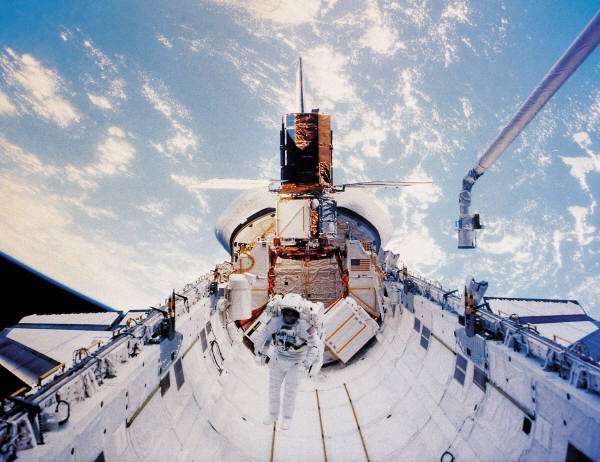
|
| Space |
|
Related links |

|
| Sport |
|
Related links |
| Travel & Tourism |
|
Related links |
|
| Water |
|
Related links |
| Wealth & Luxury |
|
Related links |
